Jeffrey Smith: The Big GMO Cover-Up

THE INSTITUTE FOR RESPONSIBLE TECHNOLOGY– Something doesn’t quite add up about genetically modified (GM) foods.

Big biotech claims that genetic engineering is a necessary step towards feeding the world’s growing population. And yet debate still rages as to whether GM crops actually increase yields at all. Furthermore, the UN recently stated that 30,000 people a day were starving to death, but not because of underproduction of crops. It’s simply through lack of access.
Independent scientific studies raised serious alarm bells over the safety of GM foods over a decade ago. But while this made front-page headlines in European newspapers, the North American mainstream media were conspiratorially silent.

Biotech companies stand to make billions from their seed patents. Governments and supreme courts have sanctioned the patenting of life itself. The planet’s food supply is becoming increasingly dominated by fewer and fewer players.

If the biotech industry’s stated intention of feeding the world is misguided or even misdirecting, is there another political agenda behind GM food? Have we been mis-sold? Were we even given a choice in the first place?

Jeffrey M. Smith, international bestselling author of Seeds of Deception and Genetic Roulette: The Documented Health Risks of Genetically Engineered Foods, reveals the shocking truth behind GM foods and the huge effort by governments and Biotech corporations to keep it out of the mainstream media and outside of your awareness.

WORDS: Jeffrey M. Smith

It looks the same—the bread, pies, sodas, even corn on the cob. So much of what we eat every day looks just like it did 20 years ago. But something profoundly different has happened without our knowledge or consent. And according to leading doctors, what we don’t know may already be hurting us big time.

In May, the American Academy of Environmental Medicine (AAEM) publicly condemned genetically modified organisms (GMOs) in our food supply, saying they posed “a serious health risk.” They called on the US government to implement an immediate moratorium on all genetically modified (GM) foods, and urged physicians to prescribe non-GMO diets for all patients.

GM-What?

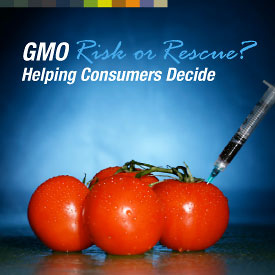
Genetic engineering is quite distinct from selective breeding because it involves taking genes from a completely different species and inserting them into the DNA of a plant or animal. The long term effects of this for our health and our planet’s biodiversity are unknown.

AAEM, an “Academy of Firsts,” was the first US medical organization to describe or acknowledge Gulf War Syndrome, chemical sensitivity, food allergy/addiction, and a host of other medical issues. But the potential for harm from GMOs dwarfs anything they have identified thus far. It can impact everyone who eats.

More than 70% of the foods on supermarket shelves contain derivatives of the eight GM foods on the market—soy, corn, oil from canola and cottonseed, sugar from sugar beets, Hawaiian papaya, and a small amount of zucchini and crook neck squash. The biotech industry hopes to genetically engineer virtually all remaining vegetables, fruits, grains, and beans (not to mention animals).

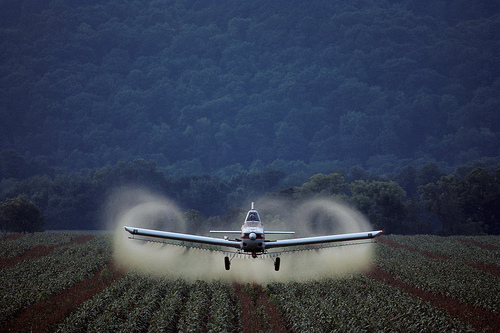
The two primary reasons why plants are engineered are to allow them to either drink poison, or produce poison. The poison drinkers are called herbicide tolerant. They’re inserted with bacterial genes that allow them to survive otherwise deadly doses of toxic herbicide. Biotech companies sell the seed and herbicide as a package deal, and US farmers use hundreds of millions of pounds more herbicide because of these types of GM crops. The poison producers are called Bt crops. Inserted genes from the soil bacterium Bacillus Thuringiensis produce an insect-killing pesticide called Bt-toxin in every cell of the plant. Both classes of GM crops are linked to dangerous side effects.

Read more about The Big GMO Cover-Up

© 2011 The Institute for Responsible Technology

Photo by Flickr user margaretkilljoy
GMO Foods Pose Higher Risks for Children

FOOD CONSUMER– Children face the greatest risk from the potential dangers of GM foods:

*Young, fast-developing bodies are influenced most

*Children are more susceptible to allergies

*Children are more susceptible to problems with milk

*Children are more susceptible to nutritional problems

*Children are in danger from antibiotic resistant diseases

*Young, fast-developing bodies are influenced most

Children’s bodies develop at a fast pace and are more likely to be influenced and show the effects of genetically modified (GM) foods. That is why independent scientists used young adolescent rats in their GM feeding studies. The rats showed significant health damage after only 10 days, including damaged immune systems and digestive function, smaller brains, livers, and testicles, partial atrophy of the liver, and potentially pre-cancerous cell growth in the intestines.

Children are more susceptible to allergies

Children are three to four times more prone to allergies than adults. Infants below two years old are at greatest risk-they have the highest incidence of reactions, especially to new allergens encountered in the diet. Even tiny amounts of allergens can sometimes cause reactions in children. Breast fed infants can be exposed via the mother’s diet, and fetuses may possibly be exposed in the womb. Michael Meacher, the former minister of the environment for the UK, said, “Any baby food containing GM products could lead to a dramatic rise in allergies.” GM corn is particularly problematic for children, as they generally eat a higher percentage of corn in their diet. Further, allergic children often rely on corn protein. Mothers using cornstarch as a talc substitute on their children’s skin might also inadvertently expose them via inhalation.

Children are more susceptible to problems with milk

Milk and dairy products from cows treated with the genetically engineered bovine growth hormone (rbGH) contain an increased amount of the hormone IGF-1, which is one of the highest risk factors associated with breast and prostate cancer. The Council on Scientific Affairs of the American Medical Association called for more studies to determine if ingesting “higher than normal concentrations of [IGF-1] is safe for children, adolescents, and adults.” Sam Epstein, M.D., Chairman of the Cancer Prevention Coalition and author of eight books, wrote, “rbGH and its digested products could be absorbed from milk into blood, particularly in infants, and produce hormonal and allergic effects.” He described how “cell-stimulating growth factors . . . could induce premature growth and breast stimulation in infants, and possibly promote breast cancer in adults.” Dr. Epstein pointed out that the hormones in cows could promote the production of “steroids and adrenaline-type stressor chemicals . . . likely to contaminate milk and may be harmful, particularly to infants and young children.”

Children are more susceptible to nutritional problems

A 2002 report by the UK’s Royal Society, said that genetic modification “could lead to unpredicted harmful changes in the nutritional state of foods.” They therefore recommended that potential health effects of GM foods be rigorously researched before being fed to pregnant or breast-feeding women, elderly people, those suffering from chronic disease, and babies. Likewise, according to former minister Meacher, unexpected changes in estrogen levels in GM soy used in infant formula “might affect sexual development in children,” and that “even small nutritional changes could cause bowel obstruction.”

Read more about GMO Foods Pose Higher Risks for Children

© 2011 Food Consumer

Photo by Flickr user tjmartins

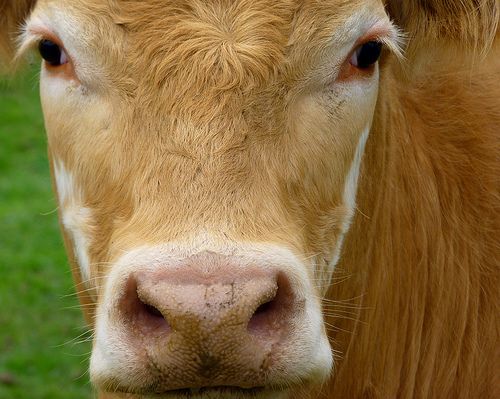
Genetically Modified Cows Produce ‘Human’ Milk

TELEGRAPH– Scientists have created genetically modified cattle that produce “human” milk in a bid to make cows’ milk more nutritious.

The scientists have successfully introduced human genes into 300 dairy cows to produce milk with the same properties as human breast milk.

Human milk contains high quantities of key nutrients that can help to boost the immune system of babies and reduce the risk of infections.

The scientists behind the research believe milk from herds of genetically modified cows could provide an alternative to human breast milk and formula milk for babies, which is often criticised as being an inferior substitute.

They hope genetically modified dairy products from herds of similar cows could be sold in supermarkets. The research has the backing of a major biotechnology company.

Read full article about Genetically Modified Cows Produce ‘Human’ Milk.

© Copyright of Telegraph Media Group Limited 2011

Photo by flickr user Jon Smith Una Nos Lucror

Labeling GMOs, Food for Environmentalist Thought

GRISTBittman: Time to label GMOs

With the USDA’s recent flurry of green lights for genetically modified crops — evidently at the urging of the White House  — the Obama administration should brace itself for a big push on the labeling question. Popular sentiment may be swelling for something the agrichemical/biotech industry really doesn’t want: labels on food products proclaiming the presence of GM material. The New York Times’ Mark Bittman is a widely read and influential writer. His latest column puts the case for labeling in terms that the administration will have trouble refuting:

“Even more than questionable approvals, it’s the unwillingness to label these products as such — even the G.E. salmon will be sold without distinction — that is demeaning and undemocratic, and the real reason is clear: producers and producer-friendly agencies correctly suspect that consumers will steer clear of G.E. products if they can identify them. Which may make them unprofitable. Where is the free market when we need it?”

He who controls the research …

At the L.A. Times, the Union of Concerned Scientists’ wonderful Doug Gurian-Sherman has a must-read op-ed for anyone who thinks people are hysterical to oppose GMOs (or want them labelled). Writes Gurian-Sherman about the alleged benefits of GMOs:

“We don’t have the complete picture. That’s no accident. Multibillion-dollar agricultural corporations, including Monsanto and Syngenta, have restricted independent research on their genetically engineered crops. They have often refused to provide independent scientists with seeds, or they’ve set restrictive conditions that severely limit research options.”

Those facts should be pondered whenever you hear anyone mouth the platitude that GMOs “have been proven safe” or “never hurt anyone” or deliver X, Y, or Z benefits. Empowered by a generous intellectual-property regime, the seed giants dictate who does what research and how. As Gurian-Sherman reports, the industry and the EPA were embarrassed in 2009 when 26 university entomologists wrote a letter to the agency complaining of lack of access to seeds. “No truly independent research can be legally conducted on many critical questions involving these crops,” they wrote. Monsanto and other companies have been shamed into reaching agreements to allow access to seeds to USDA and unversity researchers — but the deals are voluntary, opaque, and still quite limited. As Gurian-Sherman writes: “The Monsanto agreement with the USDA covers research into crop production practices, for example, not research into issues such as the health risks of genetically engineered crops.”

A defense of GMO alfalfa gets mowed down

James McWilliams is a vegan, so he deplores the planting of alfalfa, which is mainly used as cow feed. But if it must be planted, he argues on the Atlantic website, it might as well be from Monsanto-patented seed genetically engineered to withstand Roundup, Monsanto’s flagship herbicide. The USDA itself [PDF] and mainstream ag scientists are on record warning that Monsanto’s alfalfa will cross-pollinate with organic and non-engineered alfalfa. The USDA chose to “deregulate” it anyway, enraging the organic community. In his Atlantic piece, McWilliams set out to defend that decision by debunking the contamination fears. A few days later, Organic Inc. author Sam Fromartz completely obliterated McWilliams’ argument, documenting several past cases of GMO contamination.

Time’s Bryan Walsh: the food movement can revive environmentalism

Bryan Walsh makes a rousing case for the food movement as savior of environmentalism, which, he argues, has “stalled.” There’s a lot to what Walsh is saying here, but I think there’s something different going on than what he describes. I don’t think environmentalism has stalled; I think efforts to make big policy changes have stalled. Climate legislation failed ignominiously last year, and not before being hopelessly compromised and stepped on by industry interests. And that was with Democrats in charge of the White House and both legislative chambers. Meanwhile, global climate talks are in limbo. What now? No one has figured out a way to crack that nut.

What the food movement offers is a hands-on way to create a world that makes sense in your immediate community. It is environmentalism brought into the kitchen, the yard, the neighborhood, the city farmers’ market, the soil in the surrounding countryside. You can get your hands on food, taste it, make friends around it. The change you see is immediate. And just as the environmental movement spawned the environmental-justice movement — based on the idea that certain groups were more focused on whales than on toxic poisoning in low-income communities — a food-justice movement has sprung up. Indeed, much of today’s food movement sprouted in low-income urban areas in the early ’90s.

But on the grand policy level — Michelle Obama’s garden and kids initiative aside — the food movement is getting squashed, too, as Food and Water Watch’s Wenonah Hauter recently argued in a pungent essay. The lesson: Changing policy is hard, long, grinding work, often abstract and rife with defeats. To keep going, it helps to have on-the-ground successes, and that — often enough — is what community food work provides. (Not that there aren’t setbacks, squabbles, and frustrations built into it.) All that said, I agree with Walsh that the food and environmental movements are now intertwined and will thrive or languish together.

Click to continue reading full article the case for labeling GMOs.

Article by Tom Philpott, Grist’s senior food and agriculture writer.

© Copyright Grist, 2011

Image by flickr user, Askokas Change Makers

Monsanto Crop Circle photo by Melvyn Calderon:Greenpeace


MR Original – GMO Labeling

MEDIA ROOTS – With a healthy eating mentality on the rise, a lot of companies are attempting to cash in on the idea of providing natural and organic foods, which is great if the foods are truly natural and organic. However, labeling laws along with the FDA itself aren’t exactly on the thoughtful consumers side in all of this. Unfortunately, it’s not as simple as picking up a bag of Tostitos and reading the ingredients. Corn, oil, salt. Sounds natural, right? Not necessarily.

Genetically modified organisms. The name explains it all – scientifically created in a lab in an effort to feed more people faster and for a lot less money. GMO’s are definitely not natural. Government regulations on GMO’s define the process as “the altering of the genetic material in that organism in a way that does not occur naturally by mating or natural recombination or both.” Furthermore, companies can use genetically modified foods (most commonly corn and soy) without labeling them as such. Sometimes tricky labeling can even serve to dupe intelligent buyers.

Silk brand soymilk, for example, started out using organic soybeans but over time switched to using non-organic, GMO soy while changing the ‘organic’ labeling to ‘natural’. The company saved money and was able to keep its long-time consumers that most likely overlooked the new wording. Silk was eventually held accountable for its dishonesty and recently returned to using certified organic soybeans in its original soymilk.

New regulations require biotechnology companies to provide health safety data directly to the FDA prior to marketing a GMO product. However, ‘we the consumer’ still must do our own research before grocery shopping because foods containing GMO’s continue to remain unlabeled as such.

For your health, do just that – research.

If the food is processed, non-organic, and contains a crop that has a genetically modified variant (like tomatoes, potatoes, canola, corn and soy, do) then the chances are it is GMO. Reading the food labels and ingredient lists won’t mean much unless you first know what’s what. Learn what crops are genetically modified and what ingredients they are used to make. The non-GMO shopping guide by the NON-GMO Project is a great resource to start with.

The truth about what we eat should be in our control and it can be.

Visit the nonGMO project to find out what you can do to help the labeling process at http://www.nongmoproject.org/

Article by Erin Berton

© COPYRIGHT MEDIA ROOTS, 2011

Photograph by flickr user Tim Psych