PBS Frontline Documentary: United States of Secrets

XaIWseY

logo taken from an actual NSA spy satellite exterior called: NROL-39

PBS’ United States of Secrets is a stunning, must watch documentary covering the detailed history of the post 9/11 NSA mass surveillance program.

The two part series lets state officials prop up the narrative that such spying is needed amidst a ‘War on Terror’, but juxtaposes their rhetoric with stories from NSA whistleblowers’ who were targeted for speaking out.

Incidentally, the history of ‘The Program’ derives in large part from an internal leaked document, which outlines how former Attorney General Alberto Gonzales helped shield the Bush administration from the illegality of dragnet spying. After Obama inherited Bush’s spying apparatus, he charged multiple whistleblowers with espionage for leaking information about ‘The Program’ to the press.

United States of Secrets puts the Snowden leaks in context with the NSA’s sordid past, and cogently outlines how the surveillance state got to where it is today.

MR

**

You can watch United States of Secrets on You Tube, albeit in lower quality than PBS:


United States of Secrets Part 1 of 2

**


United States of Secrets Part 2 of 2

**

Incarceration: a New American Pastime

In 1984, a newly formed company Corrections Corporation of America acquired the United States’ very first corrections facility contract for the state of Tennessee. This was the first time in American history that a private, for-profit corporation would control and care for the nation’s incarcerated.

Over the next 28 years, the power and reach of the privatized prison system consumed over half of the country’s prison institutions and, in turn, led to a six-fold increase in prisons and inmate capacity in the U.S. The number of correctional facilities and unwarranted incarcerations in America will continue to increase so long as the corporate takeover of U.S. prisons is driven by a corporate philosophy that revolves around perpetual profits and growth.

When we consider the growth of American industry over the past ten years, we are faced with the fact it has continued to struggle to keep afloat through multiple wars and recession. Conversely, Corrections Corporation of America (CCA), like many of the independent prison operators, has experienced considerable growth and profits, with most of that growth occurring over the past decade. This phenomenon is not limited to CCA either—its rival, the GEO Group, has experienced similar growth. In 2003, CCA traded near $6.00/share and it now currently sells near $34.00/share (NASDAQ).

Both companies, CCA and GEO Group reported their total revenue for 2011 at around $1.7 billion, further proving that the private corrections industry is thriving. With their success, these companies have begun to own and operate their own facilities as well. CCA now owns and operates 66 facilities; the GEO Group now has 65 in their possession.  In the recession, both companies have thrived not only on an increased demand for prison capacity, but on a corporate philosophy that places profits above anything else.

The contemporary philosophy in corporate America maintains that perpetual profits and aggressive growth is the only path to success. The current model perpetuates a survival–of-the-fittest, take-no-prisoners attitude, where the success of the corporation is paramount. With the current framework, the goal of benefiting society as a whole becomes secondary to that of the success of the corporation. “Unfortunately, we live in a world of capitalists who thrive on the great Myth of Perpetual Growth, endless growth, ad-infinitum, forever, till the end of time”.

We see this business philosophy every day at department stores as they shill the week’s hot new product. We see it every year at Black Friday when companies try to outdo the previous year’s successes. As a nation run by corporate capitalism, we assume perpetual growth is guaranteed, even though we live in a world of limited resources and consumers. The problem of this philosophy not only exists in department stores, but it also exists in the far reaches of our government as well, and can be seen in the public statements of companies like CCA that tout their constant construction of new facilities and new beds for more inmates. This corporate philosophy of perpetual growth has become a cancer, and exists in all areas public and private, affecting all facets of our society.

At the time the first contract was awarded to CCA, in 1984, there were 903 state-run correctional facilities in the United States, incarcerating a total of 395,309 inmates. In 2005 the number of prisons had doubled to 1,821 facilities and the number of inmates had grown to over 1.4 million. From 2005 until 2010 the number of inmates climbed to a staggering 2,266,832 nearly doubling the number of inmates in a five year period (U.S. Census). In addition to the unprecedented increase in prisons and inmates we have also seen an increase in unwarranted arrests and incarcerations in the United States over the past few years.

The most notable of cases has been in New York, which Mayor Bloomberg has repeatedly touted as the “safest big city in America.” He has been able to claim this due to the increase of arrests throughout the city over the past decade and with the implementation of the highly questionable “stop and frisk” policy. The Village Voice recently helped in bringing to light the truth about how New York City police departments had established an arrest quota for their officers. The officers were given the choice to either abide by these guidelines or risk losing their jobs due to non-compliance. Since this story broke, a plethora of similar  accounts have come to light, such as the recent development of the “Cash for Kids” scandal, where elected judge of Pennsylvania, Mark Ciavarella, received millions of dollars in kickbacks for child convictions to fill the beds of a private juvenile detention center owned by Mid Atlantic Youth Services Corp. Cases such as these are only a symptom of a much greater sickness within our corrections system. By continuing to allow the privatization of prisons in America, we contribute to the incremental degradation of our human rights, and further establish a totalitarian justice system which no longer upholds law, but instead does the bidding of its corporate controllers.

Some have argued though, that there is no direct relationship between the privatization of the prison system and the increased incarcerations in America. There is, of course, the possibility that this growth is due to an increase in population and other social factors that led to increased criminal activity. If that were the case, we can conclude companies like CCA and the GEO Group are merely providing the United States with a much needed service. If this logic were true though, other countries struggling with similar population growth, poverty, and social tensions would see a similar rise in their prison populations. As it stands, the U.S. leads the pack, as we incarcerate more citizens than any other country in the world. China, with the world’s highest population and most impoverished people, trails behind us.

The undeniable correlation between the time frame of the sudden increases in size of the U.S. prison system and its inmates, in addition to the creation of the private corrections companies and their government contracts, further establishes that they must be inextricably linked. If we are to take back control of our disproportionate corrections operations, we must first decouple profits from incarceration. Once corporations are not rewarded for imprisoning citizens, then we will have the social space to examine and correct the roots of criminal behavior, instead of just profiting from them.

 Written by Justin Blush for Media Roots

Swann: Media Neglects NDAA, Drug War & Executive Orders

MEDIA ROOTS – Ben Swann, host and producer of WXIX’s Reality Check, has been offering viewers a look at news not typically covered by the contemporary corporate media establishment. Publicly aired three nights a week in Cincinnati, the news featurette has now received an online cult following for its raw reporting and fresh format. Previous segments have featured petrodollar warfare, voting machine fraud, and the Fed’s third round of quantitative easing.

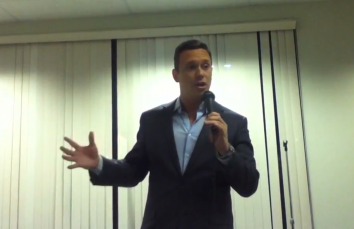
Earlier this month at a pre-election meeting of liberty students, Mr. Swann shared with participants how and why the corporate media fails to cover unlawful executive orders, the illegitimate NDAA, and the broken War on Drugs. The salon is called Libertas Found and also featured libertarian congressional candidate Bob Coogan who discussed what he believes are solutions for Ohio 52nd district.

Below are three parts of Swann’s keynote speech that have recently been released. Part 4 of the series is expected to offer Swann’s view on why the media seems to not find newsworthy internet piracy legislation.

Oskar Mosco for Media Roots.

*** 

Ben Swann discusses why the media does not accurately cover the ongoing

Mexican drug war or look into the U.S.’ War on Drugs policies.


Ben Swann talks about why the media continues to fail holding President Obama accountable for his actions on NDAA despite his supposed contradictory stance.


Ben Swann looks into why the media fails to cover executive orders and privilege.

 ***

Image provided by Ben Swann

Big Oil is More Than Big Trouble for the Environment

MEDIA ROOTS – The global petroleum industry has long been the antagonist for environmental and animal-rights advocates. But more recently, “Big Oil” has emerged as a literal threat to democracy for its vast political influence and ability to contrive wars for profit. A report released last month by the National Wildlife Federation exposed to what extent the oil industry, along with coal, affect elections in America.

Speaker of the House John Boehner tops the list of congressman receiving financial aid from the energy industry. Many of these donors stand to benefit from the proposed construction of the Keystone XL pipeline, an ecologically-damaging project that would send diluted bitumen – a tar-like substance – to American oil refineries, and the congressman has repeatedly castigated the president for delaying its permit. If that wasn’t bad enough, the congressman actually owns investments in some of these companies. Congress is exempt from various trade-laws and last year 60 Minutes highlighted Boehner’s record of insider-trading.

More recently, Congress passed a bill referred to as the “Stop the War on Coal Act.” Congressman Johnson, also a Republican from Ohio, authored the bill and explained the bill wasn’t about climate change as much as it was about public health and safety. But dissenters of the bill argue it actually endangers millions of Americans and virtually declares war on public health. Furthermore, the bill could possibly pave way for a similar bill that would further secure the stature of the petroleum industry.

Big Oil should be considered a big country

Seven of the top ten highest-grossing corporations in the world, as ranked by Fortune magazine earlier this year, are of the oil industry. Royal Dutch Shell, the list’s top revenue-generator, is on par with the gross domestic product of Iran. But if it was its own country, it would be the twenty-fifth highest-grossing country in the world.

When considering these seven corporations together, they are the sixth highest-grossing entity worldwide – government or corporate. And because these entities are private corporations, and considered persons by the Supreme Court, they are not subject to the same level of public scrutiny or congressional oversight. While it may not be surprising that over three-quarters of all petroleum refined in the United States produces gasoline, diesel, and jet fuels, it may be news to some just who is consuming these fuels the most.

The petrodollar war, not the terror war

Purchasing over one percent of the world’s refined oil – by far more than any other single entity – is the U.S. Department of Defense. Over half of this consumption is used to fuel jet engines with the Air Force being the branch of greatest oil demand. The department consumes nearly double the amount of fuel annually as the Republic of Ireland and, during the height of battle in Iraq just a half-decade ago, American troops were consuming well over one million gallons of fuel daily making them the highest oil-consuming soldiers in world history. This past year, the military handed taxpayers a $20 billion energy bill which roughly equates to the cost of an automobile tank for every man, woman, and child in the country.

Less than a month after 9/11 several news outlets were reminding readers that oil was actually more of an issue than terrorism. L.A. Weekly pushed the envelope of sensitivity by offering “it’s the oil, stupid” just eight days after terrorists allegedly hijacked four airplanes. These claims are based on the fact that Big Oil has been vying for an Afghan pipeline for decades.

During the Bush-Cheney era, both of whom are previous oil executives themselves, Big Oil lobbied the federal government over $393 million, with nearly a million dollars diverted to Senator Obama during his 2008 campaign for the White House. But as the majority of Americans of all political backgrounds continue to favor renewable energy options, this Congress continues to turn a blind eye and instead demonizes governments – such as those of Iran and Venezuela – that refuse to trade crude oil in U.S. Dollars. “Petrodollar warfare” is the true reason why the U.S. invaded Iraq in 1990, and again in 2003, and is why Iran continues to remain in the military’s crosshairs.

Corporate media complicity

Meanwhile, the corporate media establishment has yet to connect the dots of history for the general public or sound the alarm on the true cause of this grim outlook. In fact, many of these outlets outright support the industry as reported in a Media Matters study earlier this year regarding the coverage of the Keystone XL pipeline. The report showed that while only a quarter of Keystone XL coverage featured the massive demonstrations of people speaking out against the project, the media continued to parrot industry job estimates even though these predictions had already been widely discredited.

Starting in 1980, the FCC began deregulating the media industry which resulted in over 90% of media outlets being owned by just six corporate entities. Already this year over $153 million oil industry dollars have been spent in the corporate media establishment – mere pocket change for this influential group of executives. The result is a misguided society concerned more by the threat of terror than the more realistic threat of economic collapse.

Embedded below is an episode of FTM Daily, a radio program hosted by economist Jerry Robinson, which further explores the extent of the petrodollar system, its influence on the value of the U.S. dollar, and reveals who the major players are.

Oskar Mosco is the managing editor for Media Roots.

Photograph: © 2013 David Oppenheimer – Performance Impressions

***

Earlier this year on FTM Daily, Jerry Robinson features an examination of the

Petrodollar system that is what the now-volatile U.S. Dollar is based on.

Posted in Uncategorized | 1 Reply

Massachusetts Resolves to End Corporate Personhood

MEDIA ROOTS – Massachusetts just became the seventh state in the nation to officially call for a repeal of Citizens United, the 2010 court case that recognized corporations as people and money as speech. That landmark ruling is the primary reason for the development of “super PACs” in the last two presidential elections. A super PAC is a political action committee that is able to accept unlimited political donations as long as they are not spent directly on candidates’ campaigns.

Referred to as “independent-expenditure only committees” by the Federal Election Commission, super PACs received considerable backlash from last year’s Occupy Wall Street movement. Additionally, Senator Bernie Sanders (I-VT) recently published the donations made by 23 American billionaires to super PACs this election season. “Billionaires buying the 2012 elections have a combined $195 billion in wealth,” Sanders explains in the report’s introduction. “More than the bottom 43% of American households – 50 million families.”

The grassroots organization Move to Amend has been working since 2009 to amend the US Constitution to ensure the end of corporate personhood and Coffee Party USA has been calling to repeal Citizens United since its inception. Also, over 200 local governments now support the call to repeal this piece of controversial legislation.

Oskar Mosco

***

Senator Bernie Sanders discusses the need for a constitutional amendment

to undo the Supreme Court’s Citizens United decision of 2010.

***

Photo provided by Flickr user  labiagaferrer

Posted in Uncategorized | 1 Reply