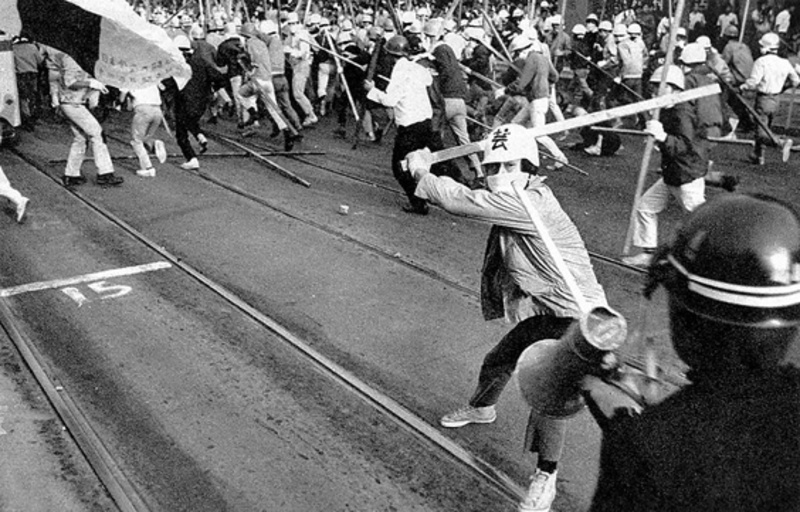
Obama’s high-profile trip to Hiroshima was accompanied by a media storm that gave endless justifications for the U.S. use of the atomic bomb on Japanese civilians. The myths are widely accepted in society, and underpin the notion of American exceptionalism.
In this episode of The Empire Files, Abby Martin interviews Dr. Peter Kuznick, co-author with Director Oliver Stone of the bestselling book and HBO series “The Untold History of the United States,” about the real story behind the use of the atomic bombs—as well as the untold history of Imperial Japan, its role today for the U.S. Empire, and the danger for new war on the horizon.
Imperial Japan, the Bomb and the Pacific Powder Keg
**
PETER KUZNICK: Well, the myth is not just that it was justified. That’s tied to the other even bigger myth, in some ways, that the atomic bombs actually ended the Pacific War which is being repeated. You might have seen that the National Park Service announced a Manhattan Project National Park. They’re going to be developing these national historical sites, and when the Secretary of the Interior, Jewell, announced it, she said that it may have been tragic in some ways, but at least it ended the war. That’s the basic myth, and if it ended the war, and it’s a good war, and we’re the good guys, and we were responding to the Japanese aggression, then ergo the bomb is actually justifiable and even moral, and the argument goes even further to say that it saved lives, and not that it costs a couple 100,000 lives, but it actually saved lives. Initially, it saved half a million American lives, but then we decided to become more humane and we said, “What about all the Japanese lives that is saved?” So it’s part of this broad myth that has got no basis whatsoever in fact. In Hiroshima 80,000 people were incinerated in the blast. In Nagasaki another 80,000 perished. Thousands more died in the days and weeks following from the fires that burned down the city or being forced to drink radioactive soot pouring from the ashen sky. Tens of thousands more died in the years following from radiation poisoning. Another mass atrocity even more obscured from the US history is that months prior the US had already firebombed multiple Japanese cities, pushing Japan to the brink of surrender. On March 10th, 1945, the US military dropped 2,000 tons of bombs on Tokyo, burning up twenty percent of the city and massacring 130,000 civilians in what’s known as the worst firebombing in history.
The United States had been firebombing Japanese cities for months already, and in fact the United States had firebombed more than 100 Japanese cities. In fact, the destruction reached 99.5 percent in the city of Toyama–almost 100%–the entire city wiped out. You saw what we did in Tokyo on the night of March 9th and 10th, so we were wiping out cities. What changes the equation now is the Soviet invasion, and that’s what the Japanese leaders had been dreading, and we know from mid-May, when the Supreme War Council issued their statements, they said that the Soviet invasion would put an end to the Japanese Empire. That’s what they’d been fearing. That’s what the Americans knew that they were fearing, and we said that in our intelligence reports. They say over and over again that the Soviet invasion of Japan will convince all Japanese that defeat is inevitable. We knew that. Truman knew that the Japanese were trying to end the war. He knew that they were appealing to the Soviets to try to help them get better surrender terms from the United States, but Truman went ahead and used the bomb, so the real controversial question is what motivated Truman. It was clearly not to expedite the end of the war.
NARRATION: In 1946, the US strategic bombing survey group, assigned by Truman himself to study the attacks, determined, based on a detailed investigation, Japan would have surrendered even if the atomic bombs had not been dropped, even if Russia had not entered the war, and even if no invasion had been planned or contemplated. The question wasn’t whether or not Japanese leaders would surrender, but who they would surrender to. The American banking and corporate establishment, having clawed their way so close to the top for a 150 years, for the first time saw their path to the biggest profits they could fathom as the unwounded, unchallenged savior, unless of course the pieces in this new world gravitated towards capitalism’s mortal enemy. The prestige of the Soviet Union was high for its defeat of fascism, but the ideas of socialism spread far beyond Soviet borders and the message of revolution was a call that turned the dreams of US corporations into nightmares. For the US Empire to protect its rise, it would have to hobble its economic and ideological rival. Intending to bog down the Soviet Union in a costly and consuming arms race, and issue a threat to anyone who imagined a world without empires, it planted its flag with two thumps of its chest.
PK: The timing doesn’t make any sense. The logic doesn’t make any sense. We dropped the bomb because we were sending a message to the Soviet leaders, and that was exactly how they interpreted it: That if the Soviets don’t go along with US plans in Europe and the Pacific, this is the fate that awaited them, so the Soviets knew that Japanese were trying to surrender, that they were desperate to surrender, that the Americans knew they were desperate surrender, and then they saw the Americans wipe out those two cities. Therefore, the Soviets interpreted it just the way the scientists warned the American leaders that the Soviets would interpret it. And the danger, the scientists said, was that it was going to lead to this uncontrollable arms race, and a race for mutual annihilation, and that was the reality that Truman set up with the dropping of the atomic bombs. So the crime that Truman committed, and it was a crime, a war crime by every definition, was not simply killing a couple hundred thousand innocent civilians in Hiroshima and Nagasaki. It was threatening the entire species with annihilation. As Oliver and I say in in Untold History, to kill hundreds of thousands of innocent civilians is a war crime. To threaten all of mankind, and also life on our planet with extinction, goes far beyond that.
ABBY MARTIN: Yeah, I think it was one of the worst crimes ever perpetrated on humanity and going to the Hiroshima Museum with an in-utero survivor, thanks to you setting that up for me, was incredibly potent and devastating. Why do you think this myth holds so strongly today? Because I talk to people all the time about it, and it seems like it’s just this visceral reaction…
PK: But that’s the myth that Americans have promulgated for all this time because it’s so essential to this notion of American exceptionalism, American goodness, American beneficence during the entire Cold War, and then that gets into some of the other crucial myths because the entire Soviet role in winning the war in Europe and their contributions to the victory in the Pacific has been wiped out, but it’s all tied in with this fundamental mythology that just plagues Americans and prevents Americans from understanding the world. One of the key things that I try to stress is this idea that you mentioned that the Americans won the war in Europe. That is such nonsense. Throughout most of the war the United States and the British faced ten German divisions combined. The Soviets were facing 200 German divisions during that time. The United States lost about 310,000 in combat, a little more than 400,000 overall. The Soviet Union lost 27 million. Do you know what that 27 million figure represents? It is hard to even conceptualize. 27 million is the equivalent of one 9-11 a day every day for 24 years. That’s what the Soviets suffered in World War II. Imagine if Nazi Germany had developed the bomb first and used it. The world would look upon nuclear weapons with the appropriate horror. We would have said this is the kind of weapon that a fascist country would actually use.
AM: But instead they give the Empire the moral arbitration to decide who else can have nuclear weapons, right? The only country that’s ever used one.
PK: The only country that’s ever used one, the country that’s repeatedly threatened to use them. Every American president since Truman has threatened repeatedly to use nuclear weapons. And in one of Obama’s better moments in Prague, in his famous Prague speech about nuclear weapons, he calls for nuclear abolition, but he effectively says the United States won’t be the first country get rid of its nuclear weapons. The United States will be the last country to do so.
NARRATION: It’s always been the Japanese people and Japan’s colonial subjects, who have suffered unspeakable pain under the rule of rich royalty. For most of the Empire of Japan’s history, an elite dynasty ruled over peasants in a feudal society, but as the feudal order transformed into an industrialized country, its need to expand and conquer set it outward. In 1894, close to a million Korean peasants participated in an armed uprising against their ruling aristocrats. Seeing an opportunity, Japan deployed thousands of soldiers, occupied the country and imposed a proxy dictator in Seoul. In the 1930s, in their most ambitious expansion, the Japanese Empire invaded and conquered large parts of China, all of Korea, Thailand, the Philippines and what is today Myanmar, Cambodia, Laos, Vietnam, Indonesia, Malaysia, Singapore, Papua New Guinea, and five separate island nations, including Guam and the Marshall Islands. Rule under the Emperor was a horror of historic proportions. A policy of so-called comfort women bound over 200,000 as sex slaves for Japanese soldiers. Torture, human experiments, mass rape and mass executions cast a shadow on its imprisoned nations. Japanese officers gave the order to trudge a path into China by carpet bombing civilians and carrying out a reign of terror on the ground. In one campaign, Japanese soldiers conquered the town of Nanjing and proceeded to murder and rape everyone they could. Upwards of 300,000 people are estimated to have been killed and 20,000 raped in the massacre. One photo seemingly plucked from the devil’s mind says it all. A baby skewered on a Japanese bayonet. The Communist Party unions, former Japanese soldiers and others militantly carried out anti-war actions throughout Japan’s conquests. By the Emperor’s decree, organizers were rounded up en masse and imprisoned. Protests were violently suppressed. At the outbreak of WWII, Japan’s rulers naturally aligned with German and Italian fascism.
PK: What Japan did, not only in China, which was terrible, but also what Japan did in the rest of Asia during that period, is a series of atrocities which the Japanese government has been trying to cover up. Partly in response to that, the United States began to apply sanctions and embargoes on Japan and when the United States cut off Japan’s oil supply, Japan was very much dependent on the United States for a lot of raw materials that they were using to build up their war machine, as well as for their energy needs. The United States was at the same time defending our allies in the Pacific, the British, the French and the Dutch, and the others who were terribly exploiting their colonies. So Japan moves in there. Japan had colony envy in some ways during this time, and they wanted their own empire, and so they wanted to displace the French and the Europeans from Southeast Asia and other parts of Asia so Japan could move in there, but because Japan was economically boxed in and feeling desperate, they decided they were going to have to move. And the reason why they went against the US fleet at Pearl Harbor was they thought the US fleet could block Japan’s access to the resources that they wanted to get in Southeast Asia.
NARRATION: With the majority of the American public opposed to joining the war, Pearl Harbor gave Truman the pretext he needed to cash in on the remains, but once Japan surrendered to the US military, a new alliance started to form.
PK: The war crimes trials should have been more severe. We never raised the charges against Japan for their bombing of Chinese cities, and why did we not? We were afraid that people were going to raise charges against the United States for our bombing of Japanese cities, as well as the atomic bombs on Hiroshima and Nagasaki. We let them off.
NARRATION: Notorious reactionary General MacArthur became a de facto dictator of occupied Japan. Under US rule, elite war criminals were allowed to escape trial, some found guilty even returned to positions in the postwar government. The US occupation tied an arm behind Japan’s back by denying it a military while resurrecting its industry as an economic surrogate.
PK: They adopted Article 9 of the Japanese Constitution. Article 9 is amazing. Under Article 9 and the Japanese Constitution they renounce the right of war as a sovereign nation and they renounce the right to have offensive military forces. This was the bedrock of the Japanese peace constitution from 1946 until this year. Finally, this year the Abe administration has revoked Article 9, effectively, under this resolution adopted by the cabinet and passed by both houses of the Japanese Parliament. So the United States initially imposed this on Japan, but what happened was the Japanese people loved it. The Japanese people embraced it, and when, during the Korean War, the United States tied to get Japan to revoke Article 9 so that the Japanese could help the Americans in the Korean War, the Japanese refused. And so there’s been this struggle ever since with the United States encouraging Japan to do away with Article 9 so that Japan could form the backbone of what the United States is doing in Asia, and the Japanese people have resisted until now.
NARRATION: Japan’s current prime minister Shinzo Abe is nostalgic for the days of empire and is implementing drastic reforms to crack down on civil liberties and reassert the country’s military might. Abe and his party’s historical revisionism have drummed up a racist nationalist movement. Korean immigrants, and segregated communities are faced with violence from anti-immigrant gangs.
PK: The Abe administration is a nightmare. The Abe administration is the realization of what has been the dream of the LDP and Japanese right wingers for decades. Abe, you remember, first got elected in 2007 and he tried to implement his nationalist program. The Japanese people resisted it, and he was forced out of office in a year. When he got re-elected this time he played it smarter, and he initially went with Abenomics and the economic policy which seemed to be working. We now know that Abenomics is a failure. The Japanese economy is doing very poorly, so whatever gains there were temporarily have now been eroded, but it was later that he began to introduce his militaristic agenda, and he did so. Abe, from the time he first got elected to parliament in 1993, has been the driving force behind Japanese historical re-education. He and his right-wing allies are very concerned about this tendency to look critically on Japan’s history, so he’s tried to whitewash, basically, the rape of Nanjing, the policy toward China, the mistreatment of the other Asians, and aggressive policies toward the other Asians, basically defend the bombing of Pearl Harbor, and issues like the Korean comfort women. The Korean women who were forced into sexual slavery by the Japanese military, is one of these hot button issues that Abe has been… He didn’t come out and officially deny it, although over the years has tried to downplay this and say this is what all the armies do. So Abe has been key in the effort to revise Japanese history in the same way that Americans have done, but Abe also is completely dedicated to re-militarizing Japanese society, so Abe passed the secrecy laws last year despite the fact that they were opposed by 82% of the Japanese public. Abe forced that through. He’s allowed the Japanese arms dealers to sell arms overseas, and one of the big things he’s been doing is the fight over… trying to prevent the people of Okinawa from exercising their democratic rights to stop the relocation of the base.
NARRATION: The island of Okinawa was the entry point of the US invasion in 1945. After decimating 90% of the island’s infrastructure, the US military took it over and has occupied it ever since. Widespread opposition helped anti-base politician Yukio Hatoyama get elected as prime minister in 2009.
PK: When Hatoyama got elected in 2009: a great victory for the Japanese people. The Japan Democratic Party finally overthrew the rule of the LDP, the conservatives, the right wingers, and one of the things that Hatoyama pledged to do during that campaign was stop the base relocation in Okinawa, from Futenma, where the big base is now, to Henoko in northern Okinawa, this pristine beautiful area where they want to relocate the military base, and at least 80% or so of the Japanese people have come out against this repeatedly, and so Hatoyama tried to block the base relocation. Obama basically smashed him. Obama, you would think that Hatoyama, a progressive ally–Obama would embrace him. Just the opposite. Obama cut his feet out from under him, forced Hatoyama to back down on his effort to block the base relocation and basically eroded the popularity and the legitimacy of the Hatoyama government. The Hatoyama regime collapsed, replaced by Kan. They had three JDP prime ministers. They couldn’t function. They couldn’t rule after that, and the JDP was replaced by Abe and the LDP, and we’ve seen this nightmare of militarization going on.
AM: I wanted you to create the context for our audience about Okinawa because that is actually what radicalized me after reading Chalmers Johnson’s book Blowback, and his talking about Okinawa, and just the heavy militarization. People don’t understand that literally the island is almost a giant base. That’s how concentrated it is.
PK: Okinawa houses 74% of American military bases in Japan and approximately half of the 50,000 American troops who are in Japan are in Okinawa. So Okinawa is where the fiercest battle in the Pacific was fought in 1945, and the Okinawans were victimized by the Japanese troops, victimized by the American troops, then after the war the US occupied Okinawa, so the Marines ran the entirety of Okinawa, and they set up bases wherever they wanted, so it was used for training. It was also used as a launch point for the American Empire. So it was a launch point for the US invasion of Vietnam, Iraq, Afghanistan. They’ve often gone out from Okinawa to build the American Empire in the Pacific. When I met with Al Magleby , who was the US Consul General, the highest American official in Okinawa, Al said no other piece of real estate is so strategically important as Okinawa, and he said it was crucial to America’s vision and the Asia pivot and American Empire, American forces throughout the Pacific. So he said we’re going to fight. We’re going to hold this. The Japanese government is supporting the US base relocation. Okinawa reverted officially from American control to Japanese control in 1972, but it has never been able to exercise its democratic rights.
NARRATION: The ominous presence of 32 military bases has violated Okinawan culture and the environment. From spilling 13,000 tons of poison gas to the 25-year cover-up of poisoning waterways with toxic chemicals, this 60 plus years of military occupation has also created a legacy of sexual abuse, corruption and impunity, rife with sexual assaults committed by US military personnel. Between 1972 and 2015, police statistics cite US forces committing 26 murders and 129 rapes. Accountability is virtually non-existent with US immunity from any crimes or environmental destruction committed on Japanese soil. According to a FOIA request and a review of hundreds of cases, rapists were only fined, demoted or restricted to their bases. In 30 cases a letter of reprimand was the only punishment, but a fire has been awakened in the Okinawans, and the protests against US militarism continue to grow. In 2010, 100,000 people fought against the construction of a new base. Tensions reached a boiling point earlier this year when a US marine admitted to raping and killing a 20-year-old local woman. In response, over 65,000 Japanese rallied to demand the removal of all US military bases from the island, with signs reading “Our fury has gone beyond the limit.” The Japanese people aren’t just fighting the presence of the US military but the resurgence of the Japanese military. Mass protest against changing Article 9 shows the deep opposition to another path of war. Abe’s new Japan quickly deployed thousands of troops to oil-rich South Sudan and routinely launches provocations against China, a country where it committed massacres not long ago. There’s no telling where Japan’s imperial ambitions might lead, and it coincides with the so-called Asia pivot, a calculated US build-up against China, not because it poses a military threat but because it poses an economic threat to US business.
AM: Abe’s administration is super militaristic, far right wing. I wanted to talk about what confrontations you see playing out in terms of the US Asia pivot toward Japan when Japan is seemingly wanting to become another empire.
PK: The US Asia pivot… Remember who really announced the US Asia pivot. It was Hillary Clinton. She wrote the article in Foreign Policy magazine in November of 2011 titled America’s Pacific Century saying, basically, that the United States is going to pivot. We focused too long on the Middle East. It’s time that we focus more on Asia. We’re going to recalibrate. Our forces are going to be moved toward Asia, away from Europe and the Middle East, and this is where the 21st century is going to be. Unfortunately for the United States, reality got in the way, and so we’ve gotten bogged down. The reason why Obama really said that he wanted to wind down the wars in Iraq and Afghanistan was so that we could focus more on Asia with this Pacific pivot, and we’ve done some of that. The TPP and our new trade arrangements are partly an attempt to rebalance toward the Pacific. We’ve had war exercises, war games with the Asian nations. We’ve gotten a lot of them to increase their defense spending, effectively buying their military weapons and defense systems from American arms manufacturers, so the profiteers are drooling over all of this. What we’re looking to is Japan and other Asian allies to basically be proxies for us, to take the burden, take responsibility for controlling and containing China. The model is really what [George F.] Kennan talked about in terms of containment toward Russia during the Cold War. In the same way we’re trying to surround China. We’re trying to lock in China, to limit China. It is going to lead these other countries into a hardline stance against China, and build up the right wing in Japan and other countries. On the one hand we are forcing China into this tighter alliance with Russia. On the other hand we are building up this opposition to China. There is this crazy confrontation over the Senkaku/ Diaoyu islands between Japan and China. The US is sending its ships to challenge China in the South China Sea. The United States hasn’t taken an official position on Japan and China in the Senkaku/Diaoyu Islands. However, Obama has said if there is a military confrontation between Japan and China over the islands, the United States is going to come to Japan’s aid. We saw how that worked out in 1914 with all these entangling alliances, and how they led to World War I. Well, that same situation still exists. It’s a very dangerous situation and these are potential powder kegs.
**
FOLLOW // @EmpireFiles & @AbbyMartin
WATCH // YouTube.com/EmpireFiles
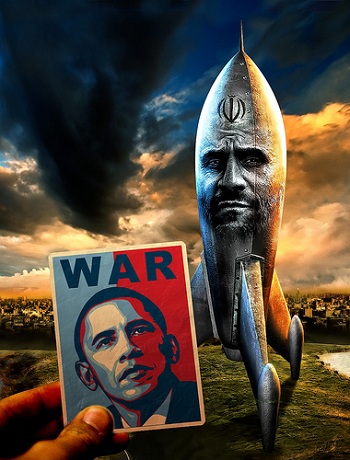 MEDIA ROOTS — Pat
Buchanan and Judge Napolitano were fired recently from their respective
networks for what is thought to be their outspoken dissent from the U.S.-Israeli
lobby. But whilst the International Atomic Energy Agency (IAEA), the C.I.A.’s National
Intelligence Estimate, and Secretary of Defense Leon Panetta all agree that
there is no evidence that Iran has, nor is making, nuclear weaponry, Obama continues to enforce questionable sanctions and command a military that is escalating the threat of war.
MEDIA ROOTS — Pat
Buchanan and Judge Napolitano were fired recently from their respective
networks for what is thought to be their outspoken dissent from the U.S.-Israeli
lobby. But whilst the International Atomic Energy Agency (IAEA), the C.I.A.’s National
Intelligence Estimate, and Secretary of Defense Leon Panetta all agree that
there is no evidence that Iran has, nor is making, nuclear weaponry, Obama continues to enforce questionable sanctions and command a military that is escalating the threat of war.
 ECONOMIST
 IRISH INDEPENDENT NEWS