MR Original – Military Officer Exposes Afghanistan Lies

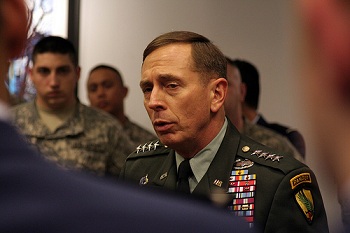
MEDIA ROOTS – Upon returning home from his second tour in Afghanistan, Lt. Colonel Daniel L. Davis unloaded several truths that exposed continued deception by multiple senior military officials.  The 17-year Army veteran describes, in an 84-page “open-source” report, an increasingly bleak reality for soldiers while chronicling specific episodes of personal gain from top military leaders.

“No one expects our leaders to always have a successful plan,” he explains in a recent summary of the report in Armed Forces Journal.  “But we do expect – and the men who do the living, fighting, and dying deserve – to have our leaders tell the truth about what’s going on.”

Prior to informing his chain of command, Davis met with six members of Congress and a New York Times reporter, to submit two documents – one classified and one not – to the Pentagon for internal review.  However, upon learning that there would be a delay in the release of the unclassified report, Davis decided to go public last week in the nation’s premier independent military periodical.  “How many more men must die in support of a mission that is not succeeding?”

The next day, the Times covered the story, but only to appear backpaged on A13.  Then, last Friday, Rolling Stone released it in an article written by Michael Hastings, the journalist that wrote the bombshell article that lead to General McChrystal’s premature retirement in 2010.

With specific evidence of industry actually impeding military development, hundreds of billions of dollars being wasted, and virtually no accountability of top decision-makers, some generals continue to deceive Congress and the U.S. people.  But with the ongoing expenditure of “blood, limbs, and lives of tens of thousands” of service members and only small gains for the country, “deception reach[ed] an intolerable low,” Davis writes. “If the public had access to these classified reports they would see the dramatic gulf between what is often said in public by our senior leaders and what is actually true behind the scenes.”

While assigned to the Future Combat Systems (FCS) organization in Fort Bliss, Texas, Davis discovered that deception was not isolated to one base or division but had become Army-wide.  Starting in 1999 and lasting nearly a decade, the FCS organization cost nearly $20 billion dollars of taxpayer monies.  Despite the Government Accountability Office documenting consistently significant problems with the agency, senior leaders routinely downplayed failures and often gave the impression of success to Congress.  To date, none of these officials involved in these deceptions have been held accountable.  Instead, one proponent, Major General Charles Cartwright, was promoted Vice President of Advanced Programs at Raytheon upon retirement.  Raytheon was a primary supplier of the FCS blunder that was eventually canceled by the Defense Secretary.

The report also offers an extensive review of the 2007 Iraqi troop surge and the misplaced credit given to CIA Director General Patreaus.  Several perspectives of the surge are featured that mention how, prior to the surge, the Iraqi Sunni community had already decided to revolt against their Al-Qaeda allies.  This shifted momentum and left some Iraqi officials perplexed at why the U.S. was sending additional battalions after they had specifically requested that U.S. troops stay on the bases outside of conflict areas.

The allegations make a clear distinction between criticism for military officials and the presumed naivety of the President and Congress.  According to Obama’s Wars by Bob Woodward, the Commander-in-Chief asked many difficult questions prior to ordering the 30,000-troop surge in Afghanistan that ultimately failed.  Obama was still in his first year of the presidency, had no personal military history, and was outnumbered in opinion by senior security advisors.  Additionally, several misleading testimonies from top brass are provided, with context and factual disparity, that exemplify the rampant deceit offered to Congress and major media outlets.

The report goes on to suggest several areas where the U.S. has lost credibility.  Davis cites how many mid-grade officers are now retiring early within the Army, due to increased disenfranchisement, and warns of a future military with dwindling respect for the chains of command.  Also, as Congress continues to remain unaware of some classified intelligence, several defense contractors are able to study such material at their convenience.  Davis recommends a bipartisan Congressional investigation of all the leaders involved to respond to these allegations, under oath.

When questioned why he felt compelled to come out with these accusations despite the fact he was going to be flamed by Army brass, Davis replied, “I believe that with knowledge comes responsibility; I knew too much to remain silent.”

Oskar Mosquito is a veteran of the U.S. Army and a producer at truth-march.

Picture provided by Flickr user hectorir

MR Original – A Soldier’s Story

MEDIA ROOTS – In the glory days of Rome, Julius Caesar came to understand that the masses could be pacified so long as they had plenty of food to eat and games to entertain them. It is said that while barbarians crashed at the city gates, Romans sat mesmerized by the displays of gratuitous violence in the Coliseum. Rome, like all empires eventually do, collapsed.

Welcome to the beginning of the end of the American empire. There are more than 44 million citizens on food stamps. Our televisions offer 700 channels to titillate and stimulate at all hours of the day while we flock to the latest Apple products, computers, mobile phones, electronic bells, whistles, and distractions. Meanwhile, Uncle Sam sent troops to more than 150 countries around the world and we are now entangled in military conflicts in Iraq, Afghanistan, Pakistan, and Libya, borrowing billions of dollars from China each day to keep the military machine going.

Stupefying. Where are the riots in the streets? Where are the nationwide protests? Somebody else will step up and fight for us, right? 

Maybe we should take a little time to know the people who are fighting in the name of our country. Peter (pseudonym), a former Army Captain, 4th Infantry Division out of Fort Hood, recently contacted Media Roots to express how he had come to be disillusioned by the war on terror and the justifications for a U.S. presence in the Middle East:

“I just started to ask questions like: Why am I here wasting over a year of my early twenties? What is the real purpose behind this war? Why were there no WMDs? Why are soldiers outnumbered by civilian contractors almost 3 to 1?”

He also touched on alarming suicide rates, saying “…the brigade I was in on led the army in suicide rates during 2006 and 2007” and also described Fort Hood as plagued by “high crime, gangs within units, drug dealing in the barracks, bad stuff going on.”

During Peter’s tenure, the divorce rate among married soldiers “topped out at over 80%” and the Army’s maddening stop-loss policy wasn’t helping matters. With stop-loss, soldiers are forced into service past their contractual obligations.

We wanted to get to know Peter, and he was kind enough to talk more in depth in an exclusive Media Roots interview. 

***

MR: Why did you join the military? 

P: I went on active duty after graduating college when I was 22 to pay back my Army ROTC scholarship commitment. I joined mainly because I wanted to do something exciting and challenging instead of just being a typical college student majoring in business or something boring like that. I also needed a way to pay my tuition. The army agreed to pay all my tuition and fees and in return after graduating I would commission as a 2nd Lieutenant and serve at least 4 years active duty.

MR: What have you done in the service thus far and where has it taken you?

P: I served as a security platoon leader (convoy escort/VIP escort type of thing), company executive officer (2nd in command of over 200 soldiers), and a battalion assistant operations officer (higher level staff mission planning). I served one tour with the 4th Infantry Division for 13 months out of FOB [Forward Operating Base] Falcon in southern Baghdad.

MR: At what point did you start asking the kinds of questions that facilitated your political awakening?

P: When I joined up and for my first year-and-a-half of service I thought Bush and Cheney were doing the right things and keeping us safe. I felt I needed to do my part to fight Islamic extremism. My brigade was one of the last “surge” brigades to go into Baghdad. I first started to ask questions probably my first time outside the wire, maybe my third day on the ground there. The outgoing unit was showing us our OE [Operating Environment] and the main routes they used. I saw how we had basically reduced Baghdad into a cesspool of trash, sewage, rubble, and mud holes as well as displaced thousands of people from their homes. I then noticed around the FOB that civilian contractors from KBR, Raytheon, General Dynamics, etc. outnumbered actual soldiers about 3:1. I thought all this was odd as many of the civilians freely explained how much money they were making by being there, mostly in the six figures + range.

When I was moved to the position of company executive officer, I was in charge of acquiring the new MRAP [Mine Resistant Ambush Protected] vehicles up at Victory Base Complex [VBC, the huge base surrounding Saddam’s palaces and Baghdad airport]. We already had more than enough vehicles and the soldiers in my company said they preferred to use the humvee as opposed to the new MRAP. Nonetheless, we had to follow orders and I ended up leading at least five or six missions to VBC where we would pick up these brand new vehicles for the Battalion to use. While at VBC, I had the pleasure of dealing with attitude-ridden, overpaid civilian contractors who issued us the new vehicles. I also noticed the sheer abundance of the new MRAPs around the complex. I’m talking thousands and thousands of brand new vehicles just sitting in a lot, not being used. I couldn’t help but imagine the cost of making all these huge armored trucks, let alone the cost of shipping all of them thousands of miles overseas to Iraq.

In the end, my company signed for and was responsible for over 35 of these new vehicles and all of their associated equipment. They added to our existing fleet of over 60 vehicles already on the FOB of the older humvees and LMTVs for a grand total of over 95 combat vehicles. So a company-sized element now had a Battalion’s worth of vehicles and equipment. Needless to say we only used about 15% of our vehicles on missions and the rest sat there collecting dust, an absolute waste of resources.

The other thing is that my company commander had to sign for all that sensitive equipment and I was responsible for managing it for him. That means it was his ass and my ass when something went missing. So, if a private leaves a $5,000 handheld radio in a porta-potty on accident and no one can find it then ultimately it is the company commander’s fault. So there would be a big investigation as to why the radio was lost and who was at fault, ending in someone, probably the company commander, having to pay out of his pocket for that missing radio since Uncle Sam always gets his. Meanwhile, Donald Rumsfeld and the Pentagon can have $3 trillion in unaccounted for spending and nothing is done about it. But the junior level army commander has the keep track of all of his property, down to the smallest weapon mount or rifle scope, and will pay for whatever is lost. All of this stuff was the spark that made me start asking questions and looking into things more. Once we got some Internet hooked up in my room on the FOB, I started looking into Ron Paul and Alex Jones type of stuff.

MR: Do you think that the threat of terrorism is exaggerated? Do you feel that the US is engaging in countries abroad to genuinely combat terrorism?

P: I did not want to believe it for the longest time but I am now sure that the terrorism threat is grossly exaggerated and it has all been staged from the beginning, most likely from our own CIA. These wars are not for combating terrorism, but for control of resources and power. It is all used as a tool for profit for international banking interests as well as all the large defense contractors. We were lied to about WMDs to get us into the war in Iraq just as we were lied to about the Gulf of Tonkin incident to get us into Vietnam.

MR: What do you think of the Army as an institution overall?

P: The Army is a good institution overall. It is a great thing for people who are trying to better themselves, get money for college, and challenge themselves. The people I served with, aside from high-level leadership like Gen. Casey and Adm. Mullen, are honorable, caring people who are just trying to do the right thing or are just trying to make a living.

In my experience, most people in the Army aren’t that concerned about the politics behind everything. They are there to do a job, better themselves and make a paycheck or they just like being a soldier and doing cool stuff like shooting machine guns and driving tanks. A lot of soldiers know the wars are a bunch of BS but with the economy so bad they have no choice but to stay in since the pay is so good now.

MR: Is the importance of strict adherence to the Constitution emphasized in the Army?

P: No, it is only mentioned in the oath of enlistment. Most enlisted soldiers have no idea what it truly means.

MR: Do you think a free press and free speech are especially important during times of war?

P: Yes, always.

MR: How would you compare World War 2 and the Vietnam War to the War on Terror?

P: WW2 at least had a known enemy and soldiers knew they were there to liberate Europe, close concentration camps and then go home when the job was done. The whole country was involved as well because of the draft and the women working in the tank and aircraft factories. It was a war with clearer objectives and politics, a good vs. evil. I don’t think it is similar at all to the wars we are in now.

Vietnam is similar in that it began as a result of a false-flag attack (Gulf of Tonkin) and was all a political, elite banker, defense contractor agenda. Kissinger, Lyndon Johnson, CIA, MacNamara—all wanted to go to war and they wanted it to last for a long time so they made the American people fear the spread of communism. That is why there was no clear objective set, strict rules of engagement established, etc. This was a war for international bankers and defense contractors to profit off of while strategically accomplishing nothing and allowing the size of government to expand.

The Wars on Terror were started because of the false flag 9/11 attack and instilled a sense of fear and vengeance among all Americans. I believe these wars had been planned for a long time by globalist neo-cons Rumsfeld, Wolfowitz, Cheney, Bush Jr. and Sr. The other thing about this war is that it is fought by an all-volunteer force of only 0.1% of Americans. The other 99.9% is not directly affected by the war and that is why there is not as much outrage and opposition to it. When I watched TV in our dining facility in Iraq it seemed like America was oblivious to us being over there fighting insurgents. All that was on the news was Anna Nicole Smith, Britney Spears, American Idol, etc. It makes you think, why am I here wasting my time if no one cares?

MR: You said only .1% of Americans serve in the military. Do you think that the stop-loss policy and tour extensions are due to the administration’s attempts at preventing a draft in any way possible, despite the escalation of engagement?

P: Yes, they are a result of not having a draft. I think if there had been a draft a lot more Americans would be affected by the wars and there would be a greater push to end them, as more people would have to sacrifice.

MR: You mentioned that the rate of contractors to soldiers on the ground was 3:1. How are they helping?

P: They don’t do much except take up space. They do jobs that the Army can’t do because we are so strapped for personnel. Normally the Army has its own cooks, laundry people, construction workers, etc. as all enlisted soldiers. Since we are so short on manpower, those support-role soldiers are all used on missions outside the wire and the contractors come in and fill those support jobs and are paid a lot more money to do them. So if you signed up for the Army thinking you were going to be a cook and not see any combat, you better think again because all the cooks in my battalion went on missions outside the wire.

MR: What is a “non-combat” troop? Is the idea that we are scaling down a front?

P: It is just a political term. We don’t have “non-combat” troops. Everyone goes to combat. Everyone carries a weapon. The term is meant to dupe the American people into thinking we are drawing down. I know they have closed the smaller FOBs like Falcon (where I was stationed) but I am sure we will remain at Victory Base Complex for at least fifty years. Iraq will be just like South Korea and Germany. We will be there forever.

***

To touch on a few of Peter’s points, Defense Secretary Gates announced the start of a phased ending of the hugely unpopular stop-loss policy back in March 2009, and the Army’s goal was to completely eliminate the need for stop-loss by March 2011. It is now April 2011, and we are still waiting. Secondly, the Army announced earlier this year that 343 soldiers and personnel took their own lives in 2010. That’s nearly one a day. Thirdly, an FBI report released last year entitled Gang Activity in the U.S. Armed Forces Increasing revealed that members of every major street gang, from Crips to Bloods to Gangster Disciples have members enlisted in the military at installations at home and abroad. Army recruiters have been found to look the other way when it comes to dealing with known gang members in order to meet recruitment quotas.

Bear in mind that Peter does not speak for all men and women in uniform, but he makes no such claim. If nothing else, we can view his testimony as a snapshot in time when a soldier saw the barbarians at the city gates and ran to warn his countrymen.

If you are currently serving in the armed forces or know somebody who is and would like to send us your thoughts, please send a message to [email protected]. We honor all requests for anonymity. Thank you.

Interview conducted by Abby Martin, article written by Jeff Wilson

Photo by flickr user US Army Photostream

***

Citizens enroll for military service for a variety of reasons.  Some do so for money towards obtaining an online degrees. Others may enroll out of the promise of a early retirement.  While some might do so just out of the pride they feel for our country and truly wish to serve and protect all that our nation stands for.  Whatever the reasoning might be, one thing is for certain, the path that they travel will rarely be the path that they imagined.


Posted in Uncategorized | 1 Reply

MR Original – Scaling Down? Think Again.

MEDIA ROOTS- In recent months, much has been made of the ‘withdrawal of US combat brigades from Iraq.’ The language used implies that a great benchmark has been reached in the march toward peace for our country.

 Since the public was told that the combat soldiers are gone, there seems to be a consensus washing over the national consciousness that the Iraq War is nearly over. The truth is, despite the hype, little has changed in the nature of our mission or the geo-political situation. Our politicians and leaders seem to believe that all it takes is shifty worded rhetoric to change the game in the eyes of the public.

The idea of an ending war is encouraged by reports of ‘non-combat’ troops replacing combat brigades. Yet, there is no such thing as a non-combat soldier. There are non-combat jobs within the Army, but every person who dons the uniform, with the exception of a chaplain, who must remain unarmed under Army regulations, is expected to take up a weapon and dodge bullets when the going gets tough. In a war zone where the enemy attacks our presence indiscriminately, any file clerk or staff officer could end up under fire and returning it. When we have a 50,000-strong military presence in a country, conducting patrols, manning guard posts, taking fire and facing bombings, we are, by definition, in a state of combat. The Army leadership and Commander-in-chief know this.


According to Joshua Keating of Foreign Policy, on August 3rd

And of course, as Gen. Ray Odierno, the outgoing U.S. commander in Iraq, recently pointed out, “as we moved away from combat operations, the enemy has not.” Even if the U.S. combat role has been reduced, U.S. facilities and patrols will still come under attack and need to be defended. The threat of insurgent attack certainly distinguishes the “noncombat” garrisons in Iraq from those in South Korea and Germany. (Thankfully, U.S. troop fatalities are now down to below 10 per month from a high of nearly 70 in 2007.)

So while the next stage of the Iraq war may be, as Obama described it, a transformation from “a military effort led by our troops to a civilian effort led by our diplomats,” the actual mission of the remaining troops will stay largely the same: building the capabilities of the Iraqi military and rooting out the extremists.

The scope of that mission will certainly change as troop levels continue to decline, though of course this isn’t the first time a president has declared an end to “combat” in Iraq.

I have a friend in Iraq who just began his deployment, serving as combat infantry. The stated mission is to train and support the Iraqi forces. However, we know this is how Vietnam began, with “military advisors” to the South Vietnamese Army, who soon were in full combat. Regardless of the drawdown, we have soldiers in harm’s way on foreign soil, taking casualties every month from enemy activity. When General Odierno acknowledges that combat isn’t over, the Administration’s announcement to the contrary becomes a mockery of itself. After all, it was two days following Obama’s announcement that our combat role had ended in Iraq that American blood was spilled.

Remember President Bush’s “Mission Accomplished” speech, and the declaration of the “end of major combat operations”? That was in 2003, and by the 2006-7 Iraq surge, pundits and people at large were mocking that rash and incompetent gesture. This year we’ve been told all “combat” troops are leaving, and as the year ends, the Secretary of Defense is forcing the window back open.


According to a recent AP article Gates: US open to request from Iraq to stay

The United States is open to the idea of keeping troops in Iraq past a deadline to leave next year if Iraq asks for it, U.S. Defense Secretary Robert Gates said Tuesday.

“We’ll stand by,” Gates said. “We’re ready to have that discussion if and when they want to raise it with us.”

Gates urged Iraq’s squabbling political groups to reconcile after eight months of deadlock. Any request to extend the U.S. military presence in Iraq would have to come from a functioning Iraqi government. It would amend the current agreement under which U.S. troops must leave by the end of 2011.

“That initiative clearly needs to come from the Iraqis; we are open to discussing it,” Gates said.

I won’t disobey a lawful order from the Commander in Chief, but I also don’t have to buy bullshit. And I certainly won’t buy it in bulk.

The Iraq War is not over, and the soldiers know it. Our friends back home need to know it too. No place on earth where US soldiers are killed in violence on a monthly basis is a non-combat zone. We cannot take the Executive branch at its word on this. While the media feeding frenzy around the “withdrawal of combat troops” did not last long, it served as a propaganda piece, a pittance to the civilian population yearning for an end to the war. I won’t say whether staying or leaving is wrong, but deliberate doublespeak from the White House is wrong. Implying that we’re coming home when we so clearly aren’t, then leaving the door open for further involvement, is not only dishonest, but also a betrayal of the President’s campaign promises.

The reality is that our 2008 Presidential “choice” was between a Republican who wanted to keep forces on the ground indefinitely, pending certain goals; and a Democrat who would keep forces on the ground to avoid a disastrous (and embarrassing) collapse of the Iraqi nation, while accepting a Peace Prize for his non-existent peace achievements. I’d guess Alfred Nobel wants his money back.

We shouldn’t forget what the President had to say in August, on the heels of his acclaimed withdrawal of “combat” troops: “Like any sovereign, independent nation, Iraq is free to chart its own course. And by the end of next year, all of our troops will be home.

Make it so, Mr. President. An open-ended offer to the Iraqi government to extend our military presence does not meet that goal.

Our Chief Executive is trying to take credit for ending a war his administration is continuing. He cannot expect to blow both hot and cold without stoking the anger of the American people, and paying the price in votes.

I challenge the same Americans who came out in force against Bush’s War, on the streets and at the polls, to do the same in defiance of Obama’s War. Americans have voted in a trend for change in 2006, 2008, and 2010. Incumbents have been hemorrhaging from both parties for four years. Are we realizing now that change doesn’t come from just one pull of a lever?

Malcolm

I am a junior enlisted man in the US Army and serve as an aviation mechanic. I have never been deployed. My unit is currently slated for an Afghanistan deployment in the not-too-distant future, but this is subject to change. I care about our country’s future because, well, we live there, and because our Constitutional government is/was the pinnacle of human achievement in the centuries-old struggle between freedom and tyranny. We’re losing it, and that would be a crime against all those who labored and died for it, and against the billions of our children who will live with the consequences if we fail.

Photo by the US Army on flickr

Posted in Uncategorized | 1 Reply

MR Original – The Well of Discontent

MEDIA ROOTS- “In yet another sign of the times, 85% of college graduates surveyed have reported that they will be moving home after they get their degrees: Stubbornly high unemployment – nearly 15% for those ages 20–24 – has made finding a job nearly impossible. And without a job there’s nowhere for these young adults to go but back to their old bedrooms, curfews and chore charts. Meet the boomerangers.

“This recession has hit young adults particularly hard,” according to Rich Morin, senior editor at the Pew Research Center in DC. So hard that a whopping 85% of college seniors planned to move back home with their parents after graduation last May according to a poll by Twentysomething Inc., a marketing and research firm based in Philadelphia. That rate has steadily risen from 67% in 2006.”Marc Slavo, Oct 17th

As a member of this generation, I feel confident in asserting that ten years ago, most college-bound teens were hoping for, if not expecting, some general circumstances by the benchmark age of thirty.

Most of us were nurtured in the belief that by obeying the law, staying in school and working hard, we would soon have our careers on track, make a decent living wage, be able to purchase a home and raise our families with a standard of living comparable to the middle class during the 1990s.

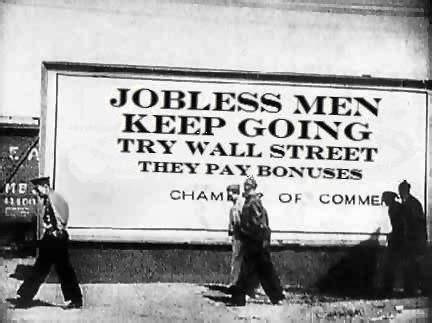
Instead, what we see today is 15% unemployment among 20-24 year-olds, and a substantial number of “underemployed”, working part-time jobs in retail or settling for far lower salaries than they were told to expect in their fields.

Young aspirants in the workforce have always had an uphill battle to fight, but no era in recent history has presented such a dark horizon. The Great Depression ended after a World War and accompanying industrial explosion; but in an America with most of its manufacturing jobs exported and factories closed, the greatest historical wealth machine has ground to a halt. This has left bartending, store-clerking and the like as some of the only options for many trying to find their place in the world.

The money isn’t coming in, it’s only going out, or circling the drain as it passes from one employee of a service “industry” to the next. If we add 150,000 jobs to the domestic economy every month until 2020 (double what we’ve been doing), we will only maintain the current unemployment rate, barring any further calamities. This is why things will undoubtedly get worse before they get better. However, there are socio-political repercussions to these ugly numbers that have begun to manifest themselves, and may crescendo in the near future. 

History shows that large numbers of educated, unemployed youth living in troubled nations often become the catalyst for revolution. In a decade that has seen more than two-thirds of American college graduates move back in with their parents in the face of a credit crunch, bleak jobs market and housing crisis, many in this generation see their American Dream washed out to sea. According to the Bureau of Labor Statistics, 16% of bartenders have at least a Bachelor’s degree, as do nearly 25% of amusement and recreation attendants. Half a million college graduates are working in customer service, 300,000 more as waiters. Not all of these people will be content with mediocrity forever.

While the 25 year-old Marketing major may wince at the thought of moving back in with Mom, he’ll maintain his good humor as he heads off to another shift at the nightclub. At 35, the same man, now stocking shelves at Wal-Mart to feed his child, won’t likely be singing “Que Sera” with the same zest.  Some of the frustration building in America’s youth will manifest itself politically. Arguably the first result of this political manifestation was the election of President Barack Obama in 2008, when he took in 66% of the under 30 vote. What did Obama promise during his campaign? Honest diplomacy, an end to the foreign wars, money for education, a revitalized economy, and the vague slogans of “hope” and “change”. Of course he was able to enthrall the pie-in-the-sky left, but his campaign’s ability to mobilize the long politically apathetic, disillusioned youth around these more practical issues was astounding.

Fewer than two years into this administration’s reign, and the lapdog Congress that was ushered in along with it, people are hopping mad. Economically, there are no signs of real improvement. The wars have not ended. College has not become more affordable, and even if it had, there are no jobs to take up once the degree is earned. Discontent is back in a big way, and we see many young people involved again, running against incumbents, carrying Rand and Ron Paul to celebrity status, backing dissent from all sides. Abused, deceived and growing desperate, the American people are sick of both major parties, as they ought to be, and are abandoning one while attempting to foment a revolution in the other.

This is the time to appeal to that discontent, because it arises from valid grievances. The causes of the current malaise run deep. There can be no more pandering, and no more half-measures against our problems. Time is just about up to deal with our fiscal, economic and civil crises, and if most of the people don’t know it, they feel it. The well of discontent will not stay closed- we have a real chance to awaken people to the issues and put them into context. The political opportunists are well-versed in the art of hijacking grassroots movements and offering false solutions. We can’t let them do it to us this time. This is why I want to speak for the truth, for the Constitution that protects us from the usurpation of life, liberty and property, and for the rights of individuals to choose their own destinies.

There was little mention in Obama’s rhetoric about the importance of adherence to the Constitution, individual responsibility, or grassroots local government; but these are the real solutions, born of our free tradition, that connect with voters. The Constitution in Article I section 8 lays forth simple and direct war powers that have been abused and perverted over the decades in order to bring us war. Diplomacy, as envisioned by George Washington, left America without “entangling alliances” and left us free to follow our best interests. Education and health care are now made more expensive and are complicated by government control. Our economy might still be the juggernaut it was in 1949, when we help more gold in our treasury than any other nation on earth, had we not been betrayed by suicidal trade agreements, excessive taxation and regulation, and the hijinks of the unconstitutional Federal Reserve. There is a window of opportunity to set the scales equal again by empowering the people, not with false promises, identity politics or government programs, but with knowledge and the courage that grows with individual freedom and personal responsibility.

If the free-thinking patriots of this country can bring that message rationally and even-handedly to mainstream voters, without cheesy taglines and Soviet-style propaganda posters, the fight might yet be ours to win. If the swelling ranks of America’s unfulfilled young generations can be awakened, they will prove a potent political force for whatever cause stirs them. Realistic goals, honest dialogue and courageous defense of our liberties and economic power could bring them out for the good.

Malcolm

I am a junior enlisted man in the US Army and serve as an aviation mechanic. I have never been deployed. My unit is currently slated for an Afghanistan deployment in the not-too-distant future, but this is subject to change. I care about our country’s future because, well, we live there, and because our Constitutional government is/was the pinnacle of human achievement in the centuries-old struggle between freedom and tyranny. We’re losing it, and that would be a crime against all those who labored and died for it, and against the billions of our children who will live with the consequences if we fail.

Photo by Mike Licht

MR Original – Light Up Your Grill

10/28/10

“When in the course of human events, it becomes necessary for one people to dissolve the political bands which have connected them with another, and to assume among the powers of the earth, the separate and equal station to which the laws of nature and of nature’s God entitle them, a decent respect to the opinions of mankind requires that they should declare the causes which impel them to the separation.

We hold these truths to be self-evident, that all men are created equal, that they are endowed by their Creator with certain unalienable rights, that among these are life, liberty, and the pursuit of happiness” – Action of Second Continental Congress, July 4, 1776 The Unanimous Declaration of the Thirteen United States of America

MEDIA ROOTS- We have major challenges ahead that are unlike anything the average American today can imagine- challenges that the next 20 years of presidential regimes can’t solve. There isn’t a chirp in the trees, and the stillness in the air is just enough to hear a storm rumbling on the horizon.

It’s time to confront the fact that we have forgotten what freedom is. Do we even remember what being free means?

Freedom is not licensing, it’s not a social security number, and it’s not welfare. It’s neither Medicaid nor Medicare. It is not the CPS, the IRS, the FDA, the Department of Indoctrination (Education), and certainly not bailouts. Freedom is not any of the 90+ taxes created that didn’t exist less than a hundred years ago.

Now let’s talk about what freedom is. It is your sheriff, your city council, and your place of worship – even if that place is simply around your dinner table with your family. It is failure when your ideas don’t work. It is helping others when their farm burns down. It is the right to contract freely, pay what you feel is fair, and charge what you know is right. It is to walk, drive, fly, or slide wherever your heart desires, and without a license. Of course with this freedom comes accountability to the equal rights of others.

Freedom is the feeling that you get when you look your family, friends, and neighbors in the eye, and know you can really trust each other, because of the time you spent together backing each other up and making things happen for yourselves. So how did we wind up here, so far from this?

We’ve been sold the idea of a massive social empire, rather than separate sovereign states. Washington is too out of touch with the problems of average Americans to make effective decisions with our money, and they are too far out of reach to be accountable to the taxpayers. This is why the founders designed mechanisms to prevent an insidious development of a coercive Empire into the founding documents. They knew Washington D.C. would inevitably seek to throne itself, promising heaven on earth if we agreed to sign on the dotted “taxation without representation” line.  The founders believed that you were naturally only subject to your need for food, water, shelter, defense, and personal accountability. 

How free are we without having control over the means of food production? How free can we be if the material essential to our existence come from China, er Wal-mart?  Even the currency in our monetary system is legally counterfeited – it subjects you to the will of a select few, making you dependent as any slave ever was.

Stalin’s 5 year plans; Mao’s “Great Leap Forward”; grand ideas of collectivization resulted in the death of 120 million farmers. Never before in history had so many locally self sufficient people found an early grave at the hands of so few. It was made possible by them subscribing to the myth of a utopia and voluntarily surrendering their means of production. Now we’ve done the same.

What techniques did Hitler, Stalin, and Mao implement to affect the totalitarianism described in our history books? If those at the top are to bring about a massive social state, how on earth do they affect the thinking of millions to agree with a group of central planners? 

In order to bypass free expression, societies indoctrinate their population. Step one in the United States is to subvert the first amendment, which was ratified to protect the ideas despised most. History has shown us time and time again that we must subject ourselves to a polarization of opinion. 

Woodrow Wilson campaigned to steer us clear of the war in Europe. At the same time, the German embassy had placed ads in papers throughout the US, including the New York Times, urging the US to steer clear of the dangerous waters surrounding Britain. Then the ammo laden ocean cruise-ship Lusitania sunk, and over one thousand civilian passengers died. Americans seethed while Germans state-side experienced persecution like never before. Lynching became common-place as Americans sent 100,000 sons to their deaths in Europe.

Franklin Delano Roosevelt’s campaign rhetoric assured America that, “If we face the choice – the choice of profit or peace – this nation will answer, this nation must answer. We choose peace.” 

After he took office, FDR immediately initiated a policy to starve the Japanese of oil. Admiral Richardson begged to bring his fleet in Hawaii back home to San Diego, claiming that they were undermanned, and over-exposed.  He was fired. Ten months later, 3,000 Americans are slaughtered at Pearl Harbor in “a day that will live in infamy,” 150,000 Japanese-Americans are jailed in internment camps, and American parents send 400,000 sons to die in the Second World War.

Is it adding up yet? War promotes and sensationalizes the myth that our individual safety is dependent upon a larger government. War centralizes people around a leader. The bigger the threat, the more they centralize. In order to convince a country to mobilize for such hell, governments must stifle polarizing opinions, and promise heaven will follow. 

The Constitution provides Washington the ability to act as a conduit for the states to rally together in the face of a threat too large for any one; the states have strength in numbers for national self-defense while maintaining freedom for their individuals. Why haven’t we managed to do this? How have we come to accept warrantless wiretappings, unreasonable searches, and incarcerations?

As Habeas Corpus and Posse Comitatus melt in the face of judicial review, we have to ask: what are we getting ready for? Why have we surrendered integral freedoms in the pursuit of defense? 

The answer is that we are not defending freedom. Instead, we’re picking a fight with an individual decision to experience terror, a war within our own minds.

Right now we have cartels over running the southwest, ranchers getting killed, Iraqi veteran sheriffs with bounties on their heads, and states being sued by the Federal government. Meanwhile you and your spouse are working your asses off, your kids are never home, your extended family is spread all over the globe, your television continuously lies to you, and you barely have time to mow the lawn you should be cultivating. No wonder we feel so powerless.

We let this happen. We’ve subjected ourselves to unconstitutional taxing, banking, currency, corporations, welfare programs, military growth, and imperial expansion. We’ve outsourced labor and material from tyrannical third world nations, and have bought into an education system that requires us to incur massive personal debt for a degree no one needs. Yet we’re looking around, confused? 

We have sold ourselves out!  We abandoned the belief in our own communities, the true source of our wealth, and traded it for the scraps of Washington’s printing press.  Are you going to throw your sons and daughters into the infernos of the next Great War based on promises from congressional critters?  Do you have any idea how far down this road we’ve gone? 

This country is about to drive off a cliff, and this is our last chance to put the brakes on before there is no avoiding the freefall into the jagged ravine below.  The wealthiest are jumping ship and dealing with the scraps they get as Washington taxes 70 plus percent of their transfers to the far-east. All of this is happening as you continue to struggle daily to make ends meet. Still think everything’s going to work itself out after these next elections? 

The time has passed to be able to affect change in our federal government. It’s over. Let all the unscrupulous history go. Forget about trying to understand “the issues”. You’ll never understand 2000 pages of unconstitutional healthcare reform. 

If you really want your life, your street, and your town to be better, it starts by understanding that you are the answer! Whoever is seated in the Presidential throne isn’t supposed to matter, but whoever holds your sheriff’s position does. Those who represent your state in the federal seat of government have failed you. The system is not working right now. On the other hand, your city council can work for you.  Every time you vote for a president you get screwed. You don’t need to understand everything to know things are fucked up. So what can “We the People” do about it? 

Rally. Find your neighbors. Have BBQs. Talk about things. Make it normal to have serious conversations.

I will get out there and say “no John, I’m not saying collectivism is bad. It’s just as natural as individualism, but there’s a time for both. No one argues against helping those who can’t help themselves. The real question is at what level do we collectivize to do so? For what reasons should we mobilize to deal with challenges? Shouldn’t we have the right to abstain from a collective effort if we don’t support? Whether we rally around Washington, our state capital, our town, or this grill, a government isn’t of the people through involuntary servitude.” 

Having a government of the people is not a spectator sport. It’s a contact sport. If you’re retired, get off the golf course. We need you. If you’ve lost your job, or can’t find one, then regroup with your family, and look for a leader.  If you can’t find one guess what? It’s you. I know…. scary, huh? The founders felt the same way. No one in their right mind should seek out public service. What I’m describing is exactly what happened in 1776, only they had something we don’t- the ability to survive locally. Chances are, you don’t have this ability. But you have something they didn’t, something they thought worth fighting for, worth dying for: The Constitution of the Republic of the United States of America. And they certainly paid for it.

So what can this document do for us legally? It can fix everything almost immediately. In the face of recent armed raids on organic food stores, illegal federal searches of political activists’ homes, unconstitutional firearms regulations, taxes levied for enumerated powers, random IRS audits, we can re-assume the state sovereignty that is articulated in the 10th Amendment, and we can reclaim the natural rights implied by the 9th Amendment by demanding that your sheriff, your city council, and your town justice serve you by keeping their word to be American and to follow the Constitution!

If you don’t care about your natural rights, your local sovereignty, and the radically liberating ideas upon which our Republic was founded, then clearly America is over. However if you do care, and haven’t learned what these documents can do for you and your family, it’s less than 20 pages long – read it while it’s still here. You will quickly see how these ideas have led us to be the most industrious, most innovative, most charitable culture in human history since July 4th, 1776 – in spite of the constant attacks on our civil liberties from within since day one.  This has been a 234 year civil rights revolution, and for it to survive and thrive it must be firmly planted in a fertile mind, a mind that truly believes in itself.  Please spend time with your wonderful neighbors around the grill, peacefully rally for sovereignty, and find the answers to heaven on earth closer to home.

“I, state your name, do solemnly swear that I will support and defend the Constitution of the United States against all enemies, foreign and domestic; that I will bear true faith and allegiance to the same; and that I will obey the orders of the President of the United States and the orders of the officers appointed over me, according to regulations and the Uniform Code of Military Justice; So help me God.”

“Oath of enlistment into the United States Armed Forces,” Title 10, US Code; Act of 5 May 1960 replacing the wording first adopted in 1789, with amendment effective 5 October 1962

“I, state your name, hereby declare, on oath, that I absolutely and entirely renounce and abjure all allegiance and fidelity to any foreign prince, potentate, state, or sovereignty of whom or which I have heretofore been a subject or citizen; that I will support and defend the Constitution and laws of the United States of America against all enemies, foreign and domestic; that I will bear true faith and allegiance to the same; that I will bear arms on behalf of the United States when required by the law; that I will perform noncombatant service in the Armed Forces of the United States when required by the law; that I will perform work of national importance under civilian direction when required by the law; and that I take this obligation freely without any mental reservation or purpose of evasion; so help me God.”

“Oath of Allegiance,” 8 C.F.R. Part 337 (2008), taken by all immigrants who wish to become United States citizens

Yossarian.

Photo by Beverly & Pack

Page 3 of 41234