
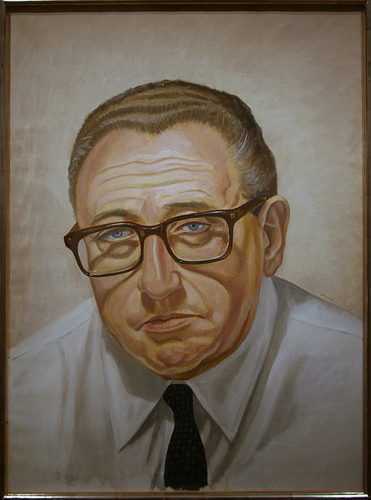
Why Henry Kissinger Should Be Tried at the Hague

KissingerCliff1066Two months ago, hundreds of thousands of Chileans somberly marked the 40th anniversary of their nation’s September 11th attack. It was on that date in 1973 that the Chilean military, armed with a generous supply of funds and weapons from the US, and assisted by the CIA and other operatives, overthrew the democratically-elected government of the moderate socialist Salvador Allende.

Sixteen years of repression, torture and death followed under the fascist Augusto Pinochet, while the flow of hefty profits to US multinationals – IT&T, Anaconda Copper and the like – resumed. Profits, along with concern that people in other nations might get ideas about independence, were the very reason for the coup and even the partial moves toward nationalization instituted by Allende could not be tolerated by the US business class.

Henry Kissinger was National Security Advisor and one of the principle architects of the coup in Chile. US-instigated coups were nothing new in 1973, especially those in Latin America. Kissinger and his boss Richard Nixon were carrying on a violent tradition that spanned the breadth of the 20th century and continues in the 21st – see, for example, Venezuela in 2002 (failed) and Honduras in 2009 (successful). Where possible, such as in Guatemala in 1954 and Brazil in 1964, coups have been the preferred method for dealing with popular insurgencies. In other instances, direct invasion by US forces such as happened on numerous occasions in Nicaragua, the Dominican Republic and many other places, has been the fallback option.

The coup in Santiago occurred as US aggression in Indochina was finally winding down after more than a decade. From 1969 through 1973, it was Kissinger again, along with Nixon, who oversaw the slaughter in Vietnam, Cambodia and Laos. It is impossible to know with precision how many were killed during those four years; all the victims were considered enemies, including the vast majority who were non-combatants, and the US has never been much interested in calculating the deaths of enemies. Estimates of Indochinese killed by the US for the war as a whole start at four million and are likely far more. It can thus be reasonably extrapolated that probably more than a million, and certainly hundreds of thousands, were killed while Kissinger and Nixon were in power.

In addition, countless thousands of Indochinese have died in the years since from the affects of the massive doses of Agent Orange and other Chemical Weapons of Mass Destruction unleashed by the US. Many of us here know soldiers who suffered from exposure to such chemicals; multiply their numbers by 1,000 or 10,000 or 50,000 – again, it’s impossible to know with accuracy – and we can begin to understand the impact on those who live in and on the land that was so thoroughly poisoned as a matter of US policy.

Studies by a variety of organizations including the United Nations also indicate that at least 25,000 people have died in Indochina since war’s end from unexploded US bombs that pocket the countryside, with an equivalent number maimed. As with Agent Orange, deaths and ruined lives from such explosions continue to this day. So 40 years on, the war quite literally goes on for the people of Indochina, and it is likely it will go on for decades more.

Near the end of his time in office, Kissinger and his new boss Gerald Ford pre-approved the Indonesian dictator Suharto’s invasion of East Timor in 1975, an illegal act of aggression again carried out with weapons made in and furnished by the US. Suharto had a long history as a bagman for US business interests; he ascended to power in a 1965 coup, also with decisive support and weapons from Washington, and undertook a year-long reign of terror in which security forces and the army killed more than a million people (Amnesty International, which rarely has much to say about the crimes of US imperialism, put the number at 1.5 million).

In addition to providing the essential on-the-ground support, Kissinger and Ford blocked efforts by the global community to stop the bloodshed when the terrible scale of Indonesian violence became known, something UN ambassador Daniel Patrick Moynihan openly bragged about. Again, the guiding principle of empire, one that Kissinger and his kind accept as naturally as breathing, is that independence cannot be allowed. That’s true even in a country as small as East Timor where investment opportunities are slight, for independence is contagious and can spread to places where far more is at stake, like resource-rich Indonesia. By the time the Indonesian occupation finally ended in 1999, 200,000 Timorese – 30 percent of the population – had been wiped out. Such is Kissinger’s legacy and it is a legacy well understood by residents of the global South no matter the denial, ignorance or obfuscation of the intelligentsia here.

If the United States is ever to become a democratic society, and if we are ever to enter the international community as a responsible party willing to wage peace instead of war, we will have to account for the crimes of those who claim to act in our names like Kissinger. Our outrage at the crimes of murderous thugs who are official enemies like Pol Pot is not enough. A cabal of American mis-leaders from Kennedy on caused for far more Indochinese deaths than the Khmer Rouge, after all, and those responsible should be judged and treated accordingly.

The urgency of the task is underscored as US aggression proliferates at an alarming rate. Millions of people around the world, most notably in an invigorated Latin America, are working to end the “might makes right” ethos the US has lived by since its inception. The 99 percent of us here who have no vested interest in empire would do well to join them.

There are recent encouraging signs along those lines, with the successful prevention of a US attack on Syria particularly noteworthy. In addition, individuals from various levels of empire have had their lives disrupted to varying degrees. David Petraeus, for example, has been hounded by demonstrators since being hired by CUNY earlier this year to teach an honors course; in 2010, Dick Cheney had to cancel a planned trip to Canada because the clamor for his arrest had grown quite loud; long after his reign ended, Pinochet was arrested by order of a Spanish magistrate for human right violations and held in England for 18 months before being released because of health problems; and earlier this year, Efrain Rios Montt, one of Washington’s past henchmen in Guatemala, was convicted of genocide, though accomplices of his still in power have since intervened on his behalf to obstruct justice.

More pressure is needed, and allies of the US engaged in war crimes like Paul Kagame should be dealt with as Pinochet was. More important perhaps for those of in the US is that we hound Rumsfeld, both Clintons, Rice, Albright and Powell, to name a few, for their crimes against humanity every time they show themselves in public just as Petraeus has been. That holds especially for our two most recent War-Criminals-in-Chief, Barack Bush and George W. Obama.

Written by Andy Piascik at [email protected].

Photo by flickr user Cliff1066
Posted in Uncategorized | 1 Reply

The Idea of Open-Source Politics and Crowd-Sourcing Leadership

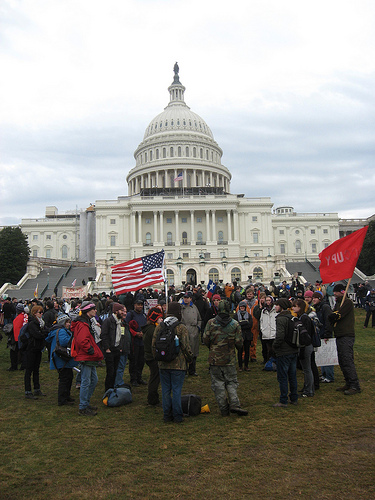
OccupyCongress17JAN2012FlickrJBrazito.jpgThe hallowed halls of a once respected US government are now filled with the hollow promises of an impotent governing class. In a political landscape riddled with indecision, political pageantry and growing despotism, the people are hungry for a leadership that represents them. Instead, we are faced with a corporatocracy – one hellbent on the consolidation of wealth and power rather than the proliferation of freedom and justice.
Believe it or not, there was a time when representative government worked on behalf of the people, but those days have long succumbed to the political distortions of misguided leaders. Thus, the age old questions remain: If it is possible to revitalize the self-governing power potential of the ‘We the People’, then what might be a viable alternative or how might we augment the current system to provide the infrastructure for a change of guard? Perhaps by looking to the revolutionary ideas of the internet and the co-creative force of its users and developers we can begin to find the answers.

One of the groundbreaking ideas that the internet has provided is that of open-source development, which promotes the universal access to a product’s design as well as redistribution of that design. This developmental model set by programmers and software developers exemplifies the highest order of free trade, and serves to utilize the best ideas for the overall benefit of the system. If we are to apply a similar model as the framework for government, we begin to see parallels between open-source programming and the ideas put forth by America’s founding fathers.

Unfortunately, the fundamental ideology of the US political system has been absent from view for quite some time. The growing disconnect between the people and their representatives has led to a lag in public representation, thus resulting in a severe lack of people’s interests and ideas being properly expressed by US legislation.

A recent example of this contrast is illustrated in the debate over the legalization of marijuana, where an overwhelming public support for legalization has not been echoed by the government, nor the legislation regarding the issue. However, the ‘War on Drugs’ is only one of many examples which illustrates the delay we are experiencing in our current democratic process.

In a world where efficiency and speed are essential to human progress, it’s unfortunate that our legislative powers have become cumbersome and inefficient. However, the internet’s crowd-sourcing concept could provide us with the possibility to facilitate some level of autonomy, where the average individual has the ability to exercise their right to self-representation.

The idea of crowd-sourcing was first referenced by Jeff Howe of Wired magazine, and can be best understood as the purposeful re-appropriation of resources for achieving a particular goal by an indeterminate group of individuals. Much like open-source programming which relies upon a multitude of contributors, so too does crowd-sourcing rely upon the involvement and contributions of the collective.

There are many examples of crowd-sourcing being used throughout the internet today.  Chemists have crowd-sourced protein folding techniques, YouTube has done so with entertainment, Facebook with different language versions of it’s site, while politicians and artists alike have crowd-sourced funding for their campaigns and projects. If this is a successful tool for science, entertainment and finance, couldn’t it also be possible to apply crowd-sourcing to politics?

Endless possibilities could present themselves once we focus the “spare processing power of millions of human brains” towards the evolution of political representation. For example, a truly participatory system could unfold which no longer relies upon single individuals to represent the will of many, but instead allows all people to become micro-leaders in a process of collective representation. Although this idea may seem farfetched, it’s not far from the framework that helped to build this country’s political ideology.

The founding fathers believed that public office should be held by its citizens, to act as contributors as well as beneficiaries in an effort to provide society with a fair and just governing body. As we continue to evolve socially and intellectually, it’s the hope that our leadership would incorporate the enlightened ideas of the past as well as those that propel us into the future. If they don’t, ‘We the People’ can and will find ways to represent ourselves through active participation in the political process.

As more and more people wake up to the corruption of the current system and the lack of political reflection on a federal level, passive acceptance of oligarchical rule will end, soon to be replaced by an active contribution in the political progress of this country, and ultimately, the world.

Written by Justin Blush for Media Roots

Photo by FlickrJBrazito

US Empire vs Venezuela: Opposing Democracy Once Again

venezuelaVirtually alone among world nations, the United States has refused to recognize the election of Nicolas Maduro as president of Venezuela. Unfortunately, this activity has become the norm in international affairs: the U.S. stands alone like the schoolyard bully, or nearly isolated with Israel, Saudia Arabia and Great Britain.
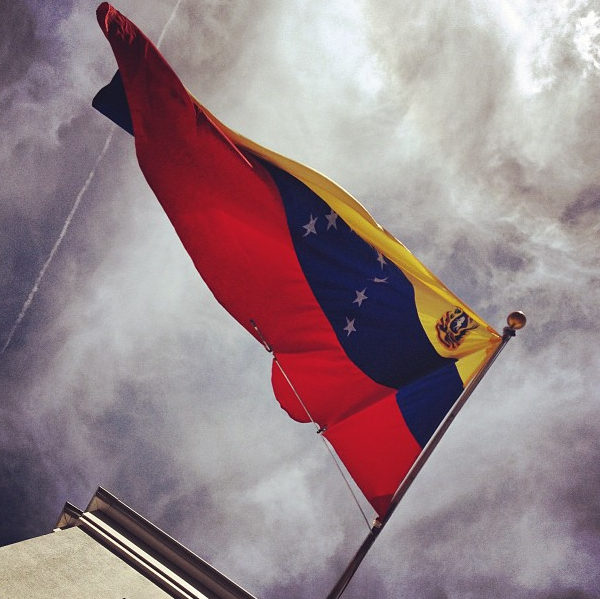
The people of Venezuela remember all too well that the American government instigated a coup that temporarily deposed the late Hugo Chavez, Maduro’s predecessor, in 2002. In the eleven years since, Washington has continued to fund opponents of the revolution and foment strikes, demonstrations and general unrest. In recent months, Venezuela expelled three U.S. diplomats who were working with opposition forces to undermine Maduro’s presidency.

Venezuela is justified to fear that this interference might escalate. Profits of investors are preeminent and any person or movement seeking to take control of resources for the popular good is branded an enemy and treated as such. The following examples are just the tip of the imperial iceberg:

Iran, 1953: The CIA helped overthrow the popular anti-monarchist Mohammad Mossadegh, largely because he nationalized Iran’s vast oil resources, and replaced him with the Shah. Oil reserves were returned to Western control and 26 years of despotic rule followed.

Guatemala, 1954: The U.S. overthrew the democratically elected Jacobo Arbenz and soon turned Guatemala into killing fields. Earlier this year, former dictator Efrain Rios Montt was convicted of genocide by a Guatemalan court. Those in the U.S. who made the killing possible and profited most from it, however, remain at large.

Vietnam, 1950’s: After the Geneva accords of 1954 set up elections to unify Vietnam, the U.S. spent the ensuing years making sure no elections were held, knowing Ho Chi Minh would win in a landslide. Twenty years later, after American forces had killed four million people and destroyed three countries, the Vietnamese drove the U.S. out anyway.

Congo, 1961: Three months after Patrice Lumumba became the first democratically elected Prime Minister of the newly-independent Congo, the U.S. helped overthrow his government (he was executed by his captors several months later). Soon thereafter began the murderous reign of Mobutu Sese Soku, who also embezzled billions of dollars, much of it “aid” from U.S. taxpayers, though successive American presidents were happy to look the other way because he ensured Western business elites easy access to the Congo’s vast resources.

Brazil, 1964: Reformer Joao Goulart had been president for three years when the military, with U.S. support, overthrew his government. Fifteen years of despotic rule followed, as all traces of democracy vanished amidst an orgy of torture and killing.

Indonesia, 1965: One of the bloodiest episodes in recent history began with a Washington backed and armed coup that resulted in the killing of approximately one million peasants and the installation of the dictator Suharto. Ten years later, Suharto invaded East Timor, again with crucial U.S. support (and weapons) and wiped out 30% of the Timorese population.

Dominican Republic, 1965: Shortly after the CIA assassinated long-time dictator and American puppet Rafael Trujillo because his act had gotten too extreme, Juan Bosch became president in the nation’s first free election in 38 years. Five months later, U.S. backed generals ousted Bosch, and a groundswell of popular support for his reinstatement was snuffed out by a U.S. invasion. Another Washington puppet, Joaquin Balaguer, became president in a fraudulent election that took place with 40,000 American soldiers occupying the tiny nation and participating in the murder of Bosch supporters.

Chile, 1973: Much as it has done in Venezuela in recent years, the U.S. began funding oppositionists and fomenting strife as soon as Salvador Allende was elected president in 1970. With additional help from the U.S., the Chilean military overthrew and murdered Allende in 1973 and the long reign of fascist Augusto Pinochet began.

Haiti, 1990-2004: In a country that suffered one agony after another under U.S. playmates Papa Doc and Baby Doc Duvalier, a popular upsurge led by the Lavalas party swept Jean Bertrand Aristide into office in 1990. A coup three years later by generals close to drug cartels begat brutal repression until Washington allowed Aristide to return on the condition he implement harsh austerity measures. When he chose instead to push the widely supported program of Lavalas, the Clinton administration whisked Aristide out of the country at gunpoint. Haiti has been ruled by heirs of the Duvalier tradition since.

One dramatic change in the last 50 years is the consistent opposition of the American public to such interventions. This was perhaps best illustrated in the 1980’s when U.S. solidarity movements undoubtedly prevented greater bloodshed in South Africa, El Salvador, Nicaragua and possibly other places. One striking feature were the thousands who travelled to work alongside Nicaraguan peasants as well as to serve as a human shield, knowing the U.S. backed contras were less likely to murder Americans. The intelligentsia here, if it ever reported this remarkable phenomenon, surely prefers to forget; people in Nicaragua and the rest of Latin America, not to mention the Washington planners of contra terror, most definitely have not.

Nicolas Maduro is not the issue. Hugo Chavez was never the issue and none of the individuals mentioned above were ever the issue. What was, and is, the issue is the effort of a galvanized populace to wrest control of their economic life from U.S. investors and the local stooges who do their dirty work. That is something the Super Rich here cannot abide, and all preventive measures are on the table, including war, unspeakable atrocities, even genocide.

By remaining ever vigilant and supporting those throughout the hemisphere (indeed, the world) who work to create a new day, we can perhaps block further U.S. interference in Venezuela, not to mention Colombia, Bolivia, Mexico, Honduras and oh so many other places.

Andy Piascik is a long-time activist and award-winning author who has written for Z Magazine, The Indypendent, Counterpunch and many other publications and websites. He can be reached at [email protected].

All the Unfit News

On 15 October 2013, the New York Times featured an op-ed piece from the Israeli Minister of Intelligence entitled ‘How Palestinian Hate Prevents Peace.’ Publishing such disinformation harms the New York Times’ readership, since the Intelligence Minster deliberately omits historical context and social realities from his commentary.

Rudimentary knowledge of recent history shreds the Intelligence Minister’s pablum. To begin with, Zionism and Judaism are completely different. Zionism is a fabricated ideology of aggression, which was created in the late 1800s, whose implementation colonizes much of the Eastern Mediterranean. Judaism, on the other hand, is a religion of peace.

With this fresh breath of history, one is now able to properly assess the following assertions from the Israeli Intelligence Minister:

“The Palestinian Authority’s television and radio stations, public schools, summer camps, children’s magazines and Web sites are being used to drive home four core messages. First, that the existence of a Jewish state (regardless of its borders) is illegitimate because there is no Jewish people and no Jewish history in this piece of land. Second, that Jews and Zionists are horrible creatures that corrupt those in their vicinity. Third, that Palestinians must continue to struggle until the inevitable replacement of Israel by an Arab-Palestinian state. And fourth, that all forms of resistance are honorable and valid, even if some forms of violence are not always expedient.”

When spreading the above decontextualized inaccuracies, the Intelligence Minister has resorted to a revolting trick: deliberately conflating Judaism and Zionism in order to garner support from U.S. readership. In reality, Palestinian grievances are aimed specifically against Zionist oppressors, not against Judaism, Jews, or any specific religion. There is nothing anti-Semitic about self-determination or about wanting to live free from military occupation. Calling criticism of Israel “anti-Semitic” demeans Jews everywhere and dilutes shared histories worldwide.

The Minister also fails to mention that it is the obligation of the occupying power, Israel, to care for the women, men and children under military occupation. This includes refraining from forcibly transferring the people it occupies and refraining from collectively punishing those under its control. Yet Israel does both on a daily basis, often through ceaseless colonialism. Israel’s other violations of international law are not featured in the Minister’s New York Times opinion piece.

The Israeli Intelligence Minister takes issue with Mahmoud Abbas attending a presentation of an Egyptian poet and various other acts of “incitement” against the “Jewish state and the Jewish people.” Again, Palestinian grievances have nothing to do with Judaism. This grand misdirection distracts from the core issue: Palestinians are fighting an anti-colonial struggle against undemocratic, racist ethno-religious ideology.

The Minister alleges Palestinian media reminds “viewers that Palestine extends ‘from Eilat to Rosh Hanikra’ — that is, not just the West Bank and Gaza Strip, but the entire land of Israel.” The Minister deliberately omits his support for colonizing “Judea and Samaria,” otherwise known as the West Bank. Fetid hypocrisy at its finest.

The Minister cites two gestures of Israeli goodwill, which he defines as “a courageous attempt to build trust and improve the atmosphere surrounding the negotiations”:  a) Israel’s “anguished decision on July 28 to release over 100 convicted terrorists” b) efforts to help the Palestinian economy.

These “terrorists” were convicted in the court of Zionist colonialism, which detains indefinitely, punishes arbitrarily, and prioritizes ethno-religious supremacy for colonial purposes. This is hardly a fair arbiter, Minister. As you know, the word “terrorist” is often used by those in power against those who resist imperial agendas.

By “Israeli efforts to help the Palestinian economy,” one may presume the Intelligence Minister is referring to this recent U.S. plan, a Band-Aid on gaping colonial sores. In other news, ending military occupation and settler colonialism, and allowing for commercial self-determination has a chance to positively affect the Palestinian economy over the long-term. The Minister has removed this option from the table.

He chimes in reminding us, “Palestinian leaders must now reciprocate by immediately and fully halting their encouragement and sponsorship of hatred.” Duly noted, sir. Fait accompli. He then threatens reconciliation, stating “Israelis will become more skeptical about the peace process and we in the Israeli government will have greater difficulty taking the additional confidence-building steps that we have been considering,” unless “Palestinian leaders” stop inciting hatred.

The Israeli Intelligence Minister, who also works as Minister of Strategic Affairs, knows exactly what he’s doing. In a strategic capacity, he’s trying to milk the Palestinian Authority of any remaining vestiges of anti-colonialism. In doing so, he finesses the PA into facilitating the final stages of a colonial agenda: mandatory silence as Judea and Samaria are gradually wrested into Zionist control. Meanwhile, resistance is deemed hatred – a classic imperial ruse.

Christian Sorensen for Media Roots

Midway Albatross, Casualties of a Plastic Genocide

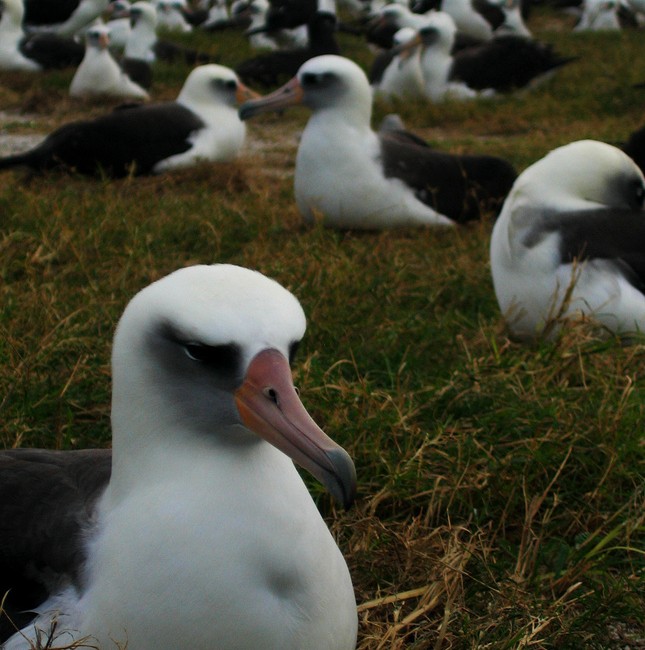
BirdAlbatrossSurrounded by thousands of miles of Pacific Ocean, the majestic Laysan Albatross birds nest on islands forming the Midway Atoll, located at the northwest point of the Hawaiian Archipelago. This unique wildlife refuge is home to 71% of the world’s Laysan Albatross population and therefore is critical to their survival. 

On Midway island, albatross live a delicate life. They typically mate and nest for the first time between the ages of five and eight. Each time they do, they hatch a solitary chick that requires constant care from both parents to stay alive.

Sadly, the deadly consequences of human overconsumption have turned the once densely albatross populated region into a mass graveyard. Like many fragile ecosystems on earth, plastic pollution in the ocean has greatly hindered this species’ survival.

One of the primary sources of albatross food is flying fish eggs, which lay in strings that attach to floating plastic in the ocean. Due to this consumption, it’s estimated that 98% of all Laysan albatrosses have varying degrees of plastic in their digestive systems.  Every year, four out of ten albatross chicks die from a variety of deadly health conditions including starvation, dehydration and obstructions of their digestive systems – all as a result of plastic ingestion. These regal seafaring birds are helpless victims, dying by the thousands every year as a result of this toxic pollution.

To get a sense of the magnitude of this tragic phenomenon, check out photographer Chris Jordan’s stunning report on the plight of Midway albatross:

***

To even begin to take on this problem we must first be willing to understand the degree of damage plastic pollution does. This non-biodegradable substance makes up 90% of ocean debris, and comes in a multitude of forms including medical garbage, bottles, bags, toys, bottles caps and plastic micro particles. 20% of this waste comes from private and commercial ships, fishing equipment, oil platforms and spillage from shipping containers, while the remaining 80% originates on land.

Thousands of tons of plastic ends up in streams, rivers and reservoirs. Eventually, it finds its way to the oceans resulting in plastic flotillas piloted by ocean winds and currents. The remainder will either sink to the bottom of the ocean floor or end up in an ocean gyre, a vortex where the debris becomes trapped. So far, one of the biggest areas of accumulated garbage is in the Pacific Ocean, also known as the ‘Great Pacific Garbage Patch’ although there are five major ‘garbage patches’ in our oceans today.

The Laysan Albatross is certainly not the only marine species endangered as a result of human pollution, but it is one of the most uniquely affected by it. Obviously we as individuals don’t have the resources to clean up the oceans. But we can become active citizens by promoting a healthy and sustainable lifestyle, while demanding that policy makers and corporations mandate the same through their laws and products.

We can commit to purchasing reusable grocery bags, reusable water bottles, eliminating styrofoam and non biodegradable storage containers from our lives as well as support politicians and local legislation that enforces environmental protections. We may not be able to undo the damage we’ve already caused to our oceans, but with commitment and dedication to a cleaner planet we can make sure we do not cause further, irreversible destruction.

As a global community, we must learn to share the planet with all species to sustain ourselves and future generations. We can make a difference, for the albatross and for all the wondrous creatures that inhabit our planet. In fact, our survival depends on it. As Jacques-Yves Cousteau once said: “For most of history, man has had to fight nature to survive; in this century he is beginning to realize that in order to survive he must protect it.”

If you would like to learn more about Midway Laysan Albatrosses and show your support, please check in and follow Wisdom on her facebook page.  Wisdom is the oldest known Laysan Albatross, first banded in 1956 when she was estimated to be 5 years. Wisdom turned 62 this year and once again nested and raised a chick, Wonder, in February. 2013.

Written by Tommie Jones, edited by Abby, Sue Martin, Photo by USFWS Headquarters

Page 8 of 16<<...678910...>>