
MR Original – Some Better This World Through Film

MEDIA ROOTS – The ability to combine audio and visuals to tell a compelling narrative makes documentary films a powerful means of storytelling. They are education through entertainment and, at their best, a persuasive and motivating push to action. It is no surprise that the Bay Area, teeming with political and artistic thought, is a documentary film capitol of the world. As an aspiring documentarian, encouraged by the learning potential from this rich network, I began seeking out insight from local filmmakers.
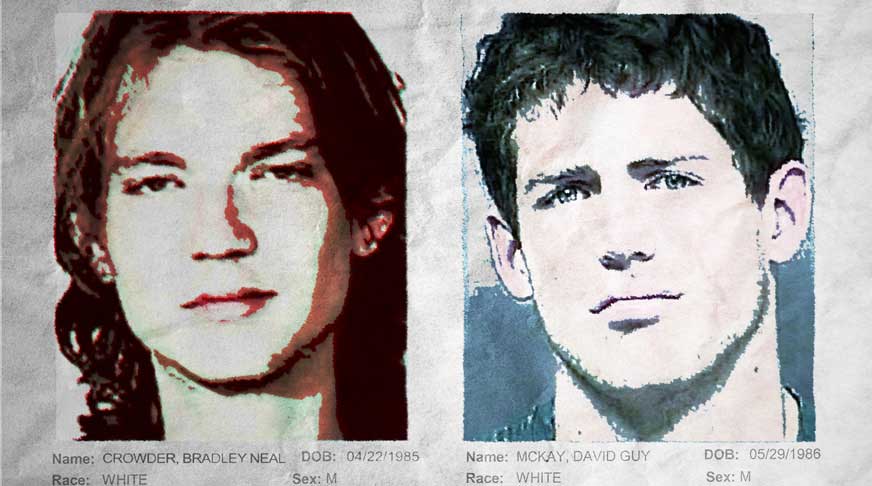
Following a tip from a friend, I came across Better This World – a film in post-production about two young men from Midland, Texas who face multiple domestic terrorism charges after manufacturing Molotov cocktails, or petrol bombs, at the 2008 Republican National Convention. What drew me into the story, and the filmmakers themselves, was the government’s star witness in the case – a controversial and unsuspected FBI informant.

Many of the stories behind the ‘foiled’ terrorist plots of the past few years share in common the trend of an undercover paid FBI informant that often times held a facilitating role in the group– a detail that frequently goes missing from mainstream media reports. (You can find more information on a few of these cases here, here and here.) Knowing this, I became eager to speak with the filmmakers who are taking on such an important and overlooked story.

Loteria Films, the local non-profit production company behind the film, is run by two women, Kelly Duane de la Vega and Katie Galloway. Kelly’s background in still photography and photojournalism, and Katie’s, in radio and print journalism, drew both women to film for what it could accomplish by blending these mediums.

When we met, Kelly recounted the restriction she felt in conveying people’s amazing personal stories as a photographer. “I think there are photographers whose photographs blow my mind, even more than a story. But I wasn’t feeling that about mine. I became so hungry for people to know the story. I knew there was another step.“

For Katie, filmmaking was a natural progression out of her love for working with audio and the depth and intimacy it brought to storytelling. While working at Frontline with documentarian, Ofra Bikel, Katie wrote and produced stories on criminal justice – a theme she also passionately explored for Pacifica Radio through coverage of the prison system and its excesses.

It was a blurb that Katie found in the Federal Court section of the New York Times that set the two women in pursuit of their first film together. Katie believed the story of two young men facing terrorism charges against the word of an FBI informant was a “really sexy, boiled down way into a story that is my life work so far – examining the criminal justice system and the problems with it.”

The trial was starting a week later, leaving not a moment for second-guessing.

“You say ‘I’m never going to do this on my credit card again. I’m never going to just start spending my own money again.’ But no one is going to give you money in a week’s turn around,” Katie explained with a smile reflecting love for the thrill and risk of chasing a good story. “It’s a gamble, its like going to Vegas.”

Better This World presents tough questions about the balance between liberty and safety in the face of post 9/11 domestic security. “The common thread in many of these [foiled terrorism] cases is some sort of political aspiration and an informant or a government agent who they hook up with and spend a lot of time with, and then at other end, the terrorism case. The question is what happened? Was it entrapment?” Katie went on to ask, “What happens when you have so many resources going into the domestic security apparatus and not necessarily enough terrorists to go around?”

“In the FBI they call it ‘aspirational and not necessarily operational’,” she added.

In a recent interview by Reuters, filmmaker and award winning journalist, John Pilger described a mindset of reporters that says, “only authority can really determine the ‘truth on the news’,” and which leads to a dangerous form of embedding in government and official versions of events.  “Authority has its place, but the skepticism about authority must be ingrained in people,” he said.

And so it seems to be among documentarians.

It is the often skeptical and critical voice of documentary film that has shaped its long and growing legacy of critiquing the status quo while motivating people to educate themselves and take action.

Filmmakers do not face the same time constraints that can lead print and broadcast journalists to regurgitate the press releases handed to them by government, military and business leaders. Instead, they use a richly layered medium to tell the deeper story that hasn’t been told before, or to tell it differently. “Otherwise, what’s the point?” asked Katie.

Kelly pointed to the lack of a concrete power structure, or system, for documentaries to pander to.  “There isn’t a central authority figure in documentary filmmaking. There isn’t a central voice. There isn’t an outlet that is determining what we get to see and don’t get to see – except for PBS and HBO and A&E, but there are ways to get your film out if you are not in those venues.

In some ways it is a much more democratic universe than mainstream journalism. We’re already so far out of the system in some ways.”

One consequence of being outside of the ‘system’ is the struggle of fundraising. As an educational nonprofit, Loteria Films can apply for grants. It has been fortunate for the support it has received so far – the Independent Television Service, the biggest grant maker nationally for documentary films, is funding Loteria’s current project but only funds 1-2% of projects that come in its door.

“When you look at all the labor and heart and soul and money that goes into independent projects and the struggle…” Katie reflected.

“We went a year and a half with very little funding. You know, begging, borrowing and stealing. That’s really the life of an independent unless you’ve made it and have money coming in regularly for projects. We’re not there yet. We’ve been really lucky raising money through grants and so forth.”

But, funding is only part of the equation. Kelly attributes the success of the partnership to their base of trust and respect, calling it the “bedrock” of their collaboration.

“When the other person is talking you know that you respect the way they think as a creative person and as a story teller. So, if they are challenging your idea it is something you have to listen to because it very well might be right. When you and your partner are both able to do that for one another it deepens your respect and base trust.”

Comparing the partnership positively to a marriage Kelly added, “It’s a long intimate journey. Its pretty damn intense – you are really committing so much to each other.”

When I asked what advice the activist filmmakers had for aspiring documentarians, Kelly’s words resonated with my pull to the medium.

“I feel like there are certain people who don’t have a choice in life, who just are going to do something creative whether it makes good sense or not…I think you have to have something inside of you that is somewhat predetermining your fate, that is driving you, that is making you choose something that is difficult. You can’t be materialistic. You have to be the kind of person that gets pride from the good their work does, or the quality and pleasure of their work.”

Just as Katie had, Kelly was sure not to gloss over the financial struggles that, more often than not, accompany the production of an independent film, while highlighting that flexibility is key in overcoming those challenges.

“Sometimes you might have to take a commercial job and that sucks because it might not be at the core of where your values are. But unless you are from a financial situation where you aren’t forced to have that choice I think you have to be okay with that – moving in and out of those worlds to tell a bigger, larger more important story. You have to figure out how to keep yourself viable so you can raise the seed money to do the thing that matters.

You just have to go for it and at the end of the journey you know whether you can do it again. Whether it was great or if it was too hard.”


Better This World
will be premiering at SXSW in March. Stay tuned to Loteria Films for an upcoming trailer of the film.


Article by alicia roldán, editor for Media Roots

Image © Copyright of Loteria Films

Posted in Uncategorized | 1 Reply

MR Original – Let’s Talk Facebook.

MEDIA ROOTS – You there.  Let’s talk Facebook.

Had I not deactivated my Facebook account just last week I would soon celebrate 26 years as a human, a full 7 of which FB would have been a part of.  More than one-quarter of my earthly life. 

In the beginning I held out as long as I could, until the pressure of being the only kid in college without an account eventually drilled through my defenses.  At first it was not all bad.  Heck, I used it to meet a girl at my school whom I otherwise would have never known, and we fell ridiculously in love.  Amazingly, disgustingly in love.  She eventually left me for another young stud and moved to the east coast.  Life! But I digress.

I quit Facebook.  If you’ve ever clicked the “deactivate account” button, the ensuing screen guilt-trips you with photos of your friends who “will miss you” if you leave.  Then you are instructed to explain why are pulling the plug and, if you make it THAT far, Facebook insinuates that you are weak of character by keeping your old email and password information warm for you, should you decide to come crawling back.  As if we can’t function without it.

I’m here to tell you that you life goes on.  Only after letting go do you realize your individual level of dependency.  One thing I’ve asked myself in my newfound post-FB world is ‘how did being a part of this for so many years make me a stronger, better person?’

Suppose I spent just 10 minutes a day on Facebook every single day for 7 years, or 2,555 days. This comes out to something like 425 hours.  425 hours is more than 17 full days.  17 full days spent on the computer posting photos, poking people, and sending messages.  

Did I make a difference in my community in those 17 days? No.  Did I make a new best friend? No.  Did I find out something that changed my life? No.  Did I learn a valuable new skill? No.  

So, why…?

Facebook is an escape to a land of safety and relative predictability but it doesn’t really matter because everybody looks good and sometimes they entertain you.  It’s reality TV with your Facebook friends as the actors.  I knew when I logged on I could expect Jen to post yet another video of her dog, Brian to rant about the Chargers and their losing ways, and Terrance to complain about college.  My friends played their parts with no major deviation from the script.  And it was this total absence of anything vaguely resembling the exchange of critical, analytical thinking that wore me down.    

The news feed makes the absolute vast majority of my friends appear one-dimensional, self-absorbed, and shallow.  My buddy Terrance is actually a deep thinker, but he doesn’t share that side of himself on Facebook (after all, what is the incentive?). Thus, I am deprived of the true essence of his person on a daily basis. I have surrounded myself with a world of make-believe and dehumanization by extending this behavioral phenomenon to the hundreds of my other intelligent, capable friends and acquaintances who post junk on the news feed. 

Look, if Facebook works for you, stick with it.  Maybe you know how to fully harness its potential to enrich your life. But do understand that you can never be 1,000,000% certain that your privacy is secure online.  And try spending as much time on Facebook as you do actually picking up the phone and calling the people you care about or, better yet, seeing them in person.  There will never be a substitution for the real experiences in life.                         
            
Writing by Jerry Miller

Photograph by Rick Pickett   

Posted in Uncategorized | 1 Reply

MR Original – Marriage: Find Your Own Meaning

MEDIA ROOTS- When my fiancé proposed two years ago, it took until the euphoria of the engagement had passed to realize that I had never fully developed my own thoughts about marriage.
As many people do, I accepted marriage as if it were as fundamental to life’s trajectory as birth or death- without ever really questioning if, or why, I wanted it.

Realizing that I had never critically examined the meaning of entering into a lifelong monogamous commitment to someone, I set out to discover what it means for my fiancé and I. What resulted was a personal journey that I had not seen coming.      

Raised in the era of booming divorce rates, I know plenty of people who say they will never marry. Some believe that true love is a farce or that monogamous dedication to one person for eternity is a recipe for a life built on lies and fading happiness. But as a deeply passionate romantic myself, I always believed in being swept off my feet into an all-absorbing vortex of everlasting, heart-racing love. What I did not initially understand is that my view of marriage was on the opposite end of the same simplified spectrum as those who reject it. Both perceptions are fed by cultural stereotypes – one of a fated fairy-tale love, and the other of a bachelor’s freedom lost to a ball and chain. 

The significance of an eternal union and the commitment it entails are simplified through and through in our society, crafting expectations that can be destructive to the relationship and family. The media, in the form of television, movies and tabloids, sensationalizes relationships to provide the most possible drama, ultimately painting black and white over the dynamics of marriage and reinforcing one extreme over the other – either a tumultuous love broken, or a star-crossed love sustained.  In family and religious contexts marriage is often portrayed as an end to abstinence, the fulfillment of a cultural expectation, or the means to a healthy family.   

Rarely is it explained to people growing up that marriage is different for everyone. Perhaps such a conversation seems like stating the obvious because, of course, marital outcomes are different. Yet marriage is often regarded as something that couples succeed or fail at, as if the factors and dynamics are the same for every pair. Also, rarely is it explained that this eternal and legal union serves different purposes and meanings for different people. The consequence of simplifying something that can take various forms is that people with different expectations and understandings of what marriage is, commit to it without consideration of what it means in very real, personal and practical terms.   


My fiancé is an exceptional person who embodies everything I want and need. There was never a doubt that the connection we share is unique and our ability to communicate and be real with each other, enviable. Yet, I was unclear about what it personally meant to marry someone. We had planned for a long engagement and in that time my relentlessly critical and questioning mind went to work diving into thoughts I had never before considered.  What would that kind of commitment be like for us, and how would we maintain it despite the challenges that repeatedly arise in life and relationships? How do we keep our relationship that we encounter every day from growing old? Is it possible to stay in sync with another person forever? The answers revealed themselves clearly over time; however, a couple trains of thought gave me considerable pause.

Naturally, I spent significant time contemplating monogamy. As animals, monogamy strikes me as unnatural. Marriage is a life path created by culture, not nature. This was an important realization in my process because I could not justify marriage as the natural progression of a relationship in love. I had to dig deeper to powerfully strengthen my personal understanding of marriage.       

Part of that process entailed figuring out if, and why, I want to be a part of a unit for the rest of my life. Did I still want time to grow on my own and apart from another? When was the last time that I got to just focus on myself? Months of introspection revealed that my doubt was not a matter of commitment to my fiancé. It centered on our timing and what it meant for my independence as a young person in my early twenties. It hit me, that in a culture bent on rugged individualism and every-man-for-himself independence, how important other people are for our growth is left heavily under-emphasized. Instead of recognizing the powerful impetus for growth that a relationship provides, I had questioned if I would be weak for not spending an extended period of my life with only myself to depend on.

Then I remembered a quote that had strongly resonated with me. It is a quote that speaks to something that I hear so little of in discussions about marriage- the opportunity that an eternal union provides for spiritual growth through introspection and self-betterment.

“In former times, if people wanted to explore the deeper mysteries of life, they would often enter a monastery or hermitage far away from conventional family ties. For many of us today, however, intimate relationship has become the new wilderness that brings us face to face with our gods and demons. It is calling on us to free ourselves from old habits and blind spots, to develop a full range of our powers, sensitivities and depths as human beings- right in the middle of every day life.” (John Welwood, Love and Awakening, 1996)

Rediscovering this passage landed me in the certainty and personal truth I had been seeking. I discovered that for us, marriage is a journey and the love that led my fiancé and I to this life-long commitment is what will shape and evolve us.

I learned that giving your full love and true commitment to one person is one of the most incredible and challenging adventures a human can embark on. How two partners move through changes together, and independently, continually shapes the possibilities and mood of their shared future. We reveal sides of ourselves to our long term partners that few, if any, ever see. As a result we are forced to deal head on with the consequences, good and bad, of who we are – our behavior and actions.

It becomes impossible to deny that the way we live and the energy we emit are inextricably linked to the feelings and well being of others, especially those who we share in love with. A union that is sustained by happiness and deep fulfillment requires that we are loving to ourselves yet firm in the understanding that we each make mistakes and feel a need to be heard and respected.      

A lifelong commitment of love is not easy because love alone is not enough. It takes bravery to fully expose yourself to, and to fully receive, someone. It takes courage and compassion to admit the ‘demons’ inherent in all of us and to take on the challenge of transcending those weaknesses. But the beauty of this challenge is that it is made possible through love. Love does not trap or imprison people. Love, free of the selfish ego, liberates us from our pain, our ‘old habits and blind spots’ by giving us the space to discover and grow while also illuminating the beauty in life that allows life to continue and flourish. When you can feel that you are fully loved and accepted for all the positive and negative that you are, it becomes easier to let go of the ego that holds you back from bettering yourself as well as the community.                     

It struck me that perhaps so many marriages end in divorce because it is an institution that people take for granted- many people do not create their own meaning and understanding of marriage and instead base their expectations on the experiences of others. Just as no two people are the same, no two relationships are identical. What is created when two people come together is something built and shaped over time. No relationship just spontaneously flourishes, or combusts – relationships become what their parts create.

This means that each relationship has the potential to be only what the people in it are willing to make it through dedication, focused attention and effort. A happy union requires a shared willingness to compromise and grow; an ability to admit when we are wrong and the willingness to critically reflect on, and take responsibility for, ourselves. We must be humble, generous and compassionate, always remembering the love that is shared and its true intention. As I often tell my fiancé, “We are on the same team. We can’t forget that.”            

If two people who truly, selflessly love each other can embark on the journey of a committed life together, I believe the reward is the most fulfilling, deeply felt and eternally lasting partnership. Yet, whether or not a partnership enters into marriage should be something determined by the pair alone, for reasons of their very own. For my fiancé and I, marriage is the path we will take, making it our eternal promise to always fully love and support each other in the life we share, constantly striving to understand and love one another more deeply and completely so that we may emanate love’s peace and goodness into the world around us. 

Written by alicia, editor for Media Roots

Photo by Brenna Finn

War and Peace at Santa Rosa Junior College

MEDIA ROOTS- Taxpayers in Sonoma County will pay $2 billion for war spending in Iraq and Afghanistan since 2001, according to the National Priorities Project. Combine those figures with the loss of more than 5,500 American soldiers and countless others abroad, and a line of questioning is likely to arise. For one SRJC political science professor, two questions are necessary and quite simple: Why did the United States invade Afghanistan, and why is the U.S. likely to remain mired there?

“The answer to the second question, in my view… is because some U.S interests cannot be served without a long-term commitment, and Afghanistan is a place where the circumstances, history and culture may render U.S. goals unachievable in the near term, if ever,” Geri Gorski said during a Sept. 16th War and Peace Forum.

The forum was titled “Iraq & Afghanistan: War Without End or Possibilities for an Enduring Peace,” and was held at the Doyle Library and sponsored by SRJC’s Arts and Lectures Committee. In an effort to educate, inform and develop a critical dialogue about foreign conflicts, faculty members from the the Social Science, Behavioral Sciences and Philosophy departments came together for an event reminiscent of the 1960s era teach-ins.

“This event today draws upon a tradition in American society that goes back to the Vietnam War, and that is so-called teach-ins; where faculty, students and staff came together to educate themselves about the Vietnam War,” Professor Martin Bennett told a standing room only crowd. “Why did this occur? It occurred because of the so-called ‘credibility gap’: the difference between what the government said our reason for being involved, what the government said we were accomplishing and the reality which was, over time, very different. And these teach-ins played a vital role in educating students and faculty, and over time moving them to action.”

Moving away from Iraq, both speakers spent most of their time discussing Afghanistan and the implications of U.S. involvement in the region. “I focus essentially on Afghanistan for a couple of reasons. One is I think that it’s the area that holds the most promise in terms of political discussion at this point. Frankly, I think the Obama Administration has been rather successful in diffusing some of the political response to Iraq by putting a timetable of withdrawal in place,” Gorski said. Speaking firmly and adamantly, he hurriedly covered the complex history of the war-torn nation and expressed his frustration with being short on time.

Picking up where Gorski left off, Bennett explored the reasons behind the Obama Administration’s escalation of the war; noting U.S. interest in controlling the region’s oil and energy resources, as well as what he referred to as the “permanent government” or National Security State. He also pointed out both the similarities and differences between the Afghanistan War and Vietnam War. “I think you can also say that both presidents conducted a very vigorous internal debate prior to escalation. I tend to be of the mind that, in both instances, the outcomes were relatively pre-determined. I had talked about the permanent government and not only did they inherit the wars, but I think they inherited the permanent government and the options were relatively narrow.”

Ending on a positive note, Bennett expressed his enthusiasm for hosting a similar event each semester and encouraged other faculty to come forward to help achieve that goal. Additionally, both Gorski and Bennett encouraged audience members to become engaged and take action by any means possible, noting the success of the antiwar movement in the 1960s. They also took questions from a devoted but seemingly overwhelmed audience and urged anyone with concerns to voice their opinion. Among others, an Afghanistan veteran chose to do so and took the opportunity to relate the discussion to his personal experience as a soldier.

Written by Art Dickinson

Posted in Uncategorized | 1 Reply

MR Original – The War On Paranoid Rhetoric

MEDIA ROOTS- Recently, I remembered a little known video by physicist and 9/11 researcher David Chandler, tackling the statistics on the ongoing “War on Terror”. Here it is. I borrowed the title from a salty comment by David in his own Youtube thread.


On 9/11, according to the official death toll, 2,976 victims and 19 hijackers died. Since then, we have been engaged in the “Global War on Terror”, colloquially known as the GWOT. This war, as Dick Cheney, the ‘Sith Lord’ without a beating heart warned us, won’t end in our lifetime, or at the very least, may take decades. Initially, in the aftermath of 9/11, there was a worldwide outpouring of support and solidarity for the U.S., as French and Italian newspapers proclaimed: “We are all Americans” and Vladimir Putin said, in a televized address: “Russia knows directly what terrorism means, and because of this we, more than anyone, understand the feelings of the American people. In the name of Russia, I want to say to the American people — we are with you.”

A week later, the anthrax attacks followed, further terrorizing Americans who had already been traumatized. At times it felt as if World War Three was imminent. NATO, in response to the 9/11 attacks, invoked article 5 for the first time in its 52-year-long history, in early October 2001. But who to put in the crosshairs of NATO’s vengeful military bravado? Then Secretary of Defense Donald Rumsfeld preferred Iraq, because he didn’t really think Afghanistan had any good targets to bomb. Ultimately, he’d get them both, leading us into the seemingly insurmountable mess the NATO partners are in today.

It didn’t end there though. Several incidents occurred that further motivated Europe to close ranks and line up behind U.S. anti-terrorism efforts. The train bombings in Madrid, in March 2004. The assassination of Dutch author, film maker and firebrand Theo van Gogh in Amsterdam, in November 2004. The London bombings of July 7, 2005, followed by another, failed attempt at a terrorist attack two weeks later. One year later, in July 2006, two suitcase bombs were discovered in trains in Germany. In the worldwide crossfire, as the Iraqi, Afghani and Palestinian death toll mounted, and the outrage over the Bush administration’s shameless Iraqi WMD lies climaxed, jihadis couldn’t have found a more fertile recruitment pool. Terrorism and a peculiar mix of counterterrorism and imperialism were now entangled in a vicious circle of reciprocity, and it was, and is, hard to determine which is a response to which.

Terrorist attacks in the United States and Europe have altered our societies. They have changed the way we travel, the way we conduct criminal trials, the way we think about our civil liberties. The Wolfowitz Doctrine’s emphasis on unilateralism evolved into the Bush Doctrine: waging preemptive war against nations that might pose a threat to our security, timid protestations from the UN notwithstanding.

We are constantly encouraged to be on the lookout for danger, report suspicious activities and watch for left luggage in airport terminals or bus stations. And if we don’t do it, creepy, fully automated camera surveillance systems will do it for us. In that sense, the Bush Doctrine has wormed its way into our everyday lives, and we frenetically look inward to foil plots before they happen, to detect radicalization in our friends and enemies, colleagues and neighbors. Radicalism, we are told, is a precursor of terrorist tendencies. Therefore, all radicals are potential terrorists.

Thought crime is no longer a taboo; Orwell rolls in his grave. It wasn’t the action, but the reaction in the form of totalitarian legislation that brought us here. We are told terrorists attack us because they hate our freedoms. The past decade tells a different story: terrorists may terrorize, but no entity hates our freedoms more than our own government, which is always in an excellent position to act upon its hatred. We are nurturing a culture of vigilantes and snitches. Politicians campaign on fear, and have pissing matches with their challengers about who is most ‘patriotic’ and best prepared to ‘protect’ the country.

In our ‘protection-addiction’, we unleash the full spectrum of counterterrorist measures not only on terrorists, but on ourselves. One example of security obsessed lunacy is the placement of children and even babies on so-called “no-fly” or other related watch lists. Bureaucracy or not, mistaken or not, it’s absurd. And if that wasn’t quite absurd enough for you, how about ‘terror babies’?

In the cacophony of news reports about thwarted terrorist attacks, and the spectacle of bellicose propaganda, we aren’t allowed a breath, we aren’t allowed a thought, not a whimper of protest against this juggernaut of self-defense overkill and the constant, compulsive, neurotic self-inspection. We are behaving like hypochondriacs. Increasingly, the otherwise distinctive line between terrorism and dissent, terrorism and crime, terrorism and immigration fades in the public’s mind.

The advent of the internet enabled citizens worldwide to interact and exchange news reports, dissenting opinion and historical context, bypassing the mainstream media filter. A filter that is said to separate the wheat from the chaff, but instead drowns out undesirable critical thought that goes beyond established ‘acceptable’ boundaries. The accepted, mainstream perceptions and historical chronology about the terrorist attacks that shaped our collective foreign policies are rarely accurate. This applies to the majority of citizens of NATO countries. I have yet to ask someone: “Who is currently thought to be responsible for the 2001 anthrax attacks?” and get the correct answer or anything other than a blank, mystified stare. I suggest you try it on the first gullible ignoramus who calls you a conspiracy nut. The legacy of the anthrax attacks: every time a malcontent sends an envelope of talcum powder to a government agency he has a dispute with, chaos ensues.

As a senior adviser to George W. Bush told Ron Suskind:

“We’re an empire now, and when we act, we create our own reality. And while you’re studying that reality — judiciously, as you will — we’ll act again, creating other new realities, which you can study too, and that’s how things will sort out. We’re history’s actors . . . and you, all of you, will be left to just study what we do.”

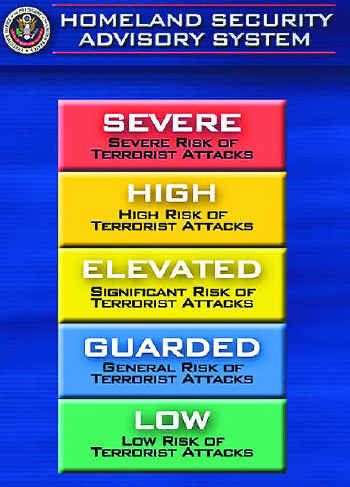
The ‘new realities’ of the GWOT have led to a new form of perpetual mass hysteria. ‘New realities’ involve, for example, color-coded threat level conditioning. We’re stimulated to be afraid. Incursions on democracy, the separation of powers and civil liberties which were once unthinkable become commonplace, as future generations grow up never questioning the big brother apparatus supposedly there for their own protection. Like wild animals domesticated, it’s a matter of time, patience and training. Anachronistic notions of civil and human rights slowly become extinct. In the GWOT, double standards with respect to human rights are considered pragmatic, as if the necessity of unethical practices (torture, rendition, extra-judicial assassinations) are self-evident.

We’re blatant hypocrites, let’s not pussyfoot around it. By today’s dystopian norms, the enlightened radicals who built the foundations of Western constitutional democracy would be considered terrorists, which is fascinating, in a morbid, cynical way. But what’s even more fascinating is the persistent and growing desire to eliminate all risk from our daily lives. It’s from this desire that insurance companies reap the profits. Fear of terrorism essentially boils down to fear of death. Fear is a primal biological mechanism to help animals protect themselves from harm. Too much fear leads to paralysis. Too little fear causes recklessness. So… how about a little reflection. What would it take for people to assess their own security rationally? Who is really paranoid here, civil and human rights activists or the die hard proponents of the GWOT? Time to have a hard, confronting look at some statistics.

Casualties of the GWOT:

  • *Iraq: 62,570 to 1,124,000

  • *Afghanistan: between 10,960 and 49,600

  • *Somalia: 7,000+

It should be noted that the lower casualty estimates of the invasion and occupation of Iraq have been heavily criticized by, among many, Justin Raimondo of antiwar.com and Project Censored. Meanwhile, the GWOT is expanding to Yemen, but its manifestations remain largely under the mainstream media radar. Key question, of course, is how many civilian American casualties are due to terrorist attacks. In 2009, 25. That’s twenty-five, in case you missed it. (The US government definition of terrorism excludes attacks on U.S. military personnel.) Worldwide, the number was considerably higher, but includes wounded, as the National Counterterrorism Center (NCTC) notes:

“Almost 58,000 individuals worldwide were either killed or injured by terrorist attacks in 2009. Based upon a combination of reporting and demographic analysis of the countries involved, well over 50 percent of the victims were Muslims, and most were victims of Sunni extremist attacks.”

Mind you: the government has its own, curious definition of terrorism:

“In deriving its figures for incidents of terrorism, NCTC in 2005 adopted the definition of “terrorism” that appears in the 22 USC § 2656f(d)(2), i.e., “premeditated, politically motivated violence perpetrated against noncombatant targets by subnational groups or clandestine agents.”

In other words, the state assures you that the state, by definition, is incapable of terrorist acts. Wisely, the report concludes:

“The Worldwide Incidents Tracking System (WITS) data provided in the National Counterterrorism Center’s Report on Terrorism is the triumph of empirical analysis over primal fear of terrorism and impulses to react rashly.”

In that context, consider the following table: Annual Causes of Death in the United States

Tobacco

435,000

Poor Diet and Physical Inactivity

365,000

Alcohol

85,000

Microbial Agents

75,000

Toxic Agents

55,000

Motor Vehicle Crashes

26,347

Adverse Reactions to Prescription Drugs

32,000

Suicide

30,622

Incidents Involving Firearms

29,000

Homicide

20,308

Sexual Behaviors

20,000

All Illicit Drug Use, Direct and Indirect

17,000

Non-Steroidal Anti-Inflammatory Drugs Such As Aspirin

7,600

Marijuana

0


It’s hard to miss the hilarious ‘0’ in the Marijuana row, however, did you also notice the penultimate row? According to a study published in “Annals of Internal Medicine”, 7600 Americans die and another 76 000 are hospitalized each year because of side effects of “non-steroidal anti-inflammatory drugs” such as aspirin. That’s approximately two-and-a-half 9/11’s per year. How about a war on aspirin?

Written by Michiel de Boer


Posted in Uncategorized | 1 Reply
Page 15 of 16<<...1213141516