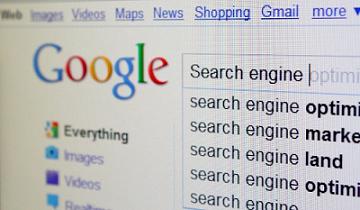
Google Think Tank Battles Online Extremism

WASHINGTON POST– Technology giant Google, having conquered the Internet and the world around it, is taking on a new challenge: violent extremism.

The company, through its eight-month-old think tank, Google Ideas, is paying for 80 former Muslim extremists, neo-Nazis, U.S. gang members and other former radicals to gather in Dublin this weekend to explore how technology can play a role in de-radicalization efforts around the globe.

The “formers,” as they have been dubbed by Google, will be surrounded by 120 thinkers, activists, philanthropists and business leaders. The goal is to dissect the question of what draws some people, especially young people, to extremist movements and why some of them leave.

“We are trying to reframe issues like radicalization and see how we can apply technology to it,” said Jared Cohen, the 29-year-old former State Department official who agreed to head Google Ideas with the understanding he would host such a conference. “Technology is part of every challenge in the world and a part of every solution.”

In forming Google Ideas, company officials said, they were eager to move beyond the traditional think tank model of conducting studies and publishing books, saying their “think/do tank” would make action a central part of its mission.

Read full article about Google Think Tank Battles Online Extremism.

© 2011 Washington Post

Photo by Flickr user MoneyBlogNewz

Is US Law Enforcement Colluding With Cisco?

SALON.COM– As if we needed any more evidence that the United States is fast becoming a Corporate Police State (i.e., systematically deploying police power to protect narrow corporate interests), make sure to check out this jaw-dropping story that broke in Canada late Friday. It details how the British Columbia Supreme Court uncovered what it says is a massive collusion between computer giant Cisco and U.S. law enforcement — a collusion that seems designed to use criminal prosecution to stop a whistle-blower’s antitrust case against a powerful politically connected corporation.

The machinations in this case are complicated, but the basics go like this: Ex-Cisco exec Peter Alfred-Adekeye filed a whistle-blower suit against his former employer Cisco in civil court — a suit that could compel the company to pay millions in damages for allegedly “forcing customers to buy maintenance contracts,” according to the Vancouver Sun.

Cisco subsequently responded with two moves designed to intimidate Adekeye: First, the company filed a counter civil suit against him for allegedly “using a former colleague’s computer code to illicitly access Cisco services worth ‘more than $14,000.'” Then, the corporation had its allies in U.S. law enforcement cite the civil counter-suit to issue a whopping 97 criminal charges against Adekeye. In other words, instead of following Adekeye’s civil case with criminal antitrust charges against Cisco, U.S. authorities were convinced by the corporation to add criminal charges to Cisco’s counter civil suit against Adekeye (this move to add state-sanctioned criminal prosecution to a corporation’s civil action, of course, is a textbook definition of a Corporate Police State).

Read full article about Is American Law Enforcement Colluding with Cisco?

© 2011 Salon.com

Photo by flickr user monkeymanforever

Posted in Uncategorized | 1 Reply

Nine Industries That Know Your Every Move

DAILY FINANCE– Don’t kid yourself. Real privacy no longer exists in this country.

We’ve long had government organizations collecting data that paints a pretty clear picture of what we do with our time. The Internal Revenue Service knows everything about what you earn and any major transactions you make. It can access every bit of information it needs to determine how much money you should be sending on April 15.

The most important gatherer of personal information in the country is the Federal Bureau of Investigation. It keeps a database of over 90 million fingerprints, which can be accessed by other law enforcement agencies. It also has an extensive database of DNA, the most specific marker of personal identity. The bureau’s ability to collect information expanded following the terrorist attacks of Sept. 11, 2001. It now tracks a large portion of mail, cell phone traffic and Internet activity of people it deems suspicious.

Thanks to advances in technology, however, there are also now numerous private enterprises that track and record your every move. Although they don’t usually give out this information, there are often worrisome leaks and security breaches where they inadvertently release sensitive information about their customers. Taken together, these industries have data on where you are, who you are communicating with, how you are earning your money, how you are spending that money, as well as the hobbies and interests you are pursuing.

We examined a large number of organizations to find the most intrusive firms and industries. Here they are, ranked by the number of people they track:

 1) Credit Rating Agencies

With each firm having files on over 200 million people, the three credit bureaus — Equifax (EFX), Experian (EXPGY), and TransUnion — know not only your credit history, but also have the data to project your credit future. The companies collect a history of all credit use by an individual, including payment of bills, mortgages, and credit cards. The agencies also track the frequency with which a person applies for credit. That information is used to determine a person’s credit risk through a credit score. These scores are produced using secret algorithms, ensuring that the bureaus know much more about you than you know about them.

 2) Cell Phone Service Providers

As cell phone popularity has increased and technology has evolved, cell phone companies have come to possess a wealth of information about their customers. Covering over 90% of the American population, cell phone providers can tell who you call, when you call, how often you call certain people and what you say in your text messages. With GPS, they also now know where you are whenever you have your phone. As smartphones become the equivalent of miniature computers, cellular companies can also track personal behavior, such as use of multimedia and wireless e-commerce transactions.

3) Social Media Companies

In its ascent to Internet superpower, social enterprise Facebook has amassed an enormous amount of user information. Who your friends are, what you like, and what photos you are in are all information that the company has access to. That, however, is not the full extent of it. Facebook also tracks which profiles you view, who you communicate with most often, companies and causes you support, your personal calendar, and a great deal of personal information about your friends and family. Perhaps most surprising, Facebook can access much of the information you may have deleted, including photos and status updates, from their servers.

See the FULL list & read more about Who Is Watching You? Nine Industries That Know Your Every Move

© 2010 Daily Finance

Photo by Flickr user jonathanmcintosh

One US Corporation’s Role in Egypt’s Brutal Crackdown

THE HUFFINGTON POST – The open Internet’s role in popular uprising is now undisputed. Look no further than Egypt, where the Mubarak regime today reportedly shut down Internet and cell phone communications — a troubling predictor of the fierce crackdown that has followed.

What’s even more troubling is news that one American company is aiding Egypt’s harsh response through sales of technology that makes this repression possible.

The power of open networks is clear. The Internet’s favorite offspring — Twitter, Facebook and YouTube — are now heralded on CNN, BBC and Fox News as flag-bearers for a new era of citizen journalism and activism. (More and more these same news organizations have abandoned their own, more traditional means of newsgathering to troll social media for breaking information.)

But the open Internet’s power cuts both ways: The tools that connect, organize and empower protesters can also be used to hunt them down.

Telecom Egypt, the nation’s dominant phone and Internet service provider, is a state-run enterprise, which made it easy on Friday morning for authorities to pull the plug and plunge much of the nation into digital darkness.

Moreover, Egypt also has the ability to spy on Internet and cell phone users, by opening their communication packets and reading their contents. Iran used similar methods during the 2009 unrest to track, imprison and in some cases, “disappear” truckloads of cyber-dissidents.

The companies that profit from sales of this technology need to be held to a higher standard. One in particular is an American firm, Narus of Sunnyvale, Calif., which has sold Telecom Egypt “real-time traffic intelligence” equipment.

Narus, now owned by Boeing, was founded in 1997 by Israeli security experts to create and sell mass surveillance systems for governments and large corporate clients.

The company is best known for creating NarusInsight, a supercomputer system which is allegedly used by the National Security Agency and other entities to perform mass surveillance and monitoring of public and corporate Internet communications in real time.

Narus provides Egypt Telecom with Deep Packet Inspection equipment (DPI), a content-filtering technology that allows network managers to inspect, track and target content from users of the Internet and mobile phones, as it passes through routers on the information superhighway.

Other Narus global customers include the national telecommunications authorities in Pakistan and Saudi Arabia — two countries that regularly register alongside Egypt near the bottom of Human Rights Watch’s world report.

Click to continue reading what Democrats and Republicans are saying about Narus’ role in Egypts brutal crackdown.

© COPYRIGHT HUFFINGTON POST, 2011

Written by Timothy Karr

As the Campaign Director for Free Press and SavetheInternet.com, Karr oversees campaigns on public broadcasting and noncommercial media, fake news and propaganda, journalism in crisis, and the future of the Internet. Before joining Free Press, Tim served as executive director of MediaChannel.org and vice president of Globalvision New Media and the Globalvision News Network.

Photograph by Flickr user: Samantha Celera

End of the Internet? The Google-Verizon Pact: It Gets Worse

COMMON DREAMS– So Google and Verizon went public Monday with their “policy framework” — better known as the pact to end the Internet as we know it.

News of this deal broke this week, sparking a public outcry that’s seen hundreds of thousands of Internet users calling on Google to live up to its “Don’t Be Evil” pledge.

But cut through the platitudes the two companies (Googizon, anyone?) offered on Monday’s press call, and you’ll find this deal is even worse than advertised.

The proposal is one massive loophole that sets the stage for the corporate takeover of the Internet.

Real Net Neutrality means that Internet service providers can’t discriminate between different kinds of online content and applications. It guarantees a level playing field for all Web sites and Internet technologies. It’s what makes sure the next Google, out there in a garage somewhere, has just as good a chance as any giant corporate behemoth to find its audience and thrive online.

What Google and Verizon are proposing is fake Net Neutrality. You can read their framework for yourself here  or go here to see Google twisting itself in knots about this suddenly “thorny issue.” But here are the basics of what the two companies are proposing:

1. Under their proposal, there would be no Net Neutrality on wireless networks — meaning anything goes, from blocking websites and applications to pay-for-priority treatment.

2. Their proposed standard for “non-discrimination” on wired networks is so weak that actions like Comcast’s widely denounced blocking of BitTorrent would be allowed.

3. The deal would let ISPs like Verizon — instead of Internet users like you — decide which applications deserve the best quality of service. That’s not the way the Internet has ever worked, and it threatens to close the door on tomorrow’s innovative applications. (If RealPlayer had been favored a few years ago, would we ever have gotten YouTube?)

4. The deal would allow ISPs to effectively split the Internet into “two pipes” — one of which would be reserved for “managed services,” a pay-for-play platform for content and applications. This is the proverbial toll road on the information superhighway, a fast lane reserved for the select few, while the rest of us are stuck on the cyber-equivalent of a winding dirt road.

5. The pact proposes to turn the Federal Communications Commission into a toothless watchdog, left fruitlessly chasing consumer complaints but unable to make rules of its own. Instead, it would leave it up to unaccountable (and almost surely industry-controlled) third parties to decide what the rules should be.

If there’s a silver lining in this whole fiasco it’s that, last I checked anyway, it wasn’t up to Google and Verizon to write the rules. That’s why we have Congress and the FCC.

Certainly by now we should have learned — from AIG, Massey Energy, BP, you name it — what happens when we let big companies regulate themselves or hope they’ll do the right thing.

We need the FCC — with the backing of Congress and President Obama — to step and do the hard work of governing. That means restoring the FCC’s authority to protect Internet users and safeguarding real Net Neutrality once and for all.

Such a move might not be popular on Wall Street or even in certain corners of Silicon Valley, but it’s the kind of leadership the public needs right now.

If you haven’t yet told the FCC why we need Net Neutrality, please do it now. 


Craig Aaron is the managing director of Free Press, the national, nonpartisan, nonprofit media reform group, where he leads all program, public advocacy and communications work, including the SavetheInternet.com and SaveTheNews.org campaigns.

photo by Steve Rhodes

© COPYRIGHT COMMON DREAMS, 2010