
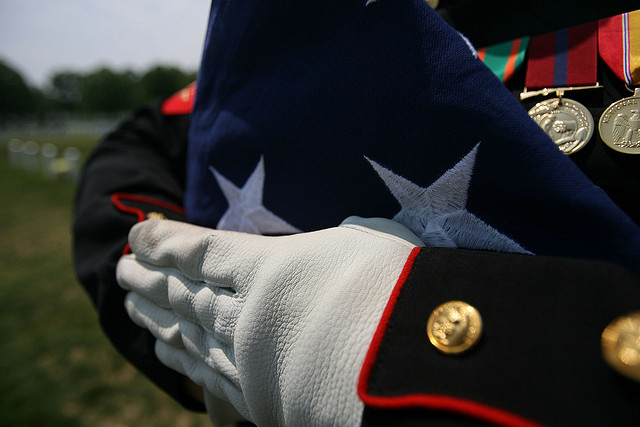
The Order to “Support the Troops” is Killing Veterans

veteran funeral beverly and packIf there’s one thing that unifies the nation in times of perpetual war it’s the pledge to “Support the Troops”.

Between yellow ribbon magnets, patriotic anthems at sports games and corporate marketing campaigns, the rhetoric that those in uniform are protecting freedom is hammered into the psyche of Americans at every turn.

But no war ever fought by the US military has been about freedom. Communism wasn’t a threat to us then, and terrorism isn’t a threat to us now. The only reason an empire ever fights wars is to maintain empire.

Every year, the establishment hijacks Veterans Day – not only to audaciously commemorate the war criminals that send our brothers and sisters off to needlessly die – but to justify decades of bloodshed and militarism while paving the way for decades more.

It’s been thirteen years after the declaration of a global “War on Terror”, with two catastrophic failures under Uncle Sam’s belt. In occupied Afghanistan, America’s longest war, opium cultivation is at record high. In Iraq, over one million civilians were slaughtered to secure oil interests. And despite being kicked out of the country by Iraqis, Obama just keeps sending more troops to fight the new al Qaeda, pledging 1500 more boots on the ground just this week.

The stream of empty platitudes ordering troop worship is especially ironic considering the abysmal treatment veterans receive once they return home.

More than 6,800 soldiers have died in Afghanistan and Iraq. And until 2011, war was the leading cause of soldier death. Then they started taking their own lives. In 2012 and 2013, soldiers began killing themselves faster than they were dying on the battlefield, according to the Pentagon’s own data. To put that into perspective, a veteran commits suicide every 65 minutes, or twenty-two every single day.

Maybe this number wouldn’t be so stunningly high if the military and VA actually helped returning soldiers rehabilitate. Instead, thousands are suffering from various injuries and forms of PTSD when they are thrown back into society.

Back in March, the backlog of Veterans benefits was a staggering 400,000 cases with an average wait time of 125 days to process the claims, according to the Iraq and Afghanistan Veterans of America. At least one million servicemen and women have been injured in Iraq and Afghanistan, compared to 300 thousand during the Vietnam War, despite the lack of a draft. The number could be even higher, but the VA abruptly stopped publishing the number of injured troops, citing national security reasons for the censorship.

The disgraceful way veterans are treated in this country exemplifies how little this government actually values life. Amidst all the ritualistic pageantry immortalizing fallen soldiers, we lose sight of the military mind, one that dominates policy and breeds new generations of sadists, who are taught that other human beings have lesser value than them. This toxic mindset seeps into every facet of American society, teaching every citizen that force is the answer to every problem. As Chris Hedges explains:

“The U.S. military has won the ideological war. The nation sees human and social problems as military problems. To fight terrorists Americans have become terrorists. Peace is for the weak. War is for the strong. Hypermasculinity has triumphed over empathy.”

As Salon journalist David Masciotra points out, compulsory troop worship deadens democracy and restricts questioning. Calling all soldiers heroes undermines those who actually are, a person who would throw themselves in the line of fire to save their battalion should not be generalized alongside one that pillages, rapes and murders.

I know people don’t join the military to be called heroes, or because they think they’re fighting evil incarnate. Most do so because there are no jobs and no hope, but there’s always hope that comes with choosing peace over violence. War would cease to exist if soldiers refused to fight them.

The only heroes of today’s wars are those who resist them, including, Tomas Young, a 34 year old soldier who became paralyzed on his fifth day deployed in Iraq from a bullet to the spine. Ever since, Young became one of the most prominent anti-war activists in America, famously penning an excoriating letter to Bush and Cheney.

He died on the eve of Veterans Day this week. But he said he wanted to die knowing that he fought as hard as he could to keep another him from coming back to Iraq.

So, the next time you hear someone say “Support the Troops”, ask what they’re doing to make sure there will be no more bloodshed, no more body bags and no more war.

Abby Martin | @abbymartin

Photo by flickr user Beverly & Pack
How Words Absolve Pillaging and Mass Murder

WordsFlickrKool_SkatkatObama’s election marked a new dawn for hundreds of millions of people, who were looking to an eloquent, constitutional lawyer for “Hope” and “Change” in America. However, it quickly became apparent that Obama had little substance beyond the slogans branded by his campaign.
With a little more than a year left in his presidency, his milquetoast legacy has been embodied by his greatest skill: wordcraft. Obama’s team has continued, if not exacerbated, most Bush era policies, simply rebranding them in order to appease and confuse the public into compliance.

One of the first things his administration did was declare an end to the “War on Terror” that the Bush sociopaths launched worldwide. Turns out, all they wanted to do was stop calling it a “War on Terror,” making clear that any further military involvement abroad would simply be called “Overseas Contingency Operations.”

Six years later, and the Nobel Peace Prize winning president has bombing campaigns in seven different countries under his belt. And the casualties of the empire’s plunders? Collateral damage.

There are also new terms for war. When US and NATO bombed the hell out of Libya resulting in the failed state we see today, it wasn’t a war. No, it was merely a “Kinetic Military Action,” according to government officials.

Torture is now “enhanced interrogation techniques”, and the act of kidnapping and exporting torture is simply called “extraordinary rendition”.

Whenever the administration sends predator drones to bomb people around the world, they’re just “surgical strikes” targeting “militants”. However, simply being military aged male constitutes someone as a militant, and according to the Bureau of Investigative Journalism, less than four percent of drone victims in Pakistan are officially listed as al Qaeda.

When Obama’s cabinet dropped the term “enemy combatant”, it was a purely symbolic move to distance itself away from the Bush Guantanamo era. Unfortunately, over 140 men still remain rotting away in the notorious prison despite what they’re now called on paper. And when these prisoners go on a hunger strike, it’s now called a “long term non-religious fast”.

As journalist Glenn Greenwald reminds us, altering the names of policies doesn’t change the fact that they’re still happening:

“The Obama administration…makes only the most cosmetic and inconsequential changes – designed to generate headlines misleadingly depicting a significant reversal – while, in fact, retaining the crux of Bush’s extremist detention theory.”

Obviously this rebranding tactic wasn’t invented by Obama’s PR team. 

Propaganda was propelled with the advent of PR genius Edward Bernays and later Nazi mastermind Joseph Goebbels, whose powerful techniques have been perfected and employed for decades by governments worldwide. Disturbing Newspeak phrases that absolve their pillaging and mass murder have permeated society and warped our interpretation of reality.


How Words Absolve Mass Murder

The term “Mowing the Lawn” is what governments say to allude to the literal mowing down of civilians. Shockingly, the callous term has been used not only by Israeli military commanders in reference to the recent bloodbath of Palestinians, but it’s also been used by Obama’s counter-terrorism adviser Bruce Riedel who said this about drone strikes:

“You’ve got to mow the lawn all the time. The minute you stop mowing, the grass is going to grow back.”

If you think that’s bad, officials also use the cute phrase “Shake ‘n Bake” to refer to using banned white phosphorus before blowing up people with high grade explosives. Administrators also think so lowly of the people they’re killing with flying robots that they brutishly call them “bug splats”.

Beyond war, in today’s cut throat capitalist world overrun by neoliberal doctrine, there’s a language of dehumanization employed towards everything, spoken among the elite class and policy heads in order to keep things running efficiently.

As the Guardian points out, the term “cleansing the stock” is actually used to describe excess human beings by parliamentarians. After all, you can’t afford to actually feel emotion, empathy or sorrow for the paupers at the bottom of the totem pole.

Unsurprisingly, when it comes to the natural world, the language is even more crude.

According to journalist George Monbiot,

“Nature is “natural capital”. Ecological processes are ecosystem services, because their only purpose is to serve us. Hills, forests and rivers are described in government reports as green infrastructure. Wildlife and habitats are asset classes in an ecosystems market. Fish populations are invariably described as stocks, as if they exist only as moveable assets from which wealth can be extracted – like disabled recipients of social security.”

All of these devaluing terms have seeped into mainstream consciousness, dutifully repeated by media figures and then, by us.

Words hold tremendous power, and if we don’t reclaim our language and start seeing people instead of “militants”, drone victims instead of “bug splats”, or natural splendor instead of “green infrastructure”, then the voiceless are destined to be silenced forever.

Follow me at @AbbyMartin

BP: Scandal, Lies and Another Massive Oil Spill Cover-Up

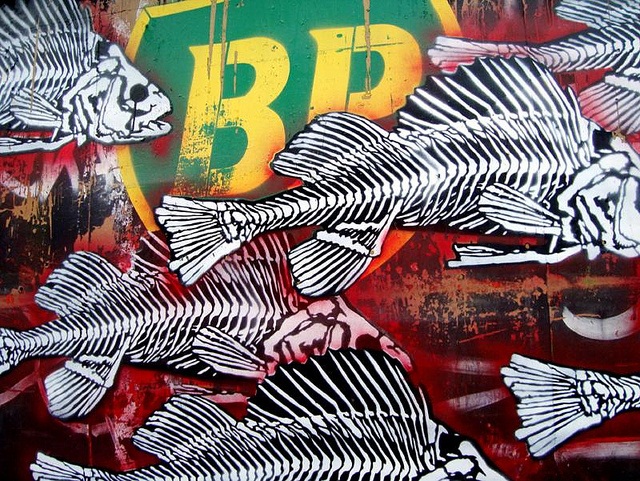
BP Thierry EhrmannForget Stephen King. If you want scary, read U.S. District Judge Carl Barbier’s 150-page Findings of Fact released recently in the Deepwater Horizon case.
Although the judge found BP liable for “gross negligence,” some U.S. media failed to mention that Barbier let BP off the hook on punitive damages. And that stuns me, given that the record seems to identify enough smoking guns to roast a sizable pig.

Every rig operator knows that, before a rig can unhook from a drill pipe, the operator has to run a “negative pressure test” to make sure the cement has properly sealed the drill pipe.

If the pipe is safely plugged, the pressure gauge will read zero. The amount of pressure BP measured at 5 p.m. on April 20, 2010, the day of the explosion? 1400 psi (see the findings, pages 62-65).

1400 psi is not zero. Stick a balloon in your mouth with zero pressure and nothing happens except that you look silly. Replace the balloon with a hose delivering a 1400 psi blast and it’ll blow your skull apart.

So, how could the company record zero? Answer: BP’s crew re-ran the test measuring the pressure in something called the “kill line,” which is definitely not the drill pipe.

By reporting that the pipe had no pressure and all was safe, BP could begin to unhook the Deepwater Horizon from the pipe—and sail away. Why would BP do that? In my view, there were three motives: money, money and money. It costs BP a good half million dollars each extra day the rig stays on top of the drill hole. It seems it wanted the rig gone, and quickly.

Instead of halting the disconnection process, BP appears to have lied and recorded the pressure reading as “zero.” The rig’s owner, Transocean of Switzerland, went along with BP’s actions.

So how did BP get away with mere “gross negligence” as opposed to the more serious claim of fraud? Because the court found that the blowout, explosion, fire and oil spill were caused by “misinterpretation of the negative pressure test.”

Misinterpretation? If a woman says “thanks” when you say she’s dressed nicely and you think she wants a kiss, that’s “misinterpretation.” But on the Deepwater Horizon, the drill pipe gauge read 1400 psi and BP picked a different pipe that gave the company the magic zero. That’s not, I contend, “misinterpretation.”

Maybe the judge thought he was pretty tough by calling out BP for “gross” negligence (rather than plain-vanilla negligence, the finding against Transocean and contractor Halliburton). But, in fact, it seems Barbier fell for the Three Stooges defense.

Throughout the 150-page decision, the judge cites one instance after another of bone-headed, buffoonish, slapstick decisions, and plenty of pratfalls and banana-peel slips by BP, Transocean and Halliburton. You have to wonder how these schmucks even found their drill hole. It was a corporate Larry-Moe-and-Curly-Joe routine that would provide a lot of belly laughs if 11 men hadn’t died as a result.

I’ve seen the Three Stooges defense before in federal court. In 1988, the corporate owner and the builder of the Shoreham nuclear plant were on trial on accusations they bilked their New York customers out of $1.8 billion. In court, they pleaded stupidity and incompetence as a defense against deliberate deception. As the government’s investigator, I didn’t buy it—billion-dollar corporations can’t be that stupid—and neither did the jury. (The racketeering charges were settled after trial for $400 million.)

And here is a new set of Stooges: BP plays Larry, Transocean puts on Moe’s wig and Halliburton makes “Nyuk! Nyuk! Nyuk!” sounds like Curly Joe. Halliburton, the judge found, failed to test the final cement mix and BP bitched about it—“[Halliburton engineer Jesse Gagliano] isn’t cutting it any more,” reads an email between two BP managers on the rig—but BP went ahead and used the bad cement anyway (Findings, paragraphs 227-228)

When the pressure in the drill pipe read 1400 psi, BP and Transocean managers should have stopped the rig departure immediately. They didn’t. Nevertheless, other systems should have prevented a blowout. According to Barbier, other safety systems were jacked with to save a penny here, a penny there (or, a million here, a million there). Example: BP used leftover cement (Findings, paragraphs 209-211) that contained chemicals that destroyed the integrity of the new cement, because using the old stuff saved some serious cash.

Barbier had the power to levy a fine big enough to make BP plc, BP America’s London-based parent corporation—a company with revenue of a quarter of a trillion dollars a year—go “ouch.” But to slam BP with a fine that would hurt, the judge needed to hear from the Justice Department about corporate-wide perfidy. He pointed out that the case would have to be made against BP plc, the international parent, if he were to level a fine that would punish the corporation.

Against BP there is evidence aplenty. For years BP plc has played fast and loose with safety—from Asia to Alaska.

Chasing BP across five continents, I’ve found that “gross negligence” could be BP’s corporate motto. In 2010, I was arrested in Azerbaijan hunting down evidence of another BP/Transocean offshore blowout that occurred 17 months before the Deepwater Horizon explosion. The cause of the Caspian blowout was the same as in the Gulf disaster: mishandling of “foamed” cement. Had BP not covered up the prior blowout off the coast of Azerbaijan, the deaths and destruction in the Gulf, I’m certain, would have been avoided.

More on the Caspian Sea blowout and BP ruling on Breaking the Set with Abby Martin:


What?! Another Massive BP Oil Spill Coverup?

**

The ugly truth is that the U.S. State Department knew of the Caspian disaster and kept its lips sealed. Furthermore, the U.S. government can’t tag BP as an endemically rogue, dangerous operator without casting doubt on the administration’s recent grant to the corporation of new deep tracts to drill in the Gulf of Mexico.

So maybe it was not the judge but the public that was blinded by the government and media crowing about a possible $18 billion fine for gross negligence. Eighteen billion dollars may sound like a lot to us mere mortals, but to a trillion-dollar behemoth like BP, it is not a punishment, but a reasonably priced permit for plunder.

Greg Palast is award winning author and journalist.

This article was originally published in Truthdig. Photo by flickr user Thierry Ehrmann

Watch Breaking the Set’s exclusive follow-up on the 2010 BP Oil Spill from the Gulf.

BP’s Oil Spill: Criminal Negligence, Thousands Still Sick & A Gulf Graveyard Left Behind

BP dead flickr user thierry ehrmannAfter BP agreed to pay $4.5 billion to the government, and another $9.2 billion in penalties since its catastrophic oil spill, a new ruling has put the corporation under fire again.
A US District Judge has found BP grossly negligent and it’s subcontractors, Halliburton and TransOcean, negligent for their roles in the 2010 Deepwater Horizon explosion and subsequent dumping of more than 210 million gallons of toxic sludge into the Gulf of Mexico, killing 11 people and countless marine creatures in the process. Under the Clean Water Act, the new ruling could effectively quadruple the penalty per barrel spilled that BP will have to pay.

BP’s criminal negligence shouldn’t come as a surprise. After nine years at sea, company management acknowledged that the Deepwater drilling rig was in decline and presented a quote “intolerable risk” to safety, yet chose to do nothing. Halliburton also plead guilty to the destruction of key evidence related to the company’s shady cost-cutting practices like failing to inspect the well’s cement mixture, and using only six of the recommended 21 centralizers to secure the site.

Besides the massive damage that’s been done to the environment as a result of the BP disaster, the health impact on humans continues – largely because of the decision by BP and the EPA to spray nearly two million gallons of a dispersant called Corexit onto the water, making the oil 52 times more toxic, according to the Environmental Pollution Journal.

All this aside, BP’s contracts with the Defense Department have more than doubled in the years since the disaster.

Even though the media is fatigued with its coverage of this disaster, Breaking the Set went down to the Louisiana Gulf Coast to see how the region is faring nearly five years later and to investigate the spill’s lasting damagesWe learned that hundreds of thousands of people are still sick, and that the oil industry has turned the once vibrant shore into a graveyard.

Abby

**

BP’s Oil Spill: Criminal Negligence, Thousands Sick & Gulf Graveyard Left Behind

**

Exclusive coverage includes interviews with Jorey Danos, a sick clean-up worker who was exposed to a toxic chemical dispersant known as Corexit, award winning toxicologist Wilma Subra, Gulf Restoration Network’s Jonathan Henderson and Clint Guidry, President of the Louisiana Shrimpers Association.

We also reached out to BP, which provided the following statements:

Q: Why were cleanup workers refused respirators and even threatened with termination if they requested them, according to multiple interviews with clean-up workers and the Louisiana Environmental Action Network?

A: We certainly do not and would not retaliate against workers. BP worked closely with OSHA, the US National Institute for Occupational Safety and Health (NIOSH) and other US government agencies to take extraordinary measures to safeguard the health and safety of responders.

Workers were provided safety training and appropriate personal protective equipment (PPE), and were monitored by federal agencies and BP to measure potential exposure levels and to help ensure compliance with established safety procedures.

Response workers applying dispersants received training on work procedures and PPE usage designed to minimize exposures, and were provided respirators and other PPE.

Workers who were not exposed to dispersants may have asked for a respirator, possibly in the mistaken belief that it would provide an extra level of protection and safety. This is not true. Perhaps the most important consideration in voluntary respirator usage is the potential physiological burden placed on the user. That was particularly true given the hot working conditions encountered during the response.

Due to the extensive controls in place, there was little potential for worker or public exposure to dispersants. More than 30,000 air monitoring samples were collected by the Coast Guard, OSHA, NIOSH, and BP as part of a comprehensive air monitoring program to evaluate the potential for human exposure to dispersant and oil compounds. The results showed that response worker and public exposures to dispersants were well below levels that could pose a health or safety concern.

Additional Background: OSHA advises that, “in workplaces with no hazardous exposures, but where workers choose to use respirators voluntarily, certain written program elements may be necessary to prevent potential hazards associated with respirator use. Employers must evaluate whether respirator use itself may actually harm employees. If so, employers must medically evaluate employees and, if necessary, restrict respirator use…”

For these reasons, respirators typically are not provided to people who do not need them, and who have not passed the required tests for fitness to wear the equipment. In consultation with NIOSH and OSHA, BP developed guidelines to help determine when PPE, including respirators, was to be used. Known as the “PPE Matrix,” this guideline was made available on several websites, including websites for BP and OSHA. Under the PPE Matrix, respirators were to be used in specifically- identified situations, including during the application of dispersants. There were times, however, when the potential risks associated with using a respirator outweighed the benefits since air monitoring data indicated that worker exposures to chemicals of concern generally were well below occupational exposure limits, and respirator use could place physiological stress on the body. In those cases, protection was provided by work practices and procedures and the use of other PPE.

A paper reviewing OSHA and NIOSH’s response to the accident can be found here.

Q: Why was the public told that Corexit was as harmless as Dawn, when five of the ingredients in it are linked to cancer, 33 are linked to skin irritation and 11 are respiratory toxins, according to expert toxicologists, Wilma Subra and Dr. Susan Shaw?

A: The Material Safety Data Sheet (MSDS) for Corexit, where human exposure characterization is addressed notes, “Based on our recommended product application and personal protective equipment, the potential human exposure is: Low.” Also, Section 16 of the MSDS characterized Corexit’s general product risk- “The human risk is: Low. The environmental risk is: Low.”

The same ingredients contained in Corexit are also found in common consumer products such as household cleaners, food packaging, hand lotion and cosmetics. The product ingredients alone do not determine if a compound has created a public health concern; there must also be exposure to a compound at levels and for sufficient duration that could cause harm.

The results of extensive monitoring conducted by federal agencies and BP show that response workers and the public simply were not exposed to dispersant compounds at levels that might pose a health risk.

Due to the controls in place during dispersant application operations, there was little potential for public or worker exposure when dispersants were applied to the oil offshore. This was confirmed by the government findings as previously mentioned.

Q: Why has the active cleanup of Louisiana’s coast officially ended when thousands of tar balls continue to wash on shore?

A: The Coast Guard ended active cleanup after an extensive four-year effort. Even so, we remain committed and prepared to respond at the Coast Guard’s direction if potential residual Macondo material is identified through the National Response Center reporting process and requires removal. We have teams and equipment at staging areas in Grand Isle, LA and Gulf Shores, AL ready to rapidly respond as necessary.

Additionally numerous studies and reports have documented the presence of tar balls along the Gulf coast in the decades before the Deepwater Horizon accident, and during our cleanup efforts we continued to find tarballs that did not contain residual Macondo oil.

Q: Why have only 148 people received any medical claim whatsoever well over four years after the disaster and why is the average benefit only $1,600 dollars, when doctors such as Michael Robichaux has studied hundreds of patients and observed long term and possibly lifelong health effects in the process?

A: BP and the PSC consulted with medical experts to determine compensation amounts and formulate a list of the conditions that, according to scientific evidence, could be caused by exposure to oil or to the dispersants used in the cleanup. Compensation for these listed conditions is subject to the clear terms of the MSA. As is common in class action settlements, the settlement program did not begin processing and paying out claims until all appeals were exhausted, which occurred earlier this year. As to Dr. Robichaux, his allegations were considered and rejected over a year ago by a New Orleans federal court, which found that the doctor “wholly failed to provide any competent evidence in support of the assertions he makes.”

**

Follow me @AbbyMartin

Art by flickr user Hierry Ehrmann

Posted in Uncategorized | 1 Reply

Guantanamo Bay: An Untold History of Occupation, Torture, Sham Trials & Resistance

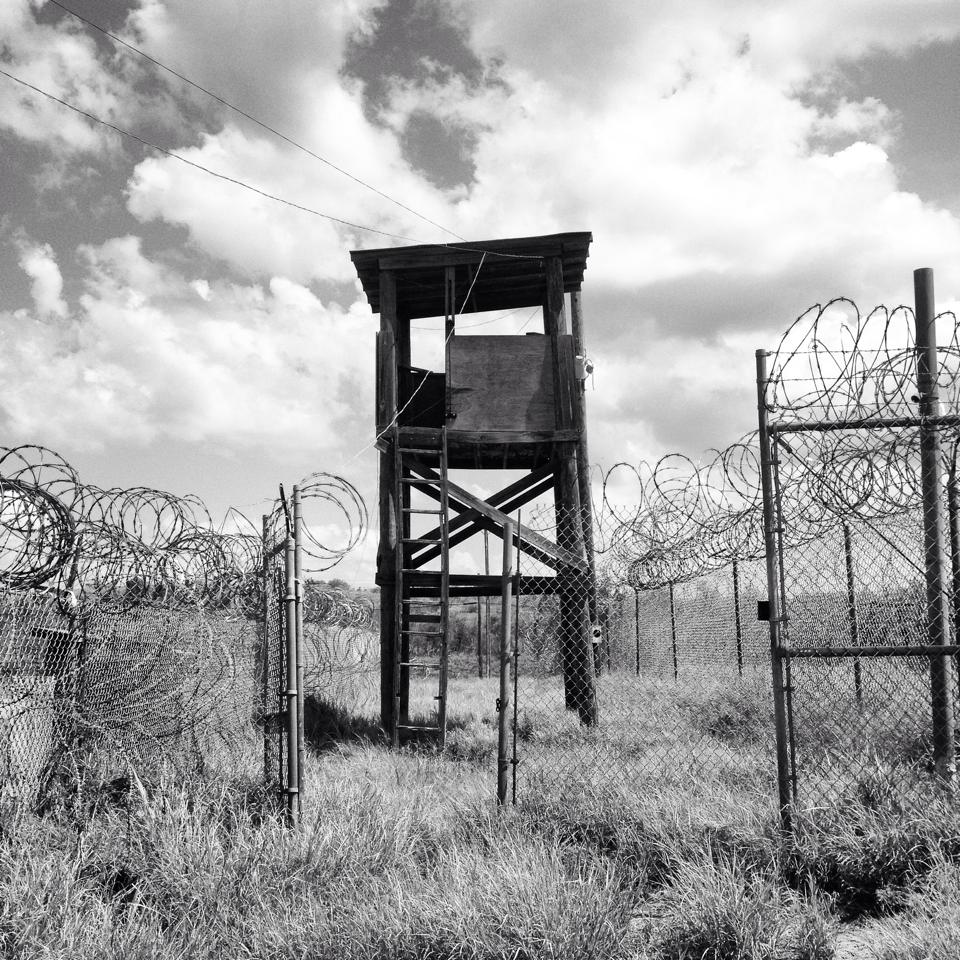
Camp XRAYFew realize how expensive it is to keep Guantanamo Bay prison operational. The Joint Task Force (JTF) detention center, which opened in 2002, costs US taxpayers $140 million a year, breaking down to about $800,000 per detainee.

The JTF was never meant to be permanent, yet twelve long years after the first round of prisoners arrived, 149 prisoners remain detained there indefinitely.

The oft repeated lie that these men are the “worst of the worst” has clouded the reality that the vast majority are completely innocent, and were simply swept up in a dragnet in Afghanistan. 78 have already been deemed innocent and cleared for release, yet pure political theater keeps them imprisoned.

Moreover, only six of the 149 men have been formally charged with a crime. Five are being tried together as alleged co-conspirators of 9/11, although they all are alleged to have varying operational levels, and one alleged mastermind of the USS Cole bombing. Yet the commissions process is completely corrupted by absurd levels of government secrecy, classification and intrusion.

A few weeks ago I traveled to Cuba to cover the continuing plight of these men and conduct an in-depth investigation for Breaking the Set. The report details how America came to host one of the most notorious prisons in Cuba, the brutal and systematic torture that took place, the sham of the 9/11 military commissions, the ongoing prisoner hunger strike and how Guantanamo Bay prison can be closed for good.

**

Gitmo Exclusive Part I: An Untold History of Occupation, Torture & Resistance

**

Gitmo Exclusive Part II: Media Brainwashing, Sham Trials & Closing Gitmo for Good

**

My brother interviewed me about my personal, intense experience at Gitmo for Media Roots Radio. Listen here.

Follow me @AbbyMartin and let me know what you think at #BTSGitmo