 MEDIA ROOTS — A neutral Internet’s First Amendment rights to free speech, dissent, and political activity face serious challenges from Congress and the Obama Administration. Currently, the House “Stop Online Piracy Act (SOPA) and its companion bill in the Senate, the Protect IP Act (PIPA)” are being debated in Congress.
The Electronic Frontier Foundation has said the “major problem is that they are written to be overly broad and they are written to favour the rights-holders. And, so, they allow a thing called a private right of action, which means that someone who believes that a [web]site is intended for, or allows, the distribution of their copyrighted material can go directly to that website’s ad networks or payment processors and have them cut off from those sources of revenue.”
Clearly, SOPA and PIPA amount to a power grab by the legislation’s corporate supporters—Viacom, Netflix, U.S. Chamber of Commerce, Motion Picture Association of America, Recording Industry Association of America, and the AFL-CIO—to alter the structure of the internet in their pro-1% favour. Today, Democracy Now! spoke with Corynne McSherry, who is the intellectual property director at the Electronic Frontier Foundation about the website strikes planned for tomorrow by Wikipedia and Reddit, protesting SOPA and PIPA, and Rebecca MacKinnon, author of Consent of the Networked: The Worldwide Struggle for Internet Freedom about online freedom and its role in cultivating a healthy democracy.
Media Roots is a prime example of the kind of website that could be targeted for aggregating material that may be deemed copyright under the overarching SOPA and PIPA legislation. Learn more about the bills and what you can do here.
MR
***
DEMOCRACY NOW! — Wikipedia, the online encyclopedia and sixth most visited site in the world, will join websites like the content aggregator Reddit to “go dark” on Wednesday [18 Jan 2012] in opposition to the Stop Online Piracy Act (SOPA) and its companion bill, the Protect IP Act (PIPA), which are currently being debated in Congress. “What these bills propose are new powers for the government and also for private actors to create, effectively, blacklists of sites that allegedly are engaging in some form of online infringement and then force service providers to block access to those sites,” says Corynne McSherry, intellectual property director at the Electronic Frontier Foundation. “What we would have is a situation where the government and private actors could censor the net.” Chief technology officials in the Obama administration have expressed concern about any “legislation that…undermines the dynamic, innovative global Internet.” But the bills’ main backers—Hollywood movie studios and music publishers—want to stop the theft of their creative content, and the bills have widespread bipartisan support. A vote on SOPA is on hold in the House now, as the Senate is still scheduled vote on PIPA next Tuesday [1/24/12]. [rush transcript included]
DN!: “If you want to know more about two controversial internet anti-piracy bills moving through Congress, you won’t be able to consult Wikipedia on Wednesday. The online encyclopedia and sixth most visited site in the world will join websites like the content aggregator Reddit to ‘go dark’ for 12 to 24 hours in opposition to the Stop Online Piracy, or SOPA, Act and its companion bill, the Protect IP Act. Wikipedia co-founder Jimmy Wales announced the decision to bring down his website last night on Twitter, writing, quote, ‘Student warning! Do your homework early. Wikipedia protesting bad law on Wednesday!’
The White House responded over the weekend to two petitions opposing the bills. The administration’s chief technology officials wrote on White House blog Saturday, quote, ‘We will not support legislation that reduces freedom of expression, increases cybersecurity risk, or undermines the dynamic, innovative global Internet.’
While the White House did not take a definite position on SOPA and the Protect IP Act, it has called for legislation to combat online piracy that has hurt the legislation’s main backers: Hollywood movie studios and music publishers who want to stop the theft of their creative content. Now a vote on SOPA is on hold in the House. The Senate is still scheduled to vote on the piracy issue next Tuesday, a week from today.
Well, to talk more about the Stop Online Piracy Act, or SOPA, and the Protect IP Act, we go to San Francisco to talk Corynne McSherry, who is the intellectual property director at the Electronic Frontier Foundation.
We welcome you to Democracy Now! Please explain both of these bills. It’s very tough, I think, for most people to understand the technical aspects of this legislation.”
CORYNNE McSHERRY: “Sure. In a nutshell, what these bills propose are new powers for the government and also for private actors to create, effectively, blacklists of sites that allegedly are engaging in some form of online infringement and then force service providers to block access to those sites. And that’s why we call these the censorship bills, because effectively what we would have is a situation where the government and private actors could censor the net. So, U.S. citizens would basically get a different version of the internet, different from what you might get in, say, Italy or even China.”
DN!: “So, explain the difference between SOPA and the Protect IP Act.”
CORYNNE McSHERRY: “Well, currently they’re quite—they’re quite similar. As drafted, SOPA was much broader than the Protect IP Act, and the folks behind the bill realized that maybe it was a little bit too broad, so they tailored it down. So now they’re quite similar. One of the differences is that SOPA is, finally, after a great deal of activism, more or less on hold for now. But Senator Reid is saying that he’s going to push forward the Protect IP Act, despite all of the opposition.”
DN!: “And explain who is behind these two acts.”
CORYNNE McSHERRY: “Well, that’s not a great mystery. Both of these acts are clearly being pushed hard by the big media industries, who seem to think that online piracy is why they’re having trouble, and actually, who insist that they’re having all kinds of trouble and they’re failing immediately if something doesn’t—if legislation isn’t passed immediately, they’re going to all go under, which is not true. In fact, the motion picture industry has been posting record profits for five years straight.”
DN!: “In a December hearing of the House Judiciary Committee, Congress Member Jason Chaffetz, a Republican from Utah, talked about the lack of expert consultation in drafting SOPA.”
Rep. Jason Chaffetz: “I was trying to think of a way to try to describe my concerns with this bill, but basically, we’re going to create—we’re going to do surgery on the internet, and we haven’t had a doctor in the room tell us how we’re going to change these organs. We’re basically going to reconfigure the internet and how it’s going to work, without bringing in the nerds, without bringing in the doctors. And again, I worry that we did not take the time to have a hearing to truly understand what it is we’re doing. And to my colleagues, I would say, if you don’t know what DNSSEC is, you don’t know what you’re doing. And so, my concern is that there is a problem, but this is not necessarily the right remedy.
DN!: “That was Utah Congress Member Chaffetz. Corynne McSherry, your response?”
Corynne McSherry: “I think he’s absolutely right. SOPA, in particular, was negotiated without any consultation with the technology sector. They were specifically excluded. And one of the things I think is really exciting, though, is that—you know, no one asked the internet—well, the internet is speaking now. And so, we’re seeing all kinds of opposition all over the web. And there’s going to be a day of action tomorrow. People are really rising up and saying, ‘Don’t interfere with basic internet infrastructure. We won’t stand for it.'”
DN!: What do you make of President Obama’s position on the bill, Corynne?
Corynne McSherry: “Well, it was heartening to see the White House statement and see the White House sort of stand with the internet and stand with its own commitments against censorship and against online censorship, in particular. Up until recently, we have been very concerned that there seemed to be a contradiction. On the one hand, you had Hillary Clinton criticizing foreign governments for online censorship and for censoring web results and so on. But at the same time, you had these bills rocketing through Congress that would propose very similar things. So, it was good to see the White House stand against that and criticize these bills. On the other hand, I am concerned that the White House seems to think that some kind of legislation needs to be passed this year. And I actually don’t think the case has been made for that.”
DN!: “Talk about the whole issue of the protection of artists, for example, the music industry and their concerns.”
Corynne McSherry: “Well, look, there’s no question that there’s plenty of infringement online. That’s been true for a long time now. The question is how you’re going to answer it. And the best way to respond—it’s very clear at this point. The best way to respond to online infringement is to give people a better alternative. And when that happens, people go to that. So that’s the best way to do it. It’s not to pretend that the Pirate Bay doesn’t exist; it’s to give people an alternative to the Pirate Bay. And one of the things that we’ve seen is that, actually, independent artists are taking advantage of new technologies to reach the—reach new audiences. Music fans have more access to more music than they ever had before, and different kinds of music. And that’s what happens when you take advantage of new technologies, as opposed to running away from it.”
DN!: “Let me read you a tweet that Murdoch sent out this weekend: ‘So Obama has thrown in his lot with Silicon Valley paymasters who threaten all software creators with piracy, plain thievery.'”
Corynne McSherry: “Well, you know, I think it’s ironic to talk about paymasters, given the amount of money that Hollywood has been spending in Congress to try to ram these bills through. I think it is true that the Obama administration has somewhat stood with Silicon Valley here, but I think Silicon Valley knows how to protect itself against so-called software piracy better than Rupert Murdoch will.”
DN!: “Finally, the votes, where they stand this week?”
Corynne McSherry: “Well, what we’re seeing now is Harry Reid, Senator Reid, is insisting that he’s going to go forward with a vote next Tuesday on the Protect IP Act. We’ll see what happens over the course of the week. Things have changed a lot. And after the day of action tomorrow, a lot of us are hopeful that Senator Reid will think better of trying to push this bill through, given the level of opposition. It’s really just a bad idea, particularly when you think about what they’re doing here. This is basic internet infrastructure that they’re messing with. And I think that Representative Chaffetz had it exactly right. It’s foolish to go in and interfere with internet infrastructure when you don’t know what you’re doing.”
DN!: “And overall, SOPA and PIPA, how they’ve been separated?”
Corynne McSherry: “Well, SOPA seems to be on hold for now. If PIPA is rammed through, it may be that in the House of Representatives they will try to revive SOPA and sort of bring the two bills in line. I certainly hope not, because that would be very, very dangerous for human rights, for internet security, and send an extremely negative signal around the world that the United States government does in fact support censorship, as long as you say that you’re doing it in the name of intellectual property enforcement.”
DN!: “Corynne McSherry, I want to thank you for being with us, intellectual property director at the Electronic Frontier Foundation. When we come back, we’ll be joined by author Rebecca MacKinnon. She has just written the book, Consent of the Networked: The Worldwide Struggle for Internet Freedom. This is Democracy Now! Back in a minute.”
The original content of this program is licensed under a Creative Commons Attribution-Noncommercial-No Derivative Works 3.0 United States License.
***
DEMOCRACY NOW! — As protests mount against two controversial
internet anti-piracy bills moving through Congress, we speak with
Rebecca MacKinnon, author of the forthcoming book, “Consent of the
Networked: The Worldwide Struggle for Internet Freedom.” “If we want
democracy to survive in the internet age, we really need to work to make
sure that the internet evolves in a manner that is compatible with
democracy,” MacKinnon says. “And that means exercising our power not
only as consumers and internet users and investors, but also as voters,
to make sure that our digital lives contain the same kind of protections
of our rights that we expect in physical space.” She argues that for
every empowering story of the internet’s role, there are many more about
the quiet corrosion of civil liberties by companies and governments.
[rush transcript included]
DN!: “We’re joined by Rebecca MacKinnon in Washington, D.C., author of Consent of the Networked: The Worldwide Struggle for Internet Freedom.
“We welcome you to Democracy Now! Rebecca, the internet has
been touted as such a tremendous liberating force. When we look at the
events of this past year, the uprisings throughout the Middle East, part
of the discussion of how that moment came is because of the internet,
because of social media. And yet you talk about, more often than not,
the internet is being used to spy on, to crack down on—spy on people,
crack down on civil liberties. Talk about what you have found and how
this relates to the legislation that we’re seeing now being developed in
Washington.”
Rebecca MacKinnon: “Well, thanks very much, Amy, for having me on here today.
“And just to connect my book to the issues that you were just
discussing in the previous segment about the Protect IP Act and the Stop
Online Piracy Act, I think the reason why this—these issues are so
important for ordinary Americans and really go beyond just sort of a
nerdy, geeky technical issue is that in today’s society, we, as
citizens, increasingly depend on internet services and platforms, mobile
services and platforms, not only for our personal lives and our
businesses and our jobs, but also for our political discourse and
political activism, getting involved with politics. And so, it’s very
important that people who are exercising power, whether they’re
corporate or whether they’re government, that are exercising power over
what we can see, over what we can access, over what we can publish and
transmit through these digital spaces, need to be held accountable, and
we need to make sure that power is not being abused in these digital
spaces and platforms that we depend on. And so, that’s why this SOPA and PIPA
legislation and the fight over it is so important, is who are you
empowering to decide what people can and cannot see and do on the
internet, and how do you make sure that that power is not going to be
abused in ways that could have political consequences. And we’ve
actually seen how existing copyright law has sometimes been abused by
different actors who want to prevent critics from speaking out.
“But coming back to the Arab Spring, my book is not about whether the
good guys or the bad guys are winning on the internet. The internet is
empowering everybody. It’s empowering Democrats. It’s empowering
dictators. It’s empowering criminals. It’s empowering people who are
doing really wonderful and creative things. But the issue really is how
do we ensure that the internet evolves in a manner that remains
consistent with our democratic values and that continues to support
people’s ability to use these technologies for dissent and political
organizing. And while the internet was part of the story in the Arab
Spring in terms of how people were able to organize, it’s not so clear
to what extent it’s going to be part of the story in terms of building
stable democracies in countries like Tunisia and Egypt, where the
dictators did fall, let alone in a number of other countries.
“In Tunisia, for instance, there is a big argument going on, now that
they’ve had their set of democratic elections to the Constitutional
Assembly, and they’re trying to write their constitution and figure out
how to set up a new democracy. And Tunisia, under Ben Ali, was actually
one of the most sophisticated Arab countries when it came to censoring
and surveillance on the internet. And quite a number of the people who
have been democratically elected in Tunisia are calling for a resumption
of censorship and surveillance for national security reasons, to
maintain public morals and public order. And there’s a huge debate going
on about what is the role of censorship and surveillance in a
democracy, and how do you make sure that power is not abused.
“And they turn and look at the United States, they look at Europe, and
censorship laws are proliferating around the democratic world. And
there’s not sufficient discussion and consideration for how these laws
are going to be abused. And we’ve seen, actually, in Europe, with a
number of efforts to censor both copyright infringement as well as child
pornography and so on, that a lot of this internet blocking that
happens, even in democracies, oftentimes exercises mission creep, so
things that weren’t originally intended to be blocked end up getting
blocked when the systems are in place. It’s really difficult to make
sure that the censorship does not spread beyond its original intent.
It’s very hard to control. So, this is one of the issues.
“It’s not that the internet isn’t empowering. It’s not that the
internet can’t help the good guys—it certainly does. But we’re at a
critical point, I think, in history, where the internet is not some
force of nature. How it evolves and how it can be used and who it
empowers really depends on all of us taking responsibility for making
sure it evolves in a direction that’s compatible with democracy, and
that it doesn’t empower the most powerful incumbent governments or the
most powerful corporations to decide what we can and cannot see and do
with our technology.”
DN!: “Rebecca MacKinnon, talk about the phenomenon, Control 2.0.”
Rebecca MacKinnon: “Right.
So, Control 2.0 is what I refer to in terms of how authoritarian
governments are evolving in the internet age. And so, one example I use
is China. And China, in many ways, is exhibit A for how an authoritarian
state survives the internet. And how do they do that? They have not cut
off their population from the internet. In fact, the internet is
expanding rapidly in China. They now have over 500 million internet
users. And the Chinese government recognizes that being connected to the
global internet is really important for its economy, for its education,
for its culture, for innovation. Yet, at the same time, they have
worked out a way to filter and censor the content overseas that they
feel their citizens should not be accessing.
“And what’s even more insidious, actually, is the way in which the
state uses the private sector to conduct most of its censorship and
surveillance. So, actually, what we know as the Great Firewall of China
that blocks Twitter and Facebook, that’s only one part of Chinese
internet censorship. Actually, most Chinese internet users are using
Chinese-language websites that are run by Chinese companies based in
China, and those companies are all held responsible for everything their
users are doing. And so, they have to hire entire departments of people
to monitor their users at the police’s behest and also to not just
block, but delete content that the Chinese government believes infringes
Chinese law. And, of course, when—in a country where crime is defined
very broadly to include political and religious dissent, that involves a
great deal of censorship. And it’s being conducted, to a great degree,
not by government agents, but by private corporations who are complying
with these demands in order to make a profit in China.”
DN!: “Rebecca, talk about specifics, like Facebook, Facebook—changes in
Facebook features and privacy settings, exposing identities of
protesters to police in Egypt, in Iran. Talk about Google. Talk about
Apple removing politically controversial apps.”
Rebecca MacKinnon: “Right.
So, for instance, with Facebook, Facebook has its own kind of type of
governance, which is why I call private internet companies the
“sovereigns of cyberspace.” And so, Facebook has a rule where it
requires that its users need to use their real name, their real
identity. And while some people violate that rule, that makes them
vulnerable to having their account shut down if they are discovered. And
so, the reason they do this is that they want people to be accountable
for their speech and prevent bullying and so on. And that may make sense
in the context of a Western democracy, assuming that you’re not
vulnerable in your workplace or anything like that, which is even a
question, but it means that you have to be—as an Egyptian activist or as
an activist in Syria and so on, you’re more exposed, because you have
to be on Facebook using your real name.
“And actually, a group of prominent activists in Egypt who were using
Facebook to organize an anti-torture movement were doing so, before the
regime fell, under fake names, and actually, at a critical point where
they were trying to organize a major protest, their Facebook group went
down, because they were in violation of the terms of service. And they
actually had to find somebody in the U.S. to take over their Facebook
page so that they could continue to operate.
“And you also have a lot of cases of people in Iran. There have been a
number of reports of people being tortured for their Facebook passwords
and so on. And the fact that Iranian users are, in most cases, using
their real names makes them a great deal more vulnerable.
“And as you know, here in the United States, Facebook recently was
subject to a fine and had to reach a settlement with the Federal Trade
Commission because of the changes in its privacy settings that had been
sudden at the end of 2009. People had made assumptions about whether
their friends could be seen or not publicly. Suddenly those settings
changed, and it exposed a lot of people in ways that, in some cases,
were very dangerous.
“But also, let’s take some other companies and some of the issues that
users face. Apple, in its App Store, it has different versions of its
App Store in different parts of the world. And their Chinese App Store
censors applications that the Chinese government believes to be
controversial. So, for instance, the Dalai Lama app in the Apple Store
is not available in China. But Apple employees are also making a lot of
other judgments about what content is and isn’t appropriate, that goes
according to standards that are much more narrow than our First
Amendment rights. So, for instance, an American political cartoonist,
Mark Fiore, had an app in which he was making fun of a range of
politicians, including President Obama, and Apple App Store nannies
decided to censor that app, because they considered it to be too
controversial, even though that speech was clearly protected under the
First Amendment. So you have companies making these judgments that go
well beyond sort of our judicial and constitutional process.
“You also have Amazon, for instance, dropping WikiLeaks, even though
it had not been accused, let alone, convicted, of any crime, simply
because a number of American politicians objected to WikiLeaks. And so,
there is this issue of: are companies, in the way in which they operate
their services, considering the free expression rights and privacy
rights of their users sufficiently to ensure that we’re able to have
robust dissent, that people can speak truth to power in a manner that
may be making current government officials very, very uncomfortable, but
which is clearly protected both under our Constitution and the
Universal Declaration of Human Rights?”
DN!: “Rebecca—”
Rebecca MacKinnon: “Should we be expecting companies to push back a bit more?”
DN!: “I wanted to ask you about the newly released government documents that
reveal the Department of Homeland Security hired the military contractor
General Dynamics to monitor postings of U.S. citizens on dozens of
websites. The sites monitored included Facebook and Twitter, as well as
several news sites, including the New York Times, Wired, The Huffington Post. General Dynamics was asked to collect reports that dealt with government agencies, including CIA, FEMA, ICE. Your thoughts?”
Rebecca MacKinnon: “Well,
this is exactly the kind of issue that we need to deal with in a
democracy. Now, if they have been hired to monitor postings that
citizens are putting on a public website, I think that’s a reminder that
our public information is public and that it’s being mined and watched
by all kinds of people. But it’s also an example of why privacy settings
are so important and why—why it’s important that people should be able
to be anonymous if they want to be on the internet, if they fear
consequences or if they fear misuse of the way in which they’re carrying
out political discussions that could be used against them in different
ways.
“And there’s also a real issue, I think, in the way in which our laws
are evolving when it comes to government access to information stored on
corporate servers, that is supposed to be private, that we are not
intending to be seen in public, which is that, according to the PATRIOT
Act and a range of other law that has been passed in recent years, it’s
much easier for government agencies to access your email, to access
information about your postings on Twitter, even if they’re anonymous,
than it is for government agents to come into your home and search your
personal effects. To do that, they need a warrant. There is very clear
restriction on the government’s ability to read your mail. Yet,
according to current law, if your email is older than 180 days old, the
government can access your email, if it’s stored on Gmail or Yahoo! or
Hotmail, without any kind of warrant or court order. So, there’s a real
erosion of our Fourth Amendment rights, really, to protection from
unreasonable search and seizure. And this is going on, I think, to a
great degree without a lot people realizing the extent to which our
privacy rights are being eroded.”
DN!: “Rebecca, we have 30 seconds, but the significance of Wednesday, of
tomorrow, of Wikipedia and many other websites going dark in protest of
the legislation here in the United States? What do you think is the most
important issue people should take away from what’s happening and also
from your book, Consent of the Networked?”
Rebecca MacKinnon: “Well, I
think the action tomorrow really demonstrates that internet censorship
affects everybody, it’s not just affecting people in China, that this is
an issue that we all need to be concerned about, and it can happen in
democracies as well as in dictatorships.”
And the core message of my book is that if we want democracy to
survive in the internet age, we really need to work to make sure that
the internet evolves in a manner that is compatible with democracy, and
that means exercising our power not only as consumers and internet users
and investors, but also as voters, to make sure that our digital lives
contain the same kind of protections of our rights that we expect in
physical space.”
DN! :
“Rebecca MacKinnon, I want to thank you very much for being with us,
senior fellow at the New America Foundation, co-founder of Global Voices
Online. Her new book is called Consent of the Networked: The Worldwide Struggle for Internet Freedom.”
The original content of this program is licensed under a Creative
Commons Attribution-Noncommercial-No Derivative Works 3.0 United States
License.
***
Photo (above) by Flickr user Adam Selwood
Photo (feature) by Flickr user Monkey Man Forever



 MEDIA ROOTS — The Electronic Privacy Information Center has obtained documents through an FOIA request detailing how the Department of Homeland Security’s (DHS) domestic spying program focuses primarily on media reports that are “critical of the agency and the U.S.
government more broadly.”
MEDIA ROOTS — The Electronic Privacy Information Center has obtained documents through an FOIA request detailing how the Department of Homeland Security’s (DHS) domestic spying program focuses primarily on media reports that are “critical of the agency and the U.S.
government more broadly.” MEDIA ROOTS — A neutral Internet’s First Amendment rights to free speech, dissent, and political activity face serious
 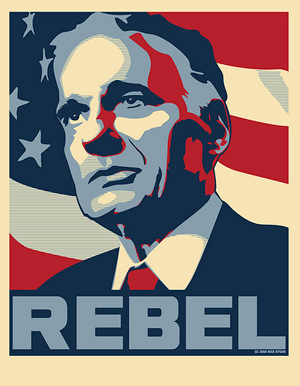 MEDIA ROOTS- Ralph Nader continues to be one of the most
honest U.S. political analysts, despite being
such an influential public citizen.
MEDIA ROOTS- Ralph Nader continues to be one of the most
honest U.S. political analysts, despite being
such an influential public citizen. 
 GLOBAL RESEARCH