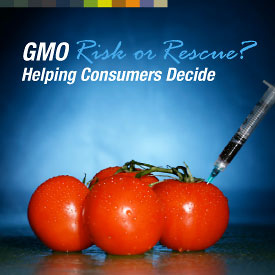
 GRIST – Bittman: Time to label GMOs
With
the USDA’s recent flurry of green lights for genetically modified crops — evidently at the urging of the White House — the Obama
administration should brace itself for a big push on the labeling
question. Popular sentiment may be swelling for something the
agrichemical/biotech industry really doesn’t want: labels on food products
proclaiming the presence of GM material. The New York Times’ Mark Bittman
is a widely read and influential writer. His latest column puts the case for labeling in terms that the administration will have trouble refuting:
“Even
more than questionable approvals, it’s the unwillingness to label these
products as such — even the G.E. salmon will be sold without
distinction — that is demeaning and undemocratic, and the real reason is
clear: producers and producer-friendly agencies correctly suspect that
consumers will steer clear of G.E. products if they can identify them.
Which may make them unprofitable. Where is the free market when we need
it?”
He who controls the research …
At the L.A. Times, the Union of Concerned Scientists’ wonderful Doug Gurian-Sherman has a must-read op-ed for anyone who thinks people are hysterical to oppose GMOs (or want
them labelled). Writes Gurian-Sherman about the alleged benefits of
GMOs:
“We
don’t have the complete picture. That’s no accident.
Multibillion-dollar agricultural corporations, including Monsanto and
Syngenta, have restricted independent research on their genetically
engineered crops. They have often refused to provide independent
scientists with seeds, or they’ve set restrictive conditions that
severely limit research options.”
Those
facts should be pondered whenever you hear anyone mouth the platitude
that GMOs “have been proven safe” or “never hurt anyone” or deliver X,
Y, or Z benefits. Empowered by a generous intellectual-property
regime, the seed giants dictate who does what research and how. As
Gurian-Sherman reports, the industry and the EPA were embarrassed in
2009
when 26 university entomologists wrote a letter to the agency
complaining of lack of access to seeds. “No truly independent research
can be legally conducted on many critical questions involving these
crops,” they wrote. Monsanto and other companies have been shamed into
reaching agreements to allow access to seeds to USDA and unversity
researchers — but the deals are voluntary, opaque, and still quite
limited. As Gurian-Sherman writes: “The Monsanto agreement with the USDA
covers research into crop production practices, for example, not
research into issues such as the health risks of genetically engineered
crops.”
A defense of GMO alfalfa gets mowed down
James McWilliams is a vegan, so he deplores the planting of alfalfa, which is mainly used as cow feed. But if it must be planted, he argues on the Atlantic website, it might as well be from Monsanto-patented seed genetically engineered
to withstand Roundup, Monsanto’s flagship herbicide. The USDA itself [PDF] and mainstream ag scientists are on record warning that Monsanto’s alfalfa will cross-pollinate with organic and non-engineered alfalfa. The USDA chose to “deregulate” it anyway, enraging the organic community. In his Atlantic piece, McWilliams set out to defend that decision by debunking the
contamination fears. A few days later, Organic Inc. author Sam
Fromartz completely obliterated McWilliams’ argument, documenting several past cases of GMO contamination.
Time’s Bryan Walsh: the food movement can revive environmentalism
Bryan Walsh makes a rousing case for
the food movement as savior of environmentalism, which, he argues, has
“stalled.” There’s a lot to what Walsh is saying here, but I think
there’s something different going on than what he describes. I don’t
think environmentalism has stalled; I think efforts to make big policy
changes have stalled. Climate legislation failed ignominiously last year,
and not before being hopelessly compromised and stepped on by industry
interests. And that was with Democrats in charge of the White House and
both legislative chambers. Meanwhile, global climate talks are in limbo.
What now? No one has figured out a way to crack that nut.
What the food
movement offers is a hands-on way to create a world that makes sense in
your immediate community. It is environmentalism brought into the
kitchen, the yard, the neighborhood, the city farmers’ market, the soil
in the surrounding countryside. You can get your hands on food, taste
it, make friends around it. The change you see is immediate. And just as
the environmental movement spawned the environmental-justice movement —
based on the idea that certain groups were more focused on whales than
on toxic poisoning in low-income communities — a food-justice movement has sprung up. Indeed, much of today’s food movement sprouted in low-income urban areas in the early ’90s.
But on the grand policy level — Michelle Obama’s garden and kids
initiative aside — the food movement is getting squashed, too, as Food
and Water Watch’s Wenonah Hauter recently argued in a pungent essay. The lesson: Changing policy is hard, long, grinding
work, often abstract and rife with defeats. To keep going, it
helps to have on-the-ground successes, and that — often enough — is
what community food work provides. (Not that there aren’t setbacks,
squabbles, and frustrations built into it.) All that said, I agree with
Walsh that the food and environmental movements are now intertwined and
will thrive or languish together.
Click to continue reading full article the case for labeling GMOs.
Article by Tom Philpott, Grist’s senior food and agriculture writer.
© Copyright Grist, 2011
Image by flickr user, Askokas Change Makers
Monsanto Crop Circle photo by Melvyn Calderon:Greenpeace



 GRIST– “Coca-Cola goes green,” announced a 2010 Forbes article. Indeed, the beverages giant maintains partnerships with Big Green groups like Conservation International and World Wildlife Fund. It recently even completed its takeover of Honest Tea, an organic bottled-tea company. It would clearly like to be seen as a paragon of “green capitalism” — the idea that doing good and doing well go hand in hand.
 HUFFINGTON POST
 NATURAL NEWS
 GRIST
GRIST YAHOO NEWS