MEDIA ROOTS — Residents
in the Carroll Boone Water District (CBWD) of Arkansas might soon have fluoride
removed from their water supply. According to Rene Fonseca, a licensed operator
with CBWD, the corrosive additive has been proven to leach lead from aging
distribution pipes which is likely causing increased lead contamination in the
region’s water supply.
Several other areas in the state of Arkansas have also
opposed adding fluoride to their water. Lobbyists from the fluoridation industry claim that CBWB taxpayers would not be strapped with
the $1.23 million cost to install fluoridation equipment. But the
Mockingbird Hill Water Association in Boone County unanimously opposed
adding fluoride to its water supply, stating that they don’t want to
take any chances amidst the current economic hardship.
Last year, in the Southern District Court of California, a
lawsuit was filed asserting the U.S. people have the right to neither ingest nor be exposed to a drug
that has never been tested or approved by the Food and Drug Administration. While the Surgeon General claims that the additive helps reduce
tooth decay, only the FDA is chartered by Congress
with the authority to approve claims of safety for products intended to treat
and prevent disease.
MR
***
Carroll County News — Eureka Springs has twice voted against fluoridation. Opponents of fluoridation
say many other cities across the country have stopped fluoridating waters after
studies have linked it to hypothyroidism, heart disease, learning problems in
children and possibly cancer.
There are also concerns the
fluoride products added to the water could be contaminated with toxic
chemicals. The CBWD, which serves a population of about 25,000, contacted 49
suppliers of fluoride asking for proper American National Standards Institute (ANSI)
and NFS60 certification that would list all contaminants by weight, and include
information about toxicological studies pertaining to those contaminants.
“These are extremely
dangerous substances,” Fonseca said. “The acute lethal toxicity of
sodium fluorosilicate for an adult man is 6.2 grams, which is about the weight
of an average driver’s license. At a water plant the size of CBWD, you would be
dumping 150 pounds a day into the water — enough oral doses to poison 9,600
men a day or 297,000 men a month. This is not pharmaceutical grade fluoride, as
you would receive in the dental office.
GRIST– Chemicals and additives found in the food supply and other consumer products are making headlines regularly as more and more groups raise concern over the safety of these substances. In a statement released this week, the American Academy of Pediatrics (AAP) asked for reform to the Toxic Substances Control Act of 1976. The group is particularly concerned about the effects these substances have on children and babies.
Last month, the U.S. Food & Drug Administration (FDA) held hearings on the safety of food dyes but failed to make a definitive ruling. The most recent study on Bisphenol-A (BPA) added to growing doubts about its safety; but the FDA’s stance on it remains ambiguous. Meanwhile, in 2010, the Government Accountability Office (GAO) reported [PDF] that the FDA is not ensuring the safety of many chemicals.
Yet while the FDA stalls and hedges on the safety of these substances, Americans are exposed to untested combinations of food additives, dyes, preservatives, and chemicals on a daily basis. Indeed, for the vast majority of Americans consuming industrial foods, a veritable chemical cocktail enters their bodies every day and according to the GAO report, “FDA is not systematically ensuring the continued safety of current GRAS substances.”
The term GRAS refers to “generally regarded as safe,” the moniker the FDA uses to regulate food additives, dyes, and preservatives. The trouble is, this system is not effective. Dr. Michael Hansen, a senior scientist at Consumers Union, said in an interview that many additives in our food supply are never even tested. That’s because the GRAS designation is a voluntary process – instead of being required to register food additives, companies can notify the FDA about their product, but only if they so choose. Hansen added that even for those additives considered GRAS, he didn’t have much faith in the designation.
NATURAL NEWS– Twelve million New Yorkers, 8.4 million of which live in
New York City (NYC), continue to involuntarily consume fluoridated water
regularly, despite a report issued from the New York State Department
of Health (DoH) back in 1990 which warned that the chemical additive is
toxic. To this day, many officials not only deny this report, but also
falsely insist that “water fluoridated at the optimum level poses no
known health risks.”
The original report, entitled Fluoride: Benefits and Risks of Exposure, provided a sharp warning to officials that fluoride chemicals are especially harmful to kidney disease
patients, diabetics, and those who are hyper-sensitive to the chemical.
It also warned that because fluoride puts incredible toxic pressure on
the kidneys, those with weaker kidneys are at an increased risk of developing skeletal fluorosis, a severe bone disease marked by symptoms of pain, tenderness and bone fractures.
The
toxicity of fluoride is so great that in 2007, the National Kidney
Foundation (NKF) withdrew its endorsement for fluoride as a beneficial water additive. The group has stated that “individuals with chronic kidney disease (CKD) should be notified of the potential risk of fluoride exposure.”
FOOD CONSUMER– Dr. Paul Connet, Ph.D. of St. Lawrence University in Canton, NY
offers 50 reasons to oppose fluoridation as listed below and the
statements are slightly edited.
1. Humans don’t need fluoride to have good teeth.
2. Fluoridation is unnecessary. Most Western European countries are
not fluoridated and they have experienced the same decline in dental
decay as the U.S. where a majority of cities are fluoridated.
3. Fluoridation’s role in the decline of tooth decay is in serious doubt.
4. Where fluoridation has been discontinued in communities in
Canada and other countries, dental decay has not increased but actually
decreased.
5. Dental crises were reported to have occurred in U.S. cities
where fluoride has been added to drinking water for over 20 years; Tooth
decay is more correlated with income than fluoride levels in water.
6. A decline in tooth decay had been already seen before
fluoridation was introduced; Some studies suggested increased levels of
fluoride in drinking water was associated with elevated risk of tooth
decay.
7. The Centers for Disease Control and Prevention acknowledges
findings by many leading dental researchers that fluoride does not have
to be ingested to have a protective effect, which is topical, but not
systemic. Since swallowing fluoride is unnecessary, no reason exists to
force people (against their will) to drink fluoride in their water
supply.
8. The FDA has never approved any fluoride product designed for ingestion as safe or effective.
9. Fluoridation does not help reduce dental decay rates. A major
survey has found 30 percent of children in fluoridated areas had dental
fluorosis on at least two teeth while the purpose of fluoridation is to
limit the rate below 10 percent.
10. While fluoride is a known risk factor for dental fluorisis, other factors also affect the dental condition.
11. The level of fluoride put into drinking water at 1 ppm is not
what nature intended. Fluoride presented in mother’s milk is 200 times
lower than 1 ppm. No benefits but only risks come from this level of
fluoride.
12. Fluoride is a cumulative poison, and only 50 percent of this mineral ingested daily can be excreted through the kidneys.
13. Fluoride actively interferes with hydrogen bonding and inhibits a great number of enzymes.
14. Together with aluminum, fluoride interferes with G-proteins
leading to further interference with many hormonal and some
neurochemical signals.
15. Fluoride is mutagenic and can damage DNA and interfere with enzymes that help DNA repairs.
16. Fluoride can form complexes with other metals or minerals causing a variety of problems.
17. Animal studies show exposure to 1 ppm of fluoride in the form
of sodium fluoride or aluminum fluoride in drinking water for a year
resulted in morphological changes in kidneys and brains of rats,
increased uptake of toxic metal aluminum in the brain and the formation
of beta-amyloid deposits, which increases the risk of Alzheimer’s
disease.
18. Aluminum fluoride used to fluoridate water is toxic to the
brain; the U.S. government recommended this chemical should be tested
for its toxicity.
19. Fluoride accumulates in the brain and alters mental behavior in a manner like a neurotoxin.
20. Five studies in China revealed fluoride exposure was linked lower IQ in children.
21. Fluoride also accumulates in the pineal gland to a very high
level and reduces melatonin production and leads to an early onset of
puberty.
22. Fluoride was prescribed in Europe to patients with
hyperthyroidism. Water fluoridation essentially forces people to use a
thyroid-depressing drug. The Department of Health and Human Services
reported fluoride exposure in fluoridated communities is estimated at
the range of 1.6 to 6.6 mg per day, which covers the dose range from 2.3
to 4.5 mg per day that decreases the thyroid functions.
23. Some early symptoms of skeletal fluorosis, which is caused by fluoride, mimic the symptoms
of arthritis, a fact that leads to misdiagnosis of skeletal fluorosis.
Because of this, incidence of skeletal fluorosis can be underestimated.
24. High doses of fluoride up to 26 mg per day were tried to treat
people with osteoporosis in hopes that their bones can be hardened and
fracture rates can be reduced. Exposure to such high levels, in fact,
increased the rate of fractures, particularly hip fractures. The level
of exposure can be easily reached in people who live in fluoridated
areas during their lifetime.
25. Many studies have linked exposure of fluoride with increased
risk of fractures, particularly hip fractures, which are serious health
problems.
MEDIA ROOTS- When was the last time you stopped to think about the one thing you
can’t live without? I don’t mean the Internet – I’m talking about water.
Without clean drinking water, life could not go on. This is why it’s so
important that we know what is in our
water. For the past sixty-five years, city governments nationwide have
been adding a controversial substance called fluoride to municipal water
supplies.
You probably recognize the word fluoride from the back of your toothpaste tube or from your visits to the dentist. But
the fluoride added
to our water is not the same as that in our toothpaste. The chemical added to
our water is a fluorine compound called hexafluorosilicic
acid that is generated as a by-product from the phosphate fertilizer
industry.
Phosphates are minerals that are used to make fertilizer, and phosphate
mining industry is a giant moneymaker. Fluoride is created
by the production of fertilizer as well as in the manufacturing of steel, aluminum,
glass, and cement. Previously, the lack of government regulation allowed gaseous
fluoride to move through factory smokestacks and straight into our
atmosphere. Now, environmental regulations require giant filtration
systems called “scrubbers” atop the stacks to keep these toxic
chemicals from escaping into the air. Fluorosilicic acid is then extracted from these scrubbers and condensed to
a water-based solution which is packaged unrefined and sold to city governments for the purpose of water fluoridation.
By selling the fluoride byproducts for this purpose, companies avoid
the huge cost of disposing of these chemicals in the environment
safely, and according to regulation. Back in the 1930’s, a band of
industrial corporations – including Monsanto, U.S. Steel, Union Carbide,
and Aluminum Company of America (ALCOA), the leading producer of
aluminum – had been cheaply disposing of their fluoride byproducts into
the environment for years. This changed when their toxic waste became the
target of negative press in the local news. A 1933 toxicology report by the
USDA had warned of fluoride’s toxicity, singling out the aluminum industry as
the biggest culprit.
The new potential of legal liability due to the exposure of
workers and communities to industrial fluoride scared these corporations.
Knowing that disposing of industrial fluoride waste safely was expensive, ALCOA
employed biochemist Gerald Cox
in 1936, to argue for fluoride’s dental benefits through experimentation on
rats. Cox, neither a doctor nor a dentist, concluded that fluoride strengthened
and protected teeth against decay and began to tour the country promoting water
fluoridation on behalf of his employers. Interestingly, Cox’s
findings ran contrary to the position originally held by the American Dental
Association (ADA) on water fluoridation.
In 1944, the Journal of the
American Dental Association published
the following statement:
“We do know that the use
of drinking water containing as little as 1.2 to 3.0 parts per million of
fluoride will cause such developmental disturbances as osteosclerosis,
spondylosis, and osteopetrosis, and we cannot afford to run the risk of
producing such serious systemic disturbances…”
In spite of this warning by the ADA, Grand Rapids, Michigan became the first
community to fluoridate its drinking water the very next year.
In 1947 Oscar R. Ewing, a
paid attorney for ALCOA, was picked to head the Federal Security Agency. In
this position he oversaw the Public Health Service or PHS (which is now the
Department of Health and Human Services). This enabled him to change the Code of Federal
Regulations, and place all control of drinking water fluoridation in the hands
of his own department. Making clear his lingering ties to the aluminum industry
and their expensive toxic waste, Ewing made fluoridation
promotion one of the first official policies of the PHS. Over the next three years, 87 additional American cities began fluoridating their water.
The study that is often referred to in fluoride’s defense
was conducted by
the National Institute of Dental Research
(NIDR) of the United States Public Health Service (PHS). It sought to
determine whether there was a relationship between fluoridation and tooth
decay. Released in 1988, the multi-million dollar nationwide survey examined
39,000 U.S. school children aged 5-17 from 84 different fluoridated and
non-fluoridated geographical areas.
Surprisingly, the study uncovered a declining trend in tooth
decay rates in both fluoridated and non-fluoridated areas, mostly due to overall
better hygiene. The overriding conclusion from the extensive study was that
there is no relationship between
tooth decay and fluoride ingestion. Despite this consensus, this study is still commonly cited to link lowered decay
rates in fluoridated areas. A seldom-reported fact is that the same trend was
found in non-fluoridated areas too.
Fluoride overexposure can bring serious health risks. The most common affliction due to overconsumption is
called fluorosis,
a condition characterized by a discoloration of teeth or changes in bone
density. An excess of fluoride eats away at the enamel of your teeth,
causing craters and surface discoloration. Dental fluorosis is the first clear
and obvious sign that your body is being poisoned by too much fluoride, and
cases can range from mild to severe. This occurs because only 50% of all fluoride
taken in by the body is excreted. The remaining fluoride is disseminated
throughout the body, accumulating in our bones, pineal gland and other tissues.
In Karnataka,
India, an excess of fluoride has turned the ground water into a slow
poison, crippling at least 10,000 people.
The Director of the National Institute of Mental Health and
Neurosciences, Dr D Nagaraj, says
that “due to fluoride concentration in water, many people in districts [in Karnataka, India] like Dharwad
and Tumkur have spinal cord diseases. These are progressive diseases,
after decades of consumption. People are battling with permanent disabilities.”
Alarmingly, a 1991 study
by the U.S. Public Health Service found that the rates of osteosarcoma, a
deadly type of bone cancer, were significantly higher in fluoridated
communities than in non-fluoridated communities. The Harvard School of Dental
Medicine found
the same link in study done ten years later. Additional studies
have associated fluoride ingestion with other serious health problems,
including chromosomal damage, morphological changes to their kidneys and brain,
hypo activity (or inactivity), damage to the thyroid gland, skeletal fluorosis,
osteoporosis, liver cancer, and fertility problems.
The most distressing findings come from 18 human studies done in
China, India, Iran and Mexico that show a substantial lowering of IQ in fluoridated
areas. The ingestion of fluoride has been shown to increase the gastrointestinal absorption
of aluminum by over 600%, and the absorption of heavy metals like aluminum is
speculated to have a direct correlation to Alzheimer’s disease and other neurological
brain disorders. Although a direct correlation between Alzheimer’s disease and
fluoride ingestion is inconclusive, it is interesting to note that the rate
of Alzheimer’s is twice as high in America than in Europe, where many countries
have banned fluoridation.
Many countries around the world are
skeptical of the benefits of adding fluoride to drinking water. Austria,
Belgium, Denmark, Finland, France, Germany, Iceland, Italy, Luxembourg,
Netherlands, Norway, Sweden, Switzerland, Japan and China have all ruled out water
fluoridation as a safe and fair practice.
If you want to find out whether you’re drinking
fluoridated water, the first thing you can do is access your city’s
fluoridation status on the Center for Disease Control’s website in its oral health
section.
If your water is fluoridated, it’s not a lost cause. You can speak out in your community or at
city council meetings to let your local representatives know your concerns. To remove
fluoride from your water you have a couple of options. You can equip your home
with water filtration systems like those at Equinox or Burkey. Filters like Pur
and Brita do not remove fluoride. If you
buy bottled drinking water, reverse osmosis and distillation remove almost all
fluoride.
If your city is planning to fluoridate you can stop it! Activists
in Pennsylvania have
successfully fought off fluoridation legislation since 1987 and they’re at it
again. There is still a chance to put a halt to the fluoridation process in
your own city.
Whether or not you support water fluoridation, the
real issue here is having a choice. No chemical, no matter what its supposed
benefits are, should be forced upon the public without their consent. Having access to clean water should be a
fundamental right for every human being.
“Water is the lifeblood of our bodies, our economy, our nation and our well-being.” -Stephen Johnson
***NOTE
After numerous attempts to get data from city officials proving the
benefits of mass fluoridation, I kept getting referred back to either the
respective city’s water website or other government controlled sites. I also
attempted to get in contact with Ellie Nadler, the head of San Diego’s Coalition for Fluoridation, but
couldn’t find any legitimate website or group presence for that matter. Ellie
backed out of any interviews and refused to give a statement.
Written by
Abby Martin, Research help by Jeff Wilson
Interview I conducted with David C. Kennedy, DDS, and former head of the International Academy of Oral Medicine and Toxicology.
Additional Resources–
Tooth
Decay Trends
in Fluoridated and Non Fluoridated Areas



 MEDIA ROOTS — Residents
in the Carroll Boone Water District (CBWD) of Arkansas might soon have fluoride
removed from their water supply. According to Rene Fonseca, a licensed operator
with CBWD, the corrosive additive has been proven to leach lead from aging
distribution pipes which is likely causing increased lead contamination in the
region’s water supply.
MEDIA ROOTS — Residents
in the Carroll Boone Water District (CBWD) of Arkansas might soon have fluoride
removed from their water supply. According to Rene Fonseca, a licensed operator
with CBWD, the corrosive additive has been proven to leach lead from aging
distribution pipes which is likely causing increased lead contamination in the
region’s water supply. GRIST
GRIST NATURAL NEWS
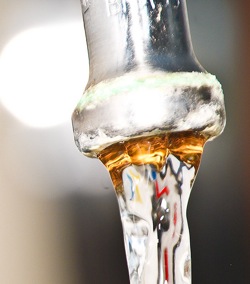 MEDIA ROOTS- When was the last time you stopped to think about the one thing you
can’t live without? I don’t mean the Internet – I’m talking about water.
Without clean drinking water, life could not go on. This is why it’s so
important that we know what is in our
water. For the past sixty-five years, city governments nationwide have
been adding a controversial substance called fluoride to municipal water
supplies.
MEDIA ROOTS- When was the last time you stopped to think about the one thing you
can’t live without? I don’t mean the Internet – I’m talking about water.
Without clean drinking water, life could not go on. This is why it’s so
important that we know what is in our
water. For the past sixty-five years, city governments nationwide have
been adding a controversial substance called fluoride to municipal water
supplies. 