 MEDIA ROOTS – Like a misplaced time capsule that was never buried, one quaint town in Florida harkens back to an old-world fishing village on the Aegean Sea, a place where life slowly drips. Situated on the west central Gulf coast, Tarpon Springs might be the last bastion of unadulterated Greek culture in America. Attracted by the lucrative sponge fishing trade, Greeks began inhabiting the area over 100 years ago. The sponges have since disappeared and the docks have been reappropriated to sell schlock beach souvenirs, but what remains is the U.S.’s highest proportion of Greek-Americans, and their heritage. Not too far from the well-worn tourist path in town, a narrow street gently curves through the neighborhood, leading to a couple of Greek social clubs.
Cushy clouds stretch across the day’s powder blue sky as the sun beams through saltwater scented air. In front of one of the clubs, middle aged men loiter about smoking cigarettes and talking in a jovial manner. At another club across the street, men play cards, watch Greek soccer on TV and drink the heavy sludge known as Greek coffee. It doesn’t take long in either group to find someone willing to discuss the trials currently plaguing Greece. They pause with a glint of curiosity in their eyes, confer for a few moments in Greek, then elect the best available English speaker to voice impressions and ideas not vetted in most coverage regarding the modern Greek drama. Demetrios Dounakis, a cheery, balding man with family still in Greece, has lived in America since 1971. Another, Stavros Bairaktaris, with salt-and pepper-hair and wandering, contemplative eyes, has lived in the U.S. for four years. Now, both call Tarpon Springs home. Their views as expatriates cast new light onto the troubles of the Greek people.
After some alpha male posturing and tough talk from Bairaktaris, he begins to speak freely. First, he paints a beautiful picture of Greece: the beaches, the small towns, the home and farm handed down to him from his father. His eyes scan the blue infinity of the skies as he recalls lovely details. In short time, however, his nostalgia turns to contempt, at the subject of the debt crisis. Bairaktaris’ voice, when speaking about Greek prosperity- or lack of it- churns in heavily accented, slightly broken English. “Why they surprised?” Upset by the lack of historical context that the media and sympathizers display, he continues, “Greece like this, Greece built like this, goes back to father’s place, back my grandfather’s place: same, same, same.” Evidently the Greek crisis is multi-textured; quick forgiveness, outpourings of sympathy, and emotional lifelines weren’t going to be handed out here. Instead Bairaktaris and Dounakis did their best to tease apart the complex layers of culpability, starting at the top.
The current prime minister of Greece was never elected. Rather, Lucas Papademos, a technocrat, was appointed to the position in 2011 thanks to his prior experience as Senior Economist at the Federal Reserve Bank of Boston, Vice President of the European Central Bank, and Governor of the Bank of Greece, where he oversaw the transition from the drachma to the euro. Dounakis didn’t have much to say about Papademos specifically, but he didn’t withhold any feelings regarding political responsibility for the crisis.
For starters, Demetrios didn’t support the switch to the euro, and doesn’t think bailouts will do Greece any good. In his view, Papademos “does whatever the EU tell him and they don’t care about the people,” and furthermore, the European Union (EU) supports the current Greek government and is therefore partially responsible for the crisis. Dounakis identifies the EU along with the United States as “big powers”- the real bosses- and claims that the Greek bailout and austerity program is going as planned from American shores. “If EU and USA weren’t here this [the corrupt Greek] government is gone long time ago.” Worse, it seems, is that if things continue as they are, nothing can be changed. His ongoing charisma turned into a stinging assessment.
“Have you ever seen so many demonstrations in your life,” Dounakis asks, his eyes narrowing. “They cut down wages, cut down their social security, they cut down everything. You know so that way the big sharks make more money.” His reference to banksters and financial hustlers swarming the waters of Greece in a feeding frenzy reflects a fear that “Greece is going to be destroyed completely. This is bankruptcy right now no matter what.” Dounakis reiterates how the bailout money is not going to the Greek people, but to those “big sharks,” angered that the money designated for the people, won’t make it past the pockets of a corrupt government and an entrenched class of civil servants.
Bairaktaris lays much of the blame at the feet of the latter group. “You know somebody, you have [a way into] the system. You get 3,000 euros [a month for] the rest of your life; you never work; you never get fired; you get all this kind of stuff. This is not today. This is from 1930s.” Bairaktaris’ frustration highlights American criticisms of Europe’s inflexible labor forces feeding at the trough of socialist largesse. This doesn’t seem to be new either, rather institutionalized nepotism and cronyism. “Any office you go, the police, everybody is like a president. You have no law. I wish they could change this,” he laments. Bairaktaris continues his pointed critique of Greek civil servants, saying they “smoke a cigarette, take a break; ‘We closed today.’ Twelve o’clock in the afternoon!” He juxtaposes the plight of an elderly lady, who might receive a 300 euro a month social security benefit while having to pay 700 euros in property tax, with a civil servant who gets 2,000 euros a month to “do nothing.”
Stories of tax evasion in Europe are common and make the endeavor sound like a national pastime in some countries. An inability to levy equal taxes on the Greeks surfaced as a common complaint. Bairaktaris made a point of this when he summed up the attitude of the Greek elite: “You don’t pay no taxes, you rich, you control everything.” Dounakis reacted more vehemently to the subject; a lack of justice, fairness and shared sacrifice percolated from his anger. “Americans have best system if you are millionaire. You gotta pay no matter what…In Greece, when you millionaire, nothing happens!” he exclaims with a hearty laugh. Contrasted with this is his idealized view of American tax collection: “They gonna cut your balls if you don’t pay in the U.S.” Perhaps Greece and America have more in common than Dounakis realizes. He unknowingly exposes more similarities, saying of the toothless, Greek tax collection authority “The big corporations – [they] let ‘em free you know.” The captains of industry in Greece “owe millions to the government and do nothing,” Dounakis concludes, shrugging his shoulders. Unfortunately, for all the problems he can diagnose, his remedies number fewer.
Dounakis firmly believes that the only solution for Greece is for the leftist and communist parties to take power. He thinks that the key to solving Greece’s problems lies in the hands of the Greek people themselves. According to him, the citizens are waking up. “They need to vote for the left parties and communists…If they vote again for the right, for the same leaders, the people are stupid.”
Dounakis tells how years ago, the Communist Party (KKE) warned Greece of the plans of the “big sharks” prior to entering the EU. Like a father with his son in an “I told you so” moment, he explains further that the small parties told the truth, yet the people still voted for the “big sharks and big companies.” Thus, all the bailout money, he says, is going to the “Troika”: the International Monetary Fund, the European Central Bank and the European Commission. He compares the “Troika” to the loan rackets that Chicago gangsters ran decades ago.
Regardless, he doesn’t blame Germany, and repeats that it’s time for Greek people to wake up. “I don’t blame superpowers, they doing to make their own jobs,” his face resigned to indifference. He adds that most Greeks in Greece would agree with this, but Greek nationals in America do not. “I blame my fucked up, stupid people. Don’t stay in house and let other people with good jobs vote!” (Numbers indicate that on average, over 80 percent of Greeks vote.) He finishes by saying, “In this country, same thing, too. Get out and vote!” The wisdom of his words rings loudly, as the American masses are frequently afflicted with voter apathy. When people don’t actively participate in their democracy and the path of their country goes terribly awry, the best place to look for answers might be the closest mirror.
Sometimes Europeans say that one big difference between themselves and Americans is that “in Europe governments fear the people, and in America people fear the government.” Perhaps Bairaktaris unconsciously reflects on this as he urges “Don’t live in fear.” He submits that this is the most important thing in life as his eyes track back and forth across the sky. Maybe the problems of Greece, America’s problems, and the problems of so many other countries during this tumultuous era aren’t as different as they are frequently portrayed to be. By accepting responsibility for leading ourselves into misfortune, perhaps salvation can be found in our commonalities with others around the globe. “I don’t believe in nationalism bullshit” Bairaktaris declares. “I believe in good people is everywhere, understanding, sitting down, talking.” Sometimes the solutions to our problems are simple and easily attained, if we only saw them. With that, he bids goodbye and returns to his social club to sit and talk with his friends.
Written by Adam Miezio for Media Roots
Photo by flickr user Piazza del Popolo
***



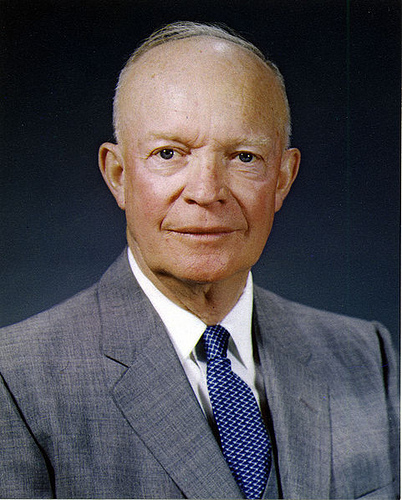 MEDIA ROOTS – The term “military-industrial complex” was originally coined by President Eisenhower in his final address as Commander-In-Chief and has since become a foreshadowing declaration to a country that may have lost its moral compass in pursuit of profits. “God help this country,” the President warned just a few weeks prior to this speech, “when someone sits in this chair who doesn’t know the military as well as I do.” Now it seems, with an annual defense budget of well over one trillion dollars, it has become a civic duty for all Americans to inform their peers of this misplaced power.
 MEDIA ROOTS — If you’ve taken Economics 101, you may have had the same realisation I did when the course reached the part where the USA, for example, goes off the gold standard and the dollar becomes a purely fiat currency with no gold or anything tangible backing it. When the issues of the business cycle arise, the inherent boom and bust cycles of our capitalist system, and the citizenry, economists, and legislators face the questions of what to do about those recurrent economic recessions, conventional economics says we must cut spending and raise taxes.
  MEDIA ROOTS – Like a misplaced time capsule that was never buried, one quaint town in Florida harkens back to an old-world fishing village on the Aegean Sea, a place where life slowly drips. Situated on the west central Gulf coast, Tarpon Springs might be the last bastion of unadulterated Greek culture in America. Attracted by the lucrative sponge fishing trade, Greeks began inhabiting the area over 100 years ago. The sponges have since disappeared and the docks have been reappropriated to sell schlock beach souvenirs, but what remains is the U.S.’s highest proportion of Greek-Americans, and their heritage. Not too far from the well-worn tourist path in town, a narrow street gently curves through the neighborhood, leading to a couple of Greek social clubs.
  MEDIA ROOTS — As U.S.A. comes to grips with a severe financial hangover, its economy will adapt to meet the peoples’ needs. After 30 years of easy credit, subprime mortgages, zero interest loans, and binge spending, the economy has imploded. The wizards of Wall Street continue casting spells and weaving their magic, as the corporate media rattles on about the wizards’ omnipotence like a rickety player piano.
  MEDIA ROOTS — “In this same
dream I had a girl waiting for me down the hall. I wanted to go out and see her
but the nurse wouldn’t let me so after trying to fight my way out and failing I
called the MP’s who promptly arrested them. After that I found out that they
were going to beat me up so I tried to make friends with the one who appeared
to be the leader. It must have worked because I don’t remember a beating.” —unknown male soldier volunteer at Edgewood
1963, dose: IM 7.0 ug/kg
MEDIA ROOTS — “In this same
dream I had a girl waiting for me down the hall. I wanted to go out and see her
but the nurse wouldn’t let me so after trying to fight my way out and failing I
called the MP’s who promptly arrested them. After that I found out that they
were going to beat me up so I tried to make friends with the one who appeared
to be the leader. It must have worked because I don’t remember a beating.” —unknown male soldier volunteer at Edgewood
1963, dose: IM 7.0 ug/kg 