Painkillers Could be a Gateway to Heroin

CNN– This past winter, I found myself following a drug dealer and his crew up the dark stairway of a triple-decker apartment building on the outskirts of Boston. Reaching a unit on the top floor, the young man pulled a gun from his waistband and set it on a coffee table next to a digital scale and a pile of drugs.

Entering a drug den, you might expect to find cocaine or heroin. But side by side with this pile of “hard stuff” were prescription pills, lots of them.

The little green tablets the men were dealing — known as “Perc 30s,” “Percs” or simply “30s” on the streets — were 30-milligram oxycodone. In medicine, oxycodone is known as an opioid analgesic, a powerful painkiller prescribed to patients with acute or chronic pain. On the streets, it’s known as heroin in a pill, and to borrow some Boston slang, it will get you “completely jammed.”

When Gil Kerlikowske, President Barack Obama’s national drug policy director, recently described today’s prescription drug abuse in the U.S. as worse than the crack epidemic of the 1980s, he was simply echoing what these drug dealers have long known.

“Pills are what it is now,” as one of them put it to us that night.

In the U.S., more people are abusing prescription drugs than cocaine, heroin and Ecstasy combined, but the most destructive have been prescription pain drugs such as oxycodone, best known by the brand name OxyContin.

The Centers for Disease Control data show overdose deaths from prescription painkillers more than doubled from 2000 to 2007, and in 17 states, painkiller overdoses are now the number one cause of accidental death.

Read full article on how Painkillers Are a Gateway to Heroin.

© 2011 CNN

Photo by Flickr user EMagineArt
Are You Enjoying Your Daily Chemical Cocktail?

GRIST– Chemicals and additives found in the food supply and other consumer products are making headlines regularly as more and more groups raise concern over the safety of these substances. In a statement released this week, the American Academy of Pediatrics (AAP) asked for reform to the Toxic Substances Control Act of 1976. The group is particularly concerned about the effects these substances have on children and babies.

Last month, the U.S. Food & Drug Administration (FDA) held hearings on the safety of food dyes but failed to make a definitive ruling. The most recent study on Bisphenol-A (BPA) added to growing doubts about its safety; but the FDA’s stance on it remains ambiguous. Meanwhile, in 2010, the Government Accountability Office (GAO) reported [PDF] that the FDA is not ensuring the safety of many chemicals.

Yet while the FDA stalls and hedges on the safety of these substances, Americans are exposed to untested combinations of food additives, dyes, preservatives, and chemicals on a daily basis. Indeed, for the vast majority of Americans consuming industrial foods, a veritable chemical cocktail enters their bodies every day and according to the GAO report, “FDA is not systematically ensuring the continued safety of current GRAS substances.”

The term GRAS refers to “generally regarded as safe,” the moniker the FDA uses to regulate food additives, dyes, and preservatives. The trouble is, this system is not effective. Dr. Michael Hansen, a senior scientist at Consumers Union, said in an interview that many additives in our food supply are never even tested. That’s because the GRAS designation is a voluntary process – instead of being required to register food additives, companies can notify the FDA about their product, but only if they so choose. Hansen added that even for those additives considered GRAS, he didn’t have much faith in the designation.

Read more about Are You Enjoying Your Daily Chemical Cocktail?

© 2011 GRIST

Photo by Flickr user joepitz

Posted in Uncategorized | 1 Reply

Coke, BPA, and the Limits of Green Capitalism

GRIST– “Coca-Cola goes green,” announced a 2010 Forbes article. Indeed, the beverages giant maintains partnerships with Big Green groups like Conservation International and World Wildlife Fund. It recently even completed its takeover of Honest Tea, an organic bottled-tea company. It would clearly like to be seen as a paragon of “green capitalism” — the idea that doing good and doing well go hand in hand.

Let’s put aside questions over what can possibly be “green” about a business model geared to sucking in huge amounts of drinking water, blasting it with what are probably toxic sweeteners and other dodgy substances, and then packaging it in little aluminum cans and plastic bottles and sending them far and wide, to be chilled (using fossil energy) before consumption.

OK, so within those tight constraints, Coca-Cola says it wants to be a “green company.” So … WTF? Last week, Coca-Cola shareholders voted by a 3-to-1 margin to continue using BPA, a toxic industrial chemical, in the lining of its soft-drink cans.

According to an account in Food Production Daily, a company executive assured shareholders that “if we had any sliver of doubt about the safety of our packaging, we would not continue to use [BPA].” So, we’re supposed to believe that Coke execs have weighed the evidence and found BPA to be safe — and that they will immediately banish it if they decide otherwise.

Sorry, but that’s bullsh*t.

Read more about Coke, BPA, and the Limits of ‘Green Capitalism’

© 2011 Grist

Photo by Flickr user williamtillis

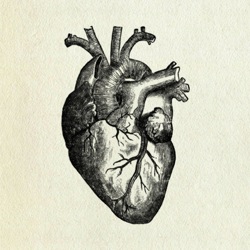
Heart Disease Leading Killer in America

heart diseaseCNN– It may be America’s No. 1 killer, but people aren’t scared enough of heart disease, says a top U.S. research cardiologist.

“We’ve done a good job of advertising to people that we’re doing better with heart disease, so people tend to sort of feel good about it,” said Dr. Robert Califf, vice chancellor for clinical research at Duke University Medical Center. “We have bypass surgery and stents and drugs that work; the [mortality] rates are declining.”

It’s true that U.S. heart disease deaths overall are down. From 1993 to 2003, cardiovascular disease death rates dropped 22.1 percent.

But more than 910,000 Americans still die of heart disease annually, according to the American Heart Association. And more than 70 million Americans live every day with some form of heart disease, which can include high blood pressure, cardiovascular disease, stroke, angina (chest pain), heart attack and congenital heart defects.

“It’s sort of accepted as part of the background noise, even though it’s far and away the mostly likely reason that you or I will die,” Califf said.

And it will get more likely, he said. “We’re just on the front end of the baby boomer epidemic, where the projections on the amount of cardiovascular disease are climbing steadily over the next 10 years,” he said.

Continue reading about Heart Disease Leading Killer in America

© CNN, 2006

Photo by flickr user Vintage Collective 

The Nature of Dis-Ease

thinking placeboBRUCE LIPTON, PHD– Sometimes, the body’s natural harmony breaks down, and we experience dis-ease, which is a reflection of the body’s inability to maintain normal control of its function-providing systems. Because behavior is created through the interaction of proteins with their complementary signals, there are really only two sources of dis-ease: either the proteins are defective or the signals are distorted.

About 5 percent of the world’s population is born with birth defects, which means they have mutated genes that code for dysfunctional proteins. Structurally deformed or defective proteins can “jam the machine,” disturb normal pathway functions, and impair the character and quality of lives. However, 95 percent of the human population arrives on this planet with a perfectly functional set of gene blueprints.

Because the majority of us have a perfectly healthy genome and produce functional proteins, illness in this group can likely be attributed to the nature of the signal. There are three primary situations in which signals contribute to dysfunction and dis-ease. The first is trauma. If you twist or misalign your spine and physically impede the transmission of the nervous system’s signals, it may result in a distortion of the information being exchanged between the brain and the body’s cells, tissues, and organs.

The second is toxicity. Toxins and poisons in our system represent inappropriate chemistry that can distort the signal’s information on its path between the nervous system and the targeted cells and tissues. Altered signals, derived from either of these causes, can inhibit or modify normal behaviors and lead to the expression of dis-ease.

The third and most important influence of signals on the dis-ease process is thought, the action of the mind. Mind-related illnesses do not require that there be anything physically wrong with the body at the outset of the dis-ease. Health is predicated upon the nervous system’s ability to accurately perceive environmental information and selectively engage appropriate, life-sustaining behaviors. If a mind misinterprets environmental signals and generates an inappropriate response, survival is threatened because the body’s behaviors become out of synch with the environment. We may not think that a thought could be enough to undermine an entire system, but, in fact, misperceptions can be lethal.

Continue reading about The Nature of Dis-Ease

© Bruce Lipton, 2009

Photo by flickr user Santosh Kumar GM

Posted in Uncategorized | 1 Reply