Panetta: “Not Much Choice” But to Use Blackwater

RAW STORY– How can a company allegedly responsible for killing 17 unarmed civilians in Baghdad in 2007 continue to get State Department and CIA contracts? CIA Director Leon Panetta says there is “not much choice” because few companies have the capabilities of Blackwater.

“Since I have become director, I have asked our agency to review every contract we have had with Blackwater and whatever their new name is now — Xe — to ensure first and foremost that we have no contract in which they are engaged in any CIA operations. We’re doing our own operations. That’s important that we not contract that out to anybody,” Panetta told ABC’s Jake Tapper Sunday.

“But at the same time I have to tell you that in the war zone, we continue to have needs for security. You’ve got a lot of forward bases. You’ve got a lot of attacks on some of those bases. We’ve got to have security. Unfortunately, there are few companies that provide that kind of security,” Panetta continued.

“State Department relies on them. We rely on them to a certain extent. So, we’ve bid out some of those contracts. They provided a bid that underbid everyone else by about $26 million and a panel that we had said that they can do the job, that they’ve shaped up their act,” he said.

“There was really not much choice but to accept that contract,” said Panetta.

“But having said that, I will tell you that I continue to be very cautious about any of those contracts and we’re reviewing all of the bids that we have with that company,” he concluded.

The CIA recently signed a new $100-million contract with Blackwater to guard its facilities in Afghanistan.

50 TO 100 AL QAEDA IN AFGHANISTAN

Panetta also told ABC’s Jake Tapper that he estimates there are somewhere in the vicinity of 50 to 100 Al Qaeda operatives inside Afghanistan.

“There’s no question that the main location of Al Qaeda is in the tribal areas of Pakistan,” he said.

Faiz Shakir at ThinkProgress notes that, with approximately 100,000 US troops in Afghanistan, that works out to 1,000 troops per Al Qaeda agent.

FEDS WON’T CHARGE BLACKWATER IN ATTEMPT TO BREAK SANCTIONS

The US won’t charge Blackwater over its attempts to secure security contracts in restive southern Sudan, even though the company’s attempts evidently violated sanctions placed on Sudan by the US, McClatchy news service reports.

The effort to drum up new business in East Africa by Blackwater owner Erik Prince, a former Navy SEAL who had close ties with top officials in the George W. Bush White House and the CIA, became a major element in a continuing four-year federal investigation into allegations of sanctions violations, illegal exports and bribery.

The Obama administration, however, has decided for now not to bring criminal charges against Blackwater, according to a U.S. official close to the case.

Had the company been indicted, it could have been suspended from doing business with the U.S. government, and a conviction could have brought debarment from all government contracts, including providing guard services for the CIA and State Department in war zones.

© COPYRIGHT RAW STORY, 2010
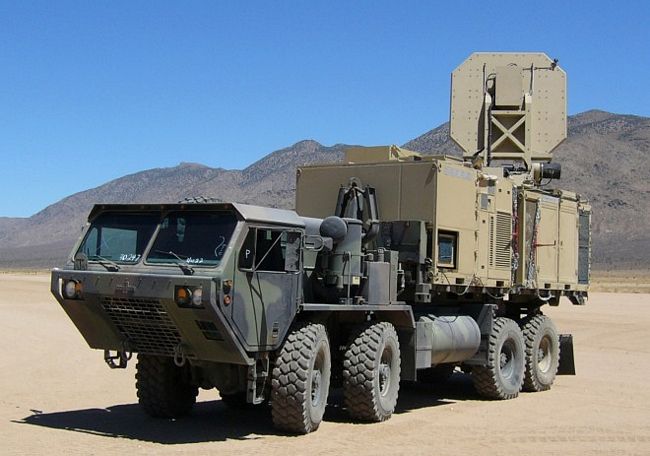
US Testing Heat Ray in Afghanistan

WIRED– The U.S. mission in Afghanistan centers around swaying locals to its side. And there’s no better persuasion tool than an invisible pain ray that makes people feel like they’re on fire.

OK, OK. Maybe that isn’t precisely the logic being employed by those segments of the American military who would like to deploy the Active Denial System to Afghanistan. I’m sure they’re telling themselves that the generally non-lethal microwave weapon is a better, safer crowd control alternative than an M-16. But those ray-gun advocates better think long and hard about the Taliban’s propaganda bonanza when news leaks of the Americans zapping Afghans until they feel roasted alive.

Because, apparently, the Active Denial System is “in Afghanistan for testing.”

An Air Force military officer and a civilian employee at the Air Force Research Laboratory are just two of the people telling Danger Room co-founder and AOL News ace Sharon Weinberger that the vehicle-mounted “block 2″ version of the pain ray is in the warzone, but hasn’t been used in combat.

[Update: “We are currently not testing the Active Denial System in Afghanistan,” Kelley Hughes, spokesperson for the Joint Non-Lethal Weapons Directorate, tells Danger Room.

So I ask her: Has it been tested previously? She hems and haws. “I’m not gonna get into operational,” Hughes answers.

Hughes also disputes the assertion that Active Denial creates a burning feeling. “It’s an intolerable heating sensation,” she says. “Like opening up an oven door.”]

For years, the military insisted that the Active Denial System — known as the “Holy Grail” of crowd control — was oh-so-close to battlefield deployment. But a host of technical issues hampered the ray gun: everything from overheating to poor performance in the rain. Safety concerns lingered; a test subject had to be airlifted to a burn center after being zapped by the weapon. (He eventually made a full recovery.) And then there were concerns about “the atmospherics” — how the locals might react — when they learned that the United States had turned a people-roaster on ‘em. “Not politically tenable,” the Defense Science Board concluded.

I pinged Gen. Stanley McChrystal’s staff about the use of Active Denial in Afghanistan. I’ll let you know if I hear anything back. But a few months ago, a source told me that a representative from the Joint Non-Lethal Weapons Directorate was in Afghanistan. Did that mean Active Denial was about to be put into action? Nope, the source said. “She’s just out getting some atmospherics on the use of non-lethals.”

Update 2
: “The active denial system is in the country,” e-mails Lt. Col. John Dorrian, a spokesman for Gen. McChrystal. “However, it has not been used operationally and no decision has been made at this time to deploy it.”

Photo: JNLWD

© COPYRIGHT WIRED, 2010

US Officials Back Away From July 2011 Afghan Withdrawal Deadline

RAW STORY– US Defense Secretary Robert Gates rejected suggestions Sunday that US forces will move out of Afghanistan in large numbers in July of next year under a deadline set by President Barack Obama.

“That absolutely has not been decided,” Gates said in an interview with Fox News Sunday.

His comment was the latest indication that the magnitude of the drawdown, if not the deadline itself, is the subject of an intensifying internal debate at a time when a NATO-led campaign against the Taliban is going slower than expected.

Vice President Joe Biden, an early skeptic of the US military buildup in Afghanistan, was quoted as telling author Jonathan Alter recently: “In July of 2011, you’re going to see a whole lot of people moving out. Bet on it.”

White House Chief of Staff Rahm Emanuel did not deny the Biden quote when asked about it, but, like Gates, said that the size of the drawdown would depend on conditions on the ground.

“Everybody knows there’s a firm date. And that firm date is a date (that) deals with the troops that are part of the surge, the additional 30,000,” he said in an interview with ABC “This Week.”

“What will be determined at that date or going into that date will be the scale and scope of that reduction,” he said.

General David Petraeus, the commander of US forces in the Middle East, said last week that in setting the deadline for the surge last year, Obama’s message was “one of urgency — not that July 2011 is when we race for the exits, reach for the light switch and flip it off.”

Petraeus told lawmakers he would be duty-bound to recommend delaying the redeployment of forces if he thought it necessary.

In the same hearing, the Pentagon’s policy chief, Michelle Flournoy, said a responsible, conditions-based drawdown would depend on there being provinces ready to be transferred to Afghan control, and that there be Afghan combat forces capable of taking the lead.

Officials have said that training of Afghan security forces has gone slower than expected, in part because there are not enough trainers.

Continue to read about the US Backing Away from Withdrawl Date.

Photo by US Army flickr

© COPYRIGHT RAW STORY, 2010

Afghan President Has ‘Lost Faith in US Ability to Defeat Taliban’

GUARDIAN– President Hamid Karzai has lost faith in the US strategy in Afghanistan and is increasingly looking to Pakistan to end the insurgency, according to those close to Afghanistan’s former head of intelligence services. Amrullah Saleh, who resigned last weekend, believes the president lost confidence some time ago in the ability of Nato forces to defeat the Taliban.

As head of the National Directorate of Security, Saleh was highly regarded in western circles. He has said little about why he quit, other than that the Taliban attack on last week’s peace jirga or assembly in Kabul was for him the “tipping point”; the interior minister, Hanif Atmar, also quit, and their resignations were accepted by Karzai.

Privately Saleh has told aides he believes Karzai’s approach is dangerously out of step with the strategy of his western backers. “There came a time when [Karzai] lost his confidence in the capability of the coalition or even his own government [to protect] this country,” a key aide told the Guardian.

Saleh believes Karzai has long thought this, but his views were crystallised in the aftermath of last year’s election when millions of votes were found to be fraudulent; Karzai blamed the US, UK and United Nations for the fraud. According to the source, Saleh is deeply concerned by Karzai’s noticeably softer attitude towards Pakistan. The president has long dropped his past habit of excoriating Pakistan for aiding the Taliban.

Saleh also echoes complaints of US commanders that Karzai refuses to behave like a commander-in-chief, and is not publicly leading the counterinsurgency campaign devised by Stanley McChrystal, the US commander of Nato forces.

In London today, the US defence secretary, Robert Gates, warned that progress needed to be made. “In all coalition countries the public expects to see us move in the right direction [but] will not tolerate the perception of a stalemate, where we are losing our young men.”

Gates also warned of “a high level of violence, especially this summer”, as US forces push deeper into southern provinces where the Taliban are strongest. Today in the south, insurgents shot down a Nato helicopter, killing four US troops, while a British soldier died in a separate attack. In Islamabad in Pakistan, an assault on a depot by insurgents destroyed 50 lorries belonging to the Nato military supply chain.

Continue reading about the Afghan President Losing Faith.

Photo by US Army Flickr

© COPYRIGHT GUARDIAN, 2010

Afghans Believe United States is Funding Taliban

MR: This article is more of an acknowlegment from the Afghani people of what we already know to be true. In late ’09, Obama signed a supplemental war bill that included a provision allowing Taliban members to be “paid off” by the US in the hope that the money will make them “switch sides” and become loyal to the US. Learn more about this bill HERE.

GUARDIAN– It’s near-impossible to find anyone in Afghanistan who doesn’t believe the US are funding the Taliban: and it’s the highly educated Afghan professionals, those employed by ISAF, USAID, international media organisations – and even advising US diplomats – who seem the most convinced.

One Afghan friend, who speaks flawless English and likes to quote Charles Dickens, Bertolt Brecht and Anton Chekhov, says the reason is clear. “The US has an interest in prolonging the conflict so as to stay in Afghanistan for the long term.”

The continuing violence between coalition forces and the Taliban is simple proof in itself.

“We say in this country, you need two hands to clap,” he says, slapping his hands together in demonstration. “One side can’t do it on its own.”

It’s not just the natural assets of Afghanistan but its strategic position, the logic goes. Commanding this country would give the US power over India, Russia, Pakistan and China, not to mention all the central Asian states.

“The US uses Israel to threaten the Arab states, and they want to make Afghanistan into the same thing,” he says. “Whoever controls Asia in the future, controls the world.”

“Even a child of five knows this,” one Kabuli radio journalist tells me, holding his hand a couple of feet from the ground in illustration. Look at Helmand, he says; how could 15,000 international and Afghan troops fail to crush a couple of thousand of badly equipped Taliban?

And as for the British, apparently they want to stay in Afghanistan even more than the Americans. The reason they want to talk to the Taliban is to bring them into the government, thus consolidating UK influence.

This isn’t just some vague prejudice or the wildly conspiratorial theories so prevalent in the Middle East. There is a highly structured if convoluted analysis behind this. If the US really wanted to defeat the Taliban, person after person asks me, why don’t they tackle them in Pakistan? The reason is simple, one friend tells me. “As long as you don’t get rid of the nest, the problem will continue. If they eliminate the Taliban, the US will have no reason to stay here.”

Continue reading about US Funding the Taliban.

Photo by repSos.de flickr user

© COPYRIGHT GUARDIAN, 2010