Are Political Views Reflected in Brain Structure?

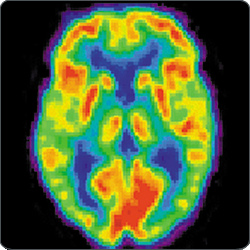
SCIENCE DAILY– We all know that people at opposite ends of the political spectrum often really can’t see eye to eye. Now, a new report published online on April 7th in Current Biology, reveals that those differences in political orientation are tied to differences in the very structures of our brains.

Individuals who call themselves liberal tend to have larger anterior cingulate cortexes, while those who call themselves conservative have larger amygdalas. Based on what is known about the functions of those two brain regions, the structural differences are consistent with reports showing a greater ability of liberals to cope with conflicting information and a greater ability of conservatives to recognize a threat, the researchers say.

“Previously, some psychological traits were known to be predictive of an individual’s political orientation,” said Ryota Kanai of the University College London. “Our study now links such personality traits with specific brain structure.”

Kanai said his study was prompted by reports from others showing greater anterior cingulate cortex response to conflicting information among liberals. “That was the first neuroscientific evidence for biological differences between liberals and conservatives,” he explained.

Read full article on how Political Views Are Reflected in Brain Structure.

© Copyright Science Daily, 2011

Photo by flickr user Blatant Truth
Coldest Star Found— No Hotter Than Fresh Coffee

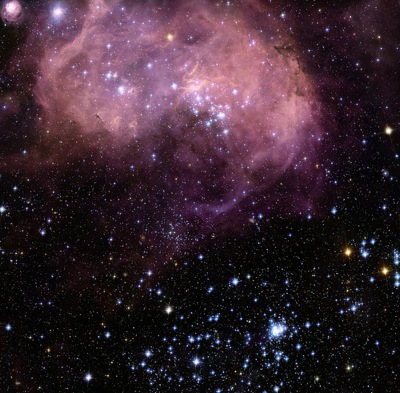
NATIONAL GEOGRAPHIC According to a new study, a star discovered 75 light-years away is no warmer than a freshly brewed cup of coffee.

Dubbed CFBDSIR 1458 10b, the star is what’s called a brown dwarf. These oddball objects are often called failed stars, because they have starlike heat and chemical properties but don’t have enough mass for the crush of gravity to ignite nuclear fusion at their cores.

With surface temperatures hovering around 206 degrees F (97 degrees C), the newfound star is the coldest brown dwarf seen to date. (Related: “Dimmest Stars in Universe Spotted?”)

“Over the years there has been steady but slow progress in pushing the boundaries of finding the coldest stars,” said study leader Michael Liu, an astronomer at the University of Hawaii.

“But with this latest discovery we have made a big leap forward—besting the previous record holder by at least 150 Kelvin [270 degrees F, or 150 degrees C],” he said.

Continue reading about the Coldest Star Found—No Hotter Than Fresh Coffee.

© 2011 National Geographic

Photo by flickr NASA

Scientists Find Molecular Switch For Skin Growth

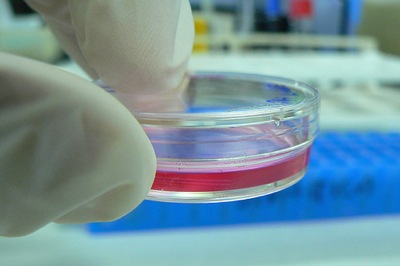
BIO SCHOLAR– Scientists have discovered a regulator of gene activity that tells epidermal stem cells when it”s time to grow more skin, as well as a “crowd control” molecule that can sense cell crowding and turn the growth off.

The study, in mice and in human cancer cells, provides clues to new therapeutic strategies for cancer, particularly squamous cell carcinoma, the second most common skin cancer, in which epidermal cell growth is inappropriately turned on.

The findings could also aid efforts to grow skin grafts and treat burn patients.

We have found a molecular switch that tells your skin to keep growing or stop growing,” said Fernando Camargo at Children’s Hospital Boston.

Read more on Scientists Find Molecular Switch That Controls Skin Growth.

© 2011 BioScholar News

Photo by flickr user kaibara87

Earliest Evidence for Magic Mushroom Use in Europe

NEW SCIENTIST – EUROPEANS may have used magic mushrooms to liven up religious rituals 6000 years ago. So suggests a cave mural in Spain, which may depict fungi with hallucinogenic properties – the oldest evidence of their use in Europe.

The Selva Pascuala mural, in a cave near the town of Villar del Humo, is dominated by a bull. But it is a row of 13 small mushroom-like objects that interests Brian Akers at Pasco-Hernando Community College in New Port Richey, Florida, and Gaston Guzman at the Ecological Institute of Xalapa in Mexico. They believe that the objects are the fungi Psilocybe hispanica, a local species with hallucinogenic properties.

Click to continue reading on mushroom use in Europe 6,000 years ago.

© Copyright New Scientist, 2011

Photograph by hans s

Posted in Uncategorized | 1 Reply

MR Original – MDMA Useful in Treating PTSD?

MEDIA ROOTS- MDMA, the active ingredient in the drug Ecstasy, has shown great potential for use in conjunction with therapy in the treatment of Post Traumatic Stress Disorder, or PTSD.

PTSD is caused by extremely violent or unpleasant experiences – either experienced firsthand or witnessed – in which the sufferer’s ability to cope is overwhelmed by stress.

One of the most popular therapies for PTSD is psychological exposure. The patient is instructed to relive the stressful experience repeatedly in his or her head, in a safe and controlled environment, and is assisted in processing the event in an emotionally healthy manner. This is where MDMA appears to have great potential for therapeutic use:

MDMA causes the release of the neurotransmitters Dopamine, Serotonin, and Oxytocin in the brain. Dopamine and Serotonin both regulate mood; Dopamine is the primary neurotransmitter associated with reward, and Serotonin with love and other causes of long-term feelings of well-being.

Oxytocin, however, is released when we feel trust, and when we bond interpersonally. It is released, among other scenarios, when mothers breast-feed their babies. By promoting trust between the patient and therapist, Oxytocin, along with Dopamine and Serotonin, allows the patient to relive the stressful experience while in a mental state of comfort and trust.

It is the overwhelming emotional response to the initial stressful event which causes PTSD. MDMA allows patients to relive their experiences and associate healthier emotions with the memories, rather than the extreme negative sensations they actually experienced. It can alleviate symptoms such as flashbacks, panic attacks, and other forms of anxiety rooted in the extremely unpleasant feelings which are tied to the memory of the event in the patients’ minds by replacing these feelings with less extreme ones.

While there are risks associated with the use of any psychoactive drugs, it appears that the benefits of controlled, therapeutic use of MDMA can outweigh the bad in patients suffering from Post Traumatic Stress Disorder.

Mitchell Singer is an SFSU undergraduate student with a great interest in all types of verbal expression. Aside from newswriting, blogging, and freelance copywriting, he spends his time sampling different media of visual art and reading books on a variety of subjects.

Photo by flickr user Alice Popkorn

Page 12 of 24<<...1011121314...>>