Top US Officials Say Afghanistan War Strengthens Taliban in Pakistan

TELEGRAPH– Admiral Mike Mullen, the chairman of the US joint chiefs of staff, said the surge of 21,000 additional US troops into Afghanistan had raised the prospect that Pakistan could face even greater turmoil in the months ahead.”They want Afghanistan back,” he said. “We can’t let them or their al-Qaeda cohorts have it. We can’t permit the return of the very same safe havens from which the attacks on 9/11 were planned and resourced.

“Yet we can’t deny that our success in that regard may only push them deeper into Pakistan.

Adml Mullen said the impact of the surge of troops on Pakistan was an unknown factor in the gambit. “Can I be 100 per cent certain that won’t destabilize Pakistan?” he said. “I don’t know the answer to that.”

The Pakistani army has been fighting the Taliban in Swat and other north-western areas since a peace deal broke down earlier this month, forcing more than two million people from their homes.

Pakistan’s army yesterday predicted its fight to clear the Swat valley of Taliban infiltration would last for up to three months. The army showed captured Taliban positions in caves during a battlefield tour. “You can see by the houses in the valley that we have kept civilian casualties to an absolute minimum and not used air power in built-up areas,” Maj Gen Sajjad Ghani, the commanding officer said.

The United Nations launched an appeal yesterday for $543 million and warned of a long-term humanitarian crisis in Pakistan.

© TELEGRAPH, 2009

‘We’re Less Safe,’ Say Counterterrorism Experts

CENTER FOR NATIONAL POLICY– Echoing recent statements by congressional Democrats, conservative counterterrorism experts Wednesday said the United States is “less safe” today than before Sept. 11, 2001. But White House Press Secretary Tony Snow continued to defend President Bush’s position that the U.S. is safer now than before the worst terrorist attacks in the nation’s history.

The National Intelligence Estimate, which reportedly concluded that the Iraq war has heightened Islamic radicalism and increased the threat of terrorism, was leaked Sunday. The report has been cited by many Democrats in their criticisms of the Bush administration’s handling of the war.

“We’ve heard a lot in the last 48 hours about the National Intelligence Estimate conclusion that U.S. presence overseas in the war in Iraq has contributed to jihadi fightings,” said Col. Michael Meese, head of the department of social sciences at West Point Military Academy. “In fact, that is what we found.”

“We’ve done a lot to look at the root causes of terrorism,” Meese said at the Heritage Foundation in Washington, D.C. From looking at “online jihadi writings, thus far, direct engagement with the United States has been good for the jihadi movement.”

He noted that the conflict drains American resources and puts pressure on American allies.

“The United States should avoid direct large-scale military action in the Middle East,” he said.

Scott Bates, vice president of the Center for National Policy, told Cybercast News Service, “I think we’re less safe [than before 9/11]. I think we’re creating more terrorists than we are capturing or killing.

“You have to turn off the faucet before you can mop up the floor,” he added. “I hate to say it, but that faucet is going full blast right now. We have to turn off that faucet.”

Bates said wining the war on terrorism requires targeting and attacking terrorists, providing a strong domestic defense system and preventing the rise of future terrorists. He said the U.S. will have to “commit equal vigor and resources in all those areas at the same time to truly prevail in this long war.”

But White House Press Secretary Tony Snow Wednesday defended the President Bush’s assertion that the United States is winning the war on terror and that the U.S. homeland is safer now than before 9/11.

“Since September 11, 2001, we have not been attacked. And, furthermore, the United States, since September 11, 2001, has taken a much more aggressive approach toward terror than it had taken previously,” Snow said during his daily briefing.

Intelligence failures of the past, he said, are finally being remedied.

“Even with the buildup since September 11th, we are only now beginning to achieve the same sort of levels that we had, in terms of intelligence assets that we had at the beginning of the Clinton administration,” Snow added.

Al Qaeda and other terrorist organizations have been weakened in the last five years and can no longer communicate easily or maintain centralized operations, he said. “They had an operational capability then that they do not have now.”

© CENTER FOR NATIONAL POLICY, 2007

Photo by Abby Martin

’06 Zogby Poll: Over 70% of US Troops Want War to End Immediately

ZOGBY INTERNATIONAL– Le Moyne College/Zogby Poll shows just one in five troops want to heed Bush call to stay “as long as they are needed.”

*While 58% say mission is clear, 42% say U.S. role is hazy

*Plurality believes Iraqi insurgents are mostly homegrown

*Almost 90% think war is retaliation for Saddam’s role in 9/11, most don’t blame Iraqi public for insurgent attacks

*Majority of troops oppose use of harsh prisoner interrogation Plurality of troops pleased with their armor and equipment

An overwhelming majority of 72% of American troops serving in Iraq think the U.S. should exit the country within the next year, and more than one in four say the troops should leave immediately, a new Le Moyne College/Zogby International survey shows.

The poll, conducted in conjunction with Le Moyne College’s Center for Peace and Global Studies, showed that 29% of the respondents, serving in various branches of the armed forces, said the U.S. should leave Iraq “immediately,” while another 22% said they should leave in the next six months. Another 21% said troops should be out between six and 12 months, while 23% said they should stay “as long as they are needed.”

Different branches had quite different sentiments on the question, the poll shows. While 89% of reserves and 82% of those in the National Guard said the U.S. should leave Iraq within a year, 58% of Marines think so. Seven in ten of those in the regular Army thought the U.S. should leave Iraq in the next year. Moreover, about three-quarters of those in National Guard and Reserve units favor withdrawal within six months, just 15% of Marines felt that way. About half of those in the regular Army favored withdrawal from Iraq in the next six months.

Continue reading about the Thoughts of Soldiers.

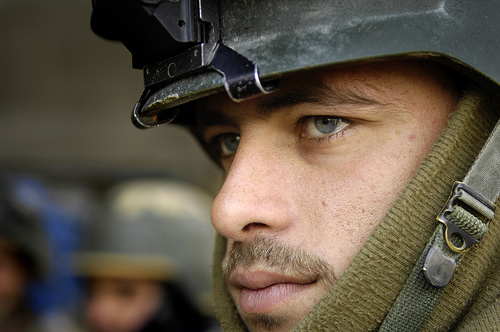
Photo by US Army flickr

© ZOBGY, 2006

Obama Ups Pakistan Drone Strikes in Assassination Campaign

CHRISTIAN SCIENCE MONITOR– Several US unmanned aerial vehicles, or drones, fired a volley of missiles at houses in a village in Pakistan’s northwest on Tuesday and killed roughly 16 alleged Taliban militants, news agencies reported. Information on civilian casualties, if any, was not immediately available.

Agence France-Presse cited an unidentified Pakistani security official as saying that about 18 US missiles were fired at targets in the village of Dattakhel. Earlier news reports put the death toll at about 10. A later report by CNN claimed 29 killed.

The attack is just the latest confirmation of the commitment President Barack Obama has made to the assassination campaign inside Pakistan — a close US ally — that began under his predecessor, President George W. Bush.

The Long War Journal, a blog that focuses its coverage on the war efforts in Iraq and Afghanistan, has been tracking US drone and other air power attacks in Pakistan for some time. Using open-source information, the blog tallied five US aerial attacks in Pakistan in 2007 and 36 in 2008, most of those in the last half of that year.

In 2009, President Obama’s first year in office, the tempo of such attacks in Pakistan increased 47 percent, to 53. The vast majority of these have been carried out with drones.

Tuesday’s strike brought this year’s tally to 12, with just over 100 fatalities. That’s just under a quarter of last year’s total. If that pace were matched for the rest of the year, there will be 134 US attacks inside Pakistan.

The Long War Journal says that 258 militants and 31 civilians were killed in these attacks in 2007, while 463 militants and 43 civilians were killed in 2008. It reports no civilian casualties so far this year.

Continue reading about Obama Upping Drone Attacks.

Photo by Foqus flickr user

© COPYRIGHT CHRISTIAN SCIENCE MONITOR, 2010

President Obama Orders Pakistan Drone Attacks

TIMES ONLINE– Missiles fired from suspected US drones killed at least 15 people inside Pakistan today, the first such strikes since Barack Obama became president and a clear sign that the controversial military policy begun by George W Bush has not changed.

Security officials said the strikes, which saw up to five missiles slam into houses in separate villages, killed seven “foreigners” – a term that usually means al-Qaeda – but locals also said that three children lost their lives.

Dozens of similar strikes since August on northwest Pakistan, a hotbed of Taleban and al-Qaeda militancy, have sparked angry government criticism of the US, which is targeting the area with missiles launched from unmanned CIA aircraft controlled from operation rooms inside the US.

The operations were stepped up last year after frustration inside the Bush administration over a perceived failure by Islamabad to stem the flow of Taleban and al-Qaeda fighters from the tribal regions into Afghanistan. Mr Obama has made Afghanistan his top foreign policy priority and said during his presidential campaign that he would consider military action inside Pakistan if the government there was unable or unwilling to take on the militants.

Continue reading about Obama Incresing Drone Attacks in Pakistan.

Photo by flickr user MGlasgow

© TIMES ONLINE, 2009

Page 77 of 79<<...7576777879