Filmmaker Robbie Martin and Paul Jay discuss Trump and Pence’s foreign policy appointments and advisors which include many of the neocons who created The Project for the New American Century and are now targeting Iran.
Robbie Martin on Trump’s Web of Militarists Who Want to Attack Iran
**
PAUL JAY: Welcome to The Real News Network. I’m Paul Jay. Well, various balloons, trial balloons are coming out of Trump Tower in New York. Donald Trump met with Tulsi Gabbard, a congresswoman from Hawaii, who’s known as very non-interventionist, was against the war in Iraq and thinks the war to overthrow Assad in Syria is illegal. And apparently, they both had a nice meeting and came to some conclusion. They had some foreign policy ideas in common. Donald Trump met with The New York Times and sounded as reasonable as one might hope someone might sound talking to The New York Times. Telling The New York Times, more or less what they would like to hear, and various other balloons making Donald sound like he’s not the crazy person in the campaign. Apparently, he’s willing to accept a fence rather than a wall in certain places. He isn’t planning, apparently, to deport 11 or 12 million people, just go after some of the very bad actors. In fact, his immigration deportation policy sounds like it might almost be more modest than Barack Obama, who’s been coined at times the Deporter in Chief.
But the real Donald Trump, the proof of the Donald Trump pudding is in his appointments, not in who he meets and what he happens to say, ’cause he will say anything on any given day that seems to suit his purposes. Whereas, the appointments to his cabinet and other agencies, those are people who will exercise some real power. And now joining us to talk about just who some of those appointments are, and some of the roots of those people, is Robbie Martin. He’s a journalist, filmmaker and musician. He writes for the magazine White Fungus, the website MintPress News and Oakland-based Media Roots. As a filmmaker, he’s the mind behind the documentary shorts, American Bisque, American Anthrax and now the full-length documentary trilogy, A Very Heavy Agenda. Thanks for joining us, Robbie.
ROBBIE MARTIN: Thanks for having me, Paul.
PAUL JAY: So, Donald Trump, in spite of his anti-interventionist rhetoric has not appointed anybody that even smells slightly of someone who’s anti-interventionist. Let’s go back a little bit into the roots of all this, though. In your film, you spend some time talking about a document that came out in the late 1990s called The Project for the New American Century. And, anyone who doesn’t know this document really should go find it, it’s still easy to find on the Internet. And some very senior people signed it who later became the major foreign policy team around George Bush, including Rumsfeld and Cheney and Wolfowitz, Kagan and others, Richard Perle, and essentially asserted itself, the document said, that America should now use its single super-power status to reshape the world in the image it pleases. Talk a bit about PNAC and how they envisioned US foreign policy.
ROBBIE MARTIN: Well, PNAC, or The Project for the New American Century, was started in the 1990s under Bill Clinton. And the reason why Bill Kristol and Robert Kagan and Gary Schmitt said that they started this think tank was because they wanted to encourage the Clinton Administration’s interventionist foreign policy. Because at the time, a sort of Pat Buchanan-esque anti-interventionist attitude was becoming quite trendy in the Republic Party. So Bill Kristol’s the Weekly Standard and along with this think tank The Project for the New American Century, they wanted to start the trend that, even though Clinton was a Democrat, that hawkish Republicans like them should encourage and cheer on Bill Clinton for his military interventions. And this attitude, of course, carried over to the Bush Administration and many, many members of Project for the New American Century, I believe, 17 signatories of their papers, actually got into the Bush Administration.
And now what’s happened is you’ve seen sort of this neocon consensus that formed around The Project for the New American Century, there’s been almost a split where, when the GOP imploded because of Trump’s rise in the primaries, that’s where it really started, you also have sort of a split in the neoconservative consensus in DC. So you have people like Robert Kagan, Max Boot, Eliot Cohen, all openly advocating for Hillary Clinton, similarly to how they were advocating for Bill Clinton in the ’90s, at least his foreign policy. But, while that was happening, which I think took most of the focus away from the other neocons, there were people like Michael Ledeen, James Woolsey, John Bolton, who are all part of Project for the New American Century, it caused them to actually split off and go towards Trump. And that’s… I think that got a little bit overshadowed by just how much focus there was towards the neocons going towards Hillary.
PAUL JAY: Because they all thought Hillary would win. Most of the ones that went to Hillary were pretty sure she was going to emerge the winner of this.
ROBBIE MARTIN: Oh, yeah, absolutely. I mean, as did I. And we’ve already actually seen Eliot Cohen, for example, reach out to the Trump campaign after he won, to try to get some kind of advisory position. And he was told, “You lost.” And he didn’t say who told him that but it might have been, you know, Bannon or someone else from inside the Trump campaign.
PAUL JAY: Let’s go back into this group and the document, the PNAC group. The Project for the New American Century, its basic thesis, if I understand it correctly, is that because this is now a single super-power world, things like international law are no longer necessary — that it’s time to assert raw American military might because there’s no reason not to. And the plan, I think, it’s laid out rather explicitly, that it starts with regime change in Iraq, regime change in Syria, and the real prize is regime change in Iran, and that’s the way to assure the American Century in the Middle East and then some. Those were just the places to begin. Talk a little bit about some of the things those people were saying around the time of the lead-up to the Iraq War, including the idea in this document that in order to pull off these regime changes and use such American military force — which means troops on the ground, it’s not just bombing campaigns — you need the American people onside. And it says explicitly in the document that you can’t do that without a new Pearl Harbor.
ROBBIE MARTIN: Yeah. I mean, back to what you said about the whole notion of international law does not exist. John Bolton specifically has been key to that sort of premise. In the Bush Administration, he was UN Ambassador and made a point to be defiant continuously against the UN, and this is, of course, after the Bush Administration defied the UN in invading Iraq. But, going before that, when The Project for the New American Century wrote the document, Rebuilding America’s Defenses, the thesis from that document actually came from a document written by Richard Perle and Douglas Feith for the incoming Netanyahu administration in the ’90s and this document was called A Clean Break: Securing the Realm.
Now, the reason why this document and Rebuilding America’s Defenses is different than what’s come before it is because, even though US foreign policy has always had a sort of pre-emptive philosophy behind it, it was never stated this, I would say, arrogantly or this candidly in a document, where the core principle behind the document is a philosophy of pre-emption– that we should invade countries that pose no immediate threat to us because at some point in the future they might pose a threat to us. And that whole mindset defined the Bush Administration and also largely defines our foreign policy outlook today, even continuing into the Obama Administration.
PAUL JAY: Part of the message of the document is that naked use of force, overt use of force, does not have to be apologized for. Again, they got their Pearl Harbor, which was 9/11, which gave them the American public opinion and, of course, they did everything they could to link Saddam Hussein to 9/11, even though there was no evidence at all that there was such a thing. I know the story of Greg Thielmann, who dealt with proliferation of weapons of mass destruction for the State Department, and at that time Bolton was Under Secretary of that department responsible for that. And Thielmann would go week after week to Bolton saying “Well, we don’t have any link between Iraq and weapons of mass destruction. We don’t think there are any.” And Bolton would say, “Well, you come back when you’ve got it. You come back when you’ve got it.” And, eventually, Thielmann didn’t have it, ’cause it wasn’t there and he told Thielmann, “Well, you can stop coming to our meetings now.” You have a similar thing happening at the level of Richard Clarke, the anti-terrorism czar, Cheney keeps saying to him, “If you don’t have terrorist attacks linked to Iraq, we’re not interested.” They had an agenda from day one and it’s part of this PNAC vision.
ROBBIE MARTIN: Oh, absolutely. And that’s part of what’s so troubling about Trump supporters — they have a blind spot for these Bush Era neocons creeping back into what will become his administration. I mean, John Bolton specifically actually helped Trump get elected. First, he ran a PAC against Rand Paul early in the Republican primaries, painting Rand Paul as a pacifist on Iran and there’s actually footage of nuclear bombs going off. I think the commercial actually starts with a family eating dinner and just a mushroom cloud exploding in the background.
PAUL JAY: And just quickly for people who don’t know, Rand Paul is the son of Ron Paul, you know, more or less is a fairly consistent Libertarian anti-interventionist. In fact, he said that if John Bolton, who’s been rumored to be getting Secretary of State, Paul has said if it is Bolton he’ll filibuster to try to stop him from being confirmed in the Senate.
ROBBIE MARTIN: Yeah, and I hope that he actually follows through on that because it seems like it’s a pretty sure bet that John Bolton’s going to have some kind of position. I mean, now that Bannon from Breitbart is part of the administration, Breitbart is now running articles trying to tell their audience that Bolton isn’t a neocon, that he wasn’t instrumental in the Iraq war. And I find that amusing because Breitbart has sort of carried this tradition of being different from sort of the neoconservative, more establishment GOP consensus in DC; now that they’re part of the establishment, they’re going to run cover and sort of deflect away these criticisms that are, I think, going to be amplified over time with Trump, just between him and his supporters.
PAUL JAY: Right. There’s a very interesting network of connections here. Breitbart News, the primary owner of Breitbart News is a billionaire named Robert Mercer. Mercer backed Ted Cruz, and his daughter Rebecca Mercer, were real players in the Cruz campaign. Breitbart News, as I said, Mercer is the major owner of that, which means Steve Bannon from Breitbart essentially worked for Mercer. Kellyanne Conway, that became the campaign manager, of course, Bannon became what they call the CEO of the Trump campaign, Kellyanne Conway became the manager. She worked for Mercer as head of the PAC that Mercer put something like 11 or 12 million dollars into backing Ted Cruz and now look at the transition team. Rebecca Mercer is on the transition team. And, of course, Kellyanne Conway seems to be continuing to run the campaign.
Pence, who they recruited, Bannon and Kellyanne Conway got on the Trump campaign prior to the Republican Convention and they’re the ones that recruited Vice President Pence who’s on the same page. And just to add another little wrinkle to this circle, this rogues gallery, another John Bolton type who’s being rumored as having, or will have a role in the Trump campaign, is a guy named Frank Gaffney. And Gaffney advised Cruz while Cruz’s campaign was being run by Mercer and now Mercer’s people are now running Trump and perhaps running the White House. And so, it’s likely to see Frank Gaffney back into the picture. Tell us a bit about what you know about Gaffney.
ROBBIE MARTIN: Well, Gaffney’s an interesting character in all this because he was one of the only PNAC neocons who managed to build a bridge to the alt-right movement very early on. He actually has a column at Breitbart and most of his writings revolve around how Sharia Law is apparently going to take over the United States and the White House. He’s written pamphlets on how the Muslim Brotherhood has infiltrated the White House. But most notably, Frank Gaffney is the originator of the ban Muslims immigration policy that was part of Trump’s campaign. And, as you said, he was also an advisor for Ted Cruz, but it recently got announced that he may be in charge of the foreign policy end of Trump’s transition team, even though he publicly denies it. What’s interesting about that is he actually has Trump’s whole transition team, including Pence, as regular recurring guests of his talk radio show. A year previous to Trump winning the primary–
PAUL JAY: This is Gaffney’s radio show. Pence is a regular on Gaffney’s radio show.
ROBBIE MARTIN: Correct, yeah. Newt Gingrich, John Bolton, even James Woolsey were regular guests. And these aren’t just guests out of dozens and dozens of guests, these were a handful of people that he would regularly have on. So, I believe that Frank Gaffney is probably someone that everybody should be taking a closer look at during this whole process, ‘because he seemed to have known who Trump was going to bring into office once he got elected.
PAUL JAY: Yeah, one of the things most of these guys have in common is they consider Islam and the Arab world the enemy of Western civilization and I think you quote in your film, maybe it’s Ledeen quoting Machiavelli saying, “When the country’s interests are being asserted, evil is acceptable,” something along those lines.
ROBBIE MARTIN: Yeah, that we are permitted to do evil in the act of protecting our nation. So, of course, you know, to a neoconservative that essentially means a pre-emptive strike or who knows what that means? It could be something even worse than that.
PAUL JAY: The most important appointment, of course, of all of these people is Pence. Some people have considered him to be, or will be, the new Cheney and it’s gotten some play that when he was asked who his role model for Vice President would be, he said Dick Cheney. And that’s a rather telling thing. Everyone knows how powerful Cheney was in the White House. Everyone knows Cheney helped create the entire false intelligence about weapons in Iraq. So, he’s saying a guy who lied through his teeth, and lied the United States into war, is his role model and has no problem saying that on 60 Minutes or national television. That tells us a lot. Tell us more about Pence and his own views and his relationships to these guys.
ROBBIE MARTIN: Well, Pence himself actually comes from right wing talk radio culture, as well. He used to host his own show, even set up a makeshift studio in his offices once he was elected. And as a freshman Senator, Mike Pence was actually one of the only government officials to keep trying to go out to the media, writing letters to John Ashcroft, using time on the House floor to convince people that Saddam Hussein was behind the 2001 anthrax attacks. And he continued to do this for about a year after anthrax was sent to Tom Daschle and Patrick Leahy.
Now, he says that his office was infected with anthrax, which may have actually happened, but Patrick Leahy and Daschle were not trying to play politics at all with that event; in fact, they still doubt the official conclusions of that investigation that it was from a lone scientist named Bruce Ivins from Fort Detrick, Maryland. Mike Pence, even against the instructions of Ari Fleischer who told the press that Saddam had nothing to do with it, that bentonite wasn’t found in the anthrax, Mike Pence continued to assert this connection which I think is a very strange thing to do for any freshman Senator to be making such a strong declaration of something during an emotional hysteria like that.
PAUL JAY: Again, this cast of characters has various other players, we can’t get through them all now, but it’s important, I think, to talk about James Woolsey who was under Clinton and then under Bush. Woolsey was CIA, right?
ROBBIE MARTIN: Woolsey was a CIA Director under Bill Clinton, for a very brief amount of time.
PAUL JAY: And Woolsey at the time of the Israeli-Lebanon War was saying, “We should take advantage of this opportunity to bomb Syria and try to get rid of Assad.” I guess the point here, and I must say, let me throw Giuliani in the mix here, too, because, at the Republican Convention, Giuliani says that it’s Iran waging terrorist threats and attacks against the United States. Iran is the source of terrorism against the United States, which everybody knows is not the case. Of course, Israel doesn’t like Iran’s support for Hezbollah but it’s clear from any number of sources, not the least of which the Joint Congressional Investigation to 9/11 that it’s, in fact, Saudi Arabia that’s allied with terrorist threats and actual terrorist attacks against the United States. But talk a little bit about Woolsey and then a little bit about Giuliani.
ROBBIE MARTIN: Well, one common thread that links all these people together — and I call them The Craziers which is a reference to Ray McGovern calling the old neoconservatives in the Reagan Administration The Crazies — I would describe these people as crazier: Gaffney, Ledeen, Bolton, Woolsey, they all actually prefer not to overthrow Assad. And I’m sure that Woolsey has said some things in the past about overthrowing Assad but, make no mistake, it’s not because they are pacifists on Syria or they don’t want a regime change in Syria, that’s actually not the case; they prefer that we overthrow the regime of Iran first. Because, in their mindset, that would cut off the head of the snake, which is Assad in Syria.
PAUL JAY: Which was the terminology that the King of Saudi Arabia used trying to goad the Americans into bombing Iran.
ROBBIE MARTIN: Yeah. So, this is a very troubling development that the Trump Administration appears to be a cabal of neoconservatives who are very fixated on militarily invading or attacking Iran. Which is something that the Bush Administration did have you know, there was a neoconservative consensus within it that wanted to do that but it ended up not winning out in the end. So, hopefully, it doesn’t this time either, but I’m not so hopeful. But, in terms of Giuliani, who’s also said things about Iran, Giuliani is probably the dirtiest character in this whole lineup of people. He has connections, time and time again, to just various aspects of the deep state. Even when he was running as Mayor, in 1989, he lost pretty badly because Ed Koch and other opponents pointed out that he actually represented General Manuel Noriega, a Panamanian drug lord.
PAUL JAY: And a CIA asset for quite awhile.
ROBBIE MARTIN: Of course, yeah. And Rudy has supported MEK, which is another terrorist organization. But there’s also just strange, convenient circumstances that Rudy has found himself in. For example, his company Bio-One, made millions of dollars off the 2001 anthrax attacks. He had a company before 9/11 that specialized in bio terror contamination clean up. And his company ended up cleaning out the Florida Sun building where the first anthrax victim was located. Rudy also invests in border technology. He has a company called SkyWatch that specializes in digital surveillance grid technology for Mexican border security in collaboration with Raytheon. So, I mean, in my mind, it’s possible Rudy contacted Trump and said, “Hey, you want to build a wall, here’s what we can do, and sort of connected those business appendages together.
PAUL JAY: Right. I think what drives all US foreign policy, certainly President Obama and Clinton and you can go back, the underlying driving force is American corporate interests, the need to control raw materials, control overseas markets, control cheap labor, to be able to export and loan money and skin cats twice through interest rates, all of that drives all American foreign policy, but this particular group, the group that was around Cheney and now the group that President-Elect Trump is gathering around him, it’s all of that and almost a vulgar direct criminality, a kind of corruption. I think by the time this regime is done its course, four years from now or eight years from now, the number of scandals and the amount of pure pillaging of the public trough in the name of fighting terrorism is going to be unparalleled.
ROBBIE MARTIN: Yeah, I mean, I hope that a lot of the people really study these characters because they’re going to be back in power again. I mean, the idea of James Woolsey being back in power again terrifies the crap out of me. And I think it should terrify many of Trump supporters, as well, who are hoping that he’d be this sort of anti-war, drain the swamp, anti-establish candidate. I mean, Woolsey himself, he doesn’t even have a problem admitting that the CIA itself was used as a tool of corporate espionage. He brags in a Wall Street Journal editorial about how we spy on Europe, the CIA spies on Europe because Europe bribes a lot. So, and he’s talking about European businesses to get American businesses, an advantage over them. So these people that are openly corrupt and have no problem bragging about their corruption.
PAUL JAY: Well, I’ll say it again, it doesn’t matter what anti-interventionist or somewhat slightly reasonable words come out of the Donald’s mouth, the proof is in the appointments and you look at the people around Trump and you can see what direction his foreign policy is going. Thanks very much for joining us, Robbie. We’ll pick this up again.
ROBBIE MARTIN: Thank you very much, Paul.
PAUL JAY: Thank you for joining us on The Real News Network.
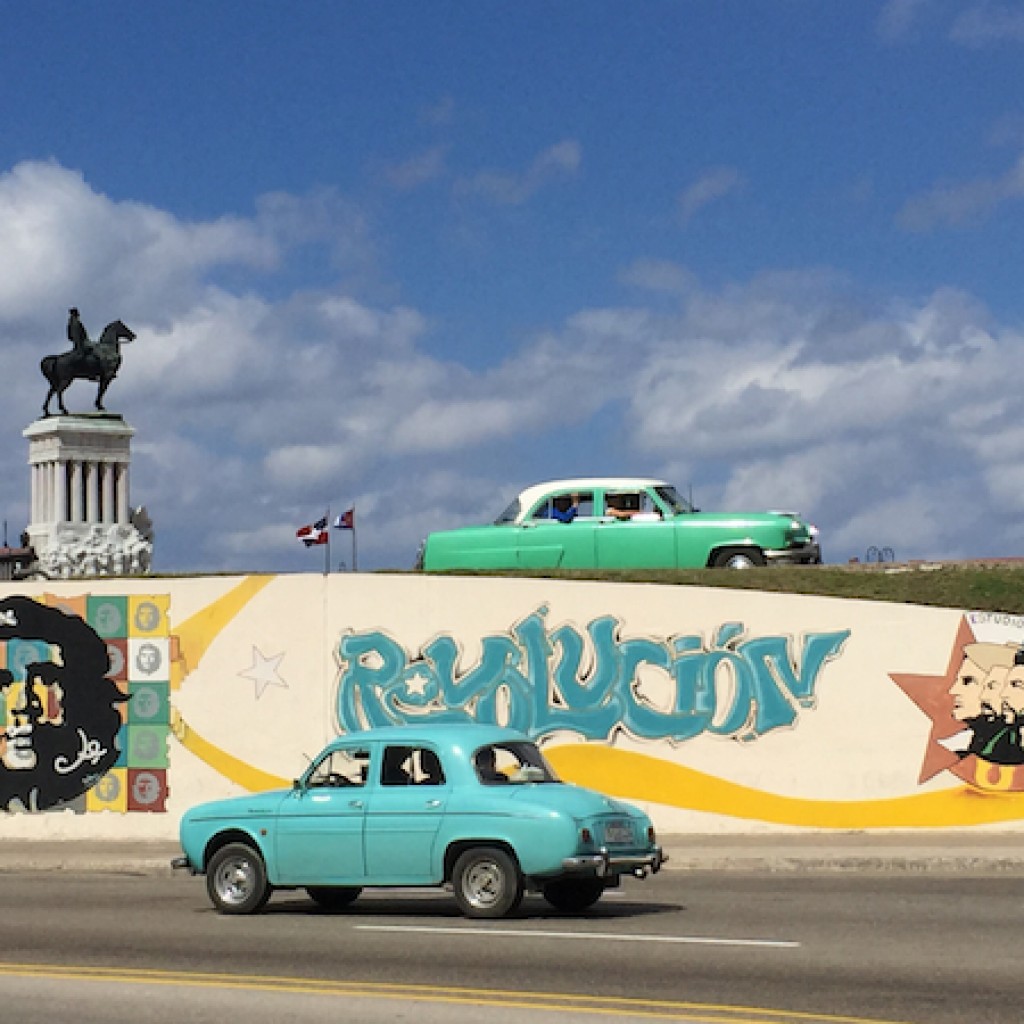 Leader of the Cuban revolution, Fidel Castro, has died on his own terms, after surviving at least 638 assassination attempts by the CIA. Unlike the glorification of brutal theocratic leaders like Saudi Arabia’s late King Abdullah, the establishment will be giving no accolades to Castro.
 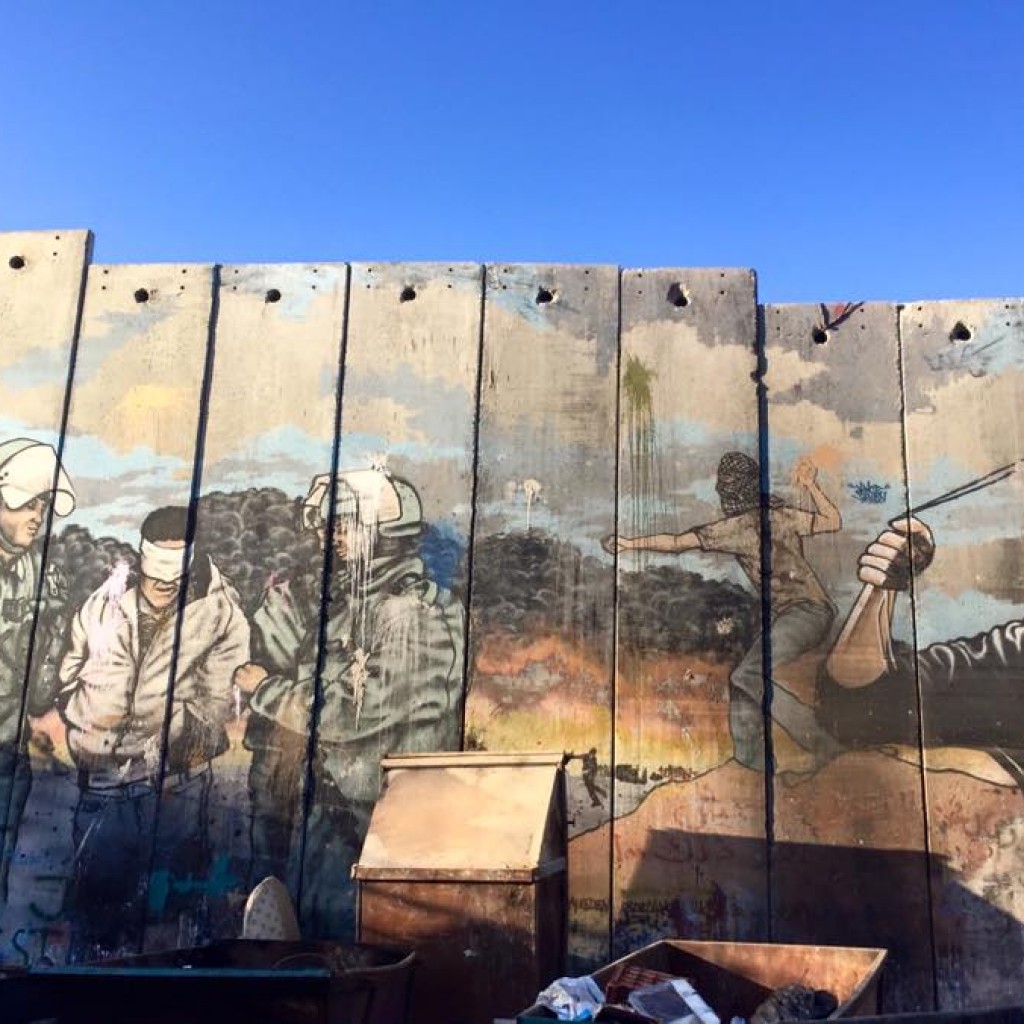 Aida has been a hot spot since the Second Intifada (also called as Al-Aqsa, a Palestinian uprising started in 2000) and refugees became highly exposed to violence as a result of military operations.
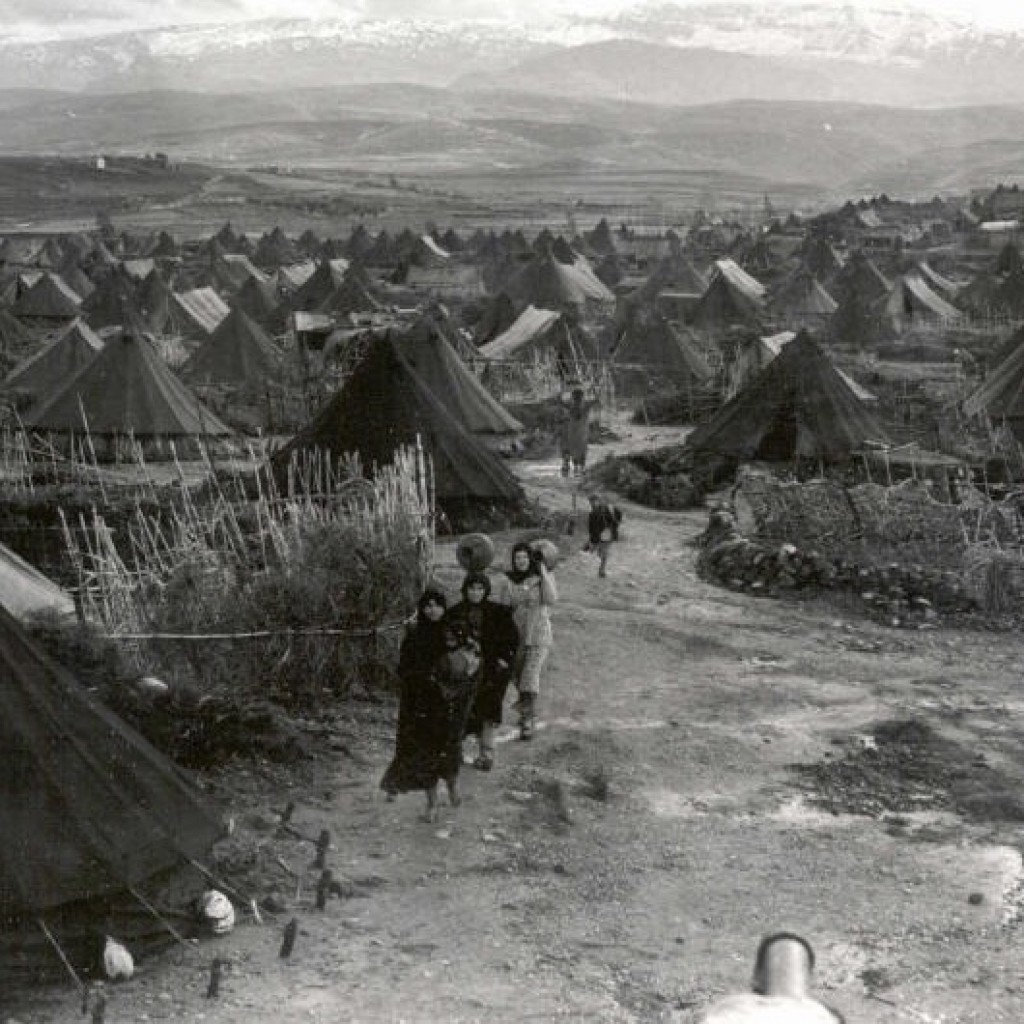 The Empire Files looks at the long history of Zionist colonization, expansion and expulsion of the country’s indigenous inhabitants.