At Trump’s inauguration, around 200 protesters and journalists were mass arrested and now face up to 70 years in prison on baseless charges. Many other legal assaults on civil liberties are in the works around the country, from treating anti-fascists as “domestic terrorists”, to legislation protecting drivers who run over peaceful marchers.
To explore what this means for U.S. activists today, Abby Martin sits down with constitutional rights lawyer Mara Verheyden-Hilliard, head of the Partnership for Civil Justice Fund, a premiere legal organization defending protest rights. Verheyden-Hilliard has litigated, and won, several cases against the U.S. government for mass arrests and other types of repression.
After a flurry of media attention, the devastation in Houston, Texas from Hurricane Harvey faded from public view. But after unprecedented floods and widespread destruction, the story is far from over.
Victims in some of the most devastated neighborhoods give harrowing testimony about nearly drowning and having no assistance to this day from government officials. The first installment of “After Harvey” reveals the untold stories of how, despite being abandoned by the state, the community banded together to save lives and rebuild their homes.
After Hurricane Harvey, Abandoned Community Takes Charge
**
The United States and several Caribbean islands are still reeling from the severe effects of an unprecedented hurricane season. The challenges began with Hurricane Harvey nearly two months ago and continue today with Hurricane Ophelia about to hit Ireland, an event never before experienced in recorded history.
Hurricane Harvey alone destroyed at least 16,786 homesand damaged at least 159,253 more. A shocking 82 people lost their lives during a hurricane that scientists say is a once in one thousand year event.
With a constant onslaught of “first ever” weather events hitting the US and a tumultuous political climate, it is an unfortunate truth that disaster recovery has all but left the minds of most Americans and the front pages of corporate media. Mainstream media outlets filled the Houston area immediately following the hurricane, collecting the shocking footage and interviews that brings in the clicks and views, all the while spotlighting the efforts of professionals engaged in harrowing rescues and organizations, such as the Red Cross, providing help. But almost as quickly as Harvey hit, corporate media left and never returned.
To bring the focus back to the ongoing recovery effort, Abby Martin visited Houston to see firsthand what residents are contending with nearly two months later. In the first episode of the series, Abby visited one of the hardest hit neighborhoods in Houston, Lake Forest Park, where she spoke with residents about the night the flooding began and how their lives have changed since.
Many residents of Lake Forest Park shared a similar experience the night Harvey arrived — waking around 3 AM to significant water levels inside their homes, some startled by the sensation of a wet bed, others with their hand draped over the bed and submerged in water. In a panic, many grabbed important documents and attempted to flee only to find hip deep water when they reached their vehicles and chest deep water in the streets. With no ability to escape safely in the dark, residents entered the attics of their single story homes, where they would spend the next three days.
While awaiting rescue in flooded homes, many residents attempted to connect with 911 dispatchers for hours each day. Occasionally failed attempt after failed attempt gave way to contact. “We’re right around the corner,” residents were told, but emergency responders never came.
After the rain stopped, the water continued to rise for days. Many residents agreed that levees were opened without warning and on purpose, causing water levels to quickly rise further. As conditions stabilized, neighbors with boats, life vests, and anything else that could float, got to work. Abby spoke with a man who was confident that 90% of the rescues in his neighborhood were done by people who live within that same neighborhood. In fact, all of the residents on one street and cul-de-sac were transported to dry ground by the same local resident using his personal boat.
After fleeing their flooded homes, many residents of Lake Forest Park again had similar experiences. One man detailed an unsettling event where he witnessed a boat of 7 rescuers, casually floating along a street sipping warm coffee, informing residents wading through chest deep water to “keep going” because they were “almost there.” Almost where? they wondered as the boats passed without offering assistance.
Some neighbors brought others to a nearby fire department for evacuation assistance only to be immediately turned away. Still others congregated in a nearby dry parking lot where older residents in need of medical care were hoping to find help. Local emergency responders occasionally passed by, assuring survivors they would soon return, but much like the false hope given by the 911 dispatchers, the rescuers never returned.
Entire neighborhoods in Houston remain in ruins and have still seen little to no help from local, state, or national government services and organizations. These neighborhoods saw virtually no presence of emergency responders for upwards of three days after the flooding began and today see no police patrols, only the occasional small supply drop from Army personnel.
Today, the streets of this flood prone neighborhood are lined with trash and debris and pushed down the streets by volunteers driving Bobcats. Just as the community came together to rescue each other from the deadly floodwaters, they have come together to help each other with recovery efforts.
Neighbors staff a table to distribute donated supplies in addition to going door-to-door to help with cleanup efforts and provide information about tenants rights. The neighborhood receives daily donations from individual families and churches, providing water, food and supplies. Only twice has the Army come to offer assistance and, when they did, just a small amount of water and supplies were provided. Residents are left wondering why the government can only offers a few bottles of water? Why can’t their country, which spends billions of dollars on war in other nations do more for them?
Houston is a glaring example of the inability of the US empire to equitably handle natural disasters, having failed time and again to rescue victims and aide the recovery effort. Without the generous assistance from volunteers in the forms of rescue and recovery, donated food and supplies, and cleanup efforts, the residents of Lake Forest Park would be virtually abandoned.
Many in Lake Forest Park and across Houston can no longer live in their homes. Drywall has been torn out and floors have been removed. The threat of mold looms with no sign of relief in sight. With images and soundbites of assistance coming in from the Red Cross and FEMA, one might think these victims of Harvey are on the road to recovery. Unfortunately, that is not the true experience of certain Houston residents.
Unable to live in their homes and with vehicles lost and destroyed, many victims have lost their jobs while waiting on FEMA for the help they were promised. Others are paying out of pocket for lodging while not receiving reimbursement or assistance. FEMA applications have been left pending for weeks while some applications to receive a meager $400 from the Red Cross have been denied with no explanation as to why and no instructions to appeal. If Houston residents who have lost everything do not qualify for $400 of assistance from the Red Cross, many are left wondering who exactly does qualify.
FEMA claims to be helping residents of Houston, but not a single resident of the entire Lake Forest Park community has yet to receive assistance or reimbursement. Calls have gone unanswered and promises have been unkept.
The community of Lake Forest Park is still in dire need of assistance, as are other communities in Houston, Florida, and the Caribbean. In the midst of this unprecedented hurricane season, the expectation that floods and disasters of this magnitude will continue only grows. What can we learn from the response to Harvey in Houston and how can we move forward and prepare before more cities across the US experience what Houston is experiencing today?
**
Abby Martin: One month ago, Hurricane Harvey tore through Houston, Texas with an intensity scientists say is a one in 1,000-year event. It destroyed nearly 17,000 homes, and damaged almost 160,000. A shocking 82 people lost their lives. Predictably, the corporate media was on the ground to bring mostly unwanted scenes of human suffering. Speaker 2: Ya’ll trying to interview people during their worst times. That’s not the smartest thing to do.
CNN Reporter: I’m so sorry-
Speaker 2: You really trying to understand it with the microphone still in my face.
CNN Reporter: Sorry.
Speaker 2: With me shivering cold, and my kids wet, and you still putting the microphone in my face.
CNN Reporter: Sorry.
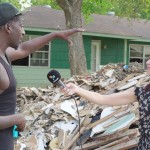
Abby Martin: But almost as quickly as it came, Harvey was out of the news, a thing of the past. One month later, long after the cameras left, I wanted to see the state of Houston, and how its people have recovered. With so many unprecedentedly strong hurricanes hitting the United States, Houston is much bigger than just a city getting back on its feet. It’s a microcosm of the U.S. empire’s ability — and willingness — to deal with natural disasters. Immediately I saw that Houston was not only far from help, but entire neighborhoods remain in ruins with no sign of local or federal government doing anything whatsoever. I spent two days in one of these neighborhoods. We’re here in the Lake Forest Park neighborhood of Houston. This was one of the hardest hit and most neglected communities in the entire city. As you can see, residents here lost virtually everything, and over a month later, they’re still in dire need of help. Venus, talk about what happened when Hurricane Harvey hit.
Venus: Well, 3 o’clock in the morning I saw the water coming under my floorboards and I told my mom, “It’s time to go.” Water was rising so high. It was horrifying to go outside, reach my car, water at my hip level, and make it outside my gate, water at my chest level. I had my mom, my son … My 24-year-old was with me at the time. But not knowing what was in that water, because it was night time, and then they telling us not to evacuate, it was horrible.
Abby Martin: They told you not to evacuate?
Venus: Yes, they told us not to evacuate. They told us to stay in our homes. If the water started rising any higher to maybe get on our roof, but if we going to the attic, carry a hatchet with us, just in case we had to knock ourselves out.
Abel Fabian: We were asleep, we don’t know that was going to happen until I feel something wet in my bed, and I thought, “Did I pee while I was sleeping?” And I told my wife, “Look, look.” And my son started yelling, “Hey, we getting flood.” So, from there on, I woke up like crazy and start doing something, and then I saw everything floating in the house. The water was about the waist. It was horrifying, because I got kids, and my wife doesn’t know how to swim. So, what I start doing, first thing I went to my paper cabinets, and start getting all important papers that I can, and put it in a trash bag. And all I can do, because in here it was so deep already, so I just thinking, “Go to the attic.”
Abby Martin: Fabian’s son, Jefferson, took harrowing video of the flooding while they were trapped in the attic.
Jefferson Fabian: My dad bought that thing. Look at the neighbor’s house.
Abby Martin: He showed me the pot of food they’d taken to survive, which they had to live on for days.
Abel Fabian: From there on, we stayed there for three days. But the horrifying thing is, I see the water goes up and up and up. It was rising, it was rising, and rising. My wife was crying, and my daughter and my kids were calling 911 every hour, and to stay in the front floor two or three hours waiting for somebody to pick up the phone, but nobody did. And we got lucky, they said, “We are around the corner, where you are?” I said, “This place.” They were lying, because they never show up.
Abby Martin: Wayland, tell us about the day of Harvey, because your neighbor was just telling us that it didn’t take days, it took hours.
Wayland: It took hours. Man, I woke up three, four in the morning, splashing my hand in the water. My dad get us up, we wake up, come outside. For the water to be in our house — if ya’ll can look at the area — for it to be on the floor in the street, it’s already to your stomach.
Abby Martin: Oh, my God.
Wayland: You know what I’m saying? And that’s at three, four in the morning. That’s crazy, because you would think the government and the state or whatever would have preemptive thinking to know, “Well, this is going to be bad. Let’s mandatory evacuate now while we can”, or something like automatic, but they don’t. Even when the water stop raining hard, it was still coming up. And these was the times when they opened the flood gates.
Abby Martin: I heard that they flooded — on purpose — some levees. I mean did they warn you that that was going to happen?
Joshua: No, ma’am. Not at all. Like I say, we watched the news through the whole process, even as it was flooding our side and raining. We was still watching the news, just trying to see what’s going on. What’s the next step, what to do? At no time was they saying, “Evacuate.” At no time was they saying, “We gonna open levees. You might have to evacuate.” It wasn’t anything of the sort. It was just, “Help yourself.”At that moment, we was in the midst of, I’m trying to tell my people to leave, and they trying to see what the news have to say. Because they supposed to know it all or tell it all. So I got them out, and in the midst of us talking, it was maybe five or 10 minutes had passed. The water have risen from a feet or two, so it was waist-level already. When I got them on the boat, my girlfriend — she’s like 5’5″, something like that — it was pretty much all the way … Yes. It was there already.
Abby Martin: So, once they flooded that, it-
Joshua: Once the levees or whatever they opened opened, it was a instant thing. The whole neighborhood just …
Wayland: They do this to prevent certain areas from getting-
Abby Martin: Certain areas?
Wayland: Certain areas. Because this is the lower-income area, so when anything happens, first places they open the gates is for these areas, closest to the bayous, which all these low-income areas ride the bayou. You hear me? They know this, they just don’t think the people know.
Abel Fabian: I was scared that the house getting fire, because I don’t know why the power company never cut the power off from the neighborhood.
Abby Martin: So one of the huge fears that residents had, aside from the flooding, were electrical fires just like the house behind me. This is one of several houses that was actually burned down because of the failure of the power company to shut off the electricity during the flood.
Abel Fabian: Fortunately, my brother-in-law were coming from Louisiana and he brought his boat here.
Abby Martin: So your brother, coming from Louisiana, came quicker than local authorities came to help you.
Abel Fabian: The local authorities never show up. Unfortunately. And he did. He take us out of here. My brother-in-law did get the boat to another people, and we walk with the water up to the chest to another main road, which is called Wayside. It’s about probably five miles from here.So, we walk on that with the water up to the chest. It was bad, because it was raining, water was cold, and infected, and smelly, and it was horrible.This is a street sign and the water was up to the half of the top one that says Lake Forest. Right on top, right there in the middle.
Wayland: When we was all moving, helping each other get out of here — because people that had been here last time — we knew. Last time we stayed on the roof for three days. So, this time, just got our neighbors, got the babies, the kids … Because they all unexpecting, not knowing what’s going on. They sitting in the cars and sitting on top of the house waiting for ambulance or waiting, and they not gonna come. We didn’t see any officials till three days later after the initial day Harvey struck. At this time, we all up there in our parking lots, and they passing by with vests on and everything, not one citizen in there. We got old people sitting up there that’s really need they machines and stuff like that. They need to get out of here. We like, “Come get the old people.” “We coming back.” And they didn’t.
Abel Fabian: While I was walking with my family on the main road back there with the water up to my chest, I saw a few rescuers from I think it was Salvation Army or something. There were seven people in each boat drinking coffee, and I thought they was gonna come and rescue, tell us, “Hey, jump in.” No, they say, “Keep on going. You’re almost there.” Almost where?And I know the area, because I live here. I say, “To where? Almost there to where?” Because it’s nothing back there. And they just tell us, “Keep walking.” And they were drinking hot coffee in the boats, like if they were fishing or hunting or something.
Abby Martin: And this is prone to flooding, right?
Wayland: This is a known flooding area, and this is something that it’s so crazy how, when everything happened, you seen no police, no ambulance, and there’s a police station right there and a fire station right there. It’s just unheard of to not get help when it’s going down. It’s crazy.
Abel Fabian: We take some people to the fire department place right on [inaudible 00:10:31], and I was amazed. My jaw almost dropped to the floor, because they tell us, “No, no, no, no, no. We can’t take these people here.” Then we ask, “Hey, can we use one of your boats here?” “Well, no, they don’t have gas. We don’t have gas for the boats. You can have them. You can use them. We can go and get you family.”
Abby Martin: While the corporate media followed around government rescue teams, the reality of total neglect for entire neighborhoods was invisible. When these abandoned communities did receive media coverage, it was of so-called looting. Yet I found a different story – one of heroism, selflessness, and community.
Joshua: I went out and I found a guy I know from the neighborhood. I do hunting and fishing. So, he was rescuing different people from the community in one of his own personal boats. I witness him doing it, I spotted him, and he recognized me and he came back up the road to rescue my people.When I got them out, I locked the house up, got everything secured, and I stayed around because I’m a little taller. I helped some of my neighbors across the street. I don’t know if you can see the walker in the fronts, or … Some of them, they older. They can’t walk, they can’t swim, they had different surgeries and things. So I just stayed back helping with them and different people with kids. People that were shorter than I couldn’t walk out on their own.Pretty much, that’s the story. We really didn’t have a lot of rescue efforts from the police officers. I’m not trying to bad mouth or put a ‘x’ on anyone, but our community helped our community.
Abby Martin: Right.
Joshua: Everyone that had a raft, a lifeboat, jacket, anything they can float, they brought it out and helped and assist with other people’s rescues. And that’s pretty much 90% of my neighborhood got rescued by my neighborhood.
Wayland: In the flood, I see it amazing for my people from my next door neighbor, brother Martinez next door, he had a boat. Everybody from all the way around this circle, they was this place stuck on their roof. That man came back, took ’em from here to where the street started going down. And that’s the farthest they can take people. I was walking people through a path through backyards to meet them up over there to go get up there to the front and to shelter to get everybody out the water.
Abby Martin: Since surviving the flood, they told me how their lives have changed.
Joshua: Far as this go, this is pretty much everything we used to own. What we called our home, everything is out here, now, on the pile. Everything we worked for for a lifetime was destroyed in a matter of hours.As we step into the home — watch your step, Ms. Abby — this where all the floors have been stripped. It was hardwood flooring. It all had to be stripped.This is the first room that the water rushed in. I guess the water pressure was so much in this room it shifted the whole wall. What can you actually take in a time like this? I can’t imagine a person going through a fire, or something like that, because it’s like, you want everything in your home, but you have to grab what you can grab and go. All appliances, all clothing, all…everything is just gone, it’s just trashed. We can only grab important documents, maybe jewelry, and important things like that.
Abby Martin: Or family photos …
Joshua: Family photos, everything is gone. Like I say, I just lost my father two years ago and all that is gone. I lost all that. Everything is completely stripped and broke down. You can’t stay in here right now.
Abby Martin: No, you can’t.
Joshua: This is what we have left of a restroom. We still have power, because you still have to pay the bills. They still coming. So we still have to pay those. Can you get ready like this for work in the morning? Or to do anything just to get back to society and life? You can’t live like this.
Abby Martin: No, you can’t.
Joshua: And we not getting any help.
Venus: When I returned home, I was scared. I cried. I cried, because everything that we had is gone. We had to start all over from scratch, and that’s memories from when my kids were babies. Everything is gone.A lot of people don’t want to face that, but sooner or later, they gonna have to come and face reality. And this is our reality.
Abel Fabian: I have four cars under the water and I say, “What I gonna do? I lost everything.” Even my underwears. Everything. You name it, it’s gone. I’m struggling right now just to get our cars to go to work. I don’t have a job right now for those reasons. I lost my job.
Abby Martin: While FEMA was nowhere to be found during the days of flooding, one month later, help from the agency is just as illusive.
Wayland: What they doing is not helping right now. People still waiting on FEMA. Can’t get to work, you losing your job, you losing your house, and it’s crazy, because I been hearing how people in the richer areas already getting checks from FEMA. And over here, we still pending. Still waiting.VENUS: I applied for FEMA. I’m still pending, but what can $400 do? $400 can’t move me in a house. I have to pay for a room because I didn’t get lodging with FEMA. So I have to pay for my room and board.
Joshua: I heard about them offering different rooms. $500, $400. We didn’t receive any of that. Even far as the Red Cross, the $400 they was giving to help people get back together, I can show you on my phone where I didn’t even qualify. I’m like, “If you don’t qualify after losing everything you own, what do it take to qualify?”
Abby Martin: You’re not qualified?
Joshua: Not qualified. Yes, ma’am. I don’t even … They say you can go and appeal it or something. As you can see, it’s really nowhere that say to appeal. Nowhere-
Abby Martin: Why? Why were you not qualified? It doesn’t say.
Joshua: It don’t even give you an appeal option, and it don’t even say why I’m not qualified.
Abel Fabian: Red Cross offer $400 for help, and guess what? This morning, they send an e-mail that I don’t qualify for that help.
Abby Martin: Why?
Abel Fabian: They don’t tell you why. They just say, “You don’t qualify.” I wonder what I have to be in order to be qualifying for that help. FEMA saying they’re helping, help … I don’t know who they help, but they’re not helping this community, here. None of us have nothing from FEMA. It’s sad. It’s sad that they prefer to send $10 million to some other countries for war or whatever, but not even a penny over here. I call FEMA and they say, “Well, we assign a supervisor.” But I haven’t heard from the supervisors. That was two weeks ago.
Wayland: We gotta do something, because what ya’ll gonna say … We know it’s gonna happen again. Do you see ditches over here? Do ya’ll see ditches? Ain’t no ditches. One ditch down one street. Come on, man. Do they do the richer neighborhoods like this? No, they got ditches on every street. They got retention ponds for any house that’s bigger than … Come on, man. It’s something that can be done. It’s just not being done because I guess they don’t see them exerting the money to this low-income area or something.
Abby Martin: Why do you think that no one’s come here? Especially after Veronica wrote Channel 13 and all these people. Why do you think that they haven’t come?
Joshua: Because I really think the area or the neighborhood is really frowned on. I don’t know if it’s stereotype or whatever about the situations that’s going on, because I know I heard a lot about the looting and things like that. You see my home, you see where I’m at. The water was 20 feet or better at every canal, bayoued up to get out of here. There was no way for us to even get out of here. We barely got out of here with our life. We didn’t have time to try to take anything from nobody else. We barely was able to grab the items that we wanted for ourself, and even those people that were stealing for whatever reason they was, they probably was just trying to help they family.
Abby Martin: Yeah, exactly. But, like during the hurricane, the community has stood up in place of government failure. Wayland, Venus and Fabian have been staffing a table every day to distribute supplies and donations, and they’re going door to door to inform people of tenants’ rights and help with cleanup efforts.
Wayland: Now, me and my group, we been out here every day helping houses, helping people. Every day we out here, we got families and small little churches come and giving food every day, or water every day. And out of these … What, it been a month, now? I seen the army come twice. They come through and they come give you a couple bottles of water or come give you one pack of MREs and one case of water. Man, people been coming giving us … I got a garage of water from all the love from people coming every day to make sure we got what we need. And if they can do it, you can’t tell me ya’ll can’t do it.The most beautiful part about it is how the community came together to save ourselves. That’s what I call the little neighborhood movement we doing. It’s so we save ourselves. That’s what we been trying to do, save everybody that can need help. Anybody they can’t do it on their own right now, we trying to help.
Venus: I came back to my neighborhood to volunteer alongside my brother, Edwardo, and Waylo, so that we can at least try to get something going on in the community, and that’s what we’re doing.
Abby Martin: You mentioned that this Bobcat, right here, this is a volunteer?
Abel Fabian: Volunteer people are amazing. They are being helping me tear down the walls, to clean the house. The world see this country as one of the first-class country that take care of some other countries first, but look how we are right now. It’s worse than we are in a war. I don’t see one police car around, I don’t see no fire departments, I don’t see FEMA. I don’t see none of them.It’s sad, because if we don’t have these volunteer with good heart, we probably don’t have nothing to eat. Because they bring to us every day water, sandwiches, whatever they can. But all this is from volunteers, not from the government.
Abby Martin: While these stories of resilience and self-organizing were inspiring, Lake Wood and many other neighborhoods are still in dire need of help.
Venus: 77078 is the zip code that need it, because it didn’t go to this house and miss this house, and go to this house and miss this house. Every house in this community was hit and hurt. Everybody, literally. The whole neighborhood is just gone.
Abel Fabian: This is 77078 zip code. Put attention. 77078.
Wayland: I know it’s a lot of stuff going on, but we one of the most advanced nations on this planet. Can’t tell me we can’t do something to take care of our people in a more, faster manner. I just want us as Americans, us as Houstans, people from right here from this 77078 area code, to be aware of what they doing to us. They want us to … Our value of life is not as valuable as we think. That’s what I see.
Abby Martin: And as my investigation found, the failure to address the urgent needs of my friends in Lake Wood by a local, state, and federal government puppeted by big oil has much bigger implications of certain disaster in the near future in countless similar cities across the country.
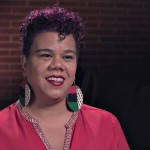
Renowned Afro-Latinx activist and scholar Rosa Clemente sits down with Abby Martin to discuss her experiences running for Vice President, organizing under Obama versus under Trump, advice for new activists, identity politics and more.
In the face of a resurgent far-right movement, backed by unleashed reactionary state forces, Clemente gives valuable insight into the challenges, strategies and tactics for a new era of organizing.
Rosa Clemente & Abby Martin – No Savior in 2020
**
Abby Martin: Rosa Clemente is a leading scholar on Afro-Latinx identity and the anti-racist struggles of the 60s and 70s. Also an activist and political organizer, she’s led political tours, built radical organizations, and much more. Among many accolades, she was selected for Ebony Magazine’s list of top 100 most inspiring African-Americans and was the 2008 Green Party candidate for vice president. I sat down with Rosa at the People’s Congress of Resistance in Washington, D.C. to talk about third party politics and organizing in the Trump era.Rosa, you worked as an aid in the Democratic Party for years, up until 2000 if I’m not mistaken. What made you leave the Democratic party and embrace more revolutionary politics?
Rosa Clemente: I was part of that radical black/Latino left of colleges that was every day having a protest or rally demanding something, so I knew the flaws of the Democratic party. I was never like … I would obviously vote or was voting as a Democrat, but then I saw Ralph Nader speak in upstate New York. At that time, he was with the Green Party. I was like, “Oh. How don’t I know that there’s another party? How am I in any way involved in electoral politics and don’t know that there’s more than two parties?”Really, the turning point for me was in 2005 when I went down to report on what was happening right after Hurricane Katrina and the levy breach in New Orleans. The minute I saw what was going on, I was obviously mad at George Bush and the response from the government, but began to talk to a lot of people and how they felt the Democratic Party, just in general, had been letting them down. It kind of gave me a focus of looking at the Democratic Party from a very critical lens. In 2006, I registered and became a Green Party member.
AM: In 2008, you ran as the vice presidential candidate, Cynthia McKinney as the presidential candidate. Two women of color, the first time in history. I voted for you. I was so proud to do so. I told everyone to do so.
RC: Thank you.
AM: What was the biggest takeaway or lesson learned from that whole experience, and what backlash, if any, did you get from the Democrats, Greens, Progressives for infringing on Obama’s presidency as the first person of color?
RC: I always tell people I believe if two men of color had been the nominees, there would have been more support for those men of color. Patriarchy, misogyny, sexism was rampant for many circles. Me and Cynthia didn’t work for almost two years after we ran. Nobody would really hire us. Of course, we were told, especially by a lot of black and Latinos that were heavily involved with the Democratic Party, that we were basically traitors and we were making the worst mistakes of our lives. I was told by some of my mentors that I was destroying any ability to have any type of career afterwards.Also as a historian, I’m a trained historian in black studies and Africana studies, I knew the significance of Barack Obama. I just wanted people to also respect the significance of two women of color, Afro-Latina, a Puerto Rican and an African American, and what that meant. I knew the significance of when Obama won, and I myself that night took a moment to watch him and Michelle and Sasha, Malia go and know this is a historical moment, but history doesn’t make movements like that. The people made the movement. That was a moment and it wasn’t a movement. Barack Obama was never a movement. I felt like that from that time. I think history has proved a lot of what me and Cynthia did to be the right thing.Lastly, there was a lot of racism in the Green party from a lot of white men in that party. The Colorado State Green Party took us off the ballot. I think people out there don’t understand the significance of what it means to take your own candidates off the ballot because you think they’re too radical.
AM: We saw two mass movements arise under the Obama administration despite … People can criticize the progressive movement for failing the anti-war movement, for dying, but really you cannot discount Black Lives Matter and Occupy Wall Street.
RC: Yeah.
AM: What does that mean? Looking back on his legacy, what significance did it have and what space did you think it carved for those sort of grassroots mobilizations?
RC: I’m sure by day two or three, the police had infiltrated Wall Street, as well as began to do the tactics of the Counter Intelligence Program, which is create destruction and discord. Then with Black Lives Matter, what predates Black Lives Matter though is important. You have young people that are undocumented that are seeing that the Barack Obama administration and the Democrats, along with Cecilia Munoz, who was the director of domestic policy, ratcheting up deportations. You began to see young people saying, “Undocumented, unafraid.” That was before even the DREAM Act was in the zeitgeist.Then what we see under a black president is a rise of Black Lives Matter. I often think of it too historically, would Black Lives Matter have risen if it hadn’t been a black president? I think so, but I think the impact wouldn’t have been as great because at this point, those black young people, whether they’re the Ferguson frontline resistors or those that were part of Black Lives Matter after it became not just a hashtag, had seen Troy Davis executed and had seen Trayvon Martin’s killer walk free. They were also those that voted for Obama the first time they could vote. They were deeply upset and disappointed, I think, at him, like, “You’re the black president and this is happening. There are things you can actually do and you’re not choosing to do them.”Then what we saw in Ferguson was queer folks, but it was also really what we call street organizations, the young brothers and sisters that people call gangs, we call them sets, that said, “Nah. Michael Brown’s death won’t be in vain. If we have to throw rocks like our Palestinian brothers and sisters are doing at military tanks, we’re going to do that.” I think it was a culmination of all of it, but particularly the disappointment that African American and Latino young people specifically felt who had helped President Obama become the president.
AM: Even this year, Rosa, with the two most hated, detestable candidates, Hillary Clinton and Donald Trump, a reality star game show host narcissist, misogynist, racist, and you can go on all day about Hillary-
RC: Megalomania.
AM: Jill Stein barely broke that million vote. I don’t understand it. I really, really thought that this time … I was like, “Clearly, with these two hated candidates, Jill Stein’s at least going to get three million, maybe 5% of the vote.” I was pretty surprised. Then you see the non-votes. Almost twice as many people in these swing states went out, voted for everything and left president blank.
RC: Right.
AM: That’s incredible.
RC: Yeah.
AM: Then there’s the shaming of people, still blaming people who voted for Jill Stein, of course, on Trump, which is insane, but why do you think there was such a poor turnout for Greens?
RC: We had too many Green Party people that were trying to sway Bernie Sanders to come the way. What the Green Party should have been doing is going to half of the population that doesn’t vote in any election. Don’t try to change a Democrat. Don’t try to go after a Trump supporter. Don’t even go after Bernie Sanders. Why don’t you go after the 50 so percent of people that are not voting in this country? We know where they’re at. We have the statistics to … We could look at all the data to say, “This is where we need to be.”I think the Green Party made a mistake by almost chasing after Bernie and Hillary and Trump, even though this was the year that we got the most mainstream media coverage. To have Jill Stein and Ajamu Baraka on a CNN stage and see no results from that means that then the party has to be very either introspective or that people of color, especially young people, may have to form their own new political party if they want to be part of electoral politics. Even with all that said, we’re not going after the people who are not voting. Instead, many people, as you say, shame them as opposed to saying, “Why are you not voting? What would make you vote? What does leadership in your community look like?”I don’t know if the Green Party’s going to be able to recover from the narrative that takes us back to 2000, that it was Ralph Nader’s fault, and now the idea that less than 1% of people that voted for Jill Stein is the reason that Trump won as opposed to always being very clear that the narrative is Trump won because 52% of white women in this country voted for white supremacy instead of themselves. They voted for patriarchy instead of their own liberation. How do we have those real and deep and honest conversations with people that are not existential conversations and really academic conversations, but true grassroots conversations?
AM: I guess just talk more about the trappings of Bernie Sanders as a whole and the whole Democratic Socialism movement.
RC: I think, in general, Americans are always looking for someone to save them. They’re either looking for someone to save them or an authority figure to tell them what to do. When it comes to Bernie Sanders and Democratic Socialism in America, I have to ask any Socialist like, “Did he run as a Socialist, or did he run as a Democrat?” He’s made his choice. I’m not saying … In fact, Bernie Sanders was in Albany during a campaign stop and he actually met with Black Lives Matter Upstate, which I help found, and met with the family of victim of police murder by the name of Dante Ivy. We were there for a good 40 minutes, and talking to him, of course I see he is not like the rest of these people, but he has his blind spot. He thinks the Democratic Party can be pushed. It’s never going to be pushed to that.I just don’t understand how they don’t see what the majority of us are seeing and why Bernie Sanders wouldn’t have taken the step forward to say, “Wait a minute. I’m going to run as a third party candidate.” He wasn’t going to run as a Green. Then run as a Socialist or figure out how we do that line or how it is that you’re independent. I think the Draft Bernie people, the folks that think he’s going to run again, I don’t think he is, but are looking for literally someone to save them at this moment of crisis. Electoral politics never saved anyone. I always look at Africans who were enslaved in this country. Not one of them voted to be free. They organized to be free, knowing that their freedom might not come, but their children’s freedom was definitely coming.I think sometimes in our movements’ faces, whether they’re progressive, left, radical, socialist, new African, Puerto Rican, independent, that we often don’t look at the psychology and the psychosis that a lot of people are going through that essentially is saying, “Either save me or tell me what to do, because I got two jobs, I got to pay my rent. I don’t have healthcare. I’m formerly incarcerated. I don’t have my prescription benefits.” College debt, that’s a privilege for some of us to have college debt when people can’t pay their rent. That’s what happens sometimes. I think that’s where we’re at right now in this country, like in a mass social control kind of way.
AM: Is there viability right now to build a new third party?
RC: I would have said a couple years ago maybe, but I think now the electoral political system is so … Corrupt is not even the right word. It’s so driven by money, obviously. Citizens United, I think, dealt a huge blow to what that looks like. To form a third party that can get on the ballot … The reason the Green Party is still critically important as well is because Greens know how to get on a ballot. I don’t think people understand the mechanisms of what it means to run and get on a ballot. I think there’s an assumption Rosa is running, I’m on a ballot. No.Then people don’t realize that often times, the Democrats and Republicans will come together to keep off any third party. In sense, they could keep switching power on and off. Four years, eight years. “Here. Your turn.” Ballot access. The fact that to run a New York City council race in the 80s would have cost $10, $15,000. You can’t even run for New York City council if you don’t have $250,000 already probably pledge. Look at our senators. We’re talking senate races that are now going in tens of millions of dollars. Who can do that? The only way you raise that money is what? Through corporations. I don’t know, at this point, if, on the federal level, we’re going to ever see a third party candidate. I do believe on the local level. That’s a whole different ball game, if it’s a smaller city and a smaller municipality.I don’t know if we should now be putting all our efforts into that. That’s lastly one thing that I’m very concerned about. I don’t like going into spaces where people are talking about who’s running in 2018 or 2020. It’s like what’s happening right now and what work can we do to basically have communities that are localized, self-determining, and can defend themselves from what we know is about to happen with the Trump administration, which, on its face, is going to be most likely massive amounts of roundups. If we can’t stop roundups and people from being deported, I don’t know if we can get to the point of starting a third party in this country, other third parties.
AM: Great point. Let’s just analyze what we’re looking at right now. We have the J20 arrests of over 200 people facing life in prison for being in the vicinity of a broken window. We have the Trump regime ramming so much down our throats. It’s so hard to figure out where to focus our energy. Then you have the Democratic Party, of course, co-opting the resistance, even Hillary Clinton using Heather Heyer’s name to try to get money.
RC: She also threw Black Lives Matter-
AM: It’s disgusting.
RC … under the bus in her book.
AM: What did she say?
RC: In her book, she said that Black Lives Matter would be great if they had a policy platform. I’m like, “So you didn’t read the movement for Black Lives policy platform that took a year to be created from over 40 groups that are mostly young people of color, queer-led groups, that gave you every solution to every problem on a website and have been for the last year, infusing what is called the Movement for Black Lives Platform into all the work.” It doesn’t help also that Bernie Sanders and all his people are talking about identity politics as something that our identities are something that we shouldn’t be talking about, when Trump won on identity politics. He ran on a white identity politic and won, but then we’re being told as people of color not to bring all of who we are into the space.
AM: It’s a disgusting contradiction.
RC: I’ll say specifically that type of mainstream media and some liberals and so-called progressives have also normalized it, like, “Let’s give him a chance.” I think Chuck Schumer and Nancy Pelosi just meeting with him last week and then walking out and saying, “We got a deal on DACA,” and then six hours later, he tweeted, he’s like, “What deal are they talking about?” Why are they walking in a room with him? Why are you even giving … It was almost like at the State of the Union. There were two Congress people that didn’t go, Luis Gutierrez and Maxine Waters. My whole thing was, why was any Democrat sitting at any State of the Union? Because you believe in the institution to the point that you want to save it, but maybe it’s no longer savable. What you’re essentially doing is you help normalize this behavior, which could actually lead to another Trump presidency.
AM: I think it might because that’s how tone deaf these people are.
RC: Because his base, no joke, they’re going to ride, like we say in hip-hop, they are riding and dying with Donald Trump. What we’ve seen is the Democratic Party failing, maybe even some third parties that should be doing better failing, so we might see less people of color, less marginalized people that would be usually inclined to be independent or Democratic maybe voting in this next election. Then obviously, we always have the Republican Party spot on with voter suppression.
AM: Not only this vitriolic repression, undocumented people, trans people, everyone’s under attack, minority or queer. I feel like we’re seeing a two-fold effect. Organizing is getting stronger, but then maybe the people on the front lines who are at risk maybe are pulling back. How do we deal with this apparent contradiction, and what will organizing look like, do you think it will look like, under Trump?
RC: I think that’s a question that … That I don’t have the answer to, because what’s also happening is what Jeff Sessions is doing with the Department of Justice. I think that’s the quiet, maybe not quiet for us, but that’s really what we should be talking about. You have Jeff Sessions basically saying he wants a new War On Drugs. There will be no crimes prosecuted, no police misconduct, not that the Department of Justice really ever comes back with anything to say that police officers have violated rights.You have someone like Betsy DeVos that is now saying that we have to think about the rapists on campus and that they’re not thrown under a bus, where you’ve had a 10-year movement of young women on campus and their male allies not only being brave enough to tell their stories, but suing the federal government under Title IX violations.While the Trump clown factory is what we see every day, then what’s happening to departments? You don’t have time to think about how do we have an underground system that’s not going to rely on Twitter, Facebook to tell our stories when the government decides whatever, an algorithm changes, and you don’t know what’s happening. We could look at mainstream media and even some progressive media that are obsessed to the point of Trumpism that they don’t tell any other stories of resistance. When you don’t even see that within the progressive media and the obsession with Russia, it’s just like I don’t know what organizing looks like right now on a mass level.I know that what I’m seeing on a local level is literally people just trying right now to survive. I spoke about that earlier. We’re like in survival mode and our thriving mode. Usually out of these moments comes a new group of people, usually young people. What I think we’re going to see is my daughter’s generation, my daughter’s 12, and I would say to like the 21, 22 year olds, are going to be faced with such a crisis and they’re going to have to figure out a new way of how we do the work and what organizing looks like and what movement building looks like.
AM: You’re a firm believer in building those organizations that can serve as a political home, not just the protest politics, not just fighting in the streets. There has to be something larger. Expand more on that.
RC: Political education is key. I think we have a lot of people that are organizers and activists that are still not have political education. What I mean by that is it’s as simple as dedicating yourself to making sure you’re watching the most progressive media, going to those spaces where there’s the Empire Files or–and I mix what I like–or Black Agenda Report to actually see the nuances and real, still deep, investigative narrative storytelling of the people, the others that are the most marginalized. I think it’s like that.I also think it’s about reading history and understanding that we’ve been here before. America is founded on the genocide of indigenous people, the enslavement of African people, the exploitation of immigrant people. We’ve had bans before, mass deportations before, and people say, “That will never happen again.” It’s literally happening now. I think history is super instructive. I don’t think history as much repeats itself as it stays on a continuum. I think it’s important that if you’re new into this movement work that you sit down and study, that you talk to elders who’ve done the work, but also the elders who will admit the mistakes that they did so those are not repeated.
AM: Rosa, what is your message to young people under 20 or just getting involved in political activism? What’s your message to them?
RC: Toni Morrison did a speech a couple years ago at UMass Amherst. She said, “Never see yourself do the white gaze.” That stuck with me because I think especially for young people of color, sometimes what young people of color are seeking is the same system that is seeking to destroy them, to edify them, to say, “You’re doing a good job. You’re good. I like what you’re saying.” Usually when that happens, you’re not doing a good job. You can’t lastly expect that all your work is always visible and awarded or rewarded. Carter G. Woodson, the father of African American history, never got one award in his life. He was never on a magazine cover. You have to be okay with being on the margins. I feel like I was born on the margins and I’m always going to be there. Young people who are doing movement work are going to have to get through that too. You might be born on the margins. You’re never going to be normal. You’ll probably die on the margins, but those of us that do that work, history will always tell the truth and we’ll always reward that work.
teleSUR journalist Abby Martin recently became the target of a smear campaign by Israeli organizations after an appearance on the podcast The Joe Rogan Experience.
On the program, which is one of the biggest and most popular podcasts in the United States, host Joe Rogan has a discussion with Martin about her experiences in Palestine while she was there for her show The Empire Files in 2016.
Video of Martin’s appearance on The Joe Rogan Experience—where she recounted her eyewitness account of human rights violations—went viral on social media. The interview garnered over 1.5 Million views on Facebook alone.
This negative press for the Israeli state on such a high-profile platform quickly caught the attention of public relations organizations.
A small YouTube channel called the Israel Advocacy Movement released a 19-minute video response claiming to debunk everything Martin said on the podcast, using baseless accusations of anti-semitism and attempting to refute the well-known fact that Palestinian territories are under Israeli military control.
While the UK-based Israel Advocacy Movement has a meager viewer base of only 3,500 subscribers, the video was then promoted on social media by the well-known organization “StandWithUs,” which exists to cultivate pro-Israel propaganda on social media.
Posting the video, StandWithUs called Martin a “notorious anti-semite” and that “she spewed ridiculous lie after lie in her attempt to smear Israel … Enough is enough.” They engaged Martin in other online attacks.
A campaign was also launched against The Joe Rogan Experience podcast and Rogan himself, including a coordinated email harassment demanding he renounce the interview and host a pro-Israel guest as penance. Such pressure against celebrities and journalists who host views sympathetic to Palestinians is typical, and often fierce.
StandWithUs, which operates on a $9 million annual budget, receives a large amount of funding and direct instructions from the Israeli government itself. In their official funding contract with the Israeli Prime Minister’s Office, StandWithUs is employed to manage “interactive media war rooms” to run government messaging.
In an exclusive interview with teleSUR, Martin said “I was getting so many accusations of misrepresenting Israeli society and distorting the treatment of Palestinians, I wanted to let Israelis speak for themselves.”
This shocking episode features a range of people in Jerusalem’s so-called “Tolerance Square.” Each interview shows with striking clarity how much racist, supremacist and even genocidal views are prevalent in Israeli society.
When asked how to deal with the Palestinian population, one man responded “I would carpet bomb them. That’s the only way … I think we have the right to hate them.”
Another says “I think we should give the Arabs a country. Then it can be a war between countries … we can just drop one big one and, ‘pop!’, done!”
A young woman declares plainly “we need to kill Arabs” while she and her friend giggle uncontrollably.
A more merciful man says “Israelis have to take over. We have to kick [Palestinians] away,” then ponders, “it would be better not to kill them, but to send them away to Arab countries.”
These interviews reveal how mainstream the desire for mass killing and ethnic cleansing of Palestinians are among Israelis, contradicting the manufactured image of as a liberal, democratic and peace-loving nation. This is reflected in polls across the region, showing that over 70 percent oppose Palestinian statehood or ending the occupation, and 50 percent want to ethnically cleanse the 1.5 million Palestinians living inside Israel as citizens.
Martin told teleSUR how the interviewees were picked from passer-bys in the bustling shopping and restaurant area of Jerusalem, “we did not cherry-pick people in any way. I strived to get a diverse range of opinions, finding people from all ages and backgrounds; religious and secular, self-described leftists and conservatives, Israeli-born and immigrants from abroad. All the interviews I conducted you see in this episode.”
“I asked very vague questions, like ‘what is it like to live here’ and ‘what do you think about the situation?’ Many were quick to share their extreme racism and even calls for mass murder, as if they were totally normal and acceptable views. Keep in mind, they said these things knowing they were speaking on-camera to U.S. media.”
Addressing the accusation that Palestinians share the same attitudes towards Jewish Israelis, Martin explained “I spent nearly a month in the West Bank, asking countless Palestinians the same questions. Never once did I hear a Palestinian express desire to kill Jewish people or to ‘kick them all out.’ But what you see in our new episode is what I found during just three hours in Jerusalem. It was truly shocking.”
Today, most of the remaining Palestinian territory remains under brutal military occupation, and is shrinking from rapidly-expanding illegal settlements. While the Netanyahu government plans big moves with greater freedom from the Trump Administration, this colonial project survives on lavish US funding, a carefully-crafted public image campaign, and threats against public figures who question Israel’s moral supremacy.
While the Israeli state and it’s propaganda arms like StandWithUs wield a massive apparatus to depict itself as a peace-seeking victim, Martin’s new Empire Files offers an irrefutable look behind that curtain.
This is a different version of this item – the previously published piece did not accurately reflect the interview. We regret the error.
Watch Abby Martin’s new episode of The Empire Files and additional reports from Martin’s on-the-ground investigations in Palestine at YouTube.com/TeleSUR English.
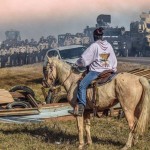
A historic gathering is taking place against the Dakota Access pipeline at Standing Rock. Thousands of people, and around 300 Native nations, have gathered to stop Big Oil’s pipeline, which threatens sacred Native grounds and the environment.
To give an eyewitness account of this growing movement, as well as essential historical context, Abby Martin interviews legendary Native leader Dennis Banks. Banks is a founder of of the American Indian Movement (AIM), a leader in the 1973 Wounded Knee standoff and many other actions over five decades.
AIM Founder Dennis Banks on Standing Rock & Historical Trauma of Native Genocide