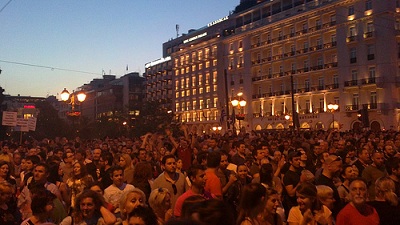
 THE NATION– When he was elected prime minister in 2009 at the head of Greece’s Panhellenic Socialist Movement (PaSoK), George Papandreou was going to wipe out corruption, open up politics, rejuvenate the country’s sclerotic economy. “There is money,” he said then, although he must have known there wasn’t any in the public coffers. Less than two years later, he has allowed the “troika” of the European Commission, the European Central Bank (ECB) and the International Monetary Fund to bind him on the horns of an impossible dilemma: either the Greek government implements a second round of austerity measures more savage than any yet endured by a developed country, with deeper cuts and tax hikes and a wholesale, cut-price sell-off of its public assets, or Greece faces default on its sovereign debt and imminent bankruptcy.
Parliament is preparing to vote on the new measures, which are opposed by more than 70 percent of the population. Trade unions have begun a two-day general strike; around Syntagma Square, small bands of agitators in face masks and hoodies—the so-called “known unknowns”—clash with riot police. Choked by clouds of tear gas, thousands of peaceful demonstrators are trying to hold their ground.
Since the end of May, Syntagma has overflowed with Greece’saganaktismenoi (cousins of the indignados who filled Spanish squares this spring), here to refuse the troika’s blackmail and demand their democracy back. The crowd has been huge, politically diverse and overwhelmingly nonviolent. There are people here from all walks of Greek society; at times the rhetoric is that of a national resistance. A neat elderly couple on their first demonstration push through the crush because their pensions have been slashed, prices are rising and they just can’t make ends meet. Vassilis Papadopoulos, a 50-year-old unemployed truck driver living on loans from his mother, has come all the way from Corinth wrapped in a giant Greek flag, with a look of despair in his eyes and saucepans to bang together. This is a movement, he says, against the political system:
“They’ve all cheated us. They destroyed the banks, our pension funds. They invested our social security money in bonds for their own benefit.” Farther down, in the square itself, something entirely new seems to be taking shape: a liberated zone in which an open conversation has been going on for weeks. University professors, passers-by, unemployed laborers, all get their three minutes with the microphone. There’s a medical tent, a “time bank,” a “team to promote calm.” When riot police cleared the square with clubs on the night of June 15, these protesters didn’t fight. They simply walked right back, picked up the rubbish and repaired their neighborhood.
Read full article about Greece In Debt, Eurozone In Crisis.
© 2011 The Nation Magazine
Photo by Flickr user Christina Kekka



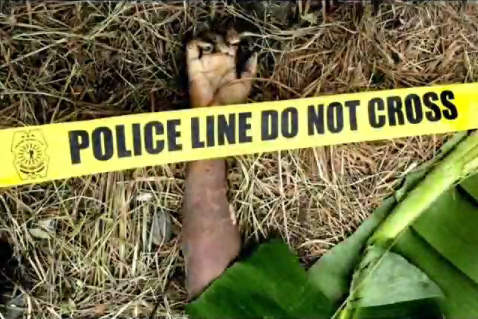 BBC– Human Rights Watch says activists in the Philippines are still being
killed with impunity, despite the president’s campaign pledge to end such
violence.
BBC– Human Rights Watch says activists in the Philippines are still being
killed with impunity, despite the president’s campaign pledge to end such
violence. PRESS TV
 THE NATION
 SKY NEWS