Space-Time Cloak Could Make Events Disappear?

NATIONAL GEOGRAPHIC– It’s no illusion: Science has found a way to make not just objects but entire events disappear, experts say.

According to new research by British physicists, it’s theoretically possible to create a material that can hide an entire bank heist from human eyes and surveillance cameras.

“The concepts are basically quite simple,” said Paul Kinsler, a physicist at Imperial College London, who created the idea with colleagues Martin McCall and Alberto Favaro.

Unlike invisibility cloaks—some of which have been made to work at very small scales—the event cloak would do more than bend light around an object.

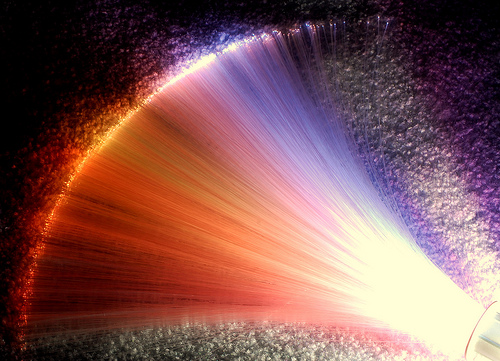
Instead this cloak would use special materials filled with metallic arrays designed to adjust the speed of light passing through.

In theory, the cloak would slow down light coming into the robbery scene while the safecracker is at work. When the robbery is complete, the process would be reversed, with the slowed light now racing to catch back up.

If the “before” and “after” visions are seamlessly stitched together, there should be no visible trace that anything untoward has happened. One second there’s a closed safe, and the next second the safe has been emptied.

Read more about Space-Time Cloak Possible, Could Make Events Disappear?

© 2011 National Geographic

Photo by Flickr user hembergler
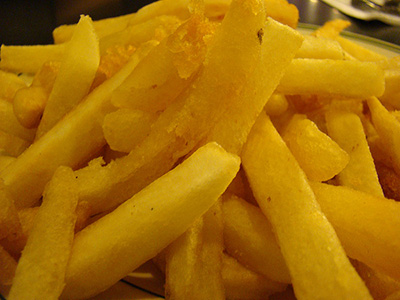
Food Companies That Serve You ‘Wood’

THE STREET– The recent class-action lawsuit brought against Taco Bell raised questions about the quality of food many Americans eat each day.

Chief among those concerns is the use of cellulose (read: wood pulp), an extender whose use in a roster of food products, from crackers and ice creams to puddings and baked goods, is now being exposed. What you’re actually paying for — and consuming — may be surprising.

Cellulose is virgin wood pulp that has been processed and manufactured to different lengths for functionality, though use of it and its variant forms (cellulose gum, powdered cellulose, microcrystalline cellulose, etc.) is deemed safe for human consumption, according to the FDA, which regulates most food industry products. The government agency sets no limit on the amount of cellulose that can be used in food products meant for human consumption. The USDA, which regulates meats, has set a limit of 3.5% on the use of cellulose, since fiber in meat products cannot be recognized nutritionally.

Jump directly to the slideshow of companies whose food contains cellulose.

“As commodity prices continue to rally and the cost of imported materials impacts earnings, we expect to see increasing use of surrogate products within food items. Cellulose is certainly in higher demand and we expect this to continue,” Michael A. Yoshikami, chief investment strategist at YCMNet Advisors, told TheStreet.

Manufacturers use cellulose in food as an extender, providing structure and reducing breakage, said Dan Inman, director of research and development at J. Rettenmaier USA, a company that supplies “organic” cellulose fibers for use in a variety of processed foods and meats meant for human and pet consumption, as well as for plastics, cleaning detergents, welding electrodes, pet litter, automotive brake pads, glue and reinforcing compounds, construction materials, roof coating, asphalt and even emulsion paints, among many other products.

“Cellulose adds fiber to the food, which is good for people who do not get the recommended daily intake of fiber in their diets,” Inman said. “It also extends the shelf life of processed foods. Plus, cellulose’s water-absorbing properties can mimic fat,” he said, allowing consumers to reduce their fat intake.

Read the full article about 15 Food Companies That Serve You ‘Wood’.

© 2011 The Street

Photo by Flickr user freya_gefn

Whales Descended From Tiny Deer-Like Ancestors

SCIENCE DAILY– Hans Thewissen, Ph.D., Professor of the Department of Anatomy, Northeastern Ohio Universities Colleges of Medicine and Pharmacy (NEOUCOM), has announced the discovery of the missing link between whales and their four-footed ancestors.

Scientists since Darwin have known that whales are mammals whose ancestors walked on land, and in the past 15 years, researchers led by Dr. Thewissen have identified a series of intermediate fossils documenting whale’s dramatic evolutionary transition from land to sea. But one step was missing: The identity of the land ancestors of whales.

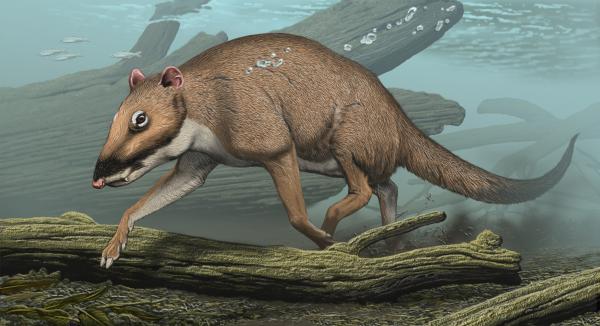
Now Dr. Thewissen and colleagues discovered of the skeleton of Indohyus, an approximately 48-million-year-old even-toed ungulate from the Kashmir region of India, as the closest known fossil relative of whales. Dr. Thewissen’s team studied a layer of mudstone with hundreds of bones of Indohyus, a fox-sized mammal that looked something like a miniature deer.

Dr. Thewissen and colleagues report key similarities between whales and Indohyus in the skull and ear that show their close family relationship.

Thewissen and colleagues also explored how Indohyus lived, and came up with some surprising results.  They determined that the bones of the skeleton of Indohyus had a thick outside layer, much thicker than in other mammals of this size.  This characteristic is often seen in mammals that are slow aquatic waders, such as the hippopotamus today.  Indohyus’ aquatic habits are further confirmed by the chemical composition of their teeth, which revealed oxygen isotope ratios similar to those of aquatic animals.  All this implies that Indohyus spent much of its time in water.

Dr. Walt Horton, Vice-President for Research at NEOUCOM commented:  “This remarkable research demonstrates that the study of the structure and composition of fossil bones can tell us about how the skeleton of whales and, by extension, other mammals like humans, interacts with the environment and changes over time.”

Read the full article on Whales Descended From Tiny Deer-Like Ancestors.

© 2011 Science Daily

Photo courtesy of Northeastern Ohio Universities Colleges of Medicine and Pharmacy

New Brain-Computer, Mind-Control Technology

KURZWEILAI– University of Michigan Center for Wireless Integrated Microsystems professor Euisik Yoon and colleagues are developing a next-generation design for a brain-computer interface (BCI): a brain implant called BioBolt.

This patent-pending invention could someday allow some disabled patients to control an arm muscle (or other muscles) by just thinking about the movement — without wires keeping them immobilized in a chair.

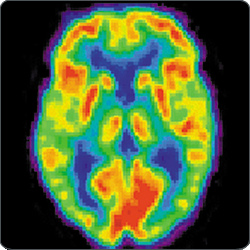
A bolt implanted in the skull would contain an ASIC (application-specific integrated circuit) microchip under the skin in the skull. It would pick up and process neural signals, and transmit them via the skin directly to a receiver located in or near the target muscle group (such as an arm or hand).

Read full article about New Brain-Computer, Mind-Control Technology.

© 2011 Kurzweilai

Photo by flickr user Blatant Truth

Cell Phone Radiation Listed as Cancer Risk

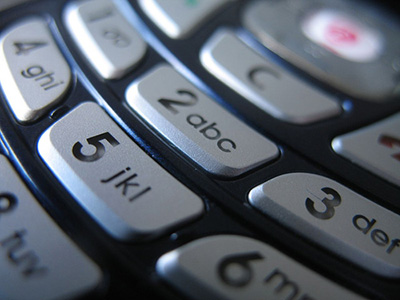
RAW STORY– A new report from the World Health Organization (WHO) classifies cell phones as a possible carcinogen in the same category as lead, engine exhaust and chloroform.

A team of 31 scientists from 14 countries in the International Agency for Research on Cancer, the cancer arm of the World Health Organization, made the determination that cell phone exposure was “possibly carcinogenic to humans.” The team, which included scientists from the U.S., reached their conclusion after reviewing dozens of studies.

“The biggest problem we have is that we know most environmental factors take several decades of exposure before we really see the consequences,” Dr. Keith Black, chairman of neurology at Cedars-Sinai Medical Center in Los Angeles, told CNN.

“What microwave radiation does in most simplistic terms is similar to what happens to food in microwaves, essentially cooking the brain. So in addition to leading to a development of cancer and tumors, there could be a whole host of other effects like cognitive memory function, since the memory temporal lobes are where we hold our cell phones,” he added.

Read the full article about Cell Phone Radiation Officially Listed a Potential Cancer Risk.

© 2011 RAW STORY

Photo by Flickr user jonjon_2k8