As the futures of whistleblowers like Edward Snowden and Julian Assange hang in the balance, the fate of another has been sealed for 35 years. Chelsea Manning sacrificed it all to leak classified information which exposed some of the most heinous US war crimes from Iraq and Afghanistan.
Manning shattered paradigms yet again by coming out as transgender. In a recent interview from jail, she discusses her legal fight for hormone therapy as a means to help other transgender prisoners to survive. In her first tweet via third party she thanked journalist Alexa O’Brien. And for good reason.
Alexa remains tirelessly dedicated to the Manning case. Since 2012, she’s provided an archive of the only available transcripts of her Manning’s closed trial. Alexa fights not only for whistleblowers, but also to preserve civil liberties. She was one of the plaintiffs on the National Defense Authorization Act lawsuit filed against President Obama, led by Chris Hedges, and was foundational in the US Day of Rage, the initial Occupy Wall Street organizing group.
On this edition of Media Roots Radio, Abby and Robbie Martin speak to Alexa about Manning’s exposures, the ongoing erosion of civil liberties and her research into the conjoining of entertainment, tech and military industries.
If you want to directly download the podcast, click the down arrow icon on the right of the soundcloud display.
This Media Roots podcast is the product of many long hours of hard work and love. If you want to encourage our voice, please consider supporting us as we continue to speak from outside party lines. Even thesmallest donations help us with operating costs.
Listen to all previous episodes of Media Roots Radio here.
Few realize how expensive it is to keep Guantanamo Bay prison operational. The Joint Task Force (JTF) detention center, which opened in 2002, costs US taxpayers $140 million a year, breaking down to about $800,000 per detainee.
The JTF was never meant to be permanent, yet twelve long years after the first round of prisoners arrived, 149 prisoners remain detained there indefinitely.
The oft repeated lie that these men are the “worst of the worst” has clouded the reality that the vast majority are completely innocent, and were simply swept up in a dragnet in Afghanistan. 78 have already been deemed innocent and cleared for release, yet pure political theater keeps them imprisoned.
Moreover, only six of the 149 men have been formally charged with a crime. Five are being tried together as alleged co-conspirators of 9/11, although they all are alleged to have varying operational levels, and one alleged mastermind of the USS Cole bombing. Yet the commissions process is completely corrupted by absurd levels of government secrecy, classification and intrusion.
A few weeks ago I traveled to Cuba to cover the continuing plight of these men and conduct an in-depth investigation for Breaking the Set. The report details how America came to host one of the most notorious prisons in Cuba, the brutal and systematic torture that took place, the sham of the 9/11 military commissions, the ongoing prisoner hunger strike and how Guantanamo Bay prison can be closed for good.
**
Gitmo Exclusive Part I: An Untold History of Occupation, Torture & Resistance
**
Gitmo Exclusive Part II: Media Brainwashing, Sham Trials & Closing Gitmo for Good
**
My brother interviewed me about my personal, intense experience at Gitmo for Media Roots Radio. Listen here.
Follow me @AbbyMartin and let me know what you think at #BTSGitmo
BREAKING THE SET— US Congressman, Dennis Kucinich, and Breaking the Set’s Abby Martin discuss accountability on the 10th anniversary of the Iraq war, Obama turning the US ‘Orwellian’, civil liberties, GMOs and other issues that have set him aside from the average establishment politician.
***
Congressman Dennis Kucinich on BTS
***
Abby Martin: “I’m really excited right now to introduce one of the few politicians I actually admire. I’m talking about Congressmand Dennis Kucinich, one of the most honest, credible politicians who ever served, a man who spent his 18-year tenure fighting for the issues, that Americans care the most about. From thewar in Iraq to the food we eat, Kucinich has always stood on the right side, the side of truth, which is why I’m honoured to have the chance to speak to Congressman Kucinich, himself. I first asked him about oil being a motivating factor in the Iraq War, particularly, in light of Bush’s former speechwriter coming out to validate that claim. And here’s what he had to say.”
Dennis Kucinich (c. 0:42): “Well, right from the beginning, it was very clear that there was no legitimate reason to go into Iraq. The only compelling reason would be to try to help corner the market on oil. It didn’t work out that way for those who thought that it would. But the fact of the matter is oil was so well-known to be the motivating factor, that when I ran for President in 2004, going across the country, I’d ask audiences, ‘Tell me what this is about, what this war is about, in three letters.’ And thousands of people would respond, simultaneously, OIL! It was never a secret.”
Abby Martin (c. 1:19): “Right. In 2007, Congressman, you actually introduced articles of impeachmentagainst George Bush and Dick Cheney. When you look at things like Nixon being ousted for wiretapping, Clinton being [impeached] for an affair, how is it that these two men could not be held accountable for initiating an illegal war based on known lies?”
Dennis Kucinich (c. 1:40): “Well, I think we have to place the responsibility for that on the shoulders of Democratic leadership because we could have moved forward with an impeachment, but the Democratic leadership wouldn’t do it. Now, there has to be accountability in a democracy. It is widely understood today that the war was based on lies. So, then, should not the thousands of Americans being killed, tens of thousands being injured, maybe a million innocent Iraqis died, perhaps, damage, in the hundreds of billions of dollars to Iraq—shouldn’t there be some accountability?
“So, what I’ve called for is a process of truth and reconciliation, like South Africa had many years ago, where leaders are required to come forward and state their role in the decision-making process. And, if they lie, then they’re subject to perjury charges. We need to clear the air in America. We need the truth. And it is time, since everyone knows it was based on a lie, then what’s wrong with calling those, who lied to us, forward to, not only, require an explanation, but also to clear the air?”
Abby Martin (c. 2:45): “Absolutely, I remember Pelosi, at the time, saying impeachment was off the table.”
Dennis Kucinich: “Right.”
Abby Martin: “I mean, could it be the Democrat leadership was scared they would open up their can of worms and somehow be complicit in the lies?”
Dennis Kucinich: “Well, you know, two-thirds of the Democrats voted against going to war. But the third, that did vote for it, were involved—as were their counterparts in the Senate—in establishment-type politics, that favoured war. Some of the leading senators, who have become exalted public figures, took a stand for that war. And they’ve never been held accountable, even politically. And, interestingly enough, it would seem as though to be qualified to speak on foreign policy—even still today—that you have to have been for the war, even though it was based on lies. That’s the kind of upside-down thinking, that continues to guide foreign policy decisions in Washington, D.C.”
Abby Martin (c. 3:37): “Well, speaking of upside-down policy, Obama’s reason for not prosecuting—or even investigating—the Bush officials was because he wanted to look forward, not backward. However, I can’t help, but wonder, why he continues to look backward to prosecute those who exposed war crimes, as whistleblowers, instead of the war criminals.”
Dennis Kucinich: “No good deed remains unpunished. And those who were the whistleblowers are being punished. Those who took us into a war based on lies are being celebrated. This inversion of reality isOrwellian. It needs to be, um, reckoned with. And that’s why I call for this period of truth and reconciliation. And, you know what? Isn’t all law enforcement about looking backwards?”
Abby Martin: “Right. Exactly.”
Dennis Kucinich: “Hello.”
Abby Martin: “Exactly. I couldn’t agree more. Let’s talk about the Afghanistan war, in terms of looking backwards. It was sold to us as a war of necessity in a post-9/11 world. Of course, Bush, at the time, had a 95% approval rating [after 9/11]. I don’t blame people for voting for it, thinking that we needed some form of retaliation [for 9/11]. But don’t you find the logic flawed now, looking back? Do you regret your vote to invade and occupy a country to find one man?”
Dennis Kucinich (c. 4:43): “No, we did not, Congress did not vote to invade and occupy. They voted to give the President the ability to respond to the attack on 9/11. And, frankly, I think it was appropriate thatthe United States struck at the training camps and made the point that you are not going to attack the United States with impunity—stop there, end of story—not to invade and occupyand, basically,try to break a country, that hasn’t been successfully conquered in modern times.
“So, this, too, points to the serious flaws in our foreign policy. We have an obligation to defend this country. And I don’t take a backseat to anyone in saying that if Americans are attacked, we have a right to defend ourselves. But it was absolutely—it was criminal to go and think we’re gonna knock off Afghanistan, occupy it, control it, remake a country where a lot of it is just a box of rocks.
“And what do we think—who do we think we are? This was a major flaw. It’s hubris, arrogance. And we need some explanation to the American people.”
Abby Martin (c. 5:55): “Absolutely. Let’s talk about your Presidential run in 2008. Both, you and Ron Paul were pretty much the leading anti-war figures, of course, on both sides of the spectrum, of both parties. I remember leftists and Libertarians, at the time, calling for you guys to be running mates because you were so united against the wars and for the restoration of our civil liberties.
“Now, these factions are so divided. They’re more divided than ever before. And it just seems like, without any representation, to have us—these dividing factions—fighting each other, instead of the forces we should be fighting against is really counter-intuitive. How do you think it got this way? And how can we unite these factions to really focus on cohesive, unified opposition again?”
Dennis Kucinich (c. 6:34): “Well, I think what Ron Paul and I proved is that there is plenty of space in American politics for a new movement, which goes across partisan lines, which embraces the concerns of Democrats and Republicans, liberals and conservatives, that’s based on the truth, on protecting the Constitution, taking care of our practical aspirations here, at home, and in sharply curtailing this aggression, that America has practised around the world.
“So, I think Ron Paul and I have been able to demonstrate this capacity of creating new possibilities. And, frankly, since the two parties continue to fail to address America’s economic problems, I think the American people, increasingly, will be looking, to alternatives, as we move toward the future.”
Abby Martin (c. 7:24): “I call it the two-party dictatorship, Congressman. Let’s talk about civil liberties, which is something that you had been very vocal about in your entire term. Rand Paul, his epic filibuster, not really supported by a single Democrat, I mean, how is that drones and due process are partisan issues now?”
Dennis Kucinich: “Well, they shouldn’t be. What happens in Washington is this: Whatever party holds the White House, their supporters in Congress try to protect the president of a party. But the president isn’t just the president of a party. He’s a president of the United States. And members of Congress aren’t just partisan participants in a process, they are United States Congresspersons. And what we have to remember is that, both, myself and Ron Paul—Rand’s father—raised this issue of the drones in the Congress relentlessly, brought a resolution in front of the Congress, forced a committee to have to consider to it.
“And, you know, finally people are starting to understand there are Constitutional issues here. And good for Senator Rand Paul for raising the issue on the floor of the Senate, but we haven’t resolved it. Other countries are gonna start to use drones. Imagine for a moment that if China thought—or any other nation—thought they could invade US airspace with a drone, as we invade other people’s airspace. We wouldn’t stand for it. How can we expect other countries to continue to standby, while we violate their sovereignty and their territorial integrity? And, then, on the domestic level, we gotta worry about the domestic use of drones. It won’t be long—mark my words—that law enforcement, domestically, will start using these drones to go after suspects using armed force.”
Abby Martin (c. 9:00): “Yeah, and they are counter-intuitive abroad. I mean, it doesn’t take a genius to see that killing people with drones is not a good way to fight, quote, ‘terrorism.’
“You served an epic 18-year run in Congress. You were one of the most vocal leaders against the establishment line time and time again. When you were redistricted, did you feel you were deliberately gerrymandered out of office because of your politics?”
Dennis Kucinich: “By the Democrats, not by the Republicans.”
Abby Martin: “Wow.”
Dennis Kucinich: “It was Democrats in the Ohio legislature who went out of their way to totally distort the map in Ohio and to cut my district up into four pieces, making it impossible for me to win.
“Now, I can tell you, I don’t have any—that’s just a fact. I’m not bitter about it. You know? I still have a home in Washington and a home in Cleveland. I can occasionally see the light of the Capitol on. I just wanna know who’s home.”
Abby Martin: “Unbelievable when your own party turns against the ideals, that this country was founded on.
“When you did leave, Congressman, the media portrayed you as fringe. I mean they even called you the Congressman with the most wacky ideas. Yet, the majority of Americans support what you stood up for. How is it that this depiction is even allowed to exist? And what damage does it do when people feel they are marginalised for sharing views, that you had?”
Dennis Kucinich: “Well, one, it doesn’t hurt my feelings. Two, it never changed my position. When you stand up for the truth, it’s very easy to understand that you take on certain interest groups, who are gonna try to marginalise you.
“It is interesting, as you point out, that someone would try to characterise, as fringe, having opposed the war in Iraq based on facts, having challenged those who made the decisions, that cost our troops, and our Nation, and the Iraqi people so dearly, having challenged other wars, and have proven to be right again and again and again. But you know what that means. If the truth is at the fringe, then what position is being celebrated?”
Abby Martin: “Exactly. And speaking from an inside perspective—you’ve been inside the system for so long—when you look at things like Monsanto, like Vermont not even being able to pass a labelling law because of the fear of a lawsuit from Monsanto—I mean, you were also one of the only people to try to get GMOs labelled.”
Dennis Kucinich: “1999.”
Abby Martin: “What does this say? Do corporations, essentially, have more power than voter resolutions and—”
Dennis Kucinich: “Yes.”
Abby Martin: “—how do—”
Dennis Kucinich: “Yes, after Buckley v. Valeo and Citizens United [v. Federal Election Commission], corporations took enormous power over our government. Monsanto, look, they were able to get the Bush Administration, in its waning days, to be able to claim—the first Bush Administration—to be able to claim in 1993 that genetically modified organisms were the functional equivalent of conventional food. No science based on that at all. But the dollar bill has a science all of its own.
“And, so, now, you have hundreds of millions of acres of crops, that have been planted with genetically modified organisms used to do that. We can’t—our markets are closing in Europe, as a result. People don’t want these crops to come in. And, even more than that, we have no idea, as to the effects with respect toallergenicity, toxicity, functional characteristics, antibiotic resistance. We’re part of a grand experiment now in our food. You know, this is another one of the reasons why I eat organic and I’m a vegan.”
Abby Martin: “Indeed. Thank you for bringing those fringe ideas to the mainstream and standing up to the truth, that so many of us don’t have a voice to share in the system. Thank you so much, Congressman Kucinich.”
Dennis Kucinich: “Thank you.”
Abby Martin: “I’m a huge fan.”
Dennis Kucinich: “Thank you.”
Transcript by Felipe Messina for Media Roots and Breaking the Set.
MEDIA ROOTS — Breaking the Set takes an in-depth look at the little-known landmark lawsuit against the National Defense Authorization Act’s (NDAA) indefinite detention clause. While in New York City covering the latest hearing of plaintiffs’ statements, Abby Martin and Manuel Rapalo take a look at how many people actually know about the NDAA. The episode features interviews with the journalist who spearheaded the lawsuit, Tangerine Bolen, whistleblower, Jesselyn Radack, and lead plaintiff in the NDAA case Hedges v Obama, Chris Hedges, about the historical precedent the lawsuit sets and why every American should care.
Messina
***
Exclusive NDAA Coverage: Call to Action with Chris Hedges
“Our Constitutional rights are being replaced by a systematic rewiring of who truly holds the power in this country.
“I’m sorry, but the Constitution begins with, ‘We the People…’ And our freedom depends on our willingness to protect it. And when it comes to speaking truth to power, I think it’s time we remind the power structure who’s really in charge.” —Abby Martin (MediaRoots.org, Founder; Breaking the Set, Founder; USA, Citizen)
***
Abby Martin: “Salaam, guys! Yesterday, I had the amazing opportunity to take Breaking the Set on the road to New York City. And we set up shop right outside of the Thurgood Marshall Courthouse downtown where a groundbreaking trial is taking place. In what might be one of the most historic civil liberties cases of our generation, a group of activists and journalists are seeking justice in a lawsuit against the federal government. It’s called Hedges v. Obama, a lawsuit, which was filed last year over Section 1021(b) of the National Defense Authorization Act, one which authorises the military to indefinitely detain American citizens without due process.
“While the lawsuit’s main plaintiff is journalist Chris Hedges, the case is also being fought by Revolution Truth Founder, Tangerine Bolen; Pentagon Papers whistleblower, Daniel Ellsberg; author Noam Chomsky, and many others. Yesterday, I heard the second round of oral arguments against the White House’s appeal to a decree made by a judge, who agreedwith the plaintiffs on the NDAA’s unconstitutionality.
“So, today, you’ll see my exclusive interviews with the plaintiffs and more. So, stay tuned for a very important Breaking the Set.”
Abby Martin (c. 2:13): “The indefinite detention of American citizens is a very serious and disturbing notion. So, surely, Americans have heard about one of the greatest threats facing their First and Fifth Amendment rights.
“Well, Breaking the Set producer Manuel Rapalo hit the streets of New York to find out just how much people really know about the NDAA. Take a look.”
Manuel Rapalo (c. 2:34): “What is the NDAA? It sounds innocuous enough. I mean, it’s a budget act. But it’s a budget with a very important clause, one that has tremendous implications for the civil liberties of Americans.
“Outside the Second Court of Appeals in New York, demonstrators arrived to lend their support to plaintiffs in a case against the NDAA, plaintiffs, that, ultimately, represent the frustrations of countless civil liberties activists. And their message is clear: Any military detention of American citizens without due process is, both, illegal and unconstitutional.
(c. 3:13) “So, I’m outside the Thurgood Marshall Courthouse where supporters for the plaintiffs against the NDAA case are right there behind me. But we’re gonna ask some passersby to see how many people actually know what the NDAA is.
“Have you ever heard of the National Defense Authorization Act?”
Male New York City Pedestrian: “No.”
Male New York City Pedestrian #2: “Negative.”
Male New York City Pedestrian #3: “I have not.”
Male New York City Pedestrian, #4: “No.”
Male New York City Pedestrian, #5: “Nope.”
Female New York City Pedestrian: “No, I have not.”
Male New York City Pedestrian, #6: “I haven’t heard about that. But that sounds serious.”
Female New York City Pedestrian, #2: “No, I never heard of it.”
Manuel Rapalo (c. 3:39): “Have you ever heard of the National Defense Authorization Act?”
Male New York City Pedestrian, #7: “No.”
Manuel Rapalo: “Or the NDAA?”
Male New York City Pedestrian, #7: “No.”
Manuel Rapalo: “It’s a law, that gives the government the right to indefinitely detain US citizens without due process, without a trial, if they are suspected of being associated with terrorists. Have you heard about that?”
Female New York City Pedestrian, #3: “Yes. That’s ridiculous.”
Male New York City Pedestrian, #3: “I usually follow the news. I haven’t heard anything about this. So, I was wondering what it was when I was looking at it.” [Gesturing to the crowd nearby on Thurgood Marshall Courthouse steps.]
Male New York City Pedestrian, #8: “I don’t feel it’s right. You know what I mean? Because they’re just locking anybody up now. You know w’ I mean? For anything. And I don’t think it’s fair.”
Male New York City Pedestrian, #7 (c. 4:06): “That’s not right, definitely not right. They should be given a right to an attorney to present their case.”
Male New York City Pedestrian, #9: “I think it’s terrible. It’s like a type of legislation, which enabled, back in the ‘30s with Nazis, to go, like, you know, down hill all the way with their government. And that’s what’s happening here.”
Manuel Rapalo: “Well, that sounds terrifying. Thank you so much for your time.”
Manuel Rapalo: “But it’s the vague language in a portion of the NDAA, section 1021(b), that has critics riled up. Phrases like ‘substantially supported’ and ‘associated forces,’ set a dangerous precedent for how the word terrorist can be interpreted. And while [opposition to,] and awareness of, the NDAA’s indefinite detention clause is growing, the issue has yet to be picked up by the corporate media networks.
“Journalists and activists agree over the larger implications this has over First and Fifth Amendment rights, making this case one of the most important civil liberties lawsuits since 9/11. And that’s a point, that deserves more visibility.
“Manuel Rapalo, reporting from the Thurgood Marshall Court House in New York, RT.”
Abby Martin (c. 5:07): “After attending the second round of oral arguments in what’s shaping up to be a landmark case against indefinite detention, I had an opportunity to meet with a powerhouse of plaintiffs, lawyers, and activists, who are directly working on a case against the National Defense Authorization Act. I spoke with one of the plaintiffs who spearheaded the lawsuit, Tangerine Bolen. And I asked her why she felt personally compelled to take it on.”
Tangerine Bolen: “Well, I had been defending WikiLeaks. I have an international team; I have an organisation called Revolution Truth. And we started a campaign for them. We got 12,000 signatures and a letter to the government and dealt directly, and quite extensively, with WikiLeaks stuff. A couple of my staff members had as well. Some had less than I had.
“And, you know, I found myself in an arena, hearing things and just being close to things, that the government is very worried about. And the government has engaged in a secret grand jury investigation against WikiLeaks. So, I don’t even have the right to know whether I’m being investigated until I get subpoenaed.
(c. 6:12) “And I just felt like—between that and the fact that we were about to host panel discussions with members of Hamas or, you know, Middle Eastern revolutionaries—I was inadvertently providing a platform, that under the language of 1021 would make me, possibly, an ‘associated force.’ So, I was terrified. And I was worried on behalf of my team as well.”
Abby Martin (c. 6:34): “And rightly so. But I was also curious about how the other plaintiffs decided to come on board and tackle such a complex and daunting lawsuit against the federal government. Here’s what she had to say.”
Tangerine Bolen: “So, essentially, Chris Hedges filed suit with our attorneys. And I approached Chris Hedges because I was worried. And I strategized over this. I really wanted a judge to see the forest for the trees. And, sorry, no pun intended on Katherine Forrest. But that is the case. This was very strategic.
“I picked people who, together, would all tell a piece of the story: Kai Wargalla has, you know, she started Occupy London and Occupy London was designated a ‘terrorist group,’ officially; Alexa O’Brien, [of US Day of Rage, one of the original groups, which organised Occupy Wall Street], being targeted by the cybersecurity firm, which is contracted with the DOD, trying to link her organisation to Muslim extremists; myself, with my work with WikiLeaks and this other stuff; Dan Ellsberg, obviously, our whistleblower and who had dealt very closely with Bradley Manning.
(c. 7:31) “Together, we kind of make up this evolving tribe of people, who were civil liberties advocates, were independent journalists, who were hacktivists, and computer prodigies. You know, Aaron Swartz was part of our case.
“And, together, we are all standing witness to what the US government has done and become since 9/11.And because we’re standing witness, and we’re doing so diligently and we refuse to back down, we’re being harassed and intimidated. And you see this prosecutorial overreach and spin. And we’re all trying to stop that.”
Abby Martin (c. 8:04): “The fact than an annual federal budget law can include language, that would limit, both, the journalist’s right to freely uncover information and remove American’s right to due process in unheard of. So, when outrage against the law started to grow, the question became how to challenge it.
“Plaintiffs had their first success in the case after an injunction was filed against indefinite detention by district judge Katherine Forrest, who ruled that the vague language in the bill did not meet the requirements of due process.
“While there were hundreds present, protesting, at the court house, I was truly saddened at the lack of media groups attending what could very well be the most important civil liberties lawsuit in over a decade. Other than a few reporters from one or two alternative media organisations, we were the only media outlet there!
“I asked Tangerine [Bolen] why she thinks there’s a complete media blackout about the issue.”
Tangerine Bolen (c. 8:59): “I think, unfortunately, the [corporate] mainstream media hasn’t been paying attention to the most critical news. And that’s obviously to the great detriment of this nation because—”
Manuel Rapalo: “Deliberately?”
Tangerine Bolen (c. 8:59): “Um, I think it’s complex. I think our systems are really compromised right now. Our media’s sanitised and corporatized. And I’ve, personally, talked to a lot of reporters, who work for mainstream media, who feel just as frustrated as we do. So, I don’t wanna put the onus entirely on them, but partially. You know, the New York Times should have been here today. I mean, everyone should have been here today. This is a landmark case.”
Abby Martin (in-studio): “Indeed, this case does have all the potential to set a new legal precedent. We’re talking about our most fundamental rights as human beings, the right to free speech, our right to a fair trial. And it’s all being threatened by a few lines of vague language, that’s entirely up to interpretation, interpretation, that could make the difference between being a journalist and being labelled a dangerous terrorist, that could be indefinitely detained in a military prison without charge or trial.
“I sat down with former whistleblower Jesselyn Radack and asked her about how far this interpretation can really go.”
Abby Martin (c. 10:07): “And I heard the lawyer talking about that it doesn’t affect independent journalists is what they were trying to argue. I mean is there any sort of definition of what the barometer is of what is independent and not.”
Jesselyn Radack: “That’s an excellent question. As soon as they said that, I’m like, ‘Hmm, would Julian Assange be protected?’ And then, when the judges kind of hammered down on that, they said an independent journalist would be one approved by the armed forces. So, that rules out bloggers. That rules out even members of the mainstream media, who have not gotten government approval, which, again, goes right into the unholy relationship between a lot of the mainstream media and the government.
“So, it’s very interesting, the question of independent journalism, especially because there has been such a big deal made about whether or not bloggers are ‘really journalists’ and whether or not an outlet like WikiLeaks is really a ‘journalistic outlet.’ So, for them to make that argument—‘Oh, don’t worry, we’re not going after independent journalists or activists’—it was really slick and dangerous because of the way they defined it.”
Abby Martin (c. 11:21): “It’s also very slick and dangerous, the language of terrorism, aiding and abetting terrorism. I mean, very broad language here, very dangerous. And we’ve talked about this before, about the chilling effect. Obviously, you, representing multiple whistleblowers, you being a whistleblower, yourself, I mean, what are the greater implications of this case if we do not shed light and prevent this from moving forward, Jesselyn?”
Jesselyn Radack: “I think the greater implications are; I mean, I really thought the worst possible thing, that could happen now to a whistleblower is that they could go to jail—after a trial and a judicial process. The worst case scenario now is that they could be scooped up and detained indefinitely without charge, counsel, judicial review, or their families even knowing where they are. They could be detained by our military, again, without charge, counsel, or judicial review, indefinitely, as long as the government wanted to. So, it really wouldn’t have an even more chilling effect on what is already a freezing cold environment for people to come forward and speak truth to power.”
Abby Martin (in-studio)(c. 12:30): “Wow, what a daunting metaphor for what we’re up against in this country. Our Constitutional rights are being replaced by a systematic rewiring of who truly holds the power in this country.
“I’m sorry, but the Constitution begins with, ‘We the People…’ And we can’t forget our freedom depends on our willingness to protect it. And when it comes to speaking truth to power, I think it’s time we remind the power structure who’s really in charge.”
(c. 12:59) “Well, if you like what you see so far, go to our Facebook page, at facebook.com/breakingtheset and be sure to do what thousands have already done and give us a Like. We’ll be updating our status daily with links to past segments, as well as reaching out to you for ideas of what you want to see covered on Breaking the Set. You can also check out behind the scenes photos we take at our studios or when Breaking the Set is recorded on the road, like this one we took yesterday. So, head to our Facebook page and check out all of that and more.
“Now, I’ll let you take a break from my preaching. But stay tuned to hear from the main plaintiff behind the case Hedges v. Obama, Mr. Chris Hedges himself next.”
(c. 15:21) “Yesterday, I had the honour of sitting down with the main plaintiff behind the NDAA case, Hedges v. Obama, Mr. Chris Hedges, himself. He’s a former NY Times War Correspondent and Pulitzer Prize Winner, who spent nearly two decades reporting in Central America, the Middle East, Africa, and the Balkans. Despite his prolific résumé of outstanding journalism, Hedges is precisely the kind of person that could fall subject to the NDAA’s indefinite detention clause.
“You see, Chris represents one of many journalists, who often have to embed themselves with groups, that the government has deemed ‘terrorists’ to get the full story.
“So, take a look at my exclusive interview with journalist Chris Hedges, where he talks about the lawsuit and why every American should care about it.”
Abby Martin (c. 16:06): “Chris, thanks so much for sitting down with me. Why is the government holding this line, that the NDAA is no different than the AUMF, when it’s obviously much more broad in its language?”
Chris Hedges: “Well, that was the central argument, that the government lawyers made in the Southern District Court of New York, that this was, essentially, not extending the powers of the government, butreinforcing existing powers.
“Now, I’ve read the AUMF several times. It’s very clear that this is a vast extension of government authority, allowing government to detain US citizens or use the military to detain US citizens, strip them of due process, hold them in military facilities indefinitely. That is just not in the AUMF.
“And I think that we’re seeing it. We just saw the release of a memo, a 16-page white paper on drone attacks, which looks like it was written by a first-year law student. I mean, it, you know, I can’t stand John Yoo, but at least he could write a coherent legal brief for the Bush Administration justifying torture. I mean, it’s wrong, of course, but the amateurishness of this, you know, it’s a completely amateur effort.
“And I think what we’re seeing in this case, in this memo, is an attempt by the Obama Administration to justify activities, that they’ve already carried out, which include the assassination of American citizens, the Yemeni cleric Anwar al-Awlaki, his 16-year-old son two weeks later, who was not on anybody’s terrorism list.
“And I think there’s strong, I have a strong suspicion, and the lawyers have a strong suspicion, they are already using Section 1021 of the NDAA because when Judge Forrest issued her ruling in September, the government attorneys, the day of the ruling, went to Judge Forrest and asked for a temporary stay, meaning, put this law back on the books until it is heard in the Second Circuit, or the appellate court.
“Now, Judge Forrest refused.
“They then demanded an emergency hearing. This was a Friday at 9am, the next Monday morning at the Second Circuit, which they got. And they asked the judges on the Second Circuit, in the name of national security, to put this law back into effect, to override Judge Forrest’s injunction.
“Now, the Second Circuit agreed.
“We always knew the Obama Administration would appeal. That was not an issue. They lost. We did not expect them to respond so aggressively. And I think that it’s fair to conclude, they responded with that kind of aggressivity because they were already using the law, probably against US-Pakistani dual nationals in places like Bagram.
“If Judge Forrest’s injunction was allowed to stand (i.e., the law was invalid), and they were holding American citizens and denying them due process, then, of course, they would be in contempt of court.
“So, this is a steady march forward, in terms of stripping away our most basic civil liberties. I would say the NDAA, this case, is the last in line of defence between what’s left of our anaemic democracy and our transformation into a military state.”
Abby Martin (c. 19:36): “Speaking of military states, I mean, I thought Posse Comitatus prevented the military from doing this kind of thing.”
Chris Hedges: “Well, this is the law they’re overturning.”
Abby Martin: “Wow.”
Chris Hedges: “That’s it. It was put into effect at the end of the Civil War. And this is the law they’re overturning.”
Abby Martin: “Chris, how far are you willing to take this?”
Chris Hedges (c. 19:52): “Well, we’re gonna take it, look, if the appellate court overturns Judge Forrest’s ruling, we will appeal it to the Supreme Court, which is the next level. The Supreme Court could decide not to take the case, in which case, unfortunately, the law stands. If the appellate court upholds Judge Forrest’s ruling, given the response of the government so far, I think it’s very safe to say that this will be within the Supreme Court within a matter of weeks.”
Abby Martin (c. 20:20): “And, just taking it in the broader picture here, you know, Obama closing the office that’s working to shut down Guantánamo Bay within days of his re-election, why don’t we care more about, just, the indefinite detention of human beings, in general?”
Chris Hedges: “Well, what happens in these kinds of scenarios is that you create the legal mechanism to carry out these activities, while assuring the citizenry that they won’t be affected. And then, once you have the legal mechanism to engage in this kind of behaviour, it’s too late.
“And that’s, I mean, history has just borne that out. That’s how it works.
“I think the other thing is we have, especially, a commercial, electronic media, that, really, doesn’t do journalism anymore. It is, either, obsessed with celebrity gossip and trivia and info-entertainment or, if it purports to do news (the way FOX News does or MSNBC), it’s so partisan in its coverage, that it won’t harm the power interests, that it serves.
“So, the NDAA case was never mentioned on MSNBC because the primary purpose of MSNBC was to re-elect Barack Obama. And the NDAA case would not make Obama look good. It wasn’t mentioned on FOX because this section of the NDAA has bipartisan support.
“And it’s interesting—I worked for The New York Times for 15 years—that the only established news organisation, that responsibly covered the case was The New York Times. And when Judge Forrest issued a ruling, The New York Times ran an editorial supporting her decision because The Times still—I mean, it’s an elitist organisation; I have my critiques of The Times—but, nevertheless, it still understands what is news and what is not.
“But that, for me, was kind of a frightening moment when I realised how deteriorated our systems of information have become.”
Abby Martin (c. 20:20): “Absolutely. Yeah, and I love how people say there’s no bipartisan support. Well, I look at things, like the NDAA and the erosion of civil liberties, it seems like it’s all uniform across the board.
“But, speaking historically, you mentioned the way it’s kind of been accepting these illegalities, in terms of Gitmo. But looking at when civil liberties have been repealed in the historical narrative of America, in the short, brief history of our nation, Lincoln, FDR, when he authorised the brief internment of Japanese people, all these things were very brief periods and they were reinstated. It seems like, to have the NDAA ten-plus years after an event where there’s really no threat, I mean, and now it’s coupled with the surveillance state profiting off of the erosion of our civil liberties.”
Chris Hedges: “Right.”
Abby Martin: “We’re way too far gone here.”
Chris Hedges (c. 23:11): “Right. We’re talking about periods of emergency, in which our basic civil liberties were taken from us during wartime, which is not defensible. What we’re talking about here is something else. We’re talking about a long, contiguous process, over a decade. This isn’t the first assault against our civil liberties. The corporate state has used 9/11 in the same way the Nazi Party used the Reichstag Fire, as a justification to strip away all of our most important Constitutional rights. Whether that is the right or the need of a court to issue a warrant before surveillance, whether that is the right of a whistleblower to expose government crimes, including torture—and let’s, we just saw the CIA official, Kiriakou, go to prison for 30 months. What he, purportedly, leaked to The New York Times, were war crimes.
“And the interpretation of the Authorization to Use Military Force Act [AUMF] is giving the government the right—this is what this white paper, that was leaked to NBC News was about—giving the right [to] the Executive Branch to draw up kill lists, even if US citizens are on those kill lists.
“So, we’re talking about a process, not a moment. And the examples, that you’ve cited, Lincoln’s suspending of habeas corpus during the Civil War and after FDR’s internment of 100,000 Japanese Americans were moments. This is something far more dire, far more serious and far more frightening.”
Abby Martin (c. 24:58): “You mentioned, in the hearing, about how this could affect journalists abroad who—”
Chris Hedges: “Right.”
Abby Martin: “—are embedded, trying to get stories, talk about how this can be a chilling effect for people who are trying to get truths and expose stories abroad.”
Chris Hedges: “Right. Well, I—Bruce and Carl, the lawyers, approached me to be the plaintiff because, as a foreign correspondent for 20 years, I spent time (we counted them up), either, 17 individuals or groups, that are on the State Department Terrorism List, including Al Qaeda. And there’s no exemption in this provision for journalists. So, I have literally sat in vehicles with Al Qaeda members who are now spending the rest of their lives in prison.
“Number one, of course, that means, given the current state of drone attacks, I could’ve been incinerated. Number two, if I am printing, as I was, articles, that present the viewpoint of groups, that are deeply hostile to the United States, have I substantially supported—this is the language of 1021—Al Qaeda, the Taliban, or what they call associated forces? That’s completely open to interpretation.
“And people who have a kind of hostility to the role of a free press, which is to present viewpoints, that are inimical to our own, certainly would not shrink from branding me as a fifth columnist or a closet supporter of Al Qaeda. And I speak from experience. I covered the Civil War in Nicaragua and El Salvador for five years, during the Reagan Administration. And, because we were travelling frequently, with the FMLN rebels in El Salvador or the Sandinistas in the battle against the Contras in Nicaragua, we had numerous officials denouncing us, as fifth columnists, as supporters of terrorists. So, I’ve already heard the rhetoric. I already know how it goes down.
“But this, essentially, goes beyond rhetoric and empowers the state to, not only, brand you, linguistically, a terrorist, but treat you, legally, as a terrorist.”
Abby Martin (concluding remarks, back in-studio): “This is an issue, that we felt important enough to cover and dedicate the entire show to. Look, there’s a fork in the road right now. And there’s a choice we all have to make. We can, either, relinquish our rights or we can stand for them. But the time to act is now.
“I also wanna say thank you to many great people for making today’s show happen: The Sparrow Project, Andy Stepanian, the plaintiffs and attorneys in the case, Chris Hedges, Tangerine Bolen, Alexa O’Brien, and, of course, Jesselyn Radack, and Thomas Drake, as well as all the brave, heroic activists and journalists out there who are not afraid to speak truth to power. So, let’s keep doing it.”
Transcript by Felipe Messina for Media Roots and Breaking the Set.
MEDIA ROOTS – On this episode of Breaking the Set, Abby Martin highlights Matt Heineman as a hero for removing partisanship from the healthcare debate in America with his documentary Escape Fire. Abby then calls out Michigan Congressman Mike Rogers for attempting to bring back a CISPA-esque cyber-legislation.
RT’s Capital Account, Lauren Lyster, discusses the austerity protests across Europe, and Alexa O-brien, plaintiff and activist against the NDAA’s indefinite detention provision, speaks out about her personal experience fighting the government against unlawful detention.
BTS wraps up the show by taking a look at who Alfred Nobel was and highlights a few of the most controversial Americans to have received the coveted Nobel Peace prize.
***
Nobel Mass Murder Club, Congress to Rethink CISPA, US Healthcare Sucks, Riots in Greece, NDAA Plaintiff Speaks Out.
***
Tune in from 6-6:30 or 9-9:30 EST M-F on your local cable station



 As the futures of whistleblowers like Edward Snowden and Julian Assange hang in the balance, the fate of another has been sealed for 35 years. Chelsea Manning sacrificed it all to leak classified information which exposed some of the most heinous US war crimes from Iraq and Afghanistan.
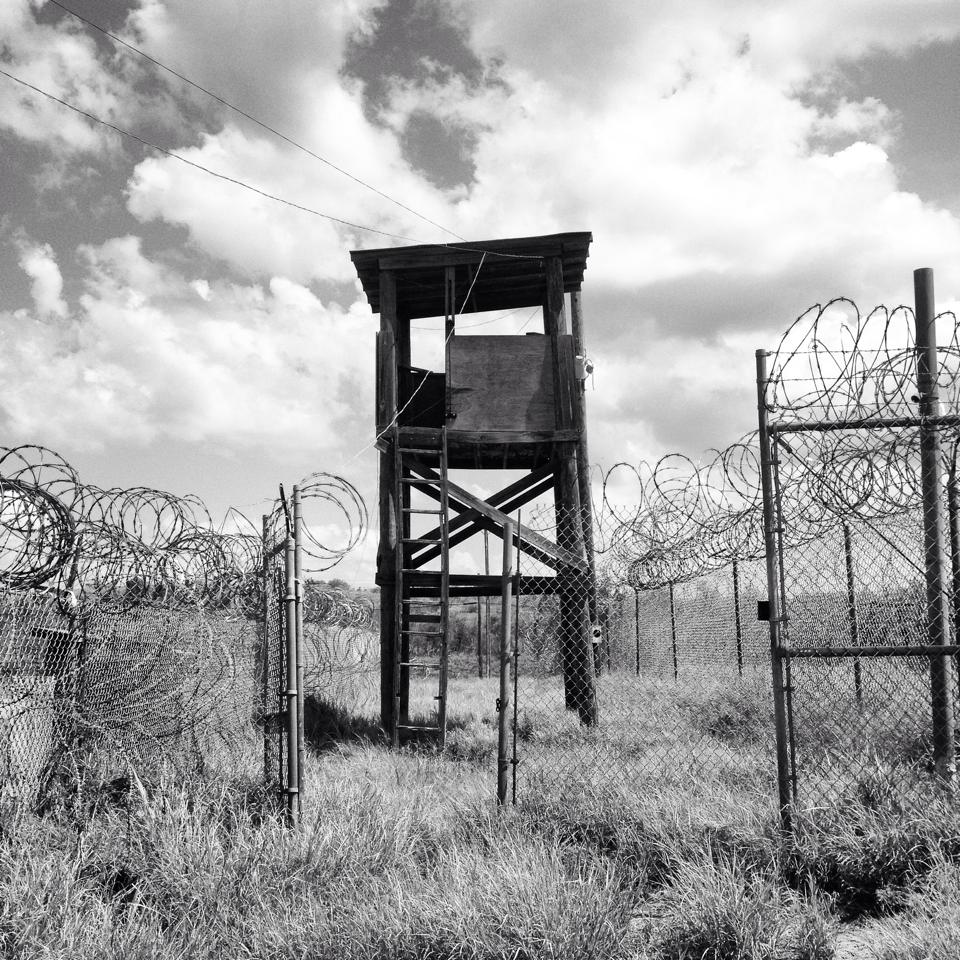 Few realize how expensive it is to keep Guantanamo Bay prison operational. The Joint Task Force (JTF) detention center, which opened in 2002, costs US taxpayers $140 million a year, breaking down to about $800,000 per detainee.
 MEDIA ROOTS – On this episode of Breaking the Set, Abby Martin highlights Matt Heineman as a hero for removing partisanship from the healthcare debate in America with his documentary Escape Fire. Abby then calls out Michigan Congressman Mike Rogers for attempting to bring back a CISPA-esque cyber-legislation.