


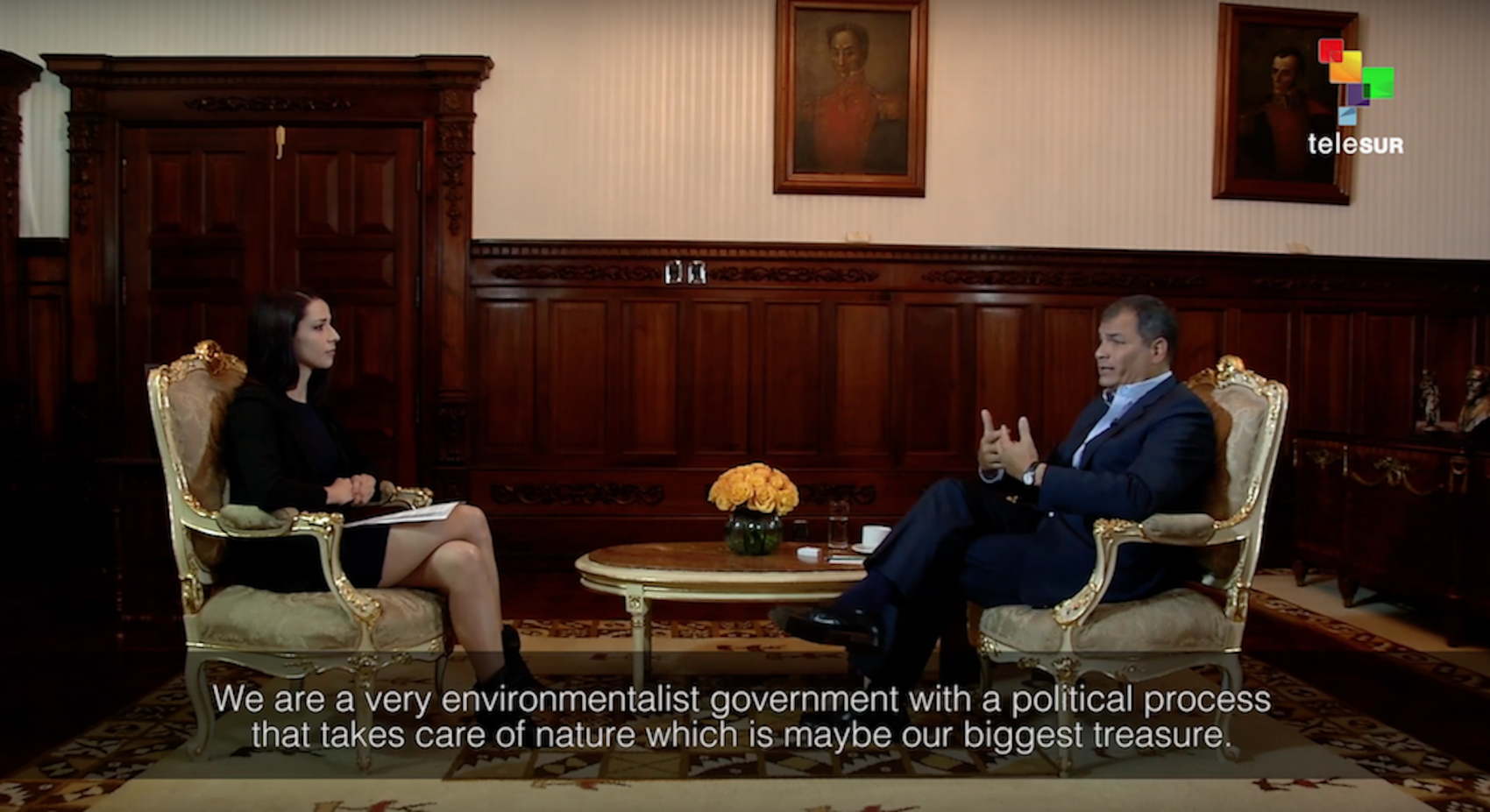
After touring Chevron’s oil pollution in the Ecuadorean Amazon, Abby Martin sits down for an exclusive interview with Ecuador’s president, Rafael Correa, about the legal battle against the corporation and push to decolonize the country from Western powers.
They discuss Ecuador’s new constitution that grants legal rights to nature for the first time in history, the country’s proposed ban against individuals using tax havens holding public office, and his administration’s dismantling of neoliberalism, stressing that the world order must shift, so that people come before capital.
Despite its diplomatic relationship with the United States, Correa comments on how Ecuador remains the subject of ongoing regime change efforts and democratic subversion on behalf of the U.S. government through NGOs like USAID. However, Correa is determined that being in the crosshairs of U.S. Empire will only embolden their fight for independence.
When asked about whether Trump or Clinton would be better for the future of Latin America, Correa’s response is surprising. He says Trump’s crudeness would be better to “revitalize the left” in Latin America, but that Hillary would be better for the sake of people in the U.S.
Abby Martin Interviews Ecuador’s President Rafael Correa
**
FOLLOW // @EmpireFiles & @AbbyMartin
WATCH // YouTube.com/EmpireFiles
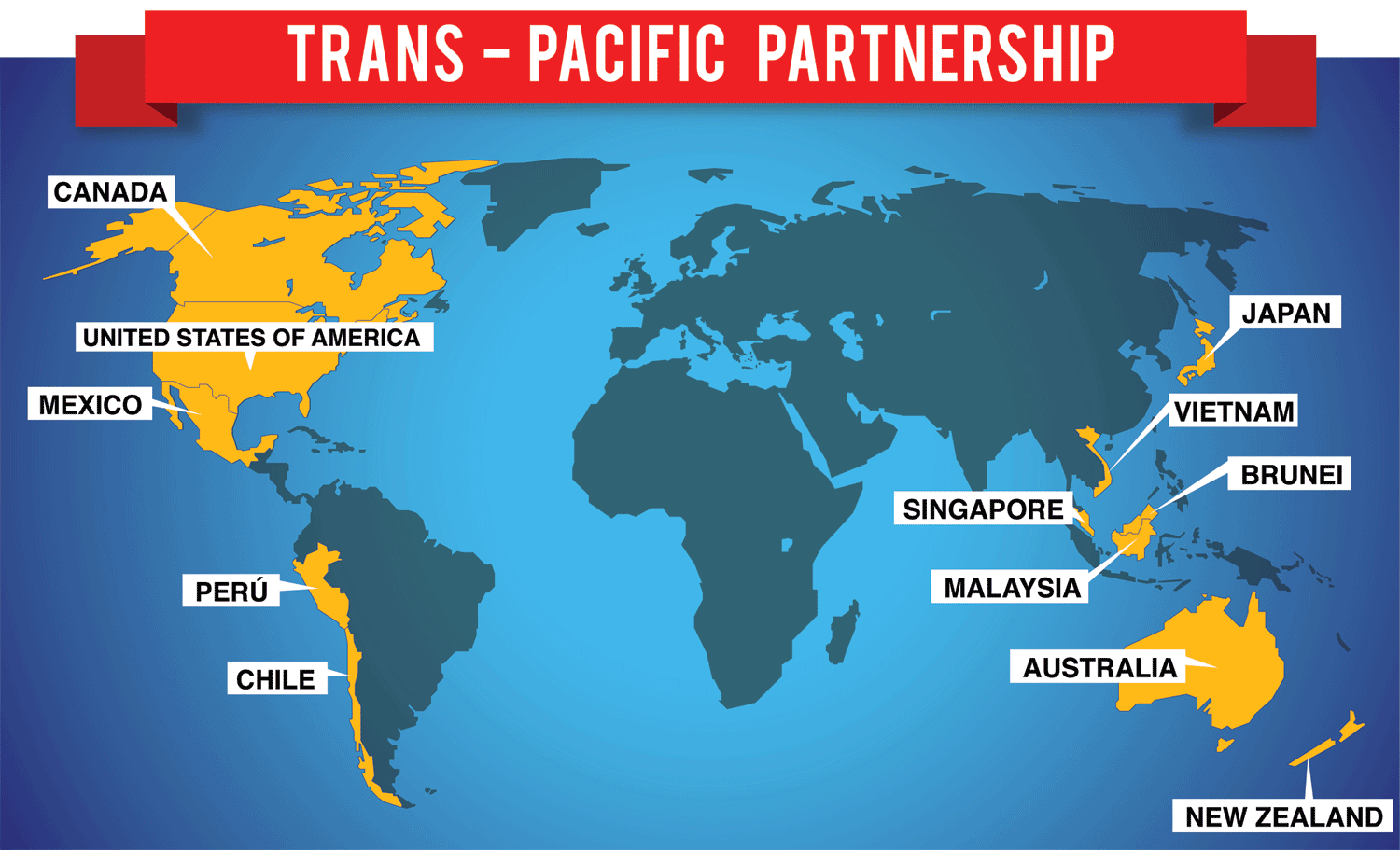 Among the many terrible features of the Trans Pacific Partnership, twelve countries are crafting something that would give corporations unprecedented power: a secret court for capitalist enterprises to sue any country that infringes on profits.
 Dubbed ‘The School of Dictators’ by human rights activists, the US Army School of the Americas, now known as the Western Hemisphere Institute for Security Cooperation, has produced some of the world’s most notorious torturers, drug traffickers and war criminals. The spectre of their crimes still haunts much of Latin America—from Argentina to El Salvador.
 According to latest numbers, 60 million people have been displaced due to violence and inhumane poverty.
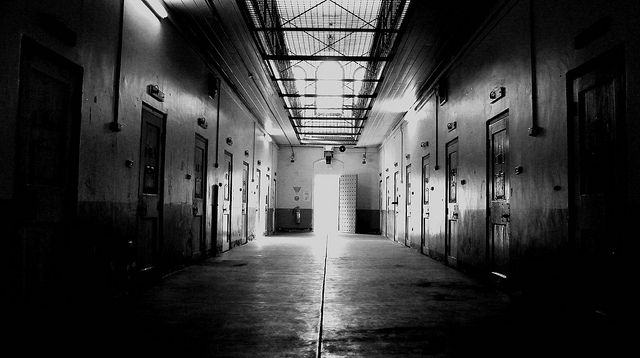 The prison system has become the established response to societal woes—from crime to mental health—and the private corporations that litter the globe have monopolized correctional facilities, amassing deep political influence in the process in order to further prison expansion and increase profits.