“What we have been living for three decades is frontier capitalism, with the frontier constantly shifting location from crisis to crisis, moving on as soon as the law catches up.”
Naomi Klein’s The Shock Doctrine is a book that shifts your socio-political paradigm even if you didn’t know that you had one.
Klein’s pointed, clear cut and stimulating parallel of shock therapy to our government’s own shock based, corporate fueled crusade is jaw dropping. After reading her book, my retired activism resurged with a stronger and more cohesive message: end corporate rule.
While I wouldn’t necessarily call her book uplifting, there is something about the unveiling of a previously blurred reality that feels refreshing; it’s a naked, un-photoshopped, un-moisturized truth that invigorates you to react.
 Ignorance isn’t bliss, it’s ignorance. Real progress cannot manifest on the false notion that the people have democratic control, so the longer we pretend that the United States isn’t a kleptocratic plutocracy, the longer we allow its government to pillage our rights and destroy our planet.
It’s the same idea that Klein highlights in her latest article, ‘How Science is Telling us all to Revolt’ in New Statesman.
Over the course of history, science has provided us a wide array of truths – from the earth being round to dinosaurs and Jesus not kicking it together in the deserts of Israel. Now, science is concluding that our economic paradigm is a threat to ecological survival, and the only way the future can shift away from its cataclysmic doomsday is through pockets of resistance.
Despite the At the American Geophysical Union’s 2012 Fall Meeting, complex systems researcher Brad Werner, presented “Is Earth Fucked? Dynamic Futility of Global Environmental Management and Possibilities for Sustainability via Direct Action Activism.”
Werner created an advanced computer program that found, through a series of complex calculations, that “global capitalism has made the depletion of resources so rapid, convenient and barrier-free that ‘earth-human systems’ are becoming dangerously unstable in response.” And in response to the “Are we fucked” question, Werner said, “More or less.”
The hopeful spin atop this morbid scientific certainty?
Revolt.
As Werner calls it, “people or groups of people” that “adopt a certain set of dynamics that does not fit within the capitalist culture.” At the very least, these people are slowing down the inevitable destruction of the natural planet.
In other words, we can avoid the man-made destruction of the earth by giving a shit and doing something about it.
The idea of caring about the world around you is not alien – it means taking stock of your surroundings and processing them in a meaningful way. It begins with disseminating the truth amidst the corporate media sewage by seeking out alternative sources of information.
Thankfully, independent media is blasting out these stories every hour of every day worldwide, despite the extraordinary efforts to keep them buried. Throughout the intake of information about the self-destructive nature of the current system, you will probably feel overwhelmed with anger, disappointment, disgust or a viscous blend of the three.
From this stage, action is almost inherent.
The truth then permeates from print to mind to mouth, from conversation to conversation, Facebook post to day of action.
As Klein says:
“…the truth is getting out anyway. The fact that business-as-usual pursuit of profits and growth is destabilizing life on earth is no longer something we need to read out in scientific journals. The early signs are unfolding before our eyes. And increasing numbers of us are responding accordingly: blockading fracking activity in Balcombe; interfering with Arctic drilling preparations in Russian waters (at tremendous personal cost); taking tar sands operators to court for violating indigenous sovereignty; and countless other acts of resistance large and small.”
Throughout human history, all social and political change has come about through a unified resistance with pointed demands.
There’s a reason why our rights to free speech and assembly are being stripped from us – they are the tools with which we can and do fight the corporatocratic takeover of the US and the planet. So, if by using these inalienable rights on which this country was founded makes me a rogue agent, two posts and a melody away from the ‘no-fly list’, so be it.
This is how I fight, and this is how I will continue to fight.
How will you?
And do not x out of this window thinking that it wouldn’t amount to anything if you bothered to actually do something. Consider Werner, the pink-haired geophysicist.
As Klein points out,
“He [Werner] isn’t saying that his research drove him to take action to stop a particular policy; he is saying that his research shows that our entire economic paradigm is a threat to ecological stability. And indeed that challenging this economic paradigm – through mass-movement counter-pressure – is humanity’s best shot at avoiding catastrophe.”
By following his passion for computer models and geophysics, Werner has not only engaged in a far-reaching activism, he’s scientifically demanded for it.
If everyone felt that what they did wasn’t big enough, nothing would ever change. Every dictatorship would be alive and well, with the 99% merely complaining over their shackles and rations.
Even a share of this website is an act of resistance.
Let your passion fuel and guide you. If you have an enthusiasm for film making, fuse that with socio-political commentary. If you have an interest in baking, make 99% cookies using only non-GMO ingredients and spread awareness through a bake sale. These may seem negligible actions when projected against the great wall of corruption facing us, but remember that even the biggest wall is only comprised of smaller pieces.
Each one of our small acts, when united, are 99% bigger than their wall. So as science recommends and our reality demands: think, react and do something.
Written by Eleanor Goldfield, activist and member of the band Rooftop Revolutionaries. Watch an interview with Eleanor on Abby Martin’s Breaking the Set.



 Ignorance isn’t bliss, it’s ignorance. Real progress cannot manifest on the false notion that the people have democratic control, so the longer we pretend that the United States isn’t a kleptocratic plutocracy, the longer we allow its government to pillage our rights and destroy our planet.
 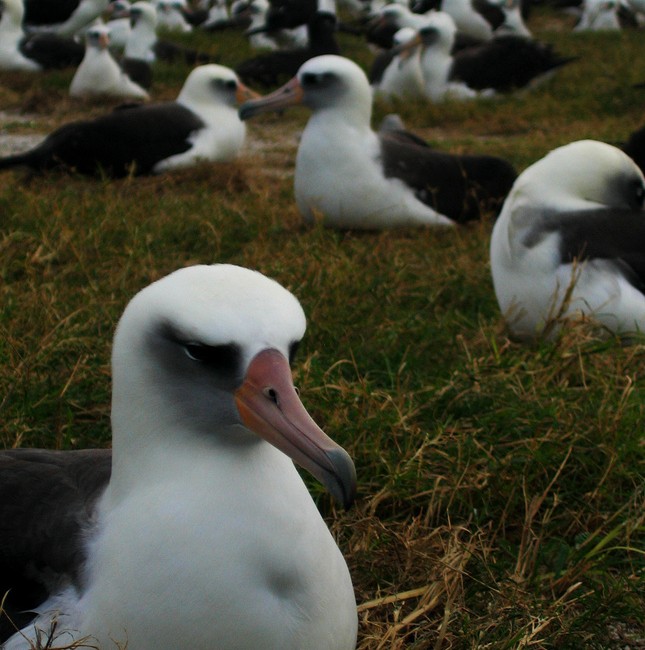 Surrounded by thousands of miles of Pacific Ocean, the majestic Laysan Albatross birds nest on islands forming the Midway Atoll, located at the northwest point of the Hawaiian Archipelago. This unique wildlife refuge is home to 71% of the world’s Laysan Albatross population and therefore is critical to their survival.
 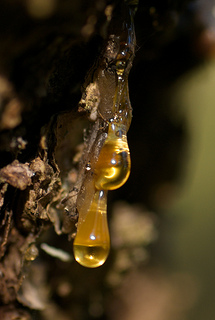 MEDIA ROOTS — If scientists working for petrochemical corporations can manipulate molecular structures to derive new substances, plastics, so can scientists working for a greener agenda.
 MEDIA ROOTS – Recently, I had the honor of going on the