What If Edward Snowden Leaked All the Documents?

NSAbyEFFIn the few public interviews given by NSA whistleblower Edward Snowden, he’s hinted at having access to documents that include CIA outpost locations and secret agents’ names. Yet Snowden has also outlined the agreement he made with journalists to vet the documents carefully, and consult with the government before every release to ensure no harm to national security.

Russ Tice, the first post-9/11 NSA whistleblower said that he would have ‘shot Snowden’ himself if he had leaked juicier documents Tice refers to as ‘the jewels’, presumably in reaction to the potential dangers posed by what’s considered legitimate spying, black-ops programs and/or by exposing the people who secretly work within the intelligence sector.

Interested in how other NSA whistleblowers feel about this potential scenario, Media Roots posed the question to former AT&T technician turned NSA whistleblower Mark Klein in an exclusive radio interview.

Media Roots: What would be your opinion of Snowden if he leaked everything that he had without any regard for protecting intelligence assets names?

Mark Klein: I would say well, he did a heroic thing and it’s better the world knows the crimes that the government’s committing. Frankly a lot of the people who might get exposed, whose lives might be in danger, probably are bad people anyways. I’m from the 70s, my hero in the 70s was Philip Agee who exposed a whole list of names of CIA agents all over the world, because he figured rightly that the CIA was a dangerous, evil organization whose main task was to assassinate people, and he was right. I don’t give a shit what happens to the CIA, I hope this organization is dismantled and destroyed, it’s dedicated to assassination, that’s what it’s always done.

Klein’s blistering critique against the US intelligence apparatus differs greatly from statements made by any other NSA whistleblower. As a private sector employee, he never held any allegiance to the US government, nor signed any secrecy oath in contrast to other former NSA employees like Bill Binney, Thomas Drake, Kirk Wiebe, and Russ Tice.  

The typical template framing how Snowden’s leaks could have or did put American service members lives at risk is always met with adamant denial from those involved, especially Glenn Greenwald (with Shepard Smith and Bill Maher) and even Snowden himself. Understandably, when facing potential espionage charges, the exaggerated construct of harm devised by National Security state apologists has to be countered with a measured response by people in positions like Greenwald.

Though hypothetically speaking, if Snowden had leaked information like this, do secret CIA agents even deserve protection? Does an unabashed assassination and torture agency sponsoring an illegal arms trade and funded by our tax dollars really deserve a cloak of secrecy any longer?

Instead of shying away from the potentially false premise that lives might be in danger from the ongoing leaks, why are journalists not confronting it with a similar line to what war-criminal-walking-free Dick Cheney said about the public outrage regarding the Iraq war?

“So?”

Written by Robbie Martin of Media Roots, @fluorescentgrey on twitter

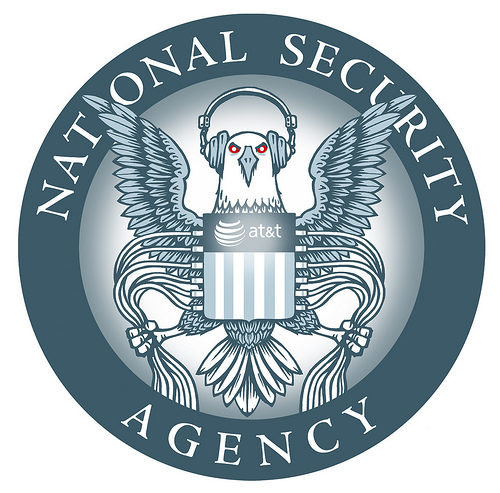
Photo from the EFF

PBS Frontline Documentary: United States of Secrets

XaIWseY

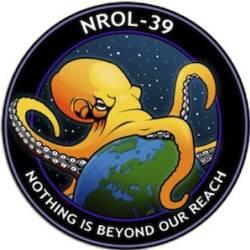
logo taken from an actual NSA spy satellite exterior called: NROL-39

PBS’ United States of Secrets is a stunning, must watch documentary covering the detailed history of the post 9/11 NSA mass surveillance program.

The two part series lets state officials prop up the narrative that such spying is needed amidst a ‘War on Terror’, but juxtaposes their rhetoric with stories from NSA whistleblowers’ who were targeted for speaking out.

Incidentally, the history of ‘The Program’ derives in large part from an internal leaked document, which outlines how former Attorney General Alberto Gonzales helped shield the Bush administration from the illegality of dragnet spying. After Obama inherited Bush’s spying apparatus, he charged multiple whistleblowers with espionage for leaking information about ‘The Program’ to the press.

United States of Secrets puts the Snowden leaks in context with the NSA’s sordid past, and cogently outlines how the surveillance state got to where it is today.

MR

**

You can watch United States of Secrets on You Tube, albeit in lower quality than PBS:


United States of Secrets Part 1 of 2

**


United States of Secrets Part 2 of 2

**

Media Roots Radio – Snowden, Greenwald, Wikileaks & the NSA

This broadcast was recorded before whistleblower Edward Snowden’s first US television interview with NBC’s Brian Williams.*

Earlier this month, journalist Glenn Greenwald released No Place to Hide, a book describing in detail how he met Snowden and started making regular NSA disclosures on The Guardian and later The Intercept. 

In this episode of Media Roots Radio, Robbie and Abby Martin detail the history of the NSA’s ‘Program’ as told in PBS’ State of Secrets and the whistleblowing by Thomas Drake, Bill Binney and eventually Edward Snowden. They examine several of the criticisms coming towards Greenwald and Snowden from the left leaning alternative-media and more ‘fringe’ circles of the Internet, such as ‘there’s nothing new in the documents’ and that ‘they aren’t releasing them fast enough’.

They also discuss the near death of Net Neutrality, Uruguay’s badass president and the dark underbelly of corporate surveillance.

The above timeline is interactive. Scroll through it to find out more about the show’s music and to resources mentioned during the broadcast. To see a larger version of the timeline with clickable resources go to the soundcloud link below the player.

If you would like to directly download the podcast click the down arrow icon on the right of the soundcloud display. To hide the comments to enable easier rewind and fast forward, click on the icon on the very bottom right.

This Media Roots podcast is the product of many long hours of hard work and love. If you want to encourage our voice, please consider supporting us as we continue to speak from outside party lines. If you donate, we want to thank you with your choice of art from AbbyMartin.org. Much of the music you hear on our podcasts comes from Robbie’s imprint Record Label Records, and Abby’s art reflects the passion and perspective that lead her to create Media Roots.org.

$40 donation: One 8×10 art print and one RLR release (You choose! Tell us in the Paypal notes.)

$80 donation: Two 8×10 art prints and two RLR releases (You choose!)

$150 donation: Four 8×10 art prints and four RLR releases (You choose!)

Even the smallest donations are appreciated and help us with our operating costs.

Thanks so much for your support!

Listen to all previous episodes of Media Roots Radio here.

Glenn Greenwald’s Chutzpah

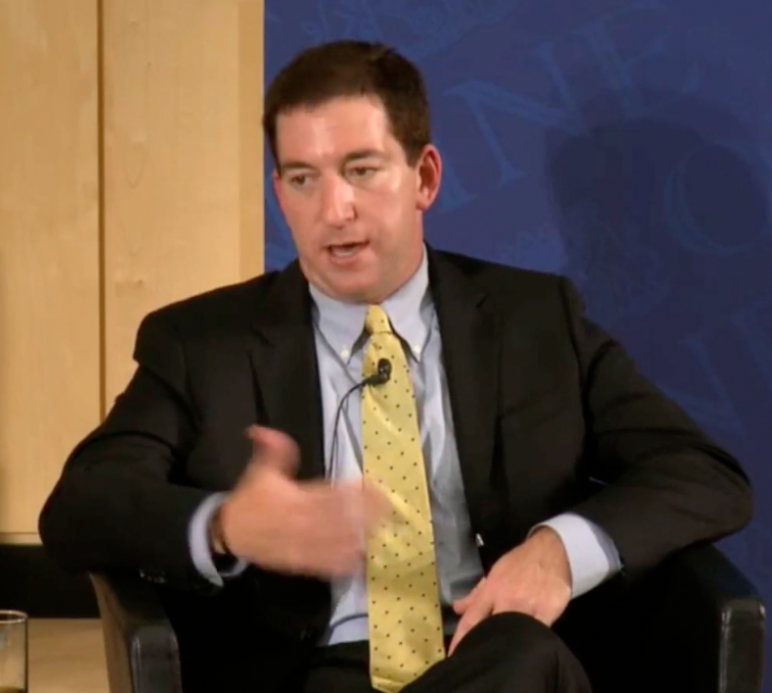
QC5wydyGlenn Greenwald was asked all-too-familiar stock questions on mainstream programs like Meet the Press and Charlie Rose during his book tour for No Place to Hide. Although he was put on the defense in almost every segment, Greenwald held firm and consistent when combating the adversarial tone of US establishment journalists.

Over the course of his high profile interviews, many may have missed his lengthier and more candid talks in Hamburg, Amsterdam and at Harvard. Here’s some of our favorite quotes from those lectures that you probably won’t hear on the corporate media.

Obama’s NSA Lies 

“I think [Obama is] due a lot of credit because it really is impressive that he’s able to say those things with a straight face and not bursting out in laughter, I find that skill really really extraordinary, and he’s very good at it and I think we ought to acknowledge it in fairness.”

CIA Assesses Senator Obama

“The greatest hope for saving America’s war fighting ability and to stem the tide of anti-war sentiment in Europe was for then-Senator Barack Obama to become president, because what that would do is transform these wars from George Bush’s face, which the world had grown increasingly tired of and had been viewed as this kind of swagger and unilateral cowboy that was particularly hated in Europe, into this kind, sophisticated, progressive face of Barack Obama.”

“And by making Obama the face of these wars it would transform all this anti-war sentiment into people who were willing to acquiesce to the war if not outright support it. [The CIA] knew that he would continue all of these policies, but his branding was so pleasant and especially in Western Europe, so beloved that it would be an immense asset for the National Security State.”

Obama’s European Branding Power 

“There’s so much rhetoric about the US government, [and Obama is] an effective salesmen around the world for this myth of American greatness. I think one of the principal things that this debate over the last year has done is open people’s eyes about the reality of president Obama vs. the image.”

Global Obama Tarnishing

“I live in Brazil where he had been beloved and across every Brazilian newspaper is very menacing pictures of him connecting him with spying.”

The Democrats

“We have been criticized very predictably and very inconsequentially from what I will call for just  lack of a better term: ‘the Right’, which is, you know, primarily Democrats who voice this critique that our disclosures are going to help the terrorists and result in the deaths of innocent people and all of that. I was on CSPAN two days ago, and every time the host said ‘And now we’re going to go to the Democrat line’ I knew I was about to be called a traitor. It was completely reliable.”

Snowden = Russian False Flag

“Those very same people who had been saying just two weeks earlier that [Snowden] was clearly a Chinese spy suddenly switched on a dime saying obviously this is an operation by Vladimir Putin.”

“It’s really remarkable how seriously all of that has been taken despite the fact that there’s zero evidence to support any of it and mountains of evidence to negate it.”

Russia is Scary

“There is this amazing dynamic in American political discourse which is that certain words drive Americans instantly into hysteria and irrationality. One of them is terrorism, the minute you say that everybody screams and jumps under the bed, not quite as much as they did before but still.”

“The much scarier word for people is Russia, this is a word that if you really want to scare an American and make them go away just whisper Russia in their ear and they’ll start running down the street.”

“On television every interviewer would say to me ‘well what about Edward Snowden he must be completely miserable, i mean he’s in Russia‘ I guess they assume that all 160 million people who live in Russia are instantly and automatically miserable from the time of their birth until they die like it’s just one big gulag.”

The Role of Journalism

“The Washington Post, New York Times and other media outlets have been more aggressive because they would have been shamed if they hadn’t been.”

Passion in Journalism

“I think it’s much more powerful as a journalist to be honest about the way you see the world and the assumptions that you’re making than it is to try and deceive your readers into pretending that you float above opinion. I think that passion and vibrancy and soul are necessary for good journalism, the attempt to drain all that out of it has made journalism not just weak but boring and sort of neutered.”

Coordinated Scripts

“I’ve been pretty scornful of the notion that there is this active plotting among journalists and media outlets to coordinate their storyline.”

“Within 24 to 48 hours literally after we first introduced Snowden to the world, there was this immediate consensus among all these media elites that they were completely capable of taking this person that they had never heard of before and didn’t know the first thing about and were diagnosing him, like clinically diagnosing him, psychologically assessing all of his pathologies. They all settled on this coordinated script that he was a ‘fame seeking narcissist’  If you Google it you will find this phrase over and over again.”

“Where did that come from, that ‘fame seeking narcissist’ thing, I really want to know.”

Pretend Respect

“There’s all these unwritten rules that govern the ways journalists are supposed to behave.”

“You’re not supposed to be too aggressive in condemning the government, you’re supposed to pretend to have respect for their fearmongering claims about why you shouldn’t be publishing.”

Exploiting Sexual Vulnerabilities

“I never used to be able to understand why in response to the leaking of the Pentagon papers the response of the Nixon administration was to break into the office of his [Daniel Ellsberg’s] psychiatrist in the hope of obtaining his psycho-sexual secrets. It never made any sense to me. It seemed like the ultimate non sequitur, ‘Oh look we have documents showing that the US government has been systematically lying to us for years about the Vietnam war’ and the response would be ‘well Daniel Ellsberg is a swinger’.”

“It’s an incredibly effective means of excluding somebody from decent company, and making everything they say instantly dismissed for that reason.”

Privacy/Encryption

“There are chat programs such as Pidgin and OTR that provide relatively good protection, there’s the TOR browser that lets you use the internet anonymously, the Tails operating system.”

“The problem is all these names are pretty daunting to people who haven’t heard them before…I think the tech community needs to develop these tools to make them much more friendly…Once that happens and that will happen, encryption will become the default means of how people communicate on the internet.”

Email Privacy

“I do use PGP email, and in part I use it because I happen to have read a lot of NSA documents talking about how frustrated they are at their inability to invade it.”

“If you use PGP email, the NSA actually looks for the people who are using encryption, because in their twisted minds, your desire to shield our communications from their prying eyes is evidence that you are suspicious.”

Laura Poitras’ Snowden Film 

Amazingly [Laura Poitras] filmed virtually everything that took place in Hong Kong, our interaction with Snowden, all of the conversations we had, which is going to be in a documentary she releases in the Fall.”

**

Check out Greenwald’s lengthiest and best public appearances so far in May 2014:

Glenn Greenwald and Noam Chomsky on Edward Snowden & The Surveillance State 

**

 Glenn Greenwald at CATO Institute: No Place to Hide

**

 The John Adams Institue Presents Glenn Greenwald: No Place to Hide

**

Richard Bacon Interviews Glenn Greenwald on BBC 

**

 Glenn Greenwald on The Kojo Nnamdi Show: State Surveillance & The Snowden Story

**

 TV Brazil’s Alberto Dines Interviews Glenn Greenwald on NSA

**

Written and compiled by Robbie Martin AKA @FluorescentGrey

The State of Surveillance and Our Fight for Freedom

The United States surveillance state has grown to a level never witnessed before in history. Following the revelations of Edward Snowden, the world is now privy to the lengths to which the U.S. government has been watching every single one of us in the global community. International governments caught off guard by the breadth of the United States spying program are now questioning to what extent they want their internet traffic funneling through U.S. servers and ISPs.

In all aspects of the global contemporary life, the U.S. government has found its way into the far reaches of personal space. From NSA email and phone spy programs, to FBI surveillance drones, the airwaves are filled with the prying eyes of our so-called protectors. These discriminating eyes which have creeped their way into every facet of our lives continue to intensify their surveillance efforts across the planet.

It all begs the question, what is it they are so afraid of? Why the need for such an extensive surveillance program? What threat do “We the People” pose to the powers that be? The proliferation of these programs began with the Bush administration’s warrantless wiretapping and the FISA amendments act of 2008, and has continued on through into the Obama administration who renewed those changes in U.S. surveillance law in 2012.

Government officials from all sides have attempted to defend the programs by rationalizing the need for added security in a post 9/11 world. Former NSA director Michael Hayden earlier this week on Sunday spoke from the pulpit of a previous generation of politicians, a generation whose ideas of government revolve around secrecy and political ambiguity. He defended the United States’ “militarization of the World Wide Web” and spoke out against the anonymity of the internet and the tension it creates “between security and Liberty.”  A tension that has been over inflated by the misguided fears of the United States Government.

Those fears became apparent when Edward Snowden leaked sensitive documents to the Washington Post and The Guardian earlier this year, giving us a peek into the NSA spying efforts of PRISM. A program whose legal justification found its roots in FISA and began with a marriage between the NSA and tech giant Microsoft on September 11, 2007. A relationship which would mark the first in a long stream of technology titans finding their way into the bed of the NSA, including prominent companies like Google, Yahoo, Facebook, YouTube, Apple and others.

Although the Snowden documents implicate these companies first hand knowledge of the program, many of them have argued that they knew nothing of the PRISM program and the extent of the government’s surveillance activities. In an attempt to win back the trust of their users, many have now begun campaigns to prioritize the privacy of their customers.

Facebook CEO Mark Zuckerberg has warned the U.S. government that its venture into voyeurism will only lead to bad business on the international level, initiating further apprehension from international customers.  Zuckerberg went onto say that “the more transparency the government has, the better folks would feel.” How convenient are the campaigns of these companies to prioritize privacy when previously they showed no interest. Their efforts to protect the people look more like a concerted effort to protect their pockets and the positions of power and influence they currently hold.

With the assistance of their corporate cohorts and their control of the majority of the world’s servers, the United States has been granted the responsibility of gatekeeper of a global information network – a network which grants them access to some of the most intimate aspects of human interaction. From 2007 onward the NSA and the United States government would become the proud owners of some of the world’s most sensitive information, the information of the People, both foreign and domestic.

From this moment forward, intelligence gathering would no longer be focused primarily on the criminal activities of state enemies but would encompass the whole of internet communication. Unsuspecting and in many cases, innocent global citizens would now become the focus of government inquiry without the need of court permission. While incrementally dissolving the people’s right to privacy the government has simultaneously relinquished the trust of the American people and the people of the world.

An inherent distrust was implied when our government implemented a surveillance program of this magnitude – a distrust which is reciprocated by the people in the form of resentment and ultimately anger. If it is true that the anonymity of the internet is such a threat to freedom as they say, then let us also recognize that the anonymity of U.S. surveillance programs is an equal if not greater threat to the preservation of a free society.

Unfortunately, it has been our government’s decision to give precedence to “security” while neglecting our long honored tradition of freedom. It’s a decision which exemplifies the despotism that has grown throughout the hallowed halls of a once respected United States government. This despotism is forged through the partnerships of corporations and government leadership that seek to solidify their positions of power instead of leading a nation of free people.

Fortunately, the internet has provided the people a platform to stand shoulder to shoulder with the titans of modern society and profess their beliefs and ideas in an equal forum for all to hear. This free forum will continue to give rise to people power movements the world over, despite government attempts to quiet public dissidence. Edward Snowden along with Barrett Brown, Chelsea Manning and Wikileaks are just the beginning of people power representatives, that in a reciprocating effort, will continue to expose the secrets of despotic governments in the same way they seek to expose the secrets of the people.

No longer are the governments of the world free from the watchful eye of public discourse. So long as the United States government continues its pursuit for a surveillance state, “We the People” will stand in opposition to that state, in our fight for freedom.

Written by Justin Blush for Media Roots