Wikileaks Vault 7 & the Russian Conspiracy Industry

Robbie Martin and Abby Martin break down the media hysteria over the Trump wiretapping claim and discuss the implications of Wikileaks’ Vault 7 data dump about CIA targeted hacking and spying. They also talk about the media’s Russophobia campaign and Robbie extensively dissects the actual facts and analysis behind the so-called “Russian hacking” allegations on Media Roots Radio.

This podcast is the product of many long hours of hard work and love. If you want to encourage our voice, please consider supporting us on PatreonListen to all previous episodes of Media Roots Radio on soundcloud or subscribe on itunes.

@AbbyMartin | @FluorescentGrey

Propaganda and the Engineering of Consent for Empire

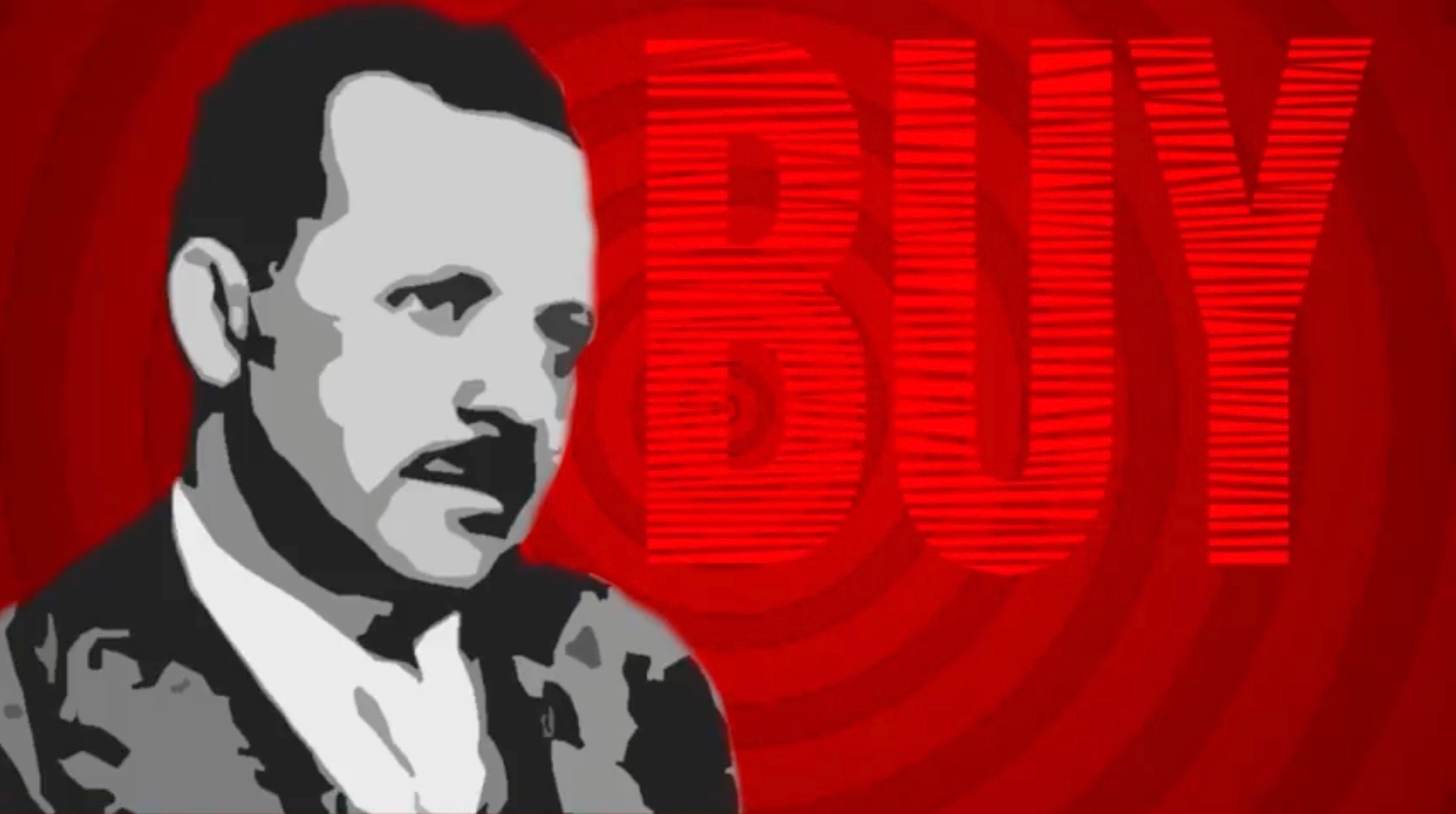
PROPAGANDA BUYIt’s been estimated that an average American living in cities sees up to 4,000 ads a day. This toxic culture of mindless consumption exploits our innermost insecurities and desire to meet impossible standards. The corporate PR machine is enormously successful due to model created by a man named Edward Bernays nearly a century ago.

The nephew of Sigmund Freud, Edward Bernays is considered the father of modern propaganda, or public relations. An Austrian aristocrat, Bernays first contribution to the United States was helping President Woodrow Wilson sell the idea of World War I as a noble mission to spread democracy in Europe. In order to create the engineering of consent, Bernays argued, you must appeal to the unconscious mind. 

And on behalf of numerous corporate clients, Bernays helped perfect the tools of manipulation and conditioning that are used today. To understand more about the history of propaganda and the collusion between the U.S. Empire and the fourth estate, Abby Martin sits down with Professor of Media Studies at NY University, Mark Crispin Miller, who wrote the intro to the new edition of Bernays 1928 seminal book, Propaganda.


Propaganda and the Engineering of Consent for Empire with Mark Crispin Miller

***

FOLLOW // @EmpireFiles & @AbbyMartin

WATCH // YouTube.com/EmpireFiles

Immortal Technique: A Revolutionary Artist Fusing the Lyrical & the Political

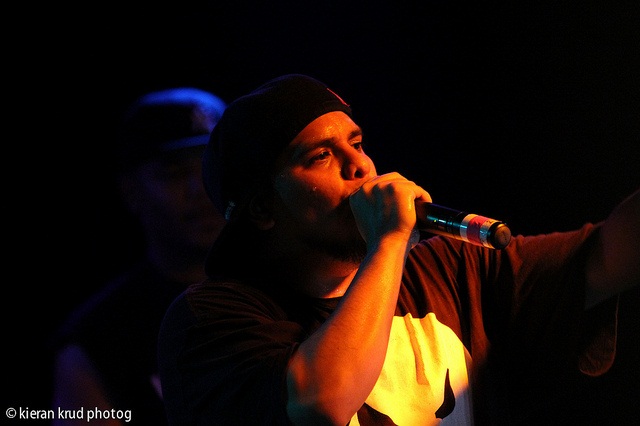
ImmortalTechniqueFrom its inception, hip hop has always been an art form to foment resistance among the oppressed. This tradition is no more apparent than in the lyrics of Felipe Coronel, also known as Immortal Technique.

Confronting the crimes of empire head on, Technique stands out from the mainstream corporate-friendly hip hop that’s commonplace in American society. With politically potent anthems like “Bin Laden” and formidable albums like Revolution Vol. 1 and The Martyr, Technique’s passionate and critically engaged music is emblematic of the creativity necessary to strike a blow against the oppressive structures of privilege and power.

Defending the rights of the oppressed through a microphone, Technique offers a forceful rebuttal to the elite consensus built on myths of control and domination. These qualities and more come through in this hard-hitting and insightful interview with Breaking the Set.

“I make rap about lyrics, not beats and marketing.” – Immortal Technique

Xavier for Media Roots

**

Immortal Technique on Conspiracy Facts, Money as God & the Two-Party Dictatorship

**

AM: Just one of your albums carries the same punch as an entire Howard Zinn book, what is your music making process like?

IT: I had a room in my house where I wrote all over the walls and it literally looks like a madman lives there–literally everywhere on the wall. One side of the wall is The Martyr and the other side is The Middle Passage and it’s just written ideas that don’t mean anything to anybody else except me. It’s like shorthand writing, you know? So I think it’s a complicated writing process. There’s sometimes when I’ll write a song like for example Caught in the Hustle which took me about an afternoon or Bin Laden. Those songs took me about an afternoon. And then there’s a song like You Never Know which took me a couple of years to write or Dance with the Devil which took around the same time.

AM: In your song Akir I want to read some lyrics for our audience: “Capitalism’s a religion that makes Satan a god/ And teaches self-righteous people to embrace a facade.” I wanted you to expand on what you meant by that.

IT: Well I think I was making a reference to the fact that when you think that everything in this world revolves around money and that you can monetize anything or that everything’s for sale, then it’s hard for me to look at you as a person of faith. I think that people hide behind faith so that they can get their economic agenda completed but it strikes me as very difficult to consider a person that has love and god in their heart where every single action of theirs is built on trying to monetize something, not so people can get paid but so they can make money from things like water, air. And I think that what’s difficult for people to process is that this is going on within their soul right now or their life or however they choose to see their spiritual struggle or their physical struggle. This is going on within all the people that are watching this program now. Everyone has some sort of choice to make. I think the difference is that when people in power are making choices it affects people differently.

AM: Iraq’s elections were this week. Barely anyone noticed. You traveled to another country ravaged by war that no one else pays attention to anymore: Afghanistan. You mentioned that you helped build an orphanage there. After talking to local Afghans on the ground and getting that perspective what message do you think that they would want to send and relay to the US government and the people here?

IT: Well I mean I went there in 2009 when there were a huge amount of civilian casualties. There were drone operations. There were a lot of people very dissatisfied with the US role. They feel like they did the exact same thing anybody else did when they came there, that they came there under the guise of stabilizing the region, stabilizing the country, the same way the USSR backed the government of Dr. Najib and “oh we’re going to have reforms. We’re going to do this,” and little-by-little the people notice the reforms benefit corporations that you’re making money with that you’re taking natural resources out the country. You want to control more and more things about our lives. Go harass your own citizens. Leave us in peace. And you know if you’re not going to leave us in peace we’re not going to fight you because we’re the Taliban, we’re going to fight you because you’re in our country. We don’t want you here anymore and it’s not your decision whether you want to stay here or not. There’s no threat here anymore. Bin Laden has been annihilated.

The threat that we have now is an inner threat. See, I think this is the part that people don’t understand. We have a new Star Wars movie coming out and I always remember this one scene from Return of the Jedi–I’m sorry The Empire Strikes Back–where he’s like “I don’t want the emperor’s prize damaged. You’ll test this machine on someone else,” and I feel that that’s what Americans don’t realize is happening, that we’re testing this machine on other people. Human rights, civil rights: let’s test it on immigrants that way people will say “they’re illegal human beings it doesn’t matter what we do to them. We can put them in these internment camps. We can put them in these FEMA camps as long as well-to-do white American citizens are there for no reason other than speaking against the government .” Oh, it’s okay for someone who works like a slave to do that then have all their money confiscated, thrown into prison, apart from their family. I don’t think you see it. That’s what my message is. You don’t see what they are doing. They are testing it on people that aren’t the perfect candidates, you know. People forget that Rosa Parks was not the first person to be ripped off the bus or to have that sort of incident. There were some before but think that–the NAACP didn’t think that she was the “perfect candidate.”

AM: Rosa Parks. Of course she wasn’t the first person but the establishment wants you to believe revolution is not a process. That it’s just a moment in time. And Rosa Parks was that moment in time. Of course rejecting the years of struggle that went on before that moment, Felipe. Of course the pretext for US intervention in Iraq and Afghanistan : 9/11, hunt for Bin Laden. I want to talk about your song Bin Laden because it really impacted me, Felipe. It says: “They funded al Qaeda, and now they blame the Muslim religion/ Even though Bin Laden, was CIA tactician/ They gave him billions of dollars, and they funded his purpose/Fahrenheit 9/11, that’s just stratchin’ the surface.” What is your biggest question in regards to what we’ve been told about that entire story. 

IT: I’ll have to get back to you on that one because it’s not just one. I mean there’s way too many. But overall I think people feel like they got their tooth capped. That’s it. There was some problem and that somehow it got fixed and now this bad guy has gone away, Ayman Zawahiri M.I.A.  It’s funny to see how seriously we took al Qaeda and how much of a threat they were to global stability that we needed to in some shape or way or form to hunt each and every single one of those cells down and destroy them and yet we had no problem when those cells existed in Syria to get rid of somebody that we didn’t like. Now obviously it became a PR nightmare for the administration, for the country, for everyone that we were giving people that were connected to that organization money but at the same time it’s very exemplary of the length–not just this country because I won’t single out America–but that any country willing to go to.

When we talk about internal struggles it has to be spoken on that the United States is not the only empire that’s had that. You don’t know how many times I’ve had to talk to people Abby and tell them “hey listen, the war against Chechnya was not a handful of Muslim extremists against these poor white Russian people who were victimized.” No, it was like as if the United States declared war against Florida and said “hey, we’re going to invade you,” and everybody in high school and college in Florida said “I don’t want to be invaded. I’m going to join a military. We’re going to fight.” Yeah, and then we had a gigantic clash of people in which a hundred thousand people died. I think that this is a story that keeps getting told again and again and again. It’s not just one system. It’s not just one group of people.

I think it’s just the whole idea that some men are more fit to rule over others and that we have to conform all ourselves to that agenda. That only some cultures are acceptable and others are deemed as savage and primitive when we live in a very civilized and yet primitive society. We live in a very civilized and technologically advanced yet barbaric society. So I think unless we address those issues. Music is one way to do that. Bin Laden is the song that I wrote when Green Lantern came up with the most electrifying hook that we possibly could. Got Mos [Def] in the studio and said “just fill the bars with nothing but facts,” and that’s what we did. We talked about how Saddam Hussein was the worst thing in the world unless it was the time when Reagan was giving him weapons fight against Iran. I think that these things, these hypocrisies, when you point them out give humanity a little bit more perspective and give them the ability to become more self aware. And that’s what we need. 

AM: It definitely does and what’s unfortunate is that simply pointing out things that you just outlined I’ve been attacked as a conspiracy theorist. I mean simply mentioning the fact that the Grand Chessboard existed as Zbigniew Brzezinski’s book, I was called a conspiracy theorist in the mainstream media. And I know you been called one too and I think it’s really important to address this pejorative term and get your response to it.

IT: Okay, I was called a conspiracy theorist because on Revolutionary Vol. 2 I made a series of claims and I’m going to tell you them right now Abby so we can both laugh. I claimed that the federal government on volume 2 was tapping all your phones and that they were listening–

AM: [Laughter]

IT: Listen to me, I’m serious.

AM: It’s already funny.

IT: My album came out in 2004. I said the federal government is tapping your phone. People said “no they’re not. He’s a conspiracy theorist.” Okay, idiot number one check. Number two: I went out and I said I didn’t believe the government’s full story behind 9/11 and that they were holding something back and it came out that they were holding something back, that they weren’t telling people about the quality of air to breathe and what chemicals were in the building so countless numbers of first responders died of some pulmonary disorder or another, a very, very tragic situation. So that’s another precedent I told people would be set and it was set. I told them that the war in Iraq was under false premise and false circumstances. The only person who still denies that to this day is Dick Cheney. He’s the only one that thinks there were weapons of mass destruction there. And that’s probably, as the old joke goes, is because him and Reagan have the receipts.

I don’t know. I don’t know what the issue is when people who don’t like conspiracy theorists only because they’re afraid of what they’re saying might actually be true. I think that’s because those people that hate us the most are the people that really want change, that want to do something but they feel powerless and they would feel even more powerless if they found out that what you were saying was actually true because then not only their suspicions about what’s actually really going on be confirmed but the other thing that would be confirmed is that they’re too much of a coward to do anything about it or that they’re not capable of doing anything about it or that they have all the courage in the world but are physically incapable, or believe themselves to be physically incapable of doing anything about it. But they’re wrong on every account. It’s not that you’re a coward. Everyone’s afraid of the odds when they seem insurmountable but when you face those odds and when you’re unwilling to just hang up your hat and say “it’s too complex, it’s too hard,” that’s when you face your fears. When you say “okay, this government’s taking away rights from people. If I stand up for those people I might lose my rights too.” When you say “it’s worth it because if one of these people loses their rights I know that I’m next. I know that my family’s next. I know that other people who speak out against injustice are next.” And if it’s not down outright it’s done subtly first until it’s done outright.

AM: Absolutely man. I love this country and that’s why I’m here fighting. I’ll be here in the streets until I die trying to make it better. Telling the truth is not a conspiracy theory. It’s such a cheap shot to shut down debate and critical thinking.

IT: I always told people. They made it into a kind of meme of Instagram. I said “don’t call me a conspiracy theorist because I know more about this country’s history than you do.”

AM: I love it. Felipe, we have one minute left. I wanted to say we’re both going to be at United We Stand Festival. It’s this amazing festival bridging together the left and the right to provide an alternative to the two-party system. Why do you feel passionate about breaking the dictatorship of Democrats and Republicans. 

IT: Well, I would say that all those people are not bad people. I just think that the system needs to understand that we won’t allow two parties that work for the same person to feed us the same lie again and again. Also I met people from the Democratic Party and people who are marginal Republicans who are very, very good people and they do good things in terms of their service and  they’re pro-immigrant. They’re pro-civil rights but at the same time I think that the country needs an alternative to just one gigantic system funded by corporations or another gigantic system funded by corporations. I think that we need a voice of our own, a people’s tribune, so to speak. Unfortunately we don’t have that.

AM: We really don’t. Thank you so much. Felipe Coronel. Immortal Technique. Amazing to have you on man.  

**

Transcript by Xavier Best, Photo by Flickr User Kieran Ferguson

LIKE Breaking the Set @ http://fb.me/JournalistAbbyMartin
FOLLOW Abby Martin @ http://twitter.com/AbbyMartin

JFK Cover-Up: Where There’s Smoke, There’s Fire

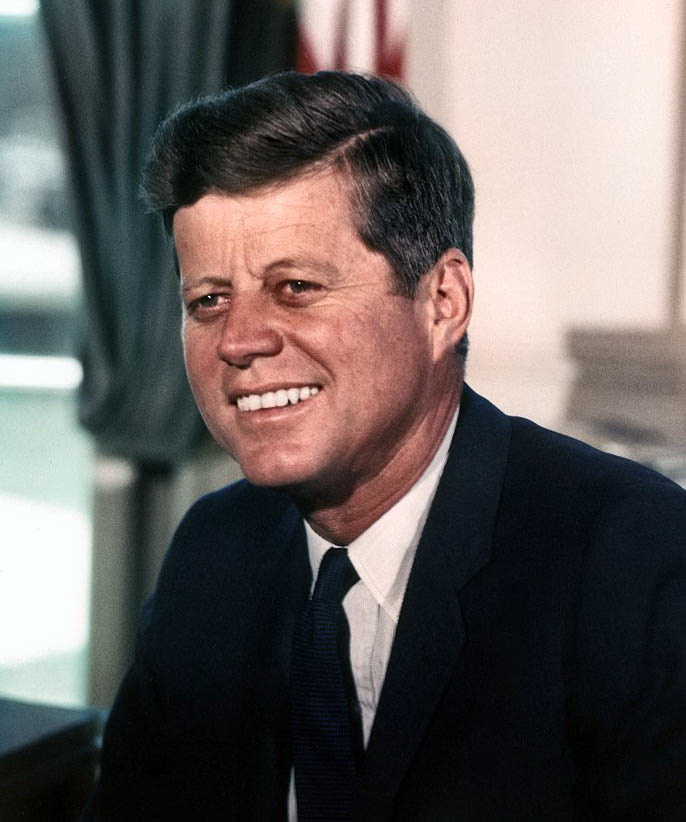
JFKWhiteHousePortraitIn November of 2003, Senator Max Cleland resigned from the 9/11 Commission investigation, directly disparaging it by way of the Warren Commission investigation. Senator Cleland said:

“The Warren Commission blew it. I’m not going to be part of that. I’m not going to be part of looking at information only partially. I’m not going to be part of just coming to quick conclusions. I’m not going to be part of political pressure to do this or not do that.”

The most obvious fact, to indicate that the true story of John F. Kennedy’s slaying is not as the government has presented, is the cover-up itself. Elaborate cover-ups spanning 50 years cannot orchestrate themselves, and there must be compelling reasons for hiding the truth from the American people, or else it would simply be declassified and revealed.

If the killing of the president was committed by a lone nut single shooter named Lee Harvey Oswald, because of his great love of Marxism, there would be no compelling reason to keep his files secret five decades after the fact. Quite the opposite, Mr. Oswald’s clear guilt and personal history would have been useful propaganda material in the ideological battle between the Western world and the Soviet bloc. The ongoing and arguably illegal suppression of assassination evidence by the US government should be taken as a clear indicator of some level of official complicity in the original assassination.

Despite the US government and major media pressing the official story for the last half decade, relatively few Americans still believe it. By 2004, 74 percent of Americans thought there was a “cover-up of the facts” about the assassination of JFK. Today, polls show a majority firmly behind the conspiratorial view, with the Associated Press finding that 59 percent of Americans think multiple people were involved in a conspiracy.

Of course, the 1979 House Select Committee on Assassinations (HSCA) determined the killing was “probably” a conspiracy, with a pathetic guess to their final determination. The committee was “unable to determine” the identities of other shooters or the “extent of the conspiracy.” This is more evidence of a cover-up, especially given the sheer number of documents to be released after 1979, and, even more damaging, those that remain secret to this day. We know of at least 1,100 multi-page records related to the JFK hit that remain classified.

Among those still classified records are details of the CIA’s surveillance of Lee Harvey Oswald prior to the assassination. Other characters kept shielded from public scrutiny include Bill Harvey, who headed an assassination team for CIA code named “ZR-RIFLE,” and CIA operative David A. Phillips, who was allegedly seen with Oswald in Dallas two months before the slaying of a president. At least 332 hidden pages of classified text concern E. Howard Hunt, a CIA thug and Nixon “plumber” (plugged leaks) involved in Watergate. Hunt would confess on his deathbed to being part of the JFK hit, as published in Rolling Stone, although specifics of his story may be inaccurate. In his confession, E. Howard Hunt named Cord Meyer, Bill Harvey, David Morales, David A. Phillips, Frank Sturgis and then Vice President Lyndon B. Johnson as other culpable players.

The 1979 HSCA investigation in no way got to the truth of the matter, and nowhere is this more clearly shown than in its failure to interview Jerrol Custer when it addressed whether the Kennedy X-rays were forgeries or not. Custer was the x-ray technician who took the pictures, and yet he was not brought in to clarify that the images were authentic. Custer testified in 1997 to the Assassinations Records Review Board: “[W]hen I looked into the skull – I remember seeing an apparatus in there… It was non-human. It had – I’m not sure if it was metallic or plastic…” His commanding officer, Dr. Ebersole returned late that night with additional skull fragments from Dallas. “High-ranking people had talked to [Ebersole]. And he suggested to me that everything I see from now on, I should forget” (ARRB, “Deposition…” p146).

Three days after Kennedy’s killing, and just one day after Lee Harvey Oswald was also gunned down – while in police custody and having never confessed to anything – the assistant Attorney General of the United States, Nicholas Katzenbach, wrote a memo to a White House aide that included this point: “The public must be satisfied that Oswald was the assassin; that he did not have confederates who are still at large; and that the evidence was such that he would have been convicted at trial.”

Clearly, at this early juncture there was no way for Nicholas Katzenbach to know these things as facts. In explaining his memo, Katzenbach told the House Select Committee on Assassinations that his emphasis was on full disclosure and not on pressing the lone assassin theory. Katzenbach’s premature memo also noted some conspiracy theories that the Soviets were behind the Kennedy killing or that the extreme right wing was behind it in order to blame it on leftists. “Unfortunately, the facts on Oswald seem about too pat, too obvious.” So even as he relayed the premature determination that Oswald was solely responsible, Katzenbach expressed a reservation that it seemed “too obvious” that Oswald was so blatantly linked to the Soviet bloc.

We see an official policy to stick to the lone assassin theory, and specifically not to blame the JFK hit on the Soviets or Cuba, even from President Johnson. During a phone call one week after the slaying to Senator Richard Russell, Johnson said, “[W]e’ve got to take this out of the arena where they’re testifying that Khrushchev and Castro did this and did that and kicking us into a war that can kill 40 million Americans in an hour…” The direct threat of nuclear war supposedly took precedent rather than full disclosure, at least from the mouth of President Johnson. This rationale for covering up the facts was already established and on the record, inside the White House, one week after President Kennedy’s murder.

Discrepancies with the Oswald legend would emerge later. Particularly curious is this bit of skullduggery: “In one taped conversation, Oswald — or someone saying he was Oswald — called the Soviet embassy. Then-FBI Director J. Edgar Hoover listened to the tape and told President Lyndon Johnson that it wasn’t Oswald’s voice.” That tape disappeared forever. Perhaps Katzenbach’s “too obvious” speculation was spot on.

Oliver Stone’s JFK film included another spot on point. As Associated Press states plainly, “Pamphlets Oswald had in his possession bore an address of a local anti-Castro operation connected to a former FBI agent with ties to organized crime.” So was Lee Harvey Oswald supposed to be pro-Castro, anti-Castro, or undercover?

Check out Breaking The Set‘s report on the assassination of JFK:

***

50 Years Later: Exposing the Truth on JFK’s Life & Death

***

A cognitive dissonance surrounds this issue, particularly in the corporate media. Investigators routinely report highly suspicious facts only to attempt to spin them away and diminish their importance. An example of this behavior is former Washington Post reporter Jefferson Morley, who has taken on the Kennedy case. Claims Morley: “This is not about conspiracy, this is about transparency… I think the CIA should obey the law.”

The definition of conspiracy is when multiple parties, or an organization such as CIA, break the law. Establishment journalists are so terrified of accusing the government of conspiracy, that they even seem prepared to attack the English language rather than to open themselves up to accusations of being a dreaded “conspiracy theorist.”

The CIA made its propaganda agenda clear in April of 1967 in a document entitled, “Countering Critics of the Warren Report.” Therein, the agency sought to, “employ propaganda assets to answer and refute the attacks of the critics” (Nurnad). That meant “book reviews” and “feature articles” as well as “friendly elite contacts (especially politicians and editors).” Countering critics of the Warren Report with propaganda was a clear breach of the CIA’s charter, and operating domestically was and remains illegal. That propaganda effort, similar to the more formal “Operation Mockingbird,” would constitute additional official conspiracies peripherally related to the killing of President John F. Kennedy. In other words, official cover-ups tend to veer into technically criminal activities.

Jefferson Morley, who already disparaged the idea of a JFK conspiracy earlier in the AP article, presented another curious revelation: “The idea that Lee Harvey Oswald was some unknown quantity to CIA officers was false… There was this incredible high-level attention to Oswald on the eve of the assassination.”

On the eve of the assassination, says Morley, as in prior to the killing in Dallas by the alleged lone nut assassin who just decided out of the blue to murder a president passing by below his place of employment. There was not only attention to Oswald, it was “high-level attention,” which was “incredible.” Morley’s evidence is hard to locate, as his sourcing was not included in his story.

What is known is that anti-Castro Cuban exiles, working with the CIA, were monitoring Lee Harvey Oswald three months prior to the JFK assassination. A lawsuit was filed to release records connected with George Joannides, who was the “chief of the CIA’s anti-Castro ‘psychological warfare’ operations in Miami.” What makes Joannides even more relevant to the cover-up is that he served as the Central Intelligence Agency’s “liason” to the HSCA in 1978-9, but he never revealed to the investigation his own involvement in 1963. George Joannides was, of course, an expert in psychological warfare, the art of disinformation – which is plentiful in this particular murder case. He was later accused of obstructing justice by deceiving the congressional committee.

The fact that there has been a cover-up of the JFK assassination is undeniable. The conflicting conclusions of the two main investigations, Warren vs. HSCA, establish that a one has taken place. Ongoing suppression of evidence by the CIA further establishes this cover-up. Defenders of the official story would attribute such illegal behavior to institutions avoiding embarrassment or hiding negligence. Establishment journalist Jefferson Morley is an example of this view, as his own conspiracy theory suggests that: “release would show the CIA trying to keep secret its own flawed performance before the assassination.”

The majority of the American people don’t see it that way, however. They believe a far more sinister explanation is likely, and for good reasons. The CIA has a history of criminal activity including overthrowing democracies, torture and politically-motivated murders. The Kennedy killing would not have been an aberration in tactics, only in the choice of target.

Written by Joe Giambrone for Media Roots

***

Works Cited

Assassination Records Review Board, Assassination of John F. Kennedy, “Deposition of Jerrol Francis Custer,” Miller Reporting Company Inc., Washington DC, 28 Oct.1997, hosted at www.aarclibrary.org, The Assassination Archives and Research Center, Web, 10 Nov. 2013.

Federation of American Scientists (FAS), “The Evolution of the U.S. Intelligence Community-An Historical Overview,” Page INT022, 23 Feb. 1996, Web, 10 Nov. 2013.

Katzenbach, Nicholas, “Memorandum For Mr. Moyers,” FBI 62-109060 JFK HQ File, Section 18, US Department of Justice, Federal Bureau of Investigation, 25 Nov. 1963, hosted at maryferrell.org, The Mary Ferrell Foundation, Web. 10 Nov. 2013.

Nurnad, Clayton P., “Countering Critics of the Warren Report,” CIA no. 1035-960, US Government, Central Intelligence Agency (CIA), reprinted in Stone, Oliver and Sklar, Zachary, “JFK: The Book of the Film (Applause Screenplay Series) First Edition,” Applause Theatre & Cinema Books, 1 Feb.2000, p.550.

Select Committee on Assassinations of the U.S. House of Representatives, “Volume VII, Section IV: Authenticity,” Report of the Select Committee on Assassinations of the U.S. House of Representatives, Washington, DC: United States Government Printing Office, 1979, hosted at John McAdams’ Web Site, Marquette University, Web, 10 Nov. 2013.

CIA Popularized ‘Conspiracy Theory’ Term to Silence Dissent

In an era of rampant surveillance, government secrecy, and whistleblower crackdowns, more and more questions have arisen over the actions and intentions of the US government. But regardless of how doubtful we may be of its justifications, we’re taught to just accept the explanation that’s given.

And if we don’t – if we openly acknowledge the gaping holes – that makes us ‘conspiracy theorists’, a pejorative term that for years has been cast on those who have been bold enough to seek the truth.

Breaking the Set reports on when the term became an establishment tool to shut down critical thinking and how labeling truth-seekers as ‘conspiracy theorists’ damages democracy.

Abby

***

Conspiracy to Tell the Truth | Interview with Lance deHaven-Smith

Breaking the Set also calls out MSNBC’s Rachel Maddow for promoting the notion that violence is rooted in conspiracy theories, while disregarding the importance of questioning official government narratives.

Abby Martin Blasts Rachel Maddow for 9/11 Comments

***

LIKE Breaking the Set @ http://fb.me/BreakingTheSet
FOLLOW Abby Martin @ http://twitter.com/AbbyMartin