Untouchable Big Oil Threatens All Life On Earth

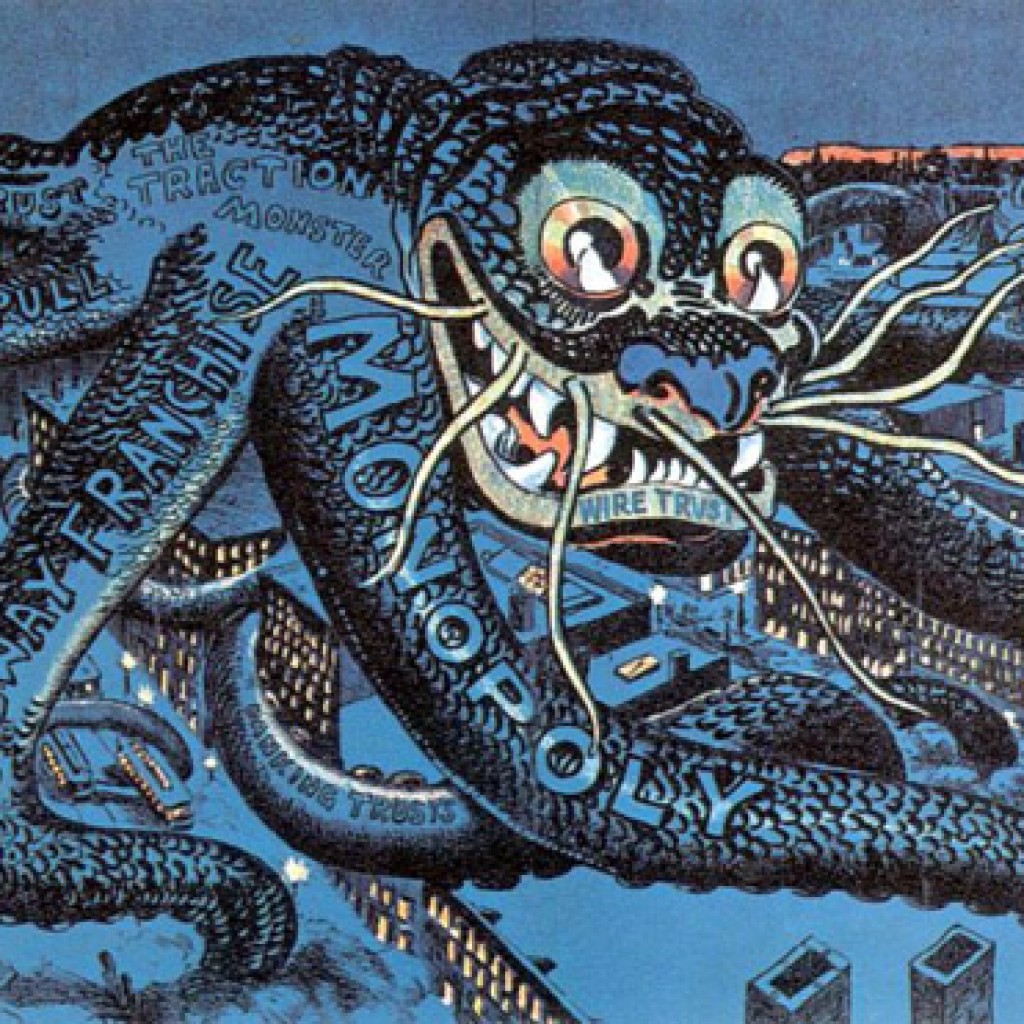
octopus-monopoly600In a system that puts profits over everything, small gangs of billionaires are given free rein to plunder the planet. One of the richest power cliques in the Empire’s inner circle is also imperiling all life on earth at an alarming rate, only to make their pockets fatter.

In the United States, the oil industry is a giant, cash-engorged beast with the loyal servitude of the state at its beck and call. It’s vast accumulation of wealth led to its vast accumulation of power and influence in today’s society.

All life on Earth is threatened by catastrophic climate change–the main culprit is so powerful that the US government is set up to serve it, rather than regulate it.

In this episode of The Empire Files, Abby Martin uncovers Big Oil’s strong-arm reach–its growth, its crimes, its power and its impunity.

Featuring interviews with two investigative journalists who have covered oil disasters on-the-ground, Antonia Juhasz, author of “Black Tide: The Devastating Impact of the Gulf Oil Spill”, and Greg Palast, author of “Vulture’s Picnic: In Pursuit of Petroleum Pigs, Power Pirates, and High-Finance Carnivores”.


Untouchable Big Oil Threatens All Life on Earth

**

FOLLOW // @EmpireFiles and @AbbyMartin

WATCH // YouTube.com/EmpireFiles

BP: Scandal, Lies and Another Massive Oil Spill Cover-Up

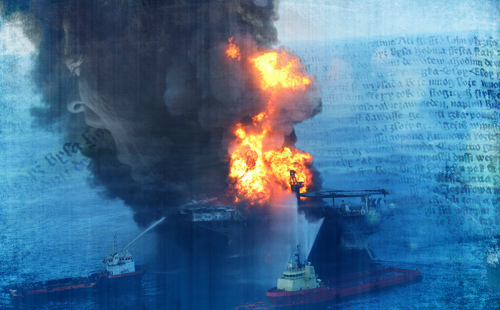
BP Thierry EhrmannForget Stephen King. If you want scary, read U.S. District Judge Carl Barbier’s 150-page Findings of Fact released recently in the Deepwater Horizon case.

Although the judge found BP liable for “gross negligence,” some U.S. media failed to mention that Barbier let BP off the hook on punitive damages. And that stuns me, given that the record seems to identify enough smoking guns to roast a sizable pig.

Every rig operator knows that, before a rig can unhook from a drill pipe, the operator has to run a “negative pressure test” to make sure the cement has properly sealed the drill pipe.

If the pipe is safely plugged, the pressure gauge will read zero. The amount of pressure BP measured at 5 p.m. on April 20, 2010, the day of the explosion? 1400 psi (see the findings, pages 62-65).

1400 psi is not zero. Stick a balloon in your mouth with zero pressure and nothing happens except that you look silly. Replace the balloon with a hose delivering a 1400 psi blast and it’ll blow your skull apart.

So, how could the company record zero? Answer: BP’s crew re-ran the test measuring the pressure in something called the “kill line,” which is definitely not the drill pipe.

By reporting that the pipe had no pressure and all was safe, BP could begin to unhook the Deepwater Horizon from the pipe—and sail away. Why would BP do that? In my view, there were three motives: money, money and money. It costs BP a good half million dollars each extra day the rig stays on top of the drill hole. It seems it wanted the rig gone, and quickly.

Instead of halting the disconnection process, BP appears to have lied and recorded the pressure reading as “zero.” The rig’s owner, Transocean of Switzerland, went along with BP’s actions.

So how did BP get away with mere “gross negligence” as opposed to the more serious claim of fraud? Because the court found that the blowout, explosion, fire and oil spill were caused by “misinterpretation of the negative pressure test.”

Misinterpretation? If a woman says “thanks” when you say she’s dressed nicely and you think she wants a kiss, that’s “misinterpretation.” But on the Deepwater Horizon, the drill pipe gauge read 1400 psi and BP picked a different pipe that gave the company the magic zero. That’s not, I contend, “misinterpretation.”

Maybe the judge thought he was pretty tough by calling out BP for “gross” negligence (rather than plain-vanilla negligence, the finding against Transocean and contractor Halliburton). But, in fact, it seems Barbier fell for the Three Stooges defense.

Throughout the 150-page decision, the judge cites one instance after another of bone-headed, buffoonish, slapstick decisions, and plenty of pratfalls and banana-peel slips by BP, Transocean and Halliburton. You have to wonder how these schmucks even found their drill hole. It was a corporate Larry-Moe-and-Curly-Joe routine that would provide a lot of belly laughs if 11 men hadn’t died as a result.

I’ve seen the Three Stooges defense before in federal court. In 1988, the corporate owner and the builder of the Shoreham nuclear plant were on trial on accusations they bilked their New York customers out of $1.8 billion. In court, they pleaded stupidity and incompetence as a defense against deliberate deception. As the government’s investigator, I didn’t buy it—billion-dollar corporations can’t be that stupid—and neither did the jury. (The racketeering charges were settled after trial for $400 million.)

And here is a new set of Stooges: BP plays Larry, Transocean puts on Moe’s wig and Halliburton makes “Nyuk! Nyuk! Nyuk!” sounds like Curly Joe. Halliburton, the judge found, failed to test the final cement mix and BP bitched about it—“[Halliburton engineer Jesse Gagliano] isn’t cutting it any more,” reads an email between two BP managers on the rig—but BP went ahead and used the bad cement anyway (Findings, paragraphs 227-228)

When the pressure in the drill pipe read 1400 psi, BP and Transocean managers should have stopped the rig departure immediately. They didn’t. Nevertheless, other systems should have prevented a blowout. According to Barbier, other safety systems were jacked with to save a penny here, a penny there (or, a million here, a million there). Example: BP used leftover cement (Findings, paragraphs 209-211) that contained chemicals that destroyed the integrity of the new cement, because using the old stuff saved some serious cash.

Barbier had the power to levy a fine big enough to make BP plc, BP America’s London-based parent corporation—a company with revenue of a quarter of a trillion dollars a year—go “ouch.” But to slam BP with a fine that would hurt, the judge needed to hear from the Justice Department about corporate-wide perfidy. He pointed out that the case would have to be made against BP plc, the international parent, if he were to level a fine that would punish the corporation.

Against BP there is evidence aplenty. For years BP plc has played fast and loose with safety—from Asia to Alaska.

Chasing BP across five continents, I’ve found that “gross negligence” could be BP’s corporate motto. In 2010, I was arrested in Azerbaijan hunting down evidence of another BP/Transocean offshore blowout that occurred 17 months before the Deepwater Horizon explosion. The cause of the Caspian blowout was the same as in the Gulf disaster: mishandling of “foamed” cement. Had BP not covered up the prior blowout off the coast of Azerbaijan, the deaths and destruction in the Gulf, I’m certain, would have been avoided.

More on the Caspian Sea blowout and BP ruling on Breaking the Set with Abby Martin:


What?! Another Massive BP Oil Spill Coverup?

**

The ugly truth is that the U.S. State Department knew of the Caspian disaster and kept its lips sealed. Furthermore, the U.S. government can’t tag BP as an endemically rogue, dangerous operator without casting doubt on the administration’s recent grant to the corporation of new deep tracts to drill in the Gulf of Mexico.

So maybe it was not the judge but the public that was blinded by the government and media crowing about a possible $18 billion fine for gross negligence. Eighteen billion dollars may sound like a lot to us mere mortals, but to a trillion-dollar behemoth like BP, it is not a punishment, but a reasonably priced permit for plunder.

Greg Palast is award winning author and journalist.

This article was originally published in Truthdig. Photo by flickr user Thierry Ehrmann

Watch Breaking the Set’s exclusive follow-up on the 2010 BP Oil Spill from the Gulf.

BP’s Oil Spill: Criminal Negligence, Thousands Still Sick & A Gulf Graveyard Left Behind

BP dead flickr user thierry ehrmannAfter BP agreed to pay $4.5 billion to the government, and another $9.2 billion in penalties since its catastrophic oil spill, a new ruling has put the corporation under fire again.

A US District Judge has found BP grossly negligent and it’s subcontractors, Halliburton and TransOcean, negligent for their roles in the 2010 Deepwater Horizon explosion and subsequent dumping of more than 210 million gallons of toxic sludge into the Gulf of Mexico, killing 11 people and countless marine creatures in the process. Under the Clean Water Act, the new ruling could effectively quadruple the penalty per barrel spilled that BP will have to pay.

BP’s criminal negligence shouldn’t come as a surprise. After nine years at sea, company management acknowledged that the Deepwater drilling rig was in decline and presented a quote “intolerable risk” to safety, yet chose to do nothing. Halliburton also plead guilty to the destruction of key evidence related to the company’s shady cost-cutting practices like failing to inspect the well’s cement mixture, and using only six of the recommended 21 centralizers to secure the site.

Besides the massive damage that’s been done to the environment as a result of the BP disaster, the health impact on humans continues – largely because of the decision by BP and the EPA to spray nearly two million gallons of a dispersant called Corexit onto the water, making the oil 52 times more toxic, according to the Environmental Pollution Journal.

All this aside, BP’s contracts with the Defense Department have more than doubled in the years since the disaster.

Even though the media is fatigued with its coverage of this disaster, Breaking the Set went down to the Louisiana Gulf Coast to see how the region is faring nearly five years later and to investigate the spill’s lasting damagesWe learned that hundreds of thousands of people are still sick, and that the oil industry has turned the once vibrant shore into a graveyard.

Abby

**

BP’s Oil Spill: Criminal Negligence, Thousands Sick & Gulf Graveyard Left Behind

**

Exclusive coverage includes interviews with Jorey Danos, a sick clean-up worker who was exposed to a toxic chemical dispersant known as Corexit, award winning toxicologist Wilma Subra, Gulf Restoration Network’s Jonathan Henderson and Clint Guidry, President of the Louisiana Shrimpers Association.

We also reached out to BP, which provided the following statements:

Q: Why were cleanup workers refused respirators and even threatened with termination if they requested them, according to multiple interviews with clean-up workers and the Louisiana Environmental Action Network?

A: We certainly do not and would not retaliate against workers. BP worked closely with OSHA, the US National Institute for Occupational Safety and Health (NIOSH) and other US government agencies to take extraordinary measures to safeguard the health and safety of responders.

Workers were provided safety training and appropriate personal protective equipment (PPE), and were monitored by federal agencies and BP to measure potential exposure levels and to help ensure compliance with established safety procedures.

Response workers applying dispersants received training on work procedures and PPE usage designed to minimize exposures, and were provided respirators and other PPE.

Workers who were not exposed to dispersants may have asked for a respirator, possibly in the mistaken belief that it would provide an extra level of protection and safety. This is not true. Perhaps the most important consideration in voluntary respirator usage is the potential physiological burden placed on the user. That was particularly true given the hot working conditions encountered during the response.

Due to the extensive controls in place, there was little potential for worker or public exposure to dispersants. More than 30,000 air monitoring samples were collected by the Coast Guard, OSHA, NIOSH, and BP as part of a comprehensive air monitoring program to evaluate the potential for human exposure to dispersant and oil compounds. The results showed that response worker and public exposures to dispersants were well below levels that could pose a health or safety concern.

Additional Background: OSHA advises that, “in workplaces with no hazardous exposures, but where workers choose to use respirators voluntarily, certain written program elements may be necessary to prevent potential hazards associated with respirator use. Employers must evaluate whether respirator use itself may actually harm employees. If so, employers must medically evaluate employees and, if necessary, restrict respirator use…”

For these reasons, respirators typically are not provided to people who do not need them, and who have not passed the required tests for fitness to wear the equipment. In consultation with NIOSH and OSHA, BP developed guidelines to help determine when PPE, including respirators, was to be used. Known as the “PPE Matrix,” this guideline was made available on several websites, including websites for BP and OSHA. Under the PPE Matrix, respirators were to be used in specifically- identified situations, including during the application of dispersants. There were times, however, when the potential risks associated with using a respirator outweighed the benefits since air monitoring data indicated that worker exposures to chemicals of concern generally were well below occupational exposure limits, and respirator use could place physiological stress on the body. In those cases, protection was provided by work practices and procedures and the use of other PPE.

A paper reviewing OSHA and NIOSH’s response to the accident can be found here.

Q: Why was the public told that Corexit was as harmless as Dawn, when five of the ingredients in it are linked to cancer, 33 are linked to skin irritation and 11 are respiratory toxins, according to expert toxicologists, Wilma Subra and Dr. Susan Shaw?

A: The Material Safety Data Sheet (MSDS) for Corexit, where human exposure characterization is addressed notes, “Based on our recommended product application and personal protective equipment, the potential human exposure is: Low.” Also, Section 16 of the MSDS characterized Corexit’s general product risk- “The human risk is: Low. The environmental risk is: Low.”

The same ingredients contained in Corexit are also found in common consumer products such as household cleaners, food packaging, hand lotion and cosmetics. The product ingredients alone do not determine if a compound has created a public health concern; there must also be exposure to a compound at levels and for sufficient duration that could cause harm.

The results of extensive monitoring conducted by federal agencies and BP show that response workers and the public simply were not exposed to dispersant compounds at levels that might pose a health risk.

Due to the controls in place during dispersant application operations, there was little potential for public or worker exposure when dispersants were applied to the oil offshore. This was confirmed by the government findings as previously mentioned.

Q: Why has the active cleanup of Louisiana’s coast officially ended when thousands of tar balls continue to wash on shore?

A: The Coast Guard ended active cleanup after an extensive four-year effort. Even so, we remain committed and prepared to respond at the Coast Guard’s direction if potential residual Macondo material is identified through the National Response Center reporting process and requires removal. We have teams and equipment at staging areas in Grand Isle, LA and Gulf Shores, AL ready to rapidly respond as necessary.

Additionally numerous studies and reports have documented the presence of tar balls along the Gulf coast in the decades before the Deepwater Horizon accident, and during our cleanup efforts we continued to find tarballs that did not contain residual Macondo oil.

Q: Why have only 148 people received any medical claim whatsoever well over four years after the disaster and why is the average benefit only $1,600 dollars, when doctors such as Michael Robichaux has studied hundreds of patients and observed long term and possibly lifelong health effects in the process?

A: BP and the PSC consulted with medical experts to determine compensation amounts and formulate a list of the conditions that, according to scientific evidence, could be caused by exposure to oil or to the dispersants used in the cleanup. Compensation for these listed conditions is subject to the clear terms of the MSA. As is common in class action settlements, the settlement program did not begin processing and paying out claims until all appeals were exhausted, which occurred earlier this year. As to Dr. Robichaux, his allegations were considered and rejected over a year ago by a New Orleans federal court, which found that the doctor “wholly failed to provide any competent evidence in support of the assertions he makes.”

**

Follow me @AbbyMartin

Art by flickr user Hierry Ehrmann

Posted in Uncategorized | 1 Reply

BP’s PR Machine & Toxic Enterprise of Criminal Negligence

BPoilFlickrWiselyWovenThe BP Deepwater Horizon oil spill dumped 172 million gallons of crude oil into the Gulf of Mexico and caused a holocaust of sea creatures. As a result, tens of thousands of Gulf residents are now suffering – both emotionally due to a loss of livelihood and physically due to contamination.

Earlier this month, Gulf victims won a major battle against BP concerning the access to compensation funds. For over a year, the oil company had claimed that the settlement process was unfair, because individuals that suffered no harm were allegedly scamming the company out of billions of dollars. Thankfully, the 5th Circuit Court rejected the corporation’s appeal, but BP’s moral bankruptcy goes far beyond blocking compensation payouts.

Investigative journalist Dahr Jamail cites former BP officials who are disgusted with how the company has reneged on its pension promises to employees and warn Deepwater Horizon oil spill victims to expect the same kind of treatment.

Russell Stauffer, a former BP head of finance for the Gulf of Mexico, says that the company has cut hundreds of employee pensions by up to 75% from what they were originally promised back in 1987. Another former employee, Kirk Wardlaw, compared the pension situation to the plight of the Gulf oil spill victims, saying:

“Those depending on BP to do the right thing in the Gulf of Mexico should be aware of BP’s unfair and callous treatment of…employees, failure to adhere to their own Code of Conduct and the willingness to hide behind a standard of ‘we did what was technically legal.'”

It would be one thing if this was a struggling mom and pop business failing to compensate its employees and victims of its own gross incompetence – but this is a multinational money hoarding machine. The corporation rakes in billions of dollars per year and remains one of Pentagon’s premiere oil and gas providers.

Even more frustrating is how BP hasn’t felt prompted to step up its safety standards after causing one of the worst environmental crisis in US history. Only nine months ago, the Petroleum Safety Authority in Norway said that the lack of maintenance and management of BP’s oil platform in the North Sea lead to a leak of about 125 barrels of oil. This after the same agency had already discovered that the platform had inadequate fire and explosion protection which could have caused another major accident.

One would think that bad press would have cut into BP’s profits by now, but the company posted record profits last year of $20 billion in just the first quarter. Perhaps the millions of dollars the company is spending on PR to control the narrative is helping maintain its image of ‘responsibility.’

Since the disaster, investigative journalist Dahr Jamail has dedicated much of his fantastic journalistic efforts towards revealing the truth behind the crisis and pressuring to hold the guilty parties accountable. Jamail joined Breaking the Set to elucidate BP’s hostile tactics to silence dissent, from blocking scientists who are reporting on affected areas to hiring a company to employ online trolls to harass critics.

Abby Martin

***

Dahr Jamail on BTS: BP Pays PR Trolls to Threaten Online Critics

***

AM: Talk about the PR firm Ogilvy & Mather that BP hired to silence its enemies online.

DJ: They were hired primarily to run BP America Facebook page. That’s what they did in addition to basically doing the general PR effort for BP through the disaster; to manage the message, as they put it themselves, and they did this very effectively. For example, when Tony Hayward made that gaff of saying, ‘I want my life back,’ it was Ogilvy that was in charge of basically doing disaster control on that. So, they came in and started becoming BP apologists and making it appear as though, ‘Oh, it was taken out of context,’ on all of BP’s social media; BP’s Twitter feed, as well as BP’s America Facebook page.

AM: Let’s talk about specific examples of what was happening when people were expressing concerns on the Facebook page. 

DJ: Problems arose when people were using the page as it was set up. It was to give BP feedback, positive and negative—mostly negative—about how they were handling the oil spill. One woman goes by the alias ‘Marie’ because she feels she is under direct threat from people working for BP and Ogilvy, says that people were coming on the pages and harassing those who were making regular, critical comments against BP. Internet trolls is what they are referred to as, and they are people who go in cause disruption in chat rooms, and in comments sections and meeting places online. Marie started receiving bellicose, derogatory remarks, degrading remarks, and then this escalated to over-threats. Trolls posting pictures of side arms, and even arsenals of semi-automatic weapons. Even as much as contacting people at their workplaces and causing disruption there. This was happening not just to her but to several other people as well. Marie ended up collecting reams of data, screenshots, tracking down the Facebook profiles of these people, and then carrying it all the way to directly linking them to people already working directly for BP or Ogilvy. Marie believes, as does the law firm that she’s hired to investigate this further that BP and Ogilvy have hired these trolls directly to harass and silence critics of BP.

AM: Breakdown really quickly again what evidence is there to show that these trolls do indeed work for the PR firm or BP directly.

DJ: Marie found the Facebook profiles of the people making threats and went through their friends’ lists. She found out people who work for BP or Ogilvy directly, had interactions with these friends. She found in other instances some of the trolls that were friends and associates worked very closely now, as well as in the past, with people directly employed with BP.

AM: We know about the ‘sock puppet’ accounts that you can host up to ten different accounts and make it look like totally legitimate Facebook profiles, which could be the case here. Let’s talk about outside the Internet. Scientists have also been blocked from oil spill access zones to do their jobs and make proper assessments. Can you elaborate on that part of the story?

DJ: Right. There’s a woman I spoke with, she’s an Associate Professor of Entomology at Louisiana State University. Linda Hooper-Bui is her name. Dr. Hooper-Bui told me that early on in the spill she was going out and collecting data to survey how the ecology was going to be impacted. Specifically, insects and spiders. How are these populations in the marsh areas around the impact zone being impacted? She had started to collect data, and her studies are going well, and then she started running into a problem with the Sheriff’s departments, people working for the U.S. Coast Guard, as well as people working for Fish & Wildlife. People from these services would come out—all of them always accompanied by someone working directly for BP—and they were barring her from going back into these areas where she had previously collected data; barring her from going back in to continue her studies, despite the fact that she had permits issued from the relevant states where she was carrying out her research that granted her access into these areas.

Dr. Hooper-Bui took this up with them and said, ‘Look, I have the proper permits. I’m a scientist just trying to do my research for my major university here,’ they said, ‘Look, we can have you arrested if you if you try to push this matter.” So, she was literally barred from continuing that on. This prompted her out of frustration to write a rather searing op-ed for the New York Times on this matter criticizing BP for doing just what I mentioned, and being afraid of the data that she was producing, which was showing deleterious impacts on these insect and spider populations that she was studying from the oil spill. That same morning that she published this op-ed with the New York Times, she received a call from a Chief Financial Officer from BP, asking her how much money she would need to be quiet. This came in the form of, ‘How about we hire you and pay you whatever amount you want to ask for.’ She refused to do so and made very public statements about exactly what was happening. She was never contacted by that person again.  

AM: Is this sort of intimidation still going on to this day, or was this only in the immediate aftermath of the spill?

DJ: Well, the online intimidation, according to Marie, who continues to track these things, says that there was enough pressure applied through the Deputy Ombudsman of BP. A woman named Billie Garde. Garde then eventually took up the issue with BP. When the government accountability project got involved shortly after that, the Ombudsman finally replied to the government accountability project and Marie, and most of the trolling and harassment stopped. But she said there do still appear to be two of the trolls that were active from the beginning that still make a presence known on the BP America Facebook page. So, it has declined rather dramatically, but it does still continue at least to a certain extent. There’s also the harassment that goes on and the people targeted are people who have compensation claims against BP. For example, financial compensation claims. Several of these people around the Gulf Coast have talked to me about instances where they have received harassment from people, but they haven’t been able to directly tie them to BP itself.

AM: BP is fighting tooth and nail to not provide those compensation claims. We’ll get into that a little bit later. It seems counterproductive for a ‘public relations’ firm. It’s the opposite of what they should be doing, which is galvanizing support for the company. What’s different about what BP’s doing? If you’re a giant corporation and you have the money, I feel like a lot of people would engage in these kind of tactics. What’s different about this?

DJ: Clearly they have enough money—hundreds of millions to be exact—and enough resources at their disposal that they felt running a big enough spin campaign the day after the oil spill of non-stop TV, newspaper ads, radio ads would be enough to convince everybody that things are better than they really are. Another instance I outline is Steven Marino. Marino worked for Ogilvy, the PR firm that convinced BP to set up the BP America Facebook page and then let them run it, and he gave a very interesting talk at University of Texas-Austin exactly two years after the spill. Almost to the day. Marino spoke to a class of business students about the PR machine that BP ran. He was very specific about the types of things that they would do. He gave the example of the BP TV commercial where we see an African-American woman named ‘Iris’ who claims to be from New Orleans. She appears to be working for BP and she’s standing there with a BP shirt on and says, ‘I’m from New Orleans. I’m here with BP, and we’re not going to leave until we make things right.’ Marino said that they would run these ads, track the immediate impact of them via Facebook and Twitter, gauge audience response, recut the ads based on that response, and run them again immediately in order to, quote unquote, “target the constituents more effectively.” This was the insidious and precise level that they were functioning on, and continue to function on today.

AM: Dahr, you’ve been investigating the Gulf since the Deepwater Horizon oil spill in 2010. As you just mentioned, if we watch the BP commercials, it’s a birdwatchers paradise. ‘The Gulf’s fine! Come on down! Eat the seafood! It’s all good!’ Can you talk about the reality on the ground as it stands today?

DJ: This is really a silent disaster. Silent, not because it’s not happening, but because of, the media and government silence that surrounds what’s going on. First and most obvious, there’s been dramatic ongoing impact on the ecosystem. For example, just this year from March to August, three million pounds of oil debris washed up on the shores of the state of Louisiana. That is twice the amount in the same time period for last year. Every time there’s a storm, when there’s seasons changing, there’s just this constant barrage of oil debris washing up not just in Louisiana, but in Alabama, Mississippi and Florida as well. There are pictures widely available as evidence, today.

As a result, we see a fishing industry that is in crisis. I’ve talked to fisherman during my last visit and they’re saying, ‘Look, one of the problems we’re seeing is there’s no babies. We’re not seeing baby fish. We’re not seeing baby crabs. We’re not seeing baby shrimp.’ So, what we’re worried about is while we’re still catching fish and fish numbers are declining slightly, there’s still no new fish coming into replace what we’re catching. That’s very distressing to them, particularly considering that we’re about three and a half years past the origin of the disaster. We have to remember that in the wake of Exxon Valdez in 1989, in Alaska, it took four years for the herring population to collapse. We need to keep that in context. That’s why this is one of the big issues going on down in the Gulf. People are obviously concerned about.

AM: We’re not going to see the real effects for generations. This is a whole ecosystem that’s connected to a lot of different things, Dahr. Then there’s Corexit, the highly toxic dispersant that BP sprayed all over the surface of the water to make it look like there was less oil. Who knows what that’s doing? Let’s talk really quickly since we are almost out of time about the state of compensation claims in the Gulf. BP originally predicted total payouts to be around eight billion dollars, and they’ve surpassed that. But do you think that they’ve been punished enough? As we know, BP was still one of the main oil and gas providers for the Pentagon. Did the government do enough to punish this corporation?

DJ: Absolutely not. They’ve been very tight on paying out compensation claims. They’ve paid out only a few. A handful of health related compensation claims. None for psychological damage, even though there’s a mess—another silent disaster down there. There’s a massive amount of psychological trauma, PTSD, alcoholism and drug abuse happening because of economic distress of people. The fishing industry is in a state of collapse and problems related to that. They’ve not paid out one compensation claim dealing with any of that, and they’ve taken a defensive tactic with the ongoing federal trial in New Orleans, saying, ‘Well, we’re being taken advantage of. People are filing too many false claims.’ So, they’re doing everything they can to effectively weasel out of paying compensation that is due. The federal government is not helping the people that have these claims against BP. The people with the claims are saying, ‘Look, we are not getting any help.’

***

Follow @DahrJamail on twitter and read his work here.

Transcript by Juan Martinez, Photo by flickr user Wisely Woven