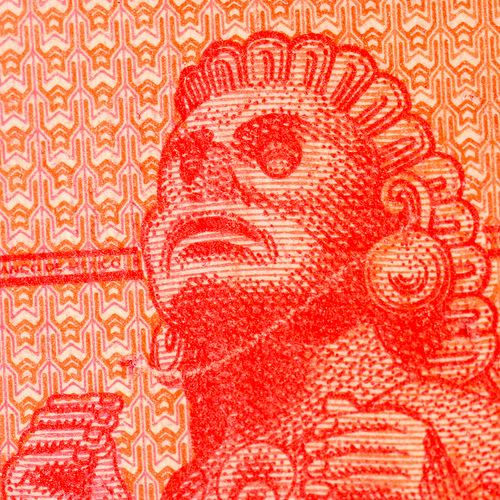
MEDIA ROOTS —With the reverberating excitement around the recent Italian Modern Monetary Theory Summit 2012, which is shattering
orthodox and right-wing economic
dogma in the Eurozone with common sense and offering the post-Shock Doctrine Occupy Movement intellectual tools to strengthen its activism, Media Roots takes a look at the work of one of the
grassroots Summit’s featured speakers, particularly for younger readers and others. This may be old news for some; yet, younger generations benefit when elders convey, celebrate, and affirm important works of radical thought in the public domain.
In 1972,
Dr. Michael Hudson published, what Terence McCarthy called, “The most important
work on imperialism since Lenin.” As
Bonnie Faulkner, host of Pacifica Radio’s Guns and Butter, indicates regularly
when she airs Dr. Hudson, “His
1972 book, Super
Imperialism: The Economic Strategy of American Empire is a critique of
how the United States exploited foreign economies through the IMF and World
Bank.”
Indeed; encapsulating the book’s analysis, the publisher writes:
“Never before has a bankrupt nation dared insist that its bankruptcy become
the foundation of world economic policy; that, because of its bankruptcy, all
the nations what their economies transferring its bankruptcy to themselves,
stultifying their industries, and paying tribute to the beggar.”
“Effectively speaking, the United States has compelled the older nations of
the West to pay for the overseas costs of the US war in Asia. Whatever they may
desire, the central banks of Europe had no choice but to continue to except the
paper dollar equivalents annually created as the domestic and overseas deficit
of the United States increase. Otherwise, the whole of shaky structure of the
world monetary system will collapse into rubble. America has succeeded in
forcing other nations to pay for its wars on a systematic basis, something
never before accomplished by any nation in history .”
Messina
***
MICHAEL
HUDSON — In 1949
the United States held three-Quarters of the world’s gold; by 1960 it had
become a debtor nation. And yet, the United States has built history’s most
powerful and affluent empire. Its techniques for world domination remained, at
first, the conventional devices of the economic superstate. In recent years,
however, the United States has sophisticated its strategy to the point here,
although fallen into serious debt, it has retained and even expanded its
dominance. The United States has pioneered a new form of imperialism in which
the assets of its competitors have been employed for American ends. The or now
calls the tune for the creditor.
Terence McCarthy, in his Introduction, calls Hudson’s analysis of the Debtor
superstate “one of the most important books of this century. It is the first
work to synthesize the new and different form which capitalist imperialism has
assumed since Lenin wrote.”
Michael Hudson teaches international and monetary economics at The New
School for Social Research, Graduate Faculty. He has published articles in
Ramparts, the Journal of International Affairs, Commonweal, Cross Currents and
the Review of Social Economy, in addition to specialized monographs on
balance-of-payments theory and accounting. He has worked as a
Balance-of-Payments analyst for the Chase Manhatten Bank and for the accounting
firm of Arthur Andersen, and as a senior economist for the Continental Oil Com.
In addition, he has lectured at the Institute for Policy Studies in
Washington, D.C, before the National Association of Business Economists in New
York, and elsewhere throughout the United States. He is currently writing a
history of international trade and investment theory, and a study of the
economic origins of the American Civil War.
GLOBAL RESEARCH — First
written in 1972, it was updated in a 2003 edition that’s every bit as relevant
now – thus this review focusing on Hudson’s new preface, introduction, and
detailed account of the book’s theme.
He revisited it in his 2008-09 Project Censored award- winning article
titled: “Economic Meltdown – The ‘Dollar Glut’ is What Finances America’s
Global Military Build-up” in which he explains the following – the
“inter-related dynamics” of:
— “surplus (US) dollars pouring into the rest of the world for yet further
financial speculation and corporate takeovers;”
— global central banks “recyl(ing) these dollar inflows (into) US
Treasury bonds to finance the federal US budget deficit; and most important
(but most suppressed in the US media),”
— “the military character of the US payments deficit and the domestic
federal budget deficit.”
In other words, the global “dollar glut” finances US corporate
takeovers, speculative excesses creating bubbles and global economic crises,
America’s reckless spending, foreign wars, hundreds of bases worldwide,
“military build-up,” and culture of militarism and belligerence
overall at the expense of democratic freedoms, beneficial social change, and
human and civil rights.
MEDIA ROOTS — “In this same
dream I had a girl waiting for me down the hall. I wanted to go out and see her
but the nurse wouldn’t let me so after trying to fight my way out and failing I
called the MP’s who promptly arrested them. After that I found out that they
were going to beat me up so I tried to make friends with the one who appeared
to be the leader. It must have worked because I don’t remember a beating.” —unknown male soldier volunteer at Edgewood
1963, dose: IM 7.0 ug/kg
When the movie Jacob’s Ladder came out in 1990, many people were probably
not aware that it was loosely based on 1968 military experiments conducted in
lab and field exercises at the Edgewood Arsenal proving ground in Maryland.
Even though Jacob’s Ladder ends with a brief description of
3-quinuclidinyl benzilate (BZ) and its effects, Adrian Lyne, the film’s director, has denied
the powerful and dangerous hallucinogenic compound was
ever used on human test subjects. However, there is evidence to
suggest otherwise. In a recent lawsuit
against the U.S. government, a
document showing BZ’s solubility in human blood has been uncovered.
A
lawsuit was filed last week by eight U.S. military veterans against, virtually,
every branch of the Defense Department, including Veterans Affairs and even Attorney
General Eric Holder. The veterans were
guinea pigs in a massive military-funded and controlled human drug experiment program,
which shows that, among other drugs like Mescaline, LSD, and amphetamines, they
also subjected people to a drug which lasts 80 hours and creates a fever-like
dream of reality, better described as a waking, walking nightmare called BZ.
At least one other account exists apart from the one excerpted above from an
unknown soldier at Edgewood Arsenal as well as another from a military scientist, Dr. James Moore, who was
accidentally exposed trying to synthesize the compound. In Dr. Moore’s
instance, he administered himself with acridine, as an antidote for BZ’s effects. In the unknown soldier’s case he had over three days of waking nightmares,
imagining fights with hospital staff and MPs, and having hour-long
imaginary conversations with an ex-girlfriend about her surprise pregnancy
announcement. Beyond this, Media Roots
has been unable to locate additional verified first-hand accounts.
BZ was modeled after atropine, an active chemical found in Datura. Indigenous North and South Americans have used Datura and other similar plants which contain atropine (e.g., Belladona, Brugmansia) in ancient spiritual rituals up until the present day. Besides psilocybin, and n,n-DMT, atropine-containing
medicinal plants are proliferated globally around the world’s ecosystem more
than any other hallucinogenic psychoactive drug. Unlike DMT and psilocybin, Datura never caught
on recreationally because of its dangerous and unpredictable nature. In the wild, Datura plants (or pretty much any
plant containing the active ingredient) contain huge differences in potency,
making it almost impossible to give someone an accurately measured or safe dose
of the plant extract. Even administering
a pure chemical ‘psychedelic’ dosage of atropine can lead to heart failure or
stroke.
This didn’t stop the US government during the height of its drug
experimentation days from trying to harness its power and re-tool the active
chemical in Datura into a powerful weaponized gas to be used on the U.S.
military battlefields.
It’s not hard to guess what the effects were like beyond the trip reports we
have based on its similarity to a Datura. On Erowid.org’s
Datura ‘effects’ section, they list delirium capable of bringing about
auditory, visual, and tactile hallucinations indistinguishable from reality. This waking dream-like state can lead to
unconscious violent behavior much like a drunken ‘black-out.’ It’s also reported
uncommonly large doses can cause hallucinations lasting for two to three days. This mirrors available data regarding the
duration of BZ’s effects.
If the U.S. government in 1968 was willing to go as far as attempt to
weaponize, which essentially means aerosolizing it or making it airborne, a
more concentrated form of the world’s most terrifying and unpleasant
hallucinogen, who can say whether or not they also toyed with doing the same to
another more recently discovered hallucinogen, Salvinorin A? The effects of
Salvinorin A are just as unpredictable as Datura but far shorter lasting. We know that in the late ‘90s the Russian
government attempted to use a gaseous form of Fentanyl, one of the most
powerful opiates—more powerful than oxycontin, heroin or morphine—to diffuse a
hostage crisis. The end result was the
tragic, accidental deaths of many of the hostages, by overdose.
The effects of what BZ would do to a group of armed soldiers would be
completely unpredictable and most likely dangerous—what’s depicted in the film Jacob’s
Ladder would be a worst-case scenario. No
one really knows the extent to which—or in what situations or environments—the U.S.
government actually tested hallucinogenic drugs on its soldiers, which is part of
the reason why similar lawsuits in the past have been dismissed. Only in the
last decade has the military declassified enough information that these Guinea
pig soldiers have been
allowed to tell their health-care providers what took place at Edgewood Arsenal.
It’s unfortunate that, since they volunteered, the U.S. government can pass
off responsibility. But these
experiments were done at a time when the general public had no idea what these
hallucinogens did, making informed consent unlikely.
Ethically, it would be hard to make the case that
these soldiers knew what the consequences would be to their physical and mental
healths.
Written by Robbie Martin, co-host of Media Roots Radio
***
UPDATED
NEWS — There were no warnings about side effects or potential long-term
health risks, according to Wray’s deposition. Although he wasn’t forced to take the drugs,
he was “given an option of not taking the test, but with innuendos — with the
option of bad punishment if we did not participate,” he says in the deposition
transcript…..Of all the events that took place during Wray’s time at Edgewood,
Kathryn says one disturbing memory he told her about that stuck with him for
more than three decades:
Wray and eight others were taken to a
clinic room and told to lie on cots, where they were hooked up to IVs and left
alone, Kathryn says. Within 5 minutes he was so high he could not find his
legs, he told her. “Then he said it felt like the bed was floating off of the
floor — and then the pain hit.” He described it as a “terrible, terrible headache,
so bad he could not open his eyes, so bad he was just screaming in pain,”
making him throw up several times. A man in a nearby bunk was “trying to claw
his own eyes out” — until Wray and another volunteer managed to get out of
their bunks, crawl over to the panicking man and stop him, he told her.
“And while all of this going on, there
was a nurse standing in the corner — she was taking notes. She made no attempt
to aid this gentleman,” says Kathryn. For days afterward, he was “completely
disoriented and terrified the pain would begin again,” Kathryn says.
MEDIA ROOTS —Dr. Michael Hudson calls it “a financial grab of infrastructure” by banking and financial elites; some call it the new world order; others use less provocative descriptors. This class warfare being waged by the world’s ruling-class against the U.S. working-class has been described as a “financial coup d’état” by Catherine Austin Fitts and others. But make no mistake; the ruling-class is stripping the world’s working-class of rights, livelihood, and dignity. And one of the centrally relevant concepts is Modern Monetary Theory (MMT).
In the most recent broadcast of Pacifica Radio’s Guns and Butter, entitled “There IS An Alternative To European Austerity: Modern Money Theory (MMT),” Dr. Michael Hudson and Dr. Stephanie Kelton are featured from their presentations at the first annual grassroots Italian MMT Summit, held from February 24-26, 2012 in Rimini, Italy. The event was organised by Italian investigative journalist Paolo Barnard.
Notable concepts discussed include: defining money and money creation, distinguishing between sovereign and non-sovereign money, fiat money, the euro, the difference between central banks and commercial banks, deflation and inflation, the dangers of the gold standard, and much more. Dr. Hudson scientifically discusses how the world’s ruling-class is destroying sovereign economies and subjugating their governments. Dr. Kelton bucks Euroamerican orthodox economic theory by proposing approaches to full employment and price stability, notions my economics professor refused to even consider. (When I pressed him on it, he said that’s when things get bloody.) Well, when might equals right, the world’s working-class must inform itself to counter ruling-class fallacies and their dire consequences for humanity. The shackles will begin to fall away once the people recall the consent of the governed, question the legitimacy of authority, and realise they can decide what is money, debt, and democracy.
Messina
***
GUNS AND BUTTER —“But if governments are not allowed to create their money, then all of the credit the economy needs is created by the commercial banks. And when the commercial bank credit creation leads to debt deflation and the government cannot finance the deficit to pay the interest then the commercial banks say: Alright, sell off and privatise your infrastructure. This is what we’re seeing in Greece today, in Ireland. You’ve seen it in Iceland. What you are seeing is a financial grab of infrastructure that is taking place by the ability of commercial bankers to prevent the central bank from creating credit.” —Dr. Michael Hudson
“I’m Bonnie Faulkner. Today on Guns and Butter: Stephanie Kelton and Michael Hudson from their introductory remarks at the first Italian grassroots economic summit on Modern Money Theory in Rimini, Italy, February 2012. Today’s show: There IS An Alternative To European Austerity: Modern Money Theory (MMT).
“Stephanie Kelton is an Associate Professor of Economics at the University of Missouri, Kansas City, Research Scholar at the Levy Economics Institute, and Director of Graduate Student Research at the Center for Full Employment and Price Stability. She is Creator and Editor of New Economic Perspectives. Her research expertise is in Federal Reserve operations, fiscal policy, social security, healthcare, international finance, and employment policy.”
Dr. Stephanie Kelton (c. 2:02): “Good evening. Buonasera. Good evening. [Applause] I am overwhelmed, [humbled,] and I am inspired. [Mariarca [Terracciano]’s story was so poignant. Like so many times in history, it takes a woman to stand up for what she believes in, to question what is wrong, and to try to affect change. In the United States, 150 years ago, like here today, we lived with an oppressive system. Ours was slavery, yours is the euro. In the United States, it was a woman named Rosa Parks, who stood up during the Civil Rights Movement when blacks were told they were not equal. They needed to dring from different water fountains and sit at the back of the bus and go to different schools. It was this woman who stood up and finally said no. And it sparked a revolution.] [Note: Supplemental text from video footage.]
“The system today isn’t working for you. And it isn’t really working for us in America. But the problems are different—and the same. And we want to talk with you for the next couple of days about the common problems that we all face and the unique challenges, that you face here in Italy and throughout the Eurozone. It is fantastic to see so many people willing to come out to listen to economics and political economy for two days. And we hope that at the end of the two days we can help you all understand that this is not your problem; this is not your fault; and there are solutions and there are ways out. There is an alternative to what you’re dealing with today. It’s not a hard alternative. But it’s going to be hard to convince others to make the changes that will lead to better lives, better possibilities for all of us in the future. Thank you so very much for spending time with us, and for reading what we do, and for taking the time. And thank you so much to Paolo Barnard for making all of this happen. We are so humbled by this turnout and by your interest in what we do. Thank you. [Applause]
Marshall Auerback: [During this actual panel session, Marshall Auerback follows Dr. Kelton’s introductory remarks, archived here (c. 25:00 into the video), although Mr. Auerback delivered his remarks in the Italian. This segment was edited out of the Guns and Butter broadcast.]
Dr. William K. Black: [During this actual panel session, Dr. William K. Black follows Mr. Marshall Auerback’s introductory remarks, archived here (c. 26:50 into the video). This segment was edited out of the Guns and Butter broadcast due to time constraints.] “Welcome. You are every banker in Europe’s worst fear. [Applause] Look around you. Take pictures. Send them to at least 20 people. Ask the media, ‘We’re here. Where are you?’ Everybody in this room knows the truth of an old proverb: It is better to live one day as a lion, than a lifetime as a pecora. Some of you may know that it was Signor Pecora, who you sent to America and helped us deal with our Great Depression. And Judge Pecora put the fear of god in all of the biggest bankers in America. And, now, the sons and daughters of Pecora, that are here in Italy, will do the same. We did not come from America or Canada or France because these countries know the answers. Most of our countries are in disaster, too. But this is because, in the case of America, we have forgotten what worked. And what worked, was again, all of you people who knew the lesson of another proverb: Steal a little, go to jail. Steal a lot, become Prime Minister [Applaus], or the head of the central bank, for all of Europe. So, we will talk over the next couple of days, not simply why we’re in this disaster, but how to fight like smart lions against the fraudulent bankers and their crony politicians, who caused this crisis and now want to destroy your sovereignty. God bless Italy.”
Dr. Alain Parquez: [During this actual panel session, Dr. Alain Parquez follows Dr. Black’s introductory remarks, archived here (c. 31:25 into the video). This segment was edited out of this Guns and Butter broadcast due to time constraints, but was included in a later broadcast.] “Yes, when I look at this audience, I am ashamed to be French because such an event would be impossible in my own country for two reasons. The government would have tried to forbid it. And the economy and society is in such a stateof total disaster that people, even young people, are completely despaired. So, again, Italians are the sole hope of Europe. [Applause] Contrary to what happens in France, you try to fight the total coup d’état which has been planned a very long time ago, and enshrined into the European monetary union. I shall try to explain that the so-called ‘sovereign crisis’ of sovereign debt is a lie. [Applause] But it has been carefully planned by those who build the European system. What they had in mind was the creation of a new totalitarian social order destroying democracy, all kind of social legislation. And now the new treaty imposed by our French president, who makes Berlusconi a saint, deprived the states of any kind of sovereignty, imposed permanent deflation. So, yes, my colleague was right. [Reaching over to UMKC Professor W.K. Black, seated to his left.] You are what the European ruling-class is afraid of—mobilisation of the people. They want to rule by fear and ignorance. And, at least, thanks to Paolo [Barnard] and thanks to you, there is hope that fear and ignorance will defeat what should be deemed techno-fascism, which is the existing tradition of the European monetary union. So, thank you and hail Italy. [Applause]”
Dr. Michael Hudson: [During this actual panel session, Dr. Michael Hudson follows Dr. Alain Parquez’s introductory remarks, archived here (c. 36:30 into the video). This segment was edited due to time constraints, but this segment is included later in this broadcast (see c. 19:10 to 23:03 of this radio broadcast).] “We are all overwhelmed to see how many people are here. [Applause] If I would’ve known there’d be more than 10 or 15 people, I would’ve worn a suit. Our message is very simple. And that is why it is threatening. From Margaret Thatcher to President Obama, you were told that there is no alternative. And we are here—and will spend the next two days—telling you that there is an alternative. And we will spell out what the alternative is.”
Paolo Barnard: [During this actual panel session, Italian journalist and producer of this event, Paolo Barnard’s remarks in the Italian, partially archived here (c. 42:00 into the video) follow Dr. Hudson’s introductory remarks.]
Dr. Stephanie Kelton (c. 4:05): “I’m gonna introduce you to the basics of Modern Monetary Theory in four parts. Modern Monetary Theory is a revolutionary way to think about the way a modern capitalist economy works. The first part of the talk this morning will focus on money. It’s an essential part of the argument. You have to understand the difference between what we’re going to call a sovereign money and a non-sovereign money. This afternoon we’ll focus on the function of finance, another essential part of Modern Monetary Theory. It is the key to understanding how a modern economy can achieve what has for so long been unthinkable: full employment for all people with stable prices. Tomorrow, we’ll talk about the international economy and the way that the domestic economy is related to what happens in the rest of the world. We’ll question the conventional thinking about deficits and debt. And we’ll focus specifically on the future of Italy.
(c. 5:22) “So, let’s begin with the first lesson. What is money? All money exists as an IOU. It’s a debt. When we say, ‘I owe you,’ we mean two people are involved in every monetary relationship. The ‘I’ is the debtor. The ‘U’ is the creditor. I Owe You. IOUs are recorded in what we call themoney of account. The money of account in Australia is the Australian dollar. The money of account in the U.S., the U.S. dollar. The money of account in Japan, the Japanese Yen. In Britain, the British pound. In Italy, the Euro. Do you see a difference? You will by the end of this talk.
(c. 6:21) “The money of account is something abstract, like a metre, a kilogram, a hectare. It’s not something you can touch or feel. It’s representational, something only a human could imagine. In any modern nation the money of account is chosen by the national government. MMT emphasises the state’s power over money. This is not something new. It dates back as far as Aristotle. You can find it in Adam Smith and in the work of John Maynard Keynes. I will read a brief quote from Keynes who said:
“‘The age of chartalist, or state money, was reached when the State claimed the right to declare what thing should answer as money of account. Today, all civilised money is, beyond the possibility of dispute, chartalist’—state money.
“A sovereign government defines the money of account. A sovereign government imposes taxes, fees, and other obligations to be paid to be paid to the state. A sovereign government decides what it will accept in payment to itself. And sovereign government chooses how it will make its own payments to others. Most governments in the world today choose their own unique money of account. And they issue their own unique currency. One nation, one money, is the rule in almost every corner of the world today. U.S. dollars, bills and coins. Mexican pesos, bills and coins. British pounds, notes and coins. Most governments also require that taxes be paid in a currency that the state has the exclusive power to issue. These currencies are sovereign money.
(c. 8:50) “As long as the state has the power to enforce its tax laws, the people will need the government’s money. The currency will have value. People will work to sell things—goods and services—to the government in order to get government money. Whatever the government accepts in payment to itself becomes the ultimate, ‘definitive,’ money in the economy. It is the only way to settle a debt. You must use government money. We can imagine in any economy a hierarchy of money. But not all money is created equal. The most acceptable money sits at the top of the pyramid. Those are the IOUs that everyone accepts and everyone must accept. Those are the IOUs that are ultimately needed to pay our debts. Those are the government’s IOUs. The rest of us can go in debt, issue IOUs, but our debt is not as good as government debt. It’s not as acceptable. It can’t be used to pay for things.
(c. 10:25) “In the U.S., the hierarchy looks like this: The government’s IOU—the United States dollar—sits at the top of the pyramid. It is a fiat currency. The United States government is the monopoly issuer of the U.S. dollar—the only entity on the planet that can legally create the currency. The U.S. government taxes in dollars. It spends in dollars. And it controls its own currency. Why is this important? What are the benefits of issuing your own currency? They are extraordinary.
(c. 11:19) “The government, when it issues its own currency, and goes into debt in that currency can always pay its debt, can never go broke, can never run out of money. It can afford anything that is for sale in that currency. It doesn’t need to borrow its own currency. And it can set its own interest rate. It does not have to pay what markets want. It does not become a victim to speculation, to bond vigilantes. It has additional policy space. It can do things for its economy and for its people that a government that does not have a sovereign currency cannot do.
(c. 12:18) “Think about what the hierarchy would look like under a gold standard. Many governments operated under gold or silver or both for some period of time in our world history. Under a gold standard, the government promises to convert its currency into gold. In that situation, what sits at the top of the pyramid is not the state’s currency, but the gold reserves. This means that the government must be careful about how much it spends. If it spends too much of its own currency, it can jeopardise the entire system because it may not be able to convert currency into gold as promised. You have to limit your spending and limit what you do with your policies. Governments operating under a gold standard do not have sovereign currency.
(c. 13:24) “In a similar way, a country that fixes its exchange rate to another country’s currency the way Argentina and Russia and others have done do not issue a sovereign currency. They must be careful about how much they spend. They must defend the reserves. If you promise to convert your currency into another country’s currency, you might go broke. You can run out. How do you get the other country’s currency? It requires trade surpluses to earn the other country’s currency. You become dependent on the rest of the world and their economic wellbeing to sustain your own wellbeing. The hierarchy in a country that operates fixed exchange rates places someone else’s currency at the top. You also lose control of your interest rate—something that’s crucial to retain control of—if a country is going to have a sustainable debt and full employment.”
(c. 14:49) “The euro is not a fixed exchange rate system, but it’s not a sovereign currency either. It’s an exceptional case, an unprecedented experiment where the currency is divorced from the individual nations themselves. The euro is effectively a foreign currency to you. All 17 governments that use the euro are not issuers of the currency, but usersof the currency. They lack the powers that a sovereign issuer has.Japan, the United States, the U.K., Canada, Australia, these are sovereign issuers. The euro is not a sovereign currency. Governments that adopted the euro must borrow the currency. They must pay whatever the bond markets require. They can run out of money. And they lack the policy space of a sovereign issuer.
(c. 16:09) “If you imagine the hierarchy for a member of the Eurozone, such as Italy, you see the relationship between the government and the currency is different. Italy does not issue the currency that it uses. It is an essential point—money matters. A sovereign government should be in control of the currency that sits at the top of its pyramid. If it gives up control of the sovereign currency, it also gives up the power to set reasonable policy in its own country. It hands over that power to the bond markets who, ultimately, decide how much can be spent—what can be done.
(c. 17:12) “Abba Lerner was an economist, a contemporary of John Maynard Keynes. He saw this very clearly. He said:
“‘By virtue of the power to create or destroy money by fiat and its power to take money away from people through taxation, [the State] is in a position to keep the rate of spending in the economy at the level required [for full employment].’
“The problem with the euro is that it cannot be created at will. The governments must go out and get euros from someone else. They’ve sacrificed their ability to conduct sensible economic policy in every nation […] and the effects are clearer now than ever. Thank you. [Applause]”
Bonnie Faulkner (c. 18:33): “You’ve been listening to professor and research scholar, Stephanie Kelton at the Summit on Modern Money Theory in Rimini, Italy.
“We next hear from financial economist and historian Michael Hudson. Michael Hudson is a Wall Street financial analyst and distinguished Research Professor of Economics at the University of Missouri, Kansas City. Today’s show: There IS An Alternative To European Austerity: Modern Money Theory (MMT). I’m Bonnie Faulkner. This is Guns and Butter.
Dr. Michael Hudson (c. 19:10): “We are all overwhelmed to see how many people are here. [Applause]
“Our message is very simple. And that is why it is threatening. From Margaret Thatcher to President Obama, you were told that there is no alternative. And we are here—and will spend the next two days—telling you that there is an alternative. And we will spell out what the alternative is.
“What we are seeing now is a fight for what is going to be the rest of the 21st century by creating a new kind of class, a new class much like the invasions of Europe a thousand years ago. A thousand years ago, invaders from the north and from Italy would grab land and grab public utilities by military means. But today—ever since the United States went off gold in 1971—aggressors can no longer afford military war. So, what you have today is a new kind of a war. It’s a financial war. You can get by privatisation and financialisation what armies used to get by force of arms. This is not the class war that people spoke of a hundred years ago. It is a financial war. And it is a war that classical economists warned against.
(c. 20:51) “300 years of classical political economy sought to get rid of landlords and bankers. A hundred years ago people spoke of technology. Nobody believed that the vested interests could fight back. But they did fight back in the way that parasites do in biological nature. I’ve read in the Italian newspapers—coming over on the airplane—that people talk about parasites. And people think about parasites, as taking the host’s energy and lifeblood. But, in biology, the smart parasites do something else: They take over the brain of the host. They make the brain think that the parasite is part of the body, to be protected.
(c. 21:53) “In America, President Obama and Treasury Secretary Timothy Geithner, say the economy cannot survive without bailing out the banks, without bailing out the debt, without making the gamblers and the cleptocrats whole on what they have taken. The production economy, the consumption economy, the real economy is being sacrificed to the financial sector. But matters don’t have to be this way. There is an alternative. And we will be spelling out the alternative in the next two days.
(c. 22:36) “We’re overwhelmed that so many of you are here. We’re excited. And we will do our best to explain to you that there are many alternatives. And then it will be your turn to carry the fight on. [Applause]
(c. 23:03) “I’m going to elaborate in a different direction from what Stephanie has said. I’m going to discuss the difference between central bank credit, or money, and commercial banks. Central banks create money, you can say. And commercial banks create credit. The last three years since September 2008 have seen the largest money creation and credit creation in history in the United States. And, yet, prices have not gone up at all. That is, consumer prices have not gone up since 1980. Wages in the United States have drifted downwards for 30 years. And consumer prices and commodity prices have been stable. But there has been an immense inflation; the largest bond market price increase in history has occurred, as interest rates have fallen from 20% to only one-quarter of 1% today. What has gone up is the price of real estate, the price of bonds, the price of stocks. So, the result is that the value of wealth—and most wealth is held by the wealthiest1% of the population—wealth has gone way up relative to wages. The result is a new kind of class war, as I said last night. It’s not the typical kind of class war between employers and employees. It’s a war of finance against the economy.
(c. 25:10) “Under industrial capitalism, the idea was that credit would be created productively to fund capital investment that would employ labour. That is not what is occurring today. When commercial banks create credit, it is create claims on wealth. It is create mortgage debt. It is create corporate debt. It is to create personal debt, and student loans, and credit card debt. This is what makes commercial bank credit creation different from the central banks’ creation of money.
(c. 26:00) “When central banks create money, they do so for a long-term public purpose. They fund government spending and capital investment and public infrastructure. In most countries in the world, public infrastructure, roads, communication systems, railroads, water and sewer systems have all taken a capital investment that is larger than all the manufacturing capital investment. In the United States, the value of New York’s real estate, alone, is larger than the value of all of the plant and equipment in the United States. The result is: The textbooks that are taught in the United States ignore this difference that we have been talking about. There is a formula, MV = PT. It means an increase in the money supply increases the price level. But the price level that the textbooks talk about are only consumer prices and commodity prices. Nowhere in the textbooks do you find a relation between the credit supply and asset prices, real estate, stocks and bonds. And, yet, 99% of the credit spent in the United States economy is spent on these financial claims. Every day an amount equal to the entire year’s gross national product passes through the New York monetary clearinghouse and the Chicago Mercantile Exchange. The vast amount of payments are within the financial sector. And, within the last ten years or so, all of the growth of bank lending is to other financial institutions.
(c. 28:17) “In the textbooks there are happy pictures about banks lending to industry to build machines and factories with a smokestack coming out and employing labour. But this is a fiction; this is not what occurs in practice. All of the increased capital investment in the United States economy comes from the retained earnings of corporations—not from banks. Banks do not lend to bring new capital investment into existence. They lend against mortgages, against capital in place, against real estate, against assets that already exist—not to create new assets.
(c. 29:14) “So, when we talk about government money. We talk about government spending that is, indeed, to spur the economy, to spur economic growth, to spur new investments. The function of government investment and government central bank money creation is very different from the private banks. The government money is, indeed, debt, the lira that you have in your pocket are debt. Paper currency is debt. But it’s debt that nobody ever intends to be repaid because, if government currency is debt, than to repay it would mean that you would not have any currency left in the pocket.
(c. 30:00) “The commercial debt is expected to be repaid; and it bears interest. And, as this commercial debt has grown—the mortgages, the bank loans to companies, the corporate raiding debt—this has loaded down the economy with an enormous debt overhead. The more money commercial banks lend, the more interest has to be paid to carry this debt overhead. And the problem is that money that is spent on paying banks debt cannot be spent on goods and services. So, the result is that when commercial banks create debt, you have a diversion of income away from spending on goods and services—to pay debt service—and that is known as debt deflation. And when debt deflation proceeds as long as it has today, we move into a late stage of finance capitalism, which is the debt deflation stage—the austerity stage. And that’s the stage that Europe finds itself in today.
Bonnie Faulkner(c. 31:21): “You are listening to financial economist and historian Michael Hudson at the Summit on Modern Money Theory in Rimini, Italy. Today’s show: There IS An Alternative To European Austerity: Modern Money Theory (MMT). I’m Bonnie Faulkner. This is Guns and Butter.”
Dr. Michael Hudson (c. 31:38): “There is a political aspect to all of this technical discussion of money. The political aspect is if governments create money, then they’re creating a mixed economy—a mixed economy of private and public capital investment. This is what made all of the countries of Europe and the United States rich. The government investment in the public infrastructure that has been able to be supplied to the economy at cost; so, you get to drive on most roads for free; you get to use this huge capital investment in infrastructure for free. But if governments are not allowed to create their money, then all of the credit the economy needs is created by the commercial banks. And when the commercial bank credit creation leads to debt deflation and the government cannot finance the deficit to pay the interest, then the commercial banks say: Alright, sell off and privatise your infrastructure. This is what we’re seeing in Greece today, in Ireland. You’ve seen it in Iceland. What you are seeing is a financial grab of infrastructure that is taking place by the ability of commercial bankers to prevent the central bank from creating credit.
“And this is a vast new bank loans. Most of the infrastructure that is being purchased—the water and sewer systems, real estate—is all being bought with borrowed money from the banks. So, that, first of all, the commercial bank political strategy is to block the central bank from creating money. And then saying the governments need to borrow from the commercial banks and need to pay interest to the commercial banks, instead of issuing interest-free debt. And then, to pay the commercial interest, they have to sell off the infrastructure. And the result is that bankers today are able to seize the property that in the past it took a military invasion to seize.
“So, what you are seeing today is a new kind of warfare. It is a financial warfare against the entire society, not only against labour, but against industry and, most of all, against government. And a tool in this warfare is to convince people that government money creation is going to be inflationary. You have all seen in the last 30 years here in Italy that your prices have not gone up much; your wages have not gone up much. And what has gone up is the price of your houses, the price it takes to buy a house—that you have to take on a lifetime of debt in order to get a place to live. In America, students have to take a decade of debt to get an education, in order to get a job, instead of the government financing education freely, as was the ideal a hundred years ago.
(c. 35:14): “In the textbooks, it is as if the economy operates without debt and on a barter basis. The reason they don’t discuss what we are discussing here today is that they don’t want you to realise that there is an alternative to commercial bank credit creation and a power grab. The Belgian poet, Baudelaire, said that the devil wins at the point where society believes that he doesn’t exist. The financial sector wins at the point where you don’t see that the prices that the banks are inflating are asset prices—real estate prices, bond and stock prices—and that the role of commercial banks is to increase the power of wealth over the rest of society, over labour, over industry, to create a new ruling-class of bankers that are even more heavy than the landlords that were criticised in the last part of the 19th century.
(c. 36:29): “For 200 years, classical economics sought to purify industrial capitalism from the carryover of feudalism. And these carryovers were the private land ownership of a hereditary aristocracy and commercial banks that had held governments in debt and then foreclosed and exchanged their debts for monopolies. In Britain, this is how the trading companies were formed, the East India Company and the Bank of England with its monopoly, and in the United States you had similar creations of monopolies through the railroads that became the largest landowners through land grant. What Balzac wrote in one of his novels was that behind every family fortune was a great theft, often an undiscovered one. And, yet, modern economics treats all of the theft, the capital transfer, the transfer payments that are occurring today, as if it were all productive, as if all income is earned. Every government in the world now prints National Income and Product Accounts that say that rent is earnings of landlords and interest is the earnings of bankers. In the United States, the financial sector has 40% of all reported corporate earnings. So, you have this shift of the economic surplus shifting away from industrial capital that’s invested in new plant and equipment—to hire labour—to finance capital that is lent out. And the interest earned by the banks is lent out again. And the result is an exponential growth, which Americans called the magic of compound interest. The growth of compound interest is so large that it is much larger than any government’s ability to pay. And, so, the result has to be default. And the default position that Europe and America finds itself today is the point at which the financial sector makes its grab for assets and takes for itself the public domain, the public enterprises, the roads, the broadcasting systems, the ports and the harbours. And that is what is happening today. And the difference in privatising these assets is that when you privatise the roads and the infrastructure, the ‘buyers’ have to pay interest; they pay dividends; they pay exorbitant executive salaries; they pay financial fees to the underwriters; they offer stock-options to the management. And then they raise the price of these public services to the highest rent extraction that they can charge. The economy is turned into a toll booth opportunity. Toll booths are placed on the access to housing, the access to roads, the access to telephone systems, the access to credit for the money that you use by credit cards in payments. And, all of a sudden, instead of paying for the cost of operating an economy, you’re paying for the privileges of people—the financial sector and what used to be called rentiers—that are simply charging whatever they can get and siphoning off the wealth into their own hands.
(c. 40:54): “So, in the United States, the real economy of production and consumption has actually declined over the last 30 years. All of the growth in the economy is overhead to the rentier sector—to what we call the FIRE sector: Finance, Insurance, and Real Estate, which now should include the legal system and the monopoly system. So, almost without the textbooks or anyone noticing, what used to be analysed as industrial capitalism has turned into finance capitalism. And this finance capitalism has not been the kind of finance that was imagined a hundred years ago. It is not financing of industry. It’s financing of economic parasitism and overhead. And all of this is presented as if the way to get rich is to go into debt—to borrow—to buy assets that are being inflated in price. When your real estate and your public enterprises have risen in price, this is not because they’ve actually grown. It is because a house and a property is worth whatever a bank will lend. And as the lending terms have been loosened, you’ve had this huge inflation in asset prices that is way beyond the ability of the economy to pay. Foreclosure time arrives and, so, financial capitalism turns into a bubble economy because the only way that banks can avoid default and a break in the chain of payments is to lend more money.”
Bonnie Faulkner(c. 42:52): “You’re listening to financial economist and historian Michael Hudson at the Summit on Modern Money Theory in Rimini, Italy. Today’s show: There IS An Alternative To European Austerity: Modern Money Theory (MMT). I’m Bonnie Faulkner. This is Guns and Butter.”
Dr. Michael Hudson (c. 43:13): “In America, the Obama Administration’s policy has been described as having to borrow your way out of debt. If people can’t pay, the idea is to continue to borrow the money from the banks; and you simply add the interest onto the debt. This is how Latin America financed itself during the 1970s until, finally, it couldn’t pay; the debts had to be written down.
“Now, the end of this shift away from government central bank money creation to commercial bank credit creation is that there has to be a bankruptcy—a debt write down. The basic premise underlying my analysis is that a debt that can’t be paid won’t be. All of the Wall Street analysts I know realise the debts can’t be paid. The political question is how won’t they be paid. Will they not be paid by letting the banks foreclose? One quarter of all American real estate today owes more money on the mortgage than it actually is worth. That means one quarter of homeowners—almost ten million people—could walk away from their property and come out ahead on their balance sheet. Donald Trump would walk away. Certainly, Goldman Sachs walks away from bad investments. But individuals are told that their debt should be paid, that only the debts of the rich don’t have to be paid. Only the debts of the 99% to the rich have to be paid. And there’s a shift in the understanding of how the economy works.
“So, the way to get rich today isn’t really to borrow money and buy a property that you hope will rise in price because when the price collapses—as they have today in America, Spain, Ireland, England—when the price crashes, the debts remain in place. And there’s the negative equity that occurs. This is the point at which property is transferred from debtors to creditors. So, that the way to make money today is to get the 99% of the population into debt to the 1% of the population. It’s not really to borrow. Never in history before was there any temporary period where people thought that the way to get rich was to go into debt. They were tricked into that by junk economics when Alan Greenspan told American homeowners: Borrow against the value of your house; treat your house like a piggy bank; and sustain your living standards that your wages are no longer paying for.
(c. 46:25) “So, while the American workers have to pay to send their children to school and to get an education to pay for what used to be publicly supported, you’ve had the banks, all of a sudden, financialise education, financialise the public sector, and even financialise the public sector and the corporate sector. The stock market in the textbooks is presented as a means of financing industry and providing equity capital—that’s not debt—that is a means for industry to make investment and hire labour. But that’s not what has occurred for the last 30 years. The stock market has become a vehicle for corporate raiders and management buyouts to borrow money to buy a company to calculate how much a company makes to pay the profit to the bankers and to be able to buy a company just like a real estate investor would buy a building.
(c. 47:45) “When a real estate investor, whether it’s Donald Trump in America or Italian and European investors, want to buy a commercial property; they calculate how much rent it will yield; they bid against each other. And the winning bidder is whoever is willing to pay the most rent to the banks to get the mortgage to buy the property. That’s what’s called using other’s people’s money. But it really isn’t other people’s savings. It’s freshly created money the banks create on their own computer keyboards. And they can create this freely by writing a bank account for the borrower; and the borrower signs an IOU, whether it’s a mortgage debt or a personal debt to pay off at interest. Now, the banks say that this is not inflationary; only government money creation is inflationary. And, yet, there’s no reason why the government can’t go to its own computers in exactly the same way that commercial banks create credit. The question is: Why should the government be called inflationary by creating money and commercial banks not be called inflationary when they create credit when you’ve seen that the banks are inflationary? They make their money by getting people to pay all of the rent or all of the corporate profits hoping to come out with a capital gain.
“And in the United States the corporate raiders and the leveraged buyout companies make a capital gain by cutting wages, by downsizing the labour force, by outsourcing it to other countries, and, especially, by seizing the pension funds and using the pension funds to pay off the bankers and write down the debt, so they have more equity.
“A few years ago in Chicago, where I grew up, Sam Zell, a real estate operator, borrowed the money to buy the Chicago Tribune. He looted the employee stock ownership plan. He used the money to pay the creditors that leant him the money to buy the Chicago Tribune. He began to fire the staff. He sold off Chicago Cubs, the baseball team that the Chicago Tribune owned. And then, even so, he mismanaged the company so badly that the company went bankrupt, wiping out the employee stock holders. They have brought a case of fraud against him claiming that they have had their money stolen. President Obama recently gave a speech saying there is no fraud; it’s all legal; that’s the ‘free market.’ The free market has been redefined to be free for the financial sector to grab, to misrepresent, and to do the things that Mr. Bill Black is going to be talking about in his talk.
(c. 51:29) “So, when you talk about the fraud that has, essentially, become the basis for making financial money, you have that as the new economy without anybody saying it. I don’t know any textbook that talks about how the way to get rich is to steal money. The way to get rich is to borrow money to buy a property that’s going up in value and make the economy shrink and grab property from the public domain. Why is it that French novelists like Balzac and poets like Baudelaire understand the economy better than what Nobel prizes are given in the textbooks that are written today? Why would one go to movies and drama, rather than a textbook? [Applause]
(c. 52:27) “What we are trying to do in this meeting today is to give you a new view of how the real economy works today and teach reality economics, instead of the parallel universe that you have in economic textbooks. At the beginning of Paul Samuelson’s textbook—which is used to indoctrinate students in the United States—he says that the criterion of economic theory is whether its axioms are consistent. This is what I was told when I studied literature in college. If you’re reading a novel, you have to suspend disbelief. You have to believe in the science-fiction or the characters that the author writes and imagine that it’s all consistent. You know when you go to a movie and after you come out of a thriller, or a mystery movie, you think, ‘Wait, a minute. There’s something wrong with that picture. They forgot how it happened.‘ What Mr. Samuelson did not say was that these assumptions have to be realistic. So, instead of learning how the economy operates, students are told how a parallel universe might operate on a different planet, if there were no government, if there were no fraud, if the entire economy operated on barter, if there was no debt, and that everybody wanted to help everybody else, that nobody inherited money, that everybody earned all of the income and wealth that they have. The reality is the opposite, but it seems to be talked about only in novels these days.
(c. 54:27) “Whenever you have a misunderstanding of reality year after year, decade after decade, and now for a century, when a false picture of the economy is painted you can be sure that there is a special interest benefiting. A false picture of reality does not happen by nature; it is subsidised. And the banking sector has subsidised ajunk economics that is taught in the universities, broadcast from your newspapers, mouthed by the politicians, whose election they sponsor, to try to make you believe, that you’re living on Mars in a different kind of a world—instead of the actual country that you’re living in—and to pretend that there is no financial class that is trying to grab what belongs to the public at large. This is what ends up with a difference between central bank creation by the government with the government aims of economic growth and full employment, as compared with commercial bank credit that aims at economic shrinkage, at austerity, at lower wages, at lower output, so that it can do to you what the commercial banks are doing to Greece, to say give us your ports and your land and your tourist areas and your water and sewer systems, so we can charge you for water and sewer. And we can take the money that you had expected to get in pensions and we can scale it down, so that we can pay ourselves.
(c. 56:10) “This is what it took an army in times past. And today it’s done without an army, as long as you will be passive and believe the science-fiction of the world that banks are painting. Thank you. [Applause]”
Bonnie Faulkner (c. 56:38): “You’ve been listening to financial economist and historian Michael Hudson. Today’s show has been: There IS An Alternative To European Austerity: Modern Money Theory (MMT). Dr. Hudson is President of The Institute for the Study of Long Term Economic Trend, a Wall Street financial analyst, and distinguished Research Professor of Economics at the University of Missouri, Kansas City. His 1972 book, Super Imperialism: The Economic Strategy of American Empire is a critique of how the United States exploited foreign economies through the IMF and World Bank. Please visit the University of Missouri, Kansas City New Economic Perspectives blog at www.NewEconomicPerspectives.org. Visit the website for the first Italian Summit on Modern Money Theory at www.DemocraziaMMT.info.”
Transcript by Felipe Messina for Media Roots and Guns and Butter
“‘Debt Deflation in Europe and America with Dr. Michael Hudson. European banking crisis causing a constitutional crisis of the European Central Bank; Germany; the myth of Social Security in the US.; bank balance sheet recession; food, fuel and climate crisis; the super congress; debt deflation; FHA lawsuit against the banks; criminalization of the financial sector; Modern Monetary Theory; the coming lost decade; debt cancellation.”
*
Also consider the Guns and Butter broadcast from June 22, 2011, entitled “Global Insurrection Against Banker Occupation.” This is the KPFA broadcast summary:
“‘Global Insurrection Against Banker Occupation’ with Max Keiser. Financial occupation of Greece; IMF Greek Memorandum; financial terrorism; controlled demolition of European economies; asset grab; lawsuits against bankers and government; Pirate My Film, including crowd funding and copyright free media; new European funding facility in the planning stage; global bank; coming housing collapse and banking disaster; devaluation of the dollar; the wild card.”
*
Also consider the Guns and Butter broadcast from June 16, 2010, entitled “Europe’s Financial Class War Against Labor, Industry and Government.” This is the KPFA broadcast summary:
“‘Europe’s Financial Class War Against Labor, Industry and Government’ with Dr. Michael Hudson. Economic crisis in Europe created by predatory lending; European Central Bank stranglehold on the Eurozone; the Euro; foreign banks decimate Greece’s social structure; Marx’s industrial capital versus fictitious capital; Latvia as a model for the rest of Europe; Hudson’s financial and fiscal plan for Latvia; the Cold War and its ruinous effect on progressive economic thought.”
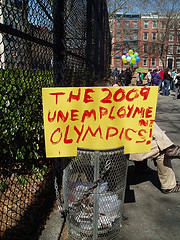
MEDIA ROOTS —Although the corporate media touts an improving economy, U.S. citizens continue to suffer cruel economic punishment and austerity. Millions of citizens still search for employment, and the typical income of a U.S. household is less now than it was in 1997. Why is the economy not improving? Wall Street makes an easy target for the ire of struggling workers, but is there a deeper, more complex reason why the economy creaks, tumbles and rolls like an outdated galleon laboring in rough seas?
Economist Joseph Stiglitz offers in-depth analysis of the weakening foundation of the U.S. economy. In the years leading up to 2008, U.S.A. lived in an easy-credit, fast-money mania, fueled by wildly inflated home values, corrupt appraisers, and financial gimmicks. However, the integrity of the economy was compromised even before the meltdown, explains Stiglitz. Our collective economic livelihood had been dealt a slow acting, poisonous blow long ago, as other observers such as Catherine Austin Fitts and Dr. Michael Hudson have described.
Stiglitz draws insight comparing today with the tumultuous Great Depression, which had been well underway for years before the banking sector crashed. What brought about the economic paralysis? The primary cause was a quiet, but massive, transition away from an agriculture-based economy. As food production modernized and became more efficient, less farmers were required to grow the food necessary to feed the U.S. Suddenly, a vast portion of the U.S. workforce became obsolete through automation.
Stiglitz argues broad changes must be made in tandem with large, concentrated investment. As once industrious manufacturing regions of U.S.A. wither and rust, elected officials neglect investment in education, research, and infrastructure, favoring austerity cuts. Yet, these three areas provide opportunities for healthy economic growth and future employment, as the nation struggles to adapt to the 21st century. Addressing these needs, perhaps, U.S.A. can fulfill its promise of greatness and prosperity.
MR
***
VANITY FAIR —Even when we fully repair the banking system, we’ll still be in deep
trouble—because we were already in deep trouble. That seeming golden age
of 2007 was far from a paradise. Yes, America had many things about
which it could be proud. Companies in the information-technology field
were at the leading edge of a revolution. But incomes for most working
Americans still hadn’t returned to their levels prior to the previous
recession. The American standard of living was sustained only by rising
debt—debt so large that the U.S. savings rate had dropped to near zero.
And “zero” doesn’t really tell the story. Because the rich have always
been able to save a significant percentage of their income, putting them
in the positive column, an average rate of close to zero means that
everyone else must be in negative numbers. (Here’s the reality: in the
years leading up to the recession, according to research done by my
Columbia University colleague Bruce Greenwald, the bottom 80 percent of
the American population had been spending around 110 percent of its
income.) What made this level of indebtedness possible was the housing
bubble, which Alan Greenspan and then Ben Bernanke, chairmen of the
Federal Reserve Board, helped to engineer through low interest rates and
nonregulation—not even using the regulatory tools they had. As we now
know, this enabled banks to lend and households to borrow on the basis
of assets whose value was determined in part by mass delusion.
The
fact is the economy in the years before the current crisis was
fundamentally weak, with the bubble, and the unsustainable consumption
to which it gave rise, acting as life support. Without these,
unemployment would have been high. It was absurd to think that fixing
the banking system could by itself restore the economy to health.
Bringing the economy back to “where it was” does nothing to address the
underlying problems.
The trauma we’re experiencing right now
resembles the trauma we experienced 80 years ago, during the Great
Depression, and it has been brought on by an analogous set of
circumstances. Then, as now, we faced a breakdown of the banking system.
But then, as now, the breakdown of the banking system was in part a
consequence of deeper problems. Even if we correctly respond to the
trauma—the failures of the financial sector—it will take a decade or
more to achieve full recovery. Under the best of conditions, we will
endure a Long Slump. If we respond incorrectly, as we have been, the
Long Slump will last even longer, and the parallel with the Depression
will take on a tragic new dimension.
Until now, the Depression
was the last time in American history that unemployment exceeded 8
percent four years after the onset of recession. And never in the last
60 years has economic output been barely greater, four years after a
recession, than it was before the recession started. The percentage of
the civilian population at work has fallen by twice as much as in any
post-World War II downturn. Not surprisingly, economists have begun to
reflect on the similarities and differences between our Long Slump and
the Great Depression. Extracting the right lessons is not easy.
MEDIA ROOTS— A cabal of banksters, traitorous shysters, thieving technocrats and debt hustlers, continue plying America with more financial soma: more credit cards, more debt, more loans, and more deficits. The snake oil salesmen of our era engineer the financial impotence of everyone not included in their exclusive, nano clique of psychopathic predators. They plunder U.S. wealth, like a con man scams a stumbling drunk into a game of three card monte. To complete the nightmare, the “drunk” American is arrested for gambling, as the fearless con man walks free, having paid to rig the scales of justice long ago.
The U.S. healthcare system is more accurately called “sickcare” and has more in common with a lucrative racket, than with an altruistic sense of universal compassion. Charlatans try to reanimate the housing market, only to see it fail, while playing off the cadaveric spasm as success. Meanwhile, the mass media’s black magic practitioners continue to indoctrinate the masses with soft fascism, paving the road to tyranny with dog and pony shows for elections.
The U.S. pulse of hope still gently pumps. Young people’s passion and enthusiasm for Republican Ron Paul shows a renewed vigor for democratic ideals. The emphatic rejection of SOPA and PIPA clearly told the status quo not to infringe upon the only remaining, reliable source of news and information. Americans sense that our leaders have broken the pact, and threaten them with “or else” as reflected by increased gun sales over recent years. America has badly veered off course. Do we have what it takes to avoid running aground?
Jim Quinn of The Burning Platform provides sound insight regarding the socioeconomic ailments of today’s America.
MR
***
The Burning Platform — It is mind boggling the degree to which central planners like Bernanke,
Geithner, Obama and Congress will inflict their vision of how the
economy and world in general should operate upon the trusting masses.
The American people want to believe their leaders are doing what is best
for them. They like dwelling in a land of delusion, security and
luxury, where government guarantees to protect them from: terrorists;
Iranian invasion; saving for retirement; looking out for their own
health; educating themselves; and accepting the consequences of living
above their means. Their ability to distinguish between truth and
propaganda has been thoroughly degraded by years of government
proscribed education. We have chosen to become a knowingly ignorant
nation of true believers. There is no time for critical thinking while
we anticipate our next tweet about the death of drug addicted pop
singer. We have been taught to love our servitude.
The fallacy of government protecting you, taking care of you and
providing you “free” benefits is so ingrained in the American psyche
that it is virtually impossible to voluntarily reverse the trend. The
truth that Americans refuse to acknowledge is that nothing is free in
this life. We are not entitled to own a home, a free education, free
healthcare, or a comfy privileged existence. Everything government
provides is taken by force from someone else. Everything government does
has a cost. Americans have traded freedom and liberty for the
appearance of safety and security.The cost is constant war, getting
groped by TSA perverts, surveillance by government agencies, threat of
imprisonment without charges and a $1 trillion price tag per year. The
cost of “free” healthcare is mind numbingly ludicrous rules and
regulations for doctors and patients, massive fraud, outrageously
expensive procedures and medications, and a $100 trillion unfunded
liability left for future generations. The ultimate cost of an
overbearing, all controlling government will be economic collapse and
revolution.
The concluding act during this bad week for freedom occurred on Saturday
in the great state of Maine. When it became clear that Ron Paul was
going to win the Maine caucuses, the GOP establishment, that has already
anointed Mitt Romney the Republican nominee, decided the people of
Maine would be told who won. Using the excuse of an impending snowstorm
(less than 1 inch), the powers that be cancelled the caucuses in
Washington County where a large contingent of youthful Ron Paul
supporters dominated. The Girl Scouts didn’t cancel their event in the
same county that day. The men who cancelled the caucus are strong Romney
supporters. This was a blatant Stalinist act of voter
disenfranchisement. The GOP leaders declared those votes would not count
in the totals. Despite this despicable act of rigging an election, Ron
Paul doubled his vote percentage from 2008. His message of freedom,
liberty, non-interventionism, sound money and self-reliance is
reverberating across the land among young people who have not been
programmed by the governing elite and the corporate mass media. The
establishment will do everything in their power, including vote fraud,
to prevent Ron Paul’s anti-establishment message from being heard.



 MEDIA ROOTS — With the reverberating excitement around the recent Italian Modern Monetary Theory Summit 2012, which is shattering
orthodox and right-wing economic
dogma in the Eurozone with common sense and offering the post-Shock Doctrine Occupy Movement intellectual tools to strengthen its activism, Media Roots takes a look at the work of one of the
grassroots Summit’s featured speakers, particularly for younger readers and others. This may be old news for some; yet, younger generations benefit when elders convey, celebrate, and affirm important works of radical thought in the public domain.
MEDIA ROOTS — With the reverberating excitement around the recent Italian Modern Monetary Theory Summit 2012, which is shattering
orthodox and right-wing economic
dogma in the Eurozone with common sense and offering the post-Shock Doctrine Occupy Movement intellectual tools to strengthen its activism, Media Roots takes a look at the work of one of the
grassroots Summit’s featured speakers, particularly for younger readers and others. This may be old news for some; yet, younger generations benefit when elders convey, celebrate, and affirm important works of radical thought in the public domain.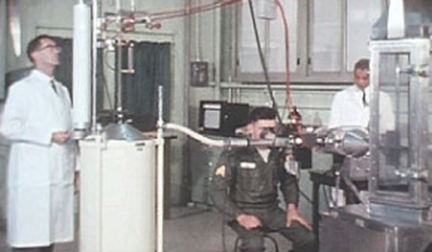 MEDIA ROOTS — “In this same
dream I had a girl waiting for me down the hall. I wanted to go out and see her
but the nurse wouldn’t let me so after trying to fight my way out and failing I
called the MP’s who promptly arrested them. After that I found out that they
were going to beat me up so I tried to make friends with the one who appeared
to be the leader. It must have worked because I don’t remember a beating.” —unknown male soldier volunteer at Edgewood
1963, dose: IM 7.0 ug/kg
MEDIA ROOTS — “In this same
dream I had a girl waiting for me down the hall. I wanted to go out and see her
but the nurse wouldn’t let me so after trying to fight my way out and failing I
called the MP’s who promptly arrested them. After that I found out that they
were going to beat me up so I tried to make friends with the one who appeared
to be the leader. It must have worked because I don’t remember a beating.” —unknown male soldier volunteer at Edgewood
1963, dose: IM 7.0 ug/kg 
 MEDIA ROOTS — Although the corporate media touts an improving economy, U.S. citizens continue to suffer cruel economic punishment and austerity. Millions of citizens still search for employment, and the typical income of a U.S. household is less now than it was in 1997. Why is the economy not improving? Wall Street makes an easy target for the ire of struggling workers, but is there a deeper, more complex reason why the economy creaks, tumbles and rolls like an outdated galleon laboring in rough seas?
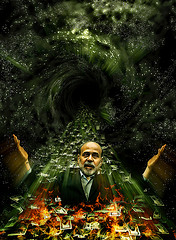 MEDIA ROOTS — A cabal of banksters, traitorous shysters, thieving technocrats and debt hustlers, continue plying America with more financial soma: more credit cards, more debt, more loans, and more deficits. The snake oil salesmen of our era engineer the financial impotence of everyone not included in their exclusive, nano clique of psychopathic predators. They plunder U.S. wealth, like a con man scams a stumbling drunk into a game of three card monte. To complete the nightmare, the “drunk” American is arrested for gambling, as the fearless con man walks free, having paid to rig the scales of justice long ago.