“I don’t ‘support Obama.’” Ellsberg clarified in an opinion article last Thursday. “I oppose the current Republican Party.” Echoing the recent words of Professor Noam Chomsky, he adds, “if I were a person in a swing state, I’d vote against Romney/Ryan, which means voting for Obama because there’s no other choice.” While this may have been sound advice of yesteryear, today this is simply forfeiture to the modern political duopoly funded by nearly identical corporate entities.
Ellsberg then continues to preach that “the only way for progressives and Democrats to block Romney from office, at this date, is to persuade enough people in swing states to vote for Obama.” While also ironic, this statement is alienating to all progressives who do not consider themselves Democrat. For instance, the majority of those whom continue to support Dr. Ron Paul would likely consider themselves progressives for the congressman’s continued stance against undeclared wars and the unconstitutional Federal Reserve Bank. And as President Obama continues to escalate Bush-era policy, it is puzzling to understand how his administration could be considered progressive in the first place.
To further discourage third-party voters, Ellsberg specifically calls out those in swing states that might be considering a vote for anyone but Obama or Romney. He considers it absurd for anyone residing in these states to think that there’s no difference between the two primary candidates and that this line of thinking is “crazily divorced from present reality.” A third-party vote in a swing state, he contends, is “complicit in facilitating the election of Romney and Ryan.” Ellsberg neglects to recognize that third-party votes in these very battleground states would actually underscore America’s current appetite for new political leadership in this country.
Sometimes things must get worse before they can get better.
The Ellsberg article closes with a reference to one of America’s greatest resisters, Henry David Thoreau. While voting is itself an action, engagement in the electoral process – from private discussion to public outreach – is ultimately of more influence. So when Mr. Ellsberg could have used his influence to publicly support the third-party candidate that he’s voting for, he instead published an item that merely continues to feed into the establishment’s two-party system for continued war, continued unlawful detentions, and continued criminal conduct.
If Governor Romney does end up switching titles, perhaps then America will witness the antiwar movement awaken from its current slumber or, at least, an Occupy Wall Street renaissance. Possibly then those whom already see through the two-party charade could start to make an impression on yesterday’s thinkers while inspiring tomorrow’s leaders. But what is certain is that only when the two-party paradigm is shattered will America witness the dawn of a new political landscape.
MEDIA ROOTS – Greenpeace specializes in environmental advocacy, striving daily to convince humanity to care for its planet. Recognizing Earth’s fragile state, the organization provides tangible solutions and affects positive change. Their tactics include lobbying, grassroots campaigns, and bold non-violent direct action. Greenpeace confronts multiple, interwoven environmental concerns, including climate change, deforestation, ocean degradation, toxic pollution, and nuclear weapons.
Recently, Greenpeace has focused on lobbying Brazilian politicians to accept responsibility for rampant deforestation and environmental injustice. After significant pressure from the organization, the public prosecutor of the Brazilian state of Para levied strict fines on abattoirs and retailers, which were linked to illicit ranches operating within his jurisdiction. These farms were functioning on illegally deforested land, selling cow meat and hide to international corporations like Wal-Mart, Nike, and Toyota. Facing fines totaling over $1 billion, the associated abattoirs and international retailers pledged to conduct future business with only registered, legal ranching establishments.
Sometimes Greenpeace must resort to innovative tactics in order to induce environmentally responsible behavior. Recently, they targeted Nestle’s KitKat bar, which contained palm oil derived from unsustainable sources, through a creatively morose internet campaign. As a result, Greenpeace goaded Nestle into halting purchases from their questionable Indonesian supplier. After pressuring corporate heavyweights like Nike, Wal-Mart, and Kraft, Greenpeace received judicious cooperation against illegal deforestation. Any respite from the pressure on all parties will lead to a resumption of illicit activities, inherent to the exploitative measures of international capitalism.
Despite its encouraging track record, there are plenty of reasons why Greenpeace must continue its lobbying efforts, grassroots tactics, and international campaigns. Primarily, corporate behemoths have only responded to Greenpeace’s requests because they’ve received substantial pressure from some socially-responsible consumers who demand strict environmental standards to be adopted along the corporate supply chain. Unfortunately, the average shopper has no desire to pay the increased prices resulting from expensive environmental standards. In response to the conflict between customer responsibility and consumer frugality, corporations continue to cut corners in favor of profit, potentially resorting to illegal strategies to achieve a more profitable bottom line.
Even if all necessary environmental standards are adhered to, corporations don’t consider the deleterious effect, which their mere presence has on local environments. For example, timber corporations build roads into isolated habitats in order to extract timber. Yet these roads remain long after the logging companies depart. By connecting cities to forests in this manner, loggers contribute to an expedited drain of other natural resources, leading to the collapse of many fragile ecosystems. With scant concern for sustainable extraction techniques, irresponsible corporate clientele will continue to degrade our global habitat beyond repair, regardless of any demand for environmental justice.
One cannot help but sympathize with Greenpeace and admire their efforts of using creativity and audacity as weapons against our collective disregard of the environment. Al Jazeera Worldlooks at Greenpeace’s humble beginnings and the courage it takes to stand up to those who deliberately ruin our one and only planet.
Christian Sorensen for Media Roots
***
Al Jazeera World – Greenpeace: From Hippies to Lobbyists
MEDIA ROOTS — On November 30, 2011, at the Arlene Francis Center for Spirit, Art, and Politics in Santa Rosa, CA, Alternative Radio founder David Barsamian gave a talk entitled “Media, Propaganda, and Censorship.”
The event was sponsored by Peace and Justice Center of Sonoma County, Media Freedom Foundation, Project Censored, and Media Roots.
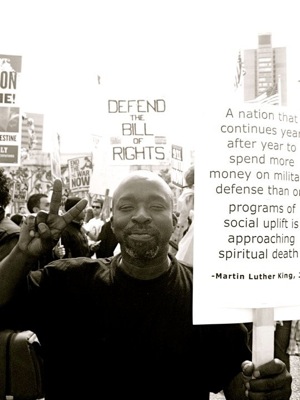
ADBUSTERS– The unrest in the Middle
East, the convulsions in Ivory Coast, the hunger sweeping across failed
states such as Somalia, the freak weather patterns and the systematic
unraveling of the American empire do not signal a lurch toward freedom
and democracy but the catastrophic breakdown of globalization. The world
as we know it is coming to an end. And what will follow will not be
pleasant or easy.
The bankrupt corporate power elite, who continue to serve the dead
ideas of unfettered corporate capitalism, globalization, profligate
consumption and an economy dependent on fossil fuels, as well as endless
war, have proven incapable of radically shifting course or responding
to our altered reality. They react to the great unraveling by pretending
it is not happening. They are desperately trying to maintain a doomed
system of corporate capitalism. And the worse it gets the more they
embrace, and seek to make us embrace, magical thinking. Dozens of
members of Congress in the United States have announced that climate
change does not exist and evolution is a hoax. They chant the mantra
that the marketplace should determine human behavior, even as the
unfettered and unregulated marketplace threw the global economy into a
seizure and evaporated some $40 trillion in worldwide wealth. The
corporate media retreats as swiftly from reality into endless
mini-dramas revolving around celebrities or long discussions about the
inane comments of a Donald Trump or a Sarah Palin. The real world – the
one imploding in our faces – is ignored.
The deadly convergence of environmental and economic catastrophe is
not coincidental. Corporations turn everything, from human beings to the
natural world, into commodities they ruthlessly exploit until
exhaustion or death. The race of doom is now between environmental
collapse and global economic collapse. Which will get us first? Or will
they get us at the same time?
Carbon emissions continue to soar upward, polar ice sheets continue
to melt at an alarming rate, hundreds of species are vanishing, fish
stocks are being dramatically depleted, droughts and floods are
destroying cropland and human habitat across the globe, water sources
are being poisoned, and the great human migration from coastlines and
deserts has begun. As temperatures continue to rise huge parts of the
globe will become uninhabitable. The continued release of large
quantities of methane, some scientists have warned, could actually
asphyxiate the human species. And accompanying the assault on the
ecosystem that sustains human life is the cruelty and stupidity of
unchecked corporate capitalism that is creating a global economy of
masters and serfs and a world where millions will be unable to survive.
We continue to talk about personalities – Ronald Reagan, Bill
Clinton, George W. Bush and Barack Obama or Stephen Harper – although
the heads of state and elected officials have become largely irrelevant.
Corporate lobbyists write the bills. Lobbyists get them passed.
Lobbyists make sure you get the money to be elected. And lobbyists
employ you when you get out of office. Those who hold actual power are
the tiny elite who manage the corporations. The share of national income
of the top 0.1 percent of Americans since 1974 has grown from 2.7 to
12.3 percent. One in six American workers may be without a job. Some 40
million Americans may live in poverty, with tens of millions more living
in a category called “near poverty.” Six million people may be forced
from their homes in the United States because of foreclosures and bank
repossessions. But while the masses suffer, Goldman Sachs, one of the
financial firms most responsible for the evaporation of $17 trillion in
wages, savings and wealth of small investors and shareholders in the
United States, is giddily handing out $17.5 billion in compensation to
its managers, including $12.6 million to its CEO, Lloyd Blankfein.
The massive redistribution of wealth happened because lawmakers and
public officials were, in essence, hired to permit it to happen. It was
not a conspiracy. The process was transparent. It did not require the
formation of a new political party or movement. It was the result of
inertia by our political and intellectual class, which in the face of
expanding corporate power found it personally profitable to facilitate
it or look the other way. The armies of lobbyists, who write the
legislation, bankroll political campaigns and disseminate propaganda,
have been able to short-circuit the electorate.
Our political vocabulary continues to sustain the illusion of
participatory democracy. The Democrats and the Liberal Party in Canada
offer minor palliatives and a feel-your-pain language to mask the
cruelty and goals of the corporate state. Neofeudalism will be cemented
into place whether it is delivered by Democrats and the Liberals, who
are pushing us there at 60 miles an hour, or by Republicans and the
Conservatives, who are barreling toward it at 100 miles an hour.
“By fostering an illusion among the powerless classes that it can
make their interests a priority,” Sheldon Wolin writes, “the Democratic
Party pacifies and thereby defines the style of an opposition party in
an inverted totalitarian system.” The Democrats and the Liberals are
always able to offer up a least-worst alternative while, in fact, doing
little or nothing to thwart the march toward corporate collectivism.
It is not that the public in the United States does not want a good
healthcare system, programs that provide employment, quality public
education or an end to Wall Street’s looting of the U.S. Treasury. Most
polls suggest Americans do. But it has become impossible for most
citizens in these corporate states to find out what is happening in the
centers of power. Television news celebrities dutifully present two
opposing sides to every issue, although each side is usually lying. The
viewer can believe whatever he or she wants to believe. Nothing is
actually elucidated or explained. The sound bites by Republicans or
Democrats, the Liberals or the Conservatives, are accepted at face
value. And once the television lights are turned off, the politicians go
back to the business of serving business.
Human history, rather than being a chronicle of freedom and
democracy, is characterized by ruthless domination. Our elites have done
what all elites do. They have found sophisticated mechanisms to thwart
popular aspirations, disenfranchise the working and increasingly the
middle class, keep us passive and make us serve their interests. The
brief democratic opening in our society in the early 20th century, made
possible by radical movements, unions and a vigorous press, has again
been shut tight. We were mesmerized by political charades, cheap
consumerism, spectacle and magical thinking as we were ruthlessly
stripped of power.
Adequate food, clean water and basic security are now beyond the
reach of half the world’s population. Food prices have risen 61 percent
globally since December 2008, according to the International Monetary
Fund. The price of wheat has exploded, more than doubling in the last
eight months to $8.56 a bushel. When half of your income is spent on
food, as it is in countries such as Yemen, Egypt, Tunisia, Somalia and
Ivory Coast, price increases of this magnitude bring with them
widespread malnutrition and starvation. Food prices in the United States
have risen over the past three months at an annualized rate of five
percent. There are some 40 million poor in the United States who devote
35 percent of their after-tax incomes to pay for food. As the cost of
fossil fuel climbs, as climate change continues to disrupt agricultural
production and as populations and unemployment swell, we will find
ourselves convulsed in more global and domestic unrest. Food riots and
political protests will be frequent, as will malnutrition and
starvation. Desperate people employ desperate measures to survive. And
the elites will use the surveillance and security state to attempt to
crush all forms of popular dissent.
The last people who should be in charge of our food supply or our
social and political life, not to mention the welfare of sick children,
are corporate capitalists and Wall Street speculators. But none of this
is going to change until we turn our backs on the wider society,
denounce the orthodoxies peddled in our universities and in the press by
corporate apologists and construct our opposition to the corporate
state from the ground up. It will not be easy. It will take time. And it
will require us to accept the status of social and political pariahs,
especially as the lunatic fringe of our political establishment steadily
gains power as the crisis mounts. The corporate state has nothing to
offer the left or the right but fear. It uses fear to turn the
population into passive accomplices. And as long as we remain afraid, or
believe that the formal mechanisms of power can actually bring us real
reform, nothing will change.
It does not matter, as writers such as John Ralston Saul have pointed
out, that every one of globalism’s promises has turned out to be a lie.
It does not matter that economic inequality has gotten worse and that
most of the world’s wealth has become concentrated in a few hands. It
does not matter that the middle class – the beating heart of any
democracy – is disappearing and that the rights and wages of the working
class have fallen into precipitous decline as labor regulations,
protection of our manufacturing base and labor unions have been
demolished. It does not matter that corporations have used the
destruction of trade barriers as a mechanism for massive tax evasion, a
technique that allows conglomerates such as General Electric or Bank of
America to avoid paying any taxes. It does not matter that corporations
are exploiting and killing the ecosystem for profit. The steady barrage
of illusions disseminated by corporate systems of propaganda, in which
words are often replaced with music and images, are impervious to truth.
Faith in the marketplace replaces for many faith in an omnipresent God.
And those who dissent are banished as heretics.
The aim of the corporate state is not to feed, clothe or house the
masses but to shift all economic, social and political power and wealth
into the hands of the tiny corporate elite. It is to create a world
where the heads of corporations make $900,000 an hour and four-job
families struggle to survive. The corporate elite achieves its aims of
greater and greater profit by weakening and dismantling government
agencies and taking over or destroying public institutions. Charter
schools, mercenary armies, a for-profit health insurance industry and
outsourcing every facet of government work, from clerical tasks to
intelligence, feed the corporate beast at our expense. The decimation of
labor unions, the twisting of education into mindless vocational
training and the slashing of social services leave us ever more enslaved
to the whims of corporations. The intrusion of corporations into the
public sphere destroys the concept of the common good. It erases the
lines between public and private interests. It creates a world that is
defined exclusively by naked self-interest.
Many of us are seduced by childish happy talk. Who wants to hear that
we are advancing not toward a paradise of happy consumption and
personal prosperity but toward disaster? Who wants to confront a future
in which the rapacious and greedy appetites of our global elite, who
have failed to protect the planet, threaten to produce widespread
anarchy, famine, environmental catastrophe, nuclear terrorism and wars
for diminishing resources? Who wants to shatter the myth that the human
race is evolving morally, that it can continue its giddy plundering of
nonrenewable resources and its hedonistic levels of consumption, that
capitalist expansion is eternal and will never cease?
Dying civilizations often prefer hope, even absurd hope, to truth. It
makes life easier to bear. It lets them turn away from the hard choices
ahead to bask in a comforting certitude that God or science or the
market will be their salvation. This is why these apologists for
globalism continue to find a following. And their systems of propaganda
have built a vast, global Potemkin village to entertain us. The tens of
millions of impoverished Americans, whose lives and struggles rarely
make it onto television, are invisible. So are most of the world’s
billions of poor, crowded into fetid slums. We do not see those who die
from drinking contaminated water or being unable to afford medical care.
We do not see those being foreclosed from their homes. We do not see
the children who go to bed hungry. We busy ourselves with the absurd.
The game is over. We lost. The corporate state will continue its
inexorable advance until two-thirds of the nation and the planet is
locked into a desperate, permanent underclass. Most of us will struggle
to make a living while the Blankfeins and our political elites wallow in
the decadence and greed of the Forbidden City and Versailles. These
elites do not have a vision. They know only one word: more. They will
continue to exploit the nation, the global economy and the ecosystem.
And they will use their money to hide in gated compounds when it all
implodes. Do not expect them to take care of us when it starts to
unravel. We will have to take care of ourselves. We will have to rapidly
create small, monastic communities where we can sustain and feed
ourselves. It will be up to us to keep alive the intellectual, moral and
cultural values the corporate state has attempted to snuff out. It is
either that or become drones and serfs in a global corporate dystopia.
It is not much of a choice. But at least we still have one.
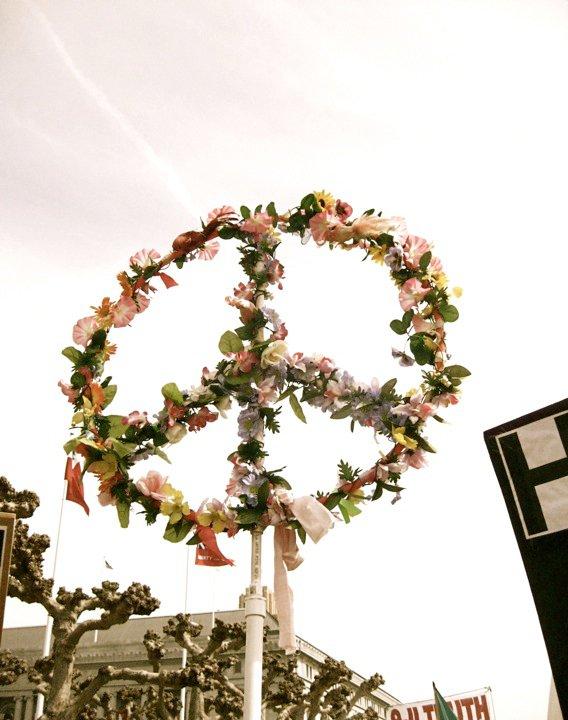
MEDIA ROOTS- Recently, a man walking by my car inquired about
my anti-war bumper sticker. After a short conversation, I learned that
this 81 year-old peace activist, Chuck, spends every Friday evening
on a high school street intersection protesting the wars. With a solid handshake and fist bump, he was on his way.
Weeks
later, I spotted Chuck at an anti-war rally down the street. When I
approached him, a big warm smile greeted me, followed by another
solid fist bump. Having developed a curiosity about his background and anti-war stance, I asked him for an interview to which he happily agreed.
As Chuck sat on my couch over a cup of coffee, it became clear that
he is a slightly shy man, not seeking recognition. “I just care about
people”, he exclaimed. This is how our conversation went down.
***
MR: Tell me a little about your background so people get an idea who you are and where you come from.
C:
I was born in 1930 at my home in Diamond, Washington, which is the
eastern part of the state. There were seven of us kids, and my parents
owned a 206 acre farm. I worked really hard as a kid, and by my early
teenage years I was already running heavy equipment and had quite a bit
of responsibility. MR: Have you always been politically aware or socially active?
C:
I’d always been interested in politics, but something happened during
the Great Depression that opened my eyes to the ideas of fairness and
greed. My father’s mortgage on the farm was $1,735. A neighbor, Mr.
Rock, owned the mortgage. When it became impossible to pay, he told my
father “If you can just pay one dollar, I won’t foreclose on you.” His
compassion and kindness enabled us to keep the farm, but a few months
later when Mr. Rock passed away, his son took over the property,
foreclosed immediately and started plowing our land. Thankfully, the
Federal Land Bank under Roosevelt took over the mortgage and
essentially saved our farm. MR: Was your family always politically minded?
C: We didn’t have television back then, but we listened to the
radio. My parents paid attention to what was happening in the world,
and liked to help others. There was a train that would come through
once a week and drop off food, coal and ice. We would save some of the
coal for these four homeless people who migrated during the winter.
They stayed in our shed, and the bits of coal we had saved over the
course of the year supplied them with enough heat to get through the
cold winter months. Without a refrigerator, we’d hang our meat on the windmill outside in the winter and the hobos would come
slice pieces off to cook. They never bothered anybody or asked for
much, we just liked to help them out. I was always impressed with how
my parents recognized that some people need help– not everyone is as
fortunate as the rest of us.
I was definitely
inspired by my parents, but I’ve always been socially active. In
school I always stuck up for the kids who were bullied, even though I
was smaller. For example, this one kid in my high school had MS or was
somehow disabled. I did whatever I could to stick up for him when he
was picked on, which was often. His family had an orchard down on the
Snake River, and would can hundreds of quarts of peaches and apricots
to sell every summer. They would always tell my family “You guys don’t
pay”.
[Chuck tears up as he tells me this]
MR: That’s how the world should
work– we need to help each other out. When did you become an activist?
Was there a specific time or event that inspired you to start protesting?
C: I was in the Army during the Korean War, but luckily I never had to go
overseas. Instead I was sent all around the
country on various assignments and even ended up working at the Pentagon in Washington DC. I was one of only a handful of guys from my
squad who didn’t end up dead. Being in the military never really
settled with me. I didn’t understand what I was doing and why, and it felt very unorganized. After serving I became aware of our
military actions, and became an outspoken critic. I suppose that
evolved into physically protesting. MR: How long have you guys been protesting on the corner?
C: We have been protesting for about four and a half
years, rain or shine. I’ve only missed about three meetings. It’s not part of a larger established organization– it’s just a few of us, but we are a committed group of concerned citizens. It’s all volunteer, but it’s not a political thing. Well, it’s somewhat
political, but it’s really about doing what’s right.
MR: Do you align yourself with a paticular political party?
C: Yes– I’m a Democrat.
MR: Historically, Democrats are known for being a bit more compassionate,
but what do you think about the idea that maybe the lines are
blurring between the two, and that both parties are just spokespersons for Big
Business and private interests?
C: I still feel that
Democrats are much more “tuned in” to people. It is unfortunate though, what these corporations are getting away with. It’s a damn crime. At one point I had a small construction company. I
thought I was smart and had a couple hundred dollars and grew that into
a labor-union based company about 200 strong. Supporting union labor
gave people a voice and enabled them to make enough money to feed their
families. Sometimes I would get
out of bounds, and they would kick me back into shape, but it was a
good relationship. MR: I’m
sure you still ended up paying a vastly larger chunk of taxes than these
corporations are doing nowadays. You say that your anti-war stance is not a political thing, but you
have to admit that war and
politics are intertwined– they’re almost inseparable. What do you
see as the main problem with America’s current political system?
C: Simple: too much greed. It’s all about the dollars.
Unless you have money or political clout, you don’t have a voice. But you must still protest, because maybe you’ll be heard. MR: Or at least make somebody think critically on their way home from work. What do you see as the main reasons why we are in Iraq and
Afghanistan?
C: Oil and greed, no doubt about it. We need to
get out of their countries. War creates hate and animosity. You don’t make people
love you by killing them. MR: Do you see the US trend of aggressive war over resources slowing down anytime soon? We’ve basically achieved what we went over there for: the regions are in turmoil, and US-backed governments are being implemented. Do you think that the regions will eventually be
restructured?
C: I don’t think it
will be effectively restructured. We just have to get the
military industrial complex out of the way. The biggest thing we
have in America is guns: half of our budget goes to the military. MR: Which makes it hard to slow down. Do you think it’ll take a long sequence
of events, like getting the right people in office and slowly chipping
away at it, or do you think it’ll take an overnight revolution?
C: I think it’ll take the
chipping away approach. We have to protest. We can’t continue
to have a military presence in 130 countries. We have to slowly get those troops out of there. We also need to write our
Senators and Congressmen. Don’t send an email– write a letter or
send a fax. They read those things, and it could make a difference. But you have to recruit others to do the same thing. Talk about things,
spread news and hand-write lots of letters.
The key is to get the next wave of young
policy makers in office. The young people are so much more progressive and open-minded. We need young leaders and we
need more of what’s happening in Wisconsin. I think that peaceful
protesting is really working.
MR: Once these people get into office,
how realistic is it to expect them to do the things they set out to do?
C: I think it’s very difficult. They have to be concerned with re-election, and to do so you
have to know where your boundaries are.
MR: When I talk to friends who support Obama, they think I have some sort of
personal agenda against him. But for me it’s not personal– I’m sure
he’s a compassionate person who genuinely wanted
change. But after getting into office, he really has limited control over what happens.
C: I saw something similar happen with Roosevelt. In the
election of ’38, he was politically stymied. It’s exactly the same
thing that’s happening now: I think Obama really wants to do the right
things, in his mind and his heart. But he needs to be
much more vocal. MR: What were some of the similarities between Obama and Roosevelt?
C: He got Social Security to go through the Supreme Court and pushed
for labor rights and public works projects. It was all about groups, like the Works Progress
Administration. He also helped
establish the idea of a minimum wage, and Washington state was the
first to adopt one. These things gave people dignity. Also, back then we
had these supposed enemies, the “Commies” and “Fascists” and
the worker’s parties that corporations demonized. We
see the same sort of fear-mongering now, but it’s “terrorists” and
“Muslim extremists”. Our leaders need to make a
stronger effort to push for green jobs, which could be a critical path for us.
MR: As far as Obama needing to
be more vocal– He seemed to genuinely want to go in
there and instigate change. So what happened? He has an opportunity every single day to get up in front
of the podium in the Rose Garden and say “This needs to stop”. But he
doesn’t. Is is because he’s powerless or is he trying
to play it safe to ensure his re-election?
C: I think he has great intentions, and has the potential to become very powerful if he can get into another term. But
for now he has to go along with the pundits because there’s so much
chaos and thing going on.
It’s a difficult job, and his
hands are pretty much tied. As an individual, he is respected.
But it’s really difficult to get things done in Washington, all they do is talk. But I definitely agree that he could
be doing a much better job.
MR: What is the key to getting this country back on track?
C: I don’t think it’ll be one specific thing. What’s
happening in Wisconsin is the beginning of the revolution. We need more of
that and we need to keep the pressure on ‘em. We can’t let up. And we
have to offer solutions, we can’t just bitch and moan. MR: How would you respond to people who say that protesting won’t make a difference?
C: I would say “You’re noticing, arent’ you?” We’re pressuring all the time– you have to be consistent. All
those little grains of sand, the seemingly small voices, all
those bodies really does make a difference. I’m
seeing more activists now than ever, and it’s encouraging. I care about
people, David. I built an orphanage in Honduras, and did work with
Habitat for Humanity in the Philippines. We have to throw the balance
in favor of the people. Change– it needs to start with the heart.
***
Interview conducted, article written by David Solmes



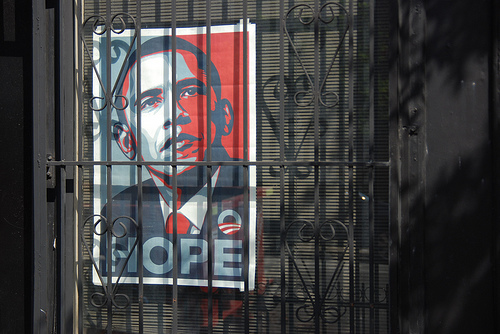 MEDIA ROOTS – Daniel Ellsberg is now advising voters in swing states to vote for President Obama in next month’s election. The unquestionable patriot that leaked the Pentagon Papers is thus often credited with initiating the end of the war in Vietnam. Mr. Ellsberg has since helped organize several major antiwar demonstrations thus it seems peculiar for him to support an administration directly responsible for hundreds of drone assassinations, the continued operation of unlawful military detention centers, pardoning known torturers, and prosecuting whistleblowers such as Bradley Manning.
 MEDIA ROOTS – Greenpeace specializes in environmental advocacy, striving daily to convince humanity to care for its planet. Recognizing Earth’s fragile state, the organization provides tangible solutions and affects positive change. Their tactics
  ADBUSTERS
 MEDIA ROOTS- Recently, a man walking by my car inquired about
my anti-war bumper sticker. After a short conversation, I learned that
this 81 year-old peace activist, Chuck, spends every Friday evening
on a high school street intersection protesting the wars. With a solid handshake and fist bump, he was on his way.
MEDIA ROOTS- Recently, a man walking by my car inquired about
my anti-war bumper sticker. After a short conversation, I learned that
this 81 year-old peace activist, Chuck, spends every Friday evening
on a high school street intersection protesting the wars. With a solid handshake and fist bump, he was on his way.