Bernanke Warns of Looming Economic Crisis

TRUTHOUT– In a surprisingly candid speech at the annual Rhode Island Public Expenditure Council meeting Monday, Federal Reserve Chair Ben Bernanke warned of a potentially dangerous economic future for the country if government spending is not curbed within a few years.

“It is crucially important that we put US fiscal policy on a sustainable path,” Bernanke said. “We should not underestimate these fiscal challenges. Failing to respond to them would endanger our economic future.”

If budget deficits continue to rise at their current pace, Bernanke said, higher interest rates could slow formation of businesses, productivity and economic growth, while a large federal debt could hurt the amount of government funds available for future emergencies, from war to natural disasters.

“The threat to our economy is real and growing,” Bernanke said.

Bernanke outlined a number of “fiscal rules” for Congress to consider implementing through legislation, including constraints on total government expenditure, deficits or debt. Today, Congress operates under a “pay-as-you-go” (PAYGO ) approach that requires tax cuts and spending increases to be offset within a ten-year budget time span, but may not be strong enough for the current economy. “The key question is whether the traditional PAYGO approach is sufficiently ambitious,” Bernanke said. “At its best, PAYGO prevents new tax cuts and mandatory spending increases from making projected budget deficits worse; by construction, PAYGO does not require the Congress to reduce the ever-increasing deficits that are already built into current law.”

Countries like Canada, Switzerland, Finland and the Netherlands have all seen marked improvements in their budgets since adopting fiscal rules that cap government spending. According to the International Monetary Fund, approximately 80 countries have implemented similar fiscal rules. “The weight of the evidence suggests that well-designed rules can help promote improved fiscal performance,” Bernanke said.

If the nation’s economic challenges are not addressed in the near future, Bernanke said, “projections by the CBO (Congressional Budget Office) and others show future budget deficits and debts rising indefinitely and at increasing rates … unsustainable trajectories of deficits and debts will never actually transpire, because creditors would never be willing to lend to a country in which the fiscal debt relative to the national income is rising without limit.”

According to the World Bank’s “Finding the Tipping Point – When Sovereign Debt Turns Bad,” the level at which a country is no longer viable to receive lending is a 77 percent public debt-to-GDP ratio. “If the debt is above this threshold, each percentage point costs 0.017 percentage points of annual real growth.”

According to the International Monetary Fund, the 2009 debt-to-GDP ratio in the United States was 83.2 percent. James A. Bacon Jr. of the Washington Examiner states, “the US is experiencing a small growth penalty today: about one-tenth of a percentage point. By mid-decade, however, the growth penalty could swell to .56 percent yearly – more than a half percentage point.”

The challenge of reducing deficit doesn’t end with capping government spending. In fact, Bernanke said, “economic conditions provide little scope for reducing deficits significantly further over the next year or two … premature fiscal tightening could put the recovery at risk.” But at the same time, “if current policy settings are maintained and under reasonable assumptions about economic growth, the federal budget will be on an unsustainable path in coming years, with the ratio of federal debt held by the public to national income rising at an increasing pace.”

Congress faces several unpopular choices to cut the deficit. The CBO has projected that federal spending for Medicare and Medicaid could be double the national income over the next 25 years. Social Security is also threatened as the country’s population ages and the number of workers paying taxes grows at a slower rate than the number of people receiving benefits. State and local budgets will also struggle to meet public pension and health care obligations for retired people. “Estimates of unfunded pension liabilities for the states as whole span a wide range, but some researchers put the figure as high as $2 trillion at the end of 2009,” Bernanke said, “[and] one recent estimate suggests that state governments have a collective liability of almost $600 billion for retiree health benefits.”

“Herbert Stein, a wise economist, once said, ‘If something cannot go on forever, it will stop.’ One way or the other, fiscal adjustments sufficient to stabilize the federal budget will certainly occur at some point,” Bernanke said. “The only real question is whether these adjustments will take place through a careful and deliberative process that weighs priorities … or whether the needed fiscal adjustments will be a rapid and painful response to a looming or actual fiscal crisis.”

Although Bernanke did not plainly endorse any particular methods of reducing the deficit, his message was clear throughout the speech. “History makes clear that countries that continually spend beyond their means suffer slower growth in incomes and living standards and are prone to greater economic and financial instability.”

Creative Commons License
This work by Truthout is licensed under a Creative Commons Attribution-Noncommercial 3.0 United States License.

Distrust in U.S. Media Edges Up to Record High

GALLUP– For the fourth straight year, the majority of Americans say they have little or no trust in the mass media to report the news fully, accurately, and fairly. The 57% who now say this is a record high by one percentage point.

1997-2010 Trend: In General, How Much Trust and Confidence Do You Have in the Mass Media When It Comes to Reporting the News Fully, Accurately, and Fairly?

The 43% of Americans who, in Gallup’s annual Governance poll, conducted Sept. 13-16, 2010, express a great deal or fair amount of trust ties the record low, and is far worse than three prior Gallup readings on this measure from the 1970s.

Trust in the media is now slightly higher than the record-low trust in the legislative branch but lower than trust in the executive and judicial branches of government, even though trust in all three branches is down sharply this year. These findings also further confirm a separate Gallup poll that found little confidence in newspapers and television specifically.

Nearly half of Americans (48%) say the media are too liberal, tying the high end of the narrow 44% to 48% range recorded over the past decade. One-third say the media are just about right while 15% say they are too conservative. Overall, perceptions of bias have remained quite steady over this tumultuous period of change for the media, marked by the growth of cable and Internet news sources. Americans’ views now are in fact identical to those in 2004, despite the many changes in the industry since then.

Read full article on US Distrust in Media.

© COPYRIGHT GALLUP, 2010

Posted in Uncategorized | 1 Reply

Americans Renew Call for Third Party

GALLUP– Americans’ desires for a third political party are as high as they have been in seven years. Fifty-eight percent of Americans believe a third major political party is needed because the Republican and Democratic Parties do a poor job of representing the American people. That is a significant increase from 2008 and ties the high Gallup has recorded for this measure since 2003.

In Your View, Do the Republican and Democratic Parties Do an Adequate Job of Representing the American People, or Do They Do Such a Poor Job That a Third Major Party Is Needed?

The finding, based on an Aug. 27-30 USA Today/Gallup poll, comes at a time when Americans are widely dissatisfied with the way things are going in the United States and give relatively weak approval ratings to the president and Congress.

Though the rise in support for a third party could be linked to the Tea Party movement, Tea Party supporters are just about average in terms of wanting to see a third party created. Sixty-two percent of those who describe themselves as Tea Party supporters would like a third major party formed, but so do 59% of those who are neutral toward the Tea Party movement. Tea Party opponents are somewhat less likely to see the need for a third party.

© COPYRIGHT GALLUP, 2010

U.S. Money for Prisons, Not for Social Services

COMMON DREAMS–  Many of those who have lost their jobs and homes in the United States due to the lingering economic recession are ending up in jail, according to a new study released by an independent think tank Thursday.

There is a strong link between poverty and incarceration in the United states, according to the report, “Money Well Spent: How positive social investments will reduce incarceration rates”, by the Justice Policy Institute (JPI).

The report’s findings on the relationship between poverty and the justice system suggests that more and more people from poor and low-income communities are being arrested and jailed, even though nationwide, crime rates have fallen.

“What we have seen in this research is that there is less focus on safety for the poor and more on policing and arrests,” Tracy Velázquez, executive director of the Washington-based JPI, told IPS.

The report notes that as prison populations have grown, so too have racial disparities in the justice system.

“This is especially evident in arrest and incarceration patterns for drug offences,” said Sarah Lyons, National Emerson Hunger Fellow and primary author of the report, who added that without adequate funding for social services, it is less likely that people will be able to succeed and avoid contact with the justice system.

Despite comparable usage of illicit drugs, in 2008, African Americans, who make up 12.2 percent of the general population, comprised 44 percent of those incarcerated for drug offences, according to the report.

Researchers say that disproportionate enforcement of drug laws in communities of colour destabilises families and communities and decreases the likelihood of positive outcomes for children and other family members left behind.

Due to the prolonged economic meltdown, many states are now making drastic cuts in funding for social services – such as health, education, and public housing – but not on policing and prison improvement and expansion.

There are nearly two million people behind bars in the U.S., most poor whites and people of colour, making the United States the number one country in the world in terms of the imprisonment rate.

The report notes that about 16 percent of incarcerated people also experienced homelessness before being arrested.

“Most of these people are significantly more likely to have both a mental illness and a substance addiction, which frequently go untreated,” said Nastassia Walsh of JPI. She said that states with higher high school graduation rates and college enrollment have lower crime rates than those with lower educational attainment levels.

The JPI study points out that the stress of living in poverty is a “risk factor” for experiencing mental health problems, and that many people who want treatment can’t afford it.

“More than 50 percent people in prisons are suffering from mental illness of some kind,” said Walsh, who holds that increased investment in mental health and substance abuse treatment can improve public safety and reduce criminal justice involvement.

According to the study’s findings, investments in job training and employment have been associated with heightened public safety. Youth who are employed are more likely to avoid justice involvement. In addition, people who are incarcerated are more likely to report having had extended periods of unemployment and lower wages than people in the general population.

“It’s time for our elected officials to realise that creating safe, healthy communities is a better investment in our country’s future than more prison beds,” stated Velázquez. “Low-income communities and people of colour are bearing the brunt of this recession, as well as of our policies that have led to mass incarceration.”

“By shifting our priorities, we can reduce these disproportionate impacts and make a real difference, especially for our country’s children and families,” she said.

More funding for affordable housing, education and employment could help turn around the lives of people struggling with homelessness, including children and youth, who are particularly affected by lack of housing, the report says.

‘It’s a question of where we choose to spend our money,” said Velázquez. “Until we quit funneling tax dollars into prisons and policing practices that sweep large numbers of people into the system – many of whom pose little risk to public safety – we should not be surprised to see incarceration rates continue to climb.”

Last year, the United Nations Committee on the Elimination of Racial Discrimination (CERD) expressed similar concerns about the lack of progress to end racial discrimination in the U.S. criminal justice system and urged Washington to take practical actions to end unjust police actions against the poor and minorities.

The international body documented a number of cases that showed that police officials in many cities were not only engaged in acts that violated the U.S. constitution, but also the International Convention on the Elimination of All Forms of Racial Discrimination.

The report’s authors urged the U.S. government to take actions to comply with that international human rights treaty.

© 2010 IPS-Inter Press Service

Biometric ID for India’s 1.2 Billion People

TRUTHOUT– Fears about loss of privacy are being voiced as India gears up to launch an ambitious scheme to biometrically identify and number each of its 1.2 billion inhabitants.

In September, officials from the Unique Identification Authority of India (UIDAI), armed with fingerprinting machines, iris scanners and cameras hooked to laptops, will fan out across the towns and villages of southern Andhra Pradesh state in the first phase of the project whose aim is to give every Indian a lifelong Unique ID (UID) number.

“The UID is soft infrastructure, much like mobile telephony, important to connect individuals to the broader economy,” explains Nandan Nilekani, chairman of the UIDAI and listed in 2009 by Time magazine as among the world’s 100 most influential people.

Nilekani is a co-founder of the influential National Association of Software and Services Companies and, before this assignment, chief of Infosys Technologies, flagship of India’s information technology (IT) sector.

According to Nilekani, the UID will most benefit India’s poor who, because they lack identity documentation, are ignored by service providers.

“The UID number, with its ‘anytime, anywhere’ biometric authentication, addresses the problem of trust,” argues Nilekani.

But a group of prominent civil society organisations are running a Campaign For No-UID, explaining that it is a “deeply undemocratic and expensive exercise” that is “fraught with unforeseen consequences.”

Participants in the campaign include well-known human rights organisations such as the Alternative Law Forum, Citizen Action Forum, People’s Union for Civil Liberties, Indian Social Action Forum, and the Centre for Internet and Society.

A meeting was organised by the campaigners in New Delhi on Aug. 25 where speakers ridiculed the idea of a 12-digit number, and said it is unlikely to rectify, for example, the massive corruption in the public distribution system that is supposed to provide food to poor families.

J.T. D’Souza, an IT expert, asserted at the meeting that the use of biometrics on such a massive scale has never been attempted before and is bound to be riddled with costly glitches.

Other speakers raised issues of security and the possibility of hackers getting at databases and passing on information to commercial outfits, intelligence agencies or even criminal gangs.

In talks and television interviews, Nilekani has maintained that the benefits of the UID project far outweigh its risks. “It’s worth taking on the project and trying to mitigate the risks so that we get the outcomes we want,” he told the CNN-IBN television channel in an interview.

But the possibility of religious profiling by state governments or misuse by caste lobbies is real. This is because the central government has decided to include caste as a category in the UID questionnaire to be filled out by applicants.

Because identity is already a potent issue and the trigger for frequent identity-related conflict – such as the 2002 anti-Muslim riots in Gujarat that left 2,000 people dead – any exercise that enhances identification is fraught.

Usha Ramanathan, a prominent legal expert who is attached to the Centre for the Study of Developing Societies in the national capital, does not buy the UIDAI’s assurances.

At the Aug. 25 meeting, Ramanthan said that while enrolling with the UIDAI may be voluntary, other agencies and service providers might require a UID number in order to transact business. Indeed, the UIDAI has already signed agreements with banks, state governments and hospital chains which will allow them to ask customers for UIDs.

Ramanathan said that, taken to its logical limit, the UID project will make it impossible, in a couple of years, for an ordinary citizen to undertake a simple task such as travelling within the country without a UID number.

The UIDAI will work with the National Population Register (NPR) which draws its powers from the Citizenship Rules of 2003 and provides for penalties if information is withheld.

And as a government website says: “Certain information collected under the NPR will be published in the local areas for public scrutiny and invitation of objections.” Seeking to allay privacy fears, the website goes on to explain that this is merely “in the nature of the electoral roll or the telephone directory.”

But things begin to look ominous when seen in the context of the National Intelligence Grid (NATGRID), the setting up of which home minister P. Chidambaram announced in February as part of his response to a major terrorist attack.

Chidambaram said NATGRID would tap into 21 sets of databases that will be networked to achieve “quick, seamless and secure access to desired information for intelligence and enforcement agencies.”

He added that NATGRID will “identify those who must be watched, investigated, disabled and neutralised.”

“Internationally only a few countries have provided national ID cards because of the unsettled debate on privacy and civil liberties,” says Prof. R. Ramakumar at the Tata Institute of Social Sciences in Mumbai. He added that several countries have had to withdraw ID card schemes or drop biometric aspects because of public opposition.

Nilekani maintains that the main purpose of the UID project is to empower the vast numbers of excluded Indians. “For the poor this is a huge benefit because they have no identities, no birth certificates, degree certificates, driver’s licences, passports or even addresses.” 

By Ranjit Devraj

Creative Commons License


This work by Truthout is licensed under a Creative Commons Attribution-Noncommercial 3.0 United States License.
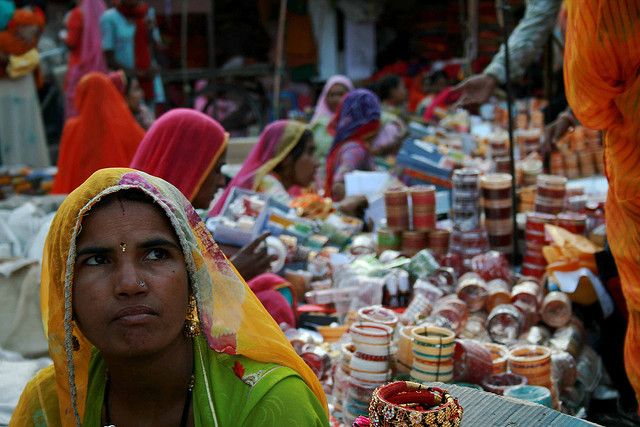
Photo by Tom Thai

Page 48 of 62<<...4647484950...>>