Noam Chomsky: Is The World Too Big To Fail?

SALON– The democracy uprising in the Arab world has been a spectacular display of courage, dedication, and commitment by popular forces — coinciding, fortuitously, with a remarkable uprising of tens of thousands in support of working people and democracy in Madison, Wisconsin, and other U.S. cities. If the trajectories of revolt in Cairo and Madison intersected, however, they were headed in opposite directions: in Cairo toward gaining elementary rights denied by the dictatorship, in Madison towards defending rights that had been won in long and hard struggles and are now under severe attack.

Each is a microcosm of tendencies in global society, following varied courses. There are sure to be far-reaching consequences of what is taking place both in the decaying industrial heartland of the richest and most powerful country in human history, and in what President Dwight Eisenhower called “the most strategically important area in the world” — “a stupendous source of strategic power” and “probably the richest economic prize in the world in the field of foreign investment,” in the words of the State Department in the 1940s, a prize that the U.S. intended to keep for itself and its allies in the unfolding New World Order of that day. 

Despite all the changes since, there is every reason to suppose that today’s policy-makers basically adhere to the judgment of President Franklin Delano Roosevelt’s influential advisor A.A. Berle that control of the incomparable energy reserves of the Middle East would yield “substantial control of the world.” And correspondingly, that loss of control would threaten the project of global dominance that was clearly articulated during World War II, and that has been sustained in the face of major changes in world order since that day.

Read more about Is The World Too Big To Fail?

Written by Noam Chomsky

© 2011 Salon

Photo by Flickr Flying Singer
Poll: 45% of Republicans Say Obama Not Born in US

DAILY POLITICAL– When it comes to knowing where President Obama was born, 45 percent of Republicans appear to believe that he was not born in America, according to the results of a New York Times/CBS poll. About a third agreed he was born in America and 22 percent say they aren’t sure.

These results match a similar poll done in February that resulted in 51 percent of Republican’s saying Obama wasn’t born in the U.S. and 28 percent saying he was born in the U.S.

In another New York Times/CBS survey, 57 percent of all adults overall say the president was born in America, while 25 percent of registered voters say he was born outside the U.S. and 18 percent weren’t sure.

Read more about Forty-five Percent of Republicans Say Obama Not Born in U.S.

© 2011 Daily Political

Photo by flickr user Criticalmoss

1 in 5 US Veterans Jobless in 2010

PRESS TV – Recent data released by the United States Bureau of Labor Statistics shows that more than one fifth of US veterans aged between 18-24 returning from Iraq and Afghanistan were unemployed in 2010.

The unemployment rate for the young male veterans was nearly 22 percent last year, more than two percent higher than their non-veteran counterparts, a press TV correspondent reported on Saturday.

“More than 25 percent of us returning from Iraq and Afghanistan can’t find employment (in the first year),” said Jake Diliberto from Veterans for Rethinking Afghanistan.

“One of the major reasons is because we have ongoing deployments, we have ongoing wars. We can’t enter the workplace and sustain the job successfully,” he added.

Experts say it is challenging for some veterans to translate their military skills into civilian life. Furthermore, the unemployment problem is exasperated by the mental and physical injuries soldiers sustained during the wars.

Read more about 1 in 5 US Veterans Jobless in 2010

© 2011 Press TV

Photo by Press TV

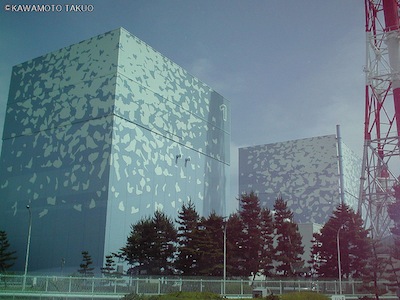
Japan Consumers May Bail Out Nuke Plant Owner

MSNBC – Japanese consumers would be on the hook for nuclear damage payments and earthquake reconstruction costs under two tax plans the government is considering, officials said Tuesday.

The Kyodo News agency said one plan would raise electricity customers’ charges to help cover claims against Tokyo Electric Power Co. from people who suffer losses from the crisis at the Fukushima Dai-ichi nuclear power plant. The increase would come in the form of a higher electricity source-development tax, which is collected from customers as part of their electricity bills.

TEPCO must pay people forced to evacuate from the region surrounding the nuclear plant, but officials said the power company may not be able to pay all the claims.

“While TEPCO will be primarily responsible for damages payments, the government may have to support the firm,” Economy, Trade and Industry Minister Banri Kaieda told a press conference Tuesday. “We are considering taxation, the electricity charge and other measures to enable the government to shoulder some of the burden.”

A second plan would raise to 8 percent Japan’s current 5 percent consumption tax for about three years, Kyodo said. The extra $273 billion ($22.5 trillion yen) would pay for reconstruction of the country’s northeastern region, said senior lawmakers in the Democratic Pary of Japan.

The March 11 earthquake and ensuing tsunami caused about $300 billion in damage, experts have estimated.

Read full article on Japan Consumers May Bail Out Nuke Plant Owner

© 2011 MSNBC

Photo by flickr user hige2

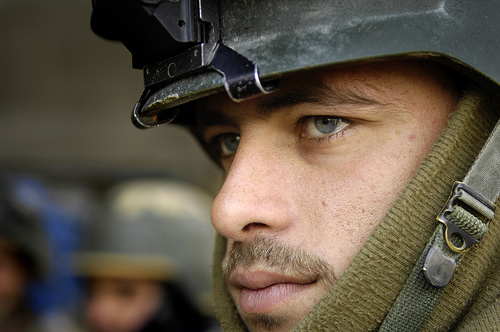
Study: 60% of Young People Support Torture

DAILY BEAST–  It’s a simple question with a gut-wrenching answer: In a time of war, is it ever OK to torture an enemy?

For decades, the answer was an automatic no. The often-cruel conditions endured by prisoners of war during World War Two spurred the Geneva Conventions, which stipulated an agreed-upon set of standards for handling war victims. By the late 1960s, when any young man could have been drafted to go to Vietnam, the humane treatment of soldiers was at the forefront of many Americans’ concerns.

But now, during a time of two overseas wars, Americans’ opinions on torture seem to have fractured, and largely on generational lines. A new study by the American Red Cross obtained exclusively by The Daily Beast found that a surprising majority—almost 60 percent—of American teenagers thought things like water-boarding or sleep deprivation are sometimes acceptable. More than half also approved of killing captured enemies in cases where the enemy had killed Americans. When asked about the reverse, 41 percent thought it was permissible for American troops to be tortured overseas. In all cases, young people showed themselves to be significantly more in favor of torture than older adults.

Read full article on Study: 60% of Young People Support Torture.

© 2011 DAILY BEAST

Photo by flickr user Andreas Helke Protest

Page 36 of 62<<...3435363738...>>