
Trump’s Web of Far Right Militarists Who Want to Attack Iran

Filmmaker Robbie Martin and Paul Jay discuss Trump and Pence’s foreign policy appointments and advisors which include many of the neocons who created The Project for the New American Century and are now targeting Iran.

Robbie Martin on Trump’s Web of Militarists Who Want to Attack Iran

**

PAUL JAY: Welcome to The Real News Network. I’m Paul Jay. Well, various balloons, trial balloons are coming out of Trump Tower in New York. Donald Trump met with Tulsi Gabbard, a congresswoman from Hawaii, who’s known as very non-interventionist, was against the war in Iraq and thinks the war to overthrow Assad in Syria is illegal. And apparently, they both had a nice meeting and came to some conclusion. They had some foreign policy ideas in common. Donald Trump met with The New York Times and sounded as reasonable as one might hope someone might sound talking to The New York Times. Telling The New York Times, more or less what they would like to hear, and various other balloons making Donald sound like he’s not the crazy person in the campaign. Apparently, he’s willing to accept a fence rather than a wall in certain places. He isn’t planning, apparently, to deport 11 or 12 million people, just go after some of the very bad actors. In fact, his immigration deportation policy sounds like it might almost be more modest than Barack Obama, who’s been coined at times the “Deporter in Chief.”

But the real Donald Trump, the proof of the Donald Trump pudding is in his appointments, not in who he meets and what he happens to say, ’cause he will say anything on any given day that seems to suit his purposes. Whereas, the appointments to his cabinet and other agencies, those are people who will exercise some real power. And now joining us to talk about just who some of those appointments are, and some of the roots of those people, is Robbie Martin. He’s a journalist, filmmaker and musician. He writes for the magazine White Fungus, the website MintPress News and Oakland-based Media Roots. As a filmmaker, he’s the mind behind the documentary shorts, American Bisque, American Anthrax and now the full-length documentary trilogy, A Very Heavy Agenda. Thanks for joining us, Robbie.

ROBBIE MARTIN: Thanks for having me, Paul.

PAUL JAY: So, Donald Trump, in spite of his anti-interventionist rhetoric has not appointed anybody that even smells slightly of someone who’s anti-interventionist. Let’s go back a little bit into the roots of all this, though. In your film, you spend some time talking about a document that came out in the late 1990s called “The Project for the New American Century.” And, anyone who doesn’t know this document really should go find it, it’s still easy to find on the Internet. And some very senior people signed it who later became the major foreign policy team around George Bush, including Rumsfeld and Cheney and Wolfowitz, Kagan and others, Richard Perle, and essentially asserted itself, the document said, that America should now use its single super-power status to reshape the world in the image it pleases. Talk a bit about PNAC and how they envisioned US foreign policy.

ROBBIE MARTIN: Well, PNAC, or The Project for the New American Century, was started in the 1990s under Bill Clinton. And the reason why Bill Kristol and Robert Kagan and Gary Schmitt said that they started this think tank was because they wanted to encourage the Clinton Administration’s interventionist foreign policy. Because at the time, a sort of Pat Buchanan-esque anti-interventionist attitude was becoming quite trendy in the Republic Party. So Bill Kristol’s the Weekly Standard and along with this think tank The Project for the New American Century, they wanted to start the trend that, even though Clinton was a Democrat, that hawkish Republicans like them should encourage and cheer on Bill Clinton for his military interventions. And this attitude, of course, carried over to the Bush Administration and many, many members of Project for the New American Century, I believe, 17 signatories of their papers, actually got into the Bush Administration.

And now what’s happened is you’ve seen sort of this neocon consensus that formed around The Project for the New American Century, there’s been almost a split where, when the GOP imploded because of Trump’s rise in the primaries, that’s where it really started, you also have sort of a split in the neoconservative consensus in DC. So you have people like Robert Kagan, Max Boot, Eliot Cohen, all openly advocating for Hillary Clinton, similarly to how they were advocating for Bill Clinton in the ’90s, at least his foreign policy. But, while that was happening, which I think took most of the focus away from the other neocons, there were people like Michael Ledeen, James Woolsey, John Bolton, who are all part of Project for the New American Century, it caused them to actually split off and go towards Trump. And that’s… I think that got a little bit overshadowed by just how much focus there was towards the neocons going towards Hillary.

PAUL JAY: Because they all thought Hillary would win. Most of the ones that went to Hillary were pretty sure she was going to emerge the winner of this.

ROBBIE MARTIN: Oh, yeah, absolutely. I mean, as did I. And we’ve already actually seen Eliot Cohen, for example, reach out to the Trump campaign after he won, to try to get some kind of advisory position. And he was told, “You lost.” And he didn’t say who told him that but it might have been, you know, Bannon or someone else from inside the Trump campaign.

PAUL JAY: Let’s go back into this group and the document, the PNAC group. The Project for the New American Century, its basic thesis, if I understand it correctly, is that because this is now a single super-power world, things like international law are no longer necessary — that it’s time to assert raw American military might because there’s no reason not to. And the plan, I think, it’s laid out rather explicitly, that it starts with regime change in Iraq, regime change in Syria, and the real prize is regime change in Iran, and that’s the way to assure the American Century in the Middle East and then some. Those were just the places to begin. Talk a little bit about some of the things those people were saying around the time of the lead-up to the Iraq War, including the idea in this document that in order to pull off these regime changes and use such American military force — which means troops on the ground, it’s not just bombing campaigns — you need the American people onside. And it says explicitly in the document that you can’t do that without a new Pearl Harbor.

ROBBIE MARTIN: Yeah. I mean, back to what you said about the whole notion of international law does not exist. John Bolton specifically has been key to that sort of premise. In the Bush Administration, he was UN Ambassador and made a point to be defiant continuously against the UN, and this is, of course, after the Bush Administration defied the UN in invading Iraq. But, going before that, when The Project for the New American Century wrote the document, “Rebuilding America’s Defenses,” the thesis from that document actually came from a document written by Richard Perle and Douglas Feith for the incoming Netanyahu administration in the ’90s and this document was called “A Clean Break: Securing the Realm.”

Now, the reason why this document and “Rebuilding America’s Defenses” is different than what’s come before it is because, even though US foreign policy has always had a sort of pre-emptive philosophy behind it, it was never stated this, I would say, arrogantly or this candidly in a document, where the core principle behind the document is a philosophy of pre-emption– that we should invade countries that pose no immediate threat to us because at some point in the future they might pose a threat to us. And that whole mindset defined the Bush Administration and also largely defines our foreign policy outlook today, even continuing into the Obama Administration.

PAUL JAY: Part of the message of the document is that naked use of force, overt use of force, does not have to be apologized for. Again, they got their Pearl Harbor, which was 9/11, which gave them the American public opinion and, of course, they did everything they could to link Saddam Hussein to 9/11, even though there was no evidence at all that there was such a thing. I know the story of Greg Thielmann, who dealt with proliferation of weapons of mass destruction for the State Department, and at that time Bolton was Under Secretary of that department responsible for that. And Thielmann would go week after week to Bolton saying “Well, we don’t have any link between Iraq and weapons of mass destruction. We don’t think there are any.” And Bolton would say, “Well, you come back when you’ve got it. You come back when you’ve got it.” And, eventually, Thielmann didn’t have it, ’cause it wasn’t there and he told Thielmann, “Well, you can stop coming to our meetings now.” You have a similar thing happening at the level of Richard Clarke, the anti-terrorism czar, Cheney keeps saying to him, “If you don’t have terrorist attacks linked to Iraq, we’re not interested.” They had an agenda from day one and it’s part of this PNAC vision.

ROBBIE MARTIN: Oh, absolutely. And that’s part of what’s so troubling about Trump supporters — they have a blind spot for these Bush Era neocons creeping back into what will become his administration. I mean, John Bolton specifically actually helped Trump get elected. First, he ran a PAC against Rand Paul early in the Republican primaries, painting Rand Paul as a pacifist on Iran and there’s actually footage of nuclear bombs going off. I think the commercial actually starts with a family eating dinner and just a mushroom cloud exploding in the background.

PAUL JAY: And just quickly for people who don’t know, Rand Paul is the son of Ron Paul, you know, more or less is a fairly consistent Libertarian anti-interventionist. In fact, he said that if John Bolton, who’s been rumored to be getting Secretary of State, Paul has said if it is Bolton he’ll filibuster to try to stop him from being confirmed in the Senate.

ROBBIE MARTIN: Yeah, and I hope that he actually follows through on that because it seems like it’s a pretty sure bet that John Bolton’s going to have some kind of position. I mean, now that Bannon from Breitbart is part of the administration, Breitbart is now running articles trying to tell their audience that Bolton isn’t a neocon, that he wasn’t instrumental in the Iraq war. And I find that amusing because Breitbart has sort of carried this tradition of being different from sort of the neoconservative, more establishment GOP consensus in DC; now that they’re part of the establishment, they’re going to run cover and sort of deflect away these criticisms that are, I think, going to be amplified over time with Trump, just between him and his supporters.

PAUL JAY: Right. There’s a very interesting network of connections here. Breitbart News, the primary owner of Breitbart News is a billionaire named Robert Mercer. Mercer backed Ted Cruz, and his daughter Rebecca Mercer, were real players in the Cruz campaign. Breitbart News, as I said, Mercer is the major owner of that, which means Steve Bannon from Breitbart essentially worked for Mercer. Kellyanne Conway, that became the campaign manager, of course, Bannon became what they call the CEO of the Trump campaign, Kellyanne Conway became the manager. She worked for Mercer as head of the PAC that Mercer put something like 11 or 12 million dollars into backing Ted Cruz and now look at the transition team. Rebecca Mercer is on the transition team. And, of course, Kellyanne Conway seems to be continuing to run the campaign.

Pence, who they recruited, Bannon and Kellyanne Conway got on the Trump campaign prior to the Republican Convention and they’re the ones that recruited Vice President Pence who’s on the same page. And just to add another little wrinkle to this circle, this rogues’ gallery, another John Bolton type who’s being rumored as having, or will have a role in the Trump campaign, is a guy named Frank Gaffney. And Gaffney advised Cruz while Cruz’s campaign was being run by Mercer and now Mercer’s people are now running Trump and perhaps running the White House. And so, it’s likely to see Frank Gaffney back into the picture. Tell us a bit about what you know about Gaffney.

ROBBIE MARTIN: Well, Gaffney’s an interesting character in all this because he was one of the only PNAC neocons who managed to build a bridge to the alt-right movement very early on. He actually has a column at Breitbart and most of his writings revolve around how Sharia Law is apparently going to take over the United States and the White House. He’s written pamphlets on how the Muslim Brotherhood has infiltrated the White House. But most notably, Frank Gaffney is the originator of the ban Muslims immigration policy that was part of Trump’s campaign. And, as you said, he was also an advisor for Ted Cruz, but it recently got announced that he may be in charge of the foreign policy end of Trump’s transition team, even though he publicly denies it. What’s interesting about that is he actually has Trump’s whole transition team, including Pence, as regular recurring guests of his talk radio show. A year previous to Trump winning the primary–

PAUL JAY: This is Gaffney’s radio show. Pence is a regular on Gaffney’s radio show.

ROBBIE MARTIN: Correct, yeah. Newt Gingrich, John Bolton, even James Woolsey were regular guests. And these aren’t just guests out of dozens and dozens of guests, these were a handful of people that he would regularly have on. So, I believe that Frank Gaffney is probably someone that everybody should be taking a closer look at during this whole process, ‘because he seemed to have known who Trump was going to bring into office once he got elected.

PAUL JAY: Yeah, one of the things most of these guys have in common is they consider Islam and the Arab world the enemy of Western civilization and I think you quote in your film, maybe it’s Ledeen quoting Machiavelli saying, “When the country’s interests are being asserted, evil is acceptable,” something along those lines.

ROBBIE MARTIN: Yeah, that we are permitted to do evil in the act of protecting our nation. So, of course, you know, to a neoconservative that essentially means a pre-emptive strike or who knows what that means? It could be something even worse than that.

PAUL JAY: The most important appointment, of course, of all of these people is Pence. Some people have considered him to be, or will be, the new Cheney and it’s gotten some play that when he was asked who his role model for Vice President would be, he said Dick Cheney. And that’s a rather telling thing. Everyone knows how powerful Cheney was in the White House. Everyone knows Cheney helped create the entire false intelligence about weapons in Iraq. So, he’s saying a guy who lied through his teeth, and lied the United States into war, is his role model and has no problem saying that on 60 Minutes or national television. That tells us a lot. Tell us more about Pence and his own views and his relationships to these guys.

ROBBIE MARTIN: Well, Pence himself actually comes from right wing talk radio culture, as well. He used to host his own show, even set up a makeshift studio in his offices once he was elected. And as a freshman Senator, Mike Pence was actually one of the only government officials to keep trying to go out to the media, writing letters to John Ashcroft, using time on the House floor to convince people that Saddam Hussein was behind the 2001 anthrax attacks. And he continued to do this for about a year after anthrax was sent to Tom Daschle and Patrick Leahy.

Now, he says that his office was infected with anthrax, which may have actually happened, but Patrick Leahy and Daschle were not trying to play politics at all with that event; in fact, they still doubt the official conclusions of that investigation that it was from a lone scientist named Bruce Ivins from Fort Detrick, Maryland. Mike Pence, even against the instructions of Ari Fleischer who told the press that Saddam had nothing to do with it, that bentonite wasn’t found in the anthrax, Mike Pence continued to assert this connection which I think is a very strange thing to do for any freshman Senator to be making such a strong declaration of something during an emotional hysteria like that.

PAUL JAY: Again, this cast of characters has various other players, we can’t get through them all now, but it’s important, I think, to talk about James Woolsey who was under Clinton and then under Bush. Woolsey was CIA, right?

ROBBIE MARTIN: Woolsey was a CIA Director under Bill Clinton, for a very brief amount of time.

PAUL JAY: And Woolsey at the time of the Israeli-Lebanon War was saying, “We should take advantage of this opportunity to bomb Syria and try to get rid of Assad.” I guess the point here, and I must say, let me throw Giuliani in the mix here, too, because, at the Republican Convention, Giuliani says that it’s Iran waging terrorist threats and attacks against the United States. Iran is the source of terrorism against the United States, which everybody knows is not the case. Of course, Israel doesn’t like Iran’s support for Hezbollah but it’s clear from any number of sources, not the least of which the Joint Congressional Investigation to 9/11 that it’s, in fact, Saudi Arabia that’s allied with terrorist threats and actual terrorist attacks against the United States. But talk a little bit about Woolsey and then a little bit about Giuliani.

ROBBIE MARTIN: Well, one common thread that links all these people together — and I call them “The Craziers” which is a reference to Ray McGovern calling the old neoconservatives in the Reagan Administration “The Crazies” — I would describe these people as crazier: Gaffney, Ledeen, Bolton, Woolsey, they all actually prefer not to overthrow Assad. And I’m sure that Woolsey has said some things in the past about overthrowing Assad but, make no mistake, it’s not because they are pacifists on Syria or they don’t want a regime change in Syria, that’s actually not the case; they prefer that we overthrow the regime of Iran first. Because, in their mindset, that would cut off the head of the snake, which is Assad in Syria.

PAUL JAY: Which was the terminology that the King of Saudi Arabia used trying to goad the Americans into bombing Iran.

ROBBIE MARTIN: Yeah. So, this is a very troubling development that the Trump Administration appears to be a cabal of neoconservatives who are very fixated on militarily invading or attacking Iran. Which is something that the Bush Administration did have – you know, there was a neoconservative consensus within it that wanted to do that but it ended up not winning out in the end. So, hopefully, it doesn’t this time either, but I’m not so hopeful. But, in terms of Giuliani, who’s also said things about Iran, Giuliani is probably the dirtiest character in this whole lineup of people. He has connections, time and time again, to just various aspects of the deep state. Even when he was running as Mayor, in 1989, he lost pretty badly because Ed Koch and other opponents pointed out that he actually represented General Manuel Noriega, a Panamanian drug lord.

PAUL JAY: And a CIA asset for quite awhile.

ROBBIE MARTIN: Of course, yeah. And Rudy has supported MEK, which is another terrorist organization. But there’s also just strange, convenient circumstances that Rudy has found himself in. For example, his company Bio-One, made millions of dollars off the 2001 anthrax attacks. He had a company before 9/11 that specialized in bio terror contamination clean up. And his company ended up cleaning out the Florida Sun building where the first anthrax victim was located. Rudy also invests in border technology. He has a company called SkyWatch that specializes in digital surveillance grid technology for Mexican border security in collaboration with Raytheon. So, I mean, in my mind, it’s possible Rudy contacted Trump and said, “Hey, you want to build a wall, here’s what we can do,” and sort of connected those business appendages together.

PAUL JAY: Right. I think what drives all US foreign policy, certainly President Obama and Clinton and you can go back, the underlying driving force is American corporate interests, the need to control raw materials, control overseas markets, control cheap labor, to be able to export and loan money and skin cats twice through interest rates, all of that drives all American foreign policy, but this particular group, the group that was around Cheney and now the group that President-Elect Trump is gathering around him, it’s all of that and almost a vulgar direct criminality, a kind of corruption. I think by the time this regime is done its course, four years from now or eight years from now, the number of scandals and the amount of pure pillaging of the public trough in the name of fighting terrorism is going to be unparalleled.

ROBBIE MARTIN: Yeah, I mean, I hope that a lot of the people really study these characters because they’re going to be back in power again. I mean, the idea of James Woolsey being back in power again terrifies the crap out of me. And I think it should terrify many of Trump supporters, as well, who are hoping that he’d be this sort of anti-war, drain the swamp, anti-establish candidate. I mean, Woolsey himself, he doesn’t even have a problem admitting that the CIA itself was used as a tool of corporate espionage. He brags in a Wall Street Journal editorial about how we spy on Europe, the CIA spies on Europe because Europe bribes a lot. So, and he’s talking about European businesses to get American businesses, an advantage over them. So these people that are openly corrupt and have no problem bragging about their corruption.

PAUL JAY: Well, I’ll say it again, it doesn’t matter what anti-interventionist or somewhat slightly reasonable words come out of the Donald’s mouth, the proof is in the appointments and you look at the people around Trump and you can see what direction his foreign policy is going. Thanks very much for joining us, Robbie. We’ll pick this up again.

ROBBIE MARTIN: Thank you very much, Paul.

PAUL JAY: Thank you for joining us on The Real News Network.
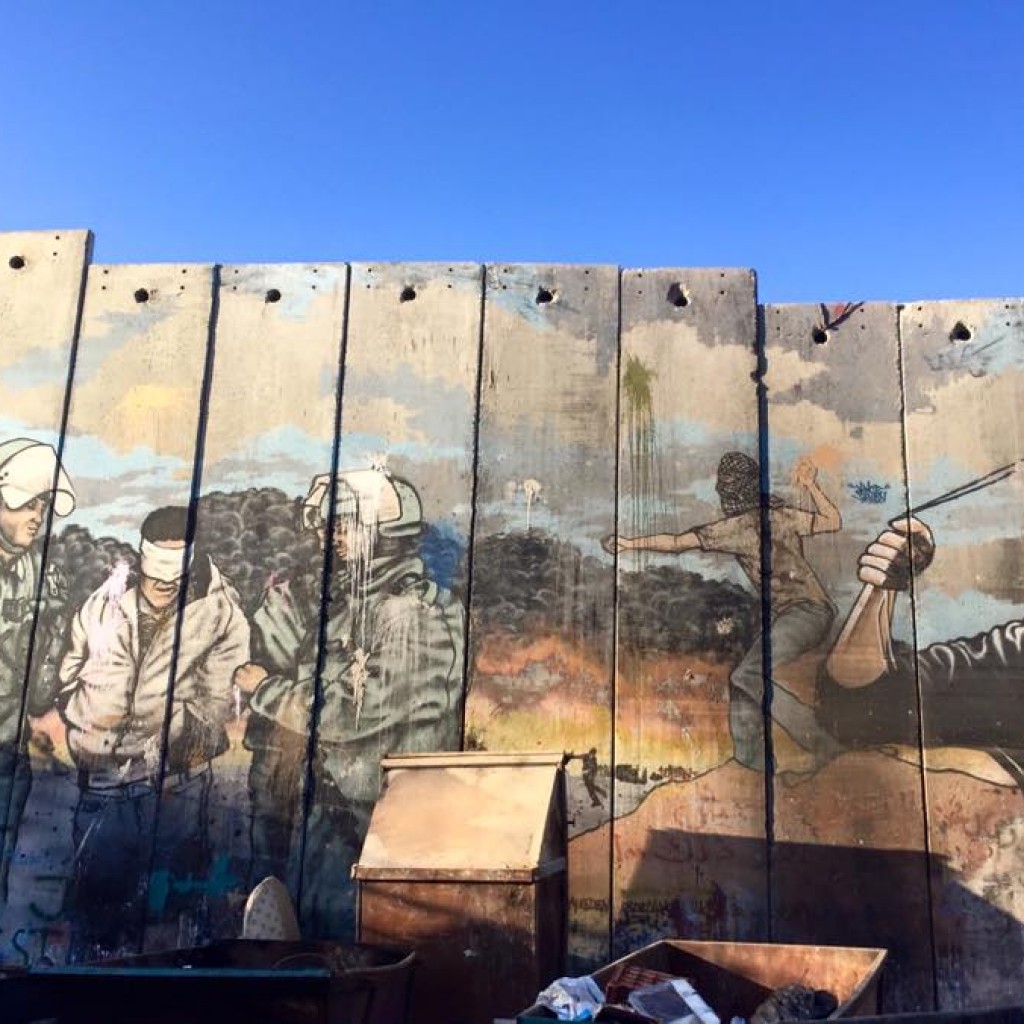
 

Inside Palestine’s Refugee Camps

In her first on-the-ground report from Palestine, Abby Martin gives a first-hand look into two of the most attacked refugee camps in the West Bank: Balata and Aida camps. 

With millions of displaced Palestinians around the world, hundreds of thousands are refugees in their own country—many have lived packed into these refugee camps after being ethnically cleansed from their villages just miles away.


Inside Palestine’s Refugee Camps

**

Aida camp is located between the municipalities of Bethlehem, Beit Jala and Jerusalem and is near two large Israeli settlements – Har Homa and Gilo – considered illegal by the international community.

“Gilo is less than two km away and they have 24-hour fresh water, gardens and schools for children. We live just next to this settlement and we suffer from lack of all of these. We’ll never accept this. My home village is 40 minutes distant and I can’t reach it. It is not easy to be a refugee in my country,” Alazzo complained.

14199134_1037761189677493_7023609121076104305_nAida has been a hot spot since the Second Intifada (also called as Al-Aqsa, a Palestinian uprising started in 2000) and refugees became highly exposed to violence as a result of military operations.
The increasing number of injuries in the camp are due to excessive force documented by the UN. In 2015, there were 84 incursions by Israeli security forces, 57 injuries (21 were minors), 44 arrests (including 13 minors), and one fatality with the death of a minor.

Walking through the alleys and narrow streets of Aida, it is common to hear stories about men and boys taken from their homes by Israeli security forces.

“We’re always afraid of our sons being taken by Israeli army. I never leave them alone. It is normal for the Israeli soldiers to take kids. It’s a scary life,” Sumayah Asad, a 40-year-old mother of six, told IPS.

It was a Friday morning, a sacred day for the Muslims, and she was handing out chocolates and sweets as gifts to whoever passed in front of her house. Asad said she was celebrating her 12-year-old son’s release after five days in detention.

“I’m happy now to see my son released from the Israeli occupation. Soldiers came to my house at three in the morning and caught my boy. They let him out after discovering he hadn’t done anything. Kids should be playing or be in the school, not in jail,” she said.

Although not everyone agrees that coexistence is possible among Jews and Palestinians, Munther Amira, 45, who was born in Aida and whose family came from the village Dier Aban (South Jerusalem), remains optimistic that peaceful change can be achieved.

“Yes, we can coexist. The idea of coexistence is based on human rights and should include our right of return. Here in Palestine, Christians and Muslims already live together. It’s difficult to develop a democracy under an occupation,” he told IPS.

By Fabíola Ortiz of Inter Press Service

**

Watch a crucial introduction to The Empire Files coverage from Palestine, How Palestine Became Colonized.

Listen to Abby’s firsthand account of life under occupation in the West Bank, settler terror & being banned from Gaza during her trip to Palestine on Media Roots Radio.

**

FOLLOW // @EmpireFiles & @AbbyMartin

WATCH // YouTube.com/EmpireFiles

How Palestine Became Colonized – The Untold History of Israel

nakba74_2_med_hrThe Empire Files looks at the long history of Zionist colonization, expansion and expulsion of the country’s indigenous inhabitants.

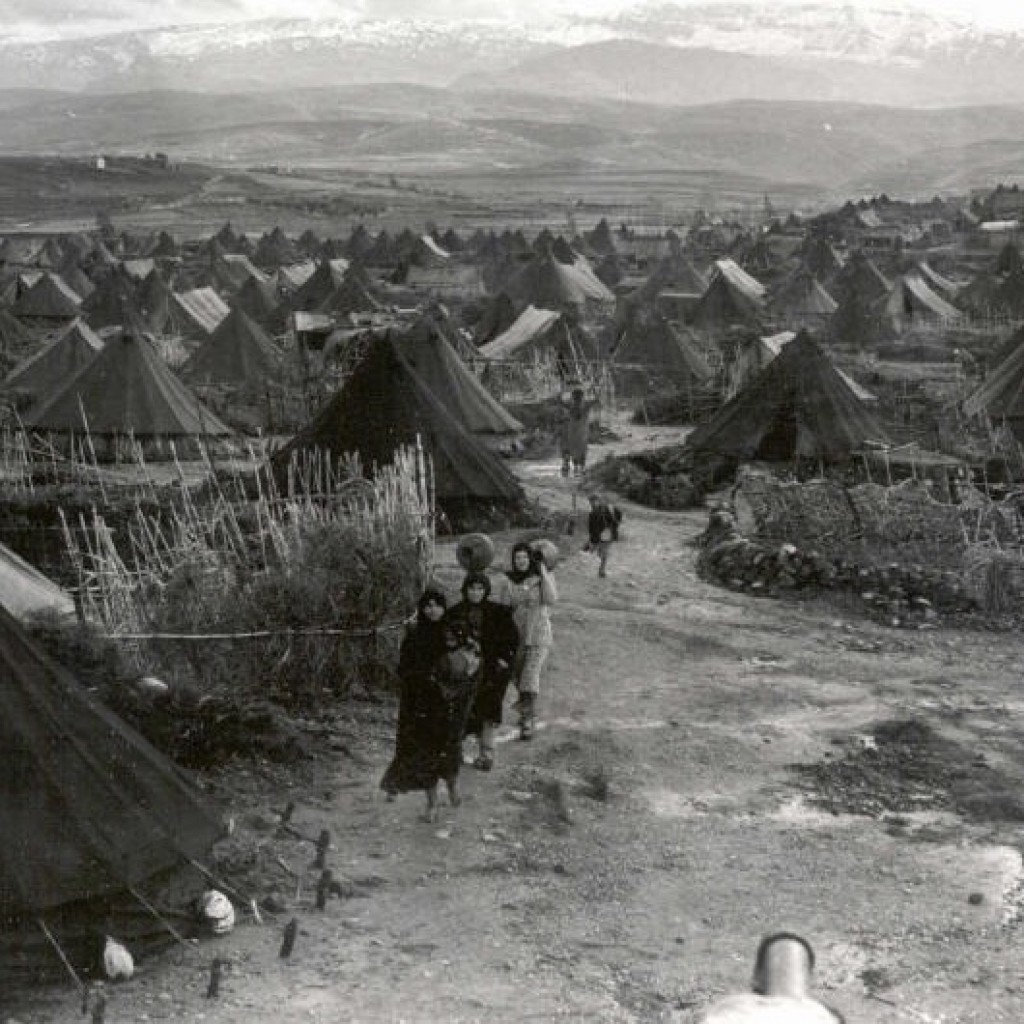
Giving critical historical context the occupation today, this timeline explores the creation of the state of Israel and how it came to cover so much land since.

From the early settlements, to the Nakba, to its conquest of the West Bank, Abby Martin reveals the brutally honest root of what is behind the so-called “Israel-Palestine conflict.”


How Palestine Became Colonized

**

Listen to Abby’s firsthand account of life under occupation in the West Bank, settler terror & being banned from Gaza during her trip to Palestine on Media Roots Radio. 

Watch Abby’s first on-the-ground investigation inside two of Palestine’s most attacked refugee camps, Aida and Balata.

**

FOLLOW // @EmpireFiles & @AbbyMartin

WATCH // YouTube.com/EmpireFiles

Media Roots Radio – Abby Goes to Palestine

Recently I traveled for a month through the West Bank in Palestine. Despite all the things I’ve read and seen, nothing could have prepared me for what it was like on the ground.

The entire West Bank is under martial law style occupation, where Israeli forces brutalize and harass Palestinians on a daily basis. For just traveling with Palestinians we had M16s pointed in our faces several times. A man almost got executed just feet from us. It’s a war zone–except only one side has military might. 

One of the most underreported realities is that Israel is becoming a fascist theocracy, with every administration becoming more fanatical than the last. From life inside the refugee camps to under occupation and settler terror, I give a first-hand account of the real Israel/Palestine on a special two hour edition of Media Roots Radio.

Watch the first segment of The Empire Files’ Palestine series that covers the history of Zionism and brutally honest root of what is behind the so-called “Israel-Palestine conflict.”

Listen to all previous episodes of Media Roots Radio on soundcloud.

Follow me @AbbyMartin | @FluorescentGrey

Posted in Uncategorized | 1 Reply

Imperial Japan, the Bomb & the Pacific Powder Keg

JAPAN SWORD TB

Obama’s high-profile trip to Hiroshima was accompanied by a media storm that gave endless justifications for the U.S. use of the atomic bomb on Japanese civilians. The myths are widely accepted in society, and underpin the notion of American exceptionalism.

In this episode of The Empire Files, Abby Martin interviews Dr. Peter Kuznick, co-author with Director Oliver Stone of the bestselling book and HBO series “The Untold History of the United States,” about the real story behind the use of the atomic bombs—as well as the untold history of Imperial Japan, its role today for the U.S. Empire, and the danger for new war on the horizon.


Imperial Japan, the Bomb and the Pacific Powder Keg

**

PETER KUZNICK: Well, the myth is not just that it was justified. That’s tied to the other even bigger myth, in some ways, that the atomic bombs actually ended the Pacific War which is being repeated. You might have seen that the National Park Service announced a Manhattan Project National Park. They’re going to be developing these national historical sites, and when the Secretary of the Interior, Jewell, announced it, she said that it may have been tragic in some ways, but at least it ended the war. That’s the basic myth, and if it ended the war, and it’s a good war, and we’re the good guys, and we were responding to the Japanese aggression, then ergo the bomb is actually justifiable and even moral, and the argument goes even further to say that it saved lives, and not that it costs a couple 100,000 lives, but it actually saved lives. Initially, it saved half a million American lives, but then we decided to become more humane and we said, “What about all the Japanese lives that is saved?” So it’s part of this broad myth that has got no basis whatsoever in fact. In Hiroshima 80,000 people were incinerated in the blast. In Nagasaki another 80,000 perished. Thousands more died in the days and weeks following from the fires that burned down the city or being forced to drink radioactive soot pouring from the ashen sky. Tens of thousands more died in the years following from radiation poisoning. Another mass atrocity even more obscured from the US history is that months prior the US had already firebombed multiple Japanese cities, pushing Japan to the brink of surrender. On March 10th, 1945, the US military dropped 2,000 tons of bombs on Tokyo, burning up twenty percent of the city and massacring 130,000 civilians in what’s known as the worst firebombing in history.

The United States had been firebombing Japanese cities for months already, and in fact the United States had firebombed more than 100 Japanese cities. In fact, the destruction reached 99.5 percent in the city of Toyama–almost 100%–the entire city wiped out. You saw what we did in Tokyo on the night of March 9th and 10th, so we were wiping out cities. What changes the equation now is the Soviet invasion, and that’s what the Japanese leaders had been dreading, and we know from mid-May, when the Supreme War Council issued their statements, they said that the Soviet invasion would put an end to the Japanese Empire. That’s what they’d been fearing. That’s what the Americans knew that they were fearing, and we said that in our intelligence reports. They say over and over again that the Soviet invasion of Japan will convince all Japanese that defeat is inevitable. We knew that. Truman knew that the Japanese were trying to end the war. He knew that they were appealing to the Soviets to try to help them get better surrender terms from the United States, but Truman went ahead and used the bomb, so the real controversial question is what motivated Truman. It was clearly not to expedite the end of the war.

NARRATION: In 1946, the US strategic bombing survey group, assigned by Truman himself to study the attacks, determined, based on a detailed investigation, Japan would have surrendered even if the atomic bombs had not been dropped, even if Russia had not entered the war, and even if no invasion had been planned or contemplated. The question wasn’t whether or not Japanese leaders would surrender, but who they would surrender to. The American banking and corporate establishment, having clawed their way so close to the top for a 150 years, for the first time saw their path to the biggest profits they could fathom as the unwounded, unchallenged savior, unless of course the pieces in this new world gravitated towards capitalism’s mortal enemy. The prestige of the Soviet Union was high for its defeat of fascism, but the ideas of socialism spread far beyond Soviet borders and the message of revolution was a call that turned the dreams of US corporations into nightmares. For the US Empire to protect its rise, it would have to hobble its economic and ideological rival. Intending to bog down the Soviet Union in a costly and consuming arms race, and issue a threat to anyone who imagined a world without empires, it planted its flag with two thumps of its chest.

PK: The timing doesn’t make any sense. The logic doesn’t make any sense. We dropped the bomb because we were sending a message to the Soviet leaders, and that was exactly how they interpreted it: That if the Soviets don’t go along with US plans in Europe and the Pacific, this is the fate that awaited them, so the Soviets knew that Japanese were trying to surrender, that they were desperate to surrender, that the Americans knew they were desperate surrender, and then they saw the Americans wipe out those two cities. Therefore, the Soviets interpreted it just the way the scientists warned the American leaders that the Soviets would interpret it. And the danger, the scientists said, was that it was going to lead to this uncontrollable arms race, and a race for mutual annihilation, and that was the reality that Truman set up with the dropping of the atomic bombs. So the crime that Truman committed, and it was a crime, a war crime by every definition, was not simply killing a couple hundred thousand innocent civilians in Hiroshima and Nagasaki. It was threatening the entire species with annihilation. As Oliver and I say in in Untold History, to kill hundreds of thousands of innocent civilians is a war crime. To threaten all of mankind, and also life on our planet with extinction, goes far beyond that.

ABBY MARTIN: Yeah, I think it was one of the worst crimes ever perpetrated on humanity and going to the Hiroshima Museum with an in-utero survivor, thanks to you setting that up for me, was incredibly potent and devastating. Why do you think this myth holds so strongly today? Because I talk to people all the time about it, and it seems like it’s just this visceral reaction…

PK: But that’s the myth that Americans have promulgated for all this time because it’s so essential to this notion of American exceptionalism, American goodness, American beneficence during the entire Cold War, and then that gets into some of the other crucial myths because the entire Soviet role in winning the war in Europe and their contributions to the victory in the Pacific has been wiped out, but it’s all tied in with this fundamental mythology that just plagues Americans and prevents Americans from understanding the world. One of the key things that I try to stress is this idea that you mentioned that the Americans won the war in Europe. That is such nonsense. Throughout most of the war the United States and the British faced ten German divisions combined. The Soviets were facing 200 German divisions during that time. The United States lost about 310,000 in combat, a little more than 400,000 overall. The Soviet Union lost 27 million. Do you know what that 27 million figure represents? It is hard to even conceptualize. 27 million is the equivalent of one 9-11 a day every day for 24 years. That’s what the Soviets suffered in World War II. Imagine if Nazi Germany had developed the bomb first and used it. The world would look upon nuclear weapons with the appropriate horror. We would have said this is the kind of weapon that a fascist country would actually use.

AM: But instead they give the Empire the moral arbitration to decide who else can have nuclear weapons, right? The only country that’s ever used one.

PK: The only country that’s ever used one, the country that’s repeatedly threatened to use them. Every American president since Truman has threatened repeatedly to use nuclear weapons. And in one of Obama’s better moments in Prague, in his famous Prague speech about nuclear weapons, he calls for nuclear abolition, but he effectively says the United States won’t be the first country get rid of its nuclear weapons. The United States will be the last country to do so.

NARRATION: It’s always been the Japanese people and Japan’s colonial subjects, who have suffered unspeakable pain under the rule of rich royalty. For most of the Empire of Japan’s history, an elite dynasty ruled over peasants in a feudal society, but as the feudal order transformed into an industrialized country, its need to expand and conquer set it outward. In 1894, close to a million Korean peasants participated in an armed uprising against their ruling aristocrats. Seeing an opportunity, Japan deployed thousands of soldiers, occupied the country and imposed a proxy dictator in Seoul. In the 1930s, in their most ambitious expansion, the Japanese Empire invaded and conquered large parts of China, all of Korea, Thailand, the Philippines and what is today Myanmar, Cambodia, Laos, Vietnam, Indonesia, Malaysia, Singapore, Papua New Guinea, and five separate island nations, including Guam and the Marshall Islands. Rule under the Emperor was a horror of historic proportions. A policy of so-called comfort women bound over 200,000 as sex slaves for Japanese soldiers. Torture, human experiments, mass rape and mass executions cast a shadow on its imprisoned nations. Japanese officers gave the order to trudge a path into China by carpet bombing civilians and carrying out a reign of terror on the ground. In one campaign, Japanese soldiers conquered the town of Nanjing and proceeded to murder and rape everyone they could. Upwards of 300,000 people are estimated to have been killed and 20,000 raped in the massacre. One photo seemingly plucked from the devil’s mind says it all. A baby skewered on a Japanese bayonet. The Communist Party unions, former Japanese soldiers and others militantly carried out anti-war actions throughout Japan’s conquests. By the Emperor’s decree, organizers were rounded up en masse and imprisoned. Protests were violently suppressed. At the outbreak of WWII, Japan’s rulers naturally aligned with German and Italian fascism.

PK: What Japan did, not only in China, which was terrible, but also what Japan did in the rest of Asia during that period, is a series of atrocities which the Japanese government has been trying to cover up. Partly in response to that, the United States began to apply sanctions and embargoes on Japan and when the United States cut off Japan’s oil supply, Japan was very much dependent on the United States for a lot of raw materials that they were using to build up their war machine, as well as for their energy needs. The United States was at the same time defending our allies in the Pacific, the British, the French and the Dutch, and the others who were terribly exploiting their colonies. So Japan moves in there. Japan had colony envy in some ways during this time, and they wanted their own empire, and so they wanted to displace the French and the Europeans from Southeast Asia and other parts of Asia so Japan could move in there, but because Japan was economically boxed in and feeling desperate, they decided they were going to have to move. And the reason why they went against the US fleet at Pearl Harbor was they thought the US fleet could block Japan’s access to the resources that they wanted to get in Southeast Asia.

NARRATION: With the majority of the American public opposed to joining the war, Pearl Harbor gave Truman the pretext he needed to cash in on the remains, but once Japan surrendered to the US military, a new alliance started to form.

PK: The war crimes trials should have been more severe. We never raised the charges against Japan for their bombing of Chinese cities, and why did we not? We were afraid that people were going to raise charges against the United States for our bombing of Japanese cities, as well as the atomic bombs on Hiroshima and Nagasaki. We let them off.

NARRATION: Notorious reactionary General MacArthur became a de facto dictator of occupied Japan. Under US rule, elite war criminals were allowed to escape trial, some found guilty even returned to positions in the postwar government. The US occupation tied an arm behind Japan’s back by denying it a military while resurrecting its industry as an economic surrogate.

PK: They adopted Article 9 of the Japanese Constitution. Article 9 is amazing. Under Article 9 and the Japanese Constitution they renounce the right of war as a sovereign nation and they renounce the right to have offensive military forces. This was the bedrock of the Japanese peace constitution from 1946 until this year. Finally, this year the Abe administration has revoked Article 9, effectively, under this resolution adopted by the cabinet and passed by both houses of the Japanese Parliament. So the United States initially imposed this on Japan, but what happened was the Japanese people loved it. The Japanese people embraced it, and when, during the Korean War, the United States tied to get Japan to revoke Article 9 so that the Japanese could help the Americans in the Korean War, the Japanese refused. And so there’s been this struggle ever since with the United States encouraging Japan to do away with Article 9 so that Japan could form the backbone of what the United States is doing in Asia, and the Japanese people have resisted until now.

NARRATION: Japan’s current prime minister Shinzo Abe is nostalgic for the days of empire and is implementing drastic reforms to crack down on civil liberties and reassert the country’s military might. Abe and his party’s historical revisionism have drummed up a racist nationalist movement. Korean immigrants, and segregated communities are faced with violence from anti-immigrant gangs.

PK: The Abe administration is a nightmare. The Abe administration is the realization of what has been the dream of the LDP and Japanese right wingers for decades. Abe, you remember, first got elected in 2007 and he tried to implement his nationalist program. The Japanese people resisted it, and he was forced out of office in a year. When he got re-elected this time he played it smarter, and he initially went with Abenomics and the economic policy which seemed to be working. We now know that Abenomics is a failure. The Japanese economy is doing very poorly, so whatever gains there were temporarily have now been eroded, but it was later that he began to introduce his militaristic agenda, and he did so. Abe, from the time he first got elected to parliament in 1993, has been the driving force behind Japanese historical re-education. He and his right-wing allies are very concerned about this tendency to look critically on Japan’s history, so he’s tried to whitewash, basically, the rape of Nanjing, the policy toward China, the mistreatment of the other Asians, and aggressive policies toward the other Asians, basically defend the bombing of Pearl Harbor, and issues like the Korean comfort women. The Korean women who were forced into sexual slavery by the Japanese military, is one of these hot button issues that Abe has been… He didn’t come out and officially deny it, although over the years has tried to downplay this and say this is what all the armies do. So Abe has been key in the effort to revise Japanese history in the same way that Americans have done, but Abe also is completely dedicated to re-militarizing Japanese society, so Abe passed the secrecy laws last year despite the fact that they were opposed by 82% of the Japanese public. Abe forced that through. He’s allowed the Japanese arms dealers to sell arms overseas, and one of the big things he’s been doing is the fight over… trying to prevent the people of Okinawa from exercising their democratic rights to stop the relocation of the base.

NARRATION: The island of Okinawa was the entry point of the US invasion in 1945. After decimating 90% of the island’s infrastructure, the US military took it over and has occupied it ever since. Widespread opposition helped anti-base politician Yukio Hatoyama get elected as prime minister in 2009.

PK: When Hatoyama got elected in 2009: a great victory for the Japanese people. The Japan Democratic Party finally overthrew the rule of the LDP, the conservatives, the right wingers, and one of the things that Hatoyama pledged to do during that campaign was stop the base relocation in Okinawa, from Futenma, where the big base is now, to Henoko in northern Okinawa, this pristine beautiful area where they want to relocate the military base, and at least 80% or so of the Japanese people have come out against this repeatedly, and so Hatoyama tried to block the base relocation. Obama basically smashed him. Obama, you would think that Hatoyama, a progressive ally–Obama would embrace him. Just the opposite. Obama cut his feet out from under him, forced Hatoyama to back down on his effort to block the base relocation and basically eroded the popularity and the legitimacy of the Hatoyama government. The Hatoyama regime collapsed, replaced by Kan. They had three JDP prime ministers. They couldn’t function. They couldn’t rule after that, and the JDP was replaced by Abe and the LDP, and we’ve seen this nightmare of militarization going on.

AM: I wanted you to create the context for our audience about Okinawa because that is actually what radicalized me after reading Chalmers Johnson’s book Blowback, and his talking about Okinawa, and just the heavy militarization. People don’t understand that literally the island is almost a giant base. That’s how concentrated it is.

PK: Okinawa houses 74% of American military bases in Japan and approximately half of the 50,000 American troops who are in Japan are in Okinawa. So Okinawa is where the fiercest battle in the Pacific was fought in 1945, and the Okinawans were victimized by the Japanese troops, victimized by the American troops, then after the war the US occupied Okinawa, so the Marines ran the entirety of Okinawa, and they set up bases wherever they wanted, so it was used for training. It was also used as a launch point for the American Empire. So it was a launch point for the US invasion of Vietnam, Iraq, Afghanistan. They’ve often gone out from Okinawa to build the American Empire in the Pacific. When I met with Al Magleby , who was the US Consul General, the highest American official in Okinawa, Al said no other piece of real estate is so strategically important as Okinawa, and he said it was crucial to America’s vision and the Asia pivot and American Empire, American forces throughout the Pacific. So he said we’re going to fight. We’re going to hold this. The Japanese government is supporting the US base relocation. Okinawa reverted officially from American control to Japanese control in 1972, but it has never been able to exercise its democratic rights.

NARRATION: The ominous presence of 32 military bases has violated Okinawan culture and the environment. From spilling 13,000 tons of poison gas to the 25-year cover-up of poisoning waterways with toxic chemicals, this 60 plus years of military occupation has also created a legacy of sexual abuse, corruption and impunity, rife with sexual assaults committed by US military personnel. Between 1972 and 2015, police statistics cite US forces committing 26 murders and 129 rapes. Accountability is virtually non-existent with US immunity from any crimes or environmental destruction committed on Japanese soil. According to a FOIA request and a review of hundreds of cases, rapists were only fined, demoted or restricted to their bases. In 30 cases a letter of reprimand was the only punishment, but a fire has been awakened in the Okinawans, and the protests against US militarism continue to grow. In 2010, 100,000 people fought against the construction of a new base. Tensions reached a boiling point earlier this year when a US marine admitted to raping and killing a 20-year-old local woman. In response, over 65,000 Japanese rallied to demand the removal of all US military bases from the island, with signs reading “Our fury has gone beyond the limit.” The Japanese people aren’t just fighting the presence of the US military but the resurgence of the Japanese military. Mass protest against changing Article 9 shows the deep opposition to another path of war. Abe’s new Japan quickly deployed thousands of troops to oil-rich South Sudan and routinely launches provocations against China, a country where it committed massacres not long ago. There’s no telling where Japan’s imperial ambitions might lead, and it coincides with the so-called Asia pivot, a calculated US build-up against China, not because it poses a military threat but because it poses an economic threat to US business.

AM: Abe’s administration is super militaristic, far right wing. I wanted to talk about what confrontations you see playing out in terms of the US Asia pivot toward Japan when Japan is seemingly wanting to become another empire.

PK: The US Asia pivot… Remember who really announced the US Asia pivot. It was Hillary Clinton. She wrote the article in Foreign Policy magazine in November of 2011 titled America’s Pacific Century saying, basically, that the United States is going to pivot. We focused too long on the Middle East. It’s time that we focus more on Asia. We’re going to recalibrate. Our forces are going to be moved toward Asia, away from Europe and the Middle East, and this is where the 21st century is going to be. Unfortunately for the United States, reality got in the way, and so we’ve gotten bogged down. The reason why Obama really said that he wanted to wind down the wars in Iraq and Afghanistan was so that we could focus more on Asia with this Pacific pivot, and we’ve done some of that. The TPP and our new trade arrangements are partly an attempt to rebalance toward the Pacific. We’ve had war exercises, war games with the Asian nations. We’ve gotten a lot of them to increase their defense spending, effectively buying their military weapons and defense systems from American arms manufacturers, so the profiteers are drooling over all of this. What we’re looking to is Japan and other Asian allies to basically be proxies for us, to take the burden, take responsibility for controlling and containing China. The model is really what [George F.] Kennan talked about in terms of containment toward Russia during the Cold War. In the same way we’re trying to surround China. We’re trying to lock in China, to limit China. It is going to lead these other countries into a hardline stance against China, and build up the right wing in Japan and other countries. On the one hand we are forcing China into this tighter alliance with Russia. On the other hand we are building up this opposition to China. There is this crazy confrontation over the Senkaku/ Diaoyu islands between Japan and China. The US is sending its ships to challenge China in the South China Sea. The United States hasn’t taken an official position on Japan and China in the Senkaku/Diaoyu Islands. However, Obama has said if there is a military confrontation between Japan and China over the islands, the United States is going to come to Japan’s aid. We saw how that worked out in 1914 with all these entangling alliances, and how they led to World War I. Well, that same situation still exists. It’s a very dangerous situation and these are potential powder kegs.

**

FOLLOW // @EmpireFiles & @AbbyMartin

WATCH // YouTube.com/EmpireFiles