
Documentary – Garbage Warrior

MEDIA ROOTS – The documentary Garbage Warrior follows Mike Reynolds, a pioneering architect with a heart of (recycled) gold.  Recognizing humanity’s collective stampede towards self-destruction, Mike works tirelessly to provide families in New Mexico with self-sufficient, sustainable housing.  His designs contrast starkly with the bland, conformist and unsustainable residential architecture present throughout the U.S. today by combining natural materials with local products to create residential masterpieces.  Each house provides its own electrical power, water, and sewage processing.  Furthermore, the construction process produces minimal waste, thrives on experimentation and is entirely flexible to the unique needs of each family.

Instead of embracing or rewarding Mike’s selfless vision to empower society, his local government throws roadblocks in his path.  Mike’s frustration dealing with government red tape raises an important question: when hindered by the U.S. government, do we break the rules, enjoy the benefits associated with such liberty, and hope the government doesn’t notice?  Or, do we accept regulatory oversight, allowing our liberty to be infringed upon, and waste time living with official approval?  These questions not only face eco-pioneers and locals striving to be sustainable, but also to the civil liberties violations associated with Washington’s War on Drugs, surveillance state, and general encroachment upon the Fourth Amendment.

Urgent societal issues of global resources come to the forefront in this documentary.  Eventually, our planet’s inhabitants will have to confront the dilemmas associated with peak oil, water scarcity, and climate change.  Our willful ignorance of these topics will only continue to render this planet uninhabitable for future generations.  If we all follow Mike’s lead, we’d be able to take care of take care of ourselves, our communities, and revive our only planet.

These issues should appeal to Republicans insistent on self-sufficiency and limited government, and Democrats insistent on environmental responsibility.  The distrust of the U.S. government, which is shared by members of the Tea Party and Occupy Wall Street alike, is further impetus for taking care of our communities and ourselves.  Also, the empowerment associated with sustainable practices is addictive–self-reliance revives forgotten crafts and encourages innovative design.  As Mike advises us, we shouldn’t let society’s rulebook stop us from achieving self-sufficiency and from taking care of one another. 


Documentary – Garbage Warrior


Christian Sorensen for Media Roots

***

Photo by Flickr User Lewis and Clark Community College


The Rush To Prohibit Less Addictive Pain Killers


MEDIA ROOTS
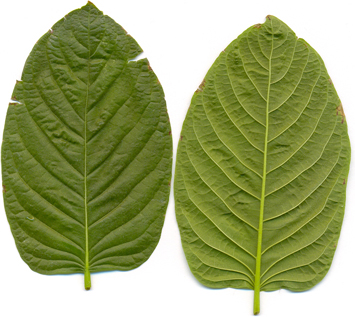
 — Known mostly in parts of south east Asia and Thailand, kratom is somewhat of a cultural intoxicant similar to the use of coca leaves (from which cocaine is derived) by the Bolivians and the use of khat or betel nut used by Arabic cultures.  The difference among these ‘cultural intoxicants’ is that kratom has effects similar to big pharma’s slew of ‘pain killer’ drugs.  The term ‘pain killer’ here is a slight misnomer since drugs like Vicodin, OxyContin, codeine and morphine ‘kill’ pain by flooding the brain with pleasure, thus, distracting you from the physical pain you may be experiencing.
This may be hard to believe in today’s society, but pharmaceutical companies used to manufacture heroin.  Before it was illegal, heroin was sold by Bayer as a way to ween oneself off of morphine addiction.  Morphine itself was prescribed as a cough syrup.  A much less potent opiate cough syrup common today is a mixture of codeine and promethazine (a sedative), referred to by rap culture as ‘purple drank.’

Presently, pharmaceutical companies rake in big money from sales of highly addictive narcotic ‘pain killers,’ such as OxyContin.  OxyContin, in and of itself, is equally as addictive as pure heroin (since heroin sold on the streets is usually not pure, especially that sold on the west coast; by all accounts, OxyContin is actually a more addictive drug than most street heroin).  Pharmaceutical companies have even gone so far as synthesizing new opiate drugs that are far more potent and addictive than even heroin, OxyContin, or morphine.  They come in highly concentrated forms like Fentanyl or Dilaudid.  Unbelievably, Fentanyl, a drug ten times more potent than heroin, can be prescribed in the form of lickable lollipop candy, as well as patches to put on the arm for a long-term timed-release ‘pain killing‘ effect.

It seems pharmaceutical companies would rather have a society addicted on their expensive pain pills than see someone medicate using a legal, less addictive and, in some cases, equally as effective, natural pain killer, such as kratom.  Now that kratom has ‘taken off’ via internet sales and it is still legal in most areas of the world, the US government, under Obama, is trying to crack down and make it unobtainable by the public.

Robbie Martin

***

THE STRANGER Kratom was first documented as an opiate substitute—a kind of herbal methadone—in Asia in the early 1800s. It’s often used by people who want an alternative to opiates, either because they’re trying to break an addiction or because they want some way to manage chronic pain without opiate-based drugs.

Every few months, a new intoxicant that isn’t technically covered by US drug-prohibition laws pops up on the market and policymakers, acting on very little information, freak out over it. Unfortunately for kratom, it has appeared in the immediate wake of the “bath salts” hysteria. (The hysteria was not entirely unjustified, as the active ingredient of “bath salts,” a chemical called MDPV, was held responsible for long-term psychiatric damage and several deaths.) Kratom is already in the early stages of the same cycle.

That cycle goes like this: Clever entrepreneurs find an intoxicant not covered under current law and begin selling it. People get excited about it and chatter online. Some user winds up in the emergency room—for reasons that may or may not be serious—and says its name to a doctor who’s never heard of it. The doctor calls the poison control center, and the public-health bureaucracy scrambles to figure out what this exotic new drug is. Someone talks to a reporter, and soon newspapers and TV stations are all over it, breathlessly warning parents about a “dangerous new high” threatening their children. Lawmakers see a chance to score some points by being tough on drugs and ban it. The drug fades away. A clever new entrepreneur finds a new drug, and the whack-a-mole cycle begins again.

Enter kratom, stage right.

Read more about The Rush To Prohibit Kratom.

© 2012 The Stranger

***

Photo by Wikimedia Commons user Abalg

Posted in Uncategorized | 1 Reply

Hallucinogenic Plant Targets Pain Receptor


MEDIA ROOTS
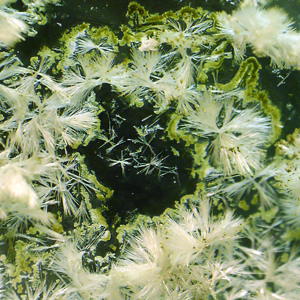
 — Salvia divinorum is one of the most fascinating and mysterious psychedelic drugs on the planet.  Equally as ‘powerful’ as DMT, with a peak duration of less than ten minutes, the drug can create a sense of timelessness where people may feel as if they’ve lived an eternity in another universe.  Its ‘abuse potential’ is low since the experience for most people can be jarring and disorienting.  For now, it is still legal in most parts of the United States.  Almost all other ingestion methods of Salvia, besides smoking, have led to little anecdotal conclusions.  People have had success making pure grain alcohol tinctures, which are very uncomfortable for the user to hold in the mouth.

The active ingredient in Salvia, salvinorin A, which binds to the kappa Opioid receptor, until now has been a mystery to science.  At the present time, pharmaceutical companies are most likely looking into the possibility of untapped knowledge in the world of the new frontier of psychedelic chemicals such as Salvia, which we know have already produced successful results.

Robbie Martin

***

TRI-CITY PSYCHOLOGY — At the molecular level, drugs like salvinorin A (the active ingredient of the hallucinogenic plant Salvia divinorum) work by activating specific proteins, known as receptors, in the brain and body.

Salvinorin A, the most potent naturally occurring hallucinogen, is unusual in that it interacts with only one receptor in the human brain—the kappa opioid receptor (KOR). Scientists know of four distinct types of opioid receptors, but until now the structure of the ‘salvia receptor’, and the details about how salvinorin A and other drugs interact with it, was a mystery.

In a research paper published March 21 in the journal Nature, scientists from the University of North Carolina at Chapel Hill, Scripps Research Foundation, and two other institutions revealed the first-ever glimpse of the complete structure of the KOR. The finding could accelerate the development of new drugs to treat addiction, depression, anxiety, chronic pain, and many other conditions.

“Once we see the structure of the receptor, it becomes easier for us to develop drugs that target the receptor in ways that might be beneficial for medical therapy,” says Bryan Roth, professor of pharmacology at UNC and one of the paper’s authors. “Drugs that block the receptor are potentially useful for treating a number of serious illnesses including chronic pain, cocaine addiction, and other diseases.”

Read more about Hallucinogenic Plant Targets Pain Receptor.

© 2012 Tri-City Psychology Services, Inc.

***

Photo by Wikimedia Commons user Abalg

Yoga as Spiritual Activism

REALITY SANDWICH– Is Activism a natural outgrowth of yoga? Isn’t yoga all about focusing inward?

When journalists ask me what my message is or what I am teaching, I reply: “Vegetarianism, environmentalism and the need to take political action.” This response is generally met with bewilderment and another question like, “What are the physical benefits of yoga?” I like to answer, “What could be more physical than what you eat, where you live, and what kind of world you share with others?”

I believe that the growing popularity of yoga at this time of global transformation and overall shift in consciousness is not a coincidence. A yogi, by definition, is someone who strives to live harmoniously with the earth. Through that relationship the yogi seeks to purify his or her karmas so that enlightenment arises. Enlightenment is a state in which “Oneness of being” is realized, the interconnection of all beings and things in our world–yoga teaches that we are inseparably woven into the great web of life, matter, and cosmic space.

We are responsible for the health and well being of our world. But even though it seems that the world needs us more than ever before, it is actually we who need the world for our own salvation–not only as physical beings who require air and water and nutrition, but also in a metaphysical sense. Mother Nature does not require us for her existence, but we need her: this earth provides us with life, and, according to yoga teachings, life gives us the opportunity for enlightenment by giving us the means to work out our past karmas.

Continue reading about Yoga as Spiritual Activism.

© Reality Sandwich, 2008

Photo by Rick Pickett

The Nature of Dis-Ease

thinking placeboBRUCE LIPTON, PHD– Sometimes, the body’s natural harmony breaks down, and we experience dis-ease, which is a reflection of the body’s inability to maintain normal control of its function-providing systems. Because behavior is created through the interaction of proteins with their complementary signals, there are really only two sources of dis-ease: either the proteins are defective or the signals are distorted.

About 5 percent of the world’s population is born with birth defects, which means they have mutated genes that code for dysfunctional proteins. Structurally deformed or defective proteins can “jam the machine,” disturb normal pathway functions, and impair the character and quality of lives. However, 95 percent of the human population arrives on this planet with a perfectly functional set of gene blueprints.

Because the majority of us have a perfectly healthy genome and produce functional proteins, illness in this group can likely be attributed to the nature of the signal. There are three primary situations in which signals contribute to dysfunction and dis-ease. The first is trauma. If you twist or misalign your spine and physically impede the transmission of the nervous system’s signals, it may result in a distortion of the information being exchanged between the brain and the body’s cells, tissues, and organs.

The second is toxicity. Toxins and poisons in our system represent inappropriate chemistry that can distort the signal’s information on its path between the nervous system and the targeted cells and tissues. Altered signals, derived from either of these causes, can inhibit or modify normal behaviors and lead to the expression of dis-ease.

The third and most important influence of signals on the dis-ease process is thought, the action of the mind. Mind-related illnesses do not require that there be anything physically wrong with the body at the outset of the dis-ease. Health is predicated upon the nervous system’s ability to accurately perceive environmental information and selectively engage appropriate, life-sustaining behaviors. If a mind misinterprets environmental signals and generates an inappropriate response, survival is threatened because the body’s behaviors become out of synch with the environment. We may not think that a thought could be enough to undermine an entire system, but, in fact, misperceptions can be lethal.

Continue reading about The Nature of Dis-Ease

© Bruce Lipton, 2009

Photo by flickr user Santosh Kumar GM

Posted in Uncategorized | 1 Reply