Media Roots Radio – Obama’s Weak NSA Retort & the Antidote to Defeatism

Robbie and Abby Martin discuss the unbelievable nature of the post 9/11 anthrax attacks. They also talk about Obama’s pathetic NSA retort revealing a chink in the establishment’s armor, inverted totalitarianism, Guantanamo Bay, and the antidote to defeatism

***

The above timeline is interactive. Scroll through it to find out more about the show’s music and to resources mentioned during the broadcast. If you would like to directly download the podcast click the down arrow icon on the right of the soundcloud display. To hide the comments to enable easier rewind and fast forward, click on the icon on the very bottom right.

This Media Roots podcast is the product of many long hours of hard work and love. If you want to encourage our voice, please consider supporting us as we continue to speak from outside party lines. Even the smallest donations are appreciated and help us with our operating costs.

Listen to all previous episodes of Media Roots Radio here.

The Death of Irony: University of Penn’s Secret Meetings on Secret Surveillance Law

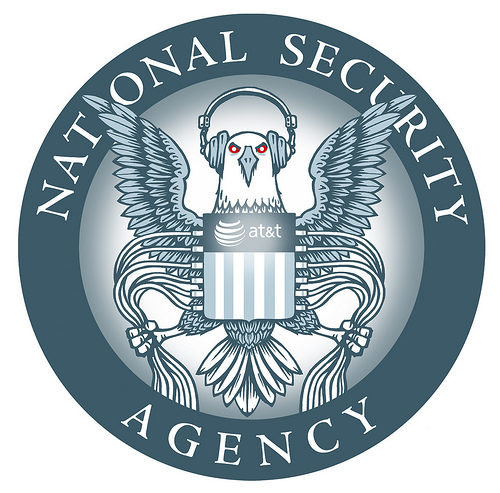
NSAbyEFFIt’s a crisp Saturday morning in late November, and the University of Pennsylvania’s campus is just barely stirring as I walk into the Silverman building and head towards Room 147, excited about the morning’s roundtable discussion: Spying and the Judiciary: FISA and Other Special Courts.

The event is one of seven moderated discussions at the Center for Ethics and the Rule of Law (CERL) Conference, On the Very Idea of Secret Laws: Transparency and Publicity in Deliberative Democracy.

I’m not the only geek fired-up either, a portly man in a suit walks up next to me as we briskly move towards the meeting room.

“We’re in for a treat this morning!” he says, his mouth cracked with a grin and his eyes alight. Only one of us would end up attending, however – and it had nothing to do with my lacking a tie.

After taking a seat (and catching out of the corner of my eye NSA’s deputy director John “Chris” Inglis drift into the room, among others), a wiry CERL staffer named Ilya Rudyak walks over and asks for my name. I introduce myself and offer my press badge.

“You’re going to have to leave,” he says with a nervous smile.

After escorting me out into the hallway, another CERL representative, Claire Finkelstein, says I can stop back in towards the end of the lunch break to ask her some questions.

In other words, this morning’s moderated discussion on secret courts, secret laws, and a rampaging surveillance apparatus is strangely, well, secret.

In fact, every event during this two day conference – with the exception of Chris Inglis’ keynote speech inside a packed auditorium the night before – is listed on the university’s law department website, yet completely shielded from press and public scrutiny. Furthermore, none of the event listings even have a full roster of attendees.

I find a 14-page list of participant bios outside of the room. The packet is chock full of representatives from the defense industry, intelligence community, academia, and think tanks such as the Cato Institute.

Courtesy for the Powerful, Not the Public

I return near the end of the attendees’ lunch break and quickly find CERL’s head staff member, Claire Finkelstein. She seems dismayed that I’m actually taking up her earlier invitation.

“Is there classified information being discussed here?” I ask Finkelstein.

“No, no classified information, but sensitive topics.”

“So if there’s no classified information being disclosed here, why is it closed to the public?”

“The main point of the discussions is for policy makers, academics, and others who are involved,” she begins, “to enter into dialogue with one another in a way that allows all of us to move up the learning curve, so that we become better-informed academics and policy makers become better-informed.”

She soon passes me off to another attendee: the ACLU’s Alex Abdo.

“There’s a non-attribution agreement that applies, a ‘Chatham House Rule’ that people here are talking about,” Alex Abdo tells me. Finally, we’re getting somewhere.

Abdo is an ACLU staff attorney and participant in that organization’s National Security Project. He arrived here this morning after doing battle with the National Security Agency in U.S. District Court in Lower Manhattan the day before. Abdo is also a conference participant. At moments during our conversation, he seems embarrassed when I press him on the absurdly-ironic secrecy cloaking a conference whose very theme ostensibly seeks to take a critical look at Intelligence Community obfuscation. Hell, even several participants (including Dr. Hans Blix) during a 2006 UK conference on freedom of information and the Iraq War scoffed at invoking the Chatham House rule.

“It’s a really fascinating discussion about how we should think about privacy in an era where so much private information can be collected so easily. That’s my understanding about what’s happened today so far.”

Thanks for the boilerplate, Mr. Abdo, but I’m still trying to wrap my head around why the public should be barred from participating in – or even observing – this “fascinating discussion” on how our “private information can be collected so easily.”

“I’ve been to a couple of these meetings before,” Abdo begins. “Usually, the thought is that if you get a bunch of people who are really thinking and working on these issues together in a room, and you promise not to use what they say against them later on, you’ll foster a thoughtful and uninhibited conversation.

He pauses, adding wryly:

If no one’s surveilling you, you can have an uninhibited conversation.

Julian Sanchez, a CATO Institute research fellow who attended the conference in its entirety, more-explicitly characterized this rule’s real purpose in a series of emails to me:

You’ve got a bunch of lawyers who used to work for the government, some who currently work for the government, and others who might very well hope to work for the government in the future, perhaps on these very issues” [such as Foreign Intelligence Surveillance Court opinions], he writes. I can promise you none of those people ever wants to be quoted in a newspaper making what comes off as a harsh personal criticism of a federal judge [who is assigned to the Foreign Intelligence Surveillance Court] — or even seeming like they partially agree with someone else’s criticism,” he continues.

“In certain circles, that’s at least going to be a huge PR headache, and very likely career kryptonite. Maybe I can just come right out and say ‘that opinion was a total disaster,’ but I’m never going to have to argue a case before that judge, or be applying for a job at DOJ, and I’m certainly not important enough to make headlines with an offhand remark. So the only way you really get a free-flowing, honest discussion is if everyone can just talk without thinking about whether they’re going to make a Huffington Post headline if they phrase something the wrong way.

Whether or not Sanchez was aware, there weren’t just “a bunch of [government] lawyers” in attendance, however. In addition to top-ranking officials within the Intelligence Community, individuals with long-standing corporate ties to the defense and intelligence industries participated too. To shed some light on a frustratingly non-transparent gathering, here’s a small sampling of attendees from the conference roster:

* John “Chris” Inglis, Deputy Director of the National Security Agency and the organization’s senior civilian leader, “responsible for guiding and directing strategies, operations, and policy.”

* Sean Kanuck, whose current position is National Intelligence Officer for Cyber Issues within the Office of the Director of National Intelligence. Kanuck came to this segment of the intelligence community after a decade-long position with the CIA’s Information Operations Center. Kanuck also has extensive experience in law focusing on corporate mergers and acquisitions;

* William R. Craven, the founder and CEO of Overwatch Systems, “a software company serving the Intelligence segment of the Defense industry.” Prior to forming Overwatch, Craven “had been the CEO of Paravant, a public company serving the defense community with rugged and high speed computing solutions for Battlefield and Intelligence applications;

* Lt. General Paul Menoher (Ret.), currently Director of Overwatch Systems LLC and an advising board member of Topia Ventures and Oberon Associates, Inc., and a consultant for ten other defense firms. Menoher also enjoyed a 35-year career in Army Intelligence;

* Amos Guiora, currently a Research Fellow at the International Institute on Counterterrorism in Israel, and Commander of the Israel Defense Force’s School of Military Law and a former legal advisor to Gaza Strip operations;

* George Casey, “head of Shearman and Sterling’s Global Mergers and Acquisitions Group”. Casey is an expert in U.S. domestic and cross-border mergers and acquisitions transactions, venture capital financing, and represents “many of the largest U.S. and non-U.S. corporate and investment banking clients.” Casey is also a current University of Pennsylvania School of Law lecturer.

* Harvey Rubin, M.D., Ph.D, Penn’s Institute for Strategic Threat Analyis and Response (ISTAR) director, and Associate Dean for Student Affairs in the School of Medicine.

So while influential members of government and private industry discuss issues (behind closed doors and shielded from any attribution to “career-damaging” statements) that clearly belong in the realm of public debate – and have been since the beginning of the Snowden-spurred surveillance scandal in April – you and I are shut out from these discussions because these officials are concerned that their statements might be recorded, publicized, and prove damaging to their reputations, careers, and profit margins.

And while this particular conference may not directly produce public policy, as Julian Sanchez also assured me, academic papers may be written about what was discussed. These papers may then become white papers that form the basis for later policy by unelected officials, and often outside the public eye.

Scrutinizing Penn’s Center for Ethics and the Rule of Law

What’s no secret, unlike the conversations throughout this two day CERL conference on surveillance and secret law, is how deeply entrenched this – and so many other non-state funded schools like Penn – are with the defense industry.

Including up to the third quarter of FY 2012 (the most recently available data), the University of Pennsylvania raked in over $17 million in government research work. FY 2011 saw a very lucrative $32 million in such contract work for Penn.

It’s worth taking a closer look at CERL too. Its advisory board contains not only law professors from a variety of universities, but defense contractors like William Craven, currently the CEO of Overwatch Systems and the former head of Paravant. Both companies have deep roots within the defense and intelligence communities. As stated earlier, Craven also participated in this Penn conference.

Ambassador Dell Dailey (Ret.) is another CERL board member whose consulting company “spans both Department of Defense and Department of State programs, numerous product focused companies, private equity, small arms company, think tank efforts and international operations.” Dailey also serves on the nonprofit Center for a New American Security’s Board of Advisors. CNAS boasts of developing “strong, pragmatic and principled national security and defense policies.”

CERL’s seeming affinity for defense industry players and its apparent sympathy for current national security policies doesn’t stop with its private contractor leadership, however.

In a Penn Law Journal article published this past summer titled The Perils of Push Button War, CERL’s head and perhaps its most publicly-visible member, Claire Finkelstein, is paraphrased regarding drone warfare:

Finkelstein points out, however, that as a weapons system, there’s a lot to like about drones. They are more precise than traditional aerial bombs, better able to pinpoint targets, and therefore have the potential to dramatically reduce civilian casualties.

Two law professors and current CERL board members, Jens Ohlin and Kevin Govern, are cited in the same article as supporting the targeted assassination of U.S. citizens abroad, as in the case of Anwar al-Awlaki:

Jens Ohlin, a law professor at Cornell, and a member of CERL’s advisory board, said that the presence of an al-Qaeda branch in Yemen with an avowed intent of engaging Americans more than justified the invocation of war powers there. He said it has never been the case that American citizens taking up arms against the U.S. get special treatment on the battlefield.

Another board member, Kevin Govern, law professor at Ave Maria Law School, and a former Army Judge Advocate, said that al-Awlaki might be compared to Nazi propaganda chief Joseph Goebbels.

What, then, do we make of Penn’s “secret” conference participants, their relationships to the U.S. defense and intelligence apparatuses, and the pervasive secrecy by which they are surrounded? Can we trust that whatever academic treatises, white papers, and possible policy decisions that may come from “On the Very Idea of Secret Laws” will represent not just the national security state’s perceived desires, but those of the public’s too?

Written by Dustin Slaughter. This article is cross-posted at Phawker.

Photo by EFF

Patriot Acts: Whistleblowers Defending Our Freedom

A very few, as heroes, patriots, martyrs, reformers in the great sense, and men, serve the state with their consciences also, and so necessarily resist it for the most part; and they are commonly treated as enemies by it. ” – Henry David Thoreau from ‘Civil Disobedience’

Daniel Ellsberg called Edward Snowden’s revelations of government spying, “the most important leak in American history.” As the public learns more and more about secret government programs to spy on U.S. citizens, it is tempting to believe that it is all about Edward Snowden and his startling disclosures. This is far from the truth. In fact, almost a decade ago, conscientious employees of United States government spy agencies such as the National Security Administration (NSA) and the Central Intelligence Agency (CIA) began reporting on abusive and seemingly unconstitutional government polices including torture and deliberate spying on innocent U.S. citizens.

Abby Martin interviewed three former employees of government spy agencies with a combined total of over 40 years experience in government positions. These interviews revealed that torture is official U.S. government policy, and that spying on innocent U.S. citizens is much more pervasive than the federal government’s response to Edward Snowden’s disclosures would seem to indicate. Taken together with Snowden’s revelations, these interviews paint a picture of an out of control federal government that has slipped the reins of morality and the US Constitution, and is determined and able to do whatever it desires without regard to legality or the Constitution.

Russell Tice, a satellite systems specialist, worked over 20 years in various government agencies including the NSA and Defense Intelligence Agency (DIA). In 2004, while performing his government assigned duties, Tice was shocked to learn that the U.S. government was spying on innocent U.S. citizens. Tice revealed what he knew to reporters for the New York Times and the Austin American-Statesman, and the story was published. Tice hoped the exposure would help put an end to what he considered to be illegal and unconstitutional activity on the part of the government.

NSA Blackmailing Obama? Abby Martin Speaks to NSA Whistleblower Russ Tice 

Thomas Drake is a former NSA senior executive and NSA Chair at the National Defense University. He worked on the Trailblazer Project, another program that intercepted cell phone, email and internet communications, and was a predecessor to the PRISM project revealed by Edward Snowden. Convinced that Trailblazer was illegally violating innocent Americans’ privacy, Drake and several others reported their concerns through proper government channels including the Department of Defense Inspector General. In 2007, all those involved were raided by the FBI. Drake was charged with violating the Espionage Act. Meanwhile, he continued to reveal waste, fraud, abuse, and violations of privacy perpetrated by the NSA to reporters, including those from the Baltimore Sun and The New Yorker.

 Advice on Trusting Your Government from NSA Whistleblower Thomas Drake

John Kiriakou is a former CIA analyst and case officer, a former senior investigator for the Senate Foreign Relations Committee, and former CIA Chief of Counterterrorist Operations in Pakistan. He resigned from the CIA in 2004 after being recruited to supervise a program of water boarding and other “enhanced interrogation” methods. He refused to participate because he felt the methods to be immoral and equivalent to torture. In December 2007, while being interviewed on ABC News, Kiriakou stated his opinion that water boarding was torture and that he knew through personal experience that it was official U.S. government policy. From that day on, Kiriakou states that all his activities have been monitored and investigated by the Justice Department. Eventually, in 2012, he was charged and convicted under the Espionage Act and sentenced to 2 ½ years in prison. This made him the first and only CIA officer ever to be convicted under the Espionage Act.

CIA Whistleblower John Kiriakou: ‘If I Tortured, I’d Be Free’

It’s a lot worse than you think.

On being briefed on Snowden’s revelations, Democratic member of the U.S. House of Representatives, Loretta Sanchez, said:

What we learned in there is significantly more than what is out in the media today… I can’t speak to what we learned in there…but I will tell you that I believe it is just the tip of the iceberg

In their discussions with Abby Martin, Tice, Drake, and Kiriakou all related their knowledge that illegal government activity is a great deal more intrusive and pervasive than even Snowden’s revelations illustrate. Russell Tice described a computer program known as ECHELON that allows the government to spy on innocent American’s phone calls, emails, and other internet activity. He personally witnessed a number of alarming examples of government abuse of this system including warrantless spying on:

– News organizations and journalists
– U.S. companies that do business internationally
– Financial institutions
– State Department personnel including Colin Powell
– 3-star and higher Admirals and Generals including David Petraeus
– Prominent law firms and lawyers
– Supreme Court Justices including Judge Alito
– United States Congressmen including Barak Obama when he was a Senator
– Friends, family members and personal residences of all of the above

A high level NSA source told Tice that orders to spy were coming from Vice President Cheney, himself.

Both Tice and Drake stated that they had personal knowledge that the government did look into the contents of the information they obtain and not just the “metadata” as President Obama now claims. Thomas Drake noted that the PRISM program revealed by Edward Snowden had taken the violations of privacy he objected to in the Trailblazer Project much further. “PRISM demonstrates that there is collusion between the U.S. government and the most powerful, largest internet service providers, not only in the country, but in the world. The government is essentially given direct access or the equivalent of direct access to subscriber information on a very large scale, including the content of their information.”

Attorney Jesselyn Radack is a Director of the Government Accountability Project, and the attorney who represents both Drake and Kiriakou. She explained that the PRISM program expands wiretapping without a warrant, like that which occurred in the Trailblazer Project under the Bush administration. Now, with PRISM, the government has direct access to the nine largest internet service providers in the world, including Google, Microsoft, and Apple. Radack stated that this is in direct violation of a number of federal laws as well as the 4th Amendment of the U.S. Constitution.

In addition to PRISM and the other spying efforts brought to light by Snowden, Drake believes that, “there are additional orders and there are additional programs that have not been revealed…I think that once those come out, several other shoes will drop. I think the government is desperate to protect the deepest of the secrets.” Drake believes that what will be revealed is that government spying treats U.S. citizens no differently than foreign nationals. He believes that the “Foreign” in Foreign Intelligence Surveillance Act (FISA) is irrelevant. The act might be more accurately called the Surveillance Act. He feels that all citizens in the U.S. and other countries are virtual subjects of one large surveillance state.

On the issue of torture, John Kiriakou emphasized that torture was not just a rogue activity carried out by isolated U.S. government agents. Kiriakou knew from personal experience that torture, during his time in the CIA, was an official U.S. government policy authorized from the President of the United States on down.

Russell Tice summarized the feelings of the group: “Every means of communication in this country, everything, is being watched by the federal government, and that is Orwellian, and that is the trademark of a police state.”

Why is the government doing this to us?

Thomas Drake gave the most succinct explanation for the rogue actions of the U.S. government. When asked by Abby Martin why he felt the government was doing this, he answered, “Because they can. They have the power.” “ Information is the currency of power,” Radack added. “More and more information is the name of the game.”

There is nothing to stop the intelligence agencies from doing this. So called oversight of intelligence activities is no oversight at all, explained Drake. The FISA court operates in complete secrecy. Congressional oversight committees are being briefed in secret, and those present are sworn to secrecy regarding what they learned. Even taking oversight into account, there is only a very small number of people who know what is going on, explained Drake. The FISA court virtually never denies a request to spy. In 2012, the FISA court approved nearly 2,000 requests for surveillance and turned down none. “This is unprecedented,” Drake said. “How can such deep secrets exist in a democracy, a constitutional republic, without something giving – and what’s giving is our fundamental rights and liberties.”

Drake further explained that this spying serves what he refers to as the “surveillance state.” “It serves a very, very large contractor base. Staggering amounts of money are being made off the fear mongering since 9/11. You now have an entire industrial scale mechanism. A number of contractors are feeding off of it, and it’s a lot of money. You also have those in congress who are supporting and enabling it. This has become normalized.” Drake believes that this process has now taken on a life of its own. “They are not going to give up the secret power willingly,” he said.

Russell Tice suggested that the spying was a means of control. He believes that the upper echelons of the intelligence community collect compromising information on individuals in order to influence their future behavior. In this sense, the executives of the intelligence community comprise a sort of shadow government that has the power to vet candidates for leadership positions in government, and put leverage on the three branches of government to get what they want. As evidence of this theory, Tice pointed out that U.S. government intelligence agencies were not affected by the sequester, but nearly all other government agencies were.

Tice describes how candidate Obama pledged to stop National Security Letters and other forms of abusive government surveillance and to support whistleblowers. Even though Tice was a lifelong Republican, he supported Obama for that reason. Once he was elected, however, Obama changed. Those promises never materialized. Obama continues to lie about and cover up the extent of U.S. government spying, and he has prosecuted whistleblowers more zealously than any President before him. “Is it because he is being controlled?” Tice wonders. Tice notes that before Edward Snowden presented the world with incontrovertible proof of unconstitutional government spying, the media neglected to report on the issue. This was true even though Tice and others exposed this activity years ago. Tice suggests that “another interest” making use of compromising information obtained through illegal spying was applying leverage to the media to keep them quiet.

There is debate as to whether or not all this government spying is even effective or helpful. In light of the Boston bombing and the underwear bomber, internal government reports suggested that perhaps intelligence agencies were getting too much information to effectively analyze and predict attacks. Nonetheless, the government makes ample use of fear mongering to defend their actions. Drake and Radack, debunked the government claim that NSA spying programs have stopped at least 50 terrorist attacks. Drake posed the question, “How many of those “terrorist plots” were stopped, disrupted or prevented solely on the basis of secret surveillance programs and not by other means.” Radack added, “Even if we got that answer, there is no way to verify it. The government has told huge lies, and yet we are just supposed to trust them to tell us how many terrorist plots they have foiled.” It does not make sense. “They say they can only tell us so much, but this administration has not been at all shy about bragging about the “terrorist plots” that it disrupts,” she said. “Or that it manufactures then disrupts,” Abby Martin quipped.

If the US government does it, it’s not illegal.

There is a two tiered justice system operating in the U.S. today. There is one system of justice for those who do the government’s bidding without question, and another system of justice for those patriots who hope to improve the government by pointing out its flaws.

No one responsible for the illegal warrantless wiretapping that took place during the Bush administration is in jail. In fact, the government made it all legal after the fact. No one responsible for the unconstitutional surveillance revealed by Edward Snowden is being prosecuted or is in jail. The Director of National Intelligence, James Clapper, who lied to Congress about the extent of NSA surveillance, is not being prosecuted and is not in jail.

John Yoo, Alberto Gonzalez, Donald Rumsfeld, and others who conceived of, authorized, implemented, and oversaw torture are not in jail. None of the attorneys who papered over torture with tortuous legal analysis are in jail. Former CIA agent, Jose Rodriguez, the man responsible for destroying the tapes showing evidence of CIA torture, is not in jail. In fact, he is on a book tour discussing the great benefits of torture.

“None are in prison, none will ever be prosecuted,” says John Kiriakou.

Uncle Sam to the conscientious – proceed at your own risk!

John Kiriakou refused to take part in torture, and exposed torture by the U.S. government in hopes of putting an end to it. He is going to jail for 2 ½ years, convicted under the Espionage Act. Kiriakou was convicted even though the author of the law he supposedly violated testified on his behalf. He is in jail even though he demonstrated no mal intent. He is in jail because the presiding judge disregarded and disallowed legal precedent regarding mal intent. John Kiriakou is in jail after the government prosecutors were able to meet in secret with and give secret information to the presiding judge that Kiriakou was not allowed to hear or rebut. In fact, after she alone heard the secret so-called “evidence,” the presiding judge publicly stated that she wished she could have sentenced Kiriakou to 10 years instead of 2 1/2 years.

John Kiriakou has been audited by the IRS every single year since 2007, when he stated torture was official U.S. government policy.

Thomas Drake exposed unconstitutional government spying as part of the Trailblazer program. Thomas Drake was prosecuted under the espionage act. To avoid an even worse sentence, Drake was forced to plead guilty to a misdemeanor. He lost his job and his pension and was required to serve one year of probation.

Bradley Manning exposed war crimes. He is in prison for many years. Edward Snowden exposed unconstitutional government spying. He had to flee the United States where he would certainly be in jail, to Russia where he is free.

John Kiriakou feels that this is all an intentional program of harassment on the part of the government. The government wants to punish critics in any way possible for the purpose of having a chilling effect on others other who would criticize, blow the whistle, point out evidence of waste, fraud, and abuse, or expose government crimes.

What hope do we have?

Forty years ago, the Supreme Court ruled that the President of the United States, Richard Nixon, was not above the law. Americans hailed whistleblowers for having brought down the President for his utter lawlessness. How did we get from prosecuting the criminal to prosecuting the messenger? “We have strayed so far,” notes Abby Martin.

Today, President Obama, who was elected to office promising to shut down Guantanamo Prison, closes the office responsible for doing just that shortly after he wins re-election

John Kiriakou observes that we have had an incremental loss in our civil liberties over the years that were accelerated after 9/11, but there has been surprisingly little public outrage.

Today, the United States government is known for:

– Intercepting phone calls and emails without a warrant
– Vaporizing innocent people including American citizens with missiles from predator drones
– Mistreatment of prisoners in Guantanamo Bay
– Extraordinary Rendition
– Indefinite pretrial detention
– Coercive “enhanced” interrogation techniques (A.K.A. torture)
– Zealous harassment and prosecution of political dissidents (whistleblowers)

Is there no hope? Have Americans accepted this loss of civil liberties without a fight?

Russell Tice does not believe so. He is still out there speaking out against government abuse.

Thomas Drake does not believe so. He is still speaking out too. “I do believe, if the conversations, debate, and discussions that people are now having are any indication, people are growing more uncomfortable with what’s been going on,” he says.

Jesselyn Radack does not believe so. She continues to defend and advocate for the whistleblowers. She notes, “Congressman Jim Sensenbrenner who wrote the Patriot Act is coming out against all this. Senators Wyden and Udall and others you think wouldn’t have a problem with this are coming out against this too, and Republican libertarians and progressive Democrats have joined forces saying it is unacceptable for the government to have this much power hidden from the people.”

John Kiriakou does not believe there is no hope. “I’ve come to realize this case is so much bigger than I am…It is so much more important for free speech and freedom of association, it is so much more important for freedom of the press. I just hope that there is enough rage out there…that it helps someone in the future stand up to the justice department and to stand up to these infringements on our civil liberties.”

Bradley Manning has not lost hope. He is going to jail rather than ignore the injustice he wanted to stop.

Finally, Edward Snowden has not given up:

Everyone everywhere now understands how bad things have gotten — and they’re talking about it. They have the power to decide for themselves whether they are willing to sacrifice their privacy to the surveillance state.” “I do not want to live in a world where everything I do and say is recorded. That is not something I am willing to support or live under.”

The rest is up to us. As Abby Martin said, “We should all be speaking up. If we don’t stop this now, who knows where we are going with it.”

Written by David Wiggins

Posted in Uncategorized | 1 Reply

Digital Currencies and Privacy Protection

By now, you’ve probably heard about Edward Snowden, the 29 year old National Security Agency contractor who defected to Hong Kong after leaking explosive revelations about the extent of the agency’s spying program.

In an exclusive interview with the Guardian’s Glenn Greenwald, Snowden explains that NSA analysts have the technological ability and blanket legal authority to snoop on anybody. “Any analyst at any time can target anyone. Any selector, anywhere… I, sitting at my desk, certainly had the authorities to wiretap anyone, from you or your accountant, to a federal judge, to even the President.” 
 
The story sent shock waves through diplomatic circles and the corporate media.  But it’s just the latest story in long wave of recent scandals, including the Associated Press phone records subpoena, the IRS- tea party investigation, the Rupert Murdoch phone hacking and Occupy Wall Street undercover police informant and provocateur revelations.  
 
Snowden further explained the far-reach of NSA capabilities to intercept every mode of our private lives, by saying “with this capability, the vast majority of human communications are automatically ingested without targeting. If I wanted to see your e-mails or your wife’s phone, all I have to do is use intercepts. I can get your e-mails, passwords, phone records, credit cards.”
 
His bold confession is not to be understood in a vacuum.  There are countless videos of low level US government personnel poking gloved fingers around travelers’ genital areas, causing permanent distress and embarrassment.  Racial, religious profiling and clever contrary profiling of white infants and grandmothers  is now encountered at train stations, bus stations and highway checkpoints as well.  For more than two centuries, this heavy, iron fist did not figure anywhere in the American republic.

Now, police departments across the country issue “administrative subpoenas,” i.e. without a search warrant signed by a judge, to routinely seize troves of customer details from mobile carriers, enabling them to track the whereabouts of millions of subscribers.

High tech surveillance drones are being acquired to spy on Americans while the constitutional scholar and Nobel Peace Prize President uses predator drones to kill thousands abroad, including women and children and American citizens, without bothering to bring any criminal charges in court, let alone convict them of any crime.

Often, the targets’ names are unknown. The killing is based on appearances called signatures: purported intercepted speech, including emails and people the targets are associated with.  Its a remote, high tech way to profile targets and it is in this context that Snowden’s revelations should be digested.

The assertion that only bad guys need to worry about PRISM is very naive.  Something as innocent as dialing a wrong number could bring you unwarranted scrutiny.  Someone with an ax to grind could drop a dime on you and wreck your life.  
 
The intelligence services and the military take a prophylactic approach.  This means they increasingly believe that with programs like PRISM, they can identify
likely criminals and terrorists before a crime or terrorist act has occurred.  
 
For all its acronyms and technical jargon, the PRISM spy program rests on a simple premise: Secretly record all information about everybody, everywhere at all times, then archive it forever.  Since any human being has the potential to become a criminal or terrorist suspect in the future, a dossier on that person will be readily available, including who that person has associated with in the past

The dossier focuses on four areas: financial transactions, phone records, Internet records and travel logs.  This diary of bytes makes it possible to ruin anybody under any pretext at will.  It creates undreamed of leverage of the state to terrorize the individual and groups of individuals. All manor of abuse is justified under the ‘War on Terror.’
 
An exhaustive review is beyond the scope of this article, but a few simple but clever changes of habit can go a long way towards protecting yourself from warrantless, illegal, unconstitutional and invasive collection of your genuine private information.  To begin, I will focus on the encrypted payments and communication system called Swiftcoin.  From a recent press release:
 
“Users running the Swiftcoin application present a challenge to eavesdroppers. This free application requires no identification or payment to download. Once installed, it enables users to opt out of the common email servers operated by large corporations that are obliged, under gag orders, to provide back door access to invasive, over reaching public and private interests.

Swiftcoin, like numbered Swiss bank accounts, does not identify users by their names. Unlike bank accounts, the user number changes every time he/she presses the send button. The Swiftcoin application may be moved off the user’s computer into a pen drive and opened up again on another computer at will. Swiftcoin users can not be traced by name, by IP address or by device. “
 
This is called deep encryption because the literally encrypted communication, including its “meta data,” is not identifiable unless the user chooses to make her wallet id public.  Every sent message departs from a new “location” or the same location as the user wishes.  The same is true for the recipient.  Every message or payment is unique and may employ disposable meta data.   In addition, the user device itself can be substituted at will.  Furthermore, a Swiftcoin wallet can be moved to a pen drive and uploaded to a different device.  All of this makes it substantially more difficult to spy on and record a user’s activity, because the correlation between a Swiftcoin id and a particular person is tenuous.  Swiftcoin does not rely entirely on encryption which, at the end of the day, can be cracked by cryptographers.  The very way that Swiftcoin is designed to be used does not lend itself to tracking any individual over time.

 
Alas, the Swiftcoin homepage states that it is not available to U.S. citizens.  However, the Swiftcoin telegram remains freely available to all regardless of nationality.  Every new user may receive ten free Swiftcoins, ( good for 10 000 telegrams; every Swiftcoin ” telegram ” costs 0.001 Swiftcoin ) which is returned to sender upon a return mail from recipient, for a net cost of zero to send and receive a telegram.  No money or purchase of Swiftcoin is required to download the program and use the telegram feature.

Written by Daniel Bruno for Media Roots

US Surveillance State, Anthrax Attacks: An Inside Job

MEDIA ROOTS – On this episode of Breaking the Set: Abby Martin talks about the corporate media’s unfair coverage of Occupy Wall Street demonstrations in comparison to the protests in Spain and Greece; EPIC’s Director of the Open Government Program, Ginger McCall, talks about government surveillance and the systematic erosion of American civil liberties; BTS looks back at the US anthrax attacks 11 years later, and analyzes the government narrative with Robbie Martin of Media Roots. 

MR

***

Anthrax Attacks: Inside Job

***

Tune in from 6-6:30 or 9-9:30 EST M-F on your local cable station

OR watch live @http://www.RT.com/usa

OR SUBSCRIBE to the official YouTube channel @http://www.youtube.com/BreakingTheSet

LIKE Breaking The Set @http://fb.me/BreakingTheSet

FOLLOW Abby Martin @http://twitter.com/AbbyMartin