

Big Oil is More Than Big Trouble for the Environment

MEDIA ROOTS – The global petroleum industry has long been the antagonist for environmental and animal-rights advocates. But more recently, “Big Oil” has emerged as a literal threat to democracy for its vast political influence and ability to contrive wars for profit. A report released last month by the National Wildlife Federation exposed to what extent the oil industry, along with coal, affect elections in America.

Speaker of the House John Boehner tops the list of congressman receiving financial aid from the energy industry. Many of these donors stand to benefit from the proposed construction of the Keystone XL pipeline, an ecologically-damaging project that would send diluted bitumen – a tar-like substance – to American oil refineries, and the congressman has repeatedly castigated the president for delaying its permit. If that wasn’t bad enough, the congressman actually owns investments in some of these companies. Congress is exempt from various trade-laws and last year 60 Minutes highlighted Boehner’s record of insider-trading.

More recently, Congress passed a bill referred to as the “Stop the War on Coal Act.” Congressman Johnson, also a Republican from Ohio, authored the bill and explained the bill wasn’t about climate change as much as it was about public health and safety. But dissenters of the bill argue it actually endangers millions of Americans and virtually declares war on public health. Furthermore, the bill could possibly pave way for a similar bill that would further secure the stature of the petroleum industry.

Big Oil should be considered a big country

Seven of the top ten highest-grossing corporations in the world, as ranked by Fortune magazine earlier this year, are of the oil industry. Royal Dutch Shell, the list’s top revenue-generator, is on par with the gross domestic product of Iran. But if it was its own country, it would be the twenty-fifth highest-grossing country in the world.

When considering these seven corporations together, they are the sixth highest-grossing entity worldwide – government or corporate. And because these entities are private corporations, and considered persons by the Supreme Court, they are not subject to the same level of public scrutiny or congressional oversight. While it may not be surprising that over three-quarters of all petroleum refined in the United States produces gasoline, diesel, and jet fuels, it may be news to some just who is consuming these fuels the most.

The petrodollar war, not the terror war

Purchasing over one percent of the world’s refined oil – by far more than any other single entity – is the U.S. Department of Defense. Over half of this consumption is used to fuel jet engines with the Air Force being the branch of greatest oil demand. The department consumes nearly double the amount of fuel annually as the Republic of Ireland and, during the height of battle in Iraq just a half-decade ago, American troops were consuming well over one million gallons of fuel daily making them the highest oil-consuming soldiers in world history. This past year, the military handed taxpayers a $20 billion energy bill which roughly equates to the cost of an automobile tank for every man, woman, and child in the country.

Less than a month after 9/11 several news outlets were reminding readers that oil was actually more of an issue than terrorism. L.A. Weekly pushed the envelope of sensitivity by offering “it’s the oil, stupid” just eight days after terrorists allegedly hijacked four airplanes. These claims are based on the fact that Big Oil has been vying for an Afghan pipeline for decades.

During the Bush-Cheney era, both of whom are previous oil executives themselves, Big Oil lobbied the federal government over $393 million, with nearly a million dollars diverted to Senator Obama during his 2008 campaign for the White House. But as the majority of Americans of all political backgrounds continue to favor renewable energy options, this Congress continues to turn a blind eye and instead demonizes governments – such as those of Iran and Venezuela – that refuse to trade crude oil in U.S. Dollars. “Petrodollar warfare” is the true reason why the U.S. invaded Iraq in 1990, and again in 2003, and is why Iran continues to remain in the military’s crosshairs.

Corporate media complicity

Meanwhile, the corporate media establishment has yet to connect the dots of history for the general public or sound the alarm on the true cause of this grim outlook. In fact, many of these outlets outright support the industry as reported in a Media Matters study earlier this year regarding the coverage of the Keystone XL pipeline. The report showed that while only a quarter of Keystone XL coverage featured the massive demonstrations of people speaking out against the project, the media continued to parrot industry job estimates even though these predictions had already been widely discredited.

Starting in 1980, the FCC began deregulating the media industry which resulted in over 90% of media outlets being owned by just six corporate entities. Already this year over $153 million oil industry dollars have been spent in the corporate media establishment – mere pocket change for this influential group of executives. The result is a misguided society concerned more by the threat of terror than the more realistic threat of economic collapse.

Embedded below is an episode of FTM Daily, a radio program hosted by economist Jerry Robinson, which further explores the extent of the petrodollar system, its influence on the value of the U.S. dollar, and reveals who the major players are.

Oskar Mosco is the managing editor for Media Roots.

Photograph: © 2013 David Oppenheimer – Performance Impressions

***

Earlier this year on FTM Daily, Jerry Robinson features an examination of the

Petrodollar system that is what the now-volatile U.S. Dollar is based on.

Posted in Uncategorized | 1 Reply

RT TV – United States: The Pain Killer Nation

MEDIA ROOTS — Whether for healing, meditation, or recreation, psychoactive substances have played a significant role in most cultures throughout human history. The United States is of no exception.
In 1895, the Bayer aspirin company used to market Heroin as an over the counter cough syrup. Up until the 1930s, opium tincture, morphine and heroin were available over-the-counter and millions of Americans were becoming addicted. In contrast, many of these same substances are now considered highly dangerous by the Drug Enforcement Agency and in many cases are illegal altogether.

Today, there are new names for nearly equally powerful and addictive substances like Vicodin, Oxycontin, Dilauded and Fentanyl. Fentanyl, a drug far more potent than heroin or Morphine comes in convenient lollypop and patch form for easy consumption which is distributed legally by pharmaceutical companies.

Most pharmaceutical production facilities do not start with pure chemicals when manufacturing these medicines. They instead use opium latex derived from poppies to produce drugs such as Vicodin. India and Nepal, for example, maintain opium latex factories to export this material globally. This practice remains legal while natural opium consumption and distribution can carry a ten-year prison sentence in most states.

With the war in Afghanistan continuing to rage on, heroin production has actually increased because of the continued presence of the United States military. Additionally, President Obama’s recent healthcare legislation has only stimulated opiate production anddistribution by mandating consumers to buy into the health insurance industry. Consequently, profits of large pharmaceutical companies continue to grow while the ubiquity of painkillers for future Americans is ensured.

Robbie Martin for Media Roots

***


Abby Martin on RT, ‘Painkiller Nation’


***

RT – Approximately 100 million working American are uninsured in the US and lack of health care ranks as the seventh cause of death. President Obama has attempted to reform healthcare, but has only fallen short. Many critics believe Obama forcing people in America to obtain healthcare is a power grab from pharmaceutical companies. Dr. Darcy Smith, a licensed clinical social worker, joins us to discuss this growing trend of pill popping.

***

MR Original – ATK: Pentagon’s Revolving Door

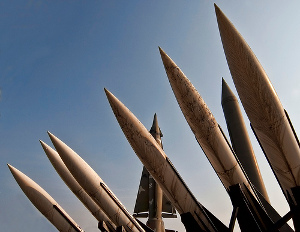
MEDIA ROOTS – Over a decade ago, the U.S. Air Force expressed interest in fielding a next-generation, hypersonic missile known as the High Speed Strike Weapon (HSSW).  Recognizing the lucrative money available in Department of Defense contracts, war industry officials began conceptualizing suitable prototypes.  Understanding the nature of HSSW and the corrupt practices of its primary developer should lead one to question the core operating conventions inherent to the U.S. military-industrial complex.

Corporate manufacturers of HSSW must meet certain design goals set by the Department of Defense.  These operational functions require an HSSW which launches from submarines, traditional surface ships, bombers, and fighter jets, and which reaches a top speed of around five-times the speed of sound. 

The Pentagon’s design goals for HSSW also include “classified elements,” necessitating a SECRET security clearance (considering the number of U.S. citizens with SECRET clearance exceeds two million, this restriction shouldn’t pose a problem).  Although Boeing and GenCorp Aerojet have tendered their own HSSW design, Alliant Techsystems Inc. (ATK), which is known for corporate success with the X-43 and also supplying the Department of Homeland Security with up to 450 million hollow point rounds of .40 caliber ammunition, is the leading candidate for Pentagon funding.

CORRUPT PRACTICES

ATK’s Board of Directors and senior corporate leadership fester within an environment rife with conflicts of interest.  Mark Ronald and Ron Fogleman possess the most egregious of them among the company’s Directors.   Mr. Ronald is Vice Chairman of the Defense Business Board (DBB), an organization which claims to provide the Secretary of Defense with “independent advice” and “outside private sector perspective” about successful business practices.  However, Mr. Ronald cannot possibly provide advice of an “independent” nature, given unimpeded access to both senior Pentagon officials and ATK’s Board of Directors.

Ron Fogleman, former Chief of Staff of the Air Force, is a charter member of The Durango Group, an organization which pays its members to “help private companies win and administer Pentagon contracts.”  The Durango Group’s gurus “move seamlessly between roles as paid advisers to the [Armed] Services and paid consultants to defense companies in the same subject areas.”  As USA Today reports, Durango employees like Fogleman get paid by “the military for advice and by defense contractors who want consulting help.”  This corrupt arrangement further benefits The Durango Group as its gurus “serve as corporate directors or advisers for other companies” across the industry.  And the wheel of corruption goes ‘round.

Corruption on ATK’s Board of Directors can also occur subtly through the diaphanous, revolving door between private corporations and public service:  Martin Faga wields clout as former Director of the National Reconnaissance Office; April Foley was once a member of the Board of Directors at the U.S. Export-Import Bank; and Tig Krekel was once Vice Chairman of J.F. Lehman & Company, a private equity firm whose chairman helped run the unscrupulous 9/11 Commission.  ATK’s day-to-day corporate leadership also exists in a climate ripe for unprincipled behavior, as its members possess experience and influence in General Motors, Lockheed Martin, the Senate Appropriations Committee, and the National Defense Industrial Organization.  With this insider economic, political, and military might, ATK is in prime position to place corporate profit ahead of integrity.

Unfortunately, these conflicts of interest are commonplace in the U.S. war industry and elicit no formal, sustained Congressional concern.  Within this culture of Congressional complicity, senior executives from Lockheed Martin, General Dynamics, and EADS pled privately with Defense Secretary Leon Panetta in June to avoid Pentagon budget cuts.  Such collusion tacitly reaffirms the Pentagon’s prioritization of U.S. corporate profit over U.S. national interest.  ATK is certainly pleased with this arrangement, since the U.S. government accounts for 68% of its sales.  By allowing “one-on-one sessions with interested prime contractors,” the Pentagon continues to abet graft, collusion, and industry corruption.

QUESTIONS FROM CONCERNED CITIZENS

Given the corrupt nature of ATK’s leadership and the war industry in general, it is rational for U.S. citizens to inquire further. Pertinent questions include:

How does HSSW contribute to the escalatory cycle of global arms manufacturing?  

Since World War II, the U.S. arms industry has produced weapons to confront inflated threats (e.g. communism, terrorism).  In response, various “enemies” produce weaponry to deter U.S. aggression.  The Pentagon then uses the enemies’ weapon production, however minute, as justification to continue allocating vast sums of taxpayer dollars to the U.S. arms industry, resulting in an upward spiral of militarization, which clogs all ends of the globe.  Production of the HSSW continues this deleterious tradition.

Is HSSW another black hole at which the Pentagon can throw funding, while enriching corporate weapon manufacturers?  

Yes.  As Wired.com pointed out, the Pentagon has a mediocre track record producing hypersonic technologies.  For example, this spring the Pentagon lost a costly Falcon prototype over the Pacific.  Bloomberg reports this loss cost the U.S. taxpayer at least $320 million, but the Air Force places the cost at half a billion dollars.  Despite these expenditures, the project continues.  The combination of existing weapon-delivery systems (e.g. strategic bombing, SLBM, and ICBM) and weapon systems in development (e.g. Prompt Global Strike weapon) render HSSW excessive.  There is no need, aside from corporate profit, to kill human beings with any greater speed or glut.

Profligacy isn’t confined to USAF programs; espionage and infantry programs can be equally wasteful.  Among these programs are NSA’s Trailblazer, which cost $4 billion before being cancelled, and the Army’s Future Combat Systems (FCS), which cost roughly $1.5 billion before cancellation.  Moreover, the Project on Government Oversight (POGO) has easily identified another $700 billion in wasteful Pentagon funding (these figures do not include the trillions wasted on wars of aggression since 2001).  To put these figures in perspective, $700 billion is enough money to give every inmate in the United States an Ivy League education and $91,000 spending money.

What does HSSW tell us about the Defense Department contracting process?  

The core architecture in which the Pentagon develops and purchases weaponry is fundamentally flawed.  Although HSSW’s procurement process is relatively mild compared to the disasters besetting other weapons platforms, it still highlights the flaw of overestimating performance while underestimating costs.

Many more questions remain unexplained: In a world hyped as rife with “asymmetric threats,” why is the Pentagon stuck in a Cold War mindset building weaponry to strike conventional targets anywhere in the world within an hour?  At what point does weapon manufacturing cease to protect the country and start to provoke conflict? 

Instead of being a valuable addition to the welfare of U.S. citizens, HSSW merely increases global arms manufacturing, wastes taxpayer dollars, and exposes fundamental flaws in the Pentagon’s weapon procurement process.  Concerned citizens marvel at the rabbit hole’s depth. What began as a passing curiosity into the basics of the ATK and its HSSW has revealed a confluence of incompetence and corruption between the defense company and the Pentagon.  Given such wasteful venality, it is incumbent upon the U.S. citizenry to inquire, educate, mobilize, engage, and advocate to change the status quo of the military-industrial complex.

Written by Christian Sorensen for Media Roots

***

Photo provided by Flickr user Dapper Snapper.

When The Pharmaceutical Industry Writes Our Laws

MEDIA ROOTS – Pharmaceutical companies spend an astronomical amount of money on lobbying and advertising.  Sometimes a marketing campaign is so expensive that even if it’s discovered that a drug is ineffective once it hits the market, the money spent needs to be made back; instead of recalling the drug, they continue to push it. Risperdal, a drug designed to treat PTSD, is one such example; although proven equally as effective as placebo, it has cost the Department of Veterans Affairs $717 million dollars over the course of 9 years. 

Robbie Martin

***

COUNTERPUNCH – Pharma is losing so much money from rising co-pays and prescription abandonment, it has launched cagey, public service announcement-sounding campaigns about “patients not taking the drugs they need,” as if it is a health and not revenue issue. Pharma has even instituted arrangements with some pharmacies to send visiting nurses to patients’ homes to ensure “compliance,” Big Brother overtones notwithstanding.

Prescription abandonment is an especially thorny issue for Pharma when the drugs are taken on faith, to reduce patients’ “risks” and patients do not necessarily feel them working. It is also a thorny issue when studies suggest the drugs being abandoned may not be necessary to begin with or working.

One such expensive placebo is the drug known by the brand name Risperdal. The Department of Veterans Affairs spent $717 million on the drug to treat posttraumatic stress disorder in Afghanistan and Iraq troops with PTSD over nine years, only to discover it worked no better than a sugar pill! Veterans Affairs doctors wrote more than 5 million prescriptions from 2000 through June 2010 for naught, says a 2011 paper in the Journal of the American Medical Association (JAMA). Last month, Johnson & Johnson also agreed to pay $1.2 billion in fines for minimizing or concealing Risperdal’s dangers. Many say unless a drug company’s chief officers go to prison or the company is banned from sales to Medicare and other government programs, penalties are a joke. 

Read more about When Big Pharma Writes The Laws.

***

Abby Martin Interviews Dr. Darcy Smith about Big Pharma’s Direct to Consumer Advertising for RT TV


***

Photo by Flickr US National Archives


Posted in Uncategorized | 1 Reply

WikiLeaks is Back – Corporate Spying

MEDIA ROOTS – Early Monday morning, the controversial website WikiLeaks released a stunning collection of Global Intelligence Files from the private intelligence corporation Stratfor.

According to WikiLeaks:

“The Global Intelligence Files exposes how Stratfor has recruited a global network of informants who are paid via Swiss banks accounts and pre-paid credit cards. Stratfor has a mix of covert and overt informants, which includes government employees, embassy staff and journalists around the world.

The material shows how a private intelligence agency works, and how they target individuals for their corporate and government clients. For example, Stratfor monitored and analysed the online activities of Bhopal activists, including the “Yes Men”, for the US chemical giant Dow Chemical. The activists seek redress for the 1984 Dow Chemical/Union Carbide gas disaster in Bhopal, India. The disaster led to thousands of deaths, injuries in more than half a million people, and lasting environmental damage.”

Most mainstream media reports aren’t covering several important issues that these files bring up, like how Stratfor has been gathering intelligence and spying on journalists and activists all over the world for not only the government, but for private corporations like Coca-Cola.

Comedy/activist duo the Yes-Men found out they were being spied on by Stratfor because of their activism surrounding the Bopal Chemical Disaster.  Other media outlets that had intelligence gathering done on them include Rolling Stone, Wikileaks itself (over 4,000 emails alone), Sunday Star Times, The Hindu, Russia Reporter, Publico and an unknown amount more.  Wikileaks says that more information about journalist spying is yet to be revealed.

Activist Cosmos found an intriguing tidbit of information within the e-mails that uncovered how “out of Wikileaks’ release of 5 million Stratfor emails is the comment from Fred Burton, Stratfor’s Vice President of Intelligence, that the Imam of the controversial so-called Ground Zero mosque is an “FBI operational asset.” Burton, who was formerly a special agent with the US State Department’s Diplomatic Security Service and the Deputy Chief of their counterterrorism division, made the comment on an email chain regarding a New York Observer article, Untangling the Bizarre CIA Links to the Ground Zero Mosque.  The controversy surrounding the “Ground Zero mosque” overwhelmingly dominated the news and discussion surrounding the ninth anniversary of the 9/11 attacks.”

At Media Roots, we recommend that you don’t rely on our or any other media outlet’s coverage of the recent leak.  Instead, you can watch the entire press conference with Julian Assange about the Stratfor leaks here:


Julian Assange Press Conference on Stratfor Leaks

***

Written by Robbie Martin for Media Roots

Photo by Flickr user Animantion Concept


Posted in Uncategorized | 1 Reply