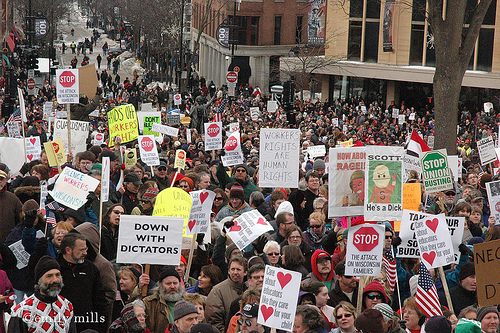
Class Struggle Exists Inside Every Major Institution

COMMONDREAMS – When we study Marx in my graduate social theory course, it never fails that at least one student will say (approximately), “Class struggle didn’t escalate in the way Marx expected. In modern capitalist societies class struggle has disappeared. So isn’t it clear that Marx was wrong and his ideas are of little value today?”

I respond by challenging the premise that class struggle has disappeared. On the contrary, I say that class struggle is going on all the time in every major institution of society. One just has to learn how to recognize it.

One needn’t embrace the labor theory of value to understand that employers try to increase profits by keeping wages down and getting as much work as possible out of their employees. As the saying goes, every successful capitalist knows what a Marxist knows; they just apply the knowledge differently.

Workers’ desire for better pay and benefits, safe working conditions, and control over their own time puts them at odds with employers. Class struggle in this sense hasn’t gone away. In fact, it’s inherent in the relationship between capitalist employer and employee. What varies is how aggressively and overtly each side fights for its interests.

Where else does class struggle occur? We can find class struggle wherever three things are at stake: the balance of power between capitalists and workers, the legitimacy of capitalism, and profits.

The most important arena outside the workplace is government, because it’s here that the rules of the game are made, interpreted, and enforced. When we look at how capitalists try to use government to protect and advance their interests — and at how other groups resist — we are looking at class struggle.

Capitalists want laws that weaken and cheapen labor. This means laws that make it harder for workers to organize unions; laws that make it easier to export production to other countries; laws that make it easier to import workers from other countries; laws and fiscal policies that keep unemployment high, so that workers will feel lucky just to have jobs, even with low pay and poor benefits.

Capitalists want tax codes that allow them to pay as little tax as possible; laws that allow them to externalize the costs of production (e.g., the health damage caused by pollution); laws that allow them to swallow competitors and grow huge and more powerful; and laws that allow them to use their wealth to dominate the political process. Workers, when guided by their economic interests, generally want the opposite.

I should note that by “workers,” I mean everyone who earns a wage or a salary and does not derive wealth from controlling the labor of others. By this definition, most of us are workers, though some are more privileged than others. This definition also implies that whenever we resist the creation and enforcement of laws that give capitalists more power to exploit people and the environment, we are engaged in class struggle, whether we call it that or not.

There are many other things capitalists want from government. They want public subsidy of the infrastructure on which profitability depends; they want wealth transferred to them via military spending; they want militarily-enforced access to foreign markets, raw materials, and labor; and they want suppression of dissent when it becomes economically disruptive. So we can include popular resistance to corporate welfare, military spending, imperialist wars, and government authoritarianism as further instances of class struggle.

Class struggle goes on in other realms. In goes on in K-12 education, for example, when business tries to influence what students are taught about everything from nutrition to the virtues of free enterprise; when U.S. labor history is excluded from the required curriculum; and when teachers’ unions are blamed for problems of student achievement that are in fact consequences of the maldistribution of income and wealth in U.S. society.

It goes on in higher education when corporations lavish funds on commercially viable research; when capitalist-backed pundits attack professors for teaching students to think critically about capitalism; and when they give money in exchange for putting their names on buildings and schools. Class struggle also goes on in higher education when pro-capitalist business schools are exempted from criticism for being ideological and free-market economists are lauded as objective scientists.

In media discourse, class struggle goes on when we’re told that the criminal behavior of capitalist firms is a bad-apple problem rather than a rotten-barrel problem. It goes on when we’re told that the economy is improving when wages are stagnant, unemployment is high, and jobs continue to be moved overseas. It goes on when we’re told that U.S. wars and occupations are motivated by humanitarian rather than economic and geopolitical concerns.

Class struggle goes on in the cultural realm when books, films, and songs vaunt the myth that economic inequality is a result of natural differences in talent and motivation. It goes on when books, films, and songs celebrate militarism and violence. It also goes on when writers, filmmakers, songwriters, and other artists challenge these myths and celebrations.

It goes on, too, in the realm of religion. When economic exploitation is justified as divinely ordained, when the oppressed are appeased by promises of justice in an afterlife, and when human capacities for rational thought are stunted by superstition, capitalism is reinforced. Class struggle is also evident when religious teachings are used, antithetically to capitalism, to affirm values of equality, compassion, and cooperation.

I began with the claim that Marx’s contemporary relevance becomes clear once one learns to see the pervasiveness of class struggle. But apart from courses in social theory, reading Marx is optional. In the real world, the important thing is learning to see the myriad ways that capitalists try to advance their interests at the expense of everyone else. This doesn’t mean that everything in social life can be reduced to class struggle, but that everything in social life should be examined to see if and how it involves a playing-out of class interests.

Click to continue reading on class struggle.

Article by Michael Schwalbe, a professor of sociology at North Carolina State University. He is the author of: Rigging the Game: How Inequality Is Reproduced in Everyday Life (Oxford, 2008). He can be reached at [email protected].

© Copyright Common Dreams, 2011

Photograph by Flickr user: Lost Albatross

13% of All U.S. Homes are Vacant

CNN– High residential vacancies are killing many housing markets, as foreclosed homes sit on the market and depress sale prices and property values.

And it’s only getting worse: The national vacancy rate crept up to just over 13% according to last week’s decennial census report. That’s up from 12.1% in 2007.

“More vacant homes equal more downward pressure on home prices,” said Brad Hunter, chief economist for Metrostudy, a real estate information provider.

Maine had the highest proportion of empty housing stock, at 22.8%. Other states with gluts of empty houses included Vermont (20.5%), Florida (17.5%), Arizona (16.3%) and Alaska (15.9%).

The way the census calculates the vacancy rates, however, is problematic. It includes properties such as ski lodges, beach houses and pied-à-terres that many real estate statisticians would not.

Read full article about 13% of All U.S. Homes are Vacant.

© Copyright CNN, 2011

Photo by flickr user Respres

Economic Inequality In US Worse Than Egypt

NEWSVINE– According to the CIA World Fact Book, the U.S. is ranked as the 42nd most unequal country in the world, with a Gini Coefficient of 45.

In contrast:

Tunisia is ranked the 62nd most unequal country, with a Gini Coefficient of 40.
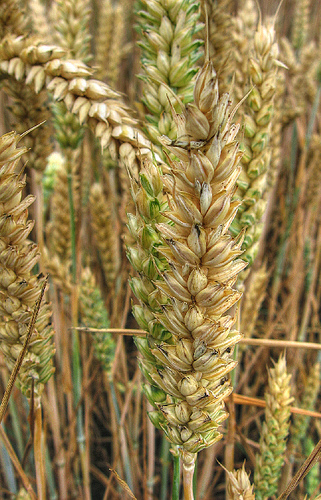
Yemen is ranked 76th most unequal, with a Gini Coefficient of 37.7.
And Egypt is ranked as the 90th most unequal country, with a Gini Coefficient of around 34.4.
And inequality in the U.S. has soared in the last couple of years, since the Gini Coefficient was last calculated, so it is undoubtedly currently much higher.
So why are Egyptians rioting, while the Americans are complacent?

Well, Americans – until recently – have been some of the wealthiest people in the world, with most having plenty of comforts (and/or entertainment) and more than enough to eat.

But another reason is that – as Dan Ariely of Duke University and Michael I. Norton of Harvard Business School demonstrate – Americans consistently underestimate the amount of inequality in our nation.

As William Alden wrote last September:

Americans vastly underestimate the degree of wealth inequality in America, and we believe that the distribution should be far more equitable than it actually is, according to a new study.

Or, as the study’s authors put it: “All demographic groups — even those not usually associated with wealth redistribution such as Republicans and the wealthy — desired a more equal distribution of wealth than the status quo.”

The report … “Building a Better America — One Wealth Quintile At A Time” by Dan Ariely of Duke University and Michael I. Norton of Harvard Business School … shows that across ideological, economic and gender groups, Americans thought the richest 20 percent of our society controlled about 59 percent of the wealth, while the real number is closer to 84 percent.

Written by John Russel

© COPYRIGHT NEWSVINE, 2011

Photo by flickr user SOS.de

Why are the rich getting richer while the poor are getting poorer in the United States?


The Future of Food Riots

COMMONDREAMS – If all the food in the world were shared out evenly, there would be enough to go around. That has been true for centuries now: if food was scarce, the problem was that it wasn’t in the right place, but there was no global shortage. However, that will not be true much longer.

The food riots began in Algeria more than a week ago, and they are going to spread. During the last global food shortage, in 2008, there was serious rioting in Mexico, Indonesia, and Egypt. We may expect to see that again this time, only bigger and more widespread.
Most people in these countries live in a cash economy, and a large proportion live in cities. They buy their food, they don’t grow it. That makes them very vulnerable, because they have to eat almost as much as people in rich countries do, but their incomes are much lower.

The poor, urban multitudes in these countries (including China and India) spend up to half of their entire income on food, compared to only about ten percent in the rich countries. When food prices soar, these people quickly find that they simply lack the money to go on feeding themselves and their children properly – and food prices now are at an all-time high.

“We are entering a danger territory,” said Abdolreza Abbassian, chief economist at the Food and Agriculture Organisation, on 5 January. The price of a basket of cereals, oils, dairy, meat and sugar that reflects global consumption patterns has risen steadily for six months, and has just broken through the previous record, set during the last food panic in June, 2008.

“There is still room for prices to go up much higher,” Abbassian added, “if for example the dry conditions in Argentina become a drought, and if we start having problems with winter kill in the northern hemisphere for the wheat crops.” After the loss of at least a third of the Russian and Ukrainina grain crop in last summer’s heat wave and the devastating floods in Australia and Pakistan, there’s no margin for error left .

It was Russia and India banning grain exports in order to keep domestic prices down that set the food prices on the international market soaring. Most countries cannot insulate themselves from this global price rise, because they depend on imports for a lot of domestic consumption. But that means that a lot of their population cannot buy enough food for their families, so they go hungry. Then they get angry, and the riots start.

Is this food emergency a result of global warming? Maybe, but all these droughts, heat waves and floods could also just be a run of really bad luck. What is nearly certain is that the warming will continue, and that in the future there will be many more weather disasters due to climate change. Food production is going to take a big hit.

Global food prices are already spiking whenever there are a few local crop failures, because the supply barely meets demand even now. As the big emerging economies grow, Chinese and Indian and Indonesian citizens eat more meat, which places a great strain on grain supplies. Moreover, world population is now passing through seven billion, on its way to nine billion by 2050. We will need a lot more food than we used to.

Some short-term fixes are possible. If the US government ended the subsidies for growing maize (corn) for “bio-fuels”, it would return about a quarter of US crop land to food production. If people ate a little less meat, if more African land was brought into production, if more food was eaten and less was thrown away, then maybe we could buy ourselves another fifteen or twenty years before demand really outstripped supply.

On the other hand, about a third of all the irrigated land in the world depends on pumping groundwater up from aquifers that are rapidly depleting. When the flow of irrigation water stops, the yield of that highly productive land will drop hugely. Desertification is spreading in many regions, and a large amount of good agricultural land is simply being paved over each year. We have a serious problem here.

Climate change is going to make the situation immeasurably worse. The modest warming that we have experience so far may not be the main cause of the floods, droughts and violent storms that have hurt this year’s crops, but the rise in temperature will continue because we cannot find the political will to stop the greenhouse-gas emissions.

The rule of thumb is that we lose about 10 percent of world food production for every rise of one degree C in average global temperature. So the shortages will grow and the price of food will rise inexorably over the years. The riots will return again and again.

In some places the rioting will turn into revolution. In others, the rioters will become refugees and push up against the borders of countries that don’t want to let them in. Or maybe we can get the warming under control before it does too much damage. Hold your breath, squeeze your eyes tight shut, and wish for a miracle.

Gwynne Dyer’s latest book, “Climate Wars: The Fight for Survival as the World Overheats“, was published recently in the United States by Oneworld.

© COPYRIGHT COMMONDREAMS, 2011

Photograph by Markusram

The Seven Myths of ‘Slums’

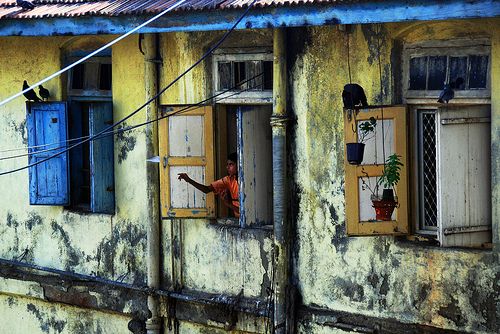
SHARE THE WORLD’S RESOURCES – For anyone who takes an interest in the problem of slums, a few basic facts will soon become clear. Firstly, the locus of global poverty is moving from rural areas to the cities, and more than half the world population now lives in urban areas for the first time in human history. Secondly, most of the world’s urban population, most of its largest cities and most of its urban poverty is now located in Africa, Asia and Latin America – the so-called developing world. Thirdly, the growth in slums since the 1980s is both formidable and unprecedented (even though urban slums have existed in Europe since the Industrial Revolution), and the number of slum-dwellers worldwide is expected to continually increase in the decades ahead.

photo by tobias leeger/flickrBeyond these facts, there seems to be little awareness about the reality of slums in the popular imagination. Thanks to the tireless work of many activists and non-governmental organisations over many decades, the issue of global poverty is now high on the international policy radar – but the issue of slums, which forms a major component of poverty in urbanising cities, still fails to register in most people’s concerns. Much may be written about informal settlements in academic books and journals, but the depiction of slums in popular movies and literature also serves to reinforce a number of long-held prejudices against the urban poor. The complacent indifference expressed by many governments and middle-class citizens to the struggles faced by the millions of people living in slums can also lead to other forms of discrimination or ‘myths’ about the solutions to inadequate housing.

As popularised by many publications in recent decades that highlight the common misconceptions about global poverty, conventional thinking on development issues in the West is often characterised by many assumptions, clichés and rationalisations about the very poor who live in distant countries. In challenging some of these core myths, we are able to move beyond a response to poverty motivated by guilt or fear, and instead focus on the structural causes of powerlessness that result in insecurity and deprivation. The following ‘myths’ about slums aim to give a general perspective on a range of key issues related to human settlements – including the impact of economic globalisation, the role of national governments, the significance of the informal sector of employment, the question of international aid, and the (little mentioned) controversy surrounding global slum data and development targets.

Myth 1: There are too many people

It is easy to believe that urban slums are a consequence of too many people living in cities, or too many poor people migrating from rural to urban areas for governments to contend with the strain on housing. But the real problem is rooted in outdated institutional structures, inappropriate legal systems, incompetent national and local governance, and short-sighted urban development policies. From a wider perspective, the resurgence of a non-interventionist ideology in recent decades has weakened the role of national governments, and de-prioritised the importance of the state in planning for a more equitable distribution of resources in cities. Crippled by debt, forced to prioritise loan repayments over basic services such as healthcare, and held in thrall to the so-called Washington Consensus policies that demanded a withdrawal of government from almost every sphere of public life, it has been impossible for initiatives by the state or international agencies to keep pace with the rate of urban slum formation since the 1980s. In the simplest terms, the existence of slums is not an inevitable consequence of overpopulation, but a result of the failure of policy at all levels – global, national and local – and the adoption of an international development paradigm that fails to prioritise the basic needs of the poor.

Myth 2: The poor are to blame

Many people continue to blame the poor for their conditions of poverty. According to this deep-seated myth, the people who live in slums are antisocial, uneducated and unwilling to work, or else they would not be living in such conditions of squalor. In contrast to such popular prejudices, however, anthropologists and development practitioners have long observed that the poor are not a burden upon the urbanising city, but are often its most dynamic resource. While achieving considerable feats of inventiveness in self-help housing on an individual basis, the collective power of urban poor groups has produced  exceptional results in building new homes and upgrading existing slum housing – as reflected in official development literature which recommends “participatory slum improvement” as the best practice for housing interventions in developing countries. Yet for every example of a successful community-led upgrading scheme, there are as many examples of slum clearance operations and forced evictions. This constitutes one of the most crucial questions in the fight against urban poverty: will governments together recognise and support the ability of the poor to organise and help develop an inclusive city, or will they continue to view slum-dwellers as being ‘anti-progress’ and a threat to established institutions?

Myth 3: Slums are places of crime, violence and social degradation

A long-standing prejudice against the urban poor is the widespread view of slums as places of social degradation and despair, and of slum-dwellers as perpetrators of violence and crime. Although high levels of crime may occur in many informal settlements in developing countries, the popular depiction of life in slums often fails to acknowledge the deeper causes of insecurity and violence – including the links between levels of crime and incidences of poverty, inequality, social exclusion, and youth unemployment. These causal factors (and most importantly, the responsibilities and failures of state institutions) often go unacknowledged in films and media reports about slums. Many squatter settlements in the South also exhibit a communal solidarity that contradicts these negative stereotypes, along with innumerable examples of self-sacrifice, altruism and community service that serve as a laudable example for mainstream society. This is not to glorify or sentimentalise the urban poor and their self-help housing, as many slums can be equally characterised by the opposite qualities of ruthless individualism and petty-exploitation. But too often the stereotypical view of squatters as something ‘other’ – whether it be criminals, idlers, parasites, usurpers, prostitutes, the diseased, drunks or drug addicts – is the most common and misguided response to those who live in poor urban communities.

Myth 4: Slums are an inevitable stage of development

There is an underlying assumption to much of the debate surrounding slums and urban poverty: that the poor will get to our standard of living eventually, just so long as they follow our prescribed free market approach to development. Yet the policies for industrial growth followed by developed countries were not based on a laissez-faire ideology of free trade and state non-intervention, but instead used protectionist strategies for key industries in the earlier phases of development – which calls into question the neoliberal policy recommendations made to developing countries since the 1970s. The mainstream ‘science’ of economics is also based on the assumption that perpetual growth is the foundation of progress, even if common experience raises doubts about the environmental and social side-effects of unfettered capitalism. Furthermore, we can ask if it is acceptable to consider the appalling conditions and human abuses that defined cities all over Europe during the nineteenth century as an inevitable, even if disagreeable, part of progress in a rapidly industrialising city like Mumbai or Chang Hai. If not, our only choice is to consider alternative goals and more holistic models of development that prioritise social objectives ahead of the profit imperative and GDP, with a more equitable distribution of resources on the national and global level.

Myth 5: The free market can end slums

Many proponents of economic globalisation maintain a rigid faith in the power of market forces to end slums. Get the inefficient government out of the way, remains the assumption, and the beneficent power of the market mechanism and private capital will act as the levers of economic growth and widespread affluence. But after several decades of relying on the market as a cure-all for the ills of the twenty-first century, the increasing number of urban residents living in slums is  sufficient evidence that the ‘growth-first’ strategy for development isn’t sustainable. Employing market forces as the arbiter of resource distribution is socially exclusive, not inclusive, and it does not function when there is a need to produce certain types of goods or services such as housing for the poor or welfare services for low-income groups. The deregulation and privatisation of public services also serves to directly undermine social welfare provision, and further compromises the ability of public agencies to meet the needs of those who cannot afford the market price for housing, healthcare, education and sanitation. In short, the efficiency-oriented, growth-led and internationally competitive strategies of the ‘world class city’ have failed to combat the problem of slums, and are more likely to exacerbate urban poverty than act as a solution in the future.

Myth 6: International aid is the answer

There may be more aid projects for improving the living conditions of the urban poor than ever before, but the current system of donor assistance has clearly failed to stem the tide of growing slum formation. The first problem is simply one of scale; urban poverty reduction is one of the lowest priorities for aid donations from most multilateral agencies and wealthy countries. A greater problem is the difference between the kind of assistance that is needed to ameliorate slums and the forms of action that are currently provided by international aid institutions. In particular, most official development assistance agencies have failed to develop relationships with slum residents and their representative organisations, and rarely assign any role to urban poor groups in the design and implementation of aid programmes. The priorities of aid agencies and development banks are also unlikely to favour the kind of redistributive policies that are central for giving the poor local control over the housing process. Although additional financial resources are imperative for upgrading slums in developing countries, it is doubtful that aid can successfully address the crisis in urban housing unless there is a transformation of the goals and priorities of the major donor countries and the institutions that govern the global economy.

Myth 7: There will always be slums

Few writers on urban development issues imagine a ‘world without slums’ in the future. In the polarised debates on urban poverty, both the ‘slums of hope’ and ‘slums of despair’ viewpoints tacitly accept the continued existence of slums. Part of the problem is one of semantics, as it is difficult to conceive of an end to ‘slums’ when the language used to describe them is limited and generalised. The UN’s Millennium Development Goal on slums – to “significantly improve the lives of 100 million slum-dwellers by 2020” – also implicitly accepts the existence of slums as an enduring reality, as achieving this (unacceptably low) target would hardly result in cities without slums. If urbanisation trends and cities are to become socially inclusive and sustainable, the development model that sustains them must be wholly reformed and reimagined. In the widest sense, a world without slums and urban poverty cannot be realised without a transformation of our existing political, economic and social structures. A first step lies in recognising the possibility of achieving a new vision of human progress based upon a fundamental reordering of global priorities – beginning with the immediate securing of universal basic needs. Only then can the twin goals enshrined in the Habitat Agenda of 1996 be translated into a concrete programme of action: “adequate shelter for all” and “sustainable human settlements development in an urbanising world”. The hope not only rests with the mobilisation of sufficient power through political organisation in the South, but also with the willingness of those in affluent societies to join voices with the poor, to sense the urgency for justice and participation, and to strengthen the global movement for a fairer distribution of the world’s resources.

Written by Adam Parsons, editor at Share The World’s Resources. He can be contacted at adam(at)stwr.org.

This article is drawn from the report: The Seven Myths of ‘Slums’ – Challenging Popular Prejudices About the World’s Urban Poor

Photography by flickr user : Tobias Leeger