Film: Fault Lines – The Top 1%

AL JAZEERA– The richest one per cent of Americans earn nearly a quarter of the country’s income and control an astonishing 40 per cent of its wealth.

Inequality in the US is more extreme than it has been in almost a century – and the gap between the super-rich and the poor and middle class people has widened drastically over the last 30 years.

Meanwhile, in Washington, a bitter partisan debate over how to cut deficit spending and reduce the US’ $14.3 trillion debt is underway. As low and middle class wages stagnate and unemployment remains above nine per cent, Republicans and Democrats are tussling over whether to slash funding for the medical and retirement programmes that are the backbone of the US’ social safety net, and whether to raise taxes – or to cut them further.

The budget debate and the economy are the battleground on which the 2012 presidential election race will be fought. And the US has never seemed so divided – both politically and economically.

How did the gap grow so wide, and so quickly? And how are the convictions, campaign contributions and charitable donations of the top one per cent impacting the other 99 per cent of Americans? Fault Lines investigates the gap between the rich and the rest.

Al Jazeera’s Fault Lines

Photo by flickr user J_D_R
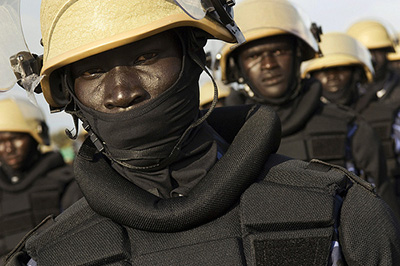
 

South Sudan, the Newest Nation

NY TIMES– After five decades of guerrilla struggle and two million lives lost, the flags are flapping proudly here in this capital. The new national anthem is blasting all over town. People are toasting oversize bottles of White Bull beer (the local brew), and children are boogieing in the streets.

“Free at Last,” reads a countdown clock.

But from the moment it declares independence on Saturday, the Republic of South Sudan, the world’s newest country and Africa’s 54th state, will take its place at the bottom of the developing world. A majority of its people live on less than a dollar a day. A 15-year-old girl has a higher chance of dying in childbirth than she does of finishing primary school. More than 10 percent of children do not make it to their fifth birthday. About three-quarters of adults cannot read. Only 1 percent of households have a bank account.

Beyond that, the nation faces several serious insurrections within its own sprawling territory and hostilities with northern Sudan, its former nemesis.

It is clearly an underdog story.

So many people here embody the distance traveled and the hopes to come. James Aguto, a former child soldier and longtime guerrilla fighter, now delivers babies. Mr. Aguto is a newly minted clinical officer, working in a government hospital, and his journey from taking life to sustaining it makes him an apt symbol for the transition this country is trying to make.

“There was one night I delivered six babies, six babies in one night!” he said. “I was so happy. I was making development here. I was showing that I had skills.”

Mr. Aguto now wants to be a doctor. “I have that spirit,” he explained.

The nation will certainly need it. More than 2,300 people have been killed in ethnic and rebel violence this year, with at least a half-dozen rebel groups, some with thousands of fighters, prowling the bush, attacking government soldiers, terrorizing civilians, and stealing cattle and even children.

Read the full article about South Sudan, the Newest Nation, Is Full of Hope and Problems.

© 2011 New York Times

Photo by Flickr user UN Photos

Child Poverty in US Nears 25%

CBS– Unemployment improved a bit last month but it is still nearly nine percent and the trouble is job creation is so slow, it will be years before we get back the seven and a half million jobs lost in the Great Recession. American families have been falling out of the middle class in record numbers. The combination of lost jobs and millions of foreclosures means a lot of folks are homeless and hungry for the first time in their lives.

One of the consequences of the recession that you don’t hear a lot about is the record number of children descending into poverty.

The government considers a family of four to be impoverished if they take in less than $22,000 a year. Based on that standard, and government projections of unemployment, it is estimated the poverty rate for kids in this country will soon hit 25 percent. Those children would be the largest American generation to be raised in hard times since the Great Depression.

Read full article about Child Poverty in US Nears 25%

© 2011 CBS

Photo by Flickr user Boasorte Careca

Unemployment improved a bit last month but it is still nearly nine percent and the trouble is job creation is so slow, it will be years before we get back the seven and a half million jobs lost in the Great Recession. American families have been falling out of the middle class in record numbers. The combination of lost jobs and millions of foreclosures means a lot of folks are homeless and hungry for the first time in their lives.
One of the consequences of the recession that you don’t hear a lot about is the record number of children descending into poverty.
The government considers a family of four to be impoverished if they take in less than $22,000 a year. Based on that standard, and government projections of unemployment, it is estimated the poverty rate for kids in this country will soon hit 25 percent. Those children would be the largest American generation to be raised in hard times since the Great Depression.

WikiLeaks Haiti: Let Them Live on $3 a Day

THE NATION– Contractors for Fruit of the Loom, Hanes and Levi’s worked in close concert with the US Embassy when they aggressively moved to block a minimum wage increase for Haitian assembly zone workers, the lowest-paid in the hemisphere, according to secret State Department cables.

The factory owners told the Haitian Parliament that they were willing to give workers a 9-cents-per-hour pay increase to 31 cents per hour to make T-shirts, bras and underwear for US clothing giants like Dockers and Nautica.

But the factory owners refused to pay 62 cents per hour, or $5 per day, as a measure unanimously passed by the Haitian Parliament in June 2009 would have mandated. And they had the vigorous backing of the US Agency for International Development and the US Embassy when they took that stand.

To resolve the impasse between the factory owners and Parliament, the State Department urged quick intervention by then Haitian President René Préval.

“A more visible and active engagement by Préval may be critical to resolving the issue of the minimum wage and its protest ‘spin-off’—or risk the political environment spiraling out of control,” argued US Ambassador Janet Sanderson in a June 10, 2009, cable back to Washington.

Two months later Préval negotiated a deal with Parliament to create a two-tiered minimum wage increase—one for the textile industry at about $3 per day and one for all other industrial and commercial sectors at about $5 per day.

Still the US Embassy wasn’t pleased. A deputy chief of mission, David E. Lindwall, said the $5 per day minimum “did not take economic reality into account” but was a populist measure aimed at appealing to “the unemployed and underpaid masses.”

Haitian advocates of the minimum wage argued that it was necessary to keep pace with inflation and alleviate the rising cost of living. As it is, Haiti is the poorest country in the hemisphere and the World Food Program estimates that as many as 3.3 million people in Haiti, a third of the population, are food insecure. In April 2008 Haiti was rocked by the so-called Clorox food riots, named after hunger so painful that it felt like bleach in your stomach.

According to a 2008 Worker Rights Consortium study, a family of one working member and two dependents needed at least 550 Haitian gourdes, or $12.50, per day to meet normal living expenses.

Read the full article about WikiLeaks Haiti: Let Them Live on $3 a Day.

© 2011 The Nation

Photo by Flickr user Okinawa Soba

Noam Chomsky: Is The World Too Big To Fail?

SALON– The democracy uprising in the Arab world has been a spectacular display of courage, dedication, and commitment by popular forces — coinciding, fortuitously, with a remarkable uprising of tens of thousands in support of working people and democracy in Madison, Wisconsin, and other U.S. cities. If the trajectories of revolt in Cairo and Madison intersected, however, they were headed in opposite directions: in Cairo toward gaining elementary rights denied by the dictatorship, in Madison towards defending rights that had been won in long and hard struggles and are now under severe attack.

Each is a microcosm of tendencies in global society, following varied courses. There are sure to be far-reaching consequences of what is taking place both in the decaying industrial heartland of the richest and most powerful country in human history, and in what President Dwight Eisenhower called “the most strategically important area in the world” — “a stupendous source of strategic power” and “probably the richest economic prize in the world in the field of foreign investment,” in the words of the State Department in the 1940s, a prize that the U.S. intended to keep for itself and its allies in the unfolding New World Order of that day. 

Despite all the changes since, there is every reason to suppose that today’s policy-makers basically adhere to the judgment of President Franklin Delano Roosevelt’s influential advisor A.A. Berle that control of the incomparable energy reserves of the Middle East would yield “substantial control of the world.” And correspondingly, that loss of control would threaten the project of global dominance that was clearly articulated during World War II, and that has been sustained in the face of major changes in world order since that day.

Read more about Is The World Too Big To Fail?

Written by Noam Chomsky

© 2011 Salon

Photo by Flickr Flying Singer