MEDIA ROOTS – The ability to combine audio and visuals to tell a compelling narrative makes documentary films a powerful means of storytelling. They are education through entertainment and, at their best, a persuasive and motivating push to action. It is no surprise that the Bay Area, teeming with political and artistic thought, is a documentary film capitol of the world. As an aspiring documentarian, encouraged by the learning potential from this rich network, I began seeking out insight from local filmmakers.
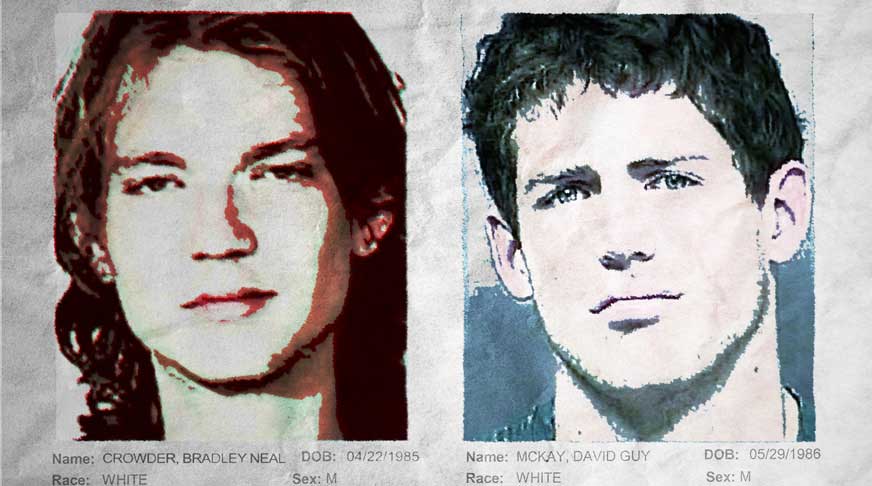 Following a tip from a friend, I came across Better This World – a film in post-production about two young men from Midland, Texas who face multiple domestic terrorism charges after manufacturing Molotov cocktails, or petrol bombs, at the 2008 Republican National Convention. What drew me into the story, and the filmmakers themselves, was the government’s star witness in the case – a controversial and unsuspected FBI informant.
Many of the stories behind the ‘foiled’ terrorist plots of the past few years share in common the trend of an undercover paid FBI informant that often times held a facilitating role in the group– a detail that frequently goes missing from mainstream media reports. (You can find more information on a few of these cases here, here and here.) Knowing this, I became eager to speak with the filmmakers who are taking on such an important and overlooked story.
Loteria Films, the local non-profit production company behind the film, is run by two women, Kelly Duane de la Vega and Katie Galloway. Kelly’s background in still photography and photojournalism, and Katie’s, in radio and print journalism, drew both women to film for what it could accomplish by blending these mediums.
When we met, Kelly recounted the restriction she felt in conveying people’s amazing personal stories as a photographer. “I think there are photographers whose photographs blow my mind, even more than a story. But I wasn’t feeling that about mine. I became so hungry for people to know the story. I knew there was another step.“
For Katie, filmmaking was a natural progression out of her love for working with audio and the depth and intimacy it brought to storytelling. While working at Frontline with documentarian, Ofra Bikel, Katie wrote and produced stories on criminal justice – a theme she also passionately explored for Pacifica Radio through coverage of the prison system and its excesses.
It was a blurb that Katie found in the Federal Court section of the New York Times that set the two women in pursuit of their first film together. Katie believed the story of two young men facing terrorism charges against the word of an FBI informant was a “really sexy, boiled down way into a story that is my life work so far – examining the criminal justice system and the problems with it.”
The trial was starting a week later, leaving not a moment for second-guessing.
“You say ‘I’m never going to do this on my credit card again. I’m never going to just start spending my own money again.’ But no one is going to give you money in a week’s turn around,” Katie explained with a smile reflecting love for the thrill and risk of chasing a good story. “It’s a gamble, its like going to Vegas.”
Better This World presents tough questions about the balance between liberty and safety in the face of post 9/11 domestic security. “The common thread in many of these [foiled terrorism] cases is some sort of political aspiration and an informant or a government agent who they hook up with and spend a lot of time with, and then at other end, the terrorism case. The question is what happened? Was it entrapment?” Katie went on to ask, “What happens when you have so many resources going into the domestic security apparatus and not necessarily enough terrorists to go around?”
“In the FBI they call it ‘aspirational and not necessarily operational’,” she added.
In a recent interview by Reuters, filmmaker and award winning journalist, John Pilger described a mindset of reporters that says, “only authority can really determine the ‘truth on the news’,” and which leads to a dangerous form of embedding in government and official versions of events. “Authority has its place, but the skepticism about authority must be ingrained in people,” he said.
And so it seems to be among documentarians.
It is the often skeptical and critical voice of documentary film that has shaped its long and growing legacy of critiquing the status quo while motivating people to educate themselves and take action.
Filmmakers do not face the same time constraints that can lead print and broadcast journalists to regurgitate the press releases handed to them by government, military and business leaders. Instead, they use a richly layered medium to tell the deeper story that hasn’t been told before, or to tell it differently. “Otherwise, what’s the point?” asked Katie.
Kelly pointed to the lack of a concrete power structure, or system, for documentaries to pander to. “There isn’t a central authority figure in documentary filmmaking. There isn’t a central voice. There isn’t an outlet that is determining what we get to see and don’t get to see – except for PBS and HBO and A&E, but there are ways to get your film out if you are not in those venues.
In some ways it is a much more democratic universe than mainstream journalism. We’re already so far out of the system in some ways.”
One consequence of being outside of the ‘system’ is the struggle of fundraising. As an educational nonprofit, Loteria Films can apply for grants. It has been fortunate for the support it has received so far – the Independent Television Service, the biggest grant maker nationally for documentary films, is funding Loteria’s current project but only funds 1-2% of projects that come in its door.
“When you look at all the labor and heart and soul and money that goes into independent projects and the struggle…” Katie reflected.
“We went a year and a half with very little funding. You know, begging, borrowing and stealing. That’s really the life of an independent unless you’ve made it and have money coming in regularly for projects. We’re not there yet. We’ve been really lucky raising money through grants and so forth.”
But, funding is only part of the equation. Kelly attributes the success of the partnership to their base of trust and respect, calling it the “bedrock” of their collaboration.
“When the other person is talking you know that you respect the way they think as a creative person and as a story teller. So, if they are challenging your idea it is something you have to listen to because it very well might be right. When you and your partner are both able to do that for one another it deepens your respect and base trust.”
Comparing the partnership positively to a marriage Kelly added, “It’s a long intimate journey. Its pretty damn intense – you are really committing so much to each other.”
When I asked what advice the activist filmmakers had for aspiring documentarians, Kelly’s words resonated with my pull to the medium.
“I feel like there are certain people who don’t have a choice in life, who just are going to do something creative whether it makes good sense or not…I think you have to have something inside of you that is somewhat predetermining your fate, that is driving you, that is making you choose something that is difficult. You can’t be materialistic. You have to be the kind of person that gets pride from the good their work does, or the quality and pleasure of their work.”
Just as Katie had, Kelly was sure not to gloss over the financial struggles that, more often than not, accompany the production of an independent film, while highlighting that flexibility is key in overcoming those challenges.
“Sometimes you might have to take a commercial job and that sucks because it might not be at the core of where your values are. But unless you are from a financial situation where you aren’t forced to have that choice I think you have to be okay with that – moving in and out of those worlds to tell a bigger, larger more important story. You have to figure out how to keep yourself viable so you can raise the seed money to do the thing that matters.
You just have to go for it and at the end of the journey you know whether you can do it again. Whether it was great or if it was too hard.”
Better This World will be premiering at SXSW in March. Stay tuned to Loteria Films for an upcoming trailer of the film.
Article by alicia roldán, editor for Media Roots
Image © Copyright of Loteria Films



 MEDIA ROOTS – Greg Fernandez Jr. is a freelance song writer, performer, author, truth activist, researcher, and a member of We Are Change East Bay. Born and raised in the Bay Area of California, Greg has devoted his life to seeking truth and participating in social activism. His new CD, Made In The USA, has been inspired by the 9/11 tragedy and other acts of government sponsored terrorism.
  Following a tip from a friend, I came across Better This World – a film in post-production about two young men from Midland, Texas who are facing multiple domestic terrorism charges after manufacturing and bringing Molotov cocktails, or petrol bombs, to the 2008 Republican National Convention. What drew me into the story, and the filmmakers themselves, was the government’s star witness in the case – a controversial and unsuspected FBI informant.