
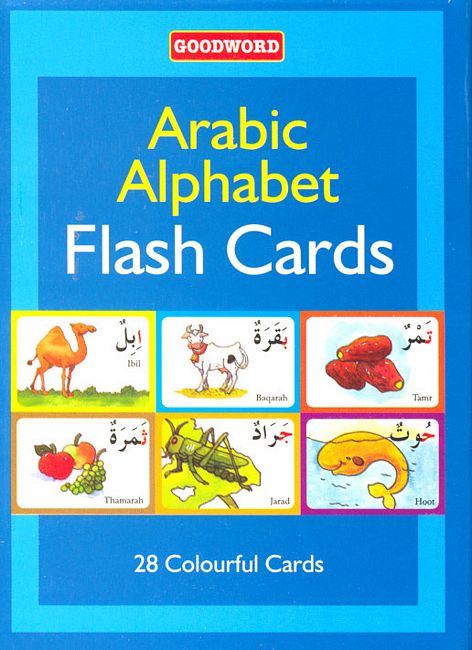
College Student Detained for Having English-Arabic Flashcards

REUTERS– Federal agents detained and interrogated a U.S. college student at the Philadelphia airport simply because we was carrying a set of English-Arabic flashcards, a lawsuit alleged on Wednesday.

The American Civil Liberties Union said it filed the suit on behalf Nicholas George, 22, a language student at Pomona College in California who was held at Philadelphia International Airport for nearly five hours in August 2009.

George, a U.S. citizen from the Philadelphia suburb of Wyncote, was on his way back to college when airport security officers found him carrying the flashcards, each of which had an English word on one side and its Arabic equivalent on the other, the ACLU said.

The U.S. Transportation Security Administration questioned him, and a TSA supervisor asked him how he felt about the September 11 attacks, whether he knew “who did 9/11,” and whether he knew what language Osama bin Laden spoke, the ACLU said.

He was handcuffed and left in a locked cell for two hours before being “abusively” interrogated by two FBI agents, but was never told why he was being detained, the ACLU said.

The lawsuit, filed in U.S. district court for the Eastern District of Pennsylvania, charges that officers from the TSA, FBI and Philadelphia police violated George’s constitutional rights of free speech and to be free from unreasonable seizure.

“As someone who travels by plane, I want TSA agents to do their job to keep flights safe,” George said in a statement. “But I don’t understand how locking me up and harassing me just because I was carrying the flashcards made anybody safer.”

Neither the federal agencies nor the Philadelphia police could be reached for comment.

© COPYRIGHT REUTERS, 2010
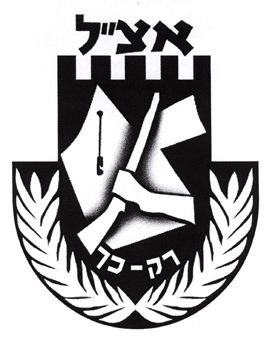
Israel Celebrates Irgun Hotel Bombing

TELEGRAPH– In the midst of its campaign against Hizbollah and Hamas “terrorists”, Israel has been accused by Britain of feting Jewish “terrorists” whose bomb attack killed 28 Britons 60 years ago today.

The accusation, which reopens the debate about the use of politically-inspired violence in the region, follows the unveiling of a plaque commemorating the attack on the King David hotel in Jerusalem on July 22, 1946, by the Irgun Jewish “resistance” to British mandate rule in Palestine. The 28 Britons were among 91 people killed.

This week, former Irgun fighters and current Right-wing politicians unveiled the plaque at the hotel, which read: “The hotel housed the Mandate Secretariat as well as the Army Headquarters. On July 22, 1946, Irgun fighters at the order of the Hebrew Resistance Movement planted explosives in the basement. Warning phone calls had been made urging the hotel’s occupants to leave immediately. For reasons known only to the British, the hotel was not evacuated and after 25 minutes the bombs exploded, and to the Irgun’s regret and dismay 91 persons were killed.”

But Israel’s celebration of its “freedom fighters” remains highly controversial at a time when it continues to pound Palestinian “terrorists”.

Tzipi Livni, Israel’s foreign minister, has found herself deeply embroiled in the debate – her father, Eitan, was Irgun’s chief operations officer. Simon Macdonald, the British ambassador to Israel, and consul general John Jenkins, wrote to the mayor of Jerusalem protesting at the plaque. “We don’t think it’s right for an act of terrorism to be commemorated,” their letter read. 

© COPYRIGHT THE TELEGRAPH, 2006

Afghan Sentenced to Death for Reading about Women’s Rights

THE INDEPENDENT– A young man, a student of journalism, is sentenced to death by an Islamic court for downloading a report from the internet. The sentence is then upheld by the country’s rulers. This is Afghanistan – not in Taliban times but six years after “liberation” and under the democratic rule of the West’s ally Hamid Karzai.

The fate of Sayed Pervez Kambaksh has led to domestic and international protests, and deepening concern about erosion of civil liberties in Afghanistan. He was accused of blasphemy after he downloaded a report from a Farsi website which stated that Muslim fundamentalists who claimed the Koran justified the oppression of women had misrepresented the views of the prophet Mohamed.

Mr Kambaksh, 23, distributed the tract to fellow students and teachers at Balkh University with the aim, he said, of provoking a debate on the matter. But a complaint was made against him and he was arrested, tried by religious judges without – say his friends and family – being allowed legal representation and sentenced to death.

The Independent is launching a campaign today to secure justice for Mr Kambaksh. The UN, human rights groups, journalists’ organisations and Western diplomats have urged Mr Karzai’s government to intervene and free him. But the Afghan Senate passed a motion yesterday confirming the death sentence.

The MP who proposed the ruling condemning Mr Kambaksh was Sibghatullah Mojaddedi, a key ally of Mr Karzai. The Senate also attacked the international community for putting pressure on the Afghan government and urged Mr Karzai not to be influenced by outside un-Islamic views.

The case of Mr Kambaksh, who also worked a s reporter for the Jahan-i-Naw (New World) newspaper, is seen in Afghanistan as yet another chapter in the escalation in the confrontation between Afghanistan and the West.

Continue reading about the Afghan Sentenced to Death for Spreading Information.

How you can save Pervez

Sayed Pervez Kambaksh’s imminent execution is an affront to civilised values. It is not, however, a foregone conclusion. If enough international pressure is brought to bear on President Karzai’s government, his sentence may yet be overturned. Add your weight to the campaign by urging the Foreign Office to demand that his life be spared. Sign our e-petition at www.independent.co.uk/petition

© COPYRIGHT THE INDEPENDENT, 2008

Posted in Uncategorized | 1 Reply
