 COMMON DREAMS– The following speech was made by Canadian author and activist
Naomi Klein at the telethon held to raise funds the legal costs of G20
protesters. The telethon took place in Toronto on Nov. 11 and rabble.ca
carried it live. It can be viewed here.
COMMON DREAMS– The following speech was made by Canadian author and activist
Naomi Klein at the telethon held to raise funds the legal costs of G20
protesters. The telethon took place in Toronto on Nov. 11 and rabble.ca
carried it live. It can be viewed here.
So we are here to raise money. But more fundamentally, we are here because we know what happened in
this city during the G20 and the wrong people are on trial for it.
There are police officers that should be facing charges for assault
and harassment — and so should any supervisors who enabled or covered
over those abuses.
So far no one in authority has paid any price for what happened.
According to the Parliamentary Committee underway in Ottawa, the worst crime the cops committed was taking off their name tags.
And let’s not forget that our outgoing city council — lest we get
too nostalgic given the incoming city council — unanimously passed a
motion to “commend the outstanding work of Chief Bill Blair, the Toronto
Police Service and the police officers working during the G20 summit in
Toronto.”
But this is not just about the cops. There are also high-level
politicians who should be under investigation — for their role in
ordering the militarization of our city, for subverting the legislative
process to increase police powers, for grossly misappropriating public
funds, using them to buy off constituents and grease donors. Tony
Clement, we are talking about you.
Not surprisingly, the Federal government has not convened an inquiry.
Neither has the RCMP. And the Ontario Legislature just shamefully voted
against having a public inquiry.
In 1998 there was an RCMP inquiry called over the use of pepper spray
on peaceful protestors outside an APEC summit. It was known as
Peppergate. How quaint by G20 standards.
But the truth is we are not so hardened, we are not blasé about state violence.
There are hundreds if not thousands of people in this city who are
still traumatized by what they suffered and witnessed that weekend at
the end of June.
The G20 changed them, changed the way they feel about their country and their city.
So let’s refresh our memories about what did happen:
Large parts of Toronto were engulfed in a sprawling security zone as
an atmosphere of hysteria gripped our city. Residents were subject to
arbitrary searches as they went to and from work, discovering that they
were in a bizarre rights-free zone.
Bike racks and bus-shelters disappeared. Trees were uprooted because, apparently, they could be used as projectiles.
In a much needed comedic interlude, a spokesperson for the Council of
Canadians was quoted in the National Post observing that the trees
could not be pulled up by hand: “You’d need an axe to cut the thing
down. And if you’ve already got an axe, you wouldn’t need a tree.”
Indeed.
All of this caused frustration to boil, as did the fact that when
demonstrations did take place they were suffocated by throngs of police
in riot gear and in some cases dangerously “kettled.”
As we all saw with our own eyes or on video, peaceful protesters were
attacked with rubber bullets, tear gas, and pepper spray. At Queen’s
Park riot police plowed into groups of people sitting on the grass
flailing their batons and kicking protesters to the ground.
I could go on listing these abuses but this would turn into a giant therapy session, not a fundraiser, and we don’t want that.
In all, over 1,100 people were arrested — the largest mass arrest in Canadian history.
Roughly 800 of them were jailed.
From them we have heard many reports of beatings (including beatings
of people in handcuffs). Of racist, sexist, and homophobic slurs and
threats, of people being screamed at for speaking in languages other
than English. Of strip searches of women by male officers, of groping by
police, sexual solicitation, rape threats.
We also heard about the shocking detention conditions: people crammed
into cells, unable to lie down. Medicines were denied, as was the right
to counsel.
I heard from women who were not given sanitary napkins, from others who were denied water and food for longer than a day.
We all owe a great debt of thanks to Canadian Civil Liberties
Association and the National Union of Public and General Employees for
the hearings they have been holding over the past few days. Providing a
space for these stories to be told; doing the job our government won’t.
Before I came here I read some of the testimony from today’s
hearings, and I have to tell you that it is very painful to read,
because the memories and the sense of helplessness come back.
Just a few hours ago a man named John Pruyn testified. I want to
share with you what he said. He said he was arrested and cuffed and
while cuffed police pulled off his artificial leg. Then they ordered him
to put it back on, which he obviously could not do with his hands tied.
Then they laughed, dragged him off and hit him, telling him he should
never have come.”
It goes without saying that no one deserves this kind of treatment, no matter what they did.
But the fact is that the vast majority of those arrests were a
complete farce. The proof is that almost all the charges were dropped.
In other words, arrestees were abused in this manner simply because they
went to a protest — or in some cases because they walked by or near
one. Or because they were wearing black. On Queen Street in Toronto. I
mean, please.
It was a relief when hundreds were released and charges were dropped.
But the G20 assault on democratic rights did not end there.
The reason we are here — the reason there is such a pressing need to
raise legal defense funds — is that the abuses are ongoing.
That’s because roughly 100 demonstrators are being prosecuted with a
sense of vendetta and a spirit of vengefulness that is so intense it
verges on the pathological.
Some are facing charges grossly disproportionate to the allegations
— like potential multi-year jail sentences for allegedly breaking a
window. No simple vandalism charge will suffice.
This is personal. This is a crusade. We see it most clearly in the
treatment of the 19 activists accused of “conspiracy” — an extremely
serious charge, with grave consequences if convicted.
I know most of you know the details but for those who don’t, let me recap.
For months leading up to the protests, police in multiple provinces
were engaged in an elaborate undercover operation, involving heavy
surveillance and many informants in activist groups.
Before the large protests took place during the G20, and well before
any glass shattered, conspiracy warrants were issued for this group of
people. In some cases, police violently arrested people in their homes
preemptively.
The claim, as I understand it, is that these activists were secretly
planning the property destruction that took place after they were in
jail. The people who did it were apparently helpless puppets.
This narrative of intrigue has been central to Bill Blair’s bizarre
claim that Toronto was victimized by a “criminal conspiracy” — as
opposed to what actually happened: a big protest attended by lots of
people, including quite a few very pissed off people.
As you can well imagine, we would have liked to have had one of these
supposed conspirators speak to us here tonight, to share their
perspective. I am sure you all would have liked to hear that speech.
Unfortunately we weren’t able to. If we did, there is every chance
that the cops would storm in here and arrest them for violating their
bail conditions. Maybe scooping up some of us wearing black while they
were at it.
But let’s talk a little about those bail conditions because they are really something. Here is a sampling:
–not being able to speak to any of the other defendants;
–not being able to go to protests or engage in political organizing;
–not being able to talk on a cell phone;
–essentially being under house arrest;
–in some cases not being able to post to the internet or speak to the media.
And it must be said that to make these wild allegations and to
simultaneously gag the accused is not justice, it’s propaganda — not to
mention the height of cowardice.
Alex Hundert, as most of you know, was “preemptively” arrested at
gunpoint before the demonstrations took place and he has been
re-arrested twice since — once for speaking at a panel at Ryerson. He
remains in jail.
So the question must be asked: why?
Why these draconian lengths to paint community organizers as terrorist masterminds, why this vendetta?
Activists have organized similar protests in dozens of cities at world summits.
Just this week, tens of thousands were out protesting the G20 summit
in Seoul. They weren’t satisfied marching in approved zones, they tried
to get into the restricted city centre, past police. Only seven people
have been reported arrested so far and no one is being accused of being a
criminal mastermind.
[Wednesday] in London, 50,000 young people protested against
education cuts. They crossed police lines and occupied the headquarters
of the Tory Party. Some people rioted. There have been 50 arrests.
So once again: why, in Toronto, is calling for civil disobedience
suddenly criminal conspiracy, with the power to ruin young lives?
Let’s unpack this a little bit, so we are clear.
Part of what is going on is that the police went so over the top that
they appear to need these convictions as a form of self-justification.
In other words, spending on summit security was so exorbitant, and
the systems of entrapment leading up to these arrests were so elaborate
that at the end of the day they need something to show for their
billion-dollar budget and their rampant civil liberties violations. A
conspiracy — not a movement.
And our friends are caught in that maze of self-righteousness, that web of self-justification.
And we need to get them out. And that is going to take good lawyers and lots of money.
So just to remind you: that is why we are here tonight. I know you
paid a lot to get in, but consider whether you can give more. Especially
those of you watching at home.
Because the burden that has been placed on these activists must somehow be shared by the broader community that opposed the G20.
By those of us who went to the protests that the arrestees helped to organize.
Now, there is something else about these cases that needs to be
acknowledged. They fit a pattern that we have seen from the Tories again
and again.
For years now they have been waging a not so silent war on artists
whose political views they don’t like. On students organizing
Palestinian solidarity events, particularly Israeli Apartheid Week.
That’s what the conference on the “new anti-Semitism” is all about.
They have also waged war on NGOs that take political positions
contrary to the government: The Canadian Arab Federation, Kairos, and
the Canadian Council for International Cooperation.
With no sense of shame the Tories have tried to put these troublesome NGOs out of business.
Could it be that this same government seized the opportunity
presented by the G20 to try to wipe out or at least weaken some of the
country’s most effective and militant anti-poverty, Indigenous
solidarity and migrant rights groups?
Because if we look at those bail conditions, and the massive legal
costs ahead, that is exactly what these charges seem designed to do.
And they have good reason to want to get these groups out of the way,
or at least bog them down in legal hassles at this particular point in
history.
Because let’s always remember that the gravest crimes of that summit
were not the fake lake, or the civil liberties violations, or even the
security budget.
The real crime was what the leaders decided to do while they were being so enthusiastically protected.
Nicknamed the “Austerity Summit,” Toronto was where they decided to
stick the public with the bill for an economic crisis that began with
wild speculation on Wall Street.
In previous G20 summits these same leaders failed to close corporate
tax loop holes, failed to impose coordinated banking regulation, failed
to break up the big banks, refused to impose a bank tax, failed to
impose even a miniscule financial transaction tax, failed to eliminate
fossil fuel subsidies, and of course resolved to continue waging wars.
So how would they come up with the revenue to cover their shrinking
tax bases thanks to layoffs and foreclosures? They would cut social
programs, of course.
The G20’s final communiqué in Toronto instructed governments to slash their deficits in half by 2013.
This is a huge and shocking cut, and we all know who will pay the price:
–students who are seeing their public educations further deteriorate
as their fees go up, which is why they were on the streets of London
yesterday, occupying the headquarters of the Tory Party;
–pensioners who are losing hard-earned benefits, which is why they have been on the streets of France for weeks;
–public-sector workers whose jobs are being eliminated, which is why
we have seen massive strikes in Italy and Spain.
And the list goes on. Here in Ontario, well before the G20, the poor were already paying
the cost of the crisis. To cite just one example, this year the
Provincial government shamefully abolished the “special diet” allowance
— a program that gave people on social assistance with health
conditions just a little bit more every month so that they could afford
foods that don’t make them sick.
That program cost $200-million a year. As John Clark pointed out
during the G20, the cost of security for the summit could have paid for
that program for five years.
At the federal level, the Tories are on course to slash stimulus
spending that includes a billion dollars a year for the construction and
renovation of social housing. Meanwhile they are paying Lockheed Martin
$9-billion for new fighter jets, with an anticipated $7-billion more in
maintenance costs.
And we all know that under Rob Ford, we are going to have to fight to
defend the public transit system and other services on which working
people depend.
We gathered on the streets of Toronto during the G20 because we know
there are other ways to make up a budget shortfall. Like getting the
hell out of Afghanistan and not building new prisons at a time when
Canada’s crime rate has been down for a decade.
But our politicians have chosen a very different route, and that route necessarily means more social unrest.
And that has everything to do with why the security costs were so high during the G20.
Because much of that money went to arming the police with a new
arsenal of weaponry: water cannons, sound cannons, tear gas and rubber
bullets, surveillance cameras. I fear that we G20 protestors were just
the guinea pigs. That those are the weapons of the future, designed to
be turned on anyone else in the country who dares to resist the G20’s
policies.
And let’s be clear that the resistance won’t only be about cutbacks.
Something else that happened at the G20 is that leaders decided not to
make serious commitments to cut fossil fuel emissions. This was striking
because after the failure of Copenhagen, there was much talk that
smaller groupings of powerful nations would step into the vacuum left by
the UN on climate policy.
But it didn’t happen. Harper shut down all climate discussion because
the Canadian government has every intention of massively expanding tar
sands production. As we speak, Enbridge is trying to build the Western
Gateway pipeline to bring tar sands oil to the West Coast of Canada, and
TransCanada is trying to buy off U.S. farmers and threatening them with
eminent domain to build the Keystone XL pipeline to bring that oil to
refiners in Texas.
Harpers’ is a bleak vision of a country. One that claws away at its
own skin in search of fossil fuels that are catastrophically warming our
planet — only to send war ships to the Arctic to lay our claim to the
oil and gas underneath that melting ice.
A country that then fortifies its borders to keep out refugees who
lose their land and their homes in other parts of the world because of
droughts and rising sea levels — caused in part by our emissions.
We see this bleak vision materializing with the proposed Immigration
Act, Bill C-49. If passed it would allow the Minister of Public Safety
to declare any group of migrants coming in to Canada, a “smuggling
incident.”
If they are designated in this way, the state would have the power to
jail them for a minimum of one year; deny access to health services;
deny monthly detention reviews, and so on.
Which certainly puts what happened here during the G20 into some perspective. But none of this will happen without a fight. No One Is Illegal,
despite the legal attacks, is organizing a multi-front campaign to stop
Bill C-49.
And the plans to expand the tar sands are hitting snags on multiple
fronts. It turns out that after the BP disaster, when an oil company
promises you that everything is going to be fine, it’s not much of a
comfort.
Everywhere the new pipelines are supposed to go into the ground, communities are organizing to keep them out.
In British Columbia, lead by First Nations communities, there is
enormous determination to block the Gateway pipeline, just as the
so-called Prosperity Mine was just defeated.
My point is simply this: our government knows that there are heavy
battles ahead. Battles over what kind of country we want. Battles with
tens of billions of dollars on the line.
These are fights we can win if we build coalitions like the ones we
saw on the streets of Toronto during the G20: immigrant rights advocates
with anti-poverty activists with First Nations defenders of the land
with labour leaders and people who were just fed up with having their
city taken over.
Our government fears those coalitions, fears the prospect of a truly
mass social movement, and we can see that fear in the arrest and
prosecution patterns.
It is no coincidence that the people facing the most serious charges
with the most restrictive bail conditions are among the most effective
organizers in this country. They are precisely the people who build
bridges across traditionally separate communities and constituencies,
finding common ground where there was often antipathy before.
That’s what Alex Hundert does at AW@L and Southern Ontario Anarchist
Resistance, with his tireless support for the blockade at Grassy Narrows
among other indigenous struggles.
That’s what Syed Hussan does as an organizer with No One Is
Illegal-Toronto — he fights for the rights of immigrants and refugees.
But now, in part because of his G20 political activities, he has been
unable to get his work visa renewed and faces deportation himself.
Some of the most effective organizers in the country are being taken
out of the game when they are needed most, precisely when the stakes are
highest. But here is what the Tories and the cops can’t seem to get:
their attacks only make us more determined. Our movements are more
resilient than they know.
And when we refuse to forget what happened here during the G20, when
we demand accountability for the real criminals and the freedom of our
friends, we are fighting not just for the past but for the future.
We are saying — with clarity and conviction — that we will not accept this treatment again.
We have the right to defend our hard won social services and meager refugee protections from morally bankrupt politicians.
We have the duty to protect our boreal forests and our pristine waters from dirty oil development.
And as we perform these duties, we know that there will be costs,
there always are. But we refuse to be vilified as criminals and we
refuse to relinquish our rights as Canadians. That is what is at stake in the struggle for G20 justice and we cannot afford to lose.
One final thought before we move on to the fun part of the evening:
what moved me most during the G20 actions is the way people embodied the
kind of world they want in the way they conducted themselves.
When police stormed, demonstrators locked arms and often repelled
arrest. When someone was snatched, they often were freed by their
friends or passersby. When people were loaded onto vans and taken to overcrowded jails, strangers looked after each other, advocated for each other.
And outside the jails there were solidarity protests where thousands
showed up, despite the fact that some of them had just gotten out of
jail themselves and were terrified of being re-arrested. Yet they showed
up, brave and loud, week after week.
Tonight is simply a continuation of that spirit. It is about acknowledging the extraordinarily high stakes of this
political moment, and treating every member of our movements as if they
are precious. Because they are.
It is about saying that we will not let media generated suspicion
make us afraid and disdainful of each other. That even when we disagree,
we will do so with respect, and will refuse to be divided into
categories of good and bad activists.
Tonight is about saying: we were together on the streets of Toronto
during the G20 and four and half months later we are together still.
We have each other’s backs. For the battles ahead.
Please give generously. Thank you.

Photography by ioerror/flickr
© COMMON DREAMS, 2010



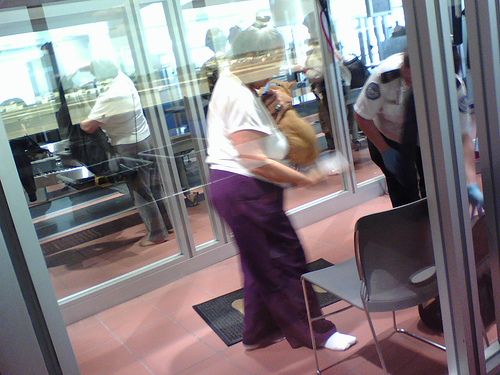 PALM BEACH POST– If you don’t want to pass through an airport scanner that allows security
agents to see an image of your naked body or to undergo the alternative, a
thorough manual search, you may have to find another way to travel this
holiday season.
PALM BEACH POST– If you don’t want to pass through an airport scanner that allows security
agents to see an image of your naked body or to undergo the alternative, a
thorough manual search, you may have to find another way to travel this
holiday season.
 MEDIA ROOTS- Two important news stories this past week illuminate a trend toward the crumbling privacy rights of the public, while corporations are expanding their rights to trump those of living, breathing American citizens.
  COMMON DREAMS
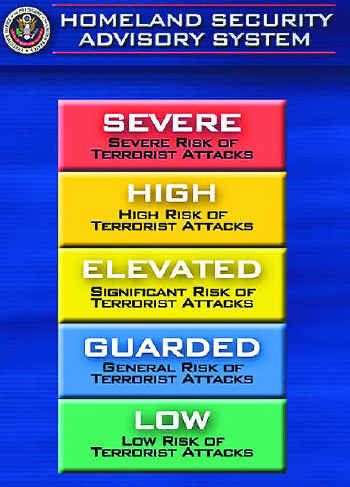 Terrorist attacks in the United States and Europe have altered our
societies. They have changed the way we travel, the way we conduct
criminal trials, the way we think about our civil liberties. The
Wolfowitz Doctrine’s emphasis on unilateralism evolved into the Bush
Doctrine: waging preemptive war against nations that might pose a
threat to our security, timid protestations from the UN
notwithstanding.
Terrorist attacks in the United States and Europe have altered our
societies. They have changed the way we travel, the way we conduct
criminal trials, the way we think about our civil liberties. The
Wolfowitz Doctrine’s emphasis on unilateralism evolved into the Bush
Doctrine: waging preemptive war against nations that might pose a
threat to our security, timid protestations from the UN
notwithstanding. 