BP Doesn’t Want You to See Its Tarballs

MOTHER JONES– Lots has changed on Elmer’s Island. Nearly a year after the great oilpocalypse of 2010, this Louisiana wildlife refuge about 50 miles south of New Orleans isn’t crawling with teams of cleanup workers raking big black pools of crude off the sand; there’s no cleanup machinery or equipment; the only immediately visible remnants of the BP/Deepwater Horizon spill are the occasional tarballs, big as a kid’s head, that wash onto the shore.

Not that I can just waltz onto this public beach to see all that—not everything has changed. Like some lame iteration of Groundhog Day, the hundredth time I try to pull onto the Elmer’s Island access road from Highway 1 in southern Louisiana—some 200 days after the last time I tried it—I am, once again, stopped. Last year, it was cops blocking the road. Now it’s private security hired by BP.

“You have to get permission from central command to come on here, and then you’ll probably have to be escorted by an official,” the security guard tells me.

“How hard is it to get permission?”

“Usually pretty hard.” She says a local reporter couldn’t get through recently.

Read more on BP Doesn’t Want You to See Its Tarballs.

© 2011 Mother Jones

Photo by Flickr USFWS Southeast
Systemic Management Problems Led to BP Oil Spill

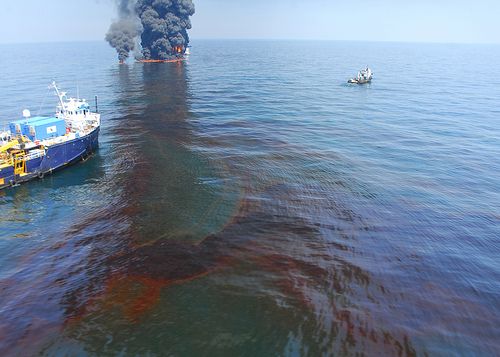
THE TIMES-PICAYUNE – The president’s Oil Spill Commission has concluded that systemic failures, not a rogue BP management style, caused the disastrous Gulf of Mexico oil well blowout in April.

“The blowout was not the product of a series of aberrational decisions made by rogue industry or government officials that could not have been anticipated or expected to occur again,” says the commission’s final report, released late Wednesday. “Rather, the root causes are systemic and, absent significant reform in both industry practices and government policies, might well recur.”

That conclusion could prove devastating to the oil and gas industry, which is waiting with bated breath to see whether a new regulatory agency will issue new drilling permits in time for idle rigs currently under contract through the spring to return to work in the Gulf of Mexico.

The chapter of the report focusing on what caused the April 20 blowout makes it clear that poor management, mostly by BP, doomed the rig, leading to the death of 11 rig workers and considerable damage to the Gulf from nearly 5 million barrels of spilled oil.

But the chapter also raises serious questions about the actions of Halliburton, a leading provider of cement to seal wells, and also takes aim at rig owner Transocean for a December 2009 “near-miss” in the North Sea that had nothing to do with BP.

Click to continue reading the full article on the Oil Spill Commission’s findings.

Article by David Hammer

©COPYRIGHT THE TIMES-PICAYUNE, 2011

Photograph by Flicker user: Deepwater Horizon Response

WikiLeaks Reveal Shell’s Grip on Nigerian State

photo by abulic monkey/flickrTHE GUARDIAN UK – The oil giant Shell claimed it had inserted staff into all the main ministries of the Nigerian government, giving it access to politicians’ every move in the oil-rich Niger Delta, according to a leaked US diplomatic cable.

The company’s top executive in Nigeria told US diplomats that Shell had seconded employees to every relevant department and so knew “everything that was being done in those ministries”. She boasted that the Nigerian government had “forgotten” about the extent of Shell’s infiltration and was unaware of how much the company knew about its deliberations.

The cache of secret dispatches from Washington’s embassies in Africa also revealed that the Anglo-Dutch oil firm swapped intelligence with the US, in one case providing US diplomats with the names of Nigerian politicians it suspected of supporting militant activity, and requesting information from the US on whether the militants had acquired anti-aircraft missiles.

Other cables released tonight reveal:

US diplomats’ fear that Kenya could erupt in violence worse than that experienced after the 2008 election unless rampant government corruption is tackled.

America asked Uganda to let it know if its army intended to commit war crimes based on US intelligence – but did not try to prevent war crimes taking place.

Washington’s ambassador to the troubled African state of Eritrea described its president, Isaias Afwerki, as a cruel “unhinged dictator” whose regime was “one bullet away from implosion”.

Click to continue reading this article Shell’s grip on the Nigerian state, at guardian.co.uk.

article by David Smith

photograph by flickr user Abulic Monkey


BP Using Prison Labor for Oil Cleanup

AOL NEWS– BP is hiring prison labor for its oil cleanup efforts, and newly unemployed coastal residents are expressing their outrage, according to a magazine article released this week.

“Hiring prison labor is more than a way for BP to save money while cleaning up the biggest oil spill in history,” reports The Nation’s Abe Louise Young. “By tapping into the inmate workforce, the company and its subcontractors get workers who are not only cheap but easily silenced — and they get lucrative tax write-offs in the process.”

Young writes that BP would not confirm that it had hired inmates. Most prison officials would also declined to answer her questions, though a few did back up what she described as an “open secret” along the Gulf Coast: “A different warden, of a privately owned center, admitted on condition of anonymity that inmates from his facility had been employed in oil cleanup, but declined to answer further questions. … A lieutenant in the Plaquemines Parish Sheriff’s Office told me that three crews of inmates were sandbagging in Buras, Louisiana, in case oil hit there. ‘They’re not getting paid, it’s part of their sentence,’ she said. ‘They’ll work as long as they’re needed. It’s a hard job because of the heat, but they’re not refusing to work.'”

In the course of her investigation, Young also personally saw one prison work crew in Louisiana:

“I drove up the gravel driveway of the Lafourche Parish Work Release Center jail, just off Highway 90, halfway between New Orleans and Houma. Men were returning from a long day of shoveling oil-soaked sand into black trash bags in the sweltering heat. Wearing BP shirts, jeans and rubber boots (nothing identifying them as inmates), they arrived back at the jail in unmarked white vans, looking dog tired.”

Young argues that Louisiana’s work-release program for inmates — up to 12 hours a day and six days a week and earning zero to 40 cents an hour — is inhumane. But a staffer with an organization that advocates community-based responses to the spill makes another case against BP’s use of prison crews. “Community members should be hired in the planning stages and paid for their expertise,” she told the magazine. “The local people are the true experts here.”

Read more about BP Hiring Prison Labor at The Nation.

© AOL NEWS, 2010

Posted in Uncategorized | 1 Reply

Fishing Families Turn to Fast Food, ‘Grind Meats’

MSNBC– Grow up on the water, the children of southern Louisiana learn, and you’ll never go hungry. As long as you can toss a line, a net or a trap, you can eat — and eat well.

Or you could, until now.

Millions of gallons of oil from the April 20 explosion of the Deepwater Horizon rig have fouled some of the world’s richest fishing grounds from Florida to Texas, and even though BP stopped the leak for the first time Thursday, more than a third of the Gulf of Mexico remains closed. For thousands who feed their families from the water, what once seemed like a never-ending, free buffet of high-protein, low-fat shrimp, crabs, oysters and fish is off limits.

It’s not that people are starving. With compensation checks from BP and the help of charities such as Second Harvest Food Bank, they’re able to stock their pantries with staples — rice and beans, grits and cereal, peanut butter and jelly.

But they’re forced to pay for protein they used to get for free. And not the kind they want.

June Demolle ate seafood every night when husband James was harvesting oysters from Black Bay and American Bay. Now, like many in Plaquemines Parish, she struggles to recall her last piece of fish.

“Been at least three weeks,” she finally decides.

Instead, the couple cooks up what Demolle derisively calls “grind meats,” hot dogs and hamburgers, in a Pointe a la Hache trailer park populated entirely by relatives. She wrinkles her nose, complaining she feels less healthy already.

“I love my fish and my kids love fish,” says Demolle, a 58-year-old grandmother who also feeds her daughters and 11 grandchildren. “Every night for dinner. Any kind of fish. All the time.”

She refuses to buy it in a store; it’s expensive, and it’s not local.

Read full article HERE.

© MSNBC, 2010

Photo by Abby Martin