Abby Martin hosts an epic conversation with the prolific Dr. Cornel West on everything from the prison industry and institutionalized racism, US empire and imperialism, corporate greed, the notion of ‘conscious capitalism’ and gearing for the revolution on Breaking The Set.
BREAKING THE SET— US Congressman, Dennis Kucinich, and Breaking the Set’s Abby Martin discuss accountability on the 10th anniversary of the Iraq war, Obama turning the US ‘Orwellian’, civil liberties, GMOs and other issues that have set him aside from the average establishment politician.
***
Congressman Dennis Kucinich on BTS
***
Abby Martin: “I’m really excited right now to introduce one of the few politicians I actually admire. I’m talking about Congressmand Dennis Kucinich, one of the most honest, credible politicians who ever served, a man who spent his 18-year tenure fighting for the issues, that Americans care the most about. From thewar in Iraq to the food we eat, Kucinich has always stood on the right side, the side of truth, which is why I’m honoured to have the chance to speak to Congressman Kucinich, himself. I first asked him about oil being a motivating factor in the Iraq War, particularly, in light of Bush’s former speechwriter coming out to validate that claim. And here’s what he had to say.”
Dennis Kucinich (c. 0:42): “Well, right from the beginning, it was very clear that there was no legitimate reason to go into Iraq. The only compelling reason would be to try to help corner the market on oil. It didn’t work out that way for those who thought that it would. But the fact of the matter is oil was so well-known to be the motivating factor, that when I ran for President in 2004, going across the country, I’d ask audiences, ‘Tell me what this is about, what this war is about, in three letters.’ And thousands of people would respond, simultaneously, OIL! It was never a secret.”
Abby Martin (c. 1:19): “Right. In 2007, Congressman, you actually introduced articles of impeachmentagainst George Bush and Dick Cheney. When you look at things like Nixon being ousted for wiretapping, Clinton being [impeached] for an affair, how is it that these two men could not be held accountable for initiating an illegal war based on known lies?”
Dennis Kucinich (c. 1:40): “Well, I think we have to place the responsibility for that on the shoulders of Democratic leadership because we could have moved forward with an impeachment, but the Democratic leadership wouldn’t do it. Now, there has to be accountability in a democracy. It is widely understood today that the war was based on lies. So, then, should not the thousands of Americans being killed, tens of thousands being injured, maybe a million innocent Iraqis died, perhaps, damage, in the hundreds of billions of dollars to Iraq—shouldn’t there be some accountability?
“So, what I’ve called for is a process of truth and reconciliation, like South Africa had many years ago, where leaders are required to come forward and state their role in the decision-making process. And, if they lie, then they’re subject to perjury charges. We need to clear the air in America. We need the truth. And it is time, since everyone knows it was based on a lie, then what’s wrong with calling those, who lied to us, forward to, not only, require an explanation, but also to clear the air?”
Abby Martin (c. 2:45): “Absolutely, I remember Pelosi, at the time, saying impeachment was off the table.”
Dennis Kucinich: “Right.”
Abby Martin: “I mean, could it be the Democrat leadership was scared they would open up their can of worms and somehow be complicit in the lies?”
Dennis Kucinich: “Well, you know, two-thirds of the Democrats voted against going to war. But the third, that did vote for it, were involved—as were their counterparts in the Senate—in establishment-type politics, that favoured war. Some of the leading senators, who have become exalted public figures, took a stand for that war. And they’ve never been held accountable, even politically. And, interestingly enough, it would seem as though to be qualified to speak on foreign policy—even still today—that you have to have been for the war, even though it was based on lies. That’s the kind of upside-down thinking, that continues to guide foreign policy decisions in Washington, D.C.”
Abby Martin (c. 3:37): “Well, speaking of upside-down policy, Obama’s reason for not prosecuting—or even investigating—the Bush officials was because he wanted to look forward, not backward. However, I can’t help, but wonder, why he continues to look backward to prosecute those who exposed war crimes, as whistleblowers, instead of the war criminals.”
Dennis Kucinich: “No good deed remains unpunished. And those who were the whistleblowers are being punished. Those who took us into a war based on lies are being celebrated. This inversion of reality isOrwellian. It needs to be, um, reckoned with. And that’s why I call for this period of truth and reconciliation. And, you know what? Isn’t all law enforcement about looking backwards?”
Abby Martin: “Right. Exactly.”
Dennis Kucinich: “Hello.”
Abby Martin: “Exactly. I couldn’t agree more. Let’s talk about the Afghanistan war, in terms of looking backwards. It was sold to us as a war of necessity in a post-9/11 world. Of course, Bush, at the time, had a 95% approval rating [after 9/11]. I don’t blame people for voting for it, thinking that we needed some form of retaliation [for 9/11]. But don’t you find the logic flawed now, looking back? Do you regret your vote to invade and occupy a country to find one man?”
Dennis Kucinich (c. 4:43): “No, we did not, Congress did not vote to invade and occupy. They voted to give the President the ability to respond to the attack on 9/11. And, frankly, I think it was appropriate thatthe United States struck at the training camps and made the point that you are not going to attack the United States with impunity—stop there, end of story—not to invade and occupyand, basically,try to break a country, that hasn’t been successfully conquered in modern times.
“So, this, too, points to the serious flaws in our foreign policy. We have an obligation to defend this country. And I don’t take a backseat to anyone in saying that if Americans are attacked, we have a right to defend ourselves. But it was absolutely—it was criminal to go and think we’re gonna knock off Afghanistan, occupy it, control it, remake a country where a lot of it is just a box of rocks.
“And what do we think—who do we think we are? This was a major flaw. It’s hubris, arrogance. And we need some explanation to the American people.”
Abby Martin (c. 5:55): “Absolutely. Let’s talk about your Presidential run in 2008. Both, you and Ron Paul were pretty much the leading anti-war figures, of course, on both sides of the spectrum, of both parties. I remember leftists and Libertarians, at the time, calling for you guys to be running mates because you were so united against the wars and for the restoration of our civil liberties.
“Now, these factions are so divided. They’re more divided than ever before. And it just seems like, without any representation, to have us—these dividing factions—fighting each other, instead of the forces we should be fighting against is really counter-intuitive. How do you think it got this way? And how can we unite these factions to really focus on cohesive, unified opposition again?”
Dennis Kucinich (c. 6:34): “Well, I think what Ron Paul and I proved is that there is plenty of space in American politics for a new movement, which goes across partisan lines, which embraces the concerns of Democrats and Republicans, liberals and conservatives, that’s based on the truth, on protecting the Constitution, taking care of our practical aspirations here, at home, and in sharply curtailing this aggression, that America has practised around the world.
“So, I think Ron Paul and I have been able to demonstrate this capacity of creating new possibilities. And, frankly, since the two parties continue to fail to address America’s economic problems, I think the American people, increasingly, will be looking, to alternatives, as we move toward the future.”
Abby Martin (c. 7:24): “I call it the two-party dictatorship, Congressman. Let’s talk about civil liberties, which is something that you had been very vocal about in your entire term. Rand Paul, his epic filibuster, not really supported by a single Democrat, I mean, how is that drones and due process are partisan issues now?”
Dennis Kucinich: “Well, they shouldn’t be. What happens in Washington is this: Whatever party holds the White House, their supporters in Congress try to protect the president of a party. But the president isn’t just the president of a party. He’s a president of the United States. And members of Congress aren’t just partisan participants in a process, they are United States Congresspersons. And what we have to remember is that, both, myself and Ron Paul—Rand’s father—raised this issue of the drones in the Congress relentlessly, brought a resolution in front of the Congress, forced a committee to have to consider to it.
“And, you know, finally people are starting to understand there are Constitutional issues here. And good for Senator Rand Paul for raising the issue on the floor of the Senate, but we haven’t resolved it. Other countries are gonna start to use drones. Imagine for a moment that if China thought—or any other nation—thought they could invade US airspace with a drone, as we invade other people’s airspace. We wouldn’t stand for it. How can we expect other countries to continue to standby, while we violate their sovereignty and their territorial integrity? And, then, on the domestic level, we gotta worry about the domestic use of drones. It won’t be long—mark my words—that law enforcement, domestically, will start using these drones to go after suspects using armed force.”
Abby Martin (c. 9:00): “Yeah, and they are counter-intuitive abroad. I mean, it doesn’t take a genius to see that killing people with drones is not a good way to fight, quote, ‘terrorism.’
“You served an epic 18-year run in Congress. You were one of the most vocal leaders against the establishment line time and time again. When you were redistricted, did you feel you were deliberately gerrymandered out of office because of your politics?”
Dennis Kucinich: “By the Democrats, not by the Republicans.”
Abby Martin: “Wow.”
Dennis Kucinich: “It was Democrats in the Ohio legislature who went out of their way to totally distort the map in Ohio and to cut my district up into four pieces, making it impossible for me to win.
“Now, I can tell you, I don’t have any—that’s just a fact. I’m not bitter about it. You know? I still have a home in Washington and a home in Cleveland. I can occasionally see the light of the Capitol on. I just wanna know who’s home.”
Abby Martin: “Unbelievable when your own party turns against the ideals, that this country was founded on.
“When you did leave, Congressman, the media portrayed you as fringe. I mean they even called you the Congressman with the most wacky ideas. Yet, the majority of Americans support what you stood up for. How is it that this depiction is even allowed to exist? And what damage does it do when people feel they are marginalised for sharing views, that you had?”
Dennis Kucinich: “Well, one, it doesn’t hurt my feelings. Two, it never changed my position. When you stand up for the truth, it’s very easy to understand that you take on certain interest groups, who are gonna try to marginalise you.
“It is interesting, as you point out, that someone would try to characterise, as fringe, having opposed the war in Iraq based on facts, having challenged those who made the decisions, that cost our troops, and our Nation, and the Iraqi people so dearly, having challenged other wars, and have proven to be right again and again and again. But you know what that means. If the truth is at the fringe, then what position is being celebrated?”
Abby Martin: “Exactly. And speaking from an inside perspective—you’ve been inside the system for so long—when you look at things like Monsanto, like Vermont not even being able to pass a labelling law because of the fear of a lawsuit from Monsanto—I mean, you were also one of the only people to try to get GMOs labelled.”
Dennis Kucinich: “1999.”
Abby Martin: “What does this say? Do corporations, essentially, have more power than voter resolutions and—”
Dennis Kucinich: “Yes.”
Abby Martin: “—how do—”
Dennis Kucinich: “Yes, after Buckley v. Valeo and Citizens United [v. Federal Election Commission], corporations took enormous power over our government. Monsanto, look, they were able to get the Bush Administration, in its waning days, to be able to claim—the first Bush Administration—to be able to claim in 1993 that genetically modified organisms were the functional equivalent of conventional food. No science based on that at all. But the dollar bill has a science all of its own.
“And, so, now, you have hundreds of millions of acres of crops, that have been planted with genetically modified organisms used to do that. We can’t—our markets are closing in Europe, as a result. People don’t want these crops to come in. And, even more than that, we have no idea, as to the effects with respect toallergenicity, toxicity, functional characteristics, antibiotic resistance. We’re part of a grand experiment now in our food. You know, this is another one of the reasons why I eat organic and I’m a vegan.”
Abby Martin: “Indeed. Thank you for bringing those fringe ideas to the mainstream and standing up to the truth, that so many of us don’t have a voice to share in the system. Thank you so much, Congressman Kucinich.”
Dennis Kucinich: “Thank you.”
Abby Martin: “I’m a huge fan.”
Dennis Kucinich: “Thank you.”
Transcript by Felipe Messina for Media Roots and Breaking the Set.
MEDIA ROOTS — Abby Martin raises the important question, in the finest spirit of Nina Simone, of an artist’s duty toward humanity. Here, she showcases some of her political artwork and explains art’s importance in reflecting the zeitgeist of today’s society.
MEDIA ROOTS — “Both parties have conspired to bring us disaster,” says Professor William K. Black, a leading white collar criminologist, who also teaches economics and law at the University of Missouri-Kansas City. “This has strangled the recovery and may even put the economy back into recession.” Professor Black gives a crucial recap of Obama’s (and both Democrats’ and Republicans’) recent history of assaults against the working-class, also known as austerity.
This “act of austerity is insane, self-destructive, [and] might well cause another recession,” says Prof. Black. “Neither party is getting behind a clean bill. It would be, literally, one sentence: The sequestration provisions are repealed.”
With the fast-paced 24-hour soundbite news cycle dominating attention spans, it’s beneficial to take a step back and scope the bigger picture. Professor Black masterfully articulates the truth behind the two-party budget cuts at home coupled with war spending abroad.
Messina
***
Prof. Bill Black: Both parties have conspired to bring us a disaster; Obama’s sequestration plan gives cuts without blame
***
REAL NEWS NETWORK — “Welcome back to the Real News Network. I’m Paul Jay in Baltimore. And welcome to this week’s edition of The Bill Black Financial and Fraud Report. [Professor] Black now joins us from Kansas City, Missouri. Bill’s an Associate Professor of Economics & Law at the University of Missouri-Kansas City. He’s a white-collar criminologist, a former financial regulator. He is the author of the book, The Best Way to Rob a Bank Is to Own One. Thanks for joining us, Bill.”
Professor Bill Black: “Thank you.”
Paul Jay (c. 0:33): “So, the sequestration cuts and drama, what do you make of it?”
Professor Bill Black: “So, both parties have conspired to bring us disaster. In this case, sequester is the fourth shoe to drop in austerity. And, collectively, this has strangled the recovery and may even put the U.S. economy back into recession.
“So, the first major act was in mid-2011 when they reached this budget deal, that created the sequestration. And the budget deal, in itself, caused over a billion dollars in spending cuts at the worst possible time.”
Paul Jay (c. 1:15): “So, just to remind everybody, the sequestration formula deal was a proposal by President Obama.”
Professor Black: “Well indeed, it was created by President Obama, now, under, of course, Republican pressure, where they’re threatening to not raise the debt ceiling. But it was an Obama idea. And the principal framer of it was Jacob Lew, the President’s selection to be Geithner’s replacement as disastrous Treasury Secretary.
“And then the President blocked a Republican effort to get rid of sequestration. And then the President went so far as to threaten a veto any bill, that got rid of sequestration when the Republicans tried to get rid of it again.
“Now, you shouldn’t think too well of the Republicans in all of this. What they were worried about, pretty much solely, was defence spending. And making sure there’d never be a drop in defence spending.
“In any event, what you see is neither party, even at this time of crisis, where all the supposedly serious people finally agree that this act of austerity is insane, self-destructive, might well cause a recession. Neither party is getting behind a clean bill. It would be, literally, one sentence: The sequestration provisions are repealed. Right? And we could be free of, at least, that aspect of the insanity. We’d still have the debt ceiling insanity. But the sequestration, we would no longer be shooting ourselves, not in the foot, but substantially farther up our anatomy.
“So, as I said, the sequestration is large, but it’s not the sequestration all by itself. It’s the fact that it is this fourth act austerity. I began to mention the mid-2011 pact knocked off a billion dollars in spending at the worst possible time.
“Then we raised taxes on the wealthy, which you may well support, but it is an act, that pushes you towards austerity.
“And then the far larger and vastly more destructive resuming the entire payroll tax on Social Security, which economists think—all by itself—knocked a half percentage point off of growth. And growth is really small, so that’s a massively important thing, that is gonna cost hundreds of thousands of people their jobs.
“And, now, the fourth shoe to drop of austerity, of course, is going to be the sequestration.
“And, meanwhile, this is happening while we see Europe forced back into a completely gratuitous recession. The entire Eurozone, on average, is back in recession. And the European Commissions have just come out with dreadful projections, saying things are going to get worse.
“Spain just announced today that a single bank that they were bailing out—which is really seven failed thrift-type entities—is going to cost them roughly $25 Billiondollars just this year. And Spain’s a large economy, but nowhere close to the United States.
“So, this is bigger, by far, than the most expensive US banking failure in history, all occurring in Spain, all being driven by the bubbleand fraud and then this self-inflicted wound of austerity.
“And we can’t even get the President, who, you know, on day one will say, the sequestration disaster [is] insane.
“And on day two refuses to put forward a clean bill to stop it.
“And, on day three, says, hey, that Jake Lew, the guy, that created this disastrous scenario, that is going to, potentially, hurl us back into a recession. He should be our Treasury Secretary and create our financial policies.”
Paul Jay: “So, when you read the business press, some of the stories are about how blasé Wall Street is and corporate America is. And they’re not very concerned with $85 Billion dollars of cuts. And the stock market’s doing fine. It does not seem to be affected by it. Why is that, if the threat of recession is looming?”
Professor Black (c. 5:53): “Well, recession isn’t necessarily bad for the stock market. We’ve had a record recovery in stock market prices with extremely weak recovery from the Great Recession because it’s been strangled.
“So, they love the current system, in which wages have not simply plateaud, household wealth for the middle class is down to where it was 18 years ago. There’s over a 15% of loss of wealth of the middle class and working-class and a massive increase in corporate profitability where we get all these productivity gains, which is what allows you to pay workers higher wages without any inflationary risk. And virtually all of those productivity gains during the Great Recession have gone to the richest—not 1%—but the richest one-thousandth of 1%.”
Paul Jay (c. 6:54): “Thanks very much for joining us, Bill. And thank you for joining us on the Real News Network.”
***
Transcript by Felipe Messina for Media Roots, New Economic Perspectives, and Real News Network.
MEDIA ROOTS – On this episode of Media Roots Radio, Abby and Robbie Martin talk about the LAPD’s manhunt against Chris Dorner, the subsequent cover-up of his death and police thuggery; how 9/11 and Ron Paul coalesced the divide between libertarians and leftists and caused people to rally behind core issues, the corporate co-option and transmogrification of the Ron Paul movement and the current divide growing between the two factions of anti-establishment political ideologies.
The above timeline is interactive. Scroll through it to find out more about the show’s music and to resources mentioned during the broadcast. To see a larger version of the timeline with clickable resources go to the soundcloud link below the player.
If you would like to directly download the podcast click the down arrow icon on the right of the soundcloud display. To hide the comments to enable easier rewind and fast forward, click on the icon on the very bottom right.
This Media Roots podcast is the product of many long hours of hard work and love. If you want to encourage our voice, please consider supporting us as we continue to speak from outside party lines. If you donate, we want to thank you with your choice of art from AbbyMartin.org as well as music from RecordLabelRecords.org. Much of the music you hear on our podcasts comes from Robbie’s imprint Record Label Records, and Abby’s art reflects the passion and perspective that lead her to create Media Roots.org.
$40 donation: One 8×10 art print and one RLR release (You choose! Tell us in the Paypal notes.)
$80 donation: Two 8×10 art prints and two RLR releases (You choose!)
$150 donation: Four 8×10 art prints and four RLR releases (You choose!)
Even the smallest donations are appreciated and help us with our operating costs.



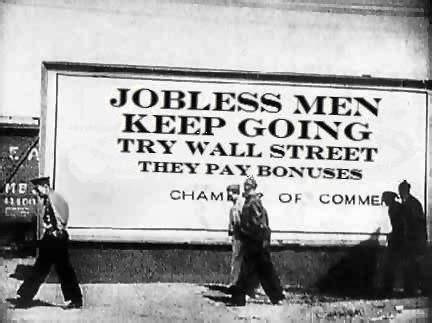 MEDIA ROOTS — “Both parties have conspired to bring us disaster,” says Professor William K. Black, a leading white collar criminologist, who also teaches economics and law at the University of Missouri-Kansas City. “This has strangled the recovery and may even put the economy back into recession.” Professor Black gives a crucial recap of Obama’s (and both Democrats’ and Republicans’) recent history of assaults against the working-class, also known as austerity.