Abby Martin issued the following response to the Jan. 7 New York Times article falsely representing her work at RT America.
The long-awaitedreportby the Director of National Intelligence (DNI), allegedly proving Russian “interference” in the US election, includes a section solely dedicated to bashing RT, and specifically calls out my former show Breaking the Set, which ended two years ago, as a propaganda vector marking the beginning of the Kremlin attempt to subvert American democracy.
Desperate to push this US intelligence narrative, The New York Times called the report “damning and surprisingly detailed,” while adding that it includes no actual evidence.
The very next day, on Jan. 7, the Times published another piece titled “Russia’s RT, The Network Implicated in U.S. Election Meddling.”
In the article, NYT journalist Russell Goldman used two blatantly false statements about my work at RT to support the argument that the network is simply a Putin-dictated propaganda outlet.
First, he stated “…two anchors who quit during live broadcasts say the network is a propaganda outlet.”
I did not quit during a live broadcast, nor did I say that the network is a propaganda outlet.
He goes on to say “…Abby Martin, who said before quitting, ‘What Russia did was wrong.’”
Any cursory research into the referenced quote—when I spoke out against Russia’s military entrance into Crimea and the network’s glorification of it—will find that not only did I not quit on air, but that I continued my show for an entire year afterward.
I was interviewed about my on-air statement on many major news stations, from BBC to CNN, where I defended my editorial freedom and also called-out the double standards and hypocrisies in their coverage.
RT issued an official statement in support of my freedom to state my opinion on the network. Over the course of the next year, I continued to voice my concerns and opinions about Russia, from MH-17 to the Ukraine crisis, unfiltered.
I quit the network on my own terms in February 2015 because I wanted to do more in-depth investigative reporting, not because I believed it to be a propaganda outlet.
The Times issued a correction after these false accounts were featured prominently on their website for over 19 hours. But their correction still misrepresents the facts to push their narrative.
The correction reads “this article misstated when the RT anchor Abby Martin left the network. She quit sometime after denouncing on air Russia’s war in Ukraine, not during the live broadcast.”
The error in their article was not simply about when I quit, but the reason and circumstances for leaving the network. The article still implies that I left over this political disagreement.
Additionally, they removed from the article the line “two anchors who quit during live broadcasts say the network is a propaganda outlet,” but they do not note that change in their correction addendum, as is standard.
The article now includes a modified sentence: “Abby Martin quit some time after denouncing Russia’s incursion on air. ‘What Russia did was wrong,’ Ms. Martin said.”
This new line twists the truth, omits the facts, and ironically contradicts their entire argument.
The glaring fact is that I spoke out about the actions of Putin, Russia and RT’s coverage of it on air, and not only was I not fired, but I still had the prime time opinion show on the network for another year.
That begs the question to the NY Times: if RT is simply a Kremlin mouthpiece, how was I allowed to do this and still be featured prominently on the network?
It appears that the Times is, once again, working to push a false perspective being promoted by US government officials and agencies. To paint RT in such a cartoonish, totalitarian fashion—and to promote the idea that it is subverting US democracy—is the dangerous state propaganda that we should be worrying about.
As Palestine makes its way into the headlines again, it’s necessary to examine not only the history of the near 70 year occupation, but the media’s culpability in pushing a devotedly pro-Israel/anti-Palestinian narrative.
During the most recent assault against the besieged Gaza Strip, even the most progressive news outlets attempted to present “both sides” of what was transpiring, as though it was anything less than a horrific attack against an occupied people who continue to struggle for their survival.
The disingenuous mainstream rhetoric writes off Palestinians as being brutal savages or human shields. The human shield myth is especially pervasive throughout the Empire’s historical revisionism, despite there being usually no evidence to back it up. In this episode, Dan Cohen, an independent journalist who lived in Gaza throughout the last weeks of the war, speaks about the terrifying moments he was made to be a human shield, not by Palestinians – but by Israeli forces.
Dan Cohen and Rania Khalek, associate editor at Electronic Intifada, join Abby Martin as she investigates the US media’s pro-Israel narrative and deep-rooted propaganda inside the settler colonial state.
The Distortion & Death Behind Israel/Palestine Coverage
Chris Hedges, New York Times best selling author, activist, and host of the new show on TeleSUR English Days of Revolt, joins Abby Martin to talk about war, propaganda, and the suppression of radical voices.
Hedges discusses US expansion of power by way of military force and the cultivation of indigenous elites, including supporting the rise of dictatorships—Mabutu Seke in the Congo, Somoza in Nicaragua, and the Shah in Iran. The protection of Western interests led to what Hedges calls the “heavy intrusion of Empire” which included things like the Reagan administration supporting military juntas and orchestrating a counter-revolutionary movement in order to combat Communist advances.
US interventionism hasn’t always been strictly undercover operations but has included unashamedly public use of lethal force, blatant surveillance, the destruction of the most basic of civil liberties, as well as the destruction of democracy – both at home and abroad. Hedges argues that since World War II, the US has masked how much has been spent on military bloc budgets, and that a massive amount of resources are being diverted towards maintaining imperial war, and the military establishment—the expansion of military power leads to catastrophic results for the world socially, economically, environmentally, and politically. And we are already seeing these consequences unfold.
War, Propaganda & the Enemy Within
**
Chris Hedges Destroys “New Atheist” Religious Fundamentalism
**
ABBY MARTIN: Chris, Eugene Debs, the famous socialist candidate back during WWI was sentenced to 10 years in prison for his opposition to the Sedition Act. It made it illegal for anyone to speak out in opposition to the war at that time. What does that say about the myth of democracy from that early on?
CHRIS HEDGES: Well, it says that if you challenge the structures of power, and particularly military power, you are at best marginalized, if not imprisoned. Those kinds of few radical voices that held fast–Randolph Bourne, Jane Adams, Eugene Debs–were excoriated in the press. Emma Goldman was eventually deported along with Alexander Berkman and others. Randolph Bourne said war is the health of the state. What you saw in WWI was the rise of the military corporate machine, which made war against these radicals through the Sedition Act, the Espionage Act and more importantly the Committee for Public Information Commission, or the Creel Commission, which created the system of modern mass propaganda, employing the understanding of crowd psychology pioneered by figures like Le Bon, Trotter and Sigmund Freud, that people were not moved by fact or reason. They were moved by the very skillful manipulation of emotion. And it worked, so Hollywood was making films like “Kaiser: the Butcher of Berlin.” The Creel Commission had its own news division.
You couldn’t even write anti-war editorials. It was against the law. It had speakers’ bureaus and you only had to use the Sedition Act and espionage on those kind of few figures who held fast to an anti-war stance, of which there were not many, and when you read people like Jane Adams, part of what they are most depressed about is how easily the intellectual class, even the reportedly left intellectual class, was seduced in the war effort. Then after the war the dreaded Hun becomes the dreaded Red and we enter what Dwight MacDonald calls this “psychosis of permanent war in the name of anti-communism”–the fusion of war and the war profiteers, the militarists and the war profiteers, which after WWII created a situation of total war.
After WWI, factories re-converted to produce domestic products. After WWII, they kept producing weapons, even though we had peace, so that we could obliterate every Soviet city ten times over with nuclear weapons. It was nuts, but with guaranteed cost overruns and guaranteed profits, that fusion of the militarists and the corporatists hijacked the country, disemboweled the country economically, and made war on all of those advances that had come under the New Deal. So it had both in an economic impact and a political impact. The USA is undoubtedly the world’s biggest, strongest empire in history, but it operates in a different way than empires past.
AM:How has the notion of empire changed over the last century?
CH: America’s unique in the sense that it colonized itself. European countries colonized India and Africa. The Spanish… the Americans… we destroyed through acts of genocide on our indigenous communities, and plundered their resources, so you had especially with the westward expansion, the US cavalry acting on behalf of the mining concerns, the railroad companies, the timber merchants. And once westward expansion was complete by the end of the 19th century, you began expansion beyond US borders. That’s when you had the Cuban-American war with the seizure of Cuba and the Philippines.
You began to see all sorts of gunboat diplomacy throughout the Caribbean and Latin America, in particular Central America. America expanded its power certainly through military force, and the threat of military force, but more by cultivating indigenous elites that would do our bidding, so you saw the rise of all sorts of dictatorships, whether it was Mobutu in the Congo or Somoza in Nicaragua, or the Shah in Iran. And of course we overthrew the Shah’s father then carried out a coup d’état to replace Mossadegh, the Prime Minister who was going to nationalize British Oil. That form of colonial power protected Western interests.
That’s why Allende was overthrown in 1973 and Pinochet was put in power to protect the copper industry from being nationalized. These elites were given tremendous resources. We saw the same thing in 1954 in Guatemala with Arbenz who wanted to challenge United Fruit’s huge acquisition of Guatemalan land to give landless peasants an ability to carry out subsistence farming, and when that happened the CIA raised a kind of black army. A huge propaganda effort run by Edward Bernays, the father of modern public relations, would come out of the Creel commission. Of course, Arbenz becomes a communist in the eyes of the press which they, through the manipulation of the press, are able to justify. So it’s a different kind of empire in the sense that, for instance, British troops actually occupied India (although many of those troops were Sikhs). We find venal elites who will do our bidding and when people rise up against those elites we provide those elites with the resources by which they can crush any form of rebellion.
AM: I wanted to talk about El Salvador in particular because you’ve seen and obviously covered extensively the horrors of US wars all over the region. What did this conflict in particular reveal about the length the empire will go to maintain economic hegemony?
CH: So its 1979 and the Sandinistas win in Nicaragua and this sets off all kinds of alarm bells because the Sandinistas–unlike Samoza who was the dictator of Nicaragua and was overthrown and later assassinated in Paraguay–were not going to protect US business interests and they did not want to see this spread throughout the region. And so I covered the war there from 1983 to 1988 and we saw the Reagan administration pump tremendous military, economic and intelligence resources into defeating the rebel group known as the Farabundo Martí National Liberation Front (FMLN). When I first got to El Salvador in 1983 the FMLN was winning the war.
They created–the Reagan administration–they brought in a huge helicopter fleet–70 Hughes helicopters that they put up in the air which made it hard for these guerrilla groups to mass in any kind of large formation. In 1983 I was able to go out with up to 700 or 800 rebels at a clip. That didn’t happen anymore. They created whole black armies that were recruited from Venezuela, Chile, Honduras and other places, that didn’t exist officially–they were ghosts armies. They called them cazador or “hunter battalions”–about 350 soldiers, very well trained, very well equipped. We would go up into Morazan and come upon the aftermath of tremendous fire, and yet there was no record of the Salvadoran army ever being there. They brought in all sorts of CIA, mostly ex-Cuban operatives, including Felix Rodriguez, who had been part of the effort to hunt down Che Guevara. Indeed he would show us Che Guevara’s wrist watch that he was wearing, taken off Che’s body. So there’s a kind of classic example of the heavy intrusion of empire to thwart… half of the population in El Salvador at the time was landless and most of the land was owned by these coffee barons–roughly ten families. They call them the Big Ten families. It was worse than serfdom. People living in tremendous poverty and deprivation and when they tried to organize peacefully in terms of building labor unions, they were literally gunned down in the streets. They put machine guns up on the rooves of buildings in the capital and then when people began to resist, the death squads, when I got to the country, were killing between 700 and 1,000 people a month. It was butchery which we funded and largely orchestrated.
You saw the same thing in Iraq, by the way. When things broke down in Iraq, they took James Steele–who I knew, a colonel, he had been the head of the military group in El Salvador who had worked with the death squads–they moved him to Iraq and he organized the Shiite death squads which carried out a reign of terror to break the Sunni resistance, and really, if you really want to look at it, create groups like ISIS. That’s how empire works and when you’re up close, as I was for twenty years, and you see the inner workings of empire, you understand how vicious and ruthless and brutal it is. But it’s very hard to penetrate within the heart of empire that reality, so that reporters such as myself who would report on these things were under constant attack, not only from the state department and from the government, but… eventually I was working for The Dallas Morning News on Central America and later for the New York Times… but from our own Washington bureaus that we’re being spun a fictitious narrative, and we were kind of demonized as being the fifth front of the rebel movement. And of course 22 reporters were killed in El Salvador, some of them assassinated by the death squads. The pressure that empire will put on those few reporters who attempt to go out and actually report is fierce and can even involve the loss of life.
AM: In reference to the Iraq war in 2003 and war as a force that gives us meaning, you said that the notion that the press was used in the war is incorrect. The press wanted to be used. Isn’t that the antithesis of what journalism should be: wanting to be used?
CH: Yeah, but you know journalists are careerists like anyone else and they know how to advance within the system. So let’s take for instance the first Gulf War which I covered with a very draconian press restriction. You could only be in a pool. I mean, I didn’t do it. I could speak Arabic, so I was out in the desert, then Cheney drew up a list of ten journalists he wanted expelled and I was top of the list, but they couldn’t find me because I was sleeping in a tent. You wouldn’t think I would be that hard to find in Saudi Arabia. No, the press goes limp in front of the military.
First of all, real war correspondents, people who really know the culture of war and have covered it… you’re talking a couple dozen. Most of them get sent over from their Washington bureau and I would literally watch them dress up in military uniforms and go sit in a five star hotel in Dhahran to hear Schwarzkopf, and sit in the front row, and they weren’t anywhere near a war, nor did they want to go near a war, and that’s true with every war I covered: only about ten or fifteen percent want to go near one. Photographers are a little more honest because they have to get out. They don’t really want to cover the war there, and covering war is a kind of insanity. I have a kind of even empathy for that, but then you shouldn’t be there. And the people who create these kinds of heroic narratives around their soldiers or their leaders and tell the story the way expected… They’re rewarded for it. They’re awarded for it by the institution. They’re rewarded by the military itself. In the first Gulf War, that whole pool system was not actually administered by the military. It was administered by fellow journalists. I used to call them Judenrat. It’s insane, but it coupled with the fact that they didn’t really want to get anywhere near the fighting, and that’s the truth of it. And secondly that they understood what was good for their career, and their career took precedence over the truth, and that’s not uncommon unfortunately.
AM: In 2003 you were booed at Rockford College and you were shamed offstage. I mean it’s just ironic because…
CH: I wasn’t shamed. I was forced offstage. I was willing to keep going. They cut my mic, and then campus security suggested that it was time for me to leave.
AM: The symbolism of that is so ironic because, of course, of the woman you were speaking of earlier, and her opposition to WWI and then we go to the New York Times’ response to this which is just hysterical because they’re saying you’re damaging the paper’s impartiality, meanwhile lauding people like Judith Miller at the time who just became literal stenographers. What was your reaction to that? Did you know at that time it had just become a complete farce? Or were you slighted?
CH: I’d been at the paper for fifteen years, so I knew the consequences for a news reporter. A columnist can say it, but of course columnists are selected by the establishment. I would never be selected as a columnist. You would select Thomas Friedman, or whoever who is not going to make those kind of statements. No, I was conscious of the game I was playing and the danger in terms of where I was going, but I had spent seven years the Middle East. I understood the folly of what we were doing. I felt that as an Arabist, I had a platform and a duty to speak because people I cared about would be and finally were killed in Iraq. Of course it deep-sixed my career, but on the other hand I really couldn’t have lived with myself, given the consequences of what has been done in Iraq: over a million dead, Iraq as a unified country is never coming back. What is it? Four million refugees and displaced, it had one of the most modern infrastructures in the Middle East. It’s been destroyed, and out of these failed states that we created or these failed enclaves we’ve seen the rise of groups like Al-Qaida in Iraq which has finally morphed into ISIS. I was aware of what I was doing, but nobody likes to lose their job, but I don’t think I could have looked back and done anything differently.
AM: Especially since you’re covering already the devastation of the Gulf War targeting of just crucial infrastructure at that point, and then followed by these harsh sanctions that took the lives of half a million children. How the hell can anyone support this continued military adventure over there?
CH: Well, because so much of it’s about natural resources. They always justify their intervention based on “bringing democracy” and “fighting barbarism” while everybody sort of turns their back on the Congo where atrocities are far worse.
AM: Cobalt.
CH: Yeah, I had written a column in which I said you can’t be a socialist unless you’re an anti-imperialist and anti-militarist because it’s really those forces, and we have to remember that the arms industry is a for-profit industry. We sell 40% of the world’s weapons. We have to break the back of empire, not only for what empire is doing to what Frantz Fanon calls “the wretched of the earth,” but for what it’s doing at home because as it disembowels the country, the harsh forms of control that empire uses on the outer reaches of empire migrate back to the homeland, so you get wholesale surveillance, militarized police, indiscriminate use of lethal force on our city streets. We’re in Baltimore where you don’t have to go very far to see that, and destruction of our most basic civil liberties.
This is the disease of empire. It goes all the way back to Thucydides who saw that as Athens expanded it destroyed its own democracy. Thucydides wrote, “The tyranny that Athens imposed on others it had finally imposed on itself.” We’re no exception and that’s what’s happening. We should be cognizant of the suffering of the Palestinians, and the Iraqis, the Afghanis, the Yemenis, the Pakistanis. We should be cognizant of the power of the industrial weapons, the missiles, the thousand-pound iron fragmentation bombs that we’re dropping. We are not. I think only those of us who’ve been near the receiving ends of these weapons understand how widespread this lethal force is–the power of these weapons, but it ultimately has reverberations for us which are already very, very extensive. The forms of power that empire uses to control subject populations abroad are now visible within America itself.
AM: Yet even the most “populist candidate today,” Bernie Sanders is widely popular among people who are so-called radical leftists. He has refused to confront the war industry and the crimes of empire, and continues to do so. You’ve pointed this out time and again. Why is this issue the most important thing to confront?
CH: Well, because what you had after WWII with the fusion of the so-called “defense industry” (the war machine, the arms industry, and the corporatists who profit off of war) is what John Ralston Saul correctly calls “a coup d’état in slow motion.” And you can’t challenge one weapon system. We used to, in the 1960s, Proxmire and others, challenge this weapon system, and that’s over. We mask how much we spend. Officially we spend a little more than 53 percent of discretionary spending on defense. Well, that’s just not true. It doesn’t count Veterans Affairs. It doesn’t count our nuclear weapons program, and it doesn’t count all of the black agendas, the black budgets that we’re not allowed to see. The best estimates are that we’re spending 1.6 to 1.7 trillion dollars a year, and you can’t talk about serious reform when you are diverting such massive amounts of your resources towards the war machine. That’s what Martin Luther King’s 1967 speech at Riverside Church understood: that we can’t build what Johnson called the new society, the great society and maintain imperial war. Bernie has voted for every military appropriations bill there is, to continue these wars. He doesn’t challenge the military establishment, either. Indeed he’s been quite welcoming of defense contractors into the state of Vermont because it provides jobs, and they try and divvy up ten billion dollars per state because they have the ability to do so. But if we don’t break the back of the war machine, if we don’t break the imperialist project, if we don’t terminate the for-profit arms industry, then any rhetoric about significant change is smoke in the wind.
AM: And interestingly enough that’s when Martin Luther King Jr. began to be obsolete. The mainstream media exiled him largely when he started talking about militarism.
CH: They took away his FBI protection, and both King and Johnson knew what that meant. Because of the number of death threats he received, it meant he was doomed.
AM: And you quoted Engels in one of your recent speeches on this point which said that it’s either barbarism or socialism.
CH: It’s often attributed to Luxembourg. She stole it, but it did come from Engels. It is really between barbarism or socialism. Either we reconfigure our relationship to each other and to the planet in a radical way or these forces, which in theological terms are forces of death, will extinguish what hope we have for life. It’s that dire. It’s that dramatic, as anyone who reads climate change reports understands. And this is the folly of empire. This is how empires destroy themselves and always have. It’s how the Roman Empire ended. You expand militarily beyond your capacity to sustain yourself and that’s precisely what we’re doing and what we’ve done, and the consequences of it politically, economically, socially, culturally and finally environmentally are catastrophic.
AM: We hear about revolution in the US like it’s some romanticized thing that can never happen here, something that only happens in other places. You’ve covered so many uprisings, some successful. What has it taught you about the potential for revolution here?
CH: Well, when a political system is seized by a tiny cabal, whatever it is–military, oligarchs–and the system seizes up and only serves the interests of that narrow elite, then there is always blowback. That blowback may not be good. If you go back to the 1930s, that blowback came in the form of fascism. In the 1930s, in the United States it came from an enlightened oligarchy led by Roosevelt, and Roosevelt writes about it quite openly, and in essence he says to his fellow oligarchs, “Either you give up some of your money or we really face the specter of revolution.” We still had the old communist party. We had movements, severely weakened after WWI, but they were still there–the Progressive Party and others–that were able to frighten the oligarchs into creating the New Deal: fifteen million jobs, public works, these kinds of things, many of which–the parks and the post offices (although they’re trying to sell off the post office as they did in Britain)–we still use today, but after WWII those forces set out to destroy the New Deal. Roosevelt used to say, “My greatest achievement is that I saved capitalism.”
AM: You just wrote a great essay that I encourage everyone to read titled “The Real Enemies Within,” in which you write, “The reality of empire is nearly impossible to see from the heart of empire. There can be no rational debate about empire with many desperate Americans who’ve ingested this as their creed. The distortion of neoliberalism has left them little else but the potent and dangerous force within the body politic, and it is growing.” Of course, those who point out the symptoms of a rotting empire are deemed heretics, traitors, just like they’ve been since WWI. What does this longstanding inability to counter this dominant narrative tell us about our society, where it is today, and how we can possibly combat this mythology?
CH: It’s a symptom of the sickness of the society itself, so as people are pushed… For instance, I was just not too long ago in the south and you have one Confederate memorial after another. I was walking through Montgomery with a great civil rights attorney, Brian Stevenson, who spent his life defending death row prisoners, most of whom were poor and black, of course, in Alabama, and he said all this stuff’s been put up in the last ten years. And I said to Brian, “This is exactly what happened in Yugoslavia.” As people reached such a point of despair they were treated into these mythical stories about themselves, and at that point you can’t connect because you’re not speaking about a reality that is defined by verifiable fact. You’re speaking about a myth, and I find the rhetoric against Muslims, and even the acts now that are carried out against Muslims, extremely frightening.
That kind of rhetoric is incendiary. I saw it in every war I covered. You get people to speak in the language of violence and then they carry out acts of indiscriminate violence. I think we’re entering a very frightening and dangerous moment in American history as the government is increasingly, of course, hostage to corporate power and military power, unable to respond to the citizenry, carrying out acts of austerity, stripping us of our civil liberties. We’re the most watched, spied-upon, photographed, monitored population in human history, and I covered the Stasi state in East Germany. You will ignite these proto-fascist forces and it will become sacrelized in the Christian religion. And it speaks in the gun culture and the language of violence, and it is a symptom of a dying civilization because in the end all this is magical thinking. It’s not real and I think the only way to save ourselves, which is why I’m a socialist, is to re-integrate these people into the economic system, and in essence give them hope, give them the possibility of a life, but, in fact of course, we’re doing the opposite. We’re pushing them further and further into extremism. As we do that, that will have very frightening political consequences and there is no shortage of examples throughout human history to prove that.
MEDIA ROOTS – Dissection of a 20 February 2013 New York Timesarticle demonstrates the extent to which the “newspaper of record” muddles the truth on issues pertaining to Israel. Even the article’s title, Trial Offers Rare Look at Work of Hezbollah in Europe, is deceptive since the article is filled with superficial, Zionist axioms and mere conjecture.
The opening paragraph asserts the testimony of an alleged Hezbollah operative provides “a rare look inside a covert global war between Israel and Iran.” This is highly misleading. There is no global war of parity between the two countries. In reality, the Iranian people have been victimized by cyber-attacks, unjustifiable sanctions, and a wide array of insidious propaganda. Instead of responding in kind, Iran has taken caution not to provoke Zionism’s itchy trigger finger.
According to the Times, this so-called operative “described being handled by a masked man he knew only as Ayman.” Conveniently, the operative “never saw the face of Ayman” because Ayman “was always wearing a mask.”
At the mysterious Ayman’s behest, this operative transported bags, a package, a cellphone, and two SIM cards around Europe and the Eastern Mediterranean. When the operative was arrested, he was in possession of a “small red notebook with the license plate numbers of two buses ferrying Israelis.” Two weeks after he was arrested, a bomb blew up alongside a bus in Burgas, Bulgaria, killing a Bulgarian chauffeur and five Israeli tourists.
According to the Times, “experts say” the Burgas attack was “similar to the one he [the operative] seemed to be planning.” Conveniently, unbiased “experts” are nowhere to be found in the Times’ article, which quotes only two pundits of sharp proclivity.
The first pundit is Daniel Benjamin, a Zionist, who comments on how the operative’s trial might tip European hesitancy in favor of designating Hezbollah as a “terrorist organization.” He also commented on Cyprus’ dedication to see this trial proceed, remarking how Cypriot authorities have “done the right thing and they’ve been resolute about it.” Benjamin has workedtirelessly against Hezbollah. As a careerist whose professional brand thrives implicitly on the pursuit of the United States’ foes, whether real or imagined, Benjamin is hardly an unbiased “expert.”
The second “expert” is Matthew Leavitt, a director at the Washington Institute for Near East Policy (WINEP), which was founded by the American Israel Public Affairs Committee (AIPAC), a powerful, right-wing, Israeli lobby located in Washington, DC. (AIPAC used to be known as the American Zionist Committee for Public Affairs). Instead of disclosing Levitt’s ties to this particular Zionist establishment, the New York Times provided him a platform through which he states “the evidence seems quite compelling that what he [the operative] was doing was conducting surveillance for a bombing that would parallel almost exactly what happened in Bulgaria.”
Belén Fernández, a scrupulous author and acclaimed analyst, reports on how much of the so-called evidence in the Burgas bombing was non-existent or manufactured. Investigative journalist Gareth Porter reveals how Bulgaria eventually conceded extremely tenuous evidence, which pertained to Hezbollah’s potential involvement, but only after Bulgarian officials received immense pressure from U.S. and Israeli officials.
For their part, Bulgarian authorities could only note Hezbollah’s potential involvement after relying “heavily on resources from foreign security services,” according to Tihomir Bezlov of the Sofia-based Center for the Study of Democracy. Even with all these externally-supplied “resources,” Bulgarian officials could only allude to “traces in this attack,” which might lead to “Hezbollah’s military wing.” The Times admits “officials in Cyprus have tried to keep the case as low-key as possible, declining in most instances to comment or to release documents.” Perhaps they too are being fed “resources” from foreign nations.
This lack of context – or perhaps selective detailing – plaguing the New York Times’ article is noteworthy.
The Times was generous enough to concede the so-called operative “described himself as ‘threatened, scared and confused,’ during his initial interrogation.” He was also “adamant that he was not participating in a plot to kill Israeli tourists.”
Perhaps the individual in question, who works as an administrator of a Lebanese trading company and aspires to become a fruit juice importer, will turn out to be a verified Hezbollah “operative,” but he could easilyhave been working for Mossad, whose patronage boasts a lurid history of conductingfalse flag operations against a variety of targets.
Unfortunately, the Times paints the suspect, who is still undergoing trial, as genuinely nefarious without disclosing their aforementioned prejudices.
Analysis of this article reveals the New York Times’ bias, which is consistent with their record of erasing Israel’s crimes and altering articles to favor Zionist narratives.



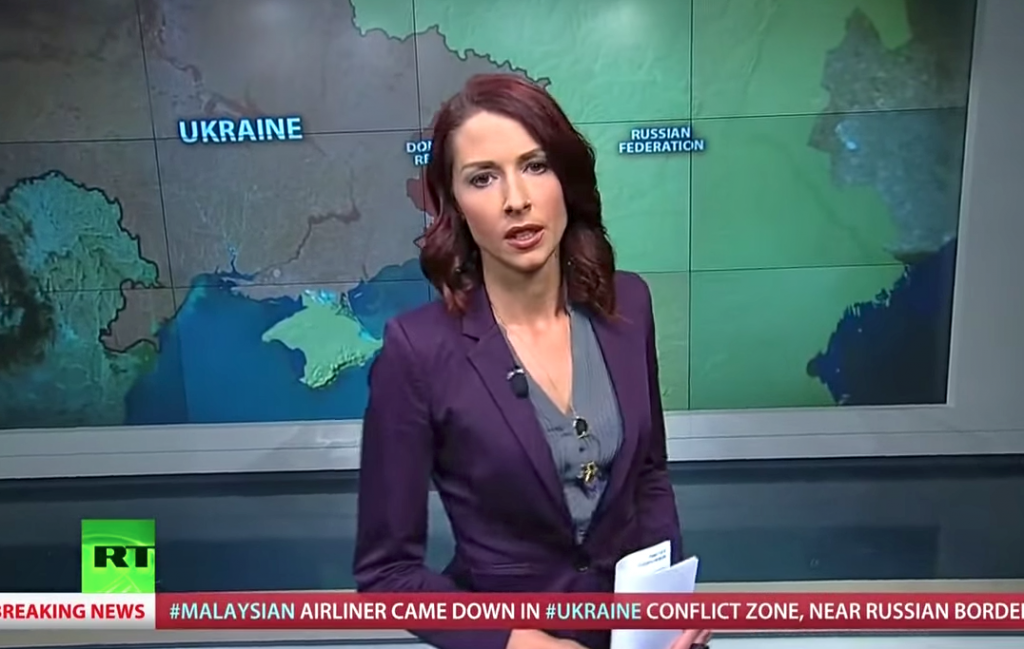 Desperate to push this US intelligence narrative, The New York Times called the report “damning and surprisingly detailed,” while adding that it includes no actual evidence.
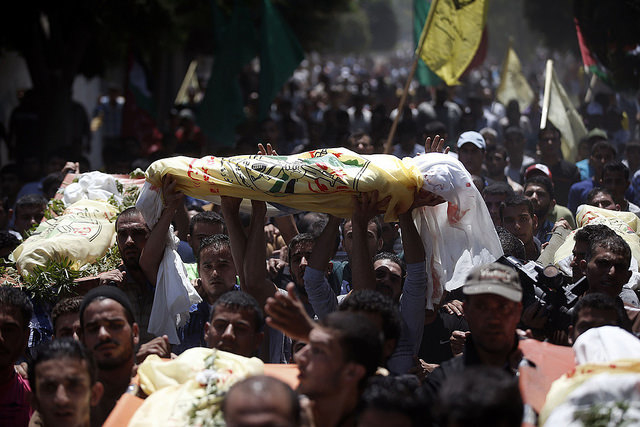 As Palestine makes its way into the headlines again, it’s necessary to examine not only the history of the near 70 year occupation, but the media’s culpability in pushing a devotedly pro-Israel/anti-Palestinian narrative.
  Chris Hedges, New York Times best selling author, activist, and host of the new show on TeleSUR English Days of Revolt, joins Abby Martin to talk about war, propaganda, and the suppression of radical voices.
 MEDIA ROOTS – Dissection of a 20 February 2013 New York Times