Libya: US Drones to Carry Out Missions

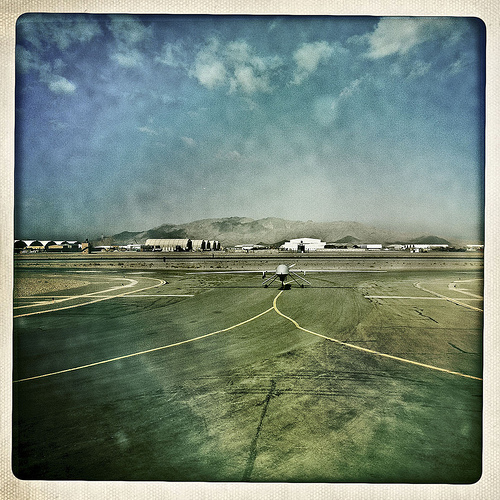
BBC– Armed US Predator drones are set to carry out missions in Libya, Secretary of Defense Robert Gates has said.

Mr Gates said their use had been authorised by President Barack Obama and would give “precision capability” to the military operation.

US drones are already used to target militants along the Pakistan-Afghanistan border.

Libyan rebels have been battling Col Gaddafi’s troops since February but have recently made little headway.

“President Obama has said that where we have some unique capabilities, he is willing to use those,” Mr Gates told a news conference.

 He said two armed, unmanned Predators were being made available to Nato as needed.

 Mr Gates denied that the drone deployment was evidence of “mission creep” in Libya and said there was no plan to put US “boots on the ground” in Libya.

 He said they marked a “modest contribution” to the military operations.

 Gen James Cartwright, vice-chairman of the Joint Chiefs of Staff, said the first mission had taken place on Thursday but turned back due to bad weather.

 He said the drones – which can fly at a lower altitude than conventional fighter jets – were “uniquely suited for urban areas”, providing improved visibility of tanks and other potential targets.

Read more about Libya: US drones to carry out missions.

© 2011 BBC

Photo by flickr user balazsgardi

Rape Rampant in US Military

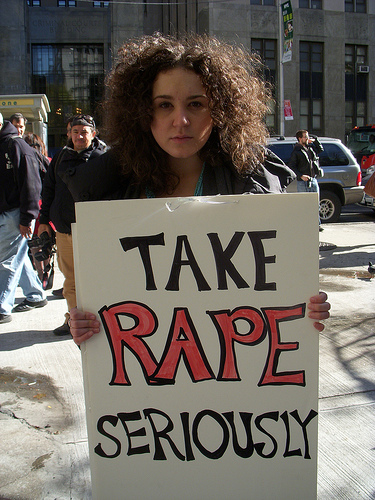
AL JAZEERA – Sexual assault within the ranks of the military is not a new problem. It is a systemic problem that has necessitated that the military conduct its own annual reporting on the crisis.

A 2003 Air Force Academy sexual assault scandal prompted the department of defense to include a provision in the 2004 National Defense Authorization Act that required investigations and reports of sexual harassment and assaults within US military academies to be filed. The personal toll is, nevertheless, devastating.

Military sexual trauma (MST) survivor Susan Avila-Smith is director of the veteran’s advocacy group Women Organizing Women. She has been serving female and scores of male clients in various stages of recovery from MST for 15 years and knows of its devastating effects up close.

“People cannot conceive how badly wounded these people are,” she told Al Jazeera, “Of the 3,000 I’ve worked with, only one is employed. Combat trauma is bad enough, but with MST it’s not the enemy, it’s our guys who are doing it. You’re fighting your friends, your peers, people you’ve been told have your back. That betrayal, then the betrayal from the command is, they say, worse than the sexual assault itself.”

On December 13, the American Civil Liberties Union (ACLU) and other groups filed a federal lawsuit seeking Pentagon records in order to get the real facts about the incidence of sexual assault in the ranks.

The Pentagon has consistently refused to release records that fully document the problem and how it is handled. Sexual assaults on women in the US military have claimed some degree of visibility, but about male victims there is absolute silence.

Click to read the full article on rape in the US military.
Article by Dahr Jamal

Photograph by WeNews

Research support was provided by the Investigative Fund at The Nation Institute.

This is the first in a two part series on sexual harassment in the US military. The second part in the series will be published in the coming week. 

© COPYRIGHT AL JAZEERA, 2011

Afghans Dying of Starvation Despite $52bn in US Aid

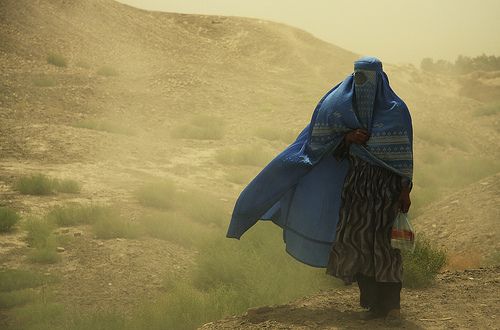
INDEPENDENT– The most extraordinary failure of the US-led coalition in Afghanistan is that the expenditure of tens of billions of dollars has had so little impact on the misery in which 30 million Afghans live. As President Barack Obama prepares this week to present a review of America’s strategy in Afghanistan which is likely to focus on military progress, US officials, Afghan administrators, businessmen and aid workers insist that corruption is the greatest threat to the country’s future.

In a series of interviews, they paint a picture of a country where $52bn (£33bn) in US aid since 2001 has made almost no impression on devastating poverty made worse by spreading violence and an economy dislocated by war. That enormous aid budget, two-thirds for security and one-third for economic, social and political development, has made little impact on 9 million living in absolute poverty, and another 5 million trying to survive on $43 (£27) a month. The remainder of the population often barely scrapes a living, having to choose between buying wood to keep warm and buying food.

Afghans see a racketeering élite as the main beneficiaries of international support and few of them are optimistic about anything changing. “Things look all right to foreigners but in fact people are dying of starvation in Kabul,” says Abdul Qudus, a man in his forties with a deeply lined face, who sells second-hand clothes and shoes on a street corner in the capital. They are little more than rags, lying on display on the half-frozen mud.

Read full article about Afghanis dying of starvation.

Photo by flickr user AfghanistanMatters

© COPYRIGHT INDEPENDENT, 2010

Torture, Secret Wars, U.S. Disdain for Justice & More

photo by jan kromerDemocracy Now! has spent this week examining the revelations behind the first installments of State cables released by WikiLeaks on Sunday. Below is a collection of the outlet’s interviews and broadcasts covering torture, renditions, secret U.S. War Ops in Pakistan, U.S. pressure on other countries to thwart justice, and the most startling leaks that have yet to come.


WikiLeaks Reveals U.S. Tried to Thwart Spanish Probes of Gitmo Torture and CIA Renditions

The latest disclosures from the massive trove of diplomatic cables published by WikiLeaks reveal U.S. officials tried to influence Spanish prosecutors and government officials to drop court investigations into torture at Guantánamo Bay and CIA extraordinary rendition flights. We speak to Scott Horton, an attorney specializing in international law and human rights and a contributing editor of Harper’s Magazine.


Leaked Cables Reveal U.S. Pressured Spain to Drop Case of Cameraman Killed in 2003 Attack on Journalists in Baghdad

Leaked U.S. embassy cables from Madrid reveal the United States pressured the Spanish government to close a court case brought by the family of a Spanish cameraman, José Couso. Couso was killed in Baghdad when a U.S. Army tank fired on the Palestine Hotel, which was filled with journalists, on April 8, 2003. Three U.S. soldiers have been indicted in Spanish court for Couso’s death. “I am outraged,” says Javier Couso, the brother of José Couso. “I can’t believe my government conspired with a foreign government… It seems we are citizens, or at least a small province, of the empire of the United States.”


Jeremy Scahill: WikiLeaks Cables Confirm Secret U.S. War Ops in Pakistan

Despite sustained denials by the Pentagon, the leaked cables from WikiLeaks confirm that U.S. military special operations forces have been secretly working with the Pakistani military to conduct offensive operations and coordinate drone strikes in the areas near the Afghan border. A U.S. embassy cable from October of 2009 states: “These deployments are highly politically sensitive because of widely-held concerns among the public about Pakistani sovereignty and opposition to allowing foreign military forces to operate in any fashion on Pakistani soil.” The cables confirm aspects of a story about the covert U.S. war in Pakistan published in The Nation magazine last year by investigative journalist and Democracy Now! correspondent Jeremy Scahill.


“We Have Not Seen Anything Yet”: Guardian Editor Says Most Startling WikiLeaks Cables Still to be Released

In the coming days, we are going to see some quite startling disclosures about Russia, the nature of the Russian state, and about bribery and corruption in other countries, particularly in Central Asia,” says Investigations Executive Editor David Leigh at the Guardian, one of the three newspapers given advanced access to the secret U.S. embassy cables by the whistleblower website, WikiLeaks. “We will see a wrath of disclosures about pretty terrible things going on around the world.” Leigh reviews the major WikiLeaks revelations so far, explains how the 250,000 files were downloaded and given to the newspaper on a thumb drive, and confirms the Guardian gave the files to the New York Times. Additional cables will be disclosed throughout the week.


U.N. Special Rapporteur Juan Méndez: Instead of Focusing on Assange, U.S. Should Address WikiLeaks Disclosure of Torture

One of the leaked U.S. State Department cables released by WikiLeaks urges diplomats to gather intelligence about “plans and intentions of member states or U.N. Special Rapporteurs to press for resolutions or investigations into U.S. counter-terrorism strategies and treatment of detainees in Iraq, Afghanistan or Guantanamo.” We speak to Juan Méndez, the new U.N. Special Rapporteur on Torture and Other Cruel, Inhuman and Degrading Treatment or Punishment. He has called on the United States to investigate and prosecute torture committed under former President George W. Bush. He also said he hopes to visit Iraq and Guantánamo Bay to probe widespread torture allegations. Méndez says, “We seem to be focusing on whether disclosing [the cables] merits some kinds of action against Julian Assange… I am very concerned about the documents that show that thousands of people first imprisoned by U.S. forces [were] transferred to the control of forces in Iraq and perhaps even in Afghanistan, where they knew they were going to be tortured.”


photograph by Jan Krömer 


Torture Hearing of US Soldier Released

photo by hermmermferm

HUFFINGTON POST– Some of war’s most disturbing moments don’t happen on the battlefield. Such was the case when Sergeant Chuck Luther sat before a Congressional committee and described how he was tortured by U.S. Army officials.

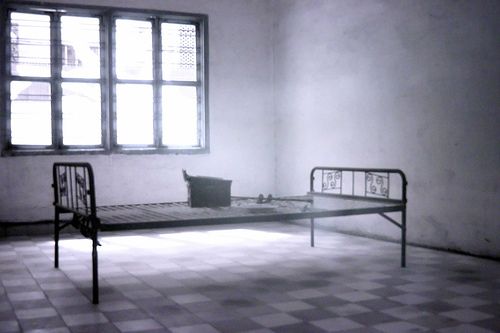
Luther had been confined to a closet at Camp Taji, Iraq. He was held there for over a month, under enforced sleep deprivation, until he agreed to sign documents saying his mortar fire wounds were caused by a pre-existing condition, making him ineligible for benefits.

Below is a video of Luther’s testimony, as he lays out the graphic details of his torture. As a reporter who covers veterans’ issues, I’m often asked what Americans can do to honor our soldiers. My answer: watch this video. Share it with your friends. Ask them to share it with theirs.

On this Veterans Day, don’t let the voices of soldiers like Sgt. Luther go silent.


Joshua Kors, investigative reporter, The Nation

photo on sourcepage by hermmermferm/flickr

© COPYRIGHT HUFFINGTON POST, 2010