Hungary’s New Nationalism

nthWORD– Naomi Wolf’s book, The End of America: Letter of Warning to a Young Patriot, argues that there are ten steps common to every state that has made the transition into fascism. One step is the targeting of key individuals or demographics: artists, academics, activists, civil servants, gays, Jews; the public blacklisting of those who don’t tow the party line. Another move towards fascism is the control over the press—all dictatorships and would-be dictators target journalists and make sweeping media reforms to increase their control and their ability to censor information.

Her book conveys the inklings of fascism here in America, but in a globalized society, the West sets the tone for policy and culture that influences the rest of the world. As Orwellian rhetoric becomes commonplace– wars are being waged to maintain “peace” and draconian bills that curtail civil liberties are being litigated as “patriotic”—countries worldwide have been enacting Wolf’s ten steps, some with more haste than others.

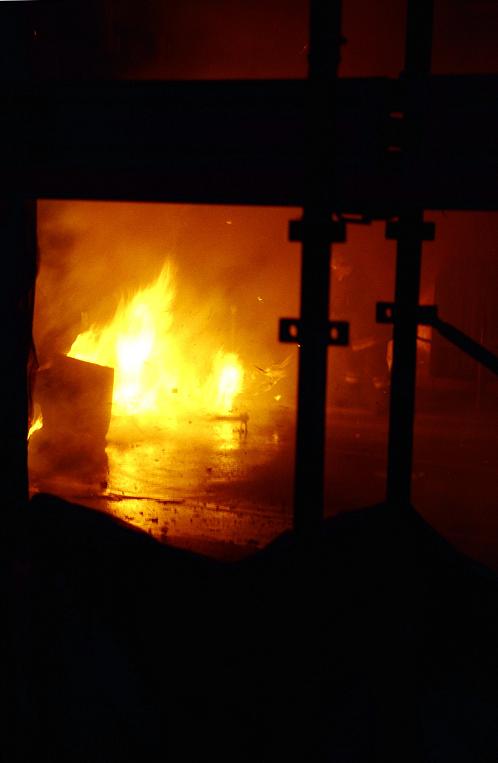
After decades of post-Soviet, post-Holocaust political and economic strife, Hungary is starting to embody Orwell’s dystopian portrayal. This April, Fidesz, Hungary’s center-right conservative party, won 2/3rds control over Parliament, putting the conservative party in power for the first time since World War II. Moreover, Fidesz now controls 22 out of the 23 major cities in the country. This complete takeover by one party is significant, because the Hungarian Constitution can be effectively changed with a 2/3rds majority in Parliament, an advantage now regularly enacted by the new party in power.

Read more about Hungary’s new nationalism at nthWORD.


Abby Martin is a freelance writer for nthWORD magazine, citizen journalist, activist and artist living in Oakland, CA. You can find more of her writing at www.MediaRoots.org and view her artwork at www.AbbyMartin.org

photo by flickr user Habeebee

Read more of Abby’s views here.

Net Neutrality Advocates Decry FCC ‘False’ Solution

COMMONDREAMS – The media advocacy group Free Press released the following statement in response to actions by the FCC today:

By a 3-2 vote Tuesday, the Federal Communications Commission approved new rules intended to prevent Internet providers like AT&T, Comcast and Verizon from acting as gatekeepers on the Web. The rules, however, heavily favor the industry they are intended to regulate, and leave consumers with minimal protections. Democratic Commissioners Mignon Clyburn and Michael Copps voted with Chairman Julius Genachowski, while Republican Commissioners Robert McDowell and Meredith Attwell Baker voted against.

Free Press Managing Director Craig Aaron made the following statement:

“We are deeply disappointed that the chairman chose to ignore the overwhelming public support for real Net Neutrality, instead moving forward with industry-written rules that will for the first time in Internet history allow discrimination online. This proceeding was a squandered opportunity to enact clear, meaningful rules to safeguard the Internet’s level playing field and protect consumers.

“The new rules are riddled with loopholes, evidence that the chairman sought approval from AT&T instead of listening to the millions of Americans who asked for real Net Neutrality. These rules don’t do enough to stop the phone and cable companies from dividing the Internet into fast and slow lanes, and they fail to protect wireless users from discrimination. No longer can you get to the same Internet via your mobile device as you can via your laptop. The rules pave the way for AT&T to block your access to third-party applications and to require you to use its own preferred applications.

“Chairman Genachowski ignored President Obama’s promise to the American people to take a ‘back seat to no one’ on Net Neutrality. He ignored the 2 million voices who petitioned for real Net Neutrality and the hundreds who came to public hearings across the country to ask him to protect the open Internet. And he ignored policymakers who urged him to protect consumers and maintain the Internet as a platform for innovation. It’s unfortunate that the only voices he chose to listen to were those coming from the very industry he’s charged with overseeing.”


The American Civil Liberties Union released this statement:

The Federal Communications Commission (FCC) today passed a new rule clarifying the legal authority of the FCC to enforce network neutrality principles. Network neutrality principles protect free speech online by prohibiting the owner of a network from prioritizing some content on the Internet while slowing other content.

The rule approved today by the FCC includes full network neutrality protections for the wired Internet, which includes cable and DSL service to homes and businesses, but provides lesser protections for wireless broadband service and may allow wireless broadband providers to block certain applications and services that compete with their own applications and services. The American Civil Liberties Union has called for network neutrality protections on both the wired and wireless Internet as important safeguards for free speech.
 
“Network neutrality principles are essential to protecting the First Amendment rights of Americans who rely on the Internet as a forum for free speech. While the new FCC rule creates stronger network neutrality protections for Americans who use the wired Internet, it fails to provide adequate protections for Americans who rely on wireless broadband service,” said Chris Calabrese, ACLU Legislative Counsel. “By creating two sets of regulations – one for the wired Internet and one for wireless broadband – and failing to ground them in the strongest legal protections available, the FCC has failed to protect free speech and Internet openness for all users. The ACLU will continue to fight for full network neutrality protections. Internet openness is key to protecting our First Amendment rights.”

The rule passed by the FCC today does not reclassify wireless broadband service as a telecommunications service, which the ACLU and other proponents of network neutrality have long urged. Treating broadband access as similar to phone service would have allowed the FCC to rely on its broader regulatory authority under Title II of the Communications Act to enforce network neutrality principles.

Article by CommonDreams

Photograph by Flickr user Sarah G

Article 19 – Communication is Your Right!

MEDIA ROOTS– Every issue around the world can only be truly communicated with unfettered access to media sources. Without an informed citizenry on the issues that impact our lives, there can be no true representation for the people. I believe communication is a human right, which is why I am organizing for a campaign called Communication is Your Right!, an advocacy campaign based on Article 19 of the United Declaration of Human Rights. 

Article 19 of the Universal Declaration of Human Rights reads: “Everyone has the right to freedom of opinion and expression; this right includes freedom to hold opinions without interference and to seek, receive and impart information and ideas through any media and regardless of frontiers.” 

On December 10, 1948 the United Nations adopted The Universal Declaration of Human Rights. Today in 2010, more than 60 years later, entire groups of people still don’t have access to factual news and information in order to better their lives, community and country and make a positive impact in this world.  

I speak with Larry Cox, the executive director of Amnesty International USA about Article 19 and why the human right to communicate is so essential in the fight for human rights.


I speak with Denis Moynihan from Democracy Now! about Article 19 and the current media landscape.


GLOBALVOICESCommunication is Your Right! recently interviewed Larry Cox, Executive Director of Amnesty International USA, who said that freedom of expression is central to the fight for human rights. “People need to understand that communication is a right, and it’s a right that is not being fulfilled at all,” he said. “That’s what it’s all about, because if people can’t express themselves, they can’t protest any issues that are going on.”

Communication is Your Right! is a platform for media makers, human rights advocates, and citizens around the globe to speak their truths. 

“When people are trying to use power in the wrong way the first people they go after are journalists,” Cox said. More than 267 cases of journalists being threatened, arrested, killed, or disappeared are tracked on Global Voices Project Threatened Voices, which states “Never before have so many bloggers been imprisoned.” These numbers are unacceptable- not only because being able to communicate is vital to changing our lives and community- but because it is a human right.

Article 19 of the Universal Declaration of Human Rights, the human right to communicate, makes threatening and silencing citizens for communicating their thoughts a human rights violation. Article 19 reads, “Everyone has the right to freedom of opinion and expression; this right includes freedom to hold opinions without interference and to seek, receive and impart information and ideas through any media and regardless of frontiers.”

On the front page of our site is a petition demanding that the United Nations take the Human Right to Communicate seriously. “With the profound changes happening in the way people connect and share information, now more than ever it’s important to protect that right to connect and share,” explains Matthew Schroyer, a journalist  from www.MentalMunition.com and Communications is Your Right! organizer. “If you can’t protect that right, then you can’t protect a democracy.”

The Communication is Your Right! petition also states that the consolidation of media companies is damaging to universal communication and without stronger UN support global communication rights none of their Millennium Goals will be achieved.

We urge people to exercise their right to communicate with a blog, podcast or video and submit your work to this campaign. We would like citizens around the world to reflect on why they haven’t been heard by their larger community. Does corporate media allow you a platform? How is government control and media policy stifling free speech in your community? These questions need reflection and we must act together to create solutions.

We are building a decentralized campaign of media makers, media reformers and human rights advocates that are working together to network with organizations, speak with our communities, and create media about Article 19. “We need a communication revolution in order to have a human rights revolution,” says Abby Martin, founder of www.MediaRoots.org and Communications is Your Right! organizer.

To join our mission to advocate for people around the world to openly and fully communicate, visit our “Organizing Together” page to learn how to become an organizer and share this campaign’s message.

Written by Abby Martin, Mera Szendro Bok and Matthey Schroyer from www.CommunicationisYourRight.org

Communication Is Your Right Banner


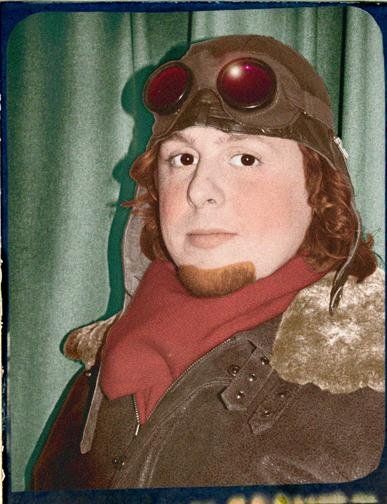
MR Original – Nathan Janes, Propaganda Artist

MEDIA ROOTS- As the world of art becomes increasingly homogenized, it is growing harder to come across original art that has societal and political significance. With the exception of Banksy and a few others, rarely do you see a prominent artist putting themselves out there to make a bold statement or provoke controversial thought. Like every other commodity in this corporatist system, popular modern art has become an over-produced, unoriginal, profit driven industry.

In times of perpetual wars and endless threats, dissenting propaganda artists have always been a crucial element of communication, organization and reflection. For our generation- there is Nathan Janes (AKA Red Baron), a propaganda artist and political activist who refuses to sell out to the system.

Janes is the mind behind PUPAGANDA, a pop art website countering the societal saturation of ‘meaningless advertising art’ by providing more inspiring, thought provoking work.  According to Janes, “It’s time people quit living a life of constant entertainment and start engaging in critical thought while questioning the barrage of commercial images and propaganda that they are faced with each day.”

His motivation is to open minds by depicting the machinery the global elite use to advance their own agenda.  And he does it with a man’s best friend – Janes uses the comforting imagery of dogs because they serve as an artistic tool for individuals to explore contentious topics.

Janes’s art has been featured in multiple prominent publications and he has been commissioned to do paintings by celebrities like Caprice Bourret and Pete Wentz of the band Fall Out Boy. Media Roots recently sat down with Nathan Janes for an exclusive interview about his artistic and political endeavors.

***

MR: What was your political awakening? Why did you start making political art?

NJ: My political awakening happened about three years ago. My journey began when my musician friend Photon Man gave me a copy of Terrorstorm by Alex Jones. It wasn’t long before I transformed my art from “Pop ARF” to “PUPAGANDA.” My previous “Pop ARF” artwork focused on the heartwarming appeal of dogs; I promoted the message of the prevention of cruelty towards animals but many of my paintings were just aesthetically pleasing without any particular message. While I still have compassion for dogs, my focus today is to awaken the general public to the ways in which we have been trained to follow our masters much like dogs. 

Since I have begun to create more powerful and thought provoking paintings, interest from art publications and other media that once promoted my work has ceased. Today’s artists found in the mainstream media and major galleries, create work lacking careful analysis of society. Artists that make strong statements about the Establishment and the ways in which we are being controlled and managed may never be promoted widely because we are a threat to the status quo.

MR: Why do you paint dogs and how does that fit into the messages you relay?

NJ: Dogs are the perfect subject to communicate my message because people still have empathy and compassion for dogs. We have been exposed to dehumanization through a constant flow of images on television, in movies, and in print depicting so much violence against our own kind that people no longer have compassion for one another. When something tragic happens to another human being, we are unable to react but if a dog is abused in anyway there is a sudden swell of compassion. There are also many parallels between the ways that dogs are trained and how we are conditioned by culture, which make for powerful paintings.

MR: What mediums do you usually work with?

NJ: I work in acrylics and usually paint on stretched canvas.

MR: Did you have any art school training or does painting come naturally for you?

NJ: I am a graduate of the Columbus College of Art and Design in Columbus, Ohio. My work today is a representation of my hard work and incredibly intensive practice.  I began training to be an artist as a freshman in High School. I am not talented or gifted; I have just applied myself and developed my skills and technique over many years.

MR: You just launched an international campaign that sparked attention worldwide, including a plug from Adbusters. What is Unplug the Signal, and why should people get involved?

NJ: Unplug the Signal is a campaign to turn off televisions.  I designed the campaign to create awareness of the gross manipulation of reality that is broadcast by the six major corporations controlling the content of television. With the average American adult watching more than 4 hours of television each day, the television plays a major role in continually creating the perceived reality in which we live.  The television has been used as a weapon of mass deception for the last half a century; it manages society and culture through such techniques as perception management, behavior placement, predictive programming and crisis creation.

People should get involved with this campaign because the television remains our greatest threat to individual sovereignty and the largest obstacle to becoming a truly informed individual. In order for individuals to see the real locus of control and look beyond such things as the false left/right paradigm, they will first need to be able to get beyond the paradigm conditioned by the television. In order for people to wake up, this information needs to be shared between families, friends, and neighbors. The campaign has just begun and already the message is spreading. I am very happy with the feedback it has been receiving.

MR: What are your three favorite pieces and what do they represent?

NJ: My three favorite pieces would be those that focus on the engineering and control of society through television:
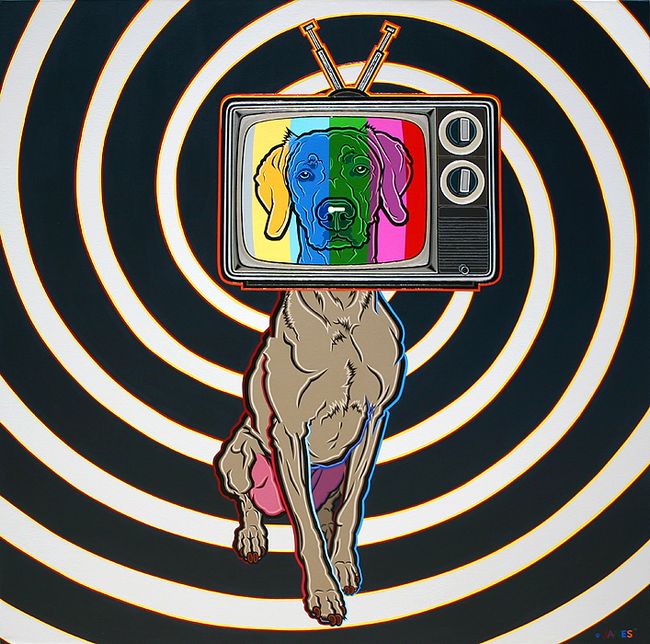
Total Indoctrination, Acrylic on Canvas, 48” x 48”, 2009

This painting represents how totally absorbed someone who regularly watches television can become, where they see everything within their lives relating somehow to television. It depicts a life where anything outside TV is rejected and all thoughts and discussions are just recycled conversations from TV and slogans from those sold to us as authorities and experts.
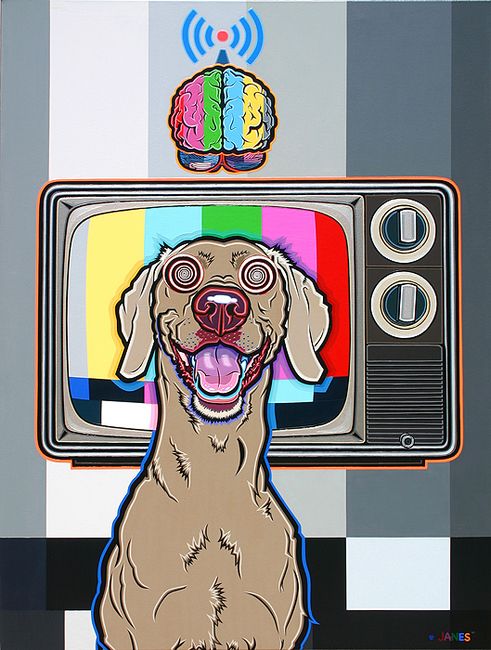

TV Mind Control, Acrylic on Canvas, 36” x 48”, 2009

This piece depicts the hypnotic affect of television as those who watch become a subject of mind-control. Too often the brain is switched to standby and all information is collected and accepted as truth without any questioning.  When viewing television, we do not consciously rationalize the information resonating within our unconscious depths; the hypnotic affect makes us highly suggestible.
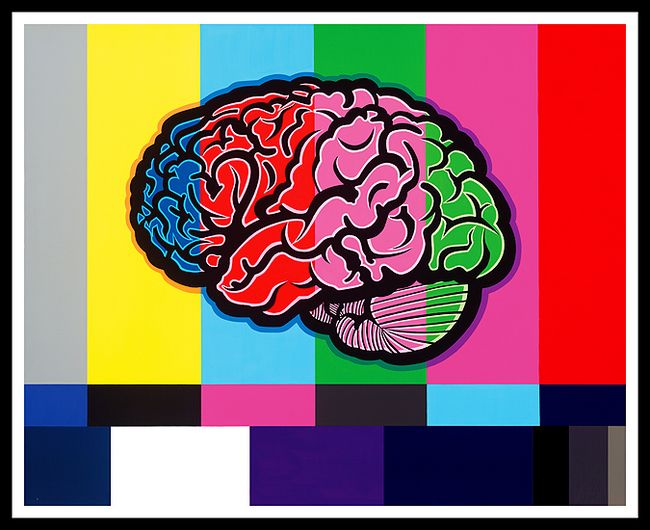
 

Unplug the Signal, Acrylic and Masonite, 20″ x 16″, 2010

“Unplug the Signal” represents the constant flow of information that is transmitted by the television 24 hours a day. It is this signal which places the viewers all on the same page and makes them highly predictable. Plato’s Cave serves as an allegory for this phenomenon. In Plato’s cave, people view the shadows on the wall and interpret these shadows as reality. When one of them finds a way out of the cave and returns to tell the others what is outside, he and his message are rejected. When individuals are so thoroughly engrossed by the message of television, they will reject any information outside of the paradigm it presents while attacking and ridiculing the messenger.


MR: What is in store for Nathan Janes?

NJ: I am currently working on a painting of the President’s dog. This painting is a critical assessment I created in response to the threats to our liberties as sovereign citizens of this Republic. As for what’s in store, I will be working on a painting on Tiananmen Square, Chemtrails, implantable microchips and other projects that will spread the message of the Unplug the Signal Campaign including poetry, song writing, and the development of an literary allegory.

****

Find out more about Nathan “Red Baron” Janes at PUPAGANDA, or follow his work on Facebook and YouTube. Get involved in his Unplug the Signal campaign at UnplugtheSignal.com

Abby


Posted in Uncategorized | 1 Reply

Local News Stations Training Psychological Ops Soldiers

RAW STORY– Two CBS affiliates have been helping train US Army psychological operations soldiers, says an investigative report at Yahoo! News.

According to documents obtained by John Cook through a freedom of information request, WRAL in Raleigh, North Carolina, and WTOC in Savannah, Georgia, have both hosted psyops soldiers as part of the Army’s Training With Industry program.

The soldiers “used WRAL and WTOC to learn broadcasting and communications expertise that they could apply in their mission, as the Army describes it, of ‘influenc[ing] the emotions, motives, objective reasoning, and ultimately the behavior of foreign audiences,'” the report states. The arrangement reaches back at least to 2001.

It is yet more evidence of an increasingly cooperative relationship between the US military and news media, that has led some media critics to question whether news organizations are becoming tools of military policy.

Cook reports that Raleigh’s WRAL says it hasn’t hosted a psyops soldier since 2007, but WTOC in Savannah currently has a psyops trainee in the newsroom.

Rick Gall, news director at WRAL, told Yahoo! News that the psyops interns’ work consisted primarily of “shadowing” employees to see how news is gathered and delivered.

“My sense was, this was an educational opportunity to see how the broadcasting industry operates,” he said. “They’d spend time in the various departments of the station, including the newsroom. I wasn’t concerned about having someone learn what we do, and there was no influence on newsgathering.”

But that will likely not satisfy media critics who have been raising the alarm about the increasingly close relationship between the military and the media. Among other things, critics point to the relatively recent practice of “embedding” reporters within military units as a sign that the military wants to shape the nature of news coverage.

Continue reading about Local News Stations Training Psychological Ops Soldiers.

© RAW STORY, 2010

Photo by flickr user @labnol