MEDIA ROOTS– Mickey Huff, Director of Project Censored, speaks at Moe’s Books in Berkeley, CA on May 19, 2011. He discusses different concepts of censorship and how the top down corporate media censors and manages news in the US. Mickey also speaks about the evolution and organizational mission of Project Censored and goes over some of the top stories from their 2011 book.
During the Q & A session Mickey comments on how 9/11 and election fraud are two subjects that are heavily censored among alternative and progressive media outlets.
MEDIA ROOTS- The root system of a tree is five times more extensive than the tree itself,
reaching far underground to form a solid base for growth and nourishment. Just
as this root system is integral to the survival of a tree, media is integral to
the foundation and survival of a democracy.
However, the corporate consolidation and top down control of America’s
current media system undermines democracy by stifling and diluting the
discourse crucial to maintaining a critical and informed public.
The mainstream media establishment has conceded its journalistic integrity
time and time again by catering to corporate and political interests. The
people can no longer wait on Congress and the FCC to eke out miniscule reforms
to the dysfunctional system in which they are embedded. Instead, the people
must create alternative methods to freely communicate and exchange information.
In the bay area, such an organization has been formed. Media Roots is a grassroots,
independent citizen journalism project that reports the news from outside of
party lines, while providing a collaborative space of open dialogue for
conscious citizens, artists and activists.
The website aggregates a variety of critical and fascinating underreported news on various
subjects: local and world news; political and corporate corruption; food and
health; and science and philosophy.
In conjunction with providing an ever-expanding archival base of crucial information,
Media Roots also conducts original reporting on an array of important local,
national and global issues. The organization produces a regular radio talk show,
original video content and extensive interviews with artists, activists, journalists
and inspiring Bay area locals.
The merit of citizen reporting is increasingly recognized as corporate
journalism continues to fail in its intended role as the watchdogs against corruption.
Many people find that their voice isn’t represented in the political dialogue
and are seeking alternative media sources reporting raw, unfiltered and
truthful information.
Media Roots is a valuable tool for people to begin revolutionizing the media
dialogue. The organization’s aim is to build community through collaboration
and participation, and its openness to feature submissions of all kinds
encourages others to take an active role in the field of media. Everyone has the ability to be a citizen journalist,
and Media Roots, while maintaining strong principles of integrity that require
all content to be based in sound research, provides an important outlet for
others to explore their ideas and share their skills.
Since the inception of the project, Media Roots has motivated multiple
people worldwide to directly engage with their communities, whether by
interviewing inspirational figures or by conducting investigatory research on a
range of issues. Furthermore, the organization has provided a voice for
multiple active duty soldiers to speak out anonymously about their political
beliefs.
Many people who get their news from the corporate media have a highly skewed
perspective on what issues should be of concern to their health, family and
communities. The mainstream political discourse truncates issues into oversimplified
talking points that pit one political party against another, causing a deep
divide in the American citizenry. Media Roots holds no party bias, and reports
from the bigger picture by analyzing issues through a broad historical
lens.
As a completely independent organization, Media Roots will never cater
toward corporate sponsors or censor credible information. Because it exists
outside of the rigid corporate model that capitalistic societies are accustomed
to, it has a unique and unrestricted ability to spontaneously grow and flourish.
Instead of competing monetarily with other independent media outlets with
similar goals, Media Roots simply seeks to co-exist as an organic beacon of
information in the emerging renaissance of grassroots journalism happening worldwide.
Like a tree’s widespread root system, grassroots networks of communication
in all fields of media must extend far beyond the top down institutional structures
created for us. The Media Roots model is not mechanized, and will continue to naturally
evolve as more people participate and contribute in the project.
People must create the alternative they wish to see from the bottom up.
Media Roots is paving an important path that is driven by a shared passion for
media justice and the core belief that unfettered access to information is a
human right.
DAILY FINANCE– Don’t kid yourself. Real privacy no longer exists in this country.
We’ve long had government organizations collecting data that paints a pretty clear picture of what we do with our time. The Internal Revenue Service knows everything about what you earn and any major transactions you make. It can access every bit of information it needs to determine how much money you should be sending on April 15.
The most important gatherer of personal information in the country is the Federal Bureau of Investigation. It keeps a database of over 90 million fingerprints, which can be accessed by other law enforcement agencies. It also has an extensive database of DNA, the most specific marker of personal identity. The bureau’s ability to collect information expanded following the terrorist attacks of Sept. 11, 2001. It now tracks a large portion of mail, cell phone traffic and Internet activity of people it deems suspicious.
Thanks to advances in technology, however, there are also now numerous private enterprises that track and record your every move. Although they don’t usually give out this information, there are often worrisome leaks and security breaches where they inadvertently release sensitive information about their customers. Taken together, these industries have data on where you are, who you are communicating with, how you are earning your money, how you are spending that money, as well as the hobbies and interests you are pursuing.
We examined a large number of organizations to find the most intrusive firms and industries. Here they are, ranked by the number of people they track:
1) Credit Rating Agencies
With each firm having files on over 200 million people, the three credit bureaus — Equifax (EFX), Experian (EXPGY), and TransUnion — know not only your credit history, but also have the data to project your credit future. The companies collect a history of all credit use by an individual, including payment of bills, mortgages, and credit cards. The agencies also track the frequency with which a person applies for credit. That information is used to determine a person’s credit risk through a credit score. These scores are produced using secret algorithms, ensuring that the bureaus know much more about you than you know about them.
2) Cell Phone Service Providers
As cell phone popularity has increased and technology has evolved, cell phone companies have come to possess a wealth of information about their customers. Covering over 90% of the American population, cell phone providers can tell who you call, when you call, how often you call certain people and what you say in your text messages. With GPS, they also now know where you are whenever you have your phone. As smartphones become the equivalent of miniature computers, cellular companies can also track personal behavior, such as use of multimedia and wireless e-commerce transactions.
3) Social Media Companies
In its ascent to Internet superpower, social enterprise Facebook has
amassed an enormous amount of user information. Who your friends are,
what you like, and what photos you are in are all information that the
company has access to. That, however, is not the full extent of it.
Facebook also tracks which profiles you view, who you communicate with
most often, companies and causes you support, your personal calendar,
and a great deal of personal information about your friends and family.
Perhaps most surprising, Facebook can access much of the information you
may have deleted, including photos and status updates, from their
servers.
MEDIA ROOTS– A couple of weeks ago, John Vanderslice killed his headlining show at
the New Parish in Oakland. As he milled around the merch table
enthusiastically greeting dedicated fans, I approached him and
asked if he would be willing to conduct an exclusive interview for Media
Roots. His response was unexpected- a charismatic and resounding “Yes” that rang
with genuine interest.
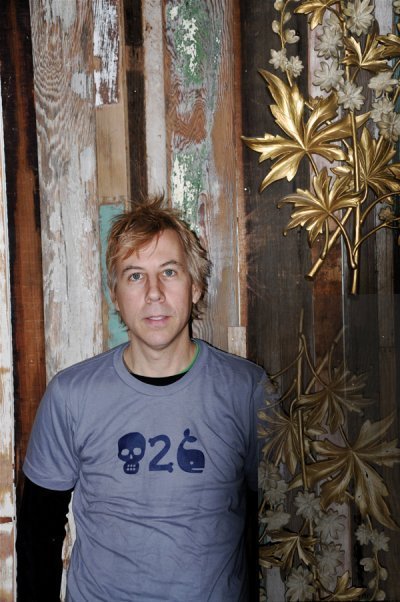
Even more disarming than his excitement for the interview was his likability. Not only is
John an amazingly talented songwriter, musician and producer, but he is
also one of the nicest and most genuine people I have ever come across.
More than anything though, he is an excellent storyteller.
Throughout his impressive and lengthy discography, three albums
stand out as the most politically motivated: 2004’s Cellar Door is a
raw, activist rock album with brilliant underpinnings in its lyricism;
2005’s Pixel Revolt is a more refined, beautifully structured album full
of the same political angst; and 2007’s Emerald City, named after
Baghdad’s fortified “Green Zone,” is a rock solid gem, brilliantly
combining both the production quality of Pixel and the dark undertones
of Cellar Door.
John’s songs are mostly narratives told through the eyes of
different characters, giving him the ability to explore dark and
controversial issues in a uniquely perceptive way. The political
commentary throughout these albums range from 9/11 foreknowledge in the
song Exodus Damage to the story of prostitution in Afghanistan in Trance Manual. The song White Dove explores humanity’s capacity to forgive
horrific crimes of war, and Tablespoon of Codeine is about numbing your
mind in order to cope with reality.
John Vanderslice’s sound can’t be boxed into any particular genre.
It encompasses folk, rock, strings, electronic and experimental sounds.
When his unique and amazing lyrics are added into the equation, his
music transcends classification.
He runs the all-analog recording study Tiny Telephone in the Mission
District of San Francisco, where bands like Deerhoof, Spoon and Death
Cab for Cutie have recorded. I was lucky enough to sit down with John at
Tiny Telephone for an in depth and candid conversation about the
struggles of independent musicians, the US political system and foreign
policy, and for some exclusive interpretive insights on a few of my favorite
songs.
***
MR: What made you move to San
Francisco from Gainesville, FL?
JV: I got an economics degree from the
University of Maryland, because my dad really pressured me into
getting a business degree. Economics was the most political subject,
and I quickly realized it was used by people to enforce very
self-serving legislation. Philosophically, you can bend numbers in
whatever way you want to bend them.
In retrospect it was a very influential
degree. To have a background in real stuff like the supply/ demand
curve helped when I started the studio. It’s one thing to think
about, but it’s another to stand face to face with it for your
survival.
After graduating, I came out to visit
my girlfriend who lived in LA. It was exciting in an end of the
world, apocalypse now kind of way. There were crack wars and
helicopters, and I was ready for it to all go down. You’re invincible
at 21, you know? You’re just like bring it on.
One weekend I came to visit a friend in
San Francisco, and I went crazy for it so I moved up. One
day, I answered an ad for a space to rent- and it was this space,
Tiny Telephone.
It was as difficult then as it is now
to find commercial space where the landlord is cool and you can make
noise. So I drafted whoever I could find and started a rehearsal room
co-op with nine people. The rent was $600 a month which seemed
insane. I remember the security deposit was $900, and I was like
there’s no way we could come up with $100 each.
It was 1996 and it felt crazy. By 1997,
we were a barely functional recording studio. Some days, it was a
rehearsal space for bands and other days it was a recording studio.
It was so low cost that we got away without having really any gear.
Slowly the coalition broke up. I pitched to an engineer I knew who
had just lost his studio about becoming partners. I told him that I
would manage him and get him bands if he brought over all his
equipment. That was 1998, and he still works here.
MR: Did you ever envision having a
studio like Tiny Telephone?
JV: I remember listening to The Who
records and looking at photos of recording studios in Queen albums as
a kid and thinking that was what I wanted. But I never conceptualized
it as a viable business plan. At the beginning, the nine of us sat
down and ran the math of what would happen if we were booked out the
studio a year in advance. We did the math: the division, the bills, the rent, and we were like this is not going to work.
But we said fuck it, let’s do it. For
the first seven years, I was still a waiter. I’d never engineered
a session, which allowed me to make my own records and plan my own
tours. Otherwise, I don’t think it would have worked. It’s almost
impossible for studios to make money for the first seven years, even
if they’re busy.
MR: I’ve taken a lot of financial
risks with what I do, because I have decided to remain completely independent and grassroots. I can only imagine that as an independent artist who has
never signed on to like a multinational corporate label, you’ve taken
a lot of financial risks as well.
JV: It’s definitely nerve racking. The
studio game is tough, and there’s a lot of rich trust funders whose
studios just appear overnight like something out of a Pixar movie. It
can be gloomy to look at the landscape of studios, and it can also
make you paranoid because the media business is so unstable.
Usually, we’re booked out every month. We’re so underpriced that we
have to be booked out, but when the recession came we took a hit. For
the first time in years, we weren’t booked out for months, and I
started to wonder if there would be a future for recording studios.
There will always be a future for
something that’s unique though. We always had tape decks and have
provided free tape for every band we record. It has been done like
that for a long time, and with great results.
You also can’t
compete with everyone . If we decided to open a store tomorrow, it
couldn’t just be a cupcake store. It would have to be something 100x
more extreme, like a store that serves cardamom in everything. Having
a micro market is the only way to do it now- you have to serve a
niche and fly a flag. You have to be 100% dedicated to what you’re
doing.
MR: Has your dedication to serving
this old school analogue niche also kept you true to staying independent and in pursuit
of your vision?
JV: For me, the music and the studio
are one and the same. It’s been helpful that I’ve had this space
to do records, because it’s shielded me from having to make any
weird deals that didn’t feel right.
MR: Does working independently from a corporate music model give
you the freedom to push your limitations as an artist?
JV: Definitely. The next album will be
with Magik*Magik Orchestra, and I want it to be a much more
conceptual, weird and immersive experience. I’m thinking about
incorporating a boy’s choir into the record, and do things that are
more committed to Magik’s world. Thankfully, I don’t have the
pressure of being on a label or hooked up with managers that are not
willing to go down those experimental avenues.
MR: Even though Media Roots isn’t primarily music based, I wanted to interview you because your music touches upon a lot of deep political issues that aren’t usually expressed in music. Have you always been politically aware?
JV: I grew up in the suburbs of DC and
saw firsthand how much manipulation there is. My mom is a crazy left
wing tree shaker, and my dad is very right wing. So I grew up in a
very politically divisive household. All our friends either worked
for the EPA or they worked to undermine environmental laws. Those
were the kind of people that were around.
We knew it mattered what people did,
and we knew it mattered where they put their time and money. I grew
up during the horrible Reagan era of de-regulation. There was also a
general hostility towards the federal government. There wasn’t a
grown-up discussion about how we are going to optimize our tax money
and create a social safety net. Yet now we see Reagan being herald as
some hero…
He is being held up as this icon-
but it’s all propaganda. He was never a true conservative. It’s a
fairytale and it’s all fucking storytelling. Although I have always
been politically interested, there are definitely times that I’ve had
to stop caring because it gets too frustrating. The Obama thing is a
real shocker too. Right when you think you finally got a break, it’s
like wow is this it? I don’t remember Clinton being this
disappointing. This is just a new level of disappointment.
MR: Yeah, I wasn’t expecting much
but I definitely was expecting more than what he has done. Then when you look at the amount of money being
funneled into the elections, it’s like where the fuck is our nation’s
priorities here?
MR: Let’s talk about
the song Exodus Damage. The video is an amazing visual representation
for that song. Is that your photography?
JV: It is my photography and Brent
Chesanek did the video, he’s awesome. The initial idea for the song
came from my interest in Timothy McVeigh and homegrown terrorism. I
got intrigued by some of the hangers on around him that weren’t
willing to commit to his idea of revolution and extreme violence. One
of his co-conspirators actually expressed regret at the trial for not
being able to commit 100%, and I found that fascinating. Like the
point where you’re talking with some guy who is saying he’s going to
bring the fertilizer pump in, and you either you hang up the phone or
you don’t. Exodus Damage is about the regret of not being able to
commit 100% to a cause, whatever that cause may be.
If you’re politically committed, for
example if you’re fighting in a rebel group in Libya right now,
everyday you have to re-define what you’re doing in order to guard
yourself against doubt. Nietzsche’s concept “The Genealogy of
Morality” talks about how in the absence of any strong belief
system humans will randomly find something else to believe in,
because that’s the predicament of being human. The human capacity for
extremism and our potential for insanity is what’s endearing to me.
MR: And the potential for greatness.
One of my favorite things about you as an artist is that you examine
these really interesting human emotions and give a unique insight
that other artists don’t typically do. Does the content of your
songwriting come mostly from personal experience, or is it just how
you process the world around you?
JV: I have a desire to hear extreme
language and weird shit being said. I always want to be surprised,
but of course I also have to process. I just heard a writer talking
about how his writing isn’t actually dealing head on with his own
problems but instead it’s a sideways filtering out of this internal
horror that if he were to directly deal with it directly he would
incinerate. I think that’s a great way to put it.
MR: In Exodus Damage, the
phrase that stuck out to me was “Dance, Dance Revolution.” It’s
such a powerful phrase because it can be interpreted in so many ways.
Why did you write that?
JV: When I went to Japan, there were
millions of iterations of the Dance, Dance Revolution video game
everywhere, they are on a totally different level of gaming than in
the States. I just thought how often the word revolution is used when
they really don’t mean it. There’s Revolution Cafe, there’s Dance,
Dance Revolution and I thought is that all we are going to get? Just
echoes of echoes of revolution.
MR: I also wanted you to talk about
Heated Pool and Bar. The song covers a lot of ground, from the
Colombian drug cartels to the poppy fields of Afghanistan. What was
the inspiration for that song?
JV: Sometimes I like having songs that
try to justify extreme military action. In Heated Pool and Bar, the
narrator is justifying this tentacle like approach to foreign policy,
where we have to be ruthlessly involved in all these areas. That
language might be a harsh way to look at the world, but every problem
is solved now by hard military action and no real diplomacy.
We get involved with these countries so
easily, but it’s very difficult to pull out. I don’t even know how
many thousands of bases we have worldwide, but it’s insane. It’s
triptych- drugs are a very valuable resource and another big reason
why we are engaged in certain countries. If we aren’t controlling
something, it means somebody else is. If the US didn’t hold territory
in Afghanistan, then the Taliban would be incredibly well funded,
making hundreds of millions of dollars selling unrefined opium. That
drug money filters through our military for bribes and other crooked
shit, but that’s all part of the game.
Part of Vietnam was about heroin too.
Drugs are an essential part of American foreign policy and you don’t
even have to say that we’re selling the drugs. It’s about the control
of the resources. If we were just assholes, we’d say of course we
should invade Iraq. Fuck, might as well invade Arabia.
MR: Just be fucking real about it.
JV: Exactly. Don’t give me this
democracy bullshit. During the first interim Iraqi elections, so many
people were illiterate that they were putting symbols for people
running for office, like a chicken would be someone running for
school board. I mean c’mon these aren’t elections. And we are paying
for all of it. Let’s just say that we didn’t care if all Muslim
people died. If you’re being honest about it that’s fine, but the
sheer amount of money that’s being spent to control these resources
isn’t worth it.
MR: It’s definitely not sustainable
to build an empire on debt.
JV: Every empire has lost by
overextension. It’s unavoidable.
MR: It seems like all these elites adhere to Game Theory, like what’s laid out
in Zbigniew Brzezinski’s book The Grand Chessboard.
It’s a strategy based mindset where you are projecting what you need
to control and where you need to be for potential future scenarios,
so you pre-emptively strike in different areas. All the while the end
goal justifies the means to these people, and all the rest is
collateral damage.
JV: That’s part of the Heartland
Theory, where you take Iraq because of its location on a map. You
look at the bordering countries, the stability of the region, and
where the resources flow throughout. If you were playing a game of
risk, you would have to take Iraq. It’s a smart place to camp out. If the presidential debates went like
that, I wouldn’t have a problem with it. Then you could really weigh
the cost of civilian life and of running up these massive military
deficits. But it’s sold as something else.
I think part of it is also having a
very small percentage of a population that drive everything. 10-15% of the American population are evangelical voters,
but they are way more powerful than their numbers. Small coalitions like that can wield
tremendous power, and then you can have broad loose coalitions hat
have zero power. A lot of people in my life don’t vote, because they
are so done. There are 30 or 40 industrialists that drive the public
conversation. The chairman of Fox News, Roger Ailes, feeds stories
that drive Rush and Beck. It’s about keeping the chatter going back
and forth.
MR: Seriously, why are we
talking about abortion rights and gay marriage in 2011? How did we
de-evolve to this point in the public discourse?
JV: It’s a brilliant tactic that I
think comes from the top echelon of people who are amoral and
transcendent on these issues. I don’t think Dick Cheney gives a shit
about gay marriage. These people are top level thinkers, they are
working on maps of the world for resource allocation and at maps of
the electoral college to strategize votes in this country. I can tell you right now that Obama is
going to win the next election. It’s pointless to vote for president,
especially in CA because of the electoral system.
MR: It almost seems like it’s by design, so that
people will dis-engage politically.
MR: One song that really resonated the
most with me is Tablespoon of Codeine. This song is amazing on so many different levels, because you can go
the way of the pharmaceutical industry dumbing ourselves down and
that we don’t face reality…
JV: Part of it was going down the
rabbit hole of 9/11. With one attack, there was the biggest shift in
foreign policy that’s happened in 100 years. Pre-emptive war was back
on the table. Looking back pre-Afghanistan and Iraq, one of the most
insane things for me was the Project for a New American Century
(PNAC), a group that had drawn out plans to go into the Middle East
to control the resources. The plans were on the table for decades,
and it was the same players involved: Wolfowitz, Cheney, Rumsfeld.
It’s almost too easy, it’s like a satire of a conspiracy.
When Reagan invaded Granada with
400 troops, it was a stunner because it was the first time we had
stepped on foreign soil since Vietnam. There was a lot of internal
debate about it there was in this country. Where we went 20 years
from that point is crackers. There were no military contractors until
10 years ago. They were janitors and now they are half our force.
Also, they operate in some kind of legal limbo that serves all kinds
of war crimes.
When I thought about all of this,
extraordinary rendition and ghost planes, I went nuts. I have a
prescription for codeine cough syrup, and I actually found myself
drinking it to turn off my mind to go sleep. It was really unsettling
that I drugged myself to stop being depressed about this country.
I really do love this country and I
think it’s an incredible experiment. You want to believe in where you
live and where you pay taxes. When you are in the voting booth you
don’t want to think that it’s completely manipulated and evil.
There is also an enormous amount of
poverty in this country. Every time we go on tour, the country seems
more and more busted. There are more trailer parks and abandoned
cities. Katrina was a big deal, but there are mini versions of
Katrina everywhere. It’s shocking that America is the richest country
but the poverty keeps getting worse year after year. Six months later
I will be driving through Alabama and it’s like what the fuck
happened? Did Katrina hit here?
MR: So what do you see happening next?
JV: Well it can’t be good, right? The
debate is so retrograde and infantile, the only way it can work out
is if we have a information based society. We should pedaling
information as a progressive western democracy, but instead we’re
behaving like China.
We’re having these debates that wouldn’t fly for
two seconds in European nations’ political discourse. You’d like to
think that there is some kind of progress being made with basic human
rights.
MR: I have read a lot of your opinion on
print and the digital age. Print is obviously dead as everything goes
into digital. We just sat down with Chris Hedges who gave the
perspective that because print is dying, there will be no more real
journalism being done online. He says we are “awash in electronic
hallucinations” and that this superficial saturation has damaged
the debate and diluted intelligent discourse.
JV: In theory, having a free flow of
information and access to raw Wikileaks documents and government
legislation should be really useful. Anyone can go online and
download a massive PDF of these bills and read what is going on. The
access to this information should elevate the national debate, but
instead I think the national debate is at its lowest point ever.
I thought there would be more cynicism.
If the DNC makes a statement, I’m like bullshit. And the same with
the RNC. I assume everything they say isn’t true. The human condition
should be extreme cynicism against every claim made from any
authority. Everything should be up for debate. Instead, there is an
enormous amount of cheerleading that’s happening. The whole tea party
movement is really shocking too, it seemed to come out of nowhere.
MR: I think it was just the
neo-conservative hijacking of the libertarian spirit and Ron Paul
movement that had been generating for years.
JV: Ron Paul is fascinating. I have no
problem with libertarianism. If we’re in a room with an evangelical
Christian, a knee jerk Democrat and a libertarian, you’re probably
going to agree with and be more charmed by the libertarian as long as
he’s not in the extreme line of Cato Institute economic thought about
corporations having individual rights.
Ron Paul is by far the most critical
politician. His beliefs are exciting, like abolishing the Federal
Reserve. Why not? Let’s try it and see what happens. At least the
power structure will be inverted somewhat. It’s anti-religion and
absolutely anti-imperial which I’m great with.
But when you see who is speaking at tea
party rallies, there has to be only 2% of true libertarians in
audience, otherwise they would be booing Sarah Palin and Nick Roman.
MR: You briefly mentioned Obama
being a disappointment. Were you initially sucked into his campaign?
JV: Yeah. He ran on a lot of stuff:
healthcare, ending Don’t Ask Don’t Tell. I thought that within the
first two weeks there would be these incredibly strong proclamations
and executive orders done. I thought that we would be out of Iraq
within three or four years, which was probably naïve. I never
thought that Afghanistan would get ramped up, which goes to show you
what desperation will lead you to when there is an absence of hope. I
wasn’t unrealistically excited, but I thought it had to be better.
But he’s arguably worse on civil liberties than Bush was which is
really scary.
MR: He’s seeking out a three-year extension on the Patriot Act.
JV: That should have been the first thing that was repealed.
MR: And Bradley Manning sits in a cell and is being forced to strip naked every night. They are probably psychologically breaking him down to coerce a false confession, because if they had any evidence that he released the documents than why haven’t they shown us? Proof of his culpability might justify his treatment in the eyes of a lot of people.
JV: We’ve tortured a lot of people that aren’t guilty. In Guantanamo, there’s tons of people that were just picked or sold by clients. They have no actionable intelligence whatsoever, but we’re torturing them just so we can learn how to torture better.
MR: It’s insane because I thought we realized that torture doesn’t work and has never provided reliable intelligence. So what’s coming up next for you
John?
JV: We are going to play White
Wilderness in its entirety with Magik*Magik Orcherstra at the Herbst
Theatre on June 17. It is going to be the only time that White
Wilderness has played with an orchestra, and it’s going to be really
fun. The official opening for the new
extension to Tiny Telephone, the non-profit studio is May 1st.
It’s going to be $200 a day to record, and Magik*Magik Orchestra will be
involved in the process.
***
Buy tickets for John Vanderslice’s show with Magik*Magik Orcherstra on June 17th here. To find out more about John
Vanderslice go to www.JohnVanderslice.com and to check out Tiny Telephone go to www.TinyTelephone.com
Writing by Abby Martin. All photography by Abby Martin of Tiny Telephone studio. To read more of Abby’s writing go here.
MEDIA ROOTS – The ability to combine audio and visuals to tell a compelling narrative makes documentary films a powerful means of storytelling. They are education through entertainment and, at their best, a persuasive and motivating push to action. It is no surprise that the Bay Area, teeming with political and artistic thought, is a documentary film capitol of the world. As an aspiring documentarian, encouraged by the learning potential from this rich network, I began seeking out insight from local filmmakers.
Following a tip from a friend, I came across Better This World – a film in post-production about two young men from Midland, Texas who are facing multiple domestic terrorism charges after manufacturing and bringing Molotov cocktails, or petrol bombs, to the 2008 Republican National Convention. What drew me into the story, and the filmmakers themselves, was the government’s star witness in the case – a controversial and unsuspected FBI informant.
Many of the stories behind the ‘foiled’ terrorist plots of the past few years share in common the trend of an undercover paid FBI informant that often times held a facilitating role in the group– a detail that frequently goes missing from mainstream media reports. (You can find more information on a few of these cases here, here and here.) Knowing this, I became eager to speak with the filmmakers who are taking on such an important and overlooked story.
Loteria Films, the local non-profit production company behind the film, is run by two women, Kelly Duane de la Vega and Katie Galloway. Kelly’s background in still photography and photojournalism, and Katie’s, in radio and print journalism, drew both women to film for what it could accomplish by blending these mediums.
When we met, Kelly recounted the restriction she felt in conveying people’s amazing personal stories as a photographer. “I think there are photographers whose photographs blow my mind, even more than a story. But I wasn’t feeling that about mine. I became so hungry for people to know the story. I knew there was another step.“
For Katie, filmmaking was a natural progression out of her love for working with audio and the depth and intimacy it brought to storytelling. While apprenticing at Frontline under documentarian, Ofra Bickle, criminal justice became her passion. It was a blurb that Katie found in the Federal Court section of the New York Times that set the two women in pursuit of their first film together. Katie believed the story of two young men facing terrorism charges against the word of an FBI informant was a “really sexy, boiled down way into a story that is my life work so far – examining the criminal justice system and the problems with it.”
The trial was starting a week later, leaving not a moment for second-guessing.
“You say ‘I’m never going to do this on my credit card again. I’m never going to just start spending my own money again.’ But no one is going to give you money in a week’s turn around,” Katie explained with a smile reflecting love for the thrill and risk of chasing a good story. “It’s a gamble, its like going to Vegas.”
Better This World presents tough questions about the balance between liberty and safety in the face of post 9/11 domestic security. “The common thread in many of these [foiled terrorism] cases is some sort of political aspiration and an informant or a government agent who they hook up with and spend a lot of time with, and then at other end, the terrorism case. The question is what happened? Was it entrapment?”
Somewhat tongue-in-cheek Katie went on to ask, “What happens when you have so many resources going into the domestic security apparatus and not necessarily enough terrorists to go around?”
“In the FBI they call it ‘aspirational and not necessarily operational’,” she added.
In a recent interview by Reuters, filmmaker and award winning journalist, John Pilger described a mindset of reporters that says, “only authority can really determine the ‘truth on the news’,” and which leads to a dangerous form of embedding in government and official versions of events. “Authority has its place, but the skepticism about authority must be ingrained in people,” he said.
And so it seems to be among documentarians.
It is the often skeptical and critical voice of documentary film that has shaped its long and growing legacy of critiquing the status quo while motivating people to educate themselves and take action.
Filmmakers do not face the same time constraints that can lead print and broadcast journalists to regurgitate the press releases handed to them by government, military and business leaders. Instead, they use a richly layered medium to tell the deeper story that hasn’t been told before, or to tell it differently. “Otherwise, what’s the point?” asked Katie.
Kelly pointed to the lack of a concrete power structure, or system, for documentaries to pander to. “There isn’t a central authority figure in documentary filmmaking. There isn’t a central voice. There isn’t an outlet that is determining what we get to see and don’t get to see – except for PBS and HBO and A&E, but there are ways to get your film out if you are not in those venues.
In some ways it is a much more democratic universe than mainstream journalism. We’re already so far out of the system in some ways.”
One consequence of being outside of the ‘system’ is the struggle of fundraising. As an educational nonprofit, Loteria Films can apply for grants. It has been fortunate for the support it has received so far – the Independent Television Service, the biggest grant maker nationally for documentary films, is funding Loteria’s current project but only funds 1-2% of projects that come in its door.
“When you look at all the labor and heart and soul and money that goes into independent projects and the struggle…” Katie reflected.
“We went a year and a half with very little funding. You know, begging, borrowing and stealing. That’s really the life of an independent unless you’ve made it and have money coming in regularly for projects. We’re not there yet. We’ve been really lucky raising money through grants and so forth.”
But, funding is only part of the equation. Kelly attributes the success of the partnership to their base of trust and respect, calling it the “bedrock” of their collaboration.
“When the other person is talking you know that you respect the way they think as a creative person and as a story teller. So, if they are challenging your idea it is something you have to listen to because it very well might be right. When you and your partner are both able to do that for one another it deepens your respect and base trust.”
Comparing the partnership positively to a marriage Kelly added, “It’s a long intimate journey. Its pretty damn intense – you are really committing so much to each other.”
When I asked what advice the activist filmmakers had for aspiring documentarians, Kelly’s words resonated with my pull to the medium.
“I feel like there are certain people who don’t have a choice in life, who just are going to do something creative whether it makes good sense or not…I think you have to have something inside of you that is somewhat predetermining your fate, that is driving you, that is making you choose something that is difficult. You can’t be materialistic. You have to be the kind of person that gets pride from the good their work does, or the quality and pleasure of their work.”
Just as Katie had, Kelly was sure not to gloss over the financial struggles that, more often than not, accompany the production of an independent film, while highlighting that flexibility is key in overcoming those challenges.
“Sometimes you might have to take a commercial job and that sucks because it might not be at the core of where your values are. But unless you are from a financial situation where you aren’t forced to have that choice I think you have to be okay with that – moving in and out of those worlds to tell a bigger, larger more important story. You have to figure out how to keep yourself viable so you can raise the seed money to do the thing that matters.
You just have to go for it and at the end of the journey you know whether you can do it again. Whether it was great or if it was too hard.”



 However, the corporate consolidation and top down control of America’s
current media system undermines democracy by stifling and diluting the
discourse crucial to maintaining a critical and informed public.
However, the corporate consolidation and top down control of America’s
current media system undermines democracy by stifling and diluting the
discourse crucial to maintaining a critical and informed public. DAILY FINANCE
 Throughout his impressive and lengthy discography, three albums
stand out as the most politically motivated: 2004’s Cellar Door is a
raw, activist rock album with brilliant underpinnings in its lyricism;
2005’s Pixel Revolt is a more refined, beautifully structured album full
of the same political angst; and 2007’s Emerald City, named after
Baghdad’s fortified “Green Zone,” is a rock solid gem, brilliantly
combining both the production quality of Pixel and the dark undertones
of Cellar Door.
Throughout his impressive and lengthy discography, three albums
stand out as the most politically motivated: 2004’s Cellar Door is a
raw, activist rock album with brilliant underpinnings in its lyricism;
2005’s Pixel Revolt is a more refined, beautifully structured album full
of the same political angst; and 2007’s Emerald City, named after
Baghdad’s fortified “Green Zone,” is a rock solid gem, brilliantly
combining both the production quality of Pixel and the dark undertones
of Cellar Door. It was as difficult then as it is now
to find commercial space where the landlord is cool and you can make
noise. So I drafted whoever I could find and started a rehearsal room
co-op with nine people. The rent was $600 a month which seemed
insane. I remember the security deposit was $900, and I was like
there’s no way we could come up with $100 each.
It was as difficult then as it is now
to find commercial space where the landlord is cool and you can make
noise. So I drafted whoever I could find and started a rehearsal room
co-op with nine people. The rent was $600 a month which seemed
insane. I remember the security deposit was $900, and I was like
there’s no way we could come up with $100 each. JV: It’s definitely nerve racking. The
studio game is tough, and there’s a lot of rich trust funders whose
studios just appear overnight like something out of a Pixar movie. It
can be gloomy to look at the landscape of studios, and it can also
make you paranoid because the media business is so unstable.
Usually, we’re booked out every month. We’re so underpriced that we
have to be booked out, but when the recession came we took a hit. For
the first time in years, we weren’t booked out for months, and I
started to wonder if there would be a future for recording studios.
JV: It’s definitely nerve racking. The
studio game is tough, and there’s a lot of rich trust funders whose
studios just appear overnight like something out of a Pixar movie. It
can be gloomy to look at the landscape of studios, and it can also
make you paranoid because the media business is so unstable.
Usually, we’re booked out every month. We’re so underpriced that we
have to be booked out, but when the recession came we took a hit. For
the first time in years, we weren’t booked out for months, and I
started to wonder if there would be a future for recording studios.
 MR: And the potential for greatness.
One of my favorite things about you as an artist is that you examine
these really interesting human emotions and give a unique insight
that other artists don’t typically do. Does the content of your
songwriting come mostly from personal experience, or is it just how
you process the world around you?
MR: And the potential for greatness.
One of my favorite things about you as an artist is that you examine
these really interesting human emotions and give a unique insight
that other artists don’t typically do. Does the content of your
songwriting come mostly from personal experience, or is it just how
you process the world around you? MR: It seems like all these elites adhere to Game Theory, like what’s laid out
in Zbigniew Brzezinski’s book
MR: It seems like all these elites adhere to Game Theory, like what’s laid out
in Zbigniew Brzezinski’s book 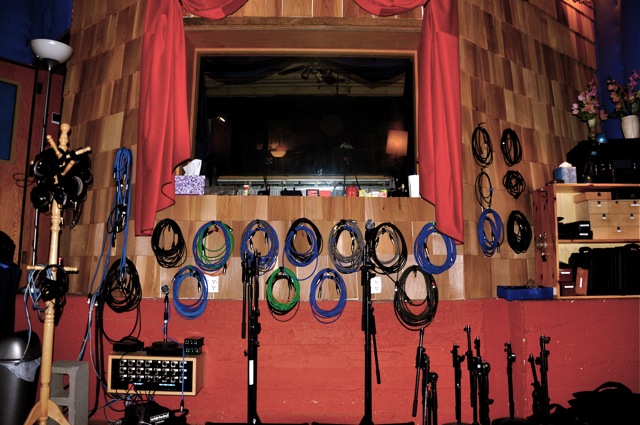 MR: So what do you see happening next?
 MR: You briefly mentioned Obama
being a disappointment. Were you initially sucked into his campaign?
MR: You briefly mentioned Obama
being a disappointment. Were you initially sucked into his campaign?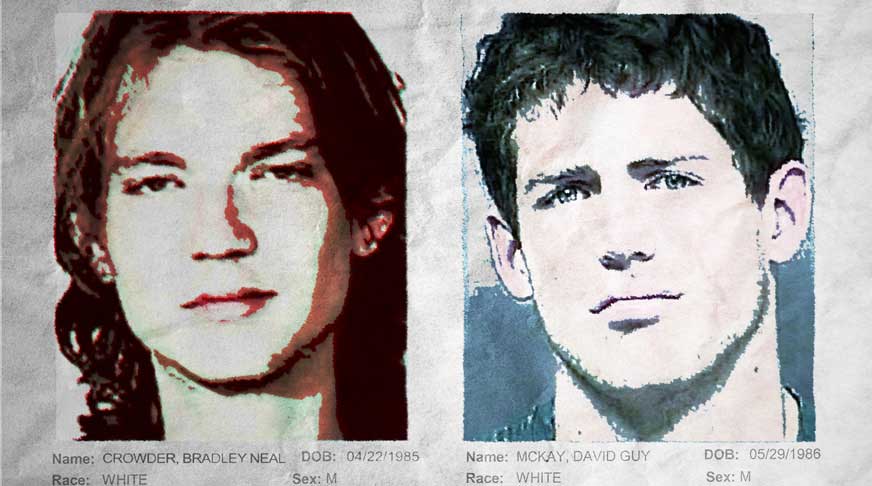 Following a tip from a friend, I came across Better This World – a film in post-production about two young men from Midland, Texas who are facing multiple domestic terrorism charges after manufacturing and bringing Molotov cocktails, or petrol bombs, to the 2008 Republican National Convention. What drew me into the story, and the filmmakers themselves, was the government’s star witness in the case – a controversial and unsuspected FBI informant.