
Paul Jay and Abby Martin on Trump’s Cabinet, Election Fraud & Fake News Hysteria

Paul Jay and Abby Martin discuss Trump’s cabinet appointments, the Green Party effort to recount the vote, and who’s really producing the fake news.

Abby Martin & Paul Jay on Trump’s Appointees & “Fake News”

**

PAUL JAY: Welcome to The Real News Network. I’m Paul Jay. Well, Thanksgiving is over, and for those of you who may have thought that after Thanksgiving it all would have been over and it would’ve turned out the world had moved into an episode of The Twilight Zone that actually had come to an end, in fact, no. Donald Trump is the President-Elect, and now to discuss all of that and the consequences with me are Abby Martin. Abby joins me from New York. Abby’s the creator and host of The Empire Files on teleSUR English, and a show that I was Executive Producer of. Thanks for joining us, Abby.

ABBY MARTIN: Hey, Paul. Nice to be on.

PAUL JAY: So, I guess it’s a little bizarre. I’ve said to some people that it almost feels like a 9/11 moment to me, and not not quite the disaster of 9/11, but the day after 9/11, if you didn’t live in the shadows of what were the Twin Towers, you kind of went back to kind of normal life, but knowing that everything had changed to a large extent. And I feel somewhat the same with the Trump presidency. This is not to in any way idealize the Obama presidency. Anybody that watches The Real News knows that we were mostly scathingly critical of the Obama Administration. On the other hand, as you and I have talked about before, this is… it looks like with Pence, the return of Cheneyesque politics. What do you make of it?

ABBY MARTIN: Oh, yeah. I mean, Mike Pence himself said that his… the person that he idealizes the most is Dick Cheney. He says that he wants his vice-presidency to be, quote, “very active”. We’re talking about a person who received the most funds from Erik Prince, the founder of Blackwater, and we’re looking at the administration now. It’s shaping up quite nicely for these billionaire Christian evangelicals, Betsy DeVos, Erik Prince’s sister, pioneer of charter schools, undermining of public education, and now she’s running the Education Department in the US.

So, Mike Pence is a very scary figure. Not only did he support the Iraq War, vote for it, he also was one of the main pioneers of the conspiracy theory that Saddam was involved in the anthrax attacks, and going out there selling that, not to mention his vehement anti-gay policies, public push for conversion therapy in Indiana. He is a pretty scary figure, Paul, especially when you consider that Trump asked him to run, quote, “foreign and domestic policy”, as we know from John Kasich, who was told and asked if he wanted to be VP, and he was told, “You’re going to run foreign and domestic policy.” That’s how insane the situation is.

So people who are telling me, “Oh, Trump is this mastermind. He’s just pulling together all these people. He’s really going to change things.” He is a puppet. He knows nothing. He has no insight on global affairs or policy plans at all. He didn’t even know the difference between Hezbollah and Hamas. He said, “I’ll worry about that when I’m in.” So, he is just getting sidelined. I mean, it is a fire sale right now in the White House of people who are the craziest outliers of the GOP that hitched their wagons on him — that were smart enough to do that, right? — that have been completely castigated and ostracized from mainstream establishment. They’ve hitched their wagons to Trump, and they are getting lavishly rewarded as we speak.

PAUL JAY: We’ve talked about before on The Real News, but I think one should keep repeating, the power that helped elect Donald Trump, in the final analysis, was the billionaire Robert Mercer. Working for Mercer was Steve Bannon, who Breitbart News Mercer’s the primary owner of, Kellyanne Conway ran Mercer’s super PAC for Ted Cruz. So, two of the critical people, one who now is going to be Chief Strategist in the White House, Steve Bannon, described by Jared Kushner, the son-in-law, as being a very good Zionist, and I think that’s part of what’s not being touched on enough by people commenting on all this, the extent to which all of the people in foreign policy are very, very strong — not supporters of Israel — supporters of Likud, supporters of the most right-wing politics in Israel.

ABBY MARTIN: Yeah. I think the mainstream media is missing the point when they’re focusing on anti-Semitism when it comes to Breitbart. Breitbart is a hardcore Zionist. Everyone on that platform supports Zionism, like you said, the Likud Party, extreme, extreme ideological, right-wing party in Israel. You know, just like Theodor Herzl said, the founder of Zionism, “Anti-Semitism is our greatest friend.” I mean, they know that that works hand-in-hand to legitimize the State of Israel.

Look, I wanted to talk about Mike Pence again really quickly, because he said something insane, Paul. He said that right now we’ll have a President that will no longer tell the American people what he won’t do in regards to torture. Someone asked him if torture was off the table. And that was his bizarre, opaque response to that. As we know, Trump has already said that he would waterboard not only terrorists but their innocent family members. You know, Mike Pompeo. You look at all of these people, and I think there’s one common theme is that they’re all hardcore Islamophobes, which is very scary at a time when we are essentially bombing seven countries. Obama just increased the role of the drone campaign to al-Shabaab, I think, in Somalia, and he’s handing this over to a reality star game show host that knows absolutely nothing — he’s handing over the most vast, unprecedented executive power apparatus to Donald Trump.

And, so, yes, we have every right to be scared of what Trump is doing and everyone he’s appointing, and we should be on alert. But, like you said, no one should be apologizing for the Obama Administration and all the things that he failed to do that now Trump will be overseeing. Guantanamo Bay. I mean, are you kidding me? Bannon — you talked about Bannon — here, we’re talking about fake news all over the media, here’s the real pioneer of fake news. This is going to be de facto state media. Breitbart is now going to be the chair… you know, in the ear of the Commander-in-Chief, Breitbart. You know when you’re looking at Donald Trump tweeting and everyone thinks oh, he’s this… he’s this genius, right? He’s trying to, oh, he’s challenging safe spaces by saying that Hamilton should be a safe space. No, he is a moron. What you see on Twitter IS the real Donald Trump. Okay? These people are throwing him for a loop. I mean, they are getting in there and really running the show.

PAUL JAY: And Breitbart News was apparently created while Breitbart, the founder, was in Israel, and his idea, his vision was a Huffington Post that was an unmitigatedly pro-Israel. The slogan they had as the guiding line was “pro-Israel, pro-freedom”. The whole origins of Breitbart are in this ultra-ultra-right wing Zionism, and Steve Bannon, after Breitbart dies, Mercer comes in and becomes the main financier, brings in Bannon, and carry on that mission, and that’s one of the common threads that runs through all the people around Trump is bringing to Cabinet. Then there’s one other common thread: they all want to target Iran.

ABBY MARTIN: Look, there is one good thing: we’ve staved off war with Russia, potentially, for a couple of months. What no one is talking about is the insane fear-mongering and war-mongering against Iran. Donald Trump brought this up multiple times during his candidacy, which was all the Obama Administration was too soft on Iran. The deal was bad. He wanted to eradicate the deal. What is that going to do? And then you have people like John Bolton who’s obsessed with bombing Iran. I mean, all of these people are. So, yeah. This wasn’t a loss for the neo-cons, okay? This wasn’t a loss for the war hawks or defense contractors. Iran is as scary to me as the build-up in Syria. So, this is not a joke. These people are serious, and they are obsessed with Iran. So, yes, on one hand, we’ve staved off an escalation of the Cold War; on the other hand, Iran is right around the corner, Paul, and no one’s really talking about that.

PAUL JAY: Other than The Real News. But, yeah, you’re right. There’s very little talk about it. In fact, I see on some of the sites that are alternative, progressive, left, a kind of idea that maybe in Trump there might be some hope that there wasn’t in Clinton, that he’ll be more accommodating with Russia and such. And while there might be some short-term accommodation with Russia — and I think it will be in order to advance the targeting of Iran — the people that are around Trump that are really going to run the foreign policy are every bit as aggressive in their rhetoric about Russia as Clinton, and then some. In fact, when Pence was running with Trump — and he would speak, not Trump, but Pence — he was attacking Clinton for not being aggressive enough towards Russia. That was one of his main critiques of her at the State Department.

ABBY MARTIN: Yeah, and Pence also said that he wanted a no-fly zone in Syria, and when Trump was asked, he said, “Oh, I didn’t know that Mike Pence said that. I disagree with him.” Well, too bad. Mike Pence is going to be running foreign and domestic policy, so if he wants a no-fly zone, well, I guess that’s not off the table, either. And then you look at Jeff Sessions, it’s a complete disaster. I mean, here you have the NAACP coming out and saying, “This is the man who has, literally his entire career, lobbied against civil liberties and equality.” That’s not a good mark on your record, Sessions, to be denied as a federal judge because you were too racist, and now you’re Attorney General? Wow. And he’s horrible on criminal reform and drugs. He thinks that Obama’s biggest problem was being too lackadaisical on marijuana reform. I mean… It just gets better and better, Paul.

PAUL JAY: Yeah. I think one of the things — and a tell of where the Trump Administration is going — is that there’s virtually not a single appointment that’s a sop, a giveaway, to half of America, or more than half, that voted, that didn’t vote for him. There’s not even something symbolic, okay, the odd meeting here, like with Tulsi Gabbard. But no attempt at, quote-unquote, “compromise”. If this had been the Democrats in the Obama Administration, they would’ve made sure they threw in some hard-right Republican here and there just to appease that camp, because they were always about appeasing that camp. But no. This is unmitigated hard right from beginning to end.

ABBY MARTIN: And a lot of people I’ve heard will apologize for Trump saying, “Look, he said whatever he…” because they acknowledge that he’s a con artist, right? And they’re, like, “Look, he just said whatever he needed to to get elected.” Well, that may be true, but I think the one constant factor about Trump is his unpredictability, because he can blow wherever the wind blows. And that’s actually scary, because we have no reason to believe that he doesn’t mean the things that he said. We have no reason to believe, especially when you’re looking at the first hundred days of his agenda, and the people that he’s appointing, we have every reason to believe that he is meaning to go through with the most extreme, hawkish, anti-immigrant policies, anti-Muslim policies. I don’t see why people are continuing to apologize for him and saying, “Let’s wait and see.” I don’t think that we need to wait and see. We’re seeing right now with his agenda online and also his appointees. It’s very crystal clear. So I don’t see this whole, you know, “Trump is really a liberal. He’s a secret Democrat.” No, he…

PAUL JAY: Yeah. Give him a chance. Let’s see what… give him a chance. Let’s see what he does. Some people have called this normalizing the Trump presidency, and I agree with that, that you can’t normalize this presidency. Yes. All the presidents from World War II on are essentially… I don’t think there’s an exception that couldn’t be charged with war crimes, but this is a step in the Cheneyesque direction. This is an aggressive US foreign policy on steroids, and a policy that is already aggressive. But let’s move on a little bit. What do you make of this attempt by the Green Party to have a recount in some of the close swing states?

ABBY MARTIN: Well, I know that a couple of people, Green Party representatives, Chris Hedges, came out yesterday to publicly disagree with Jill Stein’s approach. Look, I thought it was bizarre. I didn’t really know what to make of it. I had no idea why Jill Stein was doing this on behalf of the Democratic Party, especially when you’re looking at 2000, completely stolen election, 2004, there were also discrepancies with the exit polls. That was never recounted. And we just got Bush again. So, I find it odd now to do this. However, I do support it, and I’ll tell you why. A, we don’t live in a democracy. We all know that. We live in an oligarchy. There’s a two-party dictatorship. We have the worst electoral system in the developed world — literally. Like, the Electoral College is so frickin’ archaic, it’s insane that we haven’t repealed that yet.

So, you know, that all aside, I take Greg Palast’s approach, where he’s saying, look, forget about the Russian hacking — that’s what I disagree with him, the statement kind of alludes like, gives legitimacy to that, that theory that Russia had something to do with hacking the election. I agree with Greg Palast where he’s saying there were millions of people not that voted illegally, like Donald Trump says based on Infowars as fake news, but he’s saying, yes, millions of people weren’t counted. Millions of provisional ballots, millions of absentee ballots, millions of people who were purged from the GOP scam Crosscheck. That is a fact. That happened.

So, at the very least, maybe we can start a conversation about how screwed up our electoral system is. And maybe at the very least we could talk about how there is massive election fraud on behalf of the establishment to squelch out minority voices in this country. And I, for one, would like to see the discrepancy with the paper ballots and hand-counting with the voting machines. Because I voted with a provisional ballot and I would like to see, hey, was that counted, or not? Like, this is a huge problem here. The Crosscheck is an insane thing. Everyone should watch Greg Palast’s documentary on that.

But, yeah, I mean, in that respect, I do agree with it. And let’s see what happens. But it is odd that, on one hand, you could see it as giving legitimacy to the Democratic Party, and we know that the millions of dollars to fund this is really coming from the Democrats, and I think it really speaks to their spinelessness that they refuse to lead the charge on any of the elections when there was clear, either election fraud or whatever, and now you have Jill Stein taking it upon herself. It’s an odd situation, but, at the end of the day, I do think our elections are horrible, and I agree with paying attention to them.

PAUL JAY: I don’t see how that helps the Green Party, to have this kind of critique. I mean, it is, it’s done, and she’s doing it, and I don’t know what the internal decision-making processes are. I mean, frankly, it’s… if you’re asking me, I don’t think there’s any much chance that this recount will change things.

ABBY MARTIN: It’s a pipe dream.

PAUL JAY: On the other hand, if there’s a wildest odds that it might, I mean, I’ve said all along, as aggressive and militarist as Clinton is, I think this is going to be worse in the same way Cheney-Bush was worse. So, we’ll see. But it’s not a good thing to wage this kind of fight publicly like this. I’m not sure it’s good for the future fortunes of the Green Party. But that’s not up to me. Let’s go on to fake news. A lot of big hubbub about fake news and some website came out with a whole list of websites that are supposedly echoing Russian propaganda, including some sites like Truthdig and Truthout, and some others that in my opinion are journalistic sites, and do not do that. The Real News is not on that list. I guess — I don’t know — if someone watches our coverage, they’ll see that, in fact, we have no… we’re not shy about critiquing the Russian oligarchy or Putin, although we always make sure we talk about American war crimes first, which make Russian crimes pale in scale, but at any rate, what do you make of this whole fake news thing?

ABBY MARTIN: I agree that fake news is a problem. Right? We have Breitbart de facto state media, we have Infowars basically in the ear of the President and he’s tweeting out insane, preposterous, outlandish, false, blatantly… things. Right? But on the other hand, you have Establishment media like The Washington Post and you have this anonymous propaganda finder account called Prop or Not, which is publishing this hit list — it’s essentially McCarthyism, right? — in the new era. It’s including very credible sites like Truthdig, Counterpunch, Black Agenda Report, Naked Capitalism, conflating it with fake news sites that you can say are legitimately fake or skewed or biased extremely, right? Like Infowars or Breitbart. And, of course, Breitbart, I don’t think is on there, which speaks to a lot.

So, I think it says a lot when we’re focusing and trying to conflate actual investigative journalism and journalism that goes against the grain with Russian provocateurs and the whole main thing that this account is trying to do: the premise of their argument is that these, quote-unquote, “fake news” sites actually shaped the election in favor of Trump. That they purposefully muddy the waters, poison the well, to make people believe all this fake stuff, and basically that’s how Trump won. I don’t think that’s the case at all. I think that they’re completely missing the point here. The point is — back to this Infowars thing — Trump tapped into this kind of conspiracy culture like no one else has ever, and I think that not enough people are talking about… everyone’s so shocked at all these white working class voters who came out to vote for him. No one’s really talking about the Alex Jones audience that came out in droves, that probably were never politically active before. And it stems back from the fake news thing.

Trump tweeted out that the protesters were paid. That they were professional. There is a serious problem on the Internet right now where people are either not fact-checking anything and they believe everything they read, and they conflate every alternative news site with these crazy blogs that are totally unfounded and have no credibility. And I think that that just comes back to media literacy. Don’t read a list on Washington Post, and take it with a grain of salt: fact-find for yourself. It’s not that hard. I mean, it took me five seconds even not knowing how to have any journalistic skills whatsoever, someone who is involved in canvass organizing in college, I knew immediately that that paid protester thing on Craigslist was just a canvassing job position. I mean, the bus picture where people said the protesters were bused in. Once again, it was debunked by the original tweeter. He took down the tweet.

So, these things, I think it comes back to media literacy, understanding what the truth is, and not just taking any website with a grain of salt, and understanding the agenda that places like Infowars has. Look, they hitched their wagon to Pamela Geller gravy train, long ago, when they knew that Islamophobia made money, and it’s basically a Fear Inc. operation. So, you look at credible sites like Truthdig and Real News, which has no corporate state funding at all, those are the sites that I think people should be looking at, and not sites like Infowars that sells penis pills in between their insane fear-mongering broadcasts. And, unfortunately, that’s who’s in the ear of Trump.

PAUL JAY: And if you want to talk about why Trump won, and then you want to connect that to fake news, you need look no further than all — almost all — of the corporate-owned news, which is the biggest fake news that helped elect Trump. And I’ll give you on three points: first and most important, why aren’t there screaming headlines every single day, both on corporate TV news and newspapers about climate change? If they had been dealing with the climate change crisis with the urgency it requires and what all scientists say, including recent reports that say we could pass the 2 degree threshold by 2050 — that’s 34 years away. And that model was before Trump was elected — who knows what that does to that model now, in terms of when we hit 2 degrees, given it just exploded most climate change policy around the globe, Trump’s election.

So, if people had been really educated and given the urgency that objective facts call out for, how the hell would so many people vote for a climate denier? Number two. Even now the coverage of the Cabinet, and the people, there’s almost no conversation about what we were talking about, that they’re all focusing and targeting on Iran, and they all have a strategy of regime change, weakening Iran — in other words, they’re talking about another war in the region. No talk about that. Yes, they talk about how crazy some of these people are and so on, but that issue, and certainly leading up to the election, that’s no surprise that that’s where this Trump Administration was going.

You look at Rudy Giuliani’s speech at the Republican Convention, he was crediting Iran with supporting terrorist attacks on the United States. Which is clearly there’s no evidence of, and if he’s going to talk about anybody doing that, it’d be the Saudis, but, no, Giuliani targets Iran, as did others that spoke at the Republican convention. And then, of course, the whole way corporate media has dealt with the economic crisis. And not dealing with the issue of who really is responsible for that crisis, and how the whole bailout of ’07-’08 made massive more money for the billionaire class, and so on. They treated Sanders as some kind of marginal outlier. So, yeah, of course, they can point to some small sites that supposedly are manipulated by the Russians, most of whom that accusation’s ridiculous. But it’s corporate news elected Donald Trump.

ABBY MARTIN: You just hit it right on the head. Here’s why people even believe this fake news, because mainstream media is completely distrusted. There’s an all-time distrust in corporate media. And we’ve known that for a long, long time, right? And I think that’s, to your point, that’s why Trump became president, is because the entire media Establishment lined up behind Hillary, and that was as clear as day, even during the debates, other than the Fox News debate, it was just every single question was for Trump, hammering Trump. And people saw that, and people absorbed that, and people already think the media is lying to them, and so when they think Trump is an ally to them, and that the media is lying to them, that sows a dangerous, dangerous sentiment where you have them kind of believing, and then you have it validated by the Commander-in-Chief, saying that there are millions of people voting illegally, the protesters are paid.

So, I understand why people are completely shutting out all of the establishment press and going to these sites. The problem is these establishment press is blaming the only solution, which is the credible, independent, grassroots journalism that is telling the truth, that isn’t fake news. So it’s a really, really dangerous conflation on behalf of the establishment media, instead, of course, look in the mirror, having some introspection. Why did we lose? Why don’t people trust us? Instead, they have to punch down to the people who are doing the real work.

PAUL JAY: All right. Thanks very much, Abby.

ABBY MARTIN: Thanks so much, Paul. Great to talk to you.

PAUL JAY: Thanks for joining us on The Real News Network.
Trump’s Web of Far Right Militarists Who Want to Attack Iran

Filmmaker Robbie Martin and Paul Jay discuss Trump and Pence’s foreign policy appointments and advisors which include many of the neocons who created The Project for the New American Century and are now targeting Iran.

Robbie Martin on Trump’s Web of Militarists Who Want to Attack Iran

**

PAUL JAY: Welcome to The Real News Network. I’m Paul Jay. Well, various balloons, trial balloons are coming out of Trump Tower in New York. Donald Trump met with Tulsi Gabbard, a congresswoman from Hawaii, who’s known as very non-interventionist, was against the war in Iraq and thinks the war to overthrow Assad in Syria is illegal. And apparently, they both had a nice meeting and came to some conclusion. They had some foreign policy ideas in common. Donald Trump met with The New York Times and sounded as reasonable as one might hope someone might sound talking to The New York Times. Telling The New York Times, more or less what they would like to hear, and various other balloons making Donald sound like he’s not the crazy person in the campaign. Apparently, he’s willing to accept a fence rather than a wall in certain places. He isn’t planning, apparently, to deport 11 or 12 million people, just go after some of the very bad actors. In fact, his immigration deportation policy sounds like it might almost be more modest than Barack Obama, who’s been coined at times the “Deporter in Chief.”

But the real Donald Trump, the proof of the Donald Trump pudding is in his appointments, not in who he meets and what he happens to say, ’cause he will say anything on any given day that seems to suit his purposes. Whereas, the appointments to his cabinet and other agencies, those are people who will exercise some real power. And now joining us to talk about just who some of those appointments are, and some of the roots of those people, is Robbie Martin. He’s a journalist, filmmaker and musician. He writes for the magazine White Fungus, the website MintPress News and Oakland-based Media Roots. As a filmmaker, he’s the mind behind the documentary shorts, American Bisque, American Anthrax and now the full-length documentary trilogy, A Very Heavy Agenda. Thanks for joining us, Robbie.

ROBBIE MARTIN: Thanks for having me, Paul.

PAUL JAY: So, Donald Trump, in spite of his anti-interventionist rhetoric has not appointed anybody that even smells slightly of someone who’s anti-interventionist. Let’s go back a little bit into the roots of all this, though. In your film, you spend some time talking about a document that came out in the late 1990s called “The Project for the New American Century.” And, anyone who doesn’t know this document really should go find it, it’s still easy to find on the Internet. And some very senior people signed it who later became the major foreign policy team around George Bush, including Rumsfeld and Cheney and Wolfowitz, Kagan and others, Richard Perle, and essentially asserted itself, the document said, that America should now use its single super-power status to reshape the world in the image it pleases. Talk a bit about PNAC and how they envisioned US foreign policy.

ROBBIE MARTIN: Well, PNAC, or The Project for the New American Century, was started in the 1990s under Bill Clinton. And the reason why Bill Kristol and Robert Kagan and Gary Schmitt said that they started this think tank was because they wanted to encourage the Clinton Administration’s interventionist foreign policy. Because at the time, a sort of Pat Buchanan-esque anti-interventionist attitude was becoming quite trendy in the Republic Party. So Bill Kristol’s the Weekly Standard and along with this think tank The Project for the New American Century, they wanted to start the trend that, even though Clinton was a Democrat, that hawkish Republicans like them should encourage and cheer on Bill Clinton for his military interventions. And this attitude, of course, carried over to the Bush Administration and many, many members of Project for the New American Century, I believe, 17 signatories of their papers, actually got into the Bush Administration.

And now what’s happened is you’ve seen sort of this neocon consensus that formed around The Project for the New American Century, there’s been almost a split where, when the GOP imploded because of Trump’s rise in the primaries, that’s where it really started, you also have sort of a split in the neoconservative consensus in DC. So you have people like Robert Kagan, Max Boot, Eliot Cohen, all openly advocating for Hillary Clinton, similarly to how they were advocating for Bill Clinton in the ’90s, at least his foreign policy. But, while that was happening, which I think took most of the focus away from the other neocons, there were people like Michael Ledeen, James Woolsey, John Bolton, who are all part of Project for the New American Century, it caused them to actually split off and go towards Trump. And that’s… I think that got a little bit overshadowed by just how much focus there was towards the neocons going towards Hillary.

PAUL JAY: Because they all thought Hillary would win. Most of the ones that went to Hillary were pretty sure she was going to emerge the winner of this.

ROBBIE MARTIN: Oh, yeah, absolutely. I mean, as did I. And we’ve already actually seen Eliot Cohen, for example, reach out to the Trump campaign after he won, to try to get some kind of advisory position. And he was told, “You lost.” And he didn’t say who told him that but it might have been, you know, Bannon or someone else from inside the Trump campaign.

PAUL JAY: Let’s go back into this group and the document, the PNAC group. The Project for the New American Century, its basic thesis, if I understand it correctly, is that because this is now a single super-power world, things like international law are no longer necessary — that it’s time to assert raw American military might because there’s no reason not to. And the plan, I think, it’s laid out rather explicitly, that it starts with regime change in Iraq, regime change in Syria, and the real prize is regime change in Iran, and that’s the way to assure the American Century in the Middle East and then some. Those were just the places to begin. Talk a little bit about some of the things those people were saying around the time of the lead-up to the Iraq War, including the idea in this document that in order to pull off these regime changes and use such American military force — which means troops on the ground, it’s not just bombing campaigns — you need the American people onside. And it says explicitly in the document that you can’t do that without a new Pearl Harbor.

ROBBIE MARTIN: Yeah. I mean, back to what you said about the whole notion of international law does not exist. John Bolton specifically has been key to that sort of premise. In the Bush Administration, he was UN Ambassador and made a point to be defiant continuously against the UN, and this is, of course, after the Bush Administration defied the UN in invading Iraq. But, going before that, when The Project for the New American Century wrote the document, “Rebuilding America’s Defenses,” the thesis from that document actually came from a document written by Richard Perle and Douglas Feith for the incoming Netanyahu administration in the ’90s and this document was called “A Clean Break: Securing the Realm.”

Now, the reason why this document and “Rebuilding America’s Defenses” is different than what’s come before it is because, even though US foreign policy has always had a sort of pre-emptive philosophy behind it, it was never stated this, I would say, arrogantly or this candidly in a document, where the core principle behind the document is a philosophy of pre-emption– that we should invade countries that pose no immediate threat to us because at some point in the future they might pose a threat to us. And that whole mindset defined the Bush Administration and also largely defines our foreign policy outlook today, even continuing into the Obama Administration.

PAUL JAY: Part of the message of the document is that naked use of force, overt use of force, does not have to be apologized for. Again, they got their Pearl Harbor, which was 9/11, which gave them the American public opinion and, of course, they did everything they could to link Saddam Hussein to 9/11, even though there was no evidence at all that there was such a thing. I know the story of Greg Thielmann, who dealt with proliferation of weapons of mass destruction for the State Department, and at that time Bolton was Under Secretary of that department responsible for that. And Thielmann would go week after week to Bolton saying “Well, we don’t have any link between Iraq and weapons of mass destruction. We don’t think there are any.” And Bolton would say, “Well, you come back when you’ve got it. You come back when you’ve got it.” And, eventually, Thielmann didn’t have it, ’cause it wasn’t there and he told Thielmann, “Well, you can stop coming to our meetings now.” You have a similar thing happening at the level of Richard Clarke, the anti-terrorism czar, Cheney keeps saying to him, “If you don’t have terrorist attacks linked to Iraq, we’re not interested.” They had an agenda from day one and it’s part of this PNAC vision.

ROBBIE MARTIN: Oh, absolutely. And that’s part of what’s so troubling about Trump supporters — they have a blind spot for these Bush Era neocons creeping back into what will become his administration. I mean, John Bolton specifically actually helped Trump get elected. First, he ran a PAC against Rand Paul early in the Republican primaries, painting Rand Paul as a pacifist on Iran and there’s actually footage of nuclear bombs going off. I think the commercial actually starts with a family eating dinner and just a mushroom cloud exploding in the background.

PAUL JAY: And just quickly for people who don’t know, Rand Paul is the son of Ron Paul, you know, more or less is a fairly consistent Libertarian anti-interventionist. In fact, he said that if John Bolton, who’s been rumored to be getting Secretary of State, Paul has said if it is Bolton he’ll filibuster to try to stop him from being confirmed in the Senate.

ROBBIE MARTIN: Yeah, and I hope that he actually follows through on that because it seems like it’s a pretty sure bet that John Bolton’s going to have some kind of position. I mean, now that Bannon from Breitbart is part of the administration, Breitbart is now running articles trying to tell their audience that Bolton isn’t a neocon, that he wasn’t instrumental in the Iraq war. And I find that amusing because Breitbart has sort of carried this tradition of being different from sort of the neoconservative, more establishment GOP consensus in DC; now that they’re part of the establishment, they’re going to run cover and sort of deflect away these criticisms that are, I think, going to be amplified over time with Trump, just between him and his supporters.

PAUL JAY: Right. There’s a very interesting network of connections here. Breitbart News, the primary owner of Breitbart News is a billionaire named Robert Mercer. Mercer backed Ted Cruz, and his daughter Rebecca Mercer, were real players in the Cruz campaign. Breitbart News, as I said, Mercer is the major owner of that, which means Steve Bannon from Breitbart essentially worked for Mercer. Kellyanne Conway, that became the campaign manager, of course, Bannon became what they call the CEO of the Trump campaign, Kellyanne Conway became the manager. She worked for Mercer as head of the PAC that Mercer put something like 11 or 12 million dollars into backing Ted Cruz and now look at the transition team. Rebecca Mercer is on the transition team. And, of course, Kellyanne Conway seems to be continuing to run the campaign.

Pence, who they recruited, Bannon and Kellyanne Conway got on the Trump campaign prior to the Republican Convention and they’re the ones that recruited Vice President Pence who’s on the same page. And just to add another little wrinkle to this circle, this rogues’ gallery, another John Bolton type who’s being rumored as having, or will have a role in the Trump campaign, is a guy named Frank Gaffney. And Gaffney advised Cruz while Cruz’s campaign was being run by Mercer and now Mercer’s people are now running Trump and perhaps running the White House. And so, it’s likely to see Frank Gaffney back into the picture. Tell us a bit about what you know about Gaffney.

ROBBIE MARTIN: Well, Gaffney’s an interesting character in all this because he was one of the only PNAC neocons who managed to build a bridge to the alt-right movement very early on. He actually has a column at Breitbart and most of his writings revolve around how Sharia Law is apparently going to take over the United States and the White House. He’s written pamphlets on how the Muslim Brotherhood has infiltrated the White House. But most notably, Frank Gaffney is the originator of the ban Muslims immigration policy that was part of Trump’s campaign. And, as you said, he was also an advisor for Ted Cruz, but it recently got announced that he may be in charge of the foreign policy end of Trump’s transition team, even though he publicly denies it. What’s interesting about that is he actually has Trump’s whole transition team, including Pence, as regular recurring guests of his talk radio show. A year previous to Trump winning the primary–

PAUL JAY: This is Gaffney’s radio show. Pence is a regular on Gaffney’s radio show.

ROBBIE MARTIN: Correct, yeah. Newt Gingrich, John Bolton, even James Woolsey were regular guests. And these aren’t just guests out of dozens and dozens of guests, these were a handful of people that he would regularly have on. So, I believe that Frank Gaffney is probably someone that everybody should be taking a closer look at during this whole process, ‘because he seemed to have known who Trump was going to bring into office once he got elected.

PAUL JAY: Yeah, one of the things most of these guys have in common is they consider Islam and the Arab world the enemy of Western civilization and I think you quote in your film, maybe it’s Ledeen quoting Machiavelli saying, “When the country’s interests are being asserted, evil is acceptable,” something along those lines.

ROBBIE MARTIN: Yeah, that we are permitted to do evil in the act of protecting our nation. So, of course, you know, to a neoconservative that essentially means a pre-emptive strike or who knows what that means? It could be something even worse than that.

PAUL JAY: The most important appointment, of course, of all of these people is Pence. Some people have considered him to be, or will be, the new Cheney and it’s gotten some play that when he was asked who his role model for Vice President would be, he said Dick Cheney. And that’s a rather telling thing. Everyone knows how powerful Cheney was in the White House. Everyone knows Cheney helped create the entire false intelligence about weapons in Iraq. So, he’s saying a guy who lied through his teeth, and lied the United States into war, is his role model and has no problem saying that on 60 Minutes or national television. That tells us a lot. Tell us more about Pence and his own views and his relationships to these guys.

ROBBIE MARTIN: Well, Pence himself actually comes from right wing talk radio culture, as well. He used to host his own show, even set up a makeshift studio in his offices once he was elected. And as a freshman Senator, Mike Pence was actually one of the only government officials to keep trying to go out to the media, writing letters to John Ashcroft, using time on the House floor to convince people that Saddam Hussein was behind the 2001 anthrax attacks. And he continued to do this for about a year after anthrax was sent to Tom Daschle and Patrick Leahy.

Now, he says that his office was infected with anthrax, which may have actually happened, but Patrick Leahy and Daschle were not trying to play politics at all with that event; in fact, they still doubt the official conclusions of that investigation that it was from a lone scientist named Bruce Ivins from Fort Detrick, Maryland. Mike Pence, even against the instructions of Ari Fleischer who told the press that Saddam had nothing to do with it, that bentonite wasn’t found in the anthrax, Mike Pence continued to assert this connection which I think is a very strange thing to do for any freshman Senator to be making such a strong declaration of something during an emotional hysteria like that.

PAUL JAY: Again, this cast of characters has various other players, we can’t get through them all now, but it’s important, I think, to talk about James Woolsey who was under Clinton and then under Bush. Woolsey was CIA, right?

ROBBIE MARTIN: Woolsey was a CIA Director under Bill Clinton, for a very brief amount of time.

PAUL JAY: And Woolsey at the time of the Israeli-Lebanon War was saying, “We should take advantage of this opportunity to bomb Syria and try to get rid of Assad.” I guess the point here, and I must say, let me throw Giuliani in the mix here, too, because, at the Republican Convention, Giuliani says that it’s Iran waging terrorist threats and attacks against the United States. Iran is the source of terrorism against the United States, which everybody knows is not the case. Of course, Israel doesn’t like Iran’s support for Hezbollah but it’s clear from any number of sources, not the least of which the Joint Congressional Investigation to 9/11 that it’s, in fact, Saudi Arabia that’s allied with terrorist threats and actual terrorist attacks against the United States. But talk a little bit about Woolsey and then a little bit about Giuliani.

ROBBIE MARTIN: Well, one common thread that links all these people together — and I call them “The Craziers” which is a reference to Ray McGovern calling the old neoconservatives in the Reagan Administration “The Crazies” — I would describe these people as crazier: Gaffney, Ledeen, Bolton, Woolsey, they all actually prefer not to overthrow Assad. And I’m sure that Woolsey has said some things in the past about overthrowing Assad but, make no mistake, it’s not because they are pacifists on Syria or they don’t want a regime change in Syria, that’s actually not the case; they prefer that we overthrow the regime of Iran first. Because, in their mindset, that would cut off the head of the snake, which is Assad in Syria.

PAUL JAY: Which was the terminology that the King of Saudi Arabia used trying to goad the Americans into bombing Iran.

ROBBIE MARTIN: Yeah. So, this is a very troubling development that the Trump Administration appears to be a cabal of neoconservatives who are very fixated on militarily invading or attacking Iran. Which is something that the Bush Administration did have – you know, there was a neoconservative consensus within it that wanted to do that but it ended up not winning out in the end. So, hopefully, it doesn’t this time either, but I’m not so hopeful. But, in terms of Giuliani, who’s also said things about Iran, Giuliani is probably the dirtiest character in this whole lineup of people. He has connections, time and time again, to just various aspects of the deep state. Even when he was running as Mayor, in 1989, he lost pretty badly because Ed Koch and other opponents pointed out that he actually represented General Manuel Noriega, a Panamanian drug lord.

PAUL JAY: And a CIA asset for quite awhile.

ROBBIE MARTIN: Of course, yeah. And Rudy has supported MEK, which is another terrorist organization. But there’s also just strange, convenient circumstances that Rudy has found himself in. For example, his company Bio-One, made millions of dollars off the 2001 anthrax attacks. He had a company before 9/11 that specialized in bio terror contamination clean up. And his company ended up cleaning out the Florida Sun building where the first anthrax victim was located. Rudy also invests in border technology. He has a company called SkyWatch that specializes in digital surveillance grid technology for Mexican border security in collaboration with Raytheon. So, I mean, in my mind, it’s possible Rudy contacted Trump and said, “Hey, you want to build a wall, here’s what we can do,” and sort of connected those business appendages together.

PAUL JAY: Right. I think what drives all US foreign policy, certainly President Obama and Clinton and you can go back, the underlying driving force is American corporate interests, the need to control raw materials, control overseas markets, control cheap labor, to be able to export and loan money and skin cats twice through interest rates, all of that drives all American foreign policy, but this particular group, the group that was around Cheney and now the group that President-Elect Trump is gathering around him, it’s all of that and almost a vulgar direct criminality, a kind of corruption. I think by the time this regime is done its course, four years from now or eight years from now, the number of scandals and the amount of pure pillaging of the public trough in the name of fighting terrorism is going to be unparalleled.

ROBBIE MARTIN: Yeah, I mean, I hope that a lot of the people really study these characters because they’re going to be back in power again. I mean, the idea of James Woolsey being back in power again terrifies the crap out of me. And I think it should terrify many of Trump supporters, as well, who are hoping that he’d be this sort of anti-war, drain the swamp, anti-establish candidate. I mean, Woolsey himself, he doesn’t even have a problem admitting that the CIA itself was used as a tool of corporate espionage. He brags in a Wall Street Journal editorial about how we spy on Europe, the CIA spies on Europe because Europe bribes a lot. So, and he’s talking about European businesses to get American businesses, an advantage over them. So these people that are openly corrupt and have no problem bragging about their corruption.

PAUL JAY: Well, I’ll say it again, it doesn’t matter what anti-interventionist or somewhat slightly reasonable words come out of the Donald’s mouth, the proof is in the appointments and you look at the people around Trump and you can see what direction his foreign policy is going. Thanks very much for joining us, Robbie. We’ll pick this up again.

ROBBIE MARTIN: Thank you very much, Paul.

PAUL JAY: Thank you for joining us on The Real News Network.


Hillary Clinton’s Business of Corporate Shilling & War Making

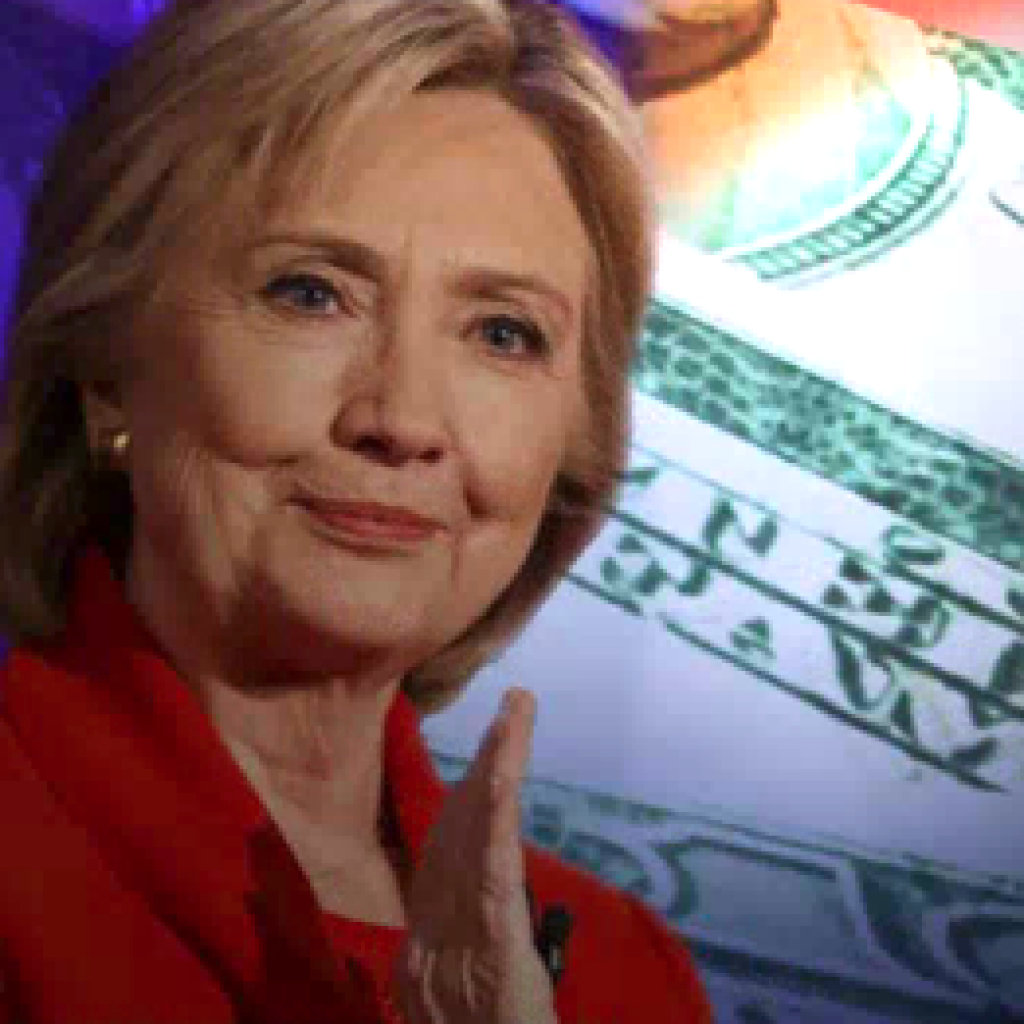
HILLARY CLINTONAs the circus of the 2016 presidential election grinds on, Hillary Clinton has posited herself as the candidate of the people. But not many “candidates of the people” have vacation homes in the Hamptons that cost $200,000 per month, or hang out with the world’s billionaires.
It’s hard to know who she is really–while once being a proponent of Donald Trump type positions, like building a wall at the Mexican border, supporting torture, and opposing same-sex marriage until 2013, today she presents herself as the anti-Trump, anti-Republican candidate.

There’s been a lot of outrage about the impression that the establishment has already anointed her as the Democratic nominee, and has carved out her path to the presidency.

But like in 2008, her guaranteed seat on the throne is being derailed by the unpredictable moods of the masses, and millions of young progressive voters. She continues to play her shape shifting game, morphing her positions to try to capture the support for her opponent, but the real Hillary is still inside.

In fact, every layer of Hillary’s career shows why, far from being a candidate of the people, she’s the top pick by corporations to do the real job of any US president: CEO of the Empire.

Digging deep into Hillary’s connections to Wall Street, Abby Martin reveals how the Clinton’s multi-million-dollar political machine operates. This episode of The Empire Files chronicles the Clinton’s rise to power in the 90s on a right-wing agenda, the Clinton Foundation’s revolving door with Gulf state monarchies, corporations and the world’s biggest financial institutions, and the establishment of the hyper-aggressive “Hillary Doctrine” while Secretary of State.


Abby Martin Exposes What Hillary Clinton Really Represents

***

FOLLOW // @EmpireFiles & @AbbyMartin

WATCH // YouTube.com/EmpireFiles

Unraveling the Syria War Chessboard with Vijay Prashad

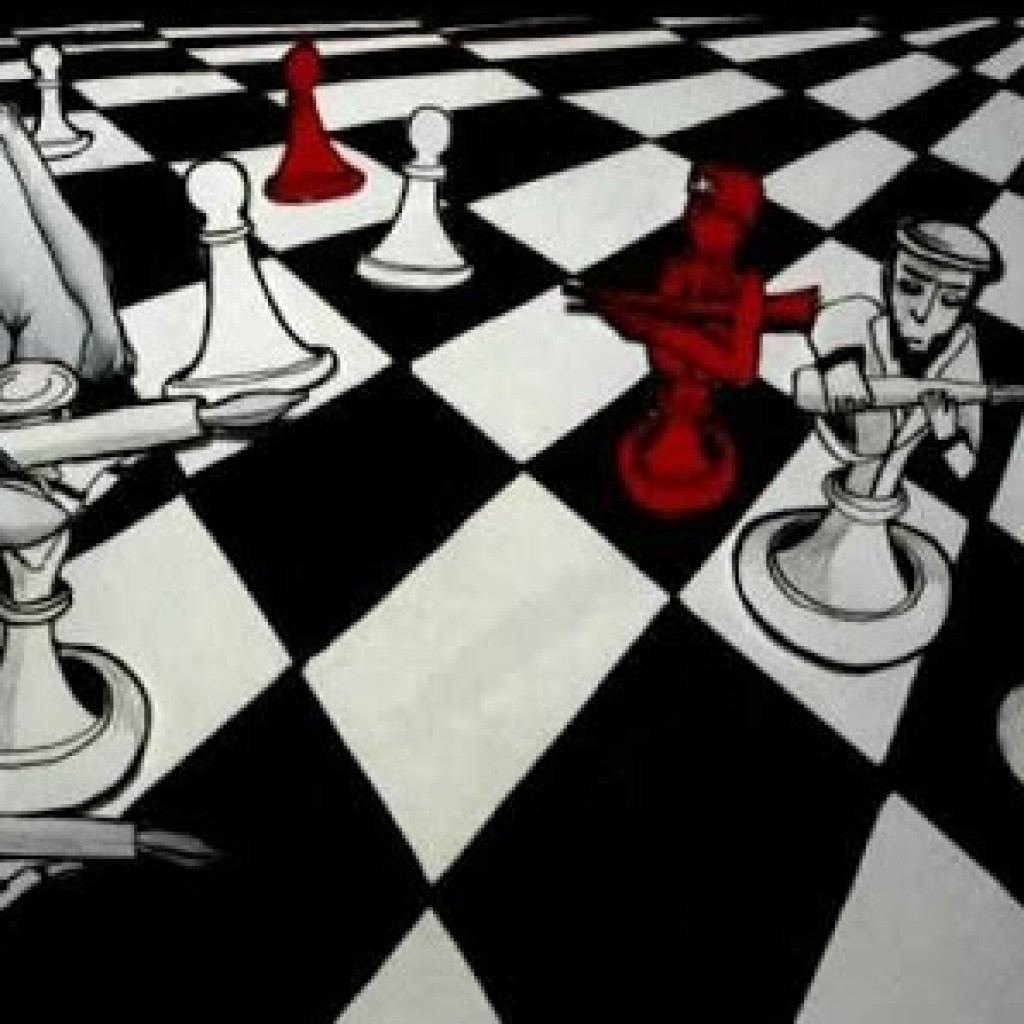
chessboardWhen the Arab Spring started in 2011, the Empire decided which revolutions were “good” and which were “bad”, pouring arms and money into police state monarchies to crush legitimate protests, from Egypt to Bahrain.
But some movements were lauded by US politicians as great causes for freedom–conveniently in countries whose governments they had long hoped to overthrow–and rushed to their aid.

In Libya, the US was able to accomplish its plan for regime change in less than a year, thrusting the country deep into misery. But in Syria, the regime change plan hasn’t gone as smoothly–a list of changing rationales and goals have spanned the last 5 years.

Millions of dollars in cash and weapons flowed to the rebel forces fighting to overthrow the government. Once ISIS rose to dominance, US officials said it was no longer about toppling Assad, it was about defeating the terrorist group in Syria, without Syrian permission. But the administration still insists Assad must go in order to defeat ISIS.

Having gone far beyond an internal political struggle, the war is marked by a complex array of forces that the U.S. Empire hopes to command: Saudi Arabia, Turkey, Kurdistan, Iran, Lebanon, Iraq and more. There’s much at stake in a bloody war that has already taken the lives of 250,000  human beings. 

To simplify this web of enemies and friends in the regional war, Abby Martin interviews Dr. Vijay Prashad, professor of International Studies at Trinity College and author of several books including “The Poorer Nations”, “A People’s History of the Third World” and “Arab Spring, Libyan Winter”.


Unraveling the Syria War Chessboard

**

VIJAY PRASHAD: When the uprising broke out in Syria, when there was initial protests–at that moment the US ambassador Mr. Ford, Robert Ford, went to the sites of the uprisings. Now this is a very important thing to recognize. A foreign ambassador inside a sovereign country went to support uprisings which were for the overthrow of the government. This is a very important thing for people to remember. In other words, the United States government, by the presence of Robert Ford, was telling the people who were opposed to the Assad government, that we are going to deliver Damascus to you. In other words, the United States took a position in 2011 by allowing Ambassador Ford to go to these places. So there was no confusion. The idea, as part of the anti-Iran policy, the idea was that Damascus has to be delivered to other powers other than Iran, perhaps Saudi Arabia. This has been a clear position. But the Syrian opposition knew from the very first that unless the United States bombed Damascus to smithereens, this regime was not going to fall. So knowing that they were not going to provide the Libyan solution, they nonetheless wound up the opposition to expect US planes to come and bomb in Damascus, which the Americans knew was not going to happen. So this in a sense is where responsibility also lies for the hundreds of thousands of people killed in Syria. In other words, the US green-lighted a regime change scenario which they very well knew they could not follow through on. So I don’t actually see any confusion in American policy. The confusion simply came in that the Obama administration had to in a sense dance around the fact that they were not able to honor what Robert Ford had suggested by his presence at this demonstration. And it was never really about the Syrian people. It was always about Iran.

ABBY MARTIN: And it’s not just the Pentagon, it’s figures within the antiwar movement, the left actually making a main pillar of the demand for Assad to step down. What would this mean for the Syrian people?

VP: The Assad government is a government of a certain class of people. The Syrian government had made enormous advances, despite really quite ruthless prison policies against the opposition. Ruthless against anybody that stood up against the government. They nonetheless made some advances in human welfare, they created institutions of different kinds, etcetera. Bashar Al-Assad, when he in a sense inherited the regime, came at a completely different moment in world history. He was much more open to the Americans and the Europeans. He was very much open to what we consider neo-liberal development, new construction projects, etcetera. He made an alliance with the Turks. Turkey made so much money, in a sense, gentrifying northern Syria in the 2000s. This was a period where it created a sense of displacement among the population. There were real grievances in the country. Nonetheless, despite having these grievances, popular opposition was extraordinarily weak in Syria. There was no way they were going to be able to actually win against the government. And I don’t mean militarily. I mean even in terms of appealing to vast numbers of people who had yet supported the government. So you can’t create revolution by shortcuts. You have to take the protracted road. And, in a sense, the American offer to the Syrian opposition was a shortcut. By opposition what do we mean? You see, the people who were revolutionaries, the left inside Syria, which there was a section, were never the people that the Americans saw as the opposition. Who did they see as opposition? From the beginning they saw the proxies of Turkey, of Saudi Arabia, maybe of the Muslim Brotherhood. These were the people that they were talking to. They were not talking to the socialists on the ground. Those socialists on the ground are disposable for everybody. This term opposition captures too much. Some people when they hear opposition they mean the rebels who came from nowhere fighting on the ground. But actually when Western governments talk about opposition, they mean the people who were in exile in Turkey and formed these groups. This was a certain kind of elite similar to the transnational coalition created in Libya. Who were they? They were bankers. These are the people that the West sees as opposition. So you know, we should not fool ourselves that very early on the poor people had been discounted by the West who had become serious with these proxies. And these proxies as we know are not merely businessmen in suits. They morphed very quickly to the very worst kind of characters and were given free rein by Western backing. And of course Gulf Arab backing to create mayhem in Syria.

AM: It feels like déja vu because we just went through the same thing in Libya not too long ago, where the character of the uprising was secondary to the overthrow of Gaddafi. What lessons can be gleaned from Libya?

VP: It depends on who is going to learn which lesson. See, the West is learning no lessons. The West has believed that regime change against its adversaries is allowed. And by the way, there was so-called soft regime change in this period. In Honduras in 2009, the United States fully backed the overthrow of the legitimate government of the Honduran people. That was when Hillary Clinton was the Secretary of State. In Japan, the Japanese people actually voted a government to power which had a mandate to remove some – some, not all – US bases from Okinawa. Hillary Clinton lobbies the government and they, the United States, overthrows a legitimately elected government and brings another government power. This was barely mentioned in the US press. So at the same time as there’s this kind of regime change in the Middle East, there was a successful regime change in Honduras, successful regime change in Japan. Have you ever heard anybody talk about regime change in Japan? No. They will blame, say, what happens in Afghanistan, what happens in Syria, emergence of ISIS, Taliban –  they blame it on somebody else. They’ll say it’s Assad’s fault that ISIS is created. I mean come off it. ISIS is a direct product of the chaos sown by the US overthrow of Saddam Hussein. When Saddam was captured in Iraq, he comes out of his hiding hole and he says to the American troops, “I am Saddam Hussein the president of Iraq, I want to negotiate a surrender.” They mocked him, laughed at him, humiliated him. Imagine if the government had actually said, “Okay, we want to accept the surrender.” In other words, we want to create a new Iraq, which we’ve illegally attacked and illegally destroyed, okay, but we want to bring the fedayeen, Saddam. Your people have to have a role in the future because they are Iraqis. We cannot simply excise them from Iraqi history. But no, they didn’t accept the surrender, they essentially turned him over to be lynched. Gaddafi – Gaddafi was killed by what? A NATO strike hits his car and then he was lynched on the street. There are right now in Sirte, which is Gaddafi’s home town, there ISIS has taken control of Sirte. Inside Sirte, it’s not merely the old jihadis but also people of Gaddafi’s green movement, who have been totally isolated again, and who have joined ISIS. Why? Because that’s the only avenue they have. You’ve marginalized… Why didn’t they arrest Gaddafi? Again, an illegal arrest, but at the time accept his surrender and say, “Your block of supporters will have a place in Libya.” No. They said none of you will have a place in Libya. You know there are tens of thousands of Gaddafi-era supporters who are in prison in Libya uncharged. This is a human rights violation. So when you conduct these regime-change operations and then tell a section of the population you are no longer relevant, you’re condemning them to social death, to political death, and in some cases to prison for life. And I think this is a lesson that nobody’s is thinking about. They’re saying, “I wish there was no war.” Well you’ve done these wars, you’ve destroyed these countries. You must, having done all that illegally, you must open yourself to the possibility that, you know what, an American should not decide what happens in Libya. Let all the Libyan people decide, including those who you now consider persona non grata. In Syria, the military is very well organized, it’s very disciplined. There hasn’t been defections. So to imagine that just because an American ambassador shows up in a square where there are fifty people standing there, that you’re going to somehow terrify the military, was an illusion. A very dangerous illusion. I don’t feel like there’s a need for anybody to say, “I support Assad. I don’t support Assad.” This is an irrelevant question. The question is, I believe in freedom of people, but I also believe that freedom is a protracted struggle. Freedom has to have a set of obligations upon human beings to win other people over. As I said, there’s no short-cut to these things, you can’t bomb your way to freedom. It’s a protracted struggle. And in a place like Syria, the government may not appeal to some people but it does appeal to others. The fact is, vacuums are the worst thing to create in any territory in the world. I think people have now understood that the Syrian Army is going to have to become one of the factors that fights the war against ISIS.

AM: The White House said part of its strategy is working with regional players on the ground. Of course, there’s several contradictory players here. First there’s Saudi Arabia. Is this a logical partner for peace when even Hillary Clinton has said that it’s the biggest exporter of Wahhabi terror worldwide?

VP: The United States government has one principal ally in the region. And that ally, apart from Israel – because Israel is not really consequential for some of this stuff. The principal ally the United States has is Saudi Arabia. The United States has on several occasions said the defense, not of Saudi Arabia, but of the royal family, is the obligation of the United States of America. Why is that so? It’s because of oil. Not because America buys oil from Saudi Arabia, but because the Saudis are able to control oil prices. Look at the recent situation. The Venezuelans fought to rebuild OPEC. They won new unity in OPEC. They raised prices of oil. In raising prices of oil, they were able to collect money and do it for regional transformation, to provide money to lesser countries with no resources, to build up the capacity of the countries, etcetera. Saudi Arabia jacked up oil production, brought down the price of oil deliberately, and did what? Brought to the knees the adversaries of the United States. Who are they? They were Venezuela, they were Russia, they were to some extent but not entirely Brazil, and eventually China. As all these countries went into free-fall, the strategy that the Chinese were building… The oil, the gas station of Saudi Arabia is a weapon against forces around the planet. So if there’s one thing the United States needs to – the people of the United States need to consider, is this unbending alliance with a theocracy that is not only brutal to its population, but is providing the material for counter-revolution around the planet. Saudi Arabia understands its region entirely through sectarian eyes. It sees the struggle in Yemen as a struggle of Shia versus Sunni, which the Yemeni people don’t see exactly like that. It sees Syria as a Sunni-Shia thing.

In Syria it’s much more complicated than Shia and Sunni, per se. So they are sectarian. They have a sectarian viewpoint. Since the 1960s, backed by the Americans, they have pushed this sectarian view on the world, not merely this region. If I asked you, Abby, let’s make a map of where Al-Qaida recruits from, one of the stunning things you’ll discover is that from the 1960s,  the Saudi-backed group called the Word Muslim League, the WML, was funding groups in these exact places because Saudis were funding this from the sixties. They opposed Arab nationalism. This was their game. So this is the major American ally. There is a terrific WikiLeaks cable from 2005, again from Syria, where the Syrian political officer of the US  embassy says, “We have to back the Saudi game of increasing Shia-Sunni tension.” Imagine this. This is a serious problem. I think now sober Western governments, not necessarily the United States, have understood that this is gotten out of hand. And something needs to be done to rein back this mad dog approach to domination in that region.

AM: Let’s expose another regional player, Turkey. How has Turkey made it possible for ISIS to thrive?

VP: They kept the border open. When Obama in 2014, August 2014, said ISIS is a threat to the world, the United States, etcetera, they could have invoked the NATO charter. Turkey as a NATO member could have been forced to close the border. But the United States didn’t invoke the NATO charter. So the border has remained porous. And so ISIS since August 2014 has continued to get recruits coming in. Look, the press picks it up here and there. They’ll say yes, the Paris attacker, the first time, the woman she is now in ISIS territory. She went through Turkey. How did she go through Turkey? She landed in Istanbul Airport, flew to Sirok, I mean to Gazientep, drove across the border. Are you kidding? Turkey is a sovereign … how can … The border is porous. Turkey has played a game which has set it in a destructive direction wherein in order to deflate the Kurdish balloon it has gone to war against the Kurds. Not only the Kurds inside Turkey, they’re bombing cities in Kurdistan, in Turkey, but they’re also bombing BKK and YPG bases in Iraq where these people are training to fight against ISIS. Understand now, if you are an American strategic planner, you are using Incirlik base inside Turkey to bomb ISIS. Meanwhile you’re providing ground support to the Kurdish militias. Meanwhile your ally, the Turkish Air Force, is bombing the Kurds. Now what is going on here? And why should people like you and I explain this? This is not for us to explain. This is a question that the United States State Department needs to explain, and the [Turkish] foreign ministry needs to explain.

AM: Can you provide any more context to why Turkey has this war against the Kurds?

VP: The point about the Middle East, or any part of the world, is they are complex cultural ecologies. If you travel in northern Iraq, for instance, the landscape is craggy and hilly and mountainous in such a way that from one valley to the next, you have language that can be slightly different. Religious traditions that differ. There is great diversity in the Middle East, it’s incredible. These people lived in various forms of fellowship for a long time. I’m not going to romanticize it. As I’ve said, various forms, there were tensions, whatever, a large Armenian population, etcetera. After the First World War, the Turkish government took a very hard republican Turkish nationalist view, led by Kemal Ataturk, the father of the Turks. They took a Turkish nationalist position, which made no or very little space for minorities. And in this of course is the killings of Armenians, a genocide of the Armenians. But also in this was the relation, the role of the Kurds. Kurds were told, “You are like us, not like the Christians.” They tried to make it about religion initially. But it was never really about religion. The attack on Armenians was not about religion, it was about difference. Are you going to be like us, are you going to assimilate fully or not? It was a very much an assimilative nationalism. And the Kurds therefore were told, “You have to assimilate to become Turks. There’s no such thing as a Kurd.” You know, that’s a very ruthless form of nationalism, and that’s been the history of modern Turkish nationalism. It has had to grapple with this very virulent strain in its nationalism, which doesn’t have space for minorities. And what’s interesting is in Turkish history, in the last twenty odd years, the Kurdish political movements have oxygenated Turkish politics. The HDP for instance is one of the few political parties that is totally socially progressive, and which is why it’s linked with the Turkish left. It’s provided the Turkish left with a mass movement.

In other words, the Kurdish nationalist movement, which surrendered its nationalism in 1993, you know they decided in ‘93 no longer to call for an independent Kurdistan, but to have rights within Turkey. You got a mass constituency for the Turkish left. And so the Kurds therefore are not some alien life form, you know, they’re part of Turkish society. The largest Kurdish city is Istanbul. There are one million Kurds that live in Istanbul. Kurds live all over the country. But they have provided through their struggle for self-determination an oxygenating space for the Turkish people, all the Turkish people. And so they are trying to revise the idea of this virulent Turkish nationalism, which Erdogan has now bizarrely come to represent. The Kurdish struggle is not a struggle of ethnicity, it’s a struggle of values. The HDP is not a Kurdish exclusionary party. It’s a party of a certain set of values, progressive values. So that’s available inside Turkey.

AM: There’s been a scholar that studied every suicide bombing since 1980, and found that 95% of them share one strategic motivation, which is the response to military intervention or occupation in their country. Given this, why do you think that the empire continues to respond with military intervention?

VP: Well there are many reasons. One of them is that if you have no other solution for the people’s problems, you utilize the hammer. If you no longer have the ability to propose a solution for poverty, starvation, desperation, etcetera… If you don’t have a solution in the United States, why talk about the world? Even in American cities you can’t provide jobs. You can’t provide schools. You provide police. You provide prison. This is the domestic cognate of imperialism overseas. Here they have no answer to people who are starving. They only know how to throw them in jail. There they have no answer to people’s demands. They only know how to bomb them. This has become a habit. Why? Because the very rich around the world have gone on strike. They refuse to pay taxes. They refuse to provide wealth for human betterment. They are happy to provide money to bomb people and build gated communities and things like that. They are happy to create dystopia. They are on strike when it comes to creating utopia. It is people who are well-meaning, well-thinking people who believe in the good side of history that have to fight for utopia. They have an end game. It is purely dystopic. We have forgotten that we need to fight for an end game. Our future is not merely resistance. Our future has got to be something beautiful.

***

FOLLOW // @EmpireFiles // @AbbyMartin // @VijayPrashad

WATCH // YouTube.com/EmpireFiles

Transcript by Michael Riches

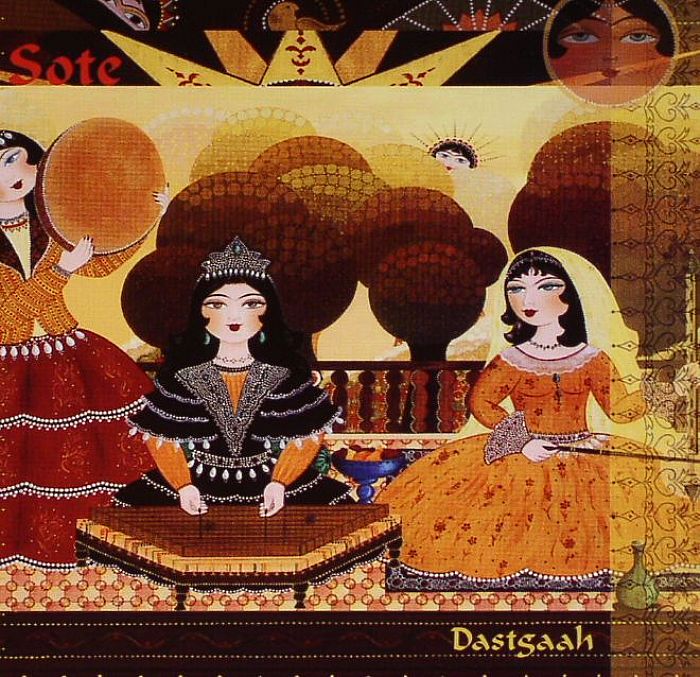
Persian and Experimental Electronic Music with Ata Ebtekar aka Sote

SOTEAta Ebtekar also known as Sote has been carving his own path in the lexicon of electronic music for the better part of two decades.

Ata attended school in Germany and later audio engineering school in the San Francisco Bay Area, the same school Robbie Martin (co-host of Media Roots Radio and aka Fluorescent Grey) attended, Expression Center for New Media.

Ata has released multiple works on Robbie’s long running music imprint ‘Record Label Records’. Having lived for long periods of time in the United States, Ata is now in Tehran to stay, further exploring the outer edges of electronic and experimental music. Ata aka Sote will release a brand new full length called Arrhythmia digitally on Record Label Records May 25th.

Follow Robbie @FluorescentGrey

Follow Ata Ebtekar @sotesound