
AFRICOM: America’s Continued Dominion

MEDIA ROOTS – The Pentagon’s budget has grown from $267 billion in 2000 to $708.2 billion in 2011. In addition to budgetary increases, the Pentagon is expanding its arrogation of global jurisdiction. The Unified Combatant Command of USAFRICOM (est. 2007) is of particular concern.

The Pentagon spins AFRICOM’s presence as a boon for all parties. According to former AFRICOM commanding General William “Kip” Ward, AFRICOM allows African nations to first choose “African solutions to African problems.” Other U.S. military leaders emphasize the benefits African countries receive from the United States’ implicit dedication to helping local communities.

U.S. military officials also claim AFRICOM allows for the relentless pursuit of shadowy, devious terrorists. “Violent extremist organizations [residing in Africa] have very clearly articulated an intent to attack the United States, its allies, its citizens and its interests both within Africa and also more broadly, in Europe,” according to AFRICOM commanding General Carter Ham. To help shape public discourse, various militant groups are presented as terrifying, inexplicable threats to the United States. Among these “threats” are Ash-Shabaab in Somalia, Boko Haram in Nigeria, al-Qa’ida in the Islamic Maghreb (AQIM), anti-Western rulers in Libya, and the Lord’s Resistance Army (LRA) in central Africa.

AFRICOM officials cite Ash-Shabaab’s proximity to the Middle East and links with al-Qa’ida as reason to pursue them relentlessly. In pursuing Ash-Shabaab, Washington uses CIA assets, drone strikes, U.S. special mission units, and African proxy forces.

General Ham referred to Boko Haram in Nigeria as a “growing threat to Western interests,” while Admiral William McRaven, Commander of USSOCOMcalled them a “terrorist group.” Such allegations from top U.S. military officials serve to expand U.S. military activity across Africa, while keeping an eye on oil in Nigeria, from which USA receives 8% of its petroleum imports.

The Pentagon’s press service hinted at the importance of oil in the Defense Department’s strategic calculus when stating Boko Haram’s challenge to the Nigerian government is troubling, considering how “Africa’s vast natural resources compound the region’s strategic importance… particularly oil that’s exported to the United States.” Since Boko Haram has yet to display a sufficiently threatening posture, General Ham ties it to AQIM in terms of training, funding, and activities in order to take Boko Haram’s profile to the next level and implicate it as a threat to the USA. By wrapping up Boko Haram in the same ball as AQIM, which according to General Ham has “very clearly” shown an intent and desire to attack U.S. citizens, AFRICOM is able to spread its forces across the rest of the Sahel without raising questions from the U.S. citizenry.

General Carter Ham asserts “each of those three [Ash-Shabaab, Boko Haram, and AQIM] pose a significant threat not only in the nations where they primarily operate, but regionally, and I think they pose a threat to the United States.” In addition to gross hyperbole, Ham points to these groups’ potential to collaborate and coalesce as further rationale for the Pentagon to assist African nations with “anti-terrorist capabilities” [read: spread U.S. forces throughout Africa]. Ham reiterated these same points earlier this summer.

In order to counter the inflated “terror” threat, General Ham follows a “theater engagement strategy,” which includes a wide variety of exercises, operations, “security cooperation programs,” training programs, and equipment sequences. Admiral Eric T. Olson (ret.), former Commander of USSOCOM, framed it as shifting the Pentagon’s “strategic focus” “largely to the south… certainly within the special operations community, as we deal with the emerging threats from the places where the lights aren’t,” referencing what is often referred to prejudicially as the “dark continent.” Hence, Pentagon strategists aim to “turn the lights on” across Africa.

Seizing upon any excuse and justification to expand AFRICOM’s jurisdiction, General Ham cites successful military operations in Libya, specifically Operation Odyssey Dawn. Even though Colonel Qaddafi is deceased, General Ham uses AFRICOM to try and fill the vacuum, which Qaddafi left behind:

“It’s very clear that extremist organizations, notably al-Qaida, with some direction from al-Qaida’s senior leaders, would seek to undermine that good governance that the Tunisians and the Libyans seek… And so I think that’s the real threat that is posed… I think we need to partner very closely with the security forces [and] armed forces of Tunisia and Libya to prevent the reestablishment of those networks [and] to prevent those violent extremist organizations from undermining the progress that both countries are seeking.”

Ham recently succeeded in normalizing military relations with the new Libyan leaders. Ham recalled how he visited Tripoli “a number of times, and has had “Libyan officials visit us in our headquarters in Germany, and we have started to map out what the U.S. assistance might be for Libya well into the future.” Ham’s words portend inauspicious obstacles in the form of U.S. interference with Libyan self-determination.

Several hundred miles south of Libya lays the Central African Republic, to where President Obama deployed over 100 “combat-equipped” U.S. troops in order to assist in fighting the Lord’s Resistance Army. These troops, augmented by U.S. civilians, headquarters personnel, communications equipment, and logistics experts, also roam Uganda, South Sudan, and the Democratic Republic of the Congo. By depicting the LRA as a nothing more than a “terror group,” the Pentagon is again able to expand AFRICOM’s territory with minimal objection from the domestic U.S. audience, while acting as if its entire existence is altruistic and humanitarian in nature.

In order to justify this particular operation, General Ham invoked a classic public-relation ploy, referring to today’s enemy as “evil.” Ham remarked, “if you ever had any question if there’s evil in the world, it is resident in the person of [LRA leader] Joseph Kony and that organization.” Many other enemies-of-the-day have been deemed “evil” during recent years, including Russia, Iran, Iraq, North Korea, Colonel Qaddafi, various “terrorists,” drug traffickers, those who resist U.S. imperialism, Afghanistan, Syria, et cetera. Meanwhile, the State Department couches the deployment to central Africa as consistent with Washington’s concern for “increasing civilian protection” and “providing humanitarian assistance.”

Harmful Presence

Contrary to the Pentagon’s illusion, AFRICOM’s existence is extremely detrimental to all involved. It perpetuates Africa’s dependency on external support. With AFRICOM looming large, African politicians and states-people can easily defer to the U.S. military instead of focusing on their respective internal and AU security apparatuses. This ease of deference is shown well in how the Pentagon is involved in “training, equipping and funding the African Union Mission and Somali forces from Uganda, Burundi, Djibouti, Sierra Leone and Kenya.” Furthermore, since the U.S. military’s FM 3-24 assumes responsibility for economic and diplomatic territory, AFRICOM’s presence now allows African politicians and states-people to defer to U.S. economic powerhouses and diplomatic initiatives. In allowing AFRICOM to assume manifold responsibilities across diplomatic, economic, and military fields, U.S. policymakers ignore Africa’s own proven capacity to stabilize violent internal strife, as evident in the Economic Community of West African States’ 1990 response to the Liberian civil war, as Danny Glover elucidated. After all, if Washington, D.C. were to admit Africa can take care of itself, then new pretexts must be invented in order to expand U.S. military operations across the continent.

Additionally, AFRICOM’s establishment and expansion provide another aperture through which Pentagon generals and politically-appointed policymakers exploit the uniformed troops. With little economic opportunity outside of corporate America’s increasingly dismal career prospects, more and more U.S. citizens are turning to the Armed Forces to make ends meet. With increasing frequency, the U.S. government and its corporate overlords send these troops to all corners of the globe to fight for mineral wealthoil, and natural resources.

What may be most patent is AFRICOM allows the U.S. military to expand throughout the African continent. Many corollaries ensue, specifically an unbridled military-industrial complex; pretexts of chasing “terror” continue unabated, U.S. access to Africa’s natural resources is ensured militarily, and live targets abound against which the Pentagon and CIA may practice. 

Far from altruistic, the Pentagon’s presence across Africa is entirely self-serving. As the Pentagon’s own propaganda machine readily concedes, AFRICOM’s “aim is to promote a stable and secure environment in support of U.S. foreign policy” [my emphasis]. General Ham states, “We’ve prioritized our efforts, focusing on the greatest threats to America, Americans and American interests.” AFRICOM’s selfish drive is remarkably similar to USA’s traditional military policies towards Latin America, described candidly as always working to improve “internal security capabilities” in support of U.S. foreign policy (Chomsky: 49). Sound familiar? 

AFRICOM’s presence simply allows Washington to shape domestic African laws, to alter internal policy decisions regarding resource extraction and counterterrorism, to coerce African governments into adjusting their foreign policies to fit U.S. military and economic objectives, and to interfere with internal litigation (Lutz et al.: 118).

The Washington Post Editorial Board recently wrote of the Chinese arms trade in Africa:

“…an investigation might shed light on China’s undisciplined arms trade, which is driven by relentless mercenary interests and a desire to cozy up to oil-soaked and mineral-rich African leaders.”

Replace “China” with “USA,” and we’re treated to the candid truth, which Washington and the Washington Post may have a tough time swallowing: An investigation might shed light on USA’s undisciplined arms trade [and militarization of the African continent], which is driven by relentless mercenary interests, [corporate interests], and a desire to cozy up to oil-soaked and mineral-rich African leaders. The truth hurts.

Former AFRICOM commanding General William Ward still claims the United States’ presence doesn’t amount to further militarization of the African continent, but merely supports “the efforts of other U.S. government agencies,” like “State Department or U.S. Agency for International Development programs.” If this is truly the case, then the United States would have established an AFRIAID command or a massive diplomatic hub instead of numerous military facilities. Economic development and educational initiatives do not necessitate military intervention.

On a continent already rife with conflict and excess weapon imports, General Ward nonetheless focused AFRICOM on “promoting regional cooperation through military-to-military engagements that strengthen regional capabilities,” and “further strengthening the unity of efforts with other U.S. agencies and, as appropriate, the international community.” Regrettably, neither one of these primary AFRICOM objectives helps Africa meet its true wishes: less foreign military interference and more African unity.

Full Coverage

U.S. policymakers who approved AFRICOM’s formation, specifically the 2007 Senate Armed Services Committee, neglected to consider USA’s history of military and espionage intervention across the African continent. Cold War games, postcolonial proxy wars, and chess matches with the USSR destabilized the continent almost beyond repair. These events were detailed lucidly in former Defense Secretary Robert Gates’ 1996 memoir From the Shadows. Given Africa’s recent history as a colonial punching bag and such a lurid history of military and espionage exploitation, U.S. policymakers ought to have deliberated AFRICOM’s formation with greater care. Instead, U.S. Congress ignored mass opposition to AFRICOM from an array of African nations, including South Africa and Nigeria.

AFRICOM is off to a fine start from a hegemonic perspective, having increased its footprint on the African continent by 1,500 personnel in less than a year, from the summer of 2009 to the spring of 2010. By the fall of 2011, the U.S. military had a presence in the Djibouti, Seychelles, Ethiopia, and Sao Tome & Principe. The Washington Post later revealed that U.S. ISR platforms and Special Operations Forces were also operating out of Burkina Faso, Mali, Mauritania, Uganda, and Kenya. According to Reuters, the U.S. military has a presence in over 34 sub-Saharan African countries. Adding to this troop saturation, the Pentagon will deploy U.S. infantry troops to Africa next year, a move which permanently aligns a stateside combat brigade with continuous, rotational deployments to the African continent.

Concerned citizens should rest well, because the former commanding officer of Camp Lemonnier, Djibouti, assures us the U.S. “must always be transparent in our operations.” One surmises that such statements are not applicable to the counter-terrorism operations stemming from the Combined Joint Task Force – Horn of Africa (CJTF-HOA), with an Area of Responsibility covering “the countries of Kenya, Somalia, Ethiopia, Sudan, Eritrea, Djibouti, and Seychelles, and an Area of Interest including Yemen, Tanzania, Mauritius, Madagascar, Mozambique, Burundi, Rwanda, Comoros, Chad, the Democratic Republic of the Congo, and Uganda.”

The Trans-Sahara Counterterrorism Partnership (TSCTP), whose motivation and strategic outlook were approved by a National Security Council committee in 2005, is AFRICOM’s instrument of choice when implementing counterterrorism efforts in Africa’s Sahel and Maghreb regions.

One must also consider the orientation of the American Army’s Third and Fifth Special Forces groups, which are by design geared towards operations in sub-Saharan Africa and Northeast Africa respectively.

Whether Washington utilizes CJTF-HOA, TSCTP, a random drone, conventional troop deployments, a Special Forces A-team, or a covert military flight, U.S. foreign policy remains committed to interference on the ground in sovereign African nations. Based on the preceding evidence, it is reasonable to conclude that the Pentagon effectively operates at will throughout the entire African continent. The implications are profound: no African is safe and accountability is nil. Barring a few competent U.S. journalists, like Jeremy Scahill and Nick Turse, the U.S. military’s expansion throughout the African continent receives little attention from the United States’ press.

Tricks of the Trade

Despite all evidence to the contrary, the Pentagon still insists it has no intent or plans for establishing permanent bases in Africa. Concerned citizens wonder how AFRICOM is able to claim such a small “footprint” in Africa, even though U.S. military forces clearly infest the continent. It does so in two ways. Firstly, AFRICOM defines the term “base” as a facility of a specific, size, scale, and composition. Since only one of the Pentagon’s numerous military facilities in Africa meets “base” criteria, Washington can continue to claim AFRICOM has only one base on the continent and no interest in constructing long term bases in Africa. Secondly, the Pentagon claims a small “footprint” in Africa by not assigning troops directly to AFRICOM. Instead, the Pentagon has AFRICOM draw its forces from tangential commands and European-based forces. When used together, the aforementioned bureaucratic loopholes allow the Pentagon to claim innocence and idealism vis-à-vis operations on the African continent, while evidence clearly shows the U.S. military operating there relentlessly.

The United States’ gluttonous military-industrial-corporate behemoth finds Djibouti quite attractive as a main base of operations on the African continent. From a strategic perspective, Djibouti rests across the vitally important Bab-el-Mandeb, a narrow chokepoint connecting the Gulf of Aden with the Red Sea, overseeing traffic to and from the Suez Canal. In this capacity, Djibouti is a regional transit port, an international trans-shipment node, and a refueling center for many. Local, unelected elites welcome USA’s presence, since these rulers benefit greatly from USA’s foreign assistance. Last fall, Camp Lemonnier was upgraded, receiving runway additions and a new dining facility, indicating AFRICOM’s intent to remain indefinitely. (Curiously, the leader of Djibouti, Ismail Omar Guelleh, who plays host to USA’s Camp Lemonnier, doesn’t even conform to USA’s professed standards of “spreading democracy.” This is never mentioned in the U.S. corporate media).

In military parlance, Djibouti is “a great strategic location. It facilitates not only our operations for U.S. Africa Command, but also U.S. Central Command and U.S. Transportation Command. It is a very key hub and important node for us, a good location that allows us to extend our reach in East Africa and partner with the countries of East Africa,” according to General Ham.

Rubbing salt in the imperial wound, U.S. Defense Secretary Leon Panetta thanked the U.S. servicemen and women who are deployed to Camp Lemonnier for “their role in maintaining stability and preventing conflict in the region.” Panetta oozed, “I can’t tell you how proud I am as Secretary of Defense to visit you… thanks on behalf of a grateful nation… You’ve done everything the nation has asked you to do.” Concerned U.S. citizens do not recall asking fellow countrymen and countrywomen to travel across the world in order to protect U.S. corporate greed or imperial configurations. Panetta later thanked the Camp Leomonnier crowd for “continuing the American dream of ensuring a better life for the next generation.” Details are not forthcoming regarding how a military presence in Djibouti helps perpetuate the so-called “American dream.”

The Pentagon press service describes the U.S.-Djibouti relationship as “‘a very important partnership’ in dealing with counterterrorism, counter-piracy and outreach into Africa.” Educational initiatives, stipulation-free economic assistance, and non-militarized humanitarian aid fall by the wayside. Any humanitarian aid, like the East and West African Malaria Task Forces, is wielded selfishly in order to co-opt African nations, improve the health of their militaries, and protect U.S. troops operating in the region.

According to AFRICOM’s chief medical doctor, Colonel John Andrus, combating malaria supports AFRICOM’s chief goal of promoting regional stability. In other words, combating malaria in Africa is not altruistic or sincerely benevolent, but rather employed as a selfish strategy in order to achieve imperial military objectives. Chief of AFRICOM’s health protection branch advises us how “each person [deployed to AFRICOM] is critical. If you have one person go down, that person can’t do his or her job.” If only we cared equally about the anonymous millions of non-military personnel who die annually from starvation, disease, and bullets across the African continent.

Yet the Pentagon still insists USA’s presence on the African continent is purely selfless. The Undersecretary of Defense for Policy claims creating peaceful political processes, which provide conditions essential to development, “is the name of the game in Africa.” USA’s strategy “puts a premium on supporting democratization and the emergence of democracies in Africa,” the Undersecretary affirms. Her verbal piffle completely disregards U.S. support for Hosni Mubarak, U.S. support for Mobutu Sese Seko in Zaire, U.S. involvement in the coup against Ghana’s Kwame Nkrumah, CIA collaboration with the South African apartheid state, and the Cold War games USA played in AngolaLibyaChad, et cetera.

As if it hasn’t suffered enough through slavery, colonialism, and decades of resource pillaging, the African continent is going to be plundered even more in the future. In the words of Professor Chalmers Johnson, “While the globalization of the 1990s was premised on cheating the poor and defenseless and on destroying the only physical environment we will ever have, its replacement by American militarism and imperialism is likely to usher in something much worse for developed, developing, and underdeveloped nations alike” (Johnson: 281). Reality contrasts starkly with the Pentagon’s artifice.

A Beacon of U.S. Journalism

This background on AFRICOM and its activities serves as a primer for Nick Turse’s stellar journalism. Nick Turse is the premier U.S. journalist covering Pentagon expansion across the African continent. Turse excels at highlighting Pentagon excess and imperialism. After publishing a candid portrayal of AFRICOM, Turse received an email from Colonel Tom Davis, an AFRICOM public affairs official. For their ensuing, riveting correspondence, click here.

For further reading on the excess of AFRICOM and militarized U.S. foreign policy, consult The Counter-Counterinsurgency Manual by the Network of Concerned Anthropologists. (Chicago: Prickly Paradigm Press, 2009).

***

Christian Sorensen for Media Roots.

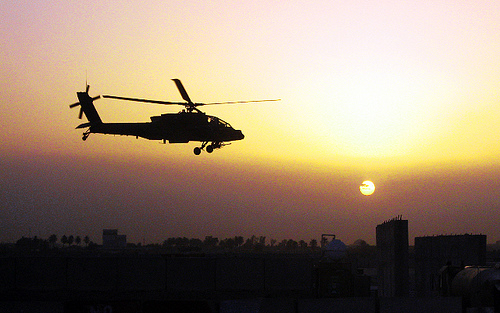
Photo provided by Flickr user The U.S. Army.
Posted in Uncategorized | 1 Reply

Israel Curious, Part 3 of 3: State & Local Support

Read part one of this series about Israeli espionage and part two about UN colonialism.

MEDIA ROOTS – When making decisions about Middle East policy, the U.S. Congress and the Executive Branch frequently bow to the whims of a foreign nation in order to remain in AIPAC’s good graces. Billions of U.S. taxpayer dollars are up for grabs if AIPAC can properly manipulate U.S. foreign policy, at which it excels with unparalleled fluency through intimidation and legalized bribes.
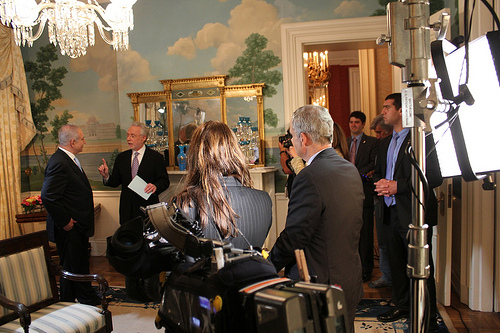
As the Salon explains, “the sight of [Israeli Prime Minister Benjamin] Netanyahu who, having defied and insulted the American president, addressing a joint session of Congress with congressmen and senators of both parties jumping to their feet like jack-in-the-boxes to show their support, was all anyone needed to understand Israel’s power in the American Congress.”

U.S. Senators and Representatives prioritize Israel

Almost all U.S. Senators and Representatives prioritize Israel’s interests over the United States’ when bowing to AIPAC’s persistent circulation of many harmful resolutions throughout the U.S. Congress. It is incumbent upon Republicans and Democrats, as self-proclaimed patriots, to shun the lobby of any foreign nation in favor of true U.S. interest. Yet the status quo, under which the Israeli Prime Minister receives 29 bi-partisan standing ovations compared to the U.S. President’s 25 partisan standing ovations, remains woefully askew. Former Senator Charles Mathias (R – MD) cautions us to draw distinction “between ethnicity, which enshrines American life and culture, and organized ethnic interest groups, which sometimes causes that derogate from the national interest” (Blitzer: 134).


Wolf Blitzer also counsels, “those American Jewish political activists who are the most successful in supporting AIPAC are those who are Zionists first, Democrats or Republicans second” (Blitzer: 132). This describes Eric Cantor (R – VA) perfectly. When President Obama offered Tel Aviv lucrative incentives in order for them to temporarily halt colonization of the West Bank, Cantor pledged to support the Israeli Prime Minister over the U.S. President. Cantor effectively vowed to protect Israeli interests against U.S. interests. One can think of no other historical example of a Congressional representative pledging loyalty to a foreign leader on an issue of such international significance, in direct opposition to his own President. Even Ronald Reagan, the mythical idol of all Republicans, had told Israeli proxies to mind their own business and stop interfering with the United States’ own self-interest (Blitzer: 135-136).

American gifts to Israel remains top priority, despite own financial crisis

Lately, Cantor has attempted to hide the United States’ annual $3 billion gift to Israel within the Department of Defense budget, in an effort to safeguard it from fiscal oversight. Wolf Blitzer explains that this move is unlikely to happen because the State Department counts on the gift to Israel in order to finagle the State Department’s foreign aid bill through U.S. Congress each year; foreign aid is not a strong issue in many lawmakers’ eyes, but giving money to Israel is (Blitzer: 7). Throughout such twisted maneuvering, no elected U.S. official possesses the temerity to even question the illogic of aiding Israel at all.

Another AIPAC Congressman has assured Israel that the United States’ worst financial crisis since the Great Depression will have no impact on aid to Israel. The United States is rife with unemployment, attempting to recover from a mortgage crisis, struggling with decrepit infrastructure, and waging global war, yet subsidizing the Israeli military remains a top priority with the U.S. Congress. The historical record has taken note.

The U.S. Senate operates in lockstep with the Israeli political right. In June 2011, a resolution promising to halt aid to the Palestinian Authority if it seeks statehood in the UN General Assembly passed unanimously in the U.S. Senate. Senator Ben Cardin (D – MD) summarized the Senate’s position: “The Senate has delivered a clear message to the international community that the United Nations recognition of a Palestinian state at this time does not further the peace process… A permanent and peaceful settlement of the Israeli-Palestinian conflict can only be achieved through direct Israeli-Palestinian negotiations.” AIPAC issued a statement “applauding the resolution.” On the bright side, Israel finally allowed a shipment of cars into Gaza for the first time since 2007. As Wolf Blitzer reminds, Israeli residents “of course, have a well-earned reputation for being charitable” (Blitzer: 125).

What happens to Palestine?

Prior to the U.S. Senate’s ugly display, half of U.S. Democratic Senators urged President Obama to suspend assistance to the Palestinian Authority if Fatah continued to participate in a unity government with Hamas. One week later, the House Republican Majority Leader and Democratic Minority Whip circulated a resolution calling for sanctions against the Palestinian Authority if it pursued statehood recognition in concert with the unity government. AIPAC’s efforts paid off. In July 2011, the House of Representatives passed Resolution 268, urging President Obama to suspend financial assistance to the Palestinian Authority if it proceeded with efforts to achieve statehood at the United Nations. Professor Zunes, of the University of San Francisco, puts Congress’ actions in perspective:

“Congress went on record reiterating their ‘strong opposition to any attempt to establish or seek recognition of a Palestinian state outside of an agreement negotiated between Israel and the Palestinians.’ It called on Palestinian leaders to ‘cease all efforts at circumventing the negotiation process, including through a unilateral declaration of statehood or by seeking recognition of a Palestinian state from other nations or the United Nations.’ It called upon President Obama to ‘announce that the United States will veto any resolution on Palestinian statehood that comes before the United Nations Security Council which is not a result of agreements reached between the Government of Israel and the Palestinians’ and to ‘lead a diplomatic effort to oppose a unilateral declaration of a Palestinian state and to oppose recognition of a Palestinian state by other nations, within the United Nations and in other international forums prior to achievement of a final agreement between the Government of Israel and the Palestinians.’

“Reread the above paragraph and replace ‘Palestinians’ with ‘Namibians’ or ‘East Timorese’ or ‘Kenyans’ or ‘Algerians,’ or any other people under foreign occupation in recent decades, and replace ‘Israel’ with the respective occupying power, and the implication of this resolution becomes clear: Both the Republican Party and the Democratic Party are still trapped in an early 20th century colonialist mindset which believes that colonized people should only be allowed independence under the terms and conditions granted them by their occupiers. Not a single member of the U.S. Senate and only a handful in the House were willing to consider the idea that, as a territory under foreign belligerent occupation, the Palestinians of the West Bank (including East Jerusalem) and the Gaza Strip have a legal right to self-determination under international law, and that not Israel, the United States or any other government can legally deny that to them. Yet, both major parties are still blinded by a pre-Wilsonian belief in the right of conquest, whereby political freedom can only be allowed to the extent of what may be voluntarily granted by the conqueror (which both Republicans and Democrats have repeatedly referred to as potential ‘painful concessions’ by Israel).”

Even a majority of Israelis think the Israeli government should accept a UN resolution recognizing an independent Palestinian state. Despite this reality, AIPAC’s hard-right stance forces the corrupt U.S. Congress and the Executive branch to facilitate colonialism. Even a former Israeli Defense Minister, Binyamin Ben-Eliezer, acknowledges it is in Israel’s best interest to recognize a Palestinian state. In sum, AIPAC has pulled U.S. policymakers farther right than most Israelis.

Consider HR 4133, which demands: the U.S. veto any UN resolutions that are remotely critical of Israel; give Israel all “necessary” military support; throw even more money at Israel’s military occupation; give the Israeli government greater access to U.S. intelligence, including classified satellite imagery; allow Israel to participate more in NATO activities; tie Israel and the U.S. so closely together that the Pentagon is forced to back Israel regardless of U.S. strategic interests; allow the Israeli Air Force to train with greater frequency on United States soil; and supply Israel with more sensitive weaponry [read: bunker-busting bombs and cluster munitions]. Israel already possesses nuclear weapons, some of the world’s finest special operations forces, the most ruthless intelligence service, disciplined infantry units, and a top-notch Air Force. So why pepper them with more gifts?

AIPAC flies U.S. Congress to Tel Aviv for their summer vacations


Vociferous advocacy for hard-right Israeli policies extends to state and local legislatures

The Colorado Senate and House of Representatives recently passed Senate Joint Resolution 27, recognizing Israel as a homeland for the Jewish people, inaccurately commending Israel as the lone democracy in the Middle East, and affirming a “close affinity” between Colorado residents and the Israeli people.  

Florida’s House Federal Affairs Subcommittee passed HR 1447 unanimously, which commends Israel on the “cordial and mutually beneficial relationship with the United States and with the state of Florida and supports Israel in its legal, historical, moral, and God-given right of self-governance and self-defense upon the entirety of its own lands, recognizing that Israel is neither an attacking force nor an occupier of the lands of others, and that peace can be afforded the region only through a whole and united Israel governed under one law for all people.”

The state of Florida recognizes Israel’s inherent right to Judea, Samaria and Jerusalem and unanimously commends Israel as “the greatest friend and ally of the United States in the Middle East.” Embracing ignorance, Florida legislature affirms “haters of Israel also hate, and seek to destroy, the United States of America.”

According to the Executive Director of Florida’s Zionist Organization of America (ZOA) branch, “the strong and honest language used in the [Florida] resolution recognizes the rights of the Jewish people to the Land of Israel, and that Jerusalem and the so-called West Bank must remain united under Israeli sovereignty for the sake of peace and security.” Hundreds of Christian Zionists joined ZOA in lobbying for Resolution 1447. The ZOA national president stated:

“It is imperative to note the particularly important role played by Israel’s Christian friends who joined with the Jewish community to urge the passage of this resolution… The Land of Israel is the rightful homeland of the Jewish People, and the enemies who seek Israel’s destruction are also self-avowed enemies of America.”

The South Carolina General Assembly recently passed Resolution 4339, which commended “the nation of Israel for its relations with the United States of America and with the state of South Carolina.” Resolution 4399 clings tightly to religious fervor:

“The roots of Israel and the roots of the United States are so intertwined that it is difficult to separate one from the other under the word and protection of almighty God; Those same haters of Israel also hate, and seek to destroy, the United States of America; Recognizing that Israel is neither an attacking force nor an occupier of the lands of others, and that peace can be afforded the region only through a united Israel governed under one law for all people.”

The Utah legislature unanimously affirmed “cultural, economic, military and security bonds to Israel” and encouraged the Governor to visit Israel on a trade mission.

The flagrant falsehoods, which are perpetuated by the Centennial State, the Sunshine State, the Palmetto State, and the Beehive State in pseudo-solidarity with Israel, are contrary to humanity’s common decency. However, they’re quite rational expressions when one considers how AIPAC “has sought out younger Jewish political activists in local city councils, state legislatures, and the better law firms.” “Whenever they cooperate with AIPAC,” “both the Jewish Lobby on Capitol Hill and the local Jewish organizations benefit.” As a result, Jewish communities around the country “are constantly approaching their representatives and senators. They stay on top of the issues. By doing so, they become politically persuasive” (Blitzer: 133).

On the municipal level, the Philadelphia City Council, which should be tackling issues of poverty, education, and budgetary woes, voted to oppose Palestinian efforts of independence at the United Nations. The City Council, which has passed three other resolutions relating to Israel since 2000, neglected to see the irony in their symbolic suppression of Palestinian self-determination: Philadelphia was the birthplace of the United States’ unilateral independence.

Colorado, Florida, South Carolina, Utah, and Philadelphia are just a few examples of an invasive phenomenon. AIPAC is increasingly targeting state and local legislatures, with the explicit intent of spreading disinformation and dragging U.S. communities into the bellicose side of a distant fight.

The U.S. Legislative and Executive branches treat Israel like the fifty-first state.


***

Christian Sorensen for Media Roots

Photo by Flickr user IsraelinUSA.

MR Original – ATK: Pentagon’s Revolving Door

MEDIA ROOTS – Over a decade ago, the U.S. Air Force expressed interest in fielding a next-generation, hypersonic missile known as the High Speed Strike Weapon (HSSW).  Recognizing the lucrative money available in Department of Defense contracts, war industry officials began conceptualizing suitable prototypes.  Understanding the nature of HSSW and the corrupt practices of its primary developer should lead one to question the core operating conventions inherent to the U.S. military-industrial complex.

Corporate manufacturers of HSSW must meet certain design goals set by the Department of Defense.  These operational functions require an HSSW which launches from submarines, traditional surface ships, bombers, and fighter jets, and which reaches a top speed of around five-times the speed of sound. 

The Pentagon’s design goals for HSSW also include “classified elements,” necessitating a SECRET security clearance (considering the number of U.S. citizens with SECRET clearance exceeds two million, this restriction shouldn’t pose a problem).  Although Boeing and GenCorp Aerojet have tendered their own HSSW design, Alliant Techsystems Inc. (ATK), which is known for corporate success with the X-43 and also supplying the Department of Homeland Security with up to 450 million hollow point rounds of .40 caliber ammunition, is the leading candidate for Pentagon funding.

CORRUPT PRACTICES

ATK’s Board of Directors and senior corporate leadership fester within an environment rife with conflicts of interest.  Mark Ronald and Ron Fogleman possess the most egregious of them among the company’s Directors.   Mr. Ronald is Vice Chairman of the Defense Business Board (DBB), an organization which claims to provide the Secretary of Defense with “independent advice” and “outside private sector perspective” about successful business practices.  However, Mr. Ronald cannot possibly provide advice of an “independent” nature, given unimpeded access to both senior Pentagon officials and ATK’s Board of Directors.

Ron Fogleman, former Chief of Staff of the Air Force, is a charter member of The Durango Group, an organization which pays its members to “help private companies win and administer Pentagon contracts.”  The Durango Group’s gurus “move seamlessly between roles as paid advisers to the [Armed] Services and paid consultants to defense companies in the same subject areas.”  As USA Today reports, Durango employees like Fogleman get paid by “the military for advice and by defense contractors who want consulting help.”  This corrupt arrangement further benefits The Durango Group as its gurus “serve as corporate directors or advisers for other companies” across the industry.  And the wheel of corruption goes ‘round.

Corruption on ATK’s Board of Directors can also occur subtly through the diaphanous, revolving door between private corporations and public service:  Martin Faga wields clout as former Director of the National Reconnaissance Office; April Foley was once a member of the Board of Directors at the U.S. Export-Import Bank; and Tig Krekel was once Vice Chairman of J.F. Lehman & Company, a private equity firm whose chairman helped run the unscrupulous 9/11 Commission.  ATK’s day-to-day corporate leadership also exists in a climate ripe for unprincipled behavior, as its members possess experience and influence in General Motors, Lockheed Martin, the Senate Appropriations Committee, and the National Defense Industrial Organization.  With this insider economic, political, and military might, ATK is in prime position to place corporate profit ahead of integrity.

Unfortunately, these conflicts of interest are commonplace in the U.S. war industry and elicit no formal, sustained Congressional concern.  Within this culture of Congressional complicity, senior executives from Lockheed Martin, General Dynamics, and EADS pled privately with Defense Secretary Leon Panetta in June to avoid Pentagon budget cuts.  Such collusion tacitly reaffirms the Pentagon’s prioritization of U.S. corporate profit over U.S. national interest.  ATK is certainly pleased with this arrangement, since the U.S. government accounts for 68% of its sales.  By allowing “one-on-one sessions with interested prime contractors,” the Pentagon continues to abet graft, collusion, and industry corruption.

QUESTIONS FROM CONCERNED CITIZENS

Given the corrupt nature of ATK’s leadership and the war industry in general, it is rational for U.S. citizens to inquire further. Pertinent questions include:

How does HSSW contribute to the escalatory cycle of global arms manufacturing?  

Since World War II, the U.S. arms industry has produced weapons to confront inflated threats (e.g. communism, terrorism).  In response, various “enemies” produce weaponry to deter U.S. aggression.  The Pentagon then uses the enemies’ weapon production, however minute, as justification to continue allocating vast sums of taxpayer dollars to the U.S. arms industry, resulting in an upward spiral of militarization, which clogs all ends of the globe.  Production of the HSSW continues this deleterious tradition.

Is HSSW another black hole at which the Pentagon can throw funding, while enriching corporate weapon manufacturers?  

Yes.  As Wired.com pointed out, the Pentagon has a mediocre track record producing hypersonic technologies.  For example, this spring the Pentagon lost a costly Falcon prototype over the Pacific.  Bloomberg reports this loss cost the U.S. taxpayer at least $320 million, but the Air Force places the cost at half a billion dollars.  Despite these expenditures, the project continues.  The combination of existing weapon-delivery systems (e.g. strategic bombing, SLBM, and ICBM) and weapon systems in development (e.g. Prompt Global Strike weapon) render HSSW excessive.  There is no need, aside from corporate profit, to kill human beings with any greater speed or glut.

Profligacy isn’t confined to USAF programs; espionage and infantry programs can be equally wasteful.  Among these programs are NSA’s Trailblazer, which cost $4 billion before being cancelled, and the Army’s Future Combat Systems (FCS), which cost roughly $1.5 billion before cancellation.  Moreover, the Project on Government Oversight (POGO) has easily identified another $700 billion in wasteful Pentagon funding (these figures do not include the trillions wasted on wars of aggression since 2001).  To put these figures in perspective, $700 billion is enough money to give every inmate in the United States an Ivy League education and $91,000 spending money.

What does HSSW tell us about the Defense Department contracting process?  

The core architecture in which the Pentagon develops and purchases weaponry is fundamentally flawed.  Although HSSW’s procurement process is relatively mild compared to the disasters besetting other weapons platforms, it still highlights the flaw of overestimating performance while underestimating costs.

Many more questions remain unexplained: In a world hyped as rife with “asymmetric threats,” why is the Pentagon stuck in a Cold War mindset building weaponry to strike conventional targets anywhere in the world within an hour?  At what point does weapon manufacturing cease to protect the country and start to provoke conflict? 

Instead of being a valuable addition to the welfare of U.S. citizens, HSSW merely increases global arms manufacturing, wastes taxpayer dollars, and exposes fundamental flaws in the Pentagon’s weapon procurement process.  Concerned citizens marvel at the rabbit hole’s depth. What began as a passing curiosity into the basics of the ATK and its HSSW has revealed a confluence of incompetence and corruption between the defense company and the Pentagon.  Given such wasteful venality, it is incumbent upon the U.S. citizenry to inquire, educate, mobilize, engage, and advocate to change the status quo of the military-industrial complex.

Written by Christian Sorensen for Media Roots

***

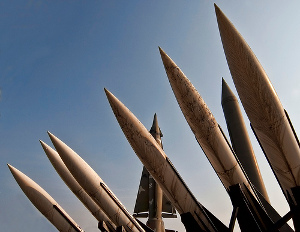
Photo provided by Flickr user Dapper Snapper.

Kathyrn Bigelow Makes Bin Laden Propaganda Film


MEDIA ROOTS –
Kathyrn Bigelow made a huge splash at the 2010 Academy Awards by usurping predicted winner Avatar with her depiction of soldiers fighting in Iraq in her movie The Hurt Locker.  The Oscar winning film was revered by conservatives and anti-war liberals alike for its ‘balanced’ and ‘realistic’ tone, but in reality the movie is a clever form of pro-military American propaganda.  It depicts an imaginary super hero-like character wearing a bomb protection suit, whose sole job is to diffuse IEDs from military zones.

Bigelow’s follow up film to The Hurt Locker is called Zero Dark Thirty, which will portray a real time account of the unfounded Seal Team 6 raid that supposedly killed Osama Bin Laden.  Considering how the film is scheduled to be released immediately following the Presidential election, the Obama campaign will likely be ecstatic with the additional marketing boost they will receive from the Hollywood hype.  While a movie about this event was probably inevitable, regardless of government involvement or sanction, one can’t help but wonder how close the relationship between the White House and Hollywood was in this particular case.

It’s been long known that movies glorifying our military receive free props and sets from said military as long as the movie’s message is pro-military.  This type of quid pro quo has been commonplace in Hollywood for years, a perfect example being Top Gun, the popular eighties movie about U.S. Navy pilots.  However, syncing up political propaganda movie releases with major political events is something relatively new.  In 2006, the respected, gritty filmmaker Paul Greengrass released United 93, which illustrated via shaky cam the events that supposedly took place on the doomed Flight 93 before its inevitable demise on 9/11.  The coincidental timing of United 93’s release coinciding with the trial of supposed twentieth hijacker Moussai cannot be denied.  During his trial, they focused heavily on the events of Flight 93, even playing unreleased audio recordings from the plane.  United 93’s marketing campaign happened simultaneously with the media hype surrounding the trial.

Even though Democrats will argue that Obama isn’t running his re-election primarily on the supposed targeted killing of Bin Laden, it has been one of the main pillars of the Obama administration.  On top of the billion dollars that Obama already has at his disposal, he will now have the full force of a Hollywood movie marketing campaign behind his election which can be argued as the most expensive campaign advertisement ever made.  The trailers for Zero Dark Thirty will most likely be running constantly on television leading up to election day.

It was previously unclear if the White House had any direct involvement in the movie, but now there is ample proof that Bigelow and crew were given exclusive access to classified details in order to make the film that no one has ever seen.  Despite Obama’s claims that little facts about the raid could be made public because of “national security” purposes, apparently it was fine to share this information with a multi million dollar Hollywood production.

Not only is it highly disturbing that the corporate controlled media regurgitated this manufactured narrative of an event no one actually witnessed, but now it’s combined with an expensive major Hollywood dramatization that will make millions of dollars.  This collaboration will cement the government narrative forever in the American psyche, causing historical revisionism to prevail over truth.

Glenn Greenwald and Abby Martin of Media Roots and RT TV explore the significance of the link between the White House and the upcoming Bin Laden movie.  Abby discusses the subject with a White House reporter and writer from Politico on RT TV; notice as the guest shuts down Abby’s rational questioning about the raid while providing no proof to the contrary, instead he repeats official government propaganda as if it were religious dogma.

Written by Robbie Martin of Media Roots

Edited by Abby Martin


***

SALON – As part of a court order in the Judicial Watch lawsuit, the Obama administration yesterday disclosed dozens of emails from the DoD and the CIA documenting that, as NBC News put it, “the Obama administration leaked classified information to filmmakers on the raid that killed Osama bin Laden.” Politico‘s Josh Gerstein added: “Just weeks after Pentagon and Central Intelligence Agency officials warned publicly of the dangers posed by leaks about the raid that killed Osama bin Laden, top officials at both agencies and at the White House granted Hollywood filmmakers unusual access to those involved in planning the raid and some of the methods they used to do it.”

The internal administration documents — which pointedly note that the film has a “release date set for 4th Qtr 2012 (Sep-Dec)” — reveal enthusiastic cooperation with the filmmakers by top-level DoD officials, including Undersecretary of Defense Michael Vickers, all done at the direction of the White House. The very first DoD email indicates the request to work with the filmmakers came from the White House. Then-CIA Director Leon Panetta is deemed “very interested in supporting” the film. The documents also reveal a meeting between the filmmakers and Obama’s chief counter-Terrorism adviser John Brennan and National Security Council Chief of Staff Denis McDonough, at which the two White House officials shared information about “command and control.” The DoD officials meeting with the filmmakers were given the White House talking points from the night of the raid, which including hailing the President’s actions as “gutsy” and stressing the heavy involvement of the White House in the raid.

Continue Reading Whitehouse Leaks for Propaganda Film.

***


Abby Martin discusses the Bin Laden leak on RT with a writer from Politico.


***

Article Photo by Flickr user Ssoosay

Front Page Photo Public Domain (by US law any photo taken by a solider while on active duty automatically becomes public domain) 

White House Withholds Evidence on bin Laden Raid


MEDIA ROOTS
— It’s been a whole year since Osama bin Laden was allegedly assassinated in a Pakistani Navy Seal raid, but that isn’t stopping water-carrying media outlets and the White House from ratcheting up fears of terrorism, painting the potential for an ‘anniversary attack.’  Not surprisingly, a federal judge recently ruled, because of ‘national security,’ the Obama Administration does not have to release photos or video of the raid.  We were told by the White House the Seals had helmet cams running in real-time during the operation.  However, they have now back peddled on that claim, stating no video exists, as the feed allegedly, and coincidentally, experienced an apparent ‘black out’ during the actual raid itself.

In a 2011 60 Minutes interview, a week after the raid, Obama said, “We have done DNA sampling and testing… we are absolutely sure it was him.”  If they’ve done DNA testing to prove it, why can’t they—at the very least—show us that evidence?  It raises many questions, among others, why they would need to do DNA testing at all, unless his body was unidentifiable to the naked eye.

The timing of Hurt Locker director Kathryn Bigelow’s upcoming bin Laden raid movie could prove to be very convenient for the Obama re-election campaign.  She was granted exclusive access to classified documents detailing the accounts of the raid, but unlike most White House propaganda ‘leaks,’ this one will be in the form of a Hollywood film.  It’s still in production, but one shoud expect the previews and TV spots for Bigelow’s movie to help remind everybody why Obama ‘keeps us safe‘ right before the November 2012 election.

Written by Robbie Martin of Media Roots

***

SALON — Earlier this week, an Obama-appointed federal judge ruled in favor of the government in a national security case (needless to say), when he denied a FOIA request to obtain all photos and videos taken during and after the raid in Pakistan that resulted in Osama bin Laden’s death. The DOJ responded to the lawsuit by arguing (needless to say) that the requested materials “are classified and are being withheld from the public to avoid inciting violence against Americans overseas and compromising secret systems and techniques used by the CIA and the military.” Among other things, disclosure of these materials would have helped resolve the seriously conflicting statements made by White House officials about what happened during the raid and what its actual goals and operating rules were.

But while the Obama administration has insisted to the court that all such materials are classified and cannot be disclosed without compromising crucial National Security secrets, the President’s aides have been continuously leaking information about the raid in order to create politically beneficial pictures of what happened. Last August, The New Yorker published what it purported to be a comprehensive account of the raid, based on mostly anonymous White House claims, that made Barack Obama look like a mix of Superman, Rambo and Clint Eastwood; The Washington Post called it “a fascinating, cinematic-like account of the operation that killed Osama bin Laden.”

Read more about Selective Bin Laden Leaking.

***

Photo by Flickr user Ssoosay