 YES!– “To search for solutions to hunger means to act within the principle that the status of acitizen surpasses that of a mere consumer.” -CITY OF BELO HORIZONTE, BRAZIL
In writing Diet for a Small Planet, I learned one simple truth: Hunger is not caused by a scarcity of food but a scarcity of democracy. But that realization was only the beginning, for then I had to ask: What does a democracy look like that enables citizens to have a real voice in securing life’s essentials? Does it exist anywhere? Is it possible or a pipe dream? With hunger on the rise here in the United States—one in 10 of us is now turning to food stamps—these questions take on new urgency.
To begin to conceive of the possibility of a culture of empowered citizens making democracy work for them, real-life stories help—not models to adopt wholesale, but examples that capture key lessons. For me, the story of Brazil’s fourth largest city, Belo Horizonte, is a rich trove of such lessons. Belo, a city of 2.5 million people, once had 11 percent of its population living in absolute poverty, and almost 20 percent of its children going hungry. Then in 1993, a newly elected administration declared food a right of citizenship. The officials said, in effect: If you are too poor to buy food in the market—you are no less a citizen. I am still accountable to you.
The new mayor, Patrus Ananias—now leader of the federal anti-hunger effort—began by creating a city agency, which included assembling a 20-member council of citizen, labor, business, and church representatives to advise in the design and implementation of a new food system. The city already involved regular citizens directly in allocating municipal resources—the “participatory budgeting” that started in the 1970s and has since spread across Brazil. During the first six years of Belo’s food-as-a-right policy, perhaps in response to the new emphasis on food security, the number of citizens engaging in the city’s participatory budgeting process doubled to more than 31,000.
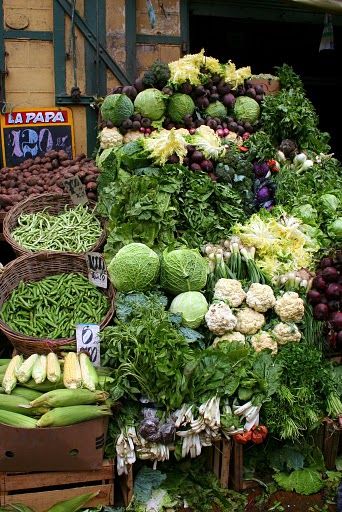
The city agency developed dozens of innovations to assure everyone the right to food, especially by weaving together the interests of farmers and consumers. It offered local family farmers dozens of choice spots of public space on which to sell to urban consumers, essentially redistributing retailer mark-ups on produce—which often reached 100 percent—to consumers and the farmers. Farmers’ profits grew, since there was no wholesaler taking a cut. And poor people got access to fresh, healthy food.
When my daughter Anna and I visited Belo Horizonte to write Hope’s Edge we approached one of these stands. A farmer in a cheerful green smock, emblazoned with “Direct from the Countryside,” grinned as she told us, “I am able to support three children from my five acres now. Since I got this contract with the city, I’ve even been able to buy a truck.”
The improved prospects of these Belo farmers were remarkable considering that, as these programs were getting underway, farmers in the country as a whole saw their incomes drop by almost half.
In addition to the farmer-run stands, the city makes good food available by offering entrepreneurs the opportunity to bid on the right to use well-trafficked plots of city land for “ABC” markets, from the Portuguese acronym for “food at low prices.” Today there are 34 such markets where the city determines a set price—about two-thirds of the market price—of about twenty healthy items, mostly from in-state farmers and chosen by store-owners. Everything else they can sell at the market price.
“For ABC sellers with the best spots, there’s another obligation attached to being able to use the city land,” a former manager within this city agency, Adriana Aranha, explained. “Every weekend they have to drive produce-laden trucks to the poor neighborhoods outside of the city center, so everyone can get good produce.”
Another product of food-as-a-right thinking is three large, airy “People’s Restaurants” (Restaurante Popular), plus a few smaller venues, that daily serve 12,000 or more people using mostly locally grown food for the equivalent of less than 50 cents a meal. When Anna and I ate in one, we saw hundreds of diners—grandparents and newborns, young couples, clusters of men, mothers with toddlers. Some were in well-worn street clothes, others in uniform, still others in business suits.
“I’ve been coming here every day for five years and have gained six kilos,” beamed one elderly, energetic man in faded khakis.
“It’s silly to pay more somewhere else for lower quality food,” an athletic-looking young man in a military police uniform told us. “I’ve been eating here every day for two years. It’s a good way to save money to buy a house so I can get married,” he said with a smile.
No one has to prove they’re poor to eat in a People’s Restaurant, although about 85 percent of the diners are. The mixed clientele erases stigma and allows “food with dignity,” say those involved.
Belo’s food security initiatives also include extensive community and school gardens as well as nutrition classes. Plus, money the federal government contributes toward school lunches, once spent on processed, corporate food, now buys whole food mostly from local growers.
“We’re fighting the concept that the state is a terrible, incompetent administrator,” Adriana explained. “We’re showing that the state doesn’t have to provide everything, it can facilitate. It can create channels for people to find solutions themselves.”
For instance, the city, in partnership with a local university, is working to “keep the market honest in part simply by providing information,” Adriana told us. They survey the price of 45 basic foods and household items at dozens of supermarkets, then post the results at bus stops, online, on television and radio, and in newspapers so people know where the cheapest prices are.
The shift in frame to food as a right also led the Belo hunger-fighters to look for novel solutions. In one successful experiment, egg shells, manioc leaves, and other material normally thrown away were ground and mixed into flour for school kids’ daily bread. This enriched food also goes to nursery school children, who receive three meals a day courtesy of the city.
The result of these and other related innovations?
In just a decade Belo Horizonte cut its infant death rate—widely used as evidence of hunger—by more than half, and today these initiatives benefit almost 40 percent of the city’s 2.5 million population. One six-month period in 1999 saw infant malnutrition in a sample group reduced by 50 percent. And between 1993 and 2002 Belo Horizonte was the only locality in which consumption of fruits and vegetables went up.
The cost of these efforts?
Around $10 million annually, or less than 2 percent of the city budget. That’s about a penny a day per Belo resident.
Behind this dramatic, life-saving change is what Adriana calls a “new social mentality”—the realization that “everyone in our city benefits if all of us have access to good food, so—like health care or education—quality food for all is a public good.”
The Belo experience shows that a right to food does not necessarily mean more public handouts (although in emergencies, of course, it does.) It can mean redefining the “free” in “free market” as the freedom of all to participate. It can mean, as in Belo, building citizen-government partnerships driven by values of inclusion and mutual respect.
And when imagining food as a right of citizenship, please note: No change in human nature is required! Through most of human evolution—except for the last few thousand of roughly 200,000 years—Homo sapiens lived in societies where pervasive sharing of food was the norm. As food sharers, “especially among unrelated individuals,” humans are unique, writes Michael Gurven, an authority on hunter-gatherer food transfers. Except in times of extreme privation, when some eat, all eat.
Before leaving Belo, Anna and I had time to reflect a bit with Adriana. We wondered whether she realized that her city may be one of the few in the world taking this approach—food as a right of membership in the human family. So I asked, “When you began, did you realize how important what you are doing was? How much difference it might make? How rare it is in the entire world?”
Listening to her long response in Portuguese without understanding, I tried to be patient. But when her eyes moistened, I nudged our interpreter. I wanted to know what had touched her emotions.
“I knew we had so much hunger in the world,” Adriana said. “But what is so upsetting, what I didn’t know when I started this, is it’s so easy. It’s so easy to end it.”
Adriana’s words have stayed with me. They will forever. They hold perhaps Belo’s greatest lesson: that it is easy to end hunger if we are willing to break free of limiting frames and to see with new eyes—if we trust our hard-wired fellow feeling and act, no longer as mere voters or protesters, for or against government, but as problem-solving partners with government accountable to us.
Frances Moore Lappé wrote this article as part of Food for Everyone, the Spring 2009 issue of YES! Magazine. Frances is the author of many books including Diet for a Small Planet and Get a Grip, co-founder of Food First and the Small Planet Institute, and a YES! contributing editor.
The author thanks Dr. M. Jahi Chappell for his contribution to the article.
(photo by alicia roldan)



 BBC NEWS– A new law has come into effect in Mexico City
giving the authorities the power to fine shops which give away free
plastic bags to their customers.
BBC NEWS– A new law has come into effect in Mexico City
giving the authorities the power to fine shops which give away free
plastic bags to their customers.  YES!
YES!