MEDIA ROOTS – With the second of three presidential debates now over, democracy continues to be victimized by the campaigns of establishment candidates referred to colloquially as “Obamney” or “Robama.” However, viewers of corporate media would not understand this for throughout the coverage, very little was reported on events occurring just outside the spectacle.
Since the historic Kennedy-Nixon debate of 1960, televised presidential debates have been a primary tool for American voters to learn about candidates for office. Over 70 million Americans tuned-in for that first televised debate as well as last night’s orchestrated charade. But while it is widely agreed that Kennedy won the debates because of his favorable on-camera presence, the winner of last night’s debates was more nebulous. For never have these televised debates featured more than the two major candidates nor have additional voices ever been needed more in a presidential election.
Yesterday Dr. Jill Stein and her running-mate, Cheri Honkala, attempted to alter the two-party paradigm by attending the debates without “credentials.” They were promptly arrested after not refusing to leave only to be later released, without charge, shortly after the debates concluded. “We think [the Commission on Presidential Debates] is entirely illegitimate,” Dr. Stein mentioned just prior to their arrest. The physician, author, teacher, and mother continued “that if democracy truly prevailed there would be no such commission, that the debates would still be run by the League of Women Voters, that the debates would be open.”
– “The candidates may not ask each other direct questions during any of the four debates.”
– “The candidates shall not address each other with proposed pledges.”
– “At no time during the October 3 First Presidential debate shall either candidate move from his designated area behind the respective podium.”
– For the October 16 town-hall-style debate, “the moderator will not ask follow-up questions or comment on either the questions asked by the audience or the answers of the candidates during the debate….”
– “The audience members shall not ask follow-up questions or otherwise participate in the extended discussion, and the audience member’s microphone shall be turned off after he or she completes asking the questions.”
– “[T]he Commission shall take appropriate steps to cut-off the microphone of any…audience member who attempts to pose any question or statement different than that previously posed to the moderator for review.”
– “No candidate may reference or cite any specific individual sitting in a debate audience (other than family members) at any time during a debate.”
– For the town-hall debate: “Each candidate may move about in a pre-designated area, as proposed by the Commission and approved by each campaign, and may not leave that area while the debate is underway.”
***
Photo provided by Flickr user Daquella manera.
Dr. Jill Stein and Cheri Honkala, surrounded by law enforcement officers,
explain to the American people yesterday how the presidential debates are illegitimate and
offers insight into what an appropriate presidential debate would look like.
MEDIA ROOTS – When visiting the Republican National Committee’s home page, one will find it stated that the RNC is “not authorized by any candidate or candidate’s committee.” However, on the party’s Facebook page, a photo of volunteers phone-banking for Mitt Romney was uploaded last week. There is absolutely no reference to the Ron Paul campaign when the party’s national convention is to be held next month in Tampa to determine the party’s official endorsement.
Last Friday, MSNBC’s Rachel Maddow discussed the myth that Mitt Romney is already the official nominee for the Republican National Committee. Maddow quoted RNC rule 40(b) which explains that “each candidate for nomination … shall demonstrate the support of a plurality of the delegates from each of five (5) or more states ….” Dr. Paul has already received the overwhelming support from Republican delegates in Iowa, Maine, Minnesota, and Louisiana going into next Saturday’s Nebraska State Convention where 23 at-large delegates will be selected to go to Tampa.
Additionally, according to RNC rule 30, the national committee does not recognize a state’s binding of delegates such as the case in Nevada and Massachusetts. Last February, the Paul campaign was able to secure 22 out of the 28 delegates in Nevada that are currently bound by the state’s committee rules to vote for Mitt Romney. In an unprecedented move in Mitt Romney’s home state of Massachusetts, the RNC state committee stripped seventeen delegates of their credentials because they refused to sign an affidavit promising they would back Mitt Romney at the RNC. The former governor has 38 bound delegates during the first round of voting in Tampa but has zero bound delegates should there be a second round of voting.
Litigation is already under way when a group unaffiliated with the Paul campaign–referred to as Lawyers for Ron Paul–filed suit against the Republican National Committee last month in California’s 9th Circuit Court after reports of electoral fraud and intimidation continue to surface around the country.
Oskar Mosco
***
Austin Petersen of Freedom Works and RT’s Abby Martin discuss the intimidation against Ron Paul delegates.
***
Lawyers for Ron Paul describe the civil rights lawsuit filed in federal court on behalf of American voters.
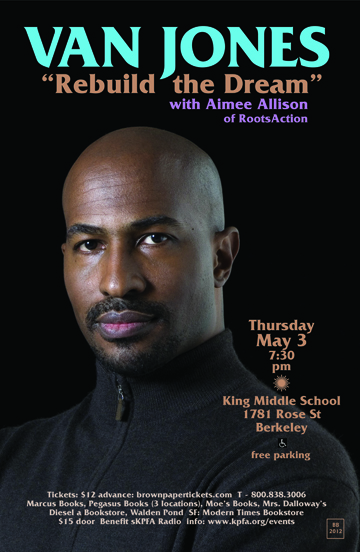
MEDIA ROOTS —The San Francisco Bay Area, particularly Berkeley, is known as one of the progressive or revolutionary regions of the USA, being the home of the 1946 Oakland General Strike, the Free Speech Movement, ‘60s counterculture, the Black Panthers, and the listener-sponsored free speech radio model popularised by Berkeley’s KPFA and its Pacifica Radio Network (later bastardised by PBS and NPR), to cite a few salient above-ground examples.
And today, arguably, one of its most famous activists, Anthony Kapel “Van” Jones, is also one of its most influential. After joining Obama’s Administration in March of 2009, ostensibly, to further Van Jones’ Green Jobs agenda (or to be co-opted), his fame has only increased. Last week, VJ returned to the Bay Area for a KPFA fundraising event for the first time since his resignation from Obama’s White House, succumbing to pressure from right-wing pundits, such as Glenn Beck, and taking one for the team, as it were.
Van Jones began his speech (at least per KPFA’s Flashpoints broadcast of excerpts) with a walk down memory lane of his activism and community organising, with thanks to KPFA each step of the way. VJ discussed criminalisation and mass incarceration of youth and his successes with the Oakland-based Ella Baker Center for Human Rights. VJ went on to describe his realisation of the importance of jobs, labour issues, and political economy. Although his work with Books Not Bars was reducing youth incarceration rates, he said, lack of jobs meant working-class youth largely ended up in the adult prison-industrial complex. This led VJ to publishing his 2008 book The Green Collar Economy on green jobs, melding the working-class need for jobs with the need for an ecologically sustainable society.
Van Jones’ KPFA benefit speech, essentially on behalf of his reputation, also spoke to his retreat from the White House, but morphed his personal explication into Obama apologism and a get-out-the-vote entreaty toward Obama’s 2012 re-election campaign. Essentially, VJ returned to Berkeley to preach to the choir, but with a shocking, maybe not so shocking, proposal:
Progressives, activists, Leftists, anarchists, and liberals, all who are aware of the litany of crimes accumulated by Obama, must vote for Obama to give him another four years to continue US/NATO imperialism and the evisceration of the Constitution.
Maybe Van Jones didn’t say that in so many words, but with his own special brand of charm and charisma, that was the essential thrust of his speech.
With the electoral vacuum among progressives, activists, and the Occupy Movement—not to mention the anarchist rejection of democratic elections and the, perhaps, illusory goal of a stateless world—in general, Van Jones is poised to be Obama and the Democrat Party’s number-one salesman to the Left. But the establishment knew that in 2009 and they know that very well in 2012.
But in understanding, Van Jones’ political outlook, we must clarify certain misperceptions. For example, there’s a widespread false narrative, which Van Jones seems content to perpetuate, which holds Van Jones was “cast out of the Obama Administration,” as the Flashpoints broadcast introduction suggested. But let’s be clear. Van Jones wasn’t “cast out.” He wasn’t fired. Van Jones quit. He quit on his past principles and he quit on those who believed in him and supported him. VJ refused to stick it out as Green Jobs tsar under Obama because, as he put it on KPFA radio last year, he didn’t want to be a distraction away from Obama. So, essentially, he bailed and, in doing so, protected Obama’s image (reminiscent of Elizabeth Warren’s saga), rather than exposing the progressive fraud the Obama Administration was and continues to be in 2012. This fraud should be self-evident, particularly to KPFA/Pacifica radio listeners hearing Obama’s crimes day in and day out. But seeing how the nation’s, perhaps, most radical radio network broadcast, arguably, one of the most famous and influential activists campaigning for Obama, VJ’s recent Berkeley speech deserves reflection. And not necessarily because it was simply broadcast, which I am grateful for—because otherwise those of us unable to attend wouldn’t have the opportunity to listen to it, learn from it, and/or critique it—but because of the seemingly sycophantic and uncritical adulation and adoration the Berkeley audience, ostensibly among the most radical, showered the man with.
Van Jones began by praising KPFA and his Berkeley audience:
“It feels good to be home! Especially, after spending a couple of years in Washington, D.C. where they think that Barack Obama is a socialist.
“Come with me to da Bay! Where you will quickly discover Barack Obama is a Republican—out here in the Bay! The Bay don’t play!”
Van Jones is a very clever Ivy League player. And it’s unlikely he works without a sophisticated team of speechwriters and PR managers, not with so much political capital riding on his ability to deliver otherwise disaffected progressives back into the loving arms of Obama’s 2012 re-election campaign. And, yet, Obama is the humanising face of the empire, the Commander-in-chief, the leader of the Democrat Party, the fount of virtually all of the ills progressives across the country have been protesting since he took office.
At the same time Van Jones pandered at every turn to the most superficial aspects of Berkeley, the SF Bay Area, activism, and progressivism, he trivialised and ridiculed progressives and radicals and the inevitably inherent complexity and ideological dialectics therein:
“First of all, as you know, I was able to distinguish myself as a radical activist in the Bay Area. [Audience Laughs; Scattered Applause] You gotta work hard! You gotta get up early! Work late, weekends, to be walkin’ down the street in Berkeley! And people say: That guy is radical!”
Van Jones ridiculed coalition meetings and the activist culture. He ridiculed the inability of some to be concise enough to speak for less than “30 minutes,” rather than applauding their passion and concern for socioeconomic justice. (And, of course, VJ himself is always afforded VIP status and allowed to speak as long as he wants because he’s a celebrity. It doesn’t matter he’s campaigning for Obama and by extension the continuation of the war machine, the surveillance state, repression of dissent, and on and on.)
“Now, I know we all fuss and fight and have twelve different factions about the KPFA [Audience Laughs]. And it’s the Bay Area, I understand it. But there’s a reason we’re so passionate about the station. And there’s a reason that the people in Pacifica need to listen to the voice of the people here. And take your hands off this station. And let the voice of the people be heard! We can solve these problems here locally.”
Now, this was perhaps one of the most disgusting moments of many throughout his speech. This was a nod to the pro-Democrat Party faction within KPFA, which he apparently now supports. For those who don’t know about the internal politics of KPFA’s and Pacifica’s governance, it can basically be understood as an ideological struggle between pro-Democrat Party forces and pro-grassroots activism forces. But what Van Jones didn’t say was that the people’s voice is heard and is reflected through democratic board elections, which have elected the Local Station Boards of KPFA and the other four sister stations across the country, which comprise the Pacifica National Board, which owns the Pacifica network. This democratic governance of KPFA and Pacifica was hard-won after many mass demonstrations and litigation by KPFA listeners, but then VJ, a Democrat, knows this—he was there in ’99, I was there in ’99, tens of thousands were there in ’99—which makes his comment all the more bewildering or infuriating, depending on one’s predisposition, whether it was an anti-democratic statement or an uninformed one.
Van Jones claimed he went to “D.C. and tried to represent some of the best of the Bay.” Yet, by then he had publicly distanced himself as far as possible from the 9/11 Truth Movement, from police state repression activism, and his radical origins. He couldn’t even bring himself to say 9/11: “You couldn’t talk about peace in 2003. You remember goin’ home for Thanksgivin’ after—[pause/gulp]—2001, 2002.” Even fighting for his Green Jobs agenda wasn’t worth the trouble because all his critics had to do was call him names for him to fold.
Upon further reflection, even Van Jones’ entire Green Jobs agenda starts to look thin when we consider the Keynesian federal direct hiring programs of FDR’s New Deal, something, neither Obama, or Van Jones will mention.
Van Jones argued toward directing the unemployed toward a perceived private sector demand for solar panels. Yet, by late 2007/early 2008, the economy was buckling. At that point, with the economy tanking, homeowners just wanted to keep their mortgages above water and renters wanted to stay in their rentals. While green jobs are all very well, we didn’t need to focus on solar panels or any high-tech industry; simply hiring the unemployed to work on the nation’s crumbling infrastructure would have sufficed. But it’s not a lack of ideas, which prevents full employment; it’s the lack of political will within the de facto two-party system.
Consider Obama’s JOBS Act, for example, which he signed into law last month. It is not the progressive legislation Democrats (or Republicans, for that matter) would have the citizenry believe with its erosions of important financial regulations resulting from the international race to the bottom dynamic where US financial regulators lower their standards to compete with foreign capital markets. Here’s how expert white-collar criminologist William K. Black describes Obama’s bill:
“The JOBS Act is something only a financial scavenger could love. It will create a fraud-friendly and fraud-enhancing environment. It will add to the unprecedented level of financial fraud by our most elite CEOs that has devastated the U.S. and European economies and cost over 20 million people their jobs. Financial fraud is a prime jobs killer. […]
“This bill will kill millions of jobs because financial frauds are weapons of mass financial destruction. It will start an international fraud-friendly deregulation race to the bottom and will become the basis for further criminogenic U.S. Congressional actions.”
Yet, Van Jones won’t mention that, either, instead dedicating his energies to selling the ostensible virtues of re-electing Obama and the Democrat Party in 2012.
Van Jones explained his retreat from the White House and said it was scary going in because he had earned the reputation of a radical. Last year, he finessed Obama’s refusal to act on his campaign promises by blaming the victim, by blaming progressives and activists because they hadn’t marched on Washington, D.C. enough, as if people elect representatives only to then have to twist their arms to fulfil their campaign promises. And, of course, VJ dares not mention the Occupy Movement, nor Obama’s federalised repression of the OM (at least not in the cut broadcast here).
Instead of admitting Obama has been a total disaster, Van Jones says he was disappointed in the movement; he blames the dissident:
“But I also saw something, that was very disappointing. It wasn’t in the building. It was on the outside. The movement stopped moving.”
Well, clearly, his disappointment pales by comparison to the disappointment Americans feel with Obama’s disgraceful policies, such as the refusal to prosecute any financial élites for fraud, the two-tiered justice system, granting Wall Street immunity, at the same time he’s positioning himself, as the champion of the 99%, and on and on.
For anybody who ever felt indignation about the crumbling economy and infrastructure or US/NATO imperialism, Van Jones offered subtle disparagement—and most cleverly when self-directed against his own idealism bound for Obama’s White House:
“So, I knew that I had been on the Left side of Pluto for most of my life and that that dudn’t really play well in Washington.”
Van Jones recalled further back, contrasting his early radical experiences in the Bay Area: “And I remember what it was like to come to fly in SFO the first time, fifteen years earlier, just a, you know, angry kid with a Yale law degree.”
Against his newfound White House wisdom: “I got [to the White House] and, you know, very smart people, very good people. But, you know, there’s something, that we have when you’re front lines fightin’, the kind of stuff you guys do, the kind of stuff we do. You know when you’re this close to the problem, when you’ve gone to as many funerals of young people, as some of us have gone […] you have a seriousness, that sometimes the people who just have to climb that slippery pole in Washington, D.C. they develop other skills. And I say that with all respect.”
VJ was suggesting: The citizenry, particularly Bay Area progressives, simply do not understand what it’s like to be in the White House and, therefore, shouldn’t criticise him or Obama.
But for all of his apologetics of White House and D.C. culture, Van Jones offered little meaningful justification for the policies, which flow from it, against the working-class and toward US/NATO imperialism. Van Jones, essentially, aimed at discrediting activists on the streets of being qualified political agents, as traumatised, unclear, not objective, incapable of assessing one’s own socioeconomic issues they confront, which “smart,” “good” people in Obama’s Administration can.
One has to listen close, but a dismissive voice of judgment and recrimination is there. Apparently, that accounts for all complaints against Obama’s first term in the White House.
Again, the subtext is you provincial radicals are just angry and insular and you don’t know what it’s like, so shut up and don’t criticise me for campaigning for Obama, however deceptively. Don’t criticise me for not even entertaining any alternatives to corporate-funded campaigns and a de facto two-party dictatorship.
Van Jones suggests the angry people who are too close to the problem are somehow too traumatised by it, too serious to have a sense of humour to be effective, as he romanticises his ascension to the White House.
They develop other skills, he says, of the same White House staffers he later contradicts himself with by describing as being trained to “look up” as career politicians in his attempts to apologise for the failures of Obama’s Administration.
At the same time, Van Jones tried to simplify and reduce the complexity of ideological dialectics on the Left and among radicals and progressives, he tried to sell us the notion of complexity within the White House. This was the most shameless Obama apologism we may have ever heard. Speaking to the Berkeley audience, VJ attempted to garner sympathy for Obama’s atrocious and disastrous, if not outright sinister, policy decisions by counting the numbers of civilian and military employees against the number of White House staffers, as if the ratio is even relevant. Granted there may be various factions within the Democrat Party, but D.C., seriously, can be boiled down to two factions at the end of the day—Democrats and Republicans. And even those two factions become one blur when we consider they both take money from the same corporations. They are both beholden to the same corporate, financial, and capital interests. And neither of them cares about democracy or free and fair elections.
“A democratic republic needs the competition of ideas, which demand free and fair elections. Rule by secrecy and patronage breeds incompetency, waste, and tyranny.” —US Day of Rage
Well, it’s no grand achievement to ascend to the White House. The grand achievements are the results accomplished once in the White House. And if the culture is such corporate lobbying drowns out any principled politics then one must stick it out and fight and blow the whistle and expose the corruptions.
But Van Jones bailed, plain and simple. Last year, in accounting for what exactly happened when his idealism went to D.C. He talked about green technology being implemented to some extent, but that it needed to be scaled up and so forth, that it doesn’t happen overnight. But how is that different from the age-old ameliorative approach the Democrat Party has always engaged in?
After reading years of headlines of Obama’s betrayal of those who voted for him (which I did not; I’ve voted third-party since 1996), how can we reconcile that with Van Jones’ more recent Obama electioneering? What type of reform-the-Democrat-Party-from-within radical strategy can justify supporting the ethical bankruptcy of the bought and sold Democrat Party, at the expense of the competition of ideas, of a multi-party system, of free and fair elections?
Here is a fraction of Obama’s accomplishments, courtesy of St. Pete for Peace:
“Signed the NDAA into law — assassinating US citizens w/o trial now legal Waged war on Libya without congressional approval Started a covert, drone war in Yemen Escalated the proxy war in Somalia Escalated the CIA drone war in Pakistan Will maintain a presence in Iraq even after “ending” war Secretly deployed US special forces to 75 countries Sharply escalated the war in Afghanistan Sold $30 billion of weapons to the dictatorship in Saudi Arabia Signed an agreement for 7 military bases in Colombia Touted nuclear power, even after the disaster in Japan Opened up deepwater oil drilling, even after the BP disaster Did a TV commercial promoting “clean coal” Defended body scans and pat-downs at airports Signed the Patriot Act extension into law Continued Bush’s rendition program”
In discussing the two-tiered justice system justice system in the USA, which enables much of the ills Van Jones describes, Glenn Greenwald has offered this summation:
“The thing is, if you look at what has happened in the last decade in the United States,” explains Greenwald, “think about the kind of crimes that we have seen by the most powerful people.
“So, we’ve seen the construction of a worldwide torture regime, spying on American people without the warrants required by the criminal law, an aggressive attack on another country that killed at least a hundred thousand innocent people, multiple acts of obstruction of justice, systematic fraud on an enormous scale, that triggered a worldwide economic crisis, that destroyed the economic comfort and middle-class security of tens of millions of people, mortgage fraud where homes were taken without legal entitlements. And every single one of these crimes has been completely protected. None have been investigated meaningfully, let alone prosecuted.
“Then at the very same time that we’ve created this template of elite immunity we have created the world’s largest penal state, prison state, in the entire world.
“So, people are extremely well aware of this vastly disparate treatment, that people who are powerful and in positions of privilege and prestige receive versus how ordinary Americans receive treatment before the bar of justice. And we’re inculcated the idea we’re all supposed to be equal before the law.”
Despite all of this, Van Jones continues campaigning for Obama with the same tired Obama apologism, blame-the-victim trope, he’s been selling since at least 2011. At this point, post Occupy Movement, this argument is utterly absurd and only buoyant due to people’s uncritical adulation.
Prior to Obama, Van Jones had an incredible record of social justice. We don’t take issue with his excellent work pre-Obama. But that was then, this is now. People change. And it is precisely because of VJ’s sparkling reputation and the belief his fans instil in him, which makes him all the more deserving of critique and questioning when he’s calling for progressives to re-elect Obama, who has only worsened every single issue, for which he once stood against.
How can we reconcile all of this with Van Jones’ call for progressives to give Obama, a war criminal worse than Bush, another four years?
Written by Felipe Messina for Media Roots [Updated 13 May 2012 08:55 PDT]
***
FLASHPOINTS — Today, on Flashpoints, Bay Area green activist and Obama outcast—or shall we say he was cast out by the Obama Administration? Maybe a little too radical?—Van Jones, here, in a recent benefit for free speech KPFA. We’re gonna play that speech and do a little introduction. Stay tuned.
Dennis Bernstein (c. 0:38): “And we’re back. You are listening to Flashpoints on Pacifica Radio. I know that many of you know who Van Jones is, somebody who was, among other things, a Yale Law School graduate, the founder of the Ella Baker Center for Human Rights, Color of Change, and Green for All. He was hired by the Obama Administration and then quickly gotten rid of.
(c. 1:08) “Many of you might not remember that Van Jones played a key role when I had to, shall we say, sit down to stand up for free speech radio and prevent the corporate takeover of Pacifica. Van Jones was the first one who showed up in the on-air studio making sure that I knew that the battle to save KPFA was on the front line. And one of the most important media battles of our time for progressive institutions and I worked very closely with Van and others to save this radio network.
“I’m gonna tell you a little bit more about what it was like when I was sitting there being threatened by a bunch of thugs hired by Pacifica [under Democrat Mary Frances Berry and then-Executive Director Lynn Chadwick] to have Van Jones show up.
“But we want to play for you now some excerpts from a speech he gave for a benefit for KPFA. Listen to this.”
Van Jones (c. 2:06): “It feels good to be home! [Audience Cheers; Applauds] Especially, after spending a couple of years in Washington, D.C. [Audience Laughs] where they think that Barack Obama is a socialist. [Van Jones Chuckles: Audience Whoops]
Audience Member: “[Unintelligible; Possibly: Those are fighting words.]”
Van Jones: “No, no, no. [Audience Laughs] Come with me to da Bay! [Van Jones Laughs; Audience Whoops; Applauds] Where you will quickly discover Barack Obama is a Republican [Audience Applauds]—out here in the Bay! [Audience Applauds] The Bay don’t play!
“So, thank you KPFA. [Audience Applauds] Thank you KPFA. [Audience Applauds]
“I wanna talk to you about my book ‘cos, you know, it’s genius. [Audience Applauds] It’s amazing! [Audience Whoops] But before we even do that I wanna take some time ‘cos I’ve been gone for a while. And I wanna thank KPFA. We’re here for them. And many of you, and we have grown up together. Many of us in this room, I see a lot of friends. It was KPFA in 1995 when [San Francisco’s] Marc Andaya, a notorious brutal police officer gunned, he didn’t gun down, he beat, stomped, and pepper-sprayed to death Aaron Williams in 1995. Marc Andaya had already shot to death an unarmed Black man. And he had 32 allegations of police brutality against him, five lawsuits, one of the worst police officers on the force, still there, still there in 1995. And the only media outlet, that would take him on was KPFA. [Audience Applauds]
“And at that time I was just a recent law school graduate. I had little baby dreadlocks. You remember. I had a green turtle-neck and a green blazer. [Audience Laughs] And that was a hundred percent of my wardrobe. [Audience Laughs] And they let me get on the air with Aaron’s family in 1995. And we built up one of the biggest police brutality campaigns in the history of the country. Not only did we get rid of Marc Andaya, we got rid of the entire San Francisco Police Commission, that was protecting brutal officers, like Marc Andaya. Thank you, KPFA. [Audience Applauds] All the way back to ’95, ’96, ’97. [Audience Applauds]
“I remember in 2000, coming out of that campaign, we had built up the Ella Baker Center for Human Rights, really, based on that campaign, that KPFA helped us to spearhead. Again, I was just right out of law school. And they invested in me. They gave me that opportunity. They gave me that microphone. And we built up the Ella Baker Center.
“And then it turned out that in Alameda County, they were going to build a super jailfor children in Oakland. And it was going to, not only be a super jail, it was going to be on the other side of the county from Oakland. And the jail, that they were proposing to build was going to be bigger than the juvenile hall in Cook County, Chicago, which is, I think, five or six times bigger. But the jail was gonna be even bigger than that. They were just gonna suction Black, Brown, and poor kids out of Oakland and stick them in that monument to racism and brutality. And nobody would do anything about it. And it was KPFA, that let us get on the air. And we started a campaign called Books Not Bars, that not only stopped—[Scattered Cheers; Applause]—yeah, ya’ll can clap for Books Not Bars. [Audience Applauds] I just want you to remember what this community has done. I’m just one activist. You can have any activist in the Bay Area. I just wanna tell y’all my story and my testimony and my thanks to KPFA because it was KPFA, that continued to let us get back on the air and back on the air and talk about it. And not only did we stop the super jail, but Books Not Bars, as a part of the Ella Baker Center, has gone on in alliance with other groups to close four youth centers in this state, to cut the youth prison population in California’s prisons by 30%. Thank you, KPFA. [Audience Applauds] Thank you, KPFA for being there for people.
“I remember in 2005 when an American city drowned and the president was missing in action. I remember Katrina. I remember African-American grandmamas on rooftops. I remember them flooding into that stadium and being in the richest country in the history of the world, that was moving troops and personnel all around the world, but couldn’t put a drop of water on the tongue of an infant right down there in New Orleans. I remember the heartbreak. And I remember there was one station, that continued to lift up the voices of the people who were suffering and insist on justice, and who helped us launch a little thing called ColorOfChange.org. [Scattered Cheers; Applause] And when we launched that organisation, me and James Rucker—James Rucker, an African-American brutha had just left MoveOn.org—we had about 3,000 emails between us. But we used that to try to get help for people. And we got on KPFA.
“That little ColorOfChange.org organisation now has almost one million members. It’s the biggest online African-American advocacy organisation in the world. Thank you, KPFA. [Audience Applauds] Thank you, KPFA for being there for people.
“And, by the way, there was this guy on this TV station; the station is named after a sneaky, furry mammal. [Audience Laughs] I don’t wanna give him no free publicity. [Audience Laughs] But it’s a sneaky, furry mammal. Tell ya neighbourhood, if they ain’t figured it out. [Audience Laughs] Now, wouldn’t that be a subtle clue to you!? [Audience Laughs] All yo’ news! Comes from a news outlet named after a sneaky, predatory, nasty little animal. [VJ Snickers; Audience Laughs] Wouldn’t that be a subtle hint!? It’s like: It couldn’t possibly be false. Anyway.
“So, there was this guy who was on this station. And he was spreading lies about certain people. Color of Change found out about it. He ain’t on that station no mo’! [Audience Applauds] He ain’t on that station no mo’! I don’t wanna mention Glenn Beck’s name; it might give him some publicity. But you can probably figure out who I’m talkin’ ‘bout.
“And, also, that same organisation, ColorOfChange.org, found out that there was a group called ALEC. [Audience Groans] Oh, don’t throw nothin’ up here! I’m just the messenger. [Audience Laughs] Ya’ll were beautiful until just now! [VJ Chuckles] I said ALEC; it’s like everybody—[VJ Strains; Audience Laughs]—everybody got constipated—[VJ Strains; Audience Laughs]. But it’s a terrible group, innit?
Audience: “Yeah!”
Van Jones (c. 10:18): “This group, in case you missed an episode, or don’t listen to KPFA. This is a terrible group. And this is this pay to play, corporate cash-for-access, organisation. And they let these corporate lobbyists meet behind closed doors with these state legislators and they just write despicable laws. And the corporations write these evil laws. And then the legislators take ‘em and pass ‘em. And it’s just a pay to play thing, make Tom DeLay look like a girl scout. [Scattered Laughter]
“And it would be bad enough, if it was just the usual despicable laws, that these people do, you know—hurt the workers, don’t pay no taxes, and rip off the country. That would be bad enough. [Scattered Laughter] But, you know, if you just let somethin’ in your refrigerator just sit in there [Scattered Laughter] for a long time. [Scattered Laughter] At first, it’d just smell kinda bad. Then it’d start to smell real bad. And then it just starts to stank! [Scattered Laughter] ALEC just started stankin’! [Scattered Laughter] They started comin’ up with crazy laws, that had nothin’ to do with any, uh, you remember that thing in Arizona? Anti-immigrant law? ALEC. You heard about all these voter disenfranchisement laws? ALEC. Trayvon Martin? That so-called stand-your-ground, kill at will, law? ALEC.
“So, Color of Change, a little local group, that got it’s first big boost from KPFA—nobody else would give us any attention, now with almost a million members—said enough is enough. And they exposed ‘em and went after ‘em and all these big corporations that were behind the scenes. Once you open up that refrigerator door [Scattered Laughter], they went—Pepsi and Coke—and they went scamperin’. And I forget how much money that they lost. ALEC is now promising that they’re not gonna put out any more of these nasty laws. Of course, they’re lyin’. But they’re forced to lie because of Color of Change. Thank you, KPFA! [Audience Applause] We have some power is what I’m sayin’.
“We have some power. And the last thing I just wanna say is I remember back at the Ella Baker Center when I was there and Alli Starr [sp?] was there and a number of people who are here. And we started thinkin’ about what we were gonna do with these young folks who were comin’ home from prison, comin’ home from jail. See, the worst thing in the world isn’t to lose the campaign. It’s to win a campaign and realise that your victory doesn’t get you what you wanted. See? We started winnin’ these campaigns. We stopped the super jail. We started closing some of these youth prisons. And we saw the young people come home for about six weeks. Turn right back around, headin’ off to the adult system. Why? No jobs. No jobs.
“We started sayin’, yo, what can we do? And, luckily, California had passed some laws to make the solar industry take off. And we noticed that folks were wanting those solar panels on their houses in California. And, so, there was consumer demand and the policies were there and entrepreneurs were there and the technology was there. And there were no solar panels goin’ up because solar panels don’t put themselves up. Nobody had thought to train the workers. And, so, people would be orderin’ solar panels and it’d be three months, six months. And we said: Well, hold on a second. You got all this work, that needs to be done, solar industry. We got some young people in Oakland and other places who need some work. Can we take these people, who most need work and connect them to the work, that most needs to be done? Repowering America with clean energy and fight pollution and poverty at the same time, you see? [Scattered Applause]
“And we came on KPFA and we started talkin’ about green jobs—Green Jobs, Not Jails. I worked with Alli Starr [sp?]. We did this UN World Environment Day in 2005. KPFA broadcast almost everything, that we did and got this tremendous momentum behind us. In 2007, the Oakland City Council passed something called the Green Jobs Corp. A guy named Ian Kim worked on that. And it wound up, finally, connectin’ the dots. We haven’t done all, that we wanted to do. But the green jobs movement and its impact on the environmental movement and on racial justice started on the airwaves with KPFA. So, thank you, KPFA. [Audience Applause] I could go on and on, but thank you, KPFA, for being there for people.
“You know, if we didn’t have this station—think about it now. Now, I know we all fuss and fight and have twelve different factions about the KPFA [Audience Laughs] And it’s the Bay Area, I understand it. But there’s a reason we’re so passionate about the station. And there’s a reason that the people in Pacifica need to listen to the voice of the people here. And take your hands off this station. And let the voice of the people be heard! We can solve these problems here locally.
“But it’s because the station’s been here for people. And it’s been here for me. And the last time I got a chance to stand in front of you guys, we had just put out a book called The Green Collar Economy. Now, y’all remember that book. They didn’t want to publish that book. I had written this book—I’ve told this story before; I’m gon’ tell it again ‘cos it pisses me off [VJ Chuckles; Audience Laughs] We had written this book, The Green Collar Economy about green jobs, and race and all this different stuff, and nobody wanted to publish it. I went to every publishing house on the East Coast. And they all met with me. I mean they were happy to meet with me. You ever have those meetings?
“[VJ Caricatures Insincere Publishers] ‘This is just great! I’m so, just, this is just great to talk to you.’ [Audience Laughs] You just keep this up. [Audience Guffaws; Scattered Applause] [Van Jones Adopts Nasal Tone Suggesting a Square Euroamerican Accent] And you’re so articulate.’ [Audience Cacchinates/Whoops; Applauds]
“That’s when you know you’re in trouble. This is going down, down, down. So, and then, of course, afterwards, rejection! Rejection! Rejection! Rejection! So, I said look, you know, I talked to my book agent. And I said:
“‘Look, I’m a big kid. I grew up in the South. I can take it. Can you please find out what’s going on with these publishers? They meet with us. They talk to us. They’re all happy when I’m there. And then they reject us.’
“And, so, she went. She made some phone calls. And she came back. She said: Let’s just move on. I said: No, I want to know! [VJ Pounds Dais; Audience Laughs] I wanna know! And she says: You don’t. I say: I do want to know! [Audience Laughs] This is what they’re saying about your book, Van. Black people do not read green books. [Audience Laughs Momentarily Before Catching Themselves In Apparent Regret] And White people do not read Black books. [Audience Laughs] Therefore, nobody is gon’ read yo’ book. [VJ Laughs; Audience Laughs, Applauds] I said: Oh, it stings! It stings!
(c. 17:58) “Luckily, there was a young person who was working at HarperOne. And HarperOne is the West Coast little branch of HarperCollins and that person had heard me give a talk. And that young person stuck up for me and that West Coast branch decided to publish the book, I’m happy to report. The first place I came to debut the book was a KPFA fundraiser four years ago. That book debuted number twelve on the New York Times and has been translated into six Asian languages and is a part of the curriculum in 100 universities. [Applause] Take that East Coast! [Audience Cheers]
“So, I say that because we’ve been together for a long time. And this feels like home. KPFA feels like home to me. I’m just so glad to be here. I’m tryin’ not to get emotional ‘cos people make fun of me gettin’ up here cryin’ and gettin’ snot on the microphone. I’m tryin’. [Audience Laughs] Not to gross anybody out. But it just means a lot to me to be here. And to have gone to D.C. and tried to represent some of the best of the Bay. That wuddn’t easy.
“On a Friday, I was with Angela. Where’s Angela? Hey, Angela. Hey, give Angela Sevin [sp? Davis?], a round of applause, one of our great freedom fighters. Stand up! [Audience Applauds; Cheers] One of our great freedom fighters. ! [Audience Applauds; Cheers] Thank you, sistuh. There’s so much good work now, but if I start callin’ out names somebody gon’ get mad at me. I ain’t gon’ call all y’all. [Audience Laughs] But Angela and I were down in San Quentin on a Friday and I knew I was goin’ to the White House. Nobody knew. But I was goin’ on that Monday. And I just needed to be with my bruthas. It was scary to me to even think about goin’. First of all, as you know, I was able to distinguish myself as a radical activist in the Bay Area. [Audience Laughs; Scattered Applause] You gotta work hard! You gotta get up early! Work late, weekends to be walkin’ down the street in Berkeley! And people say: That guy is radical. [Audience Laughs; Applauds] That guy is on the Left.
“So, I knew that I had been on the Left side of Pluto for most of my life and that that dudn’t really play well in Washington. But that wasn’t my main fear. I’d ne’er been there. You know? When you’re here, you know who your friends are. You know who your frenemies are. [Audience Snickers] You know who’s gonna talk for thirty minutes at the coalition meeting. [Audience Laughs] You know wha’ I mean? They raise their hand; then you’re like: Oh, good, bathroom break! [Audience Guffaws] I get, I’ll be right back! [Audience Laughs] ‘Cos you gon’ talk for a while! [Audience Laughs] You know! Right? I didn’t know. And I wanted to just, kind of, get grounded with my brothers.
“So, we went to San Quentin and had a big prayer meetin’. And all the bruthas hugged me. And they said: Don’t forget about us up there. Don’t forget about us up there. Tell Obama hello. That Sunday night, I got in the car. A friend of mine picked me up—Mary Anne Mendelhoff [sp?]—and she drove me to SFO. And it was a red-eye flight. And I get out and she drives off. I’m standin’ there. And I remember what it was like to come to fly in SFO the first time, fifteen years earlier, just a, you know, angry kid with a Yale law degree. They should not give angry Black kids Yale law degrees. I’m gon’ tell you right now. That would be my number one advice to the ruling-class: Do not give Ivy League law degrees to angry Black kids. And here it is, fifteen years later and I’m goin’ to the White House. And I remember when the plane took off. I said: I don’t know what’s gonna happen to me. You know you go from the jailhouse to the White House in 72 hours; that’s a lot! [Scattered Laughter]
“And I got there and, you know, very smart people, very good people. But, you know, there’s something, that we have when you’re front lines fightin’, the kind of stuff you guys do, the kind of stuff we do. You know when you’re this close to the problem, when you’ve gone to as many funerals of young people, as some of us have gone—I mean I think I still have gone to more funerals for young people than graduations—haven’t been here in the Bay, you have a seriousness, that sometimes the people who just have to climb that slippery pole in Washington, D.C. they develop other skills. And I say that with all respect.
“But I didn’t call them. They called me to come. They said they needed somebody to advise them on this stuff. And I was the top person in the country. And Time magazine had just said all this nice stuff about me and the whole deal. And I’d written a book and all that. But I’d never been there. Okay, that’s not true. [Scattered Laughter] I was there in—what was it, 2000, Alli? With the WTO? No, no with the World Bank?—okay, so, I was there with the World Bank protest. I got peppers-prayed. But, other than that [Scattered Laughter]. […]
“What I think what I learned when I was there was the lot of the lessons that you learned in the work, that we do is almost invaluable in that scenario. First of all, you know, the federal government is a lot of people. I mean it seems obvious, but once you get there, it’s like 1.6 million civilian employees, 1.4 million military. So, the president has three million people, that work for him. But in that building and on that campus, there’s only about 1,600 people. And, so, I mean that’s like cooks and interns and security guards. It’s not that many people on the White House grounds, in the White House complex. And you gotta deal with three million people under you, 300 million people in the country, and almost 7 billion people, all who want your boss’s attention. That is a trip.
“I mean it becomes white noise. Every single living human breathing has some opinion about your boss. And they all want your boss to pay attention to them. And, in fact, for about the first two years of the Obama Administration, about half of the Left had one critique of Obama: If only he would read my blog [Intoning Richard Nixon-like Growl]. [Audience Laughs] What’s wrong with this guy? If only he would read my blog. Gee, if it were that easy, folks, it would be a different game. It’s tough.
“So, I wind up in this situation where I’m there, biggest economic catastrophe since the Great Depression, two wars, ecological crisis, and 1,600 people. And, say what you want about this president, I mean, don’t forget the one before him, I mean this guy volunteers to be the captain of the Titanic after it’d hit the iceberg. [Audience Laughs] And you know who drove it into the iceberg.
“So, [Scattered Applause] […]
“And most people there though—and here’s the one advantage, that people like us have—most people there have trained themselves, the whole time we were in Washington, D.C., to look up. They’re trying to get that next job, right. The Chief of Staff is right ahead of them. They want her job, right? So, they’re only workin’ halfway to do what she’s sayin’. Then half the time, they’re trying to figure out how to get rid of that one, so they can get to the next level. And, so, this whole, everybody’s lookin’ up, tryin’ to climb that ladder. Well, I’m not a politician. I had not intention of going to Washington, D.C. They asked me to go give advice. I looked down from the White House. I looked down. And what I saw was a whole lot of people who were just like us. Good people, hard-working people, honest people, people who believe in government, people who believe in the Constitution, who for eight years had had some other person—[Audience Laughs]—above them. And who didn’t know if it was safe to go ahead and do right. And you know what’s required when you have a whole bunch of people in any situation who need to be doin’ what’s right. What’s needed is a community organiser. [Audience Laughs] It turns out I know how to do that.
“And, so, I started goin’ around to departments and agencies. And talkin’ to people and findin’ good folks. And makin’ sure folks knew we were serious about tryin’ to move some of these things forward. And if you just look at what happens in the news, you miss most of what’s goin’ on. Way more good stuff was able to get done.
“But I also saw something, that was very disappointing. It wasn’t in the building. It was on the outside. The movement stopped moving. The movement, that got us there, stopped moving. And it was the most bizarre feeling in the world to have been a part of our movement, having grown up in our movement, literally, having grown up in our movement, having been there in Seattle, having been there with Rodney King, how all of the different struggles, and remembering that the movement for hope and change didn’t start with Obama. Gimme a break! Obama didn’t invent no movement for hope and change. It started with you. It started with us.
“The movement for hope and change started in 2003. George W. Bush decided he was gonna start that illegitimate, illegal war on the people of Iraq, and you stood up and said no. That’s when the movement started. It was with ordinary people came out of our houses. We didn’t have any one leader. We didn’t have any one superhero. We didn’t have any one messiah. We had each other and a little piece of technology called email. [Sparse Laughter] We thought we were slick. Remember that? [Scattered Laughter] Move On! [Intoning Sarcastic Voice] We’ve got email now. [Audience Chuckles] I’m going to forward this to my friends. [Audience Laughs] Bush is in trouble. [Audience Laughs] Remember that?! And that was a big deal! And there was no one leader. Code Pink—remember that?!—came out, all the women’s voices came out. [Scattered Applause] United for Peace and Justice, Kevin Danaher, Medea Benjamin, Global Exchange, all these different groups, not one group, not one leader. And we had millions of people in the streets. The New York Times called us the second super power—world public opinion—the only thing, that could stand up to George Bush. And we were doing it here and around the world. That’s the movement, that got started. We got beat. We poured it right over into the John Kerry campaign. People can’t remember John Kerry’s name. Why? Because it wuddn’t about him. It wasn’t about one leader. It wasn’t about one person running for office. It was about us. And we came within a hundred thousand votes in Ohio of gettin’ rid of George W. Bush then. Don’t forget that. That wasn’t the Democrat Party; that was us, our movement. The movement was much bigger than the Kerry Campaign in 2004. And if we’d got a hundred thousand more votes in Ohio, Bush would’ve got kicked out then by you. And the people that you were inspiring in 2004. Karl Rove jumped out in 2004 and said: The Republican Party is gonna run America for the next 20 years, the next 30 years. We’re the permanent majority. Oh, really? Interesting.
“Katrina happens 2005. We had one party authoritarian rule in this country—for six years—bankrupted the richest country in the world, started an illegitimate war in Iraq, wiped out civil liberties and human rights, did every despicable thing you could imagine in a six-year period. There was no one superhero, that came and broke that momentum. You did that. We did that. We the people, ordinary folk, regular folk created this incredible movement. And it was in that environment, while you were mainstreamin’ peace. You couldn’t talk about peace in 2003. You remember goin’ home for Thanksgivin’ after 2001, 2002. You talk about peace, you couldn’t even, the whole, everybody look at you [Grunts]. [Scant Laughter]
“You mainstreamed the movement for peace when it was hard. You mainstreamed the movement for green solutions for climate when it was hard. You mainstreamed the opposition to these secret prisons in Guantánamo when it was hard. You didn’t have one leader do that for you. You did it for the country, for humanity, for the Earth. And it was because of your work and your genius and your courage that a young senator realised that there was an opportunity to do something. He left Washington, D.C. He came to try to sell his book. Remember that?”
One Lone Audience Member: “Yep.”
Van Jones: “He was tryin’ to sell The Audacity of Hope and ran into you. A tsunami of people demanding a new direction. He said: Now, wait a second. If I stand with these people and they stand with me. This thing is gonna be bigger than the Democrat Party, the Republican Party, the Giuliani brand, the McCain brand, the Clintons, and anybody else. This is, we, the people movin’ now.
“And the movement met the man. And the man met the moment. And the man met the movement. And you had this supernova and it inspired the world.
“Now, I know we like to be critical and, and all that. But just don’t forget what you did.”
Dennis Bernstein (c. 32:35): “And Van Jones speaking recently in a very animated fashion on behalf of KPFA/Pacifica Radio and the power of this free speech institution. Currently, Van Jones holds a joint appointment at Princeton University, as a Distinguished Visiting Fellow in, both, the Center for African American Studies and in the programme in Science, Technology, and Environmental Policy working with many other institutions.
“We have to say he was run out of Washington, D.C., perhaps a little bit too forward thinking and radical for the folks. But we always have to be on the cutting edge. And we are always willing to give Van Jones a platform, as we have for some time.”
Transcript by Felipe Messina for Media Roots and Flashpoints
MEDIA ROOTS — On Monday, KPFA Radio’s The Morning Mix spoke with representatives from California’s third-parties about their legal challenge to Proposition 14, Rubin v. Bowen, which created the new statewide ‘Top Two’ electoral system. Under this system, the rigged de facto two-party system has now been virtually codified in California. Given the obscene amounts of corporate funding expended by the pro-1% Democrat and Republican parties, third-party voters are now, essentially, disenfranchised under this clearly unconstitutional legislation.
“After two months of delays,” wrote RestoreVoterChoice.org prior to the hearing, “a lawsuit challenging the constitutionality of California’s new ‘Top Two’ election scheme will be heard in Alameda County Superior Court on Tuesday, 10 April [2012].
“The plaintiffs encourage supporters in the [S.F.] Bay Area to attend this important court hearing.
“The hearing is scheduled for 9:00am on April 10 in Department 16 of the court, located at 1221 Oak Street in Oakland, before Judge Lawrence John Appel. If there are last minute changes in the schedule, they will be posted here.”
Messina
***
THE MORNING MIX — “Today, we are talking to California’s third-parties about their challenge to Proposition 14. This is the proposition that created the new statewide ‘Top Two’ electoral system. People as different on the political spectrum as Ralph Nader and Meg Whitman oppose this system. And we’ll be telling you why.
“We’re also going to tackle something most of us don’t think about until we, literally, have no choice—end of life issues. Long-time hospice nurse Elaine McGee will be in and taking your calls.
“And, last week, the Center for Biological Diversity challenged the Obama Administration to save the oceans before it’s too late. We’ll talk to wildlife biologist and attorney Emily Jeffers about why the Center believes this crisis demands immediate attention and the international strategy that could lead us back from the brink.
“But we begin with the third-party challenge to California’s ‘Top Two’ law.
Adrienne Lauby (c. 9:07): “Now, our [2012 California] Primary Election will be held on June 5th, less than two months from now. And this year’s election will be very different than in the previous years. Owing to Proposition 14, a ballot measure that was passed two years ago, California is scheduled to deploy a new system where all candidates for a given office will appear on one ballot. However, representatives from several third-parties are going to court to challenge the law.”
Anthony Fest: “Under the new system, instead of a separate primary ballot for each party, all candidates for state and congressional office will be listed on the same ballot and every voter can choose from among all those candidates. The top two finishers in the June election, regardless of their party affiliation will then appear on the November General Election ballot, essentially, making November a run-off election. This is due to Prop 14, the measure that passed in June of 2010. It’s informally called the ‘Top Two’ law.
“The Green, Peace and Freedom, and Libertarian parties say the measure is unconstitutional. Last November, they filed a suit to block it and there will be a hearing on the case tomorrow morning in Alameda County Superior Court, 1221 Oak Street in Oakland. Joining us this morning to discuss the ‘Top Two’ law and the challenges to it are representatives of the three parties that filed suit.
“Marsha Feinland is with the Peace and Freedom Party. She’s run for the U.S. Senate, representing Peace and Freedom and plans to do so again. Welcome, Marsha.”
Marsha Feinland (c. 10:32): “Good morning.”
Anthony Fest: “Mike Rubin is with the Green Party. And, along with Marsha, he’s also an individual plaintiff in the lawsuit. Thanks for joining us, Mike.”
Anthony Fest: “Now, let’s begin with Marsha. Tell us, in nutshell, why you’re challenging this measure and what legal grounds.”
Marsha Feinland (c. 10:56): “Well, this measure is very anti-democratic. And we feel it doesn’t give voters a real choice. Now, the open primary ‘Top Two’ initiative was put forward as being something that gives voters more choices. But, actually, in November when most people vote, they’ll have very little choice because only the top-two vote getters in the primary will be able to make the ballot. And those top two vote-getters might not be even from two different parties; they might be very, very similar.
“It’s also possible that neither of the top two vote-getters get anywhere close to a majority. So, it’s not even both of them put together. For instance, in the coming [California] Senate race there are 24 candidates. So, it’s very possible for each of the top two to get a very low percentage, although that’s very doubtful, since Dianne Feinstein is one of them. But if we’re going to have a challenge to the powers that be, we’ve got to be able to make real choices. And we can’t do that with this election.”
Anthony Fest (c. 12:08): “So, whether or not it’s good policy, on what grounds do you say it’s unconstitutional?”
Marsha Feinland: “It’s unconstitutional because the parties do not get to pick their candidates. And it’s not just the parties; it’s the voters in the parties that don’t get to pick their candidates. In fact, we’re forced into a position in which the parties pick their candidates. The parties are able to make endorsements in the primary instead of leaving it up to the voters. There are supposed to be primaries in which the voters in the parties pick their candidates; those candidates go to the election. That’s not what’s happening.”
Anthony Fest: “Okay, let’s turn now to Mike Rubin with the Green Party. Now, Prop 14 passed two years ago with just under 54% statewide, not an overwhelming mandate, but a majority. And it also won a majority in all but three of the state’s 58 counties. So, why contest the decision of the voters? And do you think the court might be reluctant to set aside something, which the voters passed?”
Michael Rubin (c. 13:07): “Well, it’s possible that the courts might be reluctant. But I will tell you that the people, Proposition 14 passed because people are disgusted with the legislature, particularly the [California] State legislature. And, unfortunately, the remedy that was proposed by Proposition 14 for the problems of the state legislature are not responsive to the actual problems in the [two-party monopolised] state legislature, which is that the state legislature is responsive to the 1% and not the 99%.
“So, Proposition 14 was presented as a false solution to the two-partisan gridlock and all that kind of stuff. But the reality is that it’s going to do nothing about the problems in the legislature.”
Anthony Fest: “Let’s turn now to Richard Winger. As a Libertarian, Richard, do you concur with Marsha’s and Mike’s points or is your reasoning somewhat different?”
Richard Winger (c. 14:00): “It’s the same. And you asked about constitutionality. The U.S. Supreme Court said in 1986 in a case called Munro vs. Socialist Workers Party, that was from Washington State, that there is no Constitutional distinction between a petition method to show a modicum of support worthy of getting a candidate on the November ballot versus a prior vote test. Now, the U.S. Supreme Court had already said that petition requirements for a candidate to get on the General Election ballot cannot exceed 5%. Applying the logic of that decision, this system is unconstitutional because it requires a candidate who wants to get on the [California] Election Ballot itself, which is November, a showing of approximately 30%. Typically, if you look back at primaries in California and many states where all the voters could choose from all the candidates, the second-place person typically gets 30%. That’s what you need to be in the top two, on the average. So, that’s the basis for the claim.
“It’s about voting rights. The Supreme Court has said every voter has a right to vote for the candidate he or she desires.”
Anthony Fest (c. 15:32): “So, you’ll be citing that case when you make your arguments before the Superior Court down the road.”
Richard Winger: “Yes. And I gotta say when this topic was introduced just now the introducer mentioned the [California] November Election as a run-off. That is not accurate. It sounds pedantic, but it’s important. Since the 19th century, Congress has told the states to have their Congressional and Presidential elections in November. And, if they want to insure that the winner got 50%, they have to hold a run-off after that. There’s two states that do that: Georgia and Louisiana, they have it in December.
“So, by federal law, whatever California does in June is not the election because that would be illegal.”
Anthony Fest (c. 16:22): “Now, as well as being active in the Libertarian Party you’re also Editor of Ballot Access News. So, tell us, as someone who follows voting laws around the U.S., are their counterparts to Prop 14 in effect elsewhere in the U.S.? And what’s the outcome then from those?”
Richard Winger: “That’s a very good question. Louisiana has used the system for 35 years. And Washington State has used it for four years.
“There was just a study that came out in the California Journal of Politics and Policy called ‘The Top Two Primary: What Can California Learn From Washington?’ And the author was the witness for the State of Washington, in fact, in court in a Washington state case. He was on the state side. But he was a political scientist. He wrote a fair report. The abstract says: ‘The partisan structure of Washington’s legislature appears unaltered by the new primary system.’
“In other words, the whole reason this thing was sold to us is that, supposedly, it would make the [California] legislature behave better. And this study says after four years it hasn’t worked. It says: ‘The aggregate of all this did not add up to a legislature that looked different or functioned differently from the legislature elected under a partisan primary.’ He’s not the only political scientist that said that. Boris Shor and Seth Masket looked at partisanship and polarisation in state legislatures and they agreed California had the most polarised legislature, but—and the study goes back 15 years—they said Washington State had the second-most polarised legislature. And, during most of those 15 years, Washington had, either, a ‘Top Two’ primary, or a blanket primary.”
Adrienne Lauby (c. 18:22): “So, Marsha—this is Adrienne Lauby—when I’m up in the North Bay, which is pretty Democrat[-dominated], what I’ve seen over and over again is in the general election we’ve got a Democrat who’s gonna win and a Republican who doesn’t have a chance. So, to me, this sounded pretty good. You’re gonna have two Democrats who have different points of view; one may be more to the Left than the other. And I’ll get a chance to maybe put my guy or my gal in. What’s wrong with this thinking?”
Marsha Feinland: “Well, you’re making the assumption that the two Democrats might have two different points of view. In fact, if you’d looked at the primary results in the last Presidential Election, if we had had the ‘Top Two’ primary, we would’ve had Hillary Clinton and Barack Obama. And we are now finding out that they don’t have two different points of view. So, therefore, the voters have no choice at all. I think it’s really important to open the debate and open the process to people who can really pose an alternative.
“And when Richard said that this Proposition was sold to us I wanna emphasise sold. The elections are pretty much sold. They’re not really chosen. There’s so much advertising; and there’s so much money in the elections. And what happens with Proposition 14 and this type of primary is that there is even more money required because people need to raise the money, both, for the primary and for the general election.
“So, the appearance might be sold to you that you have two different candidates. But, actually, you may end up with two very-the-same candidates.”
Anthony Fest (c. 19:54): “It’s 8:20am on The KPFA Morning Mix. We’re talking about Proposition 14, the ‘Top Two’ primary law and the upcoming court challenge to it. I’m Anthony Fest with Adrienne Lauby.
“Let’s turn to Mike Rubin now, as we begin to wrap up this segment. By the way, Prop 14 applies to [California] statewide office and the U.S. House and Senate seats. It does not apply to the presidential race. But, Mike Rubin from the Green Party, let’s go back and take a look at the history of Prop 14. It was placed on the ballot, not by the voter petition process, but by a vote of the legislature. The bill, that placed it on the ballot, was written by Republican [State] Senator Abel Maldonado. It passed both houses by a better than two-to-one margin and also had the support of [then-]Governor Arnold Schwarzenegger.
“For a measure that was promoted as taking power away from the party apparatus, it had wide support from Democrat and Republican politicians. But what’s the motivation, do you think? If it was all about excluding third-parties, third-parties haven’t really made much of a dent in state politics anyway, as far as winning office. So, what’s going on behind this?”
Michael Rubin (c. 21:01): “Well, I think there’s a couple of things to say. One is that the fact that the [California] Legislature passed this was a pay-off to Abel Maldonado for his vote on the budget. It was his price to pass the budget. They needed a few Republican votes for the budget and his price was Proposition 14. That’s the first thing to say.
“The second thing is that the purpose of Proposition 14 was not really to harm third-parties. I don’t know that. That’s not the primary thing. The primary thing was, it was sold as a way of getting more quote ‘more moderate’ candidates. That was the so-called selling point. And it goes back to this thing about partisanship and gridlock and all that stuff. And I think that the problem that we have in California is that we have too many ‘moderate’ candidates, not enough ‘moderate’ candidates.”
Anthony Fest (c. 22:01): “And that should be the decision of the voters not the politicians already in office.”
Michael Rubin: “Absolutely.”
Anthony Fest: “Okay, Marsha Feinland, with the Peace and Freedom Party; Mike Rubin, with the Green Party; Richard Winger, with the Libertarian Party, thanks for joining us.
“And, Marsha, you have an announcement?”
Marsha Feinland: “Yeah. I think it’s really important for people to go to the court tomorrow morning at 9am at 1221 Oak Street. But, also, the case has been continued twice. So, it’s very important to go to the website to make sure that it’s still on schedule. The website is RestoreVoterChoice.org.”
Anthony Fest: “Thanks for joining us this morning.”
Michael Rubin: “Thank you for having us.”
Richard Winger: “Thank you.”
Marsha Feinland: “Okay.”
AUDIO OF THE SIMPSONS VIDEO CLIP
Homer Simpson: “America, take a good look at your beloved candidates. They are nothing but hideous space reptiles!”
Crowd: “[Gasps] Ahh!! [Shrieks]”
Two-Party Candidate A: “It’s true. We are aliens! But what are you going to do about it? It’s a two-party system. You have to vote for one of us!”
Passive Voters: “He’s right. It’s a two-party system.”
Assertive Voter: “Well, I believe I’ll vote for a third-party candidate.”
Two-Party Candidate B: “Go ahead. Throw your vote away!”
MEDIA ROOTS — Has the U.S. two-party dictatorship completely saturated Election 2012 media
coverage? Can you recall when you last heard news coverage of any
alternative party candidates?
At least one third-party candidate
is resisting this year’s media blockade against alternative Presidential
candidates who are not partisans of the Wall Street Democrats and
Republicans. (No, it’s not Ralph Nader, who has done more than his fair
share of working for electoral justice. And, no, it’s not the Green Party, which sold out to the Democrat Party by 2004.)
Considered one of the greenest U.S. mayors, recovering
Democrat Rocky Anderson, now with the Justice Party, recently stopped by KPFA (Berkeley,
CA) to discuss with Project Censored his 2012 campaign for U.S. President, the
collusion between Democrats and Republicans to further parallel plutocratic
goals, his history of resistance to U.S. imperialism, and more.
“[The U.S.] Constitution has been eviscerated while Democrats have stood by
with nary a whimper. It is a gutless, unprincipled party, bought and paid for
by the same interests that buy and pay for the Republican Party.” —Rocky
Anderson
Messina
***
PROJECT CENSORED — “This morning, the theme is Criminalizing Dissent: Updates on the Animal
Enterprise Terrorism Act.
“Before we get to our
first guest today, we have a surprise and drop-in guest. And we are very pleased to introduce to you;
we have live in our studio Rocky Anderson, the former mayor of Salt Lake City,
Utah, who courageously stood up in the Bush years from Utah, one of the reddest
states in the Union to call for the impeachment of then-President George W.
Bush. Rocky Anderson is in the [S.F.]
Bay Area all weekend doing several events.
And he is running on the Justice Party for President of the United
States. Rocky Anderson, thanks for
joining us.”
Rocky Anderson (c. 10:15):
“Thank you, Mickey. And [it’s]
great to see you and Andy here today.”
Mickey Huff (c. 10:18): “So, we just have a few moments here in the
beginning. Can you tell us a little bit? Remind people about what you were doing in
the impeachment phases when you were pushing for this against George W. Bush
and then segue a little bit into what you’re doing now.”
Rocky Anderson (c. 10:31):
“Well, I had huge concerns, of course, even before the invasion of Iraq,
given the run-up to the invasion and occupation. I never call it a war because it really
wasn’t a war. It was completely illegal,
[an] aggressive war, if you can even
use that term war. We knew from the U.N.
inspectors that the representations of President [G.W.] Bush were a complete
lie. He wasn’t disclosing to us the huge
disagreement within the intelligence community with what he was telling us,
with what he was telling Congress. And,
so, I was urging everyone that had any leadership position in this country to
push back against that run-up to ‘war.’ And then when it became even clearer, not
only the lies but the human rights violations, the massive death and
destruction in Iraq and the tremendous hatred and resentment throughout the
Muslim world, I felt like it was all of
our responsibilities.
“And the really
frightening thing is those who would say, as mayors did from around the country,
they didn’t want toget involved, itwasn’t their job, it was too controversial. What I saw was this narrowing of people’s
lives and leadership to exactly what they saw their role was. And, all of a sudden, there were no leaders
standing up. It was a dismal eight
years; and I was wondering, okay, if it’s not gonna be the leaders, if it’s not
gonna be people in elected office, at least the people need to rise up. We need to be closing down cities. We need to be out in the streets. We need to be doing everything we can to
stand up against the gross abuses and the whole notion of war of aggression and
empire building. And, yet, this nation,
in large part, remained so quiet and complacent—and I must say even the artist
community. We weren’t hearing the
mainstream music and the lyrics that drove so much of what we did in the ‘60s
and ‘70s, and even during the ‘80s with the disaster in Central America and
United States policy there.
“So, I think it’s
really heartening now to see the Occupy Movement, to see people becoming more
aware, taking action, understanding that our destiny really is in our
hands. And, for more of that, I really
urge people to go to our website, VoteRocky.org, and see why it is that the Justice Party was
formed. This isn’t just about moving
people around within this perverse game that people play utilising these roles
that the Democrat and Republican parties have made up and from which they’re
thriving. We need to get together,
organise in every way, do it in a sustained way, not just during an election,
but all of us hanging in there to push for major changes in what has become a
plutocracy, government by the wealthy, when all of our interests are getting absolutely
shafted.”
Andy Roth (c. 13:47): “This is Andy Roth from Project Censored; and
we’re here with Rocky Anderson, Presidential Candidate for the Justice
Party. Rocky, as mayor of Salt Lake City
from 2000 to 2008, you’re record on the environment was especially strong. You certainly weren’t quiet or
complacent. You stood up for the issues.
“Our theme later in
the hour, today, is the Animal Enterprise Terrorism Act. I just wanted to ask you, very quickly, in
the moment or two we have left now. Do
you think it’s right to use terms like terrorist
and terrorism to describe members and
actions of the environmental movement in the United States?”
Rocky Anderson (c. 14:24):
“Absolutely not. It is such a
perversion of our language. And these
people are brilliant at the way they frame things. It’s like calling what we’re doing around the
world a‘war on terrorism’ when, in fact, what we’re doing is terrorising
the lives of millions of people and really creating so many obstacles to real
security, probably for generations.
“But, you know, you
hear war on terror, war on drugs. George Lakoff points out in his excellent book Don’t Think of an Elephant; he talks
about how the Right is so successful in framing issues by the use of these
kinds of terms. Think about it. And one of the examples he uses is tax relief. Well, right there it connotes that taxes are
a bad thing and something we should be relieved from. And
what happens on the Democrat side?
They end up using the same terms.
They’ll use the same vocabulary.
And it’s not just a matter of timidity.
It’s a matter of collusion
between the two parties.”
Mickey Huff (c. 15:31): “Well, that’s the voice of Rocky Anderson,
running for [U.S.] President on the Justice Party. Rocky, could you give the website one more
time?”
Rocky Anderson (c. 15:37):
“Yes, it’s VoteRocky.org.”
Mickey Huff (c. 15:40): “Okay, so that’s the voice of Rocky
Anderson. He’ll be at 10am at Provo
Park [in Berkeley, CA] rallying with fired steelworkers. This evening, I believe, you’ll be at the
Occupy the Truth: Whistleblowers Conference at UC Berkeley. I’ll make announcements for that. I don’t believe you’re on the programme, but
I believe you’ll be there, if people want to meet and talk with you.”
Rocky Anderson (c. 15:54):
“No. But there will be great friends
of mine on the panel.”
Rocky Anderson (c. 16:02):
“And these are messages that need to get out to all the American people because
what we’re seeing under this [Obama] Administration is a more aggressive
campaign against those who are responsible for getting the truth out to the
American people and people around the world and, yet, all of the illegal
conduct, including cold-blooded murder that’s being disclosed by these people,
nobody’s doing anything about that. The
real perpetrators, again, under our two-tiered system of injustice in this country are not being held accountable.”
Mickey Huff (c. 16:35): “That’s Rocky Anderson. Thanks so much for dropping in.”
Rocky Anderson (c. 16:37):
“It’s great to see you. Thank you
so much.”
Mickey Huff (c. 16:38): “Again, this is the Project Censored show,
free speech radio, KPFA. We’ll be right
back with the Animal Enterprise Terrorism Act, Will Potter, and Odette Wilkens.
Please stay with us.”



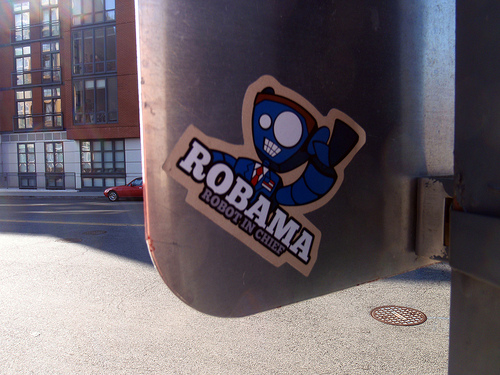 MEDIA ROOTS – With the second of three presidential debates now over, democracy continues to be victimized by the campaigns of establishment candidates referred to colloquially as “Obamney” or “Robama.” However, viewers of corporate media would not understand this for throughout the coverage, very little was reported on events occurring just outside the spectacle.
 MEDIA ROOTS – When visiting the Republican National Committee’s
  MEDIA ROOTS — The San Francisco Bay Area, particularly Berkeley, is known as one of the
 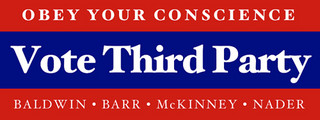 MEDIA ROOTS — On Monday, KPFA Radio’s The Morning Mix spoke with representatives from California’s third-parties about their legal challenge to Proposition 14,
 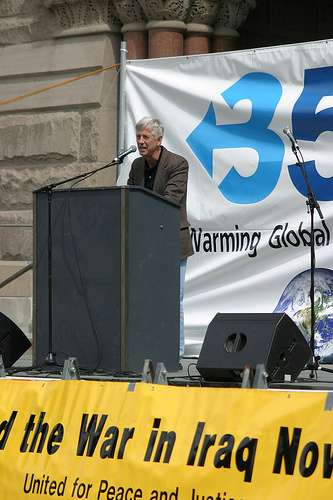 MEDIA ROOTS — Has the U.S. two-party dictatorship completely saturated Election 2012 media
coverage? Can you recall when you last heard news coverage of any
alternative party candidates?
MEDIA ROOTS — Has the U.S. two-party dictatorship completely saturated Election 2012 media
coverage? Can you recall when you last heard news coverage of any
alternative party candidates? 