How Corporations Awarded Themselves Legal Immunity

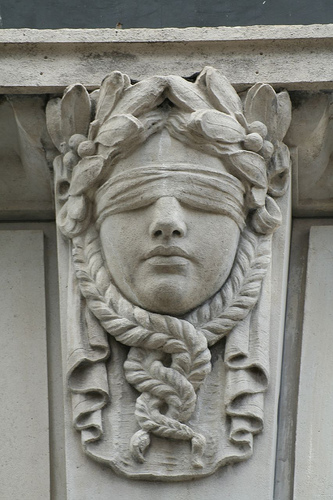
GUARDIAN– Worried about the influence of money in American politics, the huge cash payouts that the US supreme court waved through by its Citizens United decision – the decision that lifted most limits on election campaign spending? Corporations are having their way with American elections just as they’ve already had their way with our media.

But at least we have the courts, right?

Wrong. The third branch of government’s in trouble, too. In fact, access to justice – like access to elected office, let alone a pundit’s perch – is becoming a perk just for the rich and powerful.

Take the young woman now testifying in court in Texas. Jamie Leigh Jones claims she was drugged and gang-raped while working for military contractor KBR in Iraq (at the time, a division of Halliburton). Jones, now 26, was on her fourth day in post in Baghdad in 2005 when she says she was assaulted by seven contractors and held captive, under armed guard by two KBR police, in a shipping container.

When the criminal courts failed to act, her lawyers filed a civil suit, only to be met with Halliburton’s response that all her claims were to be decided in arbitration – because she’d signed away her rights to bring the company to court when she signed her employment contract. As Leigh testified before Congress, in October 2009, “I had signed away my right to a jury trial at the age of 20 and without the advice of counsel.” It was a matter of sign or resign. “I had no idea that the clause was part of the contract, what the clause actually meant,” testified Jones.

You’ve probably done the very same thing without even knowing it. When it comes to consumer claims, mandatory arbitration is the new normal. According to research by Public Citizen and others, corporations are inserting “forced arbitration” clauses into the fine print of contracts for work, for cell phone service, for credit cards, even nursing home contracts, requiring clients to give up their right to sue if they are harmed. Arbitration is a no-judge, no-jury, no-appeal world, where arbitrators are (often by contract) selected by the company and all decisions are private – and final. 

They don’t pay fair wages; they don’t pay their fare share of taxes. They evade liability. What gives? Says Saladoff: “When corporations harm, there should be some way to hold them accountable.”

Read more about How Corporations Award Themselves Legal Immunity

Written by Laura Flanders

© 2011 Guardian

Photo by Flickr user tommyajohansson
Massey Energy: Greed Leads to Manslaughter

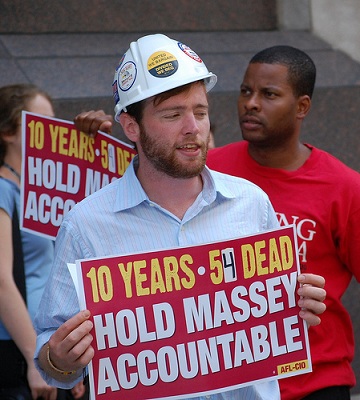
COMMON DREAMS– Just when we thought Massey Energy’s Upper Big Branch (in Montcoal, West Virginia) mining disaster of April 5, 2010, which killed 29 coal miners, couldn’t elicit any more tears or regrets or disgust or outrage, we find out how wrong we were.

Even after an independent investigation commissioned by the state’s former governor reported (on May 19, 2011) that the accident had been the clear result of safety violations, even after we learned that Massey had been cited for more than 1300 safety violations in the five years leading up to the explosion, and even after we concluded, bitterly, that Massey was guilty of wanton carelessness and recklessness—we find that we had aimed way too low.

It turns out that Massey executives were not only negligent, they were calculatingly criminal. On June 28, federal investigators announced they had discovered that Massey Energy was keeping two sets of books (safety logs). One log reflected actual mine conditions, which, alas, were demonstrably unsafe, and the other log was a fictionalized showpiece, a veritable Potemkin village, used to mislead government safety inspectors.

Maybe our first order of business should be to change the nomenclature. Given that Massey knew of the unsafe conditions and not only failed to address them, but attempted to conceal them from the very inspectors whose job it was to protect the miners from injury, we should no longer refer to the Big Branch explosion as an accident, disaster or tragedy. We should refer to it as “manslaughter.”

Read full article about When Greed Leads To Manslaughter–Massey Energy.

© 2011 Common Dreams

Photo by Flickr user Talk Media News

The Supreme Court’s Free Pass on Sexism for Walmart

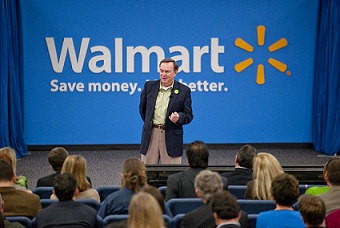
GUARDIAN– Let’s get this right: the world’s biggest boss, supported by companies as diverse as Altria, Bank of America, Microsoft and General Electric and backed up by the godfather of big business (the US Chamber of Commerce) has persuaded the US supreme court that thousands of women workers can’t possibly share enough of an interest to constitute a class?

It’s hard to know which part of the court’s decision in Dukes v Walmart hurts equity most: the assault on class-action jurisprudence generally, at a time of shrinking tools for workers seeking redress, or the defeat of history’s biggest gender-based claim before a court that, for the first time, includes two women, one of whom (Ruth Bader Ginsburg) made her reputation in sex discrimination law.

Dividing 5-4, in Dukes v Walmart, the supreme court on Monday dismissed the plaintiffs’ claim that companywide policy gave local managers too much discretion in pay and promotion decisions, leaving Walmart employees at thousands of Walmart and Sam’s Club stores vulnerable to gender stereotypes. (The company changed the format of its name since the case was filed.) The plaintiffs “provide no convincing proof of a companywide discriminatory pay and promotion policy,” Justice Antonin Scalia wrote for the majority.

Read full article about Walmart: Too Big to Sue?

© 2011 Guardian

Photo by flickr user Walmart Stores

Is US Law Enforcement Colluding With Cisco?

SALON.COM– As if we needed any more evidence that the United States is fast becoming a Corporate Police State (i.e., systematically deploying police power to protect narrow corporate interests), make sure to check out this jaw-dropping story that broke in Canada late Friday. It details how the British Columbia Supreme Court uncovered what it says is a massive collusion between computer giant Cisco and U.S. law enforcement — a collusion that seems designed to use criminal prosecution to stop a whistle-blower’s antitrust case against a powerful politically connected corporation.

The machinations in this case are complicated, but the basics go like this: Ex-Cisco exec Peter Alfred-Adekeye filed a whistle-blower suit against his former employer Cisco in civil court — a suit that could compel the company to pay millions in damages for allegedly “forcing customers to buy maintenance contracts,” according to the Vancouver Sun.

Cisco subsequently responded with two moves designed to intimidate Adekeye: First, the company filed a counter civil suit against him for allegedly “using a former colleague’s computer code to illicitly access Cisco services worth ‘more than $14,000.'” Then, the corporation had its allies in U.S. law enforcement cite the civil counter-suit to issue a whopping 97 criminal charges against Adekeye. In other words, instead of following Adekeye’s civil case with criminal antitrust charges against Cisco, U.S. authorities were convinced by the corporation to add criminal charges to Cisco’s counter civil suit against Adekeye (this move to add state-sanctioned criminal prosecution to a corporation’s civil action, of course, is a textbook definition of a Corporate Police State).

Read full article about Is American Law Enforcement Colluding with Cisco?

© 2011 Salon.com

Photo by flickr user monkeymanforever

Posted in Uncategorized | 1 Reply